

“Can you give the court your name, please?”
“The Crossbow Cannibal.”
“Address?”
“Erm… here, I guess.”
It is hard to imagine a more bizarre courtroom appearance, especially when this exchange is followed by audible gasps from the people seated in the courtroom.
Dramatic as it may be, this is not dialogue from a particularly tasteless British comedy, but an exchange from the Bradford Magistrates’ Court, 28 May 2010, between Stephen Griffiths and the court clerk.
The Crossbow Cannibal’s Final Victim
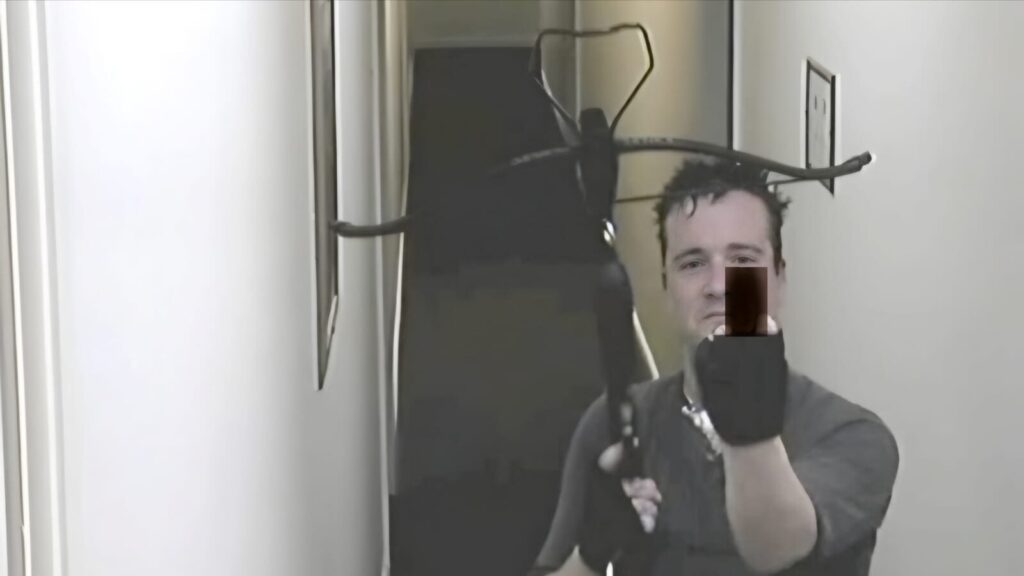
Four days earlier, Griffiths had been arrested after CCTV footage of him pursuing a woman with a crossbow was found.
But to understand how the “Crossbow Cannibal” came to be, we need to dial back a few days before this event as well, to the footage that first brought him to the police’s attention.
On the morning of 24 May, Peter Gee, the caretaker of Holmfield Court, where Griffith lived, at the edge of Bradford’s red light district, was going through CCTV footage from the preceding weekend, as a routine part of his job.
It was during this time that he saw the last moments of Suzanne Blamires, a sex worker from the nearby district.
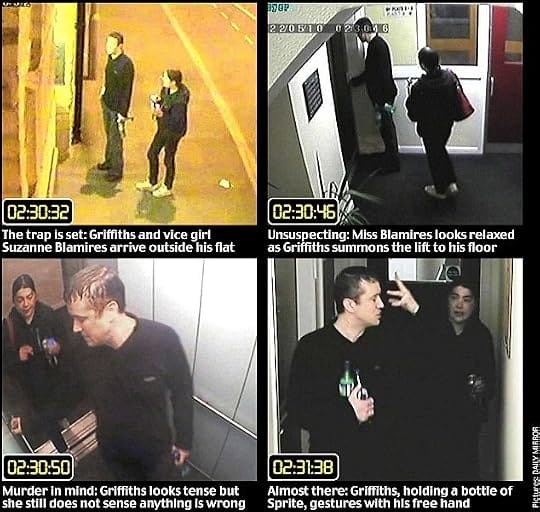
“He saw an image of someone on the third floor dragging a person into flat 33,” the police said, describing Gee’s account of events. The caretaker reviewed the footage and saw Griffiths enter his flat with a woman at 2.29 am on 22 May.
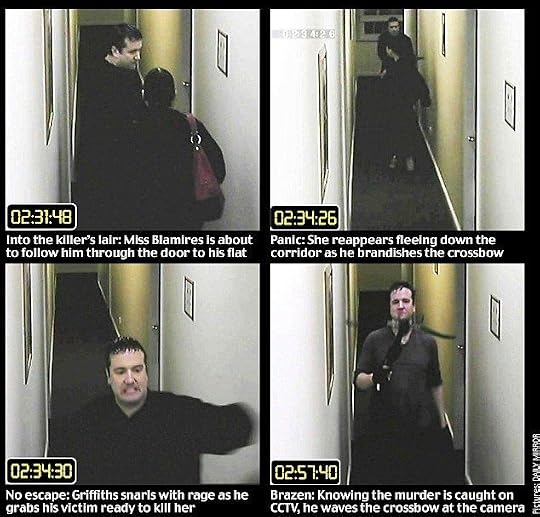
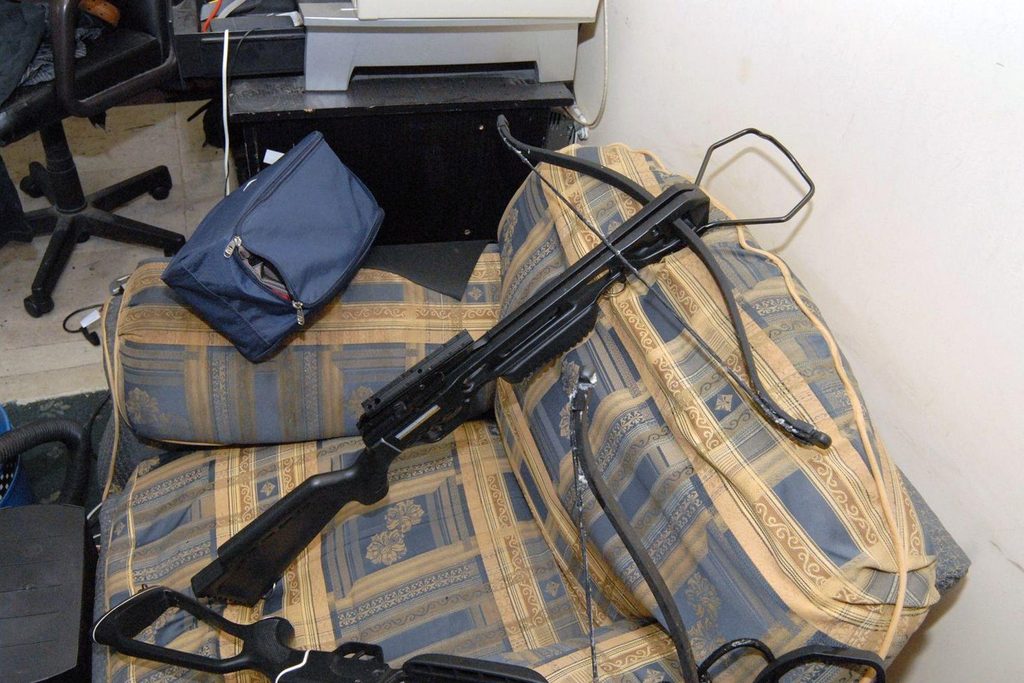
Shortly afterward, the woman was seen running out of the flat with Griffiths in hot pursuit. She was thrown or fell to the floor. Griffiths had a crossbow in his hand, which he pointed at the woman’s body.
“He fired it and pulled her into the flat by one of her legs.” Later, he emerged again and pointed the crossbow at the CCTV camera.
“He showed the crossbow to the CCTV cameras because he wanted to be caught so the (serial killer) label would apply to him.” Professor David Wilson of the University of Central England would note.
Distraught, Gee contacted the police.
Following the alert on 24 May 2010, armed officers descended on Holmfield Court, with witnesses describing them ‘pouring up the stairs of the converted mill,’ only to emerge roughly ten minutes later with Stephen Griffiths in handcuffs.
What Police Found Inside the Flat
“I am Osama bin Laden,” were the first words Griffiths uttered to the police on being arrested.
It soon came to light that though Blamires had been Griffiths’ final victim, she was far from being the only one.
“I’ve killed a lot more than Suzanne Blamires,” he himself would admit to the police.
A neighbor further mentioned that they heard the sound of banging and rising voices that continued for half an hour, after which they’d apparently heard a woman scream in pain and shout, “Get off me, you ignorant bastard.” Then there was a heavy thump and silence.
Adam Twigg, one of the tactical officers who stormed into Griffith’s residence, later disclosed in a Prime Video documentary, “There was a sizeable portion of a brain in the microwave. And there was another portion of brain on a plate, on a coffee table in the front room, next to a pair of amputated breasts.“
In fact, Griffith had had no intention of stopping at all. Within an hour of killing Blamires, he had apparently approached another sex worker called ‘R,’ and asked her for business.
He’d even offered her £80 for an hour and said he could pay for the whole night. The prosecution said that had R entered the flat she would have become his fourth victim.
A Killer Who Wanted to be Caught
The police had little trouble extracting information from Griffiths. It was almost as if he gloated about his crimes.
Among the most disturbing of Griffiths’ claims was that he had eaten parts of his victims. He told police that he had eaten the thighs of a certain Susan Rushworth (the first of his victims) after roasting them, and made similar claims about the bodies of Shelley Armitage (another victim) and Suzanne Blamires.
He described the process to investigators in remarkably matter-of-fact terms, telling them that he had “sliced and diced” the bodies. On another occasion, describing his bathroom after the murders, he reportedly said, “It was just a slaughterhouse in the bathtub.” He then added, chillingly, “That’s part of the magic.“
Elaborating, he’d gone on to say that “I [Griffiths] or part of me was responsible for the murders of Susan Rushworth, Shelley Armitage and this Suzanne Blamires whose name I thought was Amber.”
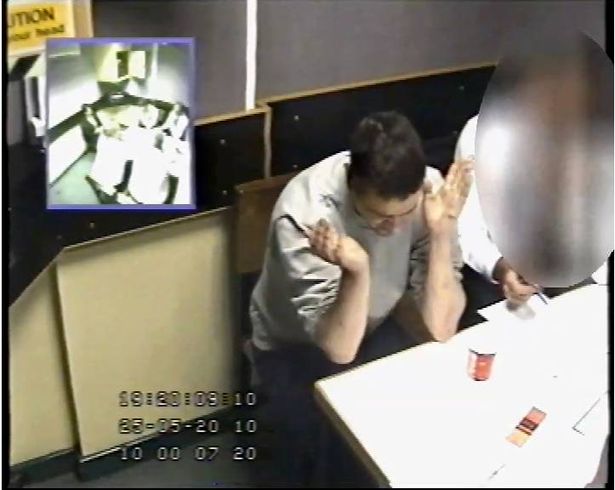
Explaining the cuts on his hands, he’d told police they were due to “slicing and dicing” of the bodies.
As more macabre details of the last murder emerged, some of the revelations caused frenzied reactions. A pathologist discovered a bolt and part of a knife embedded in Suzanne’s skull, while a civilian member found a heavy bag containing her head submerged in the River Aire at Shipley.
In fact, 81 body parts belonging to Blamires had been found in the river. Her nose and ears had been removed, while a foot had been sawn off and found in a rucksack.
Apparently, Griffiths had been influenced by the old FBI definition of a serial killer. “He knew he had to kill three or more people in a period greater than 30 days,” Professor Wilson mentioned.
The Life and Times of Stephen Griffiths
With his pet lizards on a lead, long leather coat, slicked-back hair and sunglasses that he wore regardless of the weather, Stephen Griffiths was regarded as a harmless oddball by his neighbors.
40 at the time of his arrest, he had been a PhD scholar in criminology at Bradford University, with a psychology degree under his belt.
Ironically, his thesis was on Homicide in an Industrial City and focused on Violence in Bradford from 1847 to 1899.
His actions were not exactly out of character. Only weeks earlier, Peter Gee, the caretaker, had been warned not to approach him alone since he was potentially violent and displayed erratic, unstable behavior.
Furthermore, he had had a long history of psychiatric treatment.
Stephen Griffiths’ parents had separated when he was still a young boy, following which he lived in Wakefield with his mother, Moira, and his brother and sister.
His 61-year-old father, also called Stephen, had not seen his son for 10 years when he was arrested, and had apparently not recognized him in a photograph.
At just seventeen, Griffiths had been diagnosed with a personality disorder and was assessed in the high-security Rampton hospital in Nottinghamshire, where it was concluded that his condition would not respond to treatment.
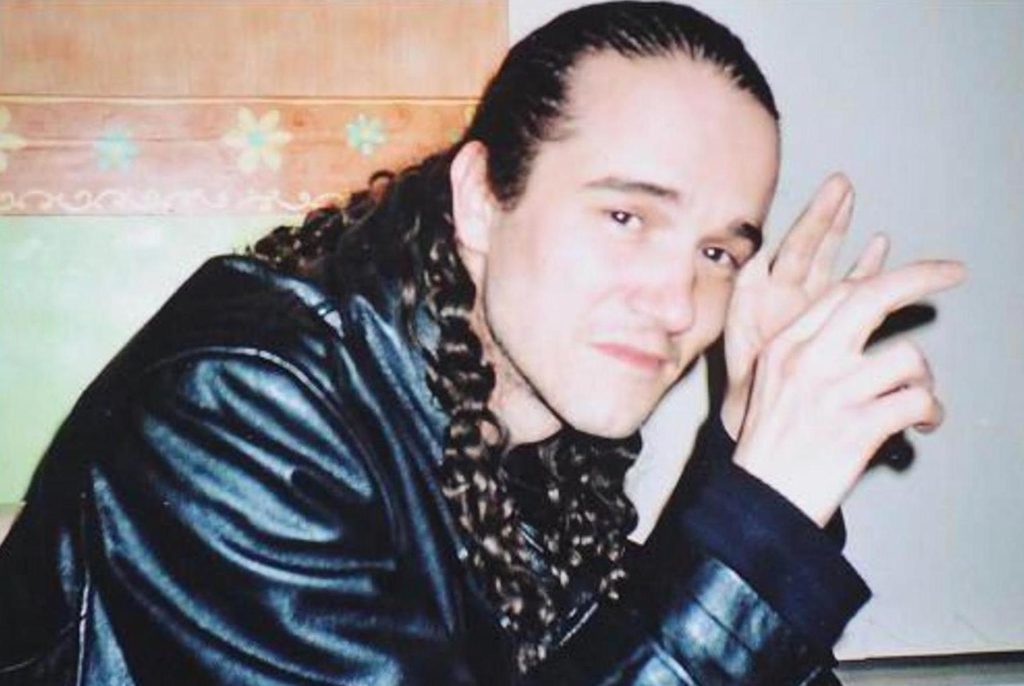
Furthermore, he confided to a psychiatrist in October 1991 that he was strongly attracted to the idea of killing someone.
Later, he had talked to a probation officer about his fantasies and preoccupation with multiple killings. “He [Griffiths] has an idolization involving Peter Sutcliffe [an English serial killer convicted of murdering 13 women],” prosecutor Robert Smith would divulge at court.
The Yorkshire Ripper Obsession
“Peter Sutcliffe came a cropper in Sheffield. So did I, but at least I got out of the city,” Griffiths had bragged to the police upon being arrested.
What Griffiths meant was, while Sutcliffe was caught inside Sheffield, he (Griffiths) had at least managed to leave the city boundaries before his own crimes caught up with him.
Sutcliffe, the so-called Yorkshire Ripper, had murdered 13 women and attempted to murder seven others during a five-year killing spree in the 1970s and early 1980s. His victims had predominantly been women, many of them sex workers, and several of the murders took place in and around Bradford.
So obsessed was he with Sutcliffe that, following his arrest, he chose to be represented by the Bradford law firm Lumb & Macgill, who had acted for Sutcliffe as well.
The London Evening Standard reported in December 2010 that Griffiths’ ex-girlfriend, Amanda Judson, mentioned that Griffiths had boasted he would become ‘more infamous‘ than Yorkshire Ripper Peter Sutcliffe.
Van Periah and the Online Persona
Stephen Griffiths also adopted a somewhat precarious online persona.
A website that Griffiths had set up, called The Skeleton and The Jaguar, was full of pictures of crossbows, and had also contained photographs of 50 serial killers.
Portraying himself as “Ven Pariah” and a “misanthrope who brought hate into heaven,” he appeared in a photograph naked from the chest upward and quoted the Bible, Ezekiel 25:17: “The path of the righteous man is beset on all sides.”

Shelley Armitage, one of his victims, was found in a video recorded on Griffiths’ mobile phone.
He had filmed Armitage while giving a chilling running commentary. ‘I am Ven Pariah. I am the Bloodbath Artist. Here is a model who is assisting me,‘ he’d said as he zoomed in to Armitage’s nude dead body in his bathtub.
He told police that he had ‘sliced and diced’ the three women, killing Rushworth with a hammer and the other two with a crossbow. He even claimed that he had cannibalized portions of their flesh after roasting it. According to Griffiths, he “didn’t have much time for the human race.”
On MySpace, he’d proudly declared, “Humanity is not merely a biological condition; it is also a state of mind. On that basis I am a pseudo human being at best. A demon at worst,” while his favorite books on the Amazon website included Goodbye Lizzie Borden: The Story of the Trial of America’s Most Famous Murderess, and Patterns of Vengeance: Crosscultural Homicide in the North American Fur Trade.
Stephen Griffiths as a ‘Person’
Griffiths’ behavior with his former girlfriends had hardly been civil.
Professor Wilson observed that Griffiths was a misogynist who had a narcissistic personality disorder, after accessing tapes in which Griffiths taunted and berated his former girlfriend, Kathy Bolton, who had a child with him.
“He is somebody who is a wannabe. He is desperately keen for fame, even infamy,” Wilson said, further explaining that Griffiths would always try to deflect blame onto his former partner(s), and when he talked about himself, he used very powerful language and was always domineering.
On the last tape, Griffiths laughs maniacally at his former partner, which Wilson says is “actually very chilling.”
Victims of the Crossbow Cannibal
The first of Griffiths’ victims was Susan Rushworth, 43, a local sex worker, who had been seriously addicted to heroin, and was the mother of three and a grandmother.
Tragically, at the time of her murder, Rushworth had actually been trying to get better from her addiction and get closer to her grandchildren.
Her daughter, Kirsty, lamented, ‘Even though she used to take drugs and stuff, my friends always used to have a laugh with her and she’d give her right arm to anybody.’
Griffiths admitted to killing Susan the previous year, with a hammer in his bedroom. He further said that there had been a lot of blood, which he had cleaned up with such precision that it had passed the test when police visited his flat later in 2009 about him sending threatening text messages to an ex.
“The remains of Susan Rushworth have never been found, nor has the defendant provided any assistance with a view to recovery or location,” it was later said in court.
The following year, Shelley Armitage fell victim to Griffiths. A ‘much-loved daughter and sister‘ and a sex worker, Armitage had been addicted to drugs and alcohol as well. She vanished on 26 April 2010.
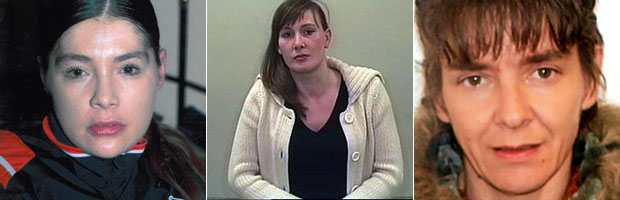
Shelley was last captured on CCTV around 10 pm walking along Rebecca Street in Bradford’s red-light district. Her movements afterward remained unknown. Although police appealed for information, saying, “both they and the police are concerned for her welfare,” nothing of much importance did come up.
Griffiths’ third victim had been Suzanne Blamires, 36, a sex worker from Bradford who disappeared on 21 May 2010.
Unlike Rushworth and Armitage, whose disappearances initially left investigators with little physical evidence, Blamires’ final movements were captured almost entirely by CCTV.
Peter Gee later witnessed her last moments, as mentioned before.
Despite his very specific choice of victims, Griffiths said he had no issue against prostitutes and was not “street cleaning” like Peter Sutcliffe.
Stephen Griffiths’ Trial
After his arrest, Griffiths appeared before the Bradford Magistrates’ Court on 28th May 2010.
The hearing itself lasted only a few minutes, with the theatrical exchange that Griffiths chose to put forward, after which Griffiths was charged with the murder of Suzanne Blamires, while the investigation into the two earlier disappearances continued.
Psychiatrists who saw him following his arrest agreed to the fact that he was a highly dangerous man but did not consider him to be mentally ill.
The case was subsequently sent to Leeds Crown Court.
In July 2010, while appearing by video link from Wakefield Prison, he unexpectedly told the court, “Yes. I want to plead guilty. I want to be re-arraigned and plead guilty.“
The judge, Mr Justice Openshaw, refused to accept the plea at that stage because there were concerns about Griffiths’ mental health and the proper legal procedure for entering the plea. Griffiths nevertheless responded simply with “Guilty.“
By December, the prosecution had assembled a disturbing body of evidence, including CCTV footage of Blamires’ final moments, forensic evidence from Griffiths’ flat and the River Aire, video of Shelley Armitage, and Griffiths’ own extensive admissions.
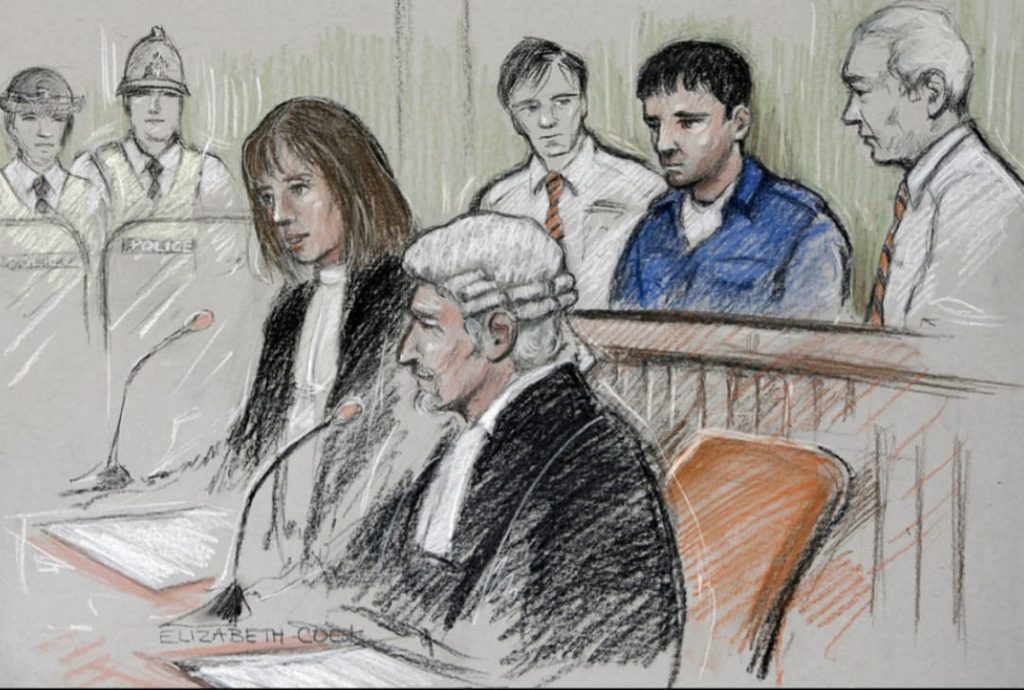
On 21 December 2010, at Leeds Crown Court, Griffiths formally pleaded guilty to murdering all three women, i.e Susan Rushworth, Shelley Armitage and Suzanne Blamires.
Interestingly, no jury delivered the verdict in Griffiths’ case.
The court heard the evidence and Griffiths’ admissions before Mr Justice Openshaw sentenced him to life imprisonment with a whole life order.
“The circumstances of these murders are so wicked and monstrous they leave me in no doubt the defendant should be kept in prison for the rest of his life,” he said.
The judge noted that his guilty pleas had been entered ‘without any remorse at all,’ adding that Griffiths had never said that he regretted what he had done or offered even a perfunctory apology.
Perspectives of the Victims’ Families
Unfortunately, even after conviction, Susan Rushworth’s body was never found.
“All my family want is for him to tell us where my mother is,” Susan’s daughter Kitsty said. “We don’t know what he’s done with her, and we want to put her to rest.“
Only the shoulders, vertebrae and connective tissue from Shelley Armitage’s body were found in the River Aire; DNA testing confirmed that they truly belonged to her.
Suzanne Blamires’ dismembered body had been dumped in the River Aire, where police eventually recovered 81 separate fragments, including her head, while other parts were found in a rucksack.
Nicky Blamires, Suzanne’s mother, described Griffiths as a coward, and said, “I wake up and think of my bright, articulate, and much loved daughter… every day I am serving a life sentence as a result of what this man has done.”
Gll Armitage, Shelley’s mother, lamented that her daughter’s death would ‘haunt them for the rest of their lives.’
Life Inside Prison for Stephen Griffins
Life in prison was hard upon Griffiths. Perhaps deservedly so.
By 2019, Griffiths was reportedly at HMP Long Lartin in Worcestershire, where he was attacked with a sharpened wooden weapon and narrowly survived. The Independent reported this retrospectively.
He had apparently moved to HMP Full Sutton by 2024, the high-security prison in East Yorkshire. Here, he was reportedly attacked by another prisoner and knocked unconscious.
The Sun reported another altercation on 14th February 2025 in his cell at Full Sutton, in which Griffiths was left bruised after a fistfight and again became unconscious.
Apparently, these incidents left him “too scared to leave his cell.“
The irony is difficult to miss.
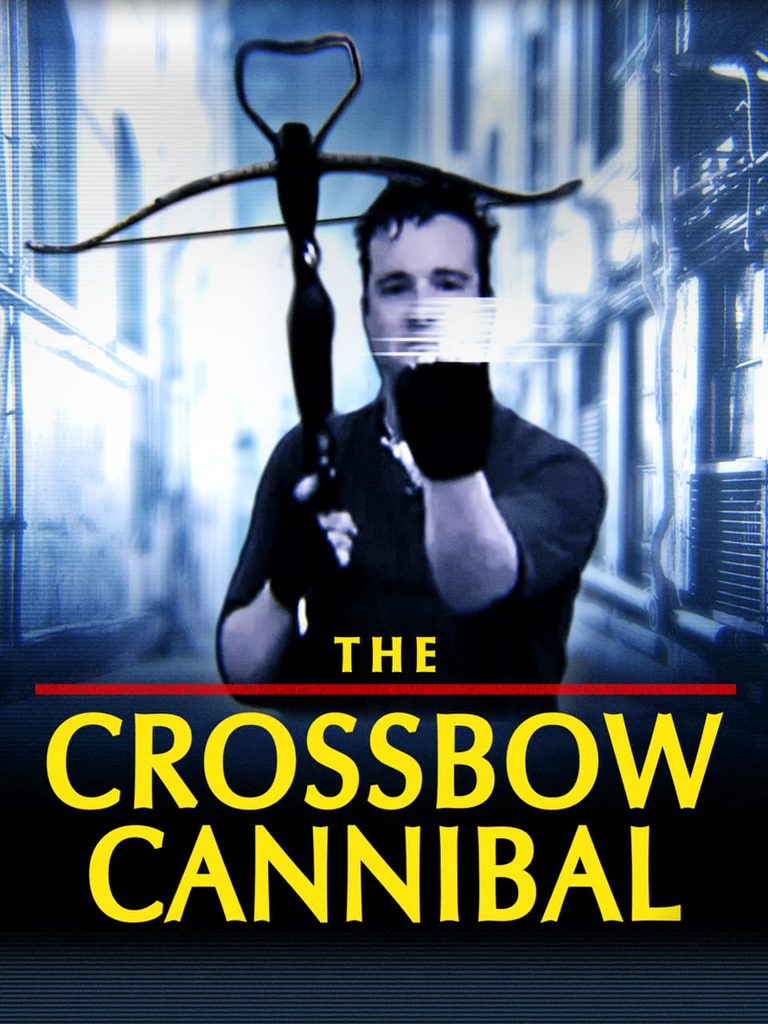
A 2025 documentary, The Crossbow Cannibal, revisited the case using archive material and interviews with people connected to the investigation and Griffiths’ family.
“Police said they hoped his conviction would bring some comfort to his victims’ families,” ABC News reported.
For more stories, explore our articles on the Lady of the Dunes and Maddie Clifton.