

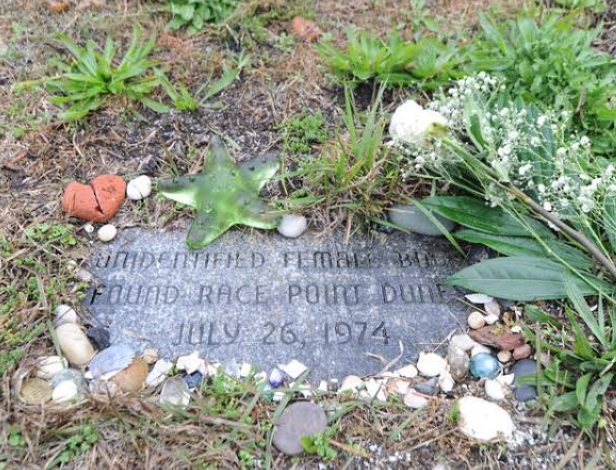
In St. Peter’s Cemetery, Provincetown, lies a grave with no name. Instead, it is inscribed with the words: “Unidentified Female Body Found Race Point Dunes July 26 1974”
Back in 1974, on a bright July morning in Provincetown, Massachusetts, the Metcalfe family had traveled to the dune shacks in Cape Cod for a summer vacation.
12-year-old Leslie Metcalfe was walking on Race Point Beach with her family dog. While on their way to Seascape Dunes, the dog veered off and started barking at the bushes.
Leslie, led by her curiosity, followed the dog and discovered what she first thought was a dead deer.
Upon a closer look, she realized she could not be more wrong.
Before her lay the body of a woman who would go on to become the oldest unidentified homicide victim in the state of Massachusetts.
The Remains Discovered at Race Point Dunes
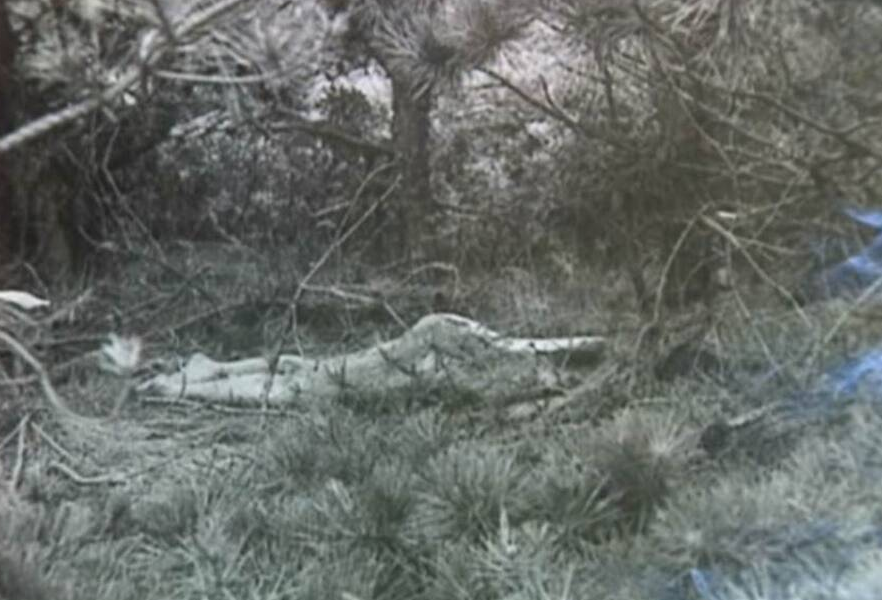
The woman was positioned face‑down, partly naked, lying on a green terrycloth beach blanket, clad in Wrangler jeans, with another pair of jeans placed under her head and no blouse in sight. Both of her arms and legs were cut off. Her head was crushed on one side, signaling the use of blunt force.
Upon arriving on the scene, investigators found three important pieces of evidence. First, there were two sets of footprints leading up to the body.
Second, a set of tire tracks about 50 yards from the body, suggesting it was specifically brought there for dumping.
And third, a few yards away, an “SOS” symbol had been drawn in the sand. However, there was no indication it had been made by the victim.
“They could have been connected, or they could not have been connected. How do you know?” questioned Officer James Meads, the lead investigator of the case.
The postmortem examination revealed more about the victim. The body was estimated to be 2 to 4 weeks old. The woman had long auburn hair, pulled back into a ponytail with a golden hair tie. Her toenails were painted pink.
“She was definitely posed there,” recalled Warren Tobias, retired acting police chief in Provincetown. “She was lying out on a beach towel as if… she was sunbathing.”
It was estimated that she was anywhere between 20 and 40 years old at the time of her death. She had an athletic build, standing approximately 5’7to 5’8 (170–172 cm) in height and weighing nearly 145 lbs. (65 kg).
The killer had made various attempts to prevent identification. Starting with the arms and legs being cut off, this left no access to fingerprints.
Another attempt was removing several of her teeth. Investigators noted she had undergone expensive dental work, which cost around $5,000 to $10,000 at the time.
The most striking detail was the absence of any sign of struggle. It looked as though the woman had made no attempt to fight back, evident from the lack of bruises/wounds on her body. It was probable that she had not expected the attack.
Forensic experts did find abrasions in her genital area, which indicated that a wooden object had been used to inflict trauma after death.
The cause of death was determined to be blunt force trauma inflicted with a military‑style entrenching tool. The blow crushed a part of her skull and left her head severed from her body.
There were no weapons present at the scene of the crime. Her remains were interred in a St. Peter’s Cemetery in Provincetown, identified solely by an inscription on a small gravestone that said, “Unidentified Female Body Found at Race Point Dunes July 26, 1974.”
Investigators Who Shaped the Case
Jean Cohen, owner of the Seascape Shack, suspected that the victim had been dumped by a transient from Boston. She noted in her journals that Provincetown’s relatively small population made it improbable the killer was a local.
The case eventually fell under the authority of 41-year-old Police Chief James J. Meads, who worked alongside Officer Warren Tobias. At the time of the discovery on July 26, 1974, Meads had served as Provincetown’s chief of police for four years.
He would go on to retire in 1992, but back then he was known as the man who pursued this case “like a bulldog with lockjaw.”
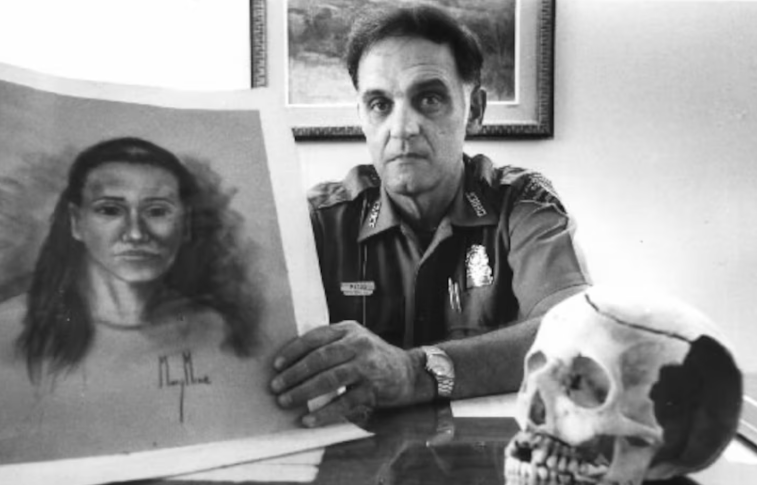
“Ever since this happened, Jim won’t leave a stone unturned,” recalled Dr. Stanley M. Schwartz, the State Dental Forensic Examiner. “He told me that he’ll never quit, and he never has.”
It was Dr. Schwartz who undertook the reconstruction of the victim’s teeth, jaw, and skull, to restore the structural integrity of the remains for further analysis.
Meanwhile, Chief Meads began reviewing thousands of missing‑person files and cross‑checking a registry of vehicles cleared to pass through the area, but found no matches.
At one point, he even carried the skull in his duffle bag looking for any clue that might crack the case.
Later, a description of the victim was transmitted via teletype to the FBI and the Royal Canadian Mounted Police to request additional investigative assistance.
The dental charts were sent all across the states. Since there were no fingerprints, the remaining teeth were the strongest evidence in the police’s hands.
In 1979, Dr. Clyde Snow, a forensic anthropologist who worked with the Civil Air Medical Institute, used the reconstructed skull to create a clay model approximating the woman’s facial features.
A year later, investigators exhumed her remains in hopes of uncovering new evidence, but the effort yielded no fresh leads, and her skull was never reburied.
Photographs of the clay model were distributed internationally to generate leads. Chief Meads even arranged for articles on the case to be published in dental journals, alongside appearances on national and international television, to generate leads.
Over the years, Meads received thousands of letters and phone calls. But only about 50 were able to supply dental records.
There were, of course, no matches found.
Families that Sought Answers
In 1987, a woman reached out to the Royal Canadian Mounted Police regarding a murder. The woman, in her early 20s, claimed that she remembered seeing her father strangle a woman in Provincetown.
The Royal Canadian Mounted Police notified Massachusetts authorities, after which investigators attempted to locate her in Montreal for questioning.
“From what I’ve been told, she said she saw her father strangle somebody. If that’s true, then it’s not our victim because she wasn’t strangled,” Meads mentioned.
“Then again, if she were a child, maybe her perception of what happened is off. But no matter what, when they find her, I’ll go to Canada to talk to her.”
This tip ultimately produced no results.
Another woman, this one from Maryland, had reached out to Meads regarding the disappearance of her missing sister. She said that her sister had the same hair color and had disappeared around the same time as the victim.
But Meads was not too sure about this account, and he did not question the woman too closely.
“It’s no use wasting my time extensively interviewing this woman about what she’s been doing to find her sister for the past 13 years if the dental charts don’t match up,” Meads had mentioned.
The dental charts did not match in the end, and this lead fizzled out as well.
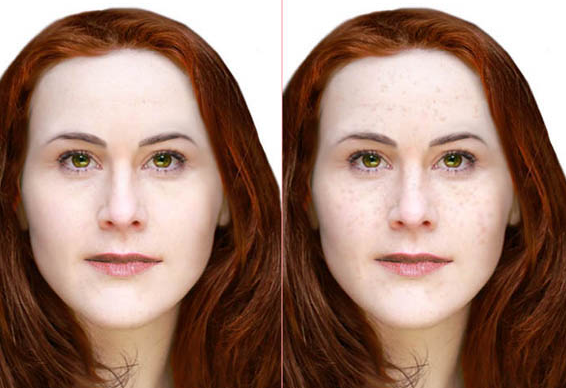
with and without freckles
Serial Killers Turned Suspects
Whitey Bulger, one of America’s most notorious crime bosses, had emerged as a suspect in this case. He was also infamous for removing the teeth of his victims.
The CapeCodToday reported that, since Bulger’s capture in June, witnesses recalled seeing him with a young woman in Provincetown during July 1974. However, no link to Bulger was found upon investigation.
Tony Costa, a serial killer from Truro, Massachusetts, was initially considered a suspect but later ruled out. Costa had been incarcerated since 1970 and died by suicide in prison on May 12, 1974. The victim was discovered two months later, confirming he could not have been involved.
“I know there’s a murderer out there somewhere loose,” Officer Warren Tobias mentioned. “There’s a family out there that needs closure.”
The Confession of Hadden Clark
The Case of Clark stood out to the authorities due to his confession.
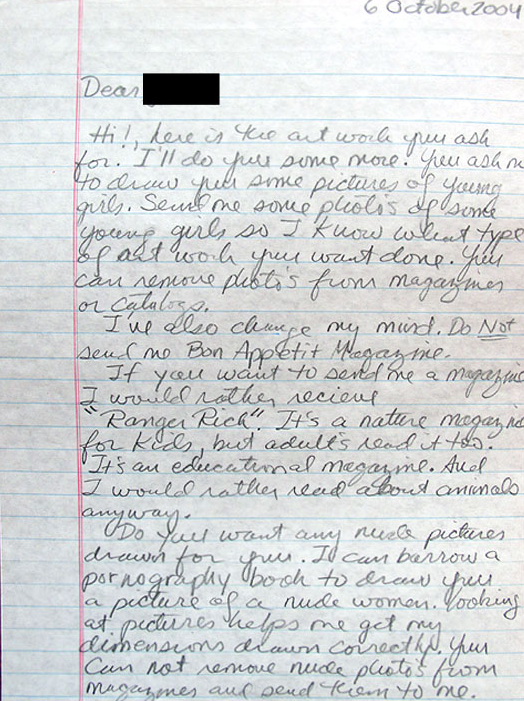
“…I could even draw you a picture of the woman I murdered on Cape Cod. I could have told the police what her name was, but after they beat the shit out of me, I wasn’t going to tell them shit. I think I have already told you this, but I can tell you again. I don’t care. This murder is still unsolved, and what the police are looking for is in my grandfather’s garden,” wrote Hadden Clark in his letter.
Hadden Clark had been convicted of killing two women. In prison, he wrote the confession letter and made two drawings. One of which had a naked woman with one of her arms cut off.
Though he confessed and even sent the sketches and a letter, his diagnosis of paranoid schizophrenia made investigators view his statements as unreliable. This tip, too, led nowhere.
Could it be Kesinger?
One of the more prominent investigative leads emerged when authorities began to suspect that the unidentified victim might be Rory Gene Kesinger.
Kesinger was a twenty‑five‑year‑old fugitive who bore a resemblance to the Lady of the Dunes. She had escaped from Plymouth County Jail in 1973 while awaiting trial for robbery and assault.
She had been missing since.
Authorities approached Kesinger’s mother for her DNA, which did not match the victim’s DNA. This closed the door on the Kesinger theory.
“With most murders, you try to figure out who the murderer was,” he said quietly. “I’ve spent years trying to figure out who the victim was.”
Two other missing women, Francis Ewalt of Montana and Vicke Lamberton of Massachusetts, were at one point strongly suspected of being the Lady of the Dunes. However, subsequent investigation ultimately ruled them out as possible identities.
Identification of Ruth Marie Terry
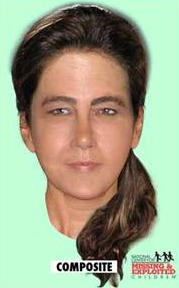
The body was re-exhumed in March 2000 for DNA testing, and a decade later, in May 2010, a CT scan of the skull enabled specialists to create a new facial reconstruction through the National Center for Missing and Exploited Children (NCMEC).
“And if we can get a match with DNA, this will be a big break in the case,” said Philip A. Rollins, district attorney for Barnstable County. “We figure out who she is, and then we’ll start to work figuring out who did it.”
It was only in 2022 that the lady of the Dunes was finally identified. The skeletal evidence was sent to Othram’s lab in Texas, where scientists overcame years of failed attempts caused by chemical damage and contamination.
Despite the degraded samples, they were able to recover enough DNA to confirm her identity. In October of 2022, the FBI formally announced the identification of the “Lady of the Dunes,” confirming her as Ruth Marie Terry of Tennessee through forensic genetic genealogy.
“No mystery around here has had quite the longevity as this one,” said Warren Alexander, a 60-year-old lifelong resident of Provincetown. “It feels nice to have this one solved.”
Who Was Ruth Marie Terry?
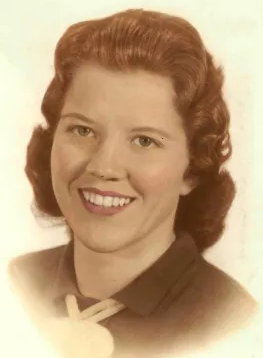
On 8th December 1936, Ruth was born to Johnny and Eva Terry in Whitwell, Tennessee. Her mother passed away at just 23 years old. Ruth, however, married young, at 21. Just a year later, in 1958, she gave birth to her son Richard.
Her first marriage did not last long, and she soon left for Livonia, Michigan, to work at the Fisher Body automotive plant. Unable to provide for her son financially, she entrusted him to a close friend who adopted him.
She did try to contact him later in 1972, but Richard refused, as he had been recovering from a drug overdose which left him in a coma for 18 days.
Terry had moved to California by then. That is where she met her husband and her killer – Guy Rockwell Muldavin.
What Terry’s Family Knew
Guy Muldavin worked as an antiques dealer in Reno, Nevada. He had previously attended the American Academy of Dramatic Arts and had served in World War II.
Four months before he killed her, the couple visited Terry’s family in Whitwell. Ruth Terry’s grandniece, Brittanie, observed that Muldavin had possessive behavior. She pointed out that Terry “wasn’t herself” when she was with Muldavin.
The couple mentioned that they were planning to travel across the States to collect antiques. This happened while they were visiting Terry’s half-brother, Kenneth. His wife Carole also noted that they spoke about visiting Massachusetts as they were leaving.

After Muldavin murdered Terry, he returned to Tennessee to tell Terry’s family that she had gone missing and that he could not find her.
When James, Terry’s brother, learned about her sudden disappearance, he traveled to California and hired a private Investigator. The Private Investigator concluded that Terry had sold all her belongings and left to join a religious cult.
Carole, however, was not satisfied with this conclusion and instead believed she was in a witness protection program that prevented her from contacting her family.
Who Was Guy Rockwell Muldavin?
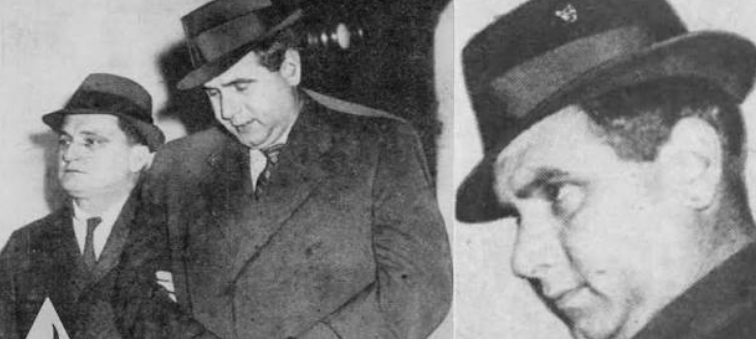
Guy Rockwell Muldavin began his life in New York, raised by a father who struggled with mental illness and alcoholism. In time, he moved with his mother to New Mexico, where he spent most of his childhood.
Muldavin met his first wife, Joellen Mae Loop, while working as a professor in Bellevue, Pennsylvania. After nearly a decade, Muldavin’s marriage to Jo Ellen Loop came to an end.
The couple divorced a decade later in July of 1956. He soon turned to Manzanita Mearns, a mother of three.
Manzanita and her eldest daughter, 18-year-old Dolores, moved in with the antiques dealer, while her (Manzanita’s) two younger children remained with their father in Canada.
Muldavin had a reputation for being a “womanizer.” Rumors circulated that he entertained women at the antique shop after hours.
“At that point, Guy had created a business for himself of selling antiques,” Rolf Norton, a detective with the Seattle Police, explained.
The Mystery of Muldavin’s Second Wife
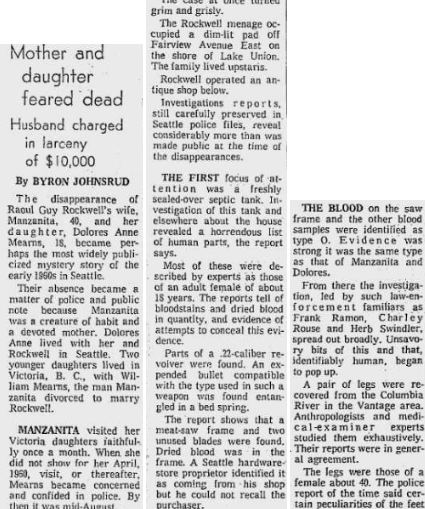
On May April 1st 1960, Muldavin’s second wife, Manzanita Aileen ‘Manzy’ Ryan, and her 18-year-old daughter, Dolores Ann Mearns, disappeared in Seattle. Muldavin was the prime suspect in the case, but he managed to flee Seattle.
Investigators uncovered dismembered human remains in Muldavin’s septic tank. But they could not prove that the remains belonged to either of the women.
He was arrested by the FBI and charged with unlawful flight to avoid giving testimony on their deaths.
In July of 1960, Muldavin married for the third time. This was around the same time his second wife and her stepdaughter went missing. The King County prosecutor was reluctant to charge Muldavin without a direct connection to the body.
Guy Muldavin met and married Evelyn Marie Emerson in King County, Washington, but soon thereafter divorced her. They married again three years later in 1963.
Muldavin faced larceny charges after swindling his third wife’s family out of $10,000 around the time his second wife disappeared.
Convicted in 1961, he received a fifteen‑year sentence. This, too, was suspended on the condition that he repay the amount.
Guy Rockwell Muldavin died in Salinas on March 14, 2002, after a lengthy illness. He was survived by his wife, Phyllis, and his sister, Joan Towers.
More than two decades later, on August 28, 2023, investigators officially named Muldavin as the killer of Ruth Marie Terry, ending one of Massachusetts’ longest‑running unidentified homicide cases.
Identified, 48 Years Later
“A horrible thing happened to my mom in a beautiful place. He was a beautiful person, and I wish I could have gotten to know her,” said Richard Hanchett, son of Terry.
Hanchett said when the FBI contacted him, “At first I thought, oh, she’s alive, you know. Then I quickly found out that was not the case.” He had never heard about the Lady of the Dunes murder or Provincetown until then.
“She loved her family and her family loved her,” said Terry’s sister-in-law, Jan Terry.
For decades, the Terry family had no idea their answers lay hundreds of miles away in Provincetown’s Saint Peter’s Cemetery. Ruth was buried only as an unidentified woman discovered in the Race Point Dunes.
In October, DNA from her remains matched with samples from the Terry family, and genealogist Hanchett finally traced his roots back to Tennessee.
“I’m 64 years old; I didn’t think I’d ever figure anything out, actually, and then to find out she was lost,” Hanchett said.
She is survived by her son and remembered in Provincetown not only as the victim once known as the Lady of the Dunes, but as Ruth Marie Terry.
For more stories, explore our articles on Julia Martha Thomas and The Great Stink of London.