
Sara Bergmann told investigators that Oskar Dirlewanger had her whipped for giving bread to a prisoner. She worked as his interpreter and housekeeper in occupied Poland, and once shared part of her bread with a Polish Jewish prisoner working at his quarters. Dirlewanger ordered a soldier to flog her, then locked her in a cellar until the following day.
The investigators also wanted to know whether she had slept with him.
Bergmann was sixteen when she took the job in early 1941 because she had no way to support herself. It paid thirty-two złoty a month, with food and accommodation. During questioning that autumn, she repeatedly denied a sexual relationship. She said she had a fiancé in Józefów.
She was Jewish, and Dirlewanger was an SS officer, which made the suspected relationship a violation of Nazi racial law. One subordinate defended his commander by explaining that he treated Bergmann too harshly for such intimacy to be plausible. He beat her, the man said, and sometimes withheld food for days over minor infractions. These exchanges survived in the investigation records.
The complaints against Dirlewanger would become more numerous and more terrible. They reached officials with the power to remove him. His career depended on what those officials decided.
In 1934, a German court sentenced Dirlewanger to two years in prison for sexually abusing a girl under fourteen. He lost his doctorate and was expelled from the Nazi Party. By then, he had spent much of his adult life moving between respectable employment and armed political violence.
He served in the First World War, won the Iron Cross, and returned to fighting with the Freikorps afterward, the right-wing paramilitary formations that battled Germany’s revolutionary left. In 1921, he commanded an armored train against Communists at Sangerhausen. Alongside these campaigns, he studied economics and obtained a doctorate at Frankfurt. He later managed businesses and became director of the employment office in Heilbronn.
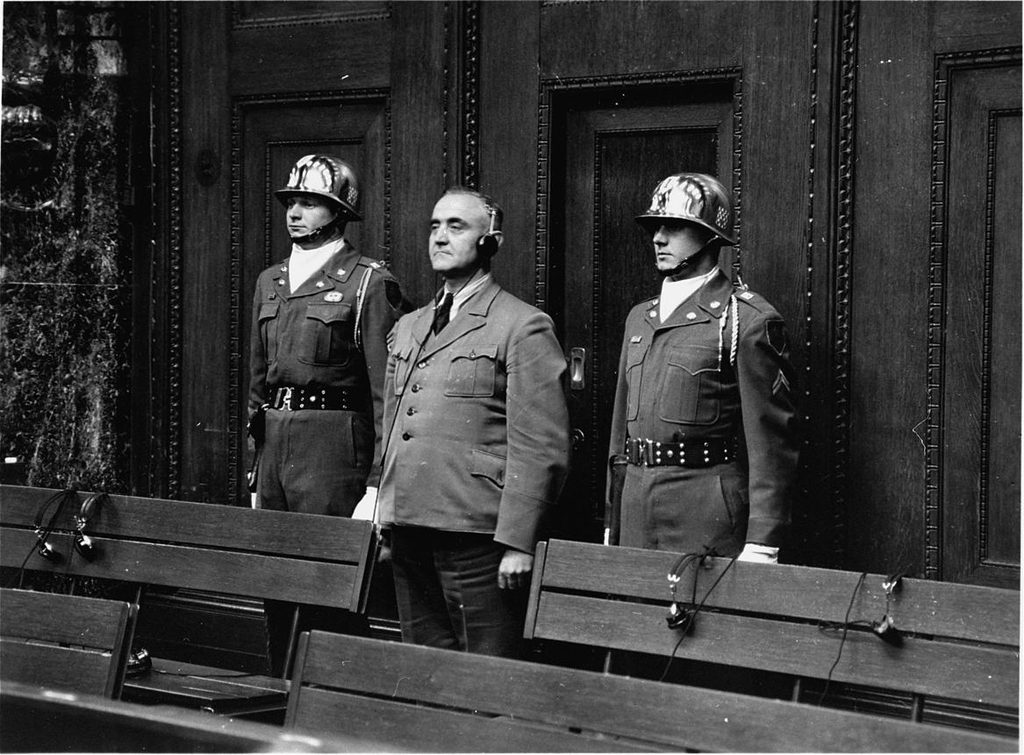
Prison interrupted that career but did not end the relationships that sustained it. His most useful friend was Gottlob Berger, who rose to head the SS Main Office and became a major organizer of SS recruitment. Berger blamed the conviction on a quarrel with another Nazi official. Even after the war, when he defended himself at Nuremberg, he described Dirlewanger as “hardly a good boy” but “a good soldier,” whose great failing was not knowing when to stop drinking.
Berger helped him get to Spain, where he fought on Franco’s side with the Condor Legion, and supported his efforts to overturn the conviction when he returned. Berger later recalled enlisting the Ministry of Justice, Hitler’s chancellery, and Himmler to reopen the proceedings. He insisted that no one put pressure on the court. The court annulled the conviction in 1940, and Dirlewanger became available for another assignment.
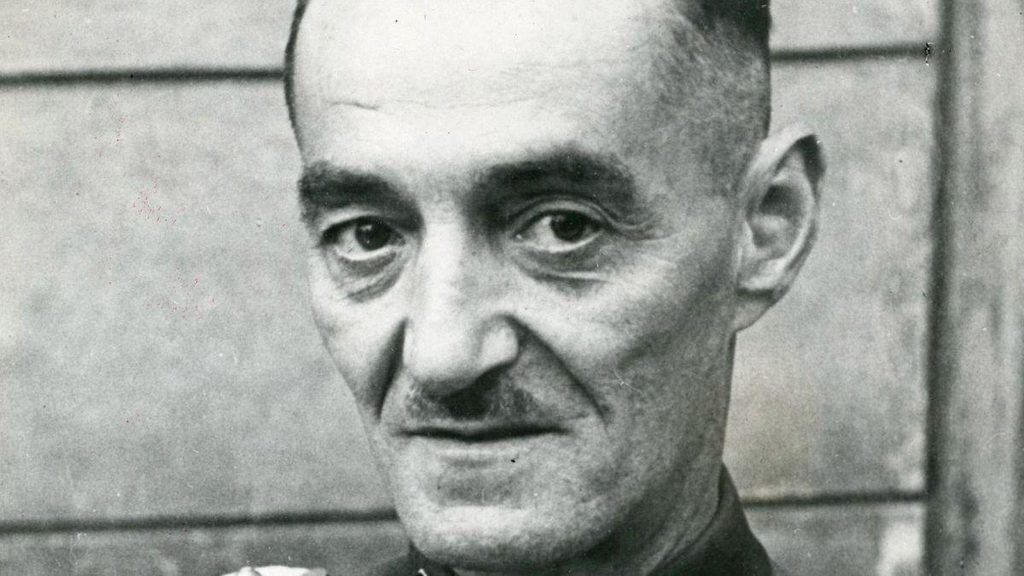
That year, the SS began assembling a special unit of convicted poachers. Men imprisoned for illegal hunting could clear their records through military service. Their experience with firearms and moving through woods was considered useful. Berger recommended Dirlewanger to command them.
The formation’s membership changed as it grew, eventually including convicted violent criminals, men punished by military courts and concentration-camp prisoners. Some recruits were perpetrators of serious crimes, while others were prisoners of the Nazi regime. The familiar description of an entire unit of murderers and rapists erases those differences. Its commander, however, soon gave his colleagues ample reason for alarm.
In occupied Poland, Dirlewanger supervised Jewish forced labor at Stary Dzików, where prisoners worked on border fortifications. His men later operated around Lublin, and complaints about robbery and mistreatment accumulated. An SS judge named Konrad Morgen noticed that convictions involving the same military postal number kept appearing. Early in 1942, he went to Lublin to investigate.
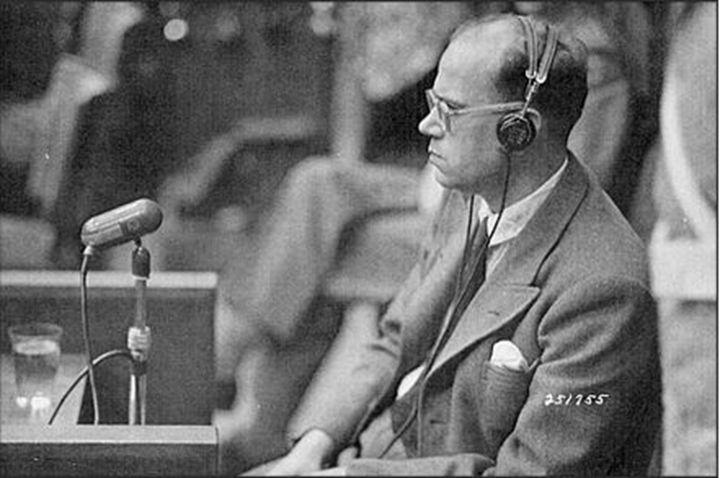
Morgen later testified at Nuremberg that he encountered accusations of extortion, arbitrary arrests, and shootings. Jews were arrested on accusations of ritual slaughter and told to pay as much as 15,000 złoty for release. Those who could not produce the money were shot. He also heard allegations that Dirlewanger killed Jewish women with injections of strychnine, although he emphasized that these remained suspicions requiring further investigation. After two days, he returned to Kraków to request Dirlewanger’s and his staff’s arrest.
The senior SS and police commander, Friedrich-W, according to Morgen, Kr. They demanded its removal from occupied Poland within a week, threatening to “lock them all up” himself.
Within roughly a fortnight, the men were gone. Morgen expected the formation to be dissolved and its commander punished. Instead, the SS transferred it east to Mogilev, in occupied Belarus.
Morgen’s frustration extended beyond this case. In March 1942, he requested a transfer to a place with a “healthier atmosphere,” warning that the volume of corruption and serious crime in occupied Poland could eventually damage a judge’s sense of justice. He pursued offenses within an organization whose leaders were ordering mass murder. Its courts could punish theft, corruption and unauthorized killings without challenging the policies that made the larger slaughter possible. Himmler himself stood at the top of the SS judicial system.
Berger’s correspondence made clear why Dirlewanger remained useful. Writing to Himmler in June 1942, he argued that a “savage country” could not be governed in a “decent manner.” He defended the unit’s policy of shooting too many Poles rather than too few and requested permission to recruit more poachers.
In Belarus, Dirlewanger’s men joined operations described as anti-partisan warfare. Soviet partisans attacked the German occupation, but the reprisals reached far beyond armed fighters. Villagers could be treated as enemies because they lived in an area where partisans operated. Dirlewanger’s men became notorious for locking civilians inside barns and setting them alight.
Other victims were made to clear minefields by walking across them. A German report on Operation Cottbus in 1943 recorded that an estimated two to three thousand local inhabitants died while clearing mines. The figures covered the wider operation, involving several formations, rather than Dirlewanger’s unit alone.
Wilhelm Kube, the German general commissioner in Belarus, examined an interim Cottbus report listing 4,500 enemy dead and another 5,000 people killed as suspected members of partisan bands. The captured weapons included just 492 rifles.
Kube pointed out what the figures meant. Many of the supposed enemy dead must have been peasants, while the other category included numerous women and children. He singled out Dirlewanger’s battalion for its reputation for destroying human lives. He sent his report to the Reich minister responsible for the occupied eastern territories.
By May 1944, another report, this time involving a whipping in Minsk, threatened to draw Dirlewanger into an investigation. Berger wrote to Himmler’s staff suggesting how the SS chief should answer. The proposed reply could acknowledge displeasure about the incident, then explain why an inquiry was impossible for the moment.
“I need him most badly for the safeguarding of that area,” Berger suggested Himmler should say.
Within months, the regiment was sent to Warsaw. On August 1, 1944, the Polish underground rose against the German occupation. Himmler ordered the city destroyed and its inhabitants killed. A battalion of Dirlewanger’s regiment arrived among the reinforcements assembled under police commander Heinz Reinefarth. On August 5, German forces pushed through the western district of Wola while carrying out mass executions.
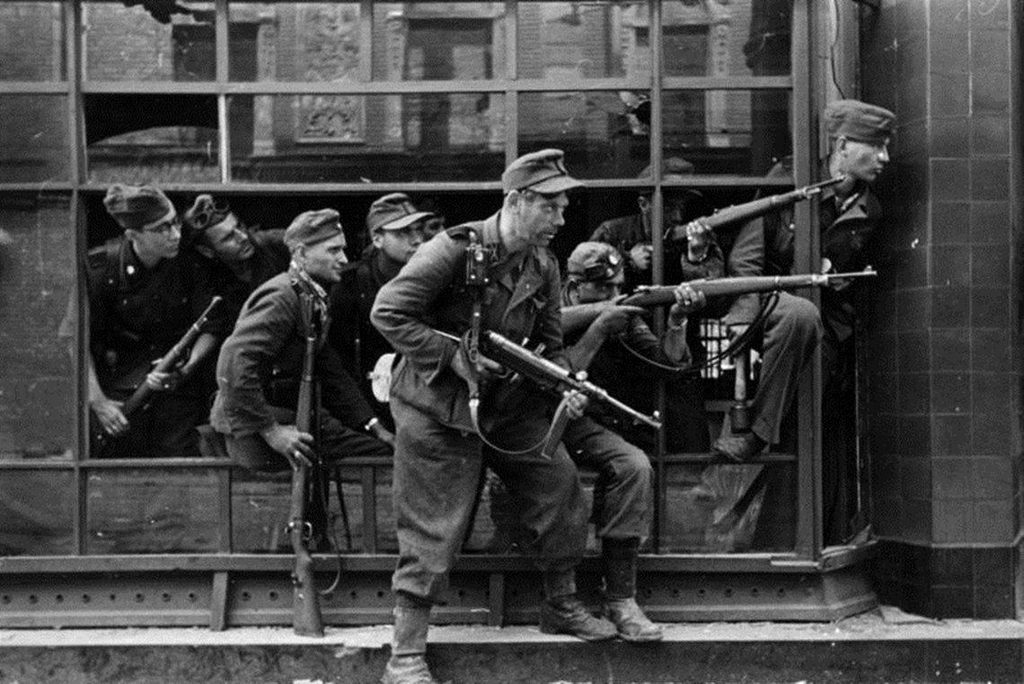
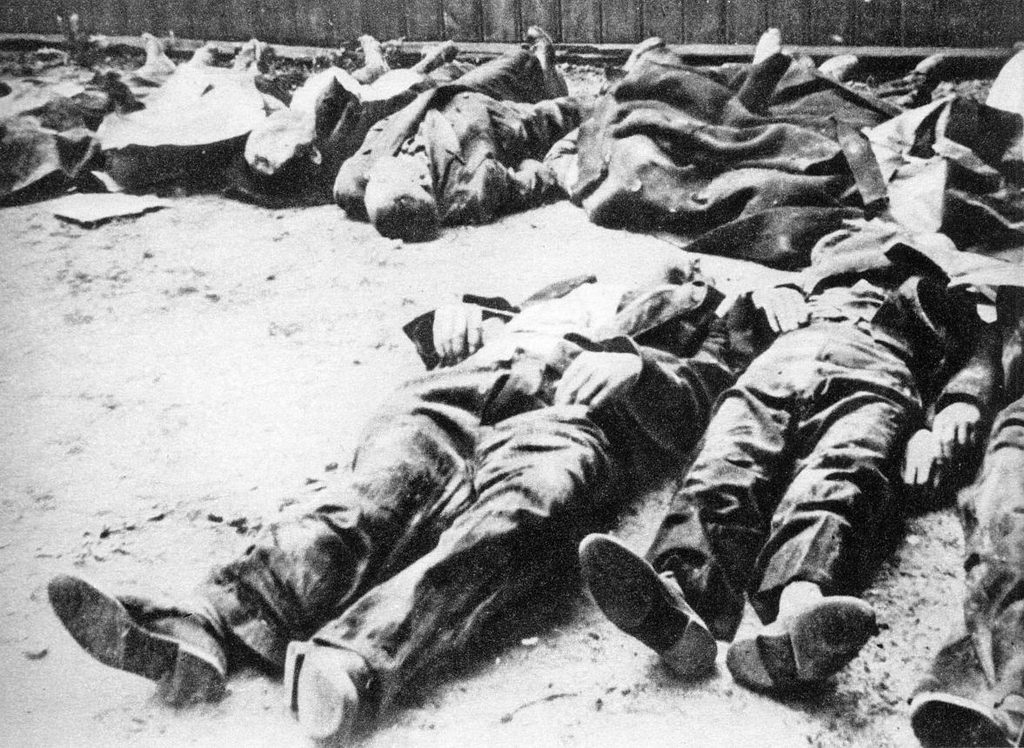
Residents were shot in courtyards, homes, and factory grounds. Buildings were burned,d and people escaping them were machine-gunned. The massacre killed tens of thousands. Dirlewanger’s formation participated alongside other SS, police, and army units. Much of the killing was carried out by forces outside his command.
Among the civilians caught in the district’s executions was Wanda Lurie. On August 5, armed men ordered the residents of her building out. She was the last to leave, bringing her children Wiesław, Ludmiła and Lech. She was in the last month of pregnancy. At the Ursus factory, where the group was taken, she saw piles of bodies in the yard. In her later testimony, she described moving her children from one group of prisoners to another to postpone their turn.
She offered an escort gold and money to save them. Her valuables were taken. Then an officer shot Wiesław, and another man killed the two younger children whose hands she was holding. A shot struck Lurie in the neck. She survived beneath bodies for three days before getting out of the factory grounds. After further captivity and hospitalization, she gave birth to a son.
Dirlewanger’s regiment reached Warsaw before its commander. Historian Hubert Kuberski’s reconstruction of the opening days places him away obtaining reinforcements when the massacre began. He later joined his men and set up quarters at St. Stanislaus Hospital on Wolska Street.
The hospital administrator, Włodzimierz Włodarski, recorded what happened there. On August 8, men from Dirlewanger’s formation brought two captured insurgents, about eighteen years old, into the grounds. They tore the prisoners’ uniforms and made them hold a flag bearing Poland’s white eagle for a photograph. Then they hanged them from a tree between the kitchen and a patient ward and photographed the bodies. The dead were taken down hours later after the hospital board intervened.
Staff also distributed coffee, bread and medicine to civilians passing along the street. German propagandists filmed the aid post. Dirlewanger then ordered it closed and forbade admitting more wounded or sick people.
Loot accumulated at the hospital. Włodarski recalled soldiers depositing a heap of silver outside Dirlewanger’s quarters, which he estimated weighed a hundred kilograms. The commander inspected it and ordered it taken into his room. An orderly told a hospital employee that sharing out the spoils was routine and that he alone had supplied Dirlewanger with more than thirty rings.
For his role in suppressing the uprising, Dirlewanger received the Knight’s Cross of the Iron Cross on September 30. On October 16, Hans Frank, the governor-general of occupied Poland, entertained him at Wawel Castle in Kraków and thanked him for the operations in Warsaw. Two years after Krüger threatened to lock him up, he was an honored guest at the seat of the occupation government.
His command later fought in Slovakia and Hungary. In February 1945, it became the 36th Waffen Grenadier Division of the SS, although Dirlewanger left after another combat wound. As Germany collapsed, he made his way into the southwest of the country.
French authorities detained him in Altshausen. A fellow prisoner, Anton Füssinger, later recalled that Dirlewanger initially introduced himself without mentioning his rank. When questioned, he admitted he had served in the Waffen-SS. He denied being a concentration-camp commander, explaining that he had only temporarily guarded a camp with his battalion.
Füssinger’s account of the imprisonment, recorded in 1960, described Dirlewanger being taken into a corridor and repeatedly beaten. After three such removals during one night, he could no longer stand or speak. The often-repeated story that Polish survivors recognized their former tormentor and took revenge goes beyond what can be securely established. The guards’ identities and the precise circumstances remain uncertain.
Dirlewanger never faced a postwar trial. His death was registered on June 7, 1945. The entry in the local register gave the cause as “Died because of abuse by the guards.”
For more extraordinary stories from history, read about the $5 million kidnapping plot that left 26 schoolchildren buried alive in California, or how eating the dead spread a fatal brain disease in Papua New Guinea.