
Lee Heist and his daughter, Morgan, drove to meet a detective on the evening of April 26, 2013, expecting to hear that someone had found Brenda’s body. John Schofield of the Lititz Borough Police Department had spent eleven years investigating her disappearance. He wanted to speak to them in person.
They met at a restaurant. Brenda was alive, Schofield told them. She was in Florida.
Lee had come to believe that his former wife might have been carjacked and killed. She had left voluntarily. Morgan, who was eight when her mother disappeared, was nineteen now.
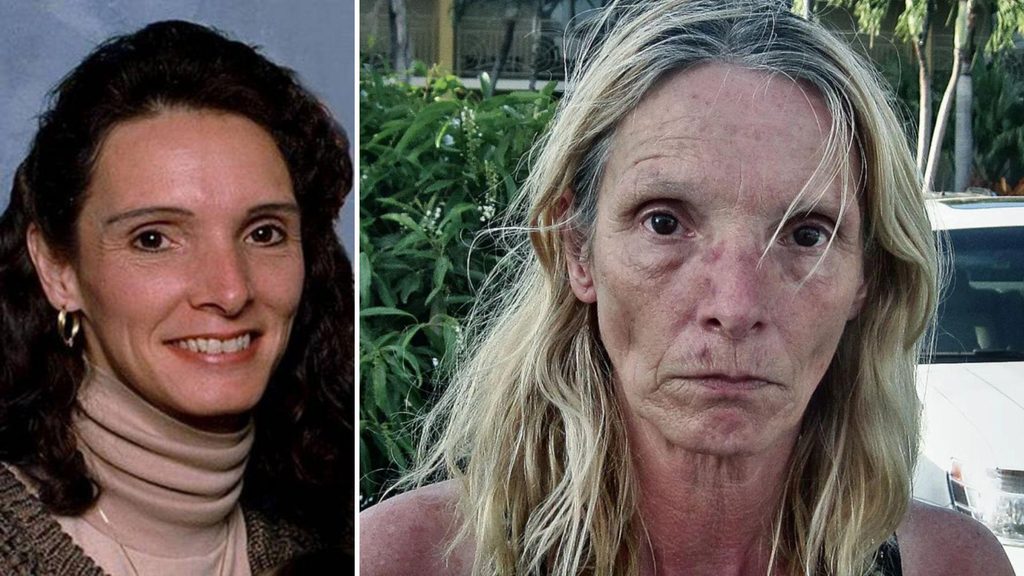
Morgan said she cried when she saw a new photograph of her mother. Brenda looked so different from the woman she remembered, someone who had been pretty and careful about her appearance.
On February 8, 2002, Brenda took Morgan and her twelve-year-old brother, also named Lee, to school in Lititz, Pennsylvania. She worked as a bookkeeper at a car dealership and had taken time off to find somewhere to live. She and her husband were separating. They planned to live near each other after the divorce, Morgan later said, and the children expected to keep seeing both parents.

Brenda returned home that morning. Her husband said they spoke by telephone shortly before lunch, while he was at work in Valley Forge. Nothing seemed wrong. That afternoon, the children came home to an empty house and called their father. Brenda did not return.
Several days later, her white Mercury Mystique turned up in York, parked near a bus station. It was undamaged, with no obvious sign of a struggle. Travel booking checks found no record of a journey under her name.
At home, pork chops were thawing in the refrigerator, and laundry lay sorted into piles. Brenda’s eyebrow pencil was there, too. She couldn’t grow eyebrows, so she carefully drew them on. Her family and the police thought it unlikely that she would willingly go away without it.
People Schofield interviewed described a devoted mother. Neighbors remembered her playing outside with her children. No one reported anything missing from the house, and there was no clear evidence of violence.
Police initially considered the possibility that Brenda had gone away on her own. As the search continued, suspicion settled on Lee. He gave investigators access to the house and his computer. He wanted them to find her.
Police eventually cleared him. In the neighborhood, some parents would still not let their children play with his.
Lee had to leave his job to look after the children. With Brenda’s earnings gone too, the family’s finances collapsed. They lost their house and car, endured a long stretch of unemployment and moved into assisted housing.
“Meaning we lost everything,” Lee said at a news conference after Brenda was found.
He later remarried. In 2009, a Lancaster County court declared Brenda legally dead, and a $100,000 life-insurance policy paid out.
Investigators monitored Brenda’s Social Security number for new accounts or benefit applications and found nothing. In 2008, about thirty investigators from local departments, state police, the FBI, and other agencies reviewed the case. Further interviews brought no breakthrough.
The declaration of death did not close Schofield’s case. He kept checking when unidentified bodies were found. Every other person reported missing from Lititz since Brenda disappeared had been located, he said in a 2011 newspaper interview.
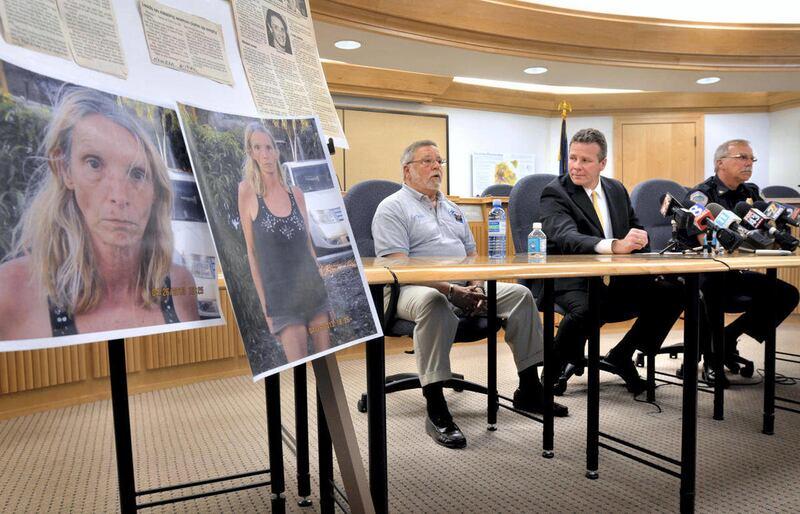
“If you asked me if there’s one thing that bothers me in my career, it’s this case,” he said.
Her photograph remained at police headquarters.
In Texas, Brenda’s mother, Jean Copenhaver, gradually came to accept that her daughter was dead. Brenda’s father died nine months after the disappearance. Copenhaver had also lost two sons.
“I believe she’s in heaven with her brothers and her dad,” she told the Lancaster New Era.
She stayed in touch with her grandchildren. A photograph of Morgan made her cry; the girl looked so much like Brenda.
The lead that finally reached Schofield came from the Florida Keys. On April 26, 2013, Brenda approached authorities in Key Largo and said she thought she might be wanted in another county. A check of her name identified her as missing and possibly dead.

Officers contacted Lititz. Photographs and identifying details confirmed her identity, and Schofield traveled to Florida to interview her.
Brenda began with the separation. She said an application for housing assistance had been rejected, leaving her distraught about how she would manage with the children. She was sitting in a park, crying, when she encountered three homeless people heading to Florida. They invited her along.
She said she went with them on impulse. After driving the strangers to York, she left her car and joined another group traveling south. The journey took about a month.
In Florida, she told Schofield, she slept under bridges, scavenged discarded food from restaurants, and panhandled. For about seven years, she lived with a man in a camper and worked odd jobs. When the relationship ended, she became homeless again.
She told him she had never had access to a computer to check whether anyone was looking for her, though she assumed they were. She never contacted her family.
During a later jailhouse interview with television host Phil McGraw, Brenda said she convinced herself the children were “better off without me.” She knew nothing about being homeless before she left, she said, and struggled to understand her own decision.
Among the people Brenda lived with in Florida was Sondra Forrester, a Pensacola mother who knew her as Lovey Smith. A neighbor recommended Brenda as a housekeeper in 2010. About six months after she began cleaning, she moved into Forrester’s home and stayed for ten or eleven months.
Forrester said she felt sorry for Brenda, who described a difficult relationship with a boyfriend, and offered her a place to stay. Brenda told her she was a widow. Her husband, a man named Lee, had died. She also said she had never had children and did not want any.
Forrester remembered her using a computer and a cellphone, maintaining a Facebook page and visiting an online dating site. Brenda had friends.
Photographs showed her at the beach and in the water. When an Inside Edition reporter showed them to her son, he saw glimpses of a life he knew nothing about, moments from the years when he and his sister wondered whether their mother had been killed.
“Why? I never would have expected this,” he said.
Forrester also learned that Brenda had told her young son her real surname. The boy knew “Miss Lovey” was a Heist before his mother did. He was about the age Brenda’s own son had been when she left Pennsylvania.
“I don’t think we know the full story yet,” Schofield told CNN.
Police in Florida encountered Brenda under other names before she revealed her identity. She faced charges involving forgery and giving a false name to law enforcement. A week after the Key Largo encounter, she surrendered at the Alachua County jail on an outstanding probation-violation warrant and was booked as Kelsie Lyanne Smith.
McGraw interviewed her at the Santa Rosa County jail for a program broadcast on May 20. She wanted her children’s forgiveness and said she would struggle to forgive herself. The program also reunited her with her mother.
Brenda told McGraw she attempted suicide three days before approaching police.
“I don’t know what happened, I just don’t know,” she said.
In June 2013, she pleaded no contest to violating probation by failing to report to authorities and received a year in jail. The probation stemmed from using another person’s identification during a traffic stop. The sentence was for that violation, not for disappearing from Pennsylvania.
Copenhaver spoke with her daughter by telephone after she resurfaced. Brenda feared the family would not want to talk to her because she had left, her mother said. Copenhaver assured her that she was loved and wanted.
Morgan could not offer the same welcome. For years she had wanted her mother home, imagining that something terrible was keeping her away.
“I ached every birthday, every Christmas,” she told the Associated Press.
Her mother had chosen to leave. Morgan wished she had never cried over her.
Brenda’s return also raised the possibility that Lee’s insurer would seek repayment of the death benefit. Lawyers and insurance specialists disagreed publicly about whether he would have to return it.
“Before that she was a fantastic mother, which is why it’s so shocking,” her son told CBS News.
Morgan remembered that mother, too. When Brenda first disappeared, she still expected her to come home. That year, she made her a Mother’s Day card.
By the time Brenda resurfaced, Morgan was in college. Her brother had graduated and hoped to work in law enforcement. Their father’s wife, Cindy, sat beside him and Morgan during a television interview about the discovery.
Lee said the children could decide for themselves whether to see their mother, and he would help arrange a meeting. He did not think seeing Brenda himself would do either of them any good.
Morgan did not want to see her then.
“I hope to eventually forgive her one day for myself, not for her.”
Other disappearances have raised similarly troubling questions. Leigh Occhi, who vanished at thirteen in 1992, was declared legally dead decades later, while the mysterious case of Peter Bergmann involved a man who used a false identity that investigators were never able to unravel.