

“She was talking about shopping for her wedding around 11 pm,” Ketan Nagpal, Priyanka Bhatia’s cousin, said in remarks reported by Press Trust of India. He had spoken with her on the night of 30 June 2018. Priyanka was engaged and expected to marry later that year.
Around the same time, a CCTV camera outside the family’s Burari home was recording the last ordinary movements of the evening. Twenty rotis arrived at 10:39 pm. Bhuvnesh Chundawat later walked the dog, returned home, and checked the locks on the shops downstairs.
Nothing in those final errands suggested that eleven people inside the house would be dead by morning.
But another plan was already written down inside the Sant Nagar home. It gave the family instructions for what to do after midnight and carried one crucial assurance. The ritual was supposed to end with them alive.
The Discovery of 11 Bodies in the Burari Home
Every morning, the Chundawat family’s grocery shop in Burari opened around 6 am. On Sunday, 1 July 2018, the shutters were still down at 7, unusual enough that neighbors gathered outside when the morning milk van arrived.
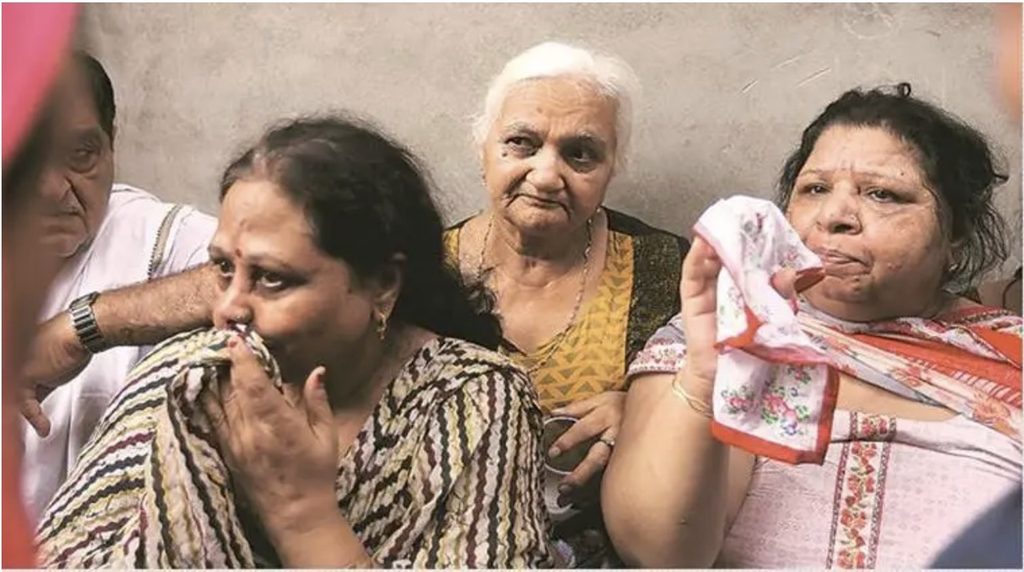
Gurcharan Singh, whose son lived nearby, said the van driver kept honking outside the closed shop. Gurcharan opened the main gate and went upstairs to check on the family. “What I saw there left me shocked,” Gurcharan said, as reported by PTI.
CCTV from a house opposite later fixed the moment more precisely. Gurcharan entered the Chundawat home at 7:14 am and rushed back outside within about 30 seconds after discovering the eleven family members inside.
Ten people were found suspended from an iron ceiling mesh upstairs. Their faces were covered, several had their mouths taped, and restraints were present. Investigators found Narayani Devi, the family matriarch, separately in another room.
The scene gave investigators no immediate, simple answer. Police opened a murder case and transferred the investigation to the Crime Branch, while officers examined whether foul play or another sequence of events could explain eleven deaths.
For neighbors, the discovery was difficult to reconcile with the family they knew. The shop had been part of the lane’s routine for years, sometimes opening as early as 5:30 am. Now everyone inside the home was dead.
Who Were the Chundawat Family?

Three generations shared the Sant Nagar house. At the center was 77-year-old Narayani Devi, who lived with her sons Bhuvnesh and Lalit, her daughter Pratibha, their spouses and five grandchildren.
Bhuvnesh, 50, ran the family grocery shop with his wife Savita, 48. Their children were Nidhi (Neetu), 25, Meneka, known as Monu, 23, and 15-year-old Dhirender, known as Dhruv.
Lalit, 45, ran a plywood business. His wife Hemlata, known as Tina, was 42. Their only son was 15-year-old Dushyant, who was widely reported at the time as Shivam.
Narayani’s widowed daughter Pratibha Bhatia, 57, also lived there with her only child, Priyanka Bhatia, 33. Priyanka worked in Noida and had become engaged just two weeks before the deaths.
According to The Times of India, teachers remembered Dhruv and Dushyant as bright students who loved music. Monu had trained in Kathak, while footage from Priyanka’s engagement showed the younger family members dancing together on 17 June.
Priyanka was due to marry later that year. Her engagement had brought relatives together, and the house was being renovated. She was still discussing wedding shopping on the night before the family was found dead.
Relatives who stayed at the house for Priyanka’s engagement told police they had noticed nothing unusual, according to The Indian Express. Whatever the family had been doing privately, they had managed to keep it from the people closest to them.
Lalit Chundawat and Claims of His Father’s Spirit

Years before the Burari deaths, Lalit Singh Chundawat lost his ability to speak after an accident at a plywood shop. His niece Vishakha said a fire trapped him inside, and falling plywood left him injured.
Lalit spent about a month in hospital. His niece Vishakha told PTI that doctors prescribed exercises that eventually helped his speech return, rejecting later claims that the recovery had been supernatural. “One gets cured after a miracle only in films and not in real life,” she said.
According to a 2026 Delhi District Court judgment concerning the Chundawat family estate, Bhopal Singh died on 17 October 2006. In the years that followed, Lalit’s claims about communicating with his father became a central focus of the police investigation.
Investigators said Lalit began claiming that Bhopal was communicating with him. A senior police official told NDTV that Lalit had “visitations from his father’s spirit,” during which he reportedly acted and spoke like Bhopal while dictating instructions.
Police also found that Lalit and his wife Tina exercised considerable control within the household. Entries recovered after the deaths would show how closely family problems, decisions and even mistakes became tied to the instructions Lalit attributed to his father.
In 2007, the messages began appearing in writing. Inside the Chundawat home, the instructions attributed to Bhopal were becoming something the family could read, preserve and return to.
The Diaries Found Inside the Burari House
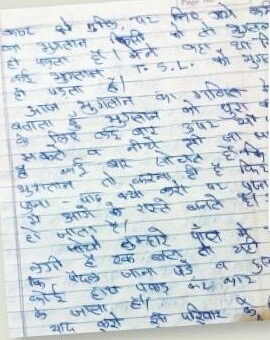
A diary entry dated 19 June 2015 read, “Maine jo kaha tha aaj woh hua hai, aage bhi aise hi karte rehna hai. Vishwaas bana ke rakhna hai.” NDTV translated the entry as: “What I had predicted, it has come true today. We have to keep believing.”
Police believed the entry referred partly to the family’s improving finances. The Chundawats had expanded their businesses, and investigators said successful outcomes were increasingly connected inside the household to following the instructions recorded in the diaries.
Other pages reached into smaller parts of family life. They criticized Dhruv’s phone use, mentioned quarrels within the household, discussed construction delays, and linked difficulties finding Priyanka a husband to instructions someone had failed to follow.
A July 2015 entry moved further into spiritual territory. One entry spoke of four deceased relatives whose souls were supposedly still “wandering” and waiting for salvation, alongside the spirit the family believed belonged to Bhopal.
The diaries also protected themselves from outside scrutiny. They said Bhopal’s supposed visits would not occur when outsiders were present. Relatives who stayed around Priyanka’s engagement later said they had never seen the registers or witnessed Lalit behaving as though possessed.
A senior police official told The New Indian Express that a diary entry dated 11 November 2017 warned, “Dhanteras aakar chali gayi… Agli Diwali na mana sako. Chetavni ko nazar andaaz karne ke bajai gaur kiya karo.” The paper translated it as: “There is a possibility that you might not see the next Diwali. Don’t ignore the warning.”
For years, the diaries had attached consequences to obedience. By June 2018, the instructions were about to become far more specific.
The Seven-Day Ritual Before the Deaths
According to Hindustan Times, police said the Chundawat family began a seven-day ritual on 24 June 2018, after relatives who had attended Priyanka’s engagement had left. Investigators believed the first six nights were rehearsals for the final ritual.
According to investigators, the family practiced binding their limbs, covering their eyes and placing nooses around their necks. The diaries called the exercise badh tapasya, a formation intended to resemble the hanging roots of a banyan tree.
One entry read, “Ishwar is baat se khush hain ki 11 bande ek bhavna vah ek line mein khade hain. Ye badh tapasya badi badi samasyaon ka hal hai.”
Its translation was: “God is pleased that 11 people have similar thoughts and are standing as one. The ‘badh tapasya’ is a solution to all major problems.”
Police said the family did not expect those rehearsals to end in death. The diaries indicated that the seventh night was supposed to end with everyone surviving, with the ritual bringing relief from problems the writings had repeatedly described.
The final entry was dated 30 June and titled “Bhagwaan ka raasta,” or “Road to God.” It assigned positions around the ceiling jaal, specified five stools, and placed Pratibha separately near the mandir.
Then the instructions became practical: food at 10 pm, eyes and ears covered, and the kriya at 1 am. That evening, CCTV began recording the family collecting the very objects named in those instructions.
CCTV Footage From the Night of June 30
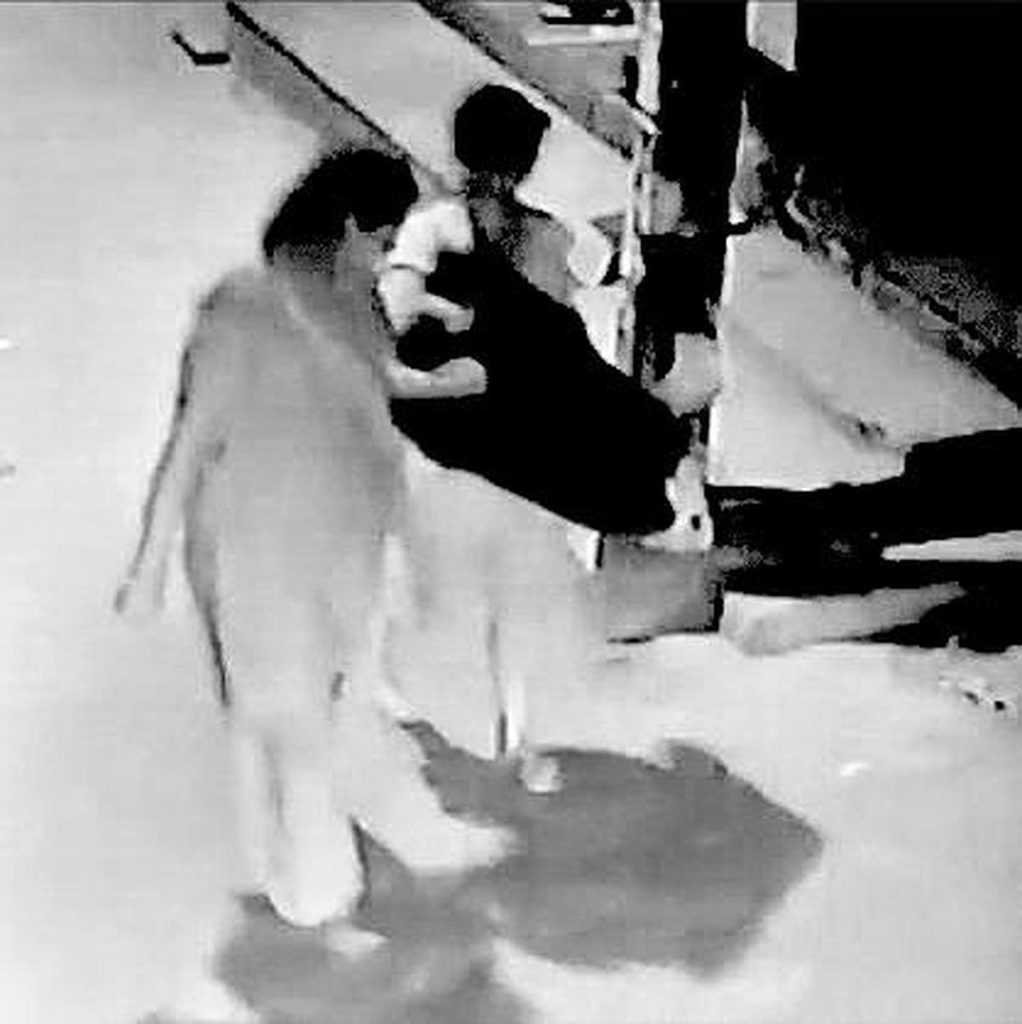
At about 10 pm on 30 June, a CCTV camera across the lane caught Savita and Neetu carrying five stools into the Chundawat home, the same number specified in the final diary instructions.
Fifteen minutes later, Dhruv and Dushyant returned with a bundle of cables from the family’s plywood shop. Police would later say both the stools and cables were used in the ritual inside the house.
At 10:39 pm, a restaurant worker arrived with twenty rotis. Bhuvnesh paid the bill. The final diary entry instructed the family to order food around 10 pm before beginning the kriya around 1 am.
At 10:57 pm, Bhuvnesh took the family dog outside. He returned at 11:04, checked the locks on the family’s shops a minute later, and then went back inside the house.
Around 11:30 pm, the last known phone activity came from the home. Seven phones recovered afterward were on silent mode, and investigators said they found no suspicious calls pointing to someone outside the family.
According to a register recovered from the house and later cited by investigators, the family had been assured: “धरती हिलेगी… लेकिन तुम घबराना मत… मैं तुम्हें बचा लूंगा।” Aaj Tak translated the instructions as saying the family should not be afraid because they would be saved and would not die.
What Happened Inside the House
No camera was inside the house, so investigators could not reconstruct every movement after the family went upstairs. By the time police entered the next morning, ten people were suspended around the ceiling grille, and Narayani was in another room.
According to the final autopsy report, all 11 family members died from hanging. Hindustan Times reported that this included Narayani Devi, whose body had been found on the floor in an adjacent room, initially raising questions about whether she had died differently.
The bindings were not identical. Police said three family members had been found with their hands tied loosely, leaving investigators to consider whether they had tied the others or had tried to free themselves.
Bhavnesh drew particular attention because one of his hands was near his throat and his restraints were loose. A police officer told Hindustan Times that forensic experts believed he had “unsuccessfully tried to free himself from the noose.”
That detail stood out because the diary suggested the family expected to survive the ritual. Investigators could not determine whether Bhavnesh realized what was happening or whether anyone else tried to free themselves.
The post-mortems established that all 11 died by hanging, but they could not determine whether the family understood the final ritual would be fatal.
Why Investigators Believed the Family Expected to Survive
In September 2018, NDTV reported that the CBI’s Central Forensic Science Laboratory had concluded the deaths were accidental rather than suicidal. Its psychological autopsy said the family died while carrying out a ritual and did not intend to kill themselves.
It was a psychological autopsy, reconstructed from the diaries, police records and interviews with relatives and friends. No clinician had examined the eleven family members before their deaths.
One explanation later discussed was shared psychosis, sometimes called folie à famille when the belief spreads within a family. Psychiatrist Dami Ajayi, writing about the case after House of Secrets, called it only a “potential retrospective diagnosis.” None of the eleven had been clinically assessed for it while alive.
Other details pointed toward a life expected to continue. Priyanka had office work pending for Monday. Milk had been kept for the next day, soaked chana dal was waiting in the kitchen, and Lalit had recharged family members’ phones shortly before the deaths.
Toxicology found no poison, while CCTV showed no outsider entering during the critical period. Handwriting analysis later connected most diary entries to Lalit and Priyanka.
Yet the 2021 police closure report described the deaths as appearing to result from a family suicide pact, even while acknowledging the psychological autopsy’s finding that they may have expected to return to normal life afterward.
The evidence could show what they prepared, ate, and wrote.
NDTV reported that another diary instruction told the family to keep water in a cup and wait for it to change color. After the ritual, they were expected to come down and untie one another.
The Mystery of the 11 Pipes

On one exterior wall of the Chundawat house were 11 plastic pipes. 7 bent downward, and 4 ran straight, matching the seven women and four men who had died inside. The front gate also contained 11 iron rods.
The numbers quickly attracted attention. Neighbors wondered whether the pipes represented the dead or had been installed for some part of the family’s ritual. Police checked the diaries for anything connecting the number eleven to the fittings.
Contractor Kunwar Pal told Hindustan Times that Lalit had the pipes installed for ventilation and lighting. He said workers used leftover pieces, which explained why some pipes were bent while others were straight.
Welder Anil Sharma told Hindustan Times that he chose the number of iron rods based on the available space and their thickness. He said the total of 11 was “a mere coincidence.”
What Happened to the Chundawat Family Home and Survivors
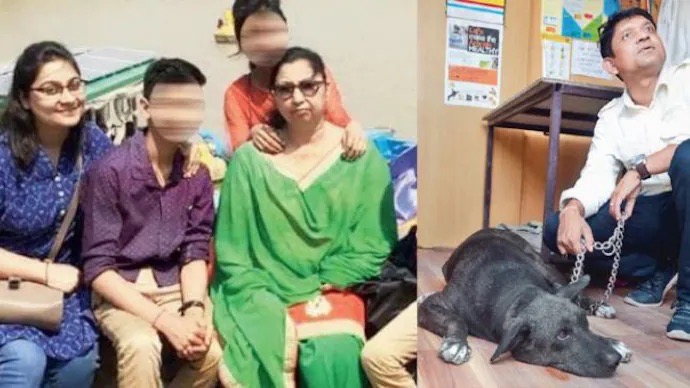
A year after the deaths, Dinesh Chundawat said the family had barely been able to grieve. Media attention, rumors about tantriks and constant speculation had followed them from the first days after the bodies were found.
Dinesh Chundawat told The Indian Express that the family had “not had the time to mourn our loss.” He also rejected the conclusion that his relatives knowingly took part in a ritual intended to end their lives and said he remained dissatisfied with the investigation.
His daughter Vishakha had kept her cousins’ phone numbers saved. “We used to chat almost on a daily basis, and sometimes, I feel an urge to call them, but there is no one now,” she said.
Tommy, the family dog found chained on the terrace, was rescued with a high fever and taken to a shelter in Noida. India Today reported that he initially recovered but died of cardiac arrest on 22 July 2018.
The Sant Nagar house did not remain empty forever. New tenants moved in, businesses returned, and a diagnostic lab eventually occupied part of the building. A 2025 revisit found the neighborhood largely back to its usual rhythm.
The Times of India reported that Delhi Police closed the criminal investigation in 2021 after finding no evidence of foul play. Later court proceedings dealt with Narayani Devi’s estate and did not reopen the investigation into the deaths.
For more unusual cases involving unexplained behavior and unresolved questions, explore our stories on the Tromp family disappearance and the disappearance of Jennifer Kesse.