

Infants under five often have little control over their lives. A child’s fondest memories often begin in the company of their parents, who are naturally supposed to create a safe place for them to inhabit.
Imagine, if you will, becoming a three- or one-year-old child, whose world was suddenly reduced to the four walls of a small apartment in Osaka.
With limited understanding of the world around, darkness closing in, there is little you can do but be terrified and cower, wait for familiar footsteps, and shriek for your mother.
Childhood Behind a Locked Door
Sadly, this was the reality for two children in Japan: Sakurako and Kaede.
Sakurako was three years old, and her younger brother, Kaede, was just one, when, on June 9, 2010, Sanae Shimamura, their 23-year-old mother, sealed the door of her apartment, leaving them totally alone inside the apartment for over 50 days before their remains were discovered.
No adult, or anyone for that matter, fed them, supervised them, or even attended to their most basic needs.
To make matters worse, there was no food in the apartment, and not even drinking water in the refrigerator.
When the children were finally found, police saw marks on the door of the empty refrigerator that appeared to have been left by their hands. The refrigerator itself was a small model intended for single-person use.
Shimamura’s Childhood
Growing up, Shimamura’s mother, Sanya Shimamura, did not have a smooth childhood.
Raised in Yokkaichi, Mie Prefecture, Shimamura had two siblings, and she was the eldest. She said her mother was often absent, going out and leaving the children home alone.
Apparently, she was often left in dirty clothes, and the house was often covered with their dog’s feces. When Shimamura was in first grade, her parents divorced, and her father, Daisuke, took custody of Shimamura and her siblings.
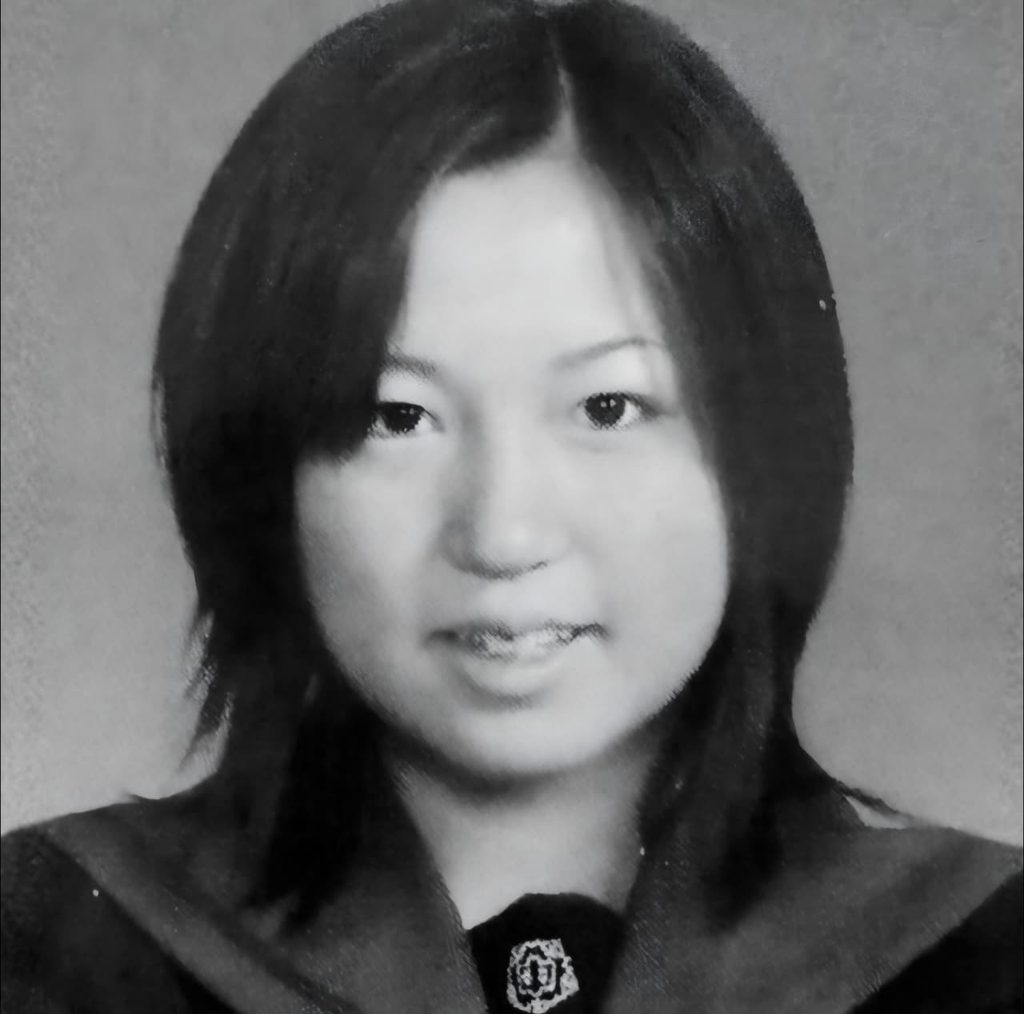
As Shimamura put it, Daisuke wasn’t the caring sort either.
As could be reconstructed from conversations with her friends, she had had her first sexual encounter at only fourteen, and engaged in compensated dating to earn money to run away from home.
In junior high, Shimamura was raped, and subsequently dropped out of school. However, her father did not seem to know.
– “Did you know that Sanae had been raped?”
“I didn’t know at the time,” Daisuke would ‘casually’ answer while being interviewed.
Upon her father remarrying, Shimamura allegedly had to face discrimination from her stepmother, as mentioned in her court testimony.
For instance, when it came to buying athletic shoes, her half-siblings received Nike shoes, while Shimamura and her biological siblings received shoes from a supermarket bargain bin, showing a clear difference in treatment.
According to her, her father was too busy with his job as a rugby coach to pay attention to these matters, leaving Shimamura with no one to talk to and an unfulfilled childhood.
Marriage and Motherhood
After school, Shimamura worked at a traditional Japanese restaurant, where she eventually met her future husband, Naoki Hane, a university student and frequent customer.
The two began a relationship and married in December 2006, after Shimamura (then 19) became pregnant. In 2007, they welcomed their first child, a daughter named Sakurako.
Shimamura’s married life seemed happy at first.
A Mainichi Shimbun report dated August 1, 2010, quotes her blog as saying, “I suddenly thought how truly happy it is to be able to spend days peacefully with my cute daughter,” about spending ordinary days with Sakurako.
Speaking about Sakurako’s birth, she apparently described the event as “happier than words can express.”
When Sakurako developed a sudden rash and fever, she wrote that nothing hurt her heart more than seeing her child without energy; in April 2008, while pregnant with Kaede, she had written to her unborn child that she only wanted him to be born safely.
Motherhood Misgivings
After the birth of their second child, Kaede, the marriage reportedly began to deteriorate. Shimamura increasingly spent time away from home and became involved in the nightlife around her.
Before long, the relationship broke down completely when her husband and his family learned of her having an affair, following which they sought a divorce. The couple divorced in May 2009, with Shimamura retaining custody of the children.
In “Report on Child Abuse: The Osaka Case of Two Children Being Abandoned and Dying” by Haru Sugiyama, the author notes that in October 2009, after contracting influenza, Shimamura had contacted her former husband and asked him to take care of the children.

He had refused and told her that she could not suddenly expect him to take them. She also sought help from her father, who declined because of work, while her mother had not answered her call.
On 8th December, 2009, Shimamura had called the Nagoya City Hall, crying, and said, “I can’t take care of my child, so please take care of him/her.”
The city hall had given her the phone number for child protective services, but when she called child protective services herself, she was told, “Please come in once,” but no specific date or time was given, and no arrangements had been made, which apparently made her think, “I guess no one will help me after all,” according to Sugiyami.
Shimamura Moves to Osaka
A few days before 18th January, 2010, Shimamura moved from Nagoya to Osaka with her two children.
On the 18th, she had an interview at a sex establishment in Minami, Osaka, where the manager provided her with a daycare center and an apartment as her dormitory, following which she began working at a sex-industry establishment.
Shimamura had left the children at the daycare only on the first day, but was dissatisfied, commenting, “When I left my child at the daycare center, one of the children was crying, but the staff didn’t try to pick him up even though they had free time.”
After this incident, she started leaving her children at home when she went out.
In the months of April and June, 2010, the water usage in room 303 (where she had been staying), was almost zero, indicating that she hardly ever bathed her children or did their laundry. The trash in this room was never thrown away either.
On 9th June, 2010, Shimamura gave her children their last meal: one juice, one rice ball (Onigiri), one steamed bun, and one hand-rolled sushi from a convenience store.

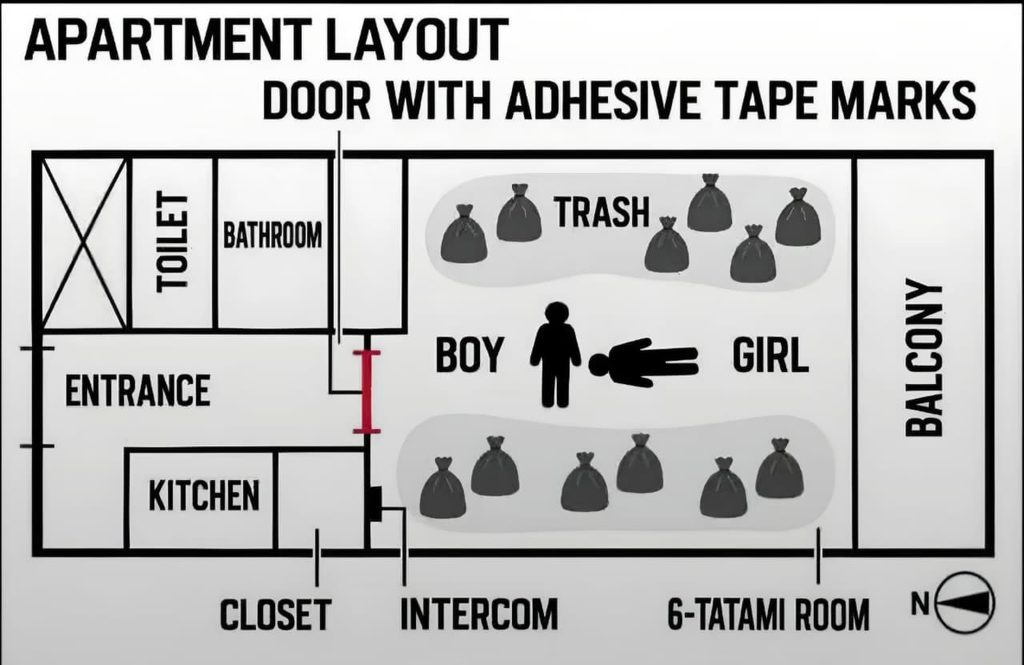
Apparently, she tore open the bag and stuck a straw into the juice carton before leaving. Then, she taped the outside of the living room door, horizontally in two places, top and bottom, and locked it with a padlock.
A Sankei report from August 4, 2010, based on police interviews, says that after leaving the children, Shimamura spent the following month going out with men she had met in Osaka’s Minami entertainment district and stayed mainly in hotels.
It also says that she visited her hometown, Yokkaichi, and invited male friends out to eat. “I wanted to play, have fun. I wanted time to myself,” she’d said.
Neighbors Raise the Alarm
On a previous occasion, on 30th March, 2010, a neighbor contacted the Osaka City Child Consultation Center about the two children.
Staff from the Center tried to visit the room in question on the 31st but were unable to do so. They tried again on 1st and 2nd April but failed again.
On April 5th they’d called the management company but were told that “the household composition is unknown,” and could obtain no information at all.
The same woman contacted authorities again on April 8th and May 18th but could not produce substantial proof beyond the children crying, and thus did not attract much attention.
“When we investigate, sometimes it turns out to be night crying or the child is just fussy. Some people are shocked when they are suspected by their neighbors, so to avoid spreading rumors, we don’t stake out or interview people based on reports of crying alone…” Osaka City Children’s Consultation Center clarified.
“I could hear crying and voices saying ‘Mommy, Mommy’ (through the intercom), but I also heard something that sounded like ‘It hurts!” the neighbor would later lament.
Fifty Days Behind the Locked Door
On 29th July, 2010, the president of Club Rich Elegance, where Shimamura worked, received a call from the apartment management company saying a resident had complained about a strange smell coming from apartment 303.
The president called his manager and had him contact Sanae, who was finally forced to return home. Apparently, she remembered screaming, “Ahhh!” and looking around, but did not remember what she saw inside the room.
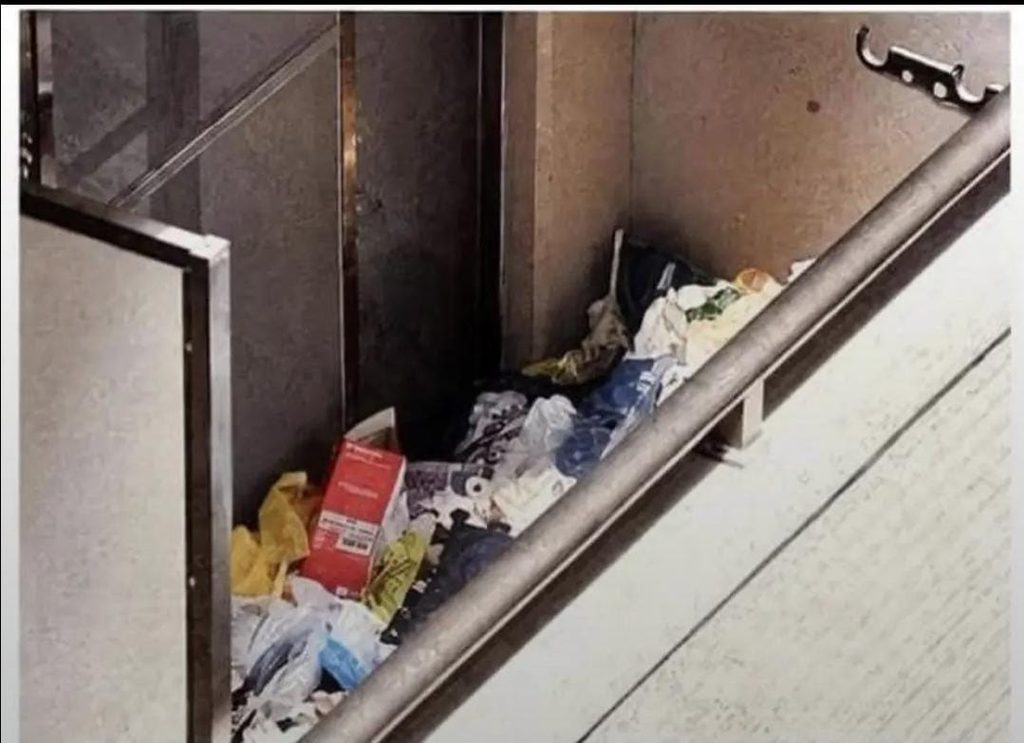
However, the apartment’s security cameras captured her locking the door and leaving the room as if nothing had happened.
A 23-year-old male classmate from junior high school received a personal congratulatory phone call from Shimamura in the early hours of July 30, just hours after she confirmed the child’s death. “Congratulations! How are you? Keep up the good work,” she’d said in her usual tone.
At approximately 1:40 a.m. on July 30, 2010, two rescue workers climbed a ladder to the balcony of a third-floor apartment and shone a flashlight into the pitch-black room. Only the floor was visible in the middle of the room, piled high with garbage. There, two unclothed infants, partially skeletonized, lay deceased, face up, huddled together in a T shape.
The Last Days of Sakurako and Kaede
Handprints of the two children, covered in feces and urine, were scattered on the walls of the room, including the walls they’d crawled near, wanting to go outside, the doors they’d kept knocking on, searching for their mother, and inside the refrigerator they’d opened in search of food.
According to the Osaka Prefectural Police, the children may have been seeking relief from the heat, as the apartment’s air conditioning wasn’t working.
The autopsy report showed that the cause of death was starvation, and that the children were malnourished; their skin was discolored brown, and bones were exposed in places. All of Sakurako’s molars were decayed.
It was further revealed that the three-year-old Sakurako had licked mustard, mayonnaise, somen dipping sauce, and even ice crystals from the freezer, sharing what she found with her younger brother.
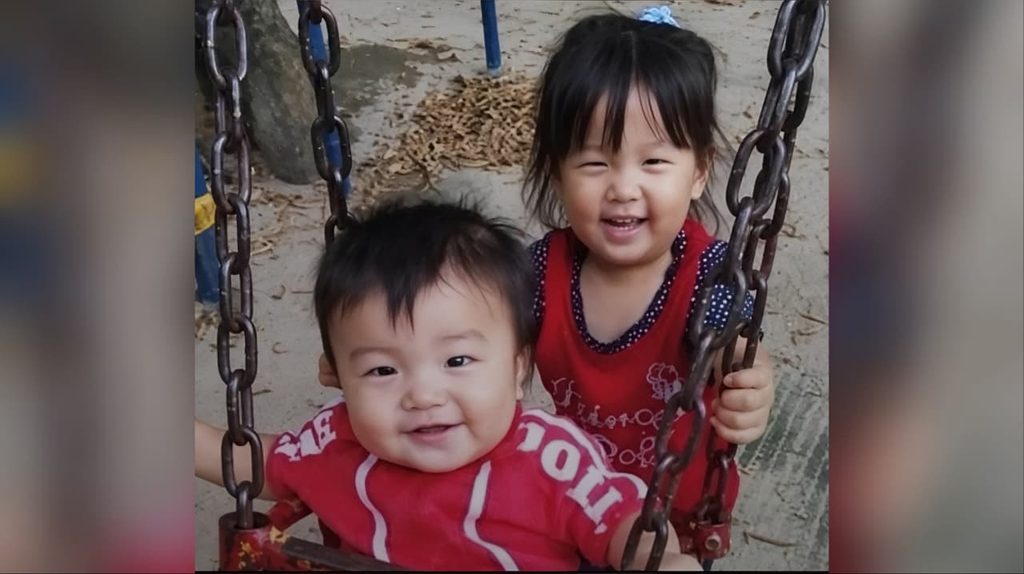
She had also searched through garbage for remnants of food; investigators found signs that cup-noodle containers had been licked clean.
It was believed that the older sister had suffered food poisoning while rummaging through the garbage and died more than 10 hours before her brother.
There was more than four days’ worth of excrement on her body, and there were signs that the brother had eaten or drunk some of it.
“I’ve Done Something Terrible”
Other household items included a bed and a television. The makeshift kitchen lacked any cooking utensils or dishes such as knives, cutting boards, or pots. Shimamura reportedly confessed that all the children’s meals had been convenience store bento boxes.
Shimamura was arrested by the Osaka Prefectural Police on July 30, initially on suspicion of abandoning the bodies.
She was found at the sex-industry establishment where she worked. According to her statement, Shimamura had grown tired of feeding and bathing the two children and began thinking, “I wish I didn’t have children.”
When she was called, she told an employee of the adult entertainment company, “I’ve done something terrible. [My] children have died inside.” The employee waited for Shimamura at the apartment building, but she didn’t show up.
On the afternoon of the 30th, they met again in front of a convenience store in Naniwa Ward, Osaka City, and when Shimamura appeared, the prefectural police apprehended her.
On August 10, Osaka Prefectural Police re-arrested Shimamura on suspicion of murder, once the police concluded that she had knowingly left the children without sufficient food or drink and had not returned for nearly two months.
Shimamura largely admitted responsibility, stating, “It is my fault that my children died. I didn’t give them food or water, and they died. I regret not going home to them.”
A Question of Intent
The first hearing of the jury trial for Shimamura was held on 5th March 2012, nearly two years after the infants had died, at the Osaka District Court under the Presiding Judge Masaki Nishida.
In court, Shimamura denied having any intent to kill, stating, “I didn’t intend to kill.”
In their opening statement, the prosecution argued that the two siblings were young and that the defendant knew they would die if not fed. Despite this, she allegedly sealed the living room door shut, locked them inside, and left them there for over a month.
In response, the defense argued that the defendant (Shimamura) was in a psychological state where she could not confront her intense fear and anxiety due to her own experiences of abuse. Therefore, they countered that she lacked the awareness to understand the consequences of her actions.
“Their existence was always on my mind. But I tried not to think about them consciously. It was like I was erasing them,” Shimamura said.
The psychological assessor (not a psychiatrist) stated that “Sanae was in a state of dissociative disorder or dissociative amnesia due to the effects of her biological mother’s chronic neglect.”
A psychiatric evaluation was conducted before the indictment, but she was found to have no mental disorder and was deemed to have criminal responsibility.
When colleagues or hosts asked about her children, she often lied, saying things like, “I’ve left them with my sister,” or “Grandma is looking after them.”

Shimamura Before the Jury
When asked by the Jury what she thought of her children now that they were deceased, she replied, “I’ve never thought it would be better if they weren’t around. Not even once. But because I was their mother, I [did] make them suffer and feel lonely.”
Further, when asked what she thought of her actions, she accepted full responsibility.
“Although I am such a terrible mother, I will continue to be a mother to these two. I believe that the only way to atone is to carry this burden for the rest of my life and reflect on it,” she said.
In their closing arguments, the prosecution argued that Shimamura’s intent to kill was evident from her deliberate deprivation of food and the fact that she had sealed the young children inside the room with adhesive tape.
Regarding her motive, it was argued that she had increasingly spent prolonged periods away from home and had ultimately prioritized her own desires over the children’s welfare, believing that it would be better if the children were no longer there.
The Sentence and Its Aftermath
The Osaka District Court delivered the verdict on March 16. Presiding Judge Masaki Nishida found that Shimamura had possessed the intent to kill and sentenced her to 30 years in prison (prosecutors had sought a life sentence).
Shimamura appealed the sentence, but the conviction and 30-year term were ultimately upheld, and she is currently serving it in a detention center in Wakayama Prefecture.
Apparently, she was adopted by a woman in prison and changed her last name from “Shimamura” to “Nakamura”.
Currently, she keeps in touch with her father, Daisuke Shimamura, through letters.
For more true crime stories, check out our articles on Derrick Robie and Isi Etute.