
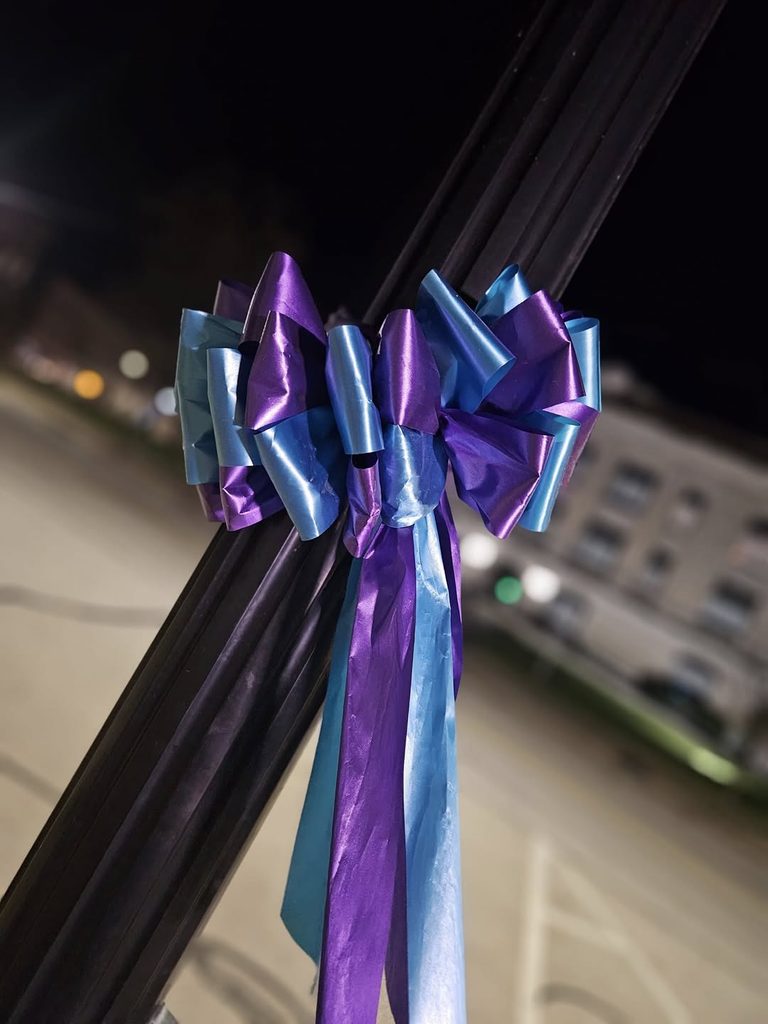
14th February 2019. That Valentine’s Day in Delphi, Indiana, came with a stark reminder. Purple and teal ribbons were tied on poles in memory of Abby Williams and Libby German.
It had been two years since their killings, and the perpetrator still hadn’t been found. And the girls’ pictures still hung in the windows of the businesses around the town square, next to the sketch of their suspected killer.
Paige Bowbly, who works at the Flower Shop II on the square, said in an interview, “Things that I could do as a child and our parents never thought twice about. I can’t let my 10-year-old do that because this man is still out there.”
Before the merciless killing shook the whole town, Abby and Libby were just two friends looking forward to spending four years of middle school together.
A Friendship Born Out of Common Interests
Abigail Williams (Abby) and Liberty German (Libby) were 8th graders at the Delphi Community Middle School. A mutual friend, Arika Gibson, described them as polar opposites.
Libby was outgoing, smart, and excelled at science so much that her science teacher encouraged her to become a teacher in the field. She also had a fulfilling family life. She loved her mom a lot, and often served as a shoulder to cry on for her elder sister.
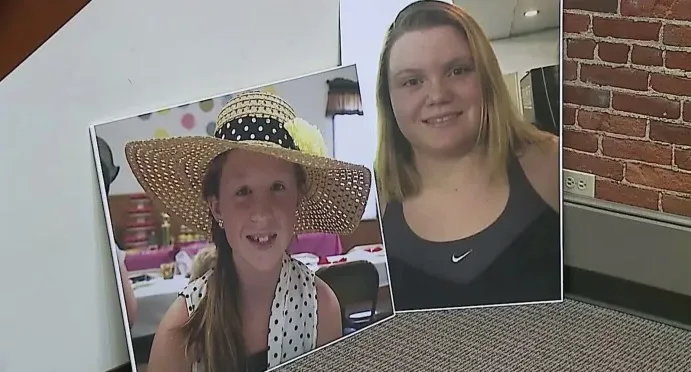
Abby, on the other hand, was a shy, quiet girl. “[Abby] didn’t speak much in front of people, but when she did, her words meant more than words,” Arika recalled while speaking to ABC News.
Their friendship blossomed during their time together on the seventh-grade volleyball team, and by eighth grade, they were best friends. Their bond grew because their interests overlapped.
Both girls loved art, photography, and swimming. They also loved spending time outdoors. Abby and Libby both had an appetite for adventure. Unfortunately, that appetite led to their deaths on 13th February 2017.
An Afternoon at the Monon High Bridge Trail
The Monon High Bridge Trail is a historic trail that follows an abandoned railroad from Easter Delphi, crosses Indiana Highway 25, and ends at the Monon High Bridge over Deer Creek.
It’s described as a relaxing trail through a heavily wooded area, offering walkers beautiful, expansive views of Deer Creek. That’s where Abby and Libby had decided to spend their afternoon on 13th February 2017.
Libby’s older sister, Kelsi German, dropped the girls off on County Road 300 North, east of the Hoosier Heartland Highway, around 1:30 pm. They continued hiking towards the Monon High Bridge.
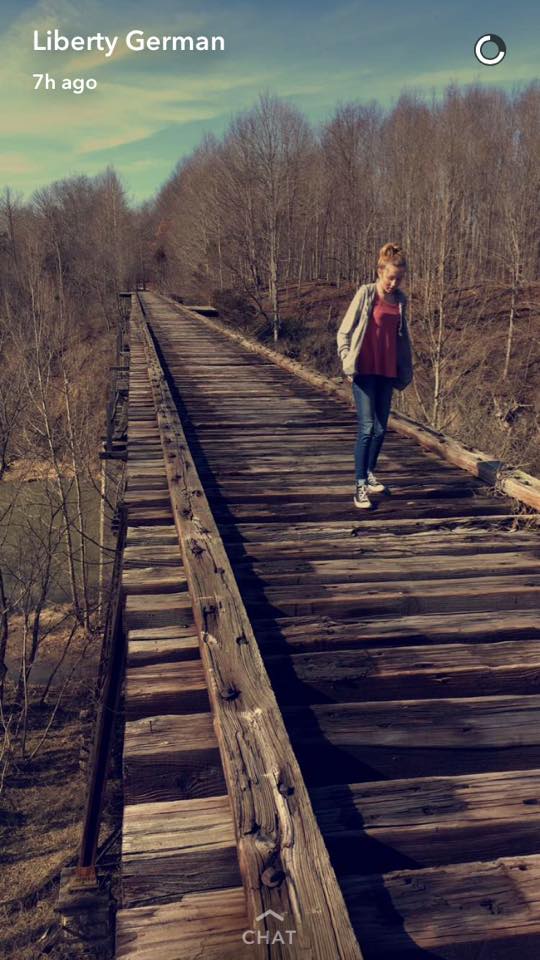
At 2.07 pm, Libby uploaded pictures to Snapchat, including one showing Abby walking across the bridge. That was the last time anyone heard from the girls. Derrick German, Libby’s father, arrived at 3 pm to pick them up at an agreed-upon spot.
When they didn’t show up, the German family searched the area. At first they didn’t think anything serious had happened.
“The only logical reasoning for them not to be here is that neither of them had a good sense of direction and they’re lost and somebody’s hurt.” Anna Williams, Abby’s mother, recalled in an interview.
After searching for almost two hours, they contacted the Carroll County Sheriff’s Department and reported Abby and Libby missing at 5:30 pm.
In the initial duration of the search, the authorities didn’t suspect any foul play and were searching for two girls who had probably just gotten lost on the trail. That assumption proved wrong the next day.
The Search for Abby Williams and Libby German
As soon as the police got involved, crews of officers and firefighters started searching the area. They even pinged the girls’ cellphones to try to locate them, but had no success.
Sheriff Tobe Leazenby believed the phones were either turned off or their batteries had died. The search was called off at 2 am. The Carroll County Sheriff’s Office released the following statement detailing their initial theory.
“Based on the information given by family and friends, police do not believe foul play is involved and have been given no information that would lead them to believe the girls are in any immediate danger, other than exposure to outside elements.“
The search resumed the next day on 14th February. Around noon, search personnel were canvassing along the south side of Deer Creek when they found pieces of the girls’ clothes tangled in branches near the river.
This led them to direct the search north of the creek, where they found the bodies of Abby and Libby behind mature trees. Crime scene personnel arrived at the scene within an hour and cordoned off an area the size of a football field around the bodies.
They treated the area as an active forensic scene. Investigators recovered Libby’s iPhone, which contained the famous video and audio (shown below) of the man who was walking behind them. He would later come to be known as the ‘bridge guy’.
Another piece of evidence recovered was an unfired .40-caliber cartridge, which would become central to the case years later. The families were informed about this find, and a day later, the identities of the bodies were confirmed.
By 22nd February, a week after the bodies were found, the authorities had released the snapshot and audio of the ‘bridge guy’ and declared that he was the main suspect. By then, hundreds of tips had started pouring in.
But finding the guy proved harder than they thought. It took authorities years to trace his identity, and even when they did, they realized the information had almost slipped past them.
The Clerical Error that Almost Cost the Case
Six days before police declared the ‘bridge guy’ the prime suspect, a man named Richard Allen told police he was on the trail on 13th February.
He disclosed that he had walked past a group of three girls as he entered the trail near Freedom Bridge and walked to High Bridge, and had seen no one else on the trail. But his name was mistakenly marked as Richard Allen Whiteman.
Whiteman Drive was the street he lived on. In another clerical error, his file was mistakenly marked ‘cleared’. As a result, the document went unreviewed until 5 years later, in September 2022.
Kathy Shank, a retired Child Protective Services worker, volunteered to evaluate and organize the 14,000 tips law enforcement received. When investigators moved to a new building, she reviewed the investigative material.
While doing so, she found a box in a drawer with the same document labeled Richard Allen Whiteman. She took the document to lead investigator Tony Liggett, who in turn involved former Delphi Police Chief Steve Mullin.
This is when Richard Allen became the focus of the case. The police checked road surveillance footage, which showed a vehicle traveling to the trail area at 1.27 pm. The vehicle matched the 2016 black Ford Focus owned by Allen.
Finally, on 13th October 2022, Detective Liggett and Investigator Mullin met Allen and interviewed him. During the day, they obtained key admissions from the suspect.
Allen admitted to being on the bridge, seeing three girls, and driving his black Ford Focus, but claimed that the time differed from the 2017 report. He confirmed he wore a dark Carhartt jacket with a hood and blue jeans, similar to the video on Libby’s iPhone.
Naturally, investigators showed him the picture of the ‘bridge guy’. According to the State’s Brief of Appellee, Allen denied it: “If it was taken with the girls’ phone, there’s no way it could be [me].”
Later that day, the police executed a search warrant on Allen’s house and found a SIG Sauer P226 .40-caliber pistol, ammunition, and an unfired Winchester .40-caliber cartridge in a keepsake box.
Investigators also recovered a blue Carhartt jacket, knives, box cutters, and older phones. Out of these, the SIG Sauer became a key piece of evidence because a .40-caliber round was found near the bodies of Abby Williams and Libby German.
Indiana State Police firearms examiner Melissa Oberg compared the pistol with the unfired cartridge recovered at the crime scene, and concluded that the round was cycled through Allen’s P226.
This was the literal ‘smoking gun’ that led to Allen’s arrest on 26th October 2022. On the day, officers asked Allen to come down to the Indiana State Police Lafayette Post.
Below is the video of ISP Lt. Jerry Holeman interviewing Allen just before taking him into custody.
Two days later, he was charged with two counts of felony murder, and his arrest was finally announced at a press conference on 31st October 2022.
After 2022, extensive pretrial litigation took place. Scheduling issues, evidence-related conflicts, and the removal of Allen’s lawyers delayed the trial to 2024.
What Happened in the Richard Allen Trial
The trial was more complicated than expected, even with the wealth of evidence. One of the defense’s first points was the reliability of the cartridge analysis and whether it could identify one specific man’s gun rather than a model.
One of the most shocking pieces of evidence presented during the trials was a call recording between Allen and his wife, where he practically confessed to the crime. “I did it. I killed Abby and Libby.”
His wife was heard rejecting his admission and claiming that they were messing with him psychologically in prison. Allen’s defense lawyers also argued in the same vein, saying his admissions were the result of mental health deterioration in prison.
In several calls with family members, Allen had repeatedly admitted to killing the girls. But one setback could have hurt the prosecution’s case. No eyewitnesses identified Allen as the ‘bridge guy’.
The defense also attempted to argue that people connected to Odin worship had killed the girls in a ritual sacrifice, but Judge Fran Gull didn’t allow it because the defense hadn’t produced enough evidence connecting third parties to the murder.
One of the most important testimonies came from Dr. Monica Wala, the lead psychologist at Westville Correctional Facility. According to her, Allen had indicated that his initial intentions towards the girls were sexual.
In total, Allen had made about 60 confessions to various people, including family, jail staff, and his psychologist. After deliberating everything for 19 hours, the jury found Allen guilty on four counts on 11th November 2024
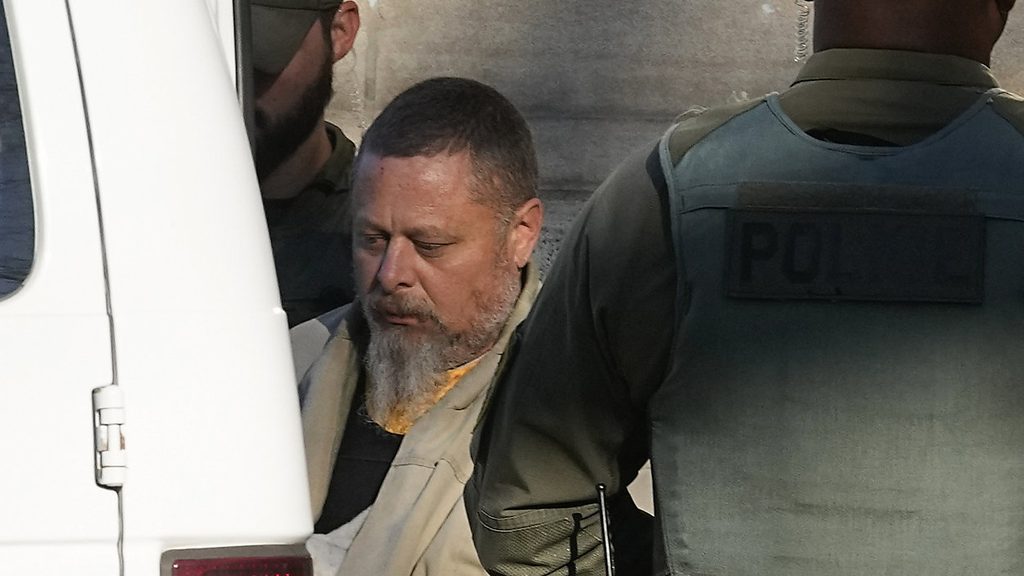
They included two counts of murder and two counts of felony murder during kidnapping/attempted kidnapping. Judge Gull sentenced Allen to 130 years in prison.
But it didn’t bring the families the kind of closure they expected.
Honoring Abby Williams and Libby German
On 20th December 2024, the day of sentencing, Abby’s grandmother, Diane Erskin, described both families’ state.
“This is a day of great sadness for our family. We won’t be going home to celebrate with champagne,” she said, as per an ABC News article, “I’ve watched her friends graduate college and wonder how many great-grandkids were murdered that day, too.”
While the trial went on, the families made their own efforts to pay tribute to the memory of their girls. The most important of them was the Abby and Libby Memorial Park.
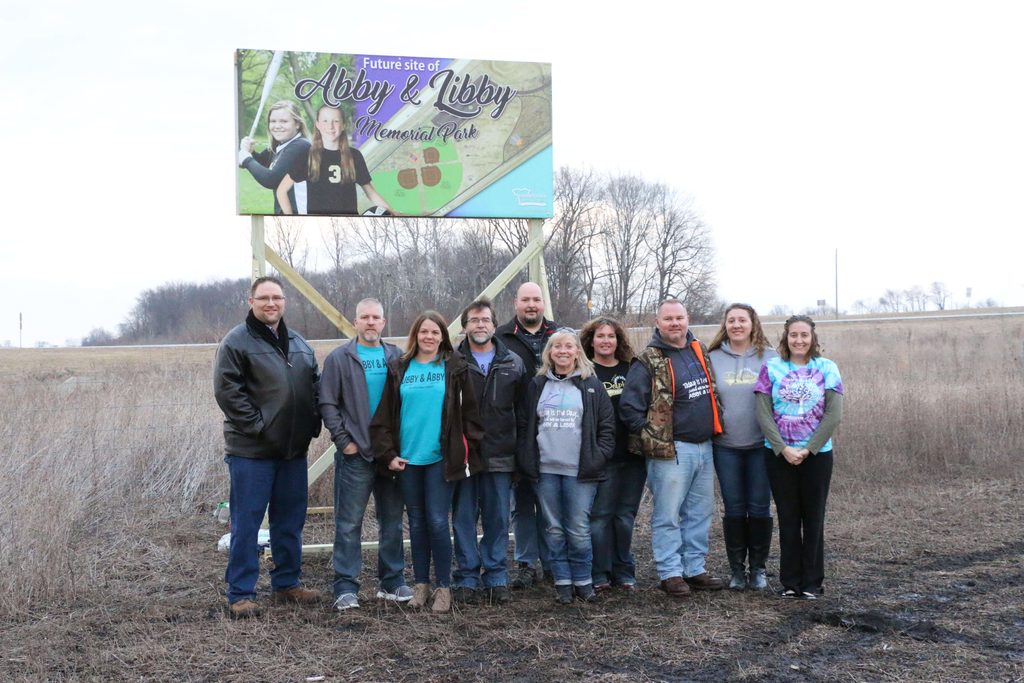
Initially built to celebrate the girls’ interests, the park has now grown into a full-fledged community space with softball/baseball fields, playgrounds, an amphitheater, picnic shelters, walking trails, and more.
At the time of writing, Allen has appealed his convictions, and appellate arguments were heard as recently as 21st September 2026. A decision is still pending, but for the families, the focus has shifted.
“I want people to remember that she lived. We talk so much about them dying that sometimes we forget that they lived,” Libby’s grandmother, Becky, told a news outlet.
But most families can’t get this kind of closure.
Many cases involving children often remain unresolved for years on end, like the Molly Bish case. Her remains were found in 2003, but no one has ever been arrested or charged with her murder.
Tristan Brübach’s killing is another such unsolved crime. His case generated around 23,000 leads, but no arrest, trial, or conviction has occurred yet.