
On January, the 22nd of 2006, Jennifer Kesse flew home to Orlando after a romantic island getaway in the Virgin Islands with her boyfriend, Rob Allen. The 24-year-old finance manager at Westgate Resorts, a subsidiary of Central Florida Investments, had just closed on her own condominium.
On the surface, life seemed to be falling into place for the young professional. Instead of going back to her apartment that day, Jennifer spent that night at Rob’s place, then drove to work the next Monday morning.
Monday the 23rd was a typical uneventful workday. At 6 pm, Jennifer left work and called her father on the drive back home.
She continued to her condo at the Mosaic at Millenia complex in South Orlando. This would be the first time she had been at her own place since leaving for vacation.
Later that night at 10 pm, she spoke on the phone with Rob. That was the last time anyone heard from her.
Now Jennifer had the habit of calling or texting her boyfriend before leaving work in the morning. On Tuesday, January 24, 2006, that call never came. When Rob tried to call her during his commute to work, the call went straight to voicemail.
He assumed she must have been busy preparing for an important meeting she had mentioned the previous night. Rob then tried to call Jennifer multiple times later that morning, but the phone remained off.
Jennifer’s Relationship with Rob
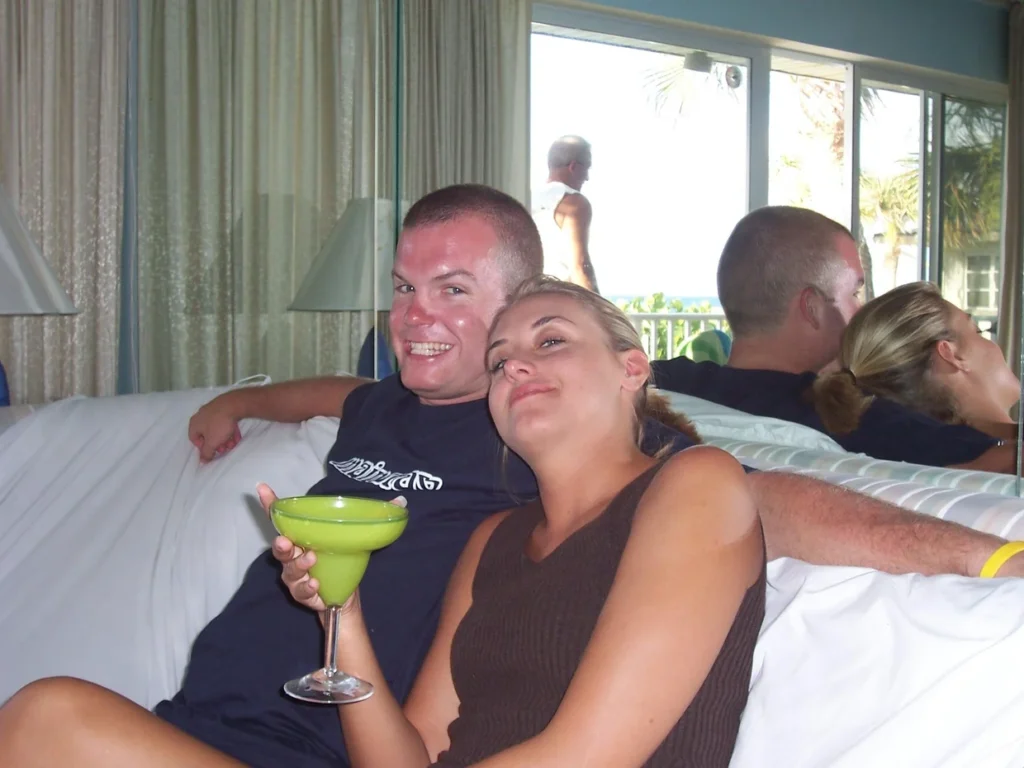
Jennifer Kesse and 25-year-old Rob Allen began dating for almost a year before her disappearance. Rob lived in Fort Lauderdale, and Jennifer resided in Orlando, so they maintained a slightly long-distance relationship that required driving about 3 hours each way to see one another on weekends.
Jennifer and Rob’s relationship was described by family and friends as deeply committed and organised. Despite the obvious challenges, they were completely integrated into each other’s lives and were planning for a future together.
Because the two places were about 200 miles apart, Jennifer and Rob developed an alternating routine. Jennifer would make a three-hour drive south, then the next weekend, Ron would drive north to Orlando.
When they were apart during the week, their dating life was anchored by phone calls. They set a routine of calling each other every morning during their commutes, checking in during the day, and having a conversation before bed.
Jennifer was very cautious about her safety, but she completely trusted Rob. Her best friend Lauren told CBS News, “She was extremely safety conscious. She was very aware of her surroundings. She carried pepper spray with her all the time.”
She even gave him the security code for her condominium, making him one of the few individuals with access to her home.
Her mother, Joyce Kesse, said, “She was just really happy. She was on a cloud.”
When the couple flew back from their vacation to Fort Lauderdale Airport, Jennifer stayed at Rob’s house. At 5 am on Monday, January 23, she woke up early to make the three-hour drive back to her office in Orlando.
Raised Alarms and Initial Searching
That Tuesday morning, Jennifer failed to make her mandatory meeting at Westgate Resorts. Because she was typically punctual and reliable, her unexplained absence concerned the leadership at her company.
After failing to reach her, Jennifer’s superiors contacted her parents, Drew and Joyce Kesse. Her parents immediately started driving from their home in Bradenton, Florida, to Orlando.
On the way, they called her condo manager and asked them to check if Jennifer was still at her apartment. The manager then reported that her car was missing, but nothing inside her place looked out of place.
While her family was racing to her apartment, surveillance at the ‘Huntington on the Green’ complex, one mile away from Jennifer’s condo, spotted her Chevy Malibu pulling into a parking space.
The cameras depicted an unidentified person, dressed in light colored clothing, stepping out of Jennifer’s car, closing the door, and walking away. This building’s camera was programmed to take still photos once every three seconds rather than a continuous video.
Unfortunately, the person’s face was hidden behind the vertical posts of a fence in every photograph that was taken. Nobody would connect this footage to Jennifer’s disappearance for more than two days. During that time, the Malibu just sat in a lot it did not belong to.
When Jennifer’s parents arrived at her condominium. They confirmed that her clothes and other items were gone, but the bed was unmade and a damp towel remained.
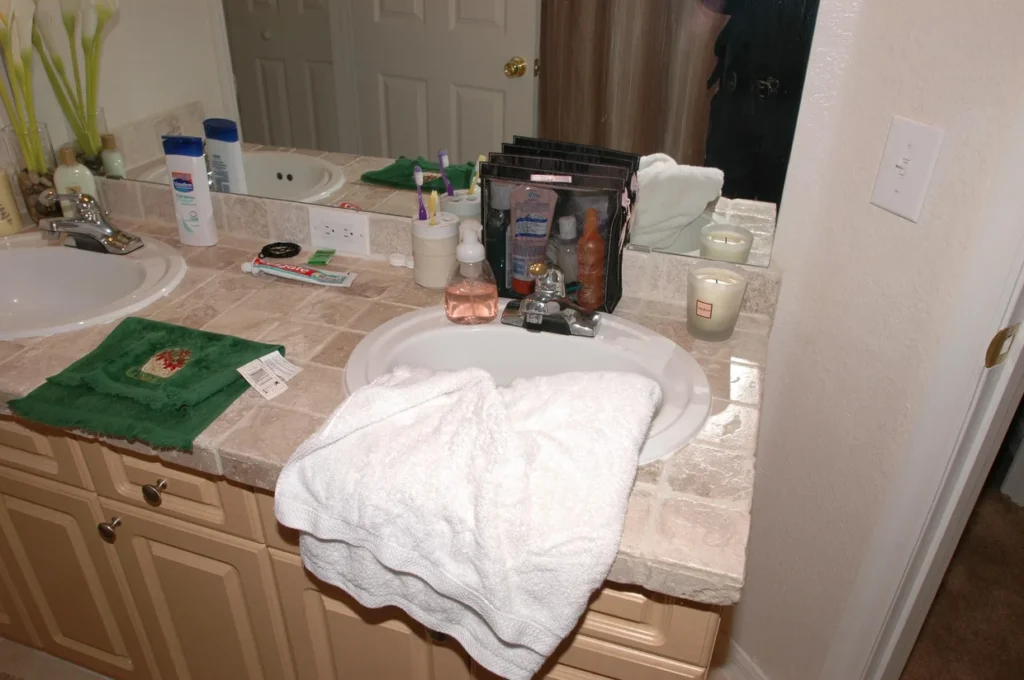
It looked like someone getting ready for another Tuesday at the office. Not like anyone broke in, or anything violent had happened inside the walls.
Determining that she was in imminent danger, her parents officially reported Jennifer as missing to the Orlando police department. Joyce stated, “The cell phone that she had since she was 16 years old went to voicemail for the first time. That is how we knew something horrendous had happened.”
However, since she was an adult and there was no evidence of forced entry, officers initially treated the case cautiously.
They allowed for the possibility that she might have left of her own accord. This position didn’t last very long, though.
By early evening, between 5 and 7 pm, friends and family were already papering the neighbourhood with flyers with Jennifer’s photo. The Orlando police department also sent a detective to the condo to begin searches and interviews.
Search parties went out on foot, in boats, and on horseback. It was a response that was typically reserved for confirmed abductions.
Jennifer’s Chevy Malibu Enters the Investigation
Her Chevy Malibu sat unnoticed in the parking lot of the Huntington on the Green apartment complex for two full days. At 8.10 am, on Thursday, January 26th, a resident of the complex recognised the vehicle from news coverage of the missing persons case and called the police.
Officers then confirmed it was Jennifer’s car and had it removed for forensic analysis, as reported by the Orlando Sentinel.
Investigators arriving at the scene found the vehicle largely undamaged. They also noted Jennifer’s collection of music CDs remained untouched inside. This ruled out the possibility of a random carjacking or robbery as the motive.
Detectives popped the trunk, fearing they would find something gory inside, but it was completely empty. Technicians then went to work processing the car’s cabin for fingerprints and hair fibres.
It seemed the perpetrator made sure to wipe down the main contact surfaces, leaving very little forensic evidence behind. Police were, however, able to recover a latent print belonging to Jennifer and a large boot print near the gas pedal.
The Video No One Could Read
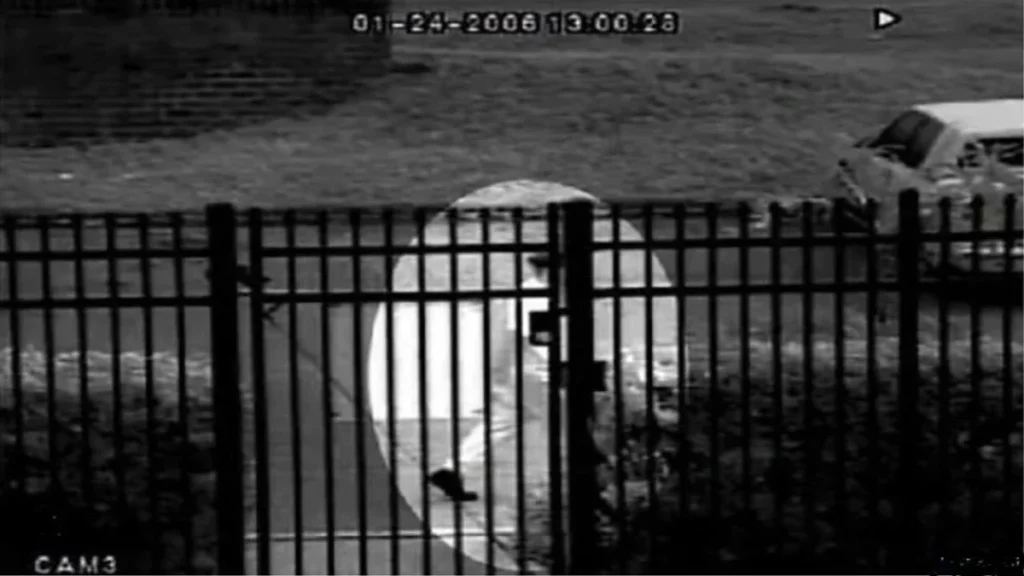
When the investigators realised the building’s CCTV had captured the perpetrator as he parked the vehicle, they were excited because it would be the first significant break in the case.
Instead, it became one of the main sources of frustration. A chain-link fence ran along the edge of the parking lot, and the crossbars fell across the frame at the wrong angle. This ended up obscuring the unknown man’s face in nearly every shot.
The camera’s image quality was also wanting. Investigators opted to bring in the FBI to create a profile from the footage.
It showed the suspect pulling into the parking space, sitting silently in Jennifer’s car for 32 seconds and then stepping out. He closed the door and walked away calmly, not once looking back at the vehicle.
By measuring the fence post height and comparing it to the suspect’s stance, the FBI determined that the person of interest stood between 5’3” and 5’5” tall.
Forensics also noted an odd physical attribute. While this person was short, they apparently had disproportionately large feet, or they were wearing oversized boots.
Even with help from the government, the Florida authorities could not determine the person’s identity. One Journalist famously dubbed the individual the “luckiest person of interest ever”.
Detectives also brought in a scent-tracking dog that followed a trail from the abandoned Malibu back to Jennifer’s own condo. This raised the possibility that whoever parked the vehicle may have doubled back to the place where she was taken, but no further evidence turned up along the route.
Jennifer’s phone was never used again, so it could not be pinged. Her bank card was also untouched, meaning there were no withdrawal or purchase records to aid the investigation.
The Investigation Turns Inward Before Stalling
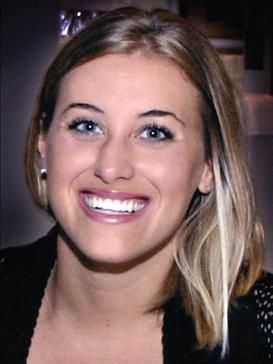
As in most cases, investigators began considering people close to the victim. Jennifer’s family and friends were all questioned but soon cleared of suspicion.
They also cross-referenced the height profile against Jennifer’s boyfriend, Rob, her ex-boyfriends, and all immediate co-workers. All of them were significantly taller, so they were cleared as well.
This forced the detectives to refocus on the outside parties. Jennifer’s condo was at the time in the middle of a construction expansion.
That meant construction workers were on site most days, and Jennifer often complained to family members that some of the crew catcalled and harassed her.
Jennifer was not the only one who was uneasy about their presence. Years later, other women who lived at the apartment block told investigators the workers often made them uncomfortable. One of the residents, Colleen, recalled construction workers gathering outside and drinking after their workday.
As some of them did not speak English, the language barrier made it difficult for detectives to interview the workers thoroughly, and this line of investigation yielded no further leads.
Investigators turned their attention to Jennifer’s work environment. They seized her computer for forensic analysis as well.
A scan revealed that a male manager, Johnny Lee Campos, had been intensely pursuing a romantic relationship with Jennifer. Her emails and messages showed that she had repeatedly and firmly rejected his advances.
Friends also confirmed that Jennifer maintained a strict rule against workplace romances and considered it extremely unprofessional. She did not, however, file charges for the harassment or file a complaint with the Human Resources department.
Co-workers reported that Campos had grown visibly resentful and was jealous of Jennifer’s relationship with Rob, not to mention her upward trajectory at work.
Campos also became a focal point in the investigation because of his behaviour on Tuesday, January 24, the morning that Jennifer disappeared. He failed to show up for work for the first half of the day despite being a senior manager.
He finally arrived at Westgate Resorts at noon. This timestamp aligned with the exact time the ‘person of interest’ parked Jennifer’s car at the neighbouring apartment complex.
Colleagues also noted that when Campos arrived at work, he was breathing heavily, pacing erratically, and acting very nervously. Detectives zeroed in, subjecting him to many intensive interrogations.
While his behaviour and whereabouts were suspect, the police were eventually forced to rule out Campos as a suspect due to physical constraints. He was significantly taller than the 5’5 profile assigned to the person of interest.
No one was ever formally arrested, nor was any suspect publicly named. The trail, after significant resources were thrown at the case, went cold.
The Case Changes Hands
In May, 2007, Westgate Resorts founder David Siegel offered a million-dollar reward for information leading to Jennifer’s recovery. The stipulation was that she be found alive by July 4th that year.
It was never claimed. Another $5,000 reward was offered by Central Florida Crimeline for the location of her remains. Neither of these offers led to anything helpful.
Increasing the case’s visibility led to a policy change in the state. On May 2, 2008, the Florida House of Representatives unanimously passed Senate Bill 502, the Jennifer Kesse and Tiffany Missing Persons Act.
It was meant to reform how the state handled missing persons cases by stripping away arbitrary waiting periods and forcing structured, but immediate police action for people reported missing.
Recognising that the Orlando Police Department detectives had exhausted their leads, the FBI took over the case in 2010. Unfortunately, this did not lead to any breakthroughs either.
By 2018, the case had gone cold for 11 years. The Orlando police department still refused to let the Kesse family see the files, though, claiming it was still an active investigation.
Drew and Joyce Kesse sued the Orlando Police Department in a desperate attempt to compel the release of their records. In March 2019, the lawsuit was settled.
The Kesses had to pay $18,000 out of pocket to cover the police’s administrative costs for copying and redacting the records. In exchange, they walked away with 16,000 pages of police files.
In essence, they were taking the investigation into their own hands. The family also hired private investigator Michael Torreta, a former federal agent, to audit the files.
He immediately discovered significant evidence that the police department had downplayed.
Torretta found scene photos of Jennifer’s Chevy Malibu. It had clear smudge marks on the front hood that depicted a physical struggle, suggesting someone had been thrown down. There were also distinct finger marks dragging on the metal.
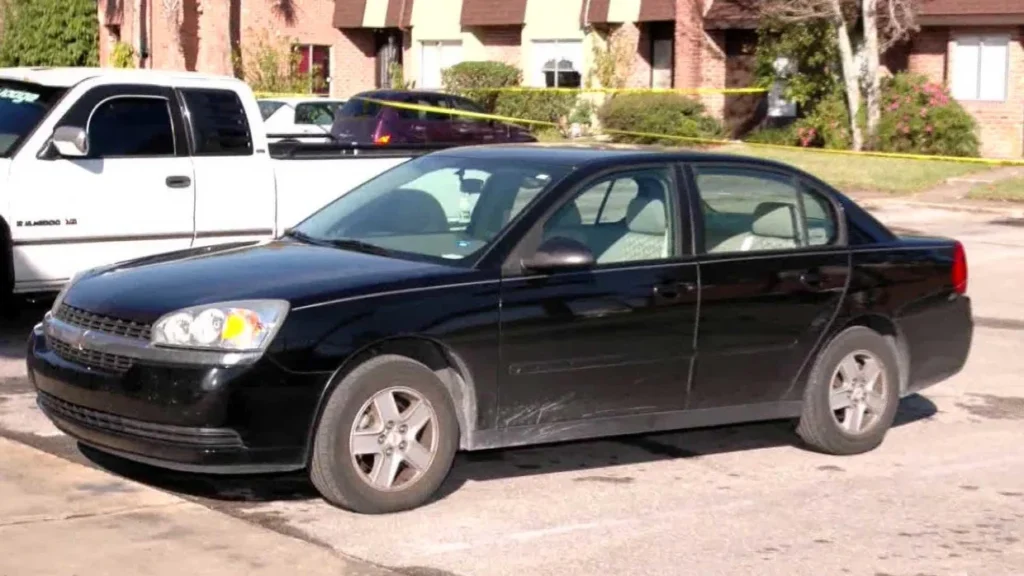
Torretta’s independent interviews, as reported by People, revealed that upwards of 10 undocumented construction workers were living in cramped conditions inside the empty condo directly across the hallway from Jennifer’s front door during the time she went missing.
In December 2022, the family eventually handed the case files to the Florida Department of Law Enforcement to strip local politics from the search. FDLE agents discovered pieces of physical evidence from Jennifer’s vehicle, including two stray hairs that had not been DNA tested in the original investigation.
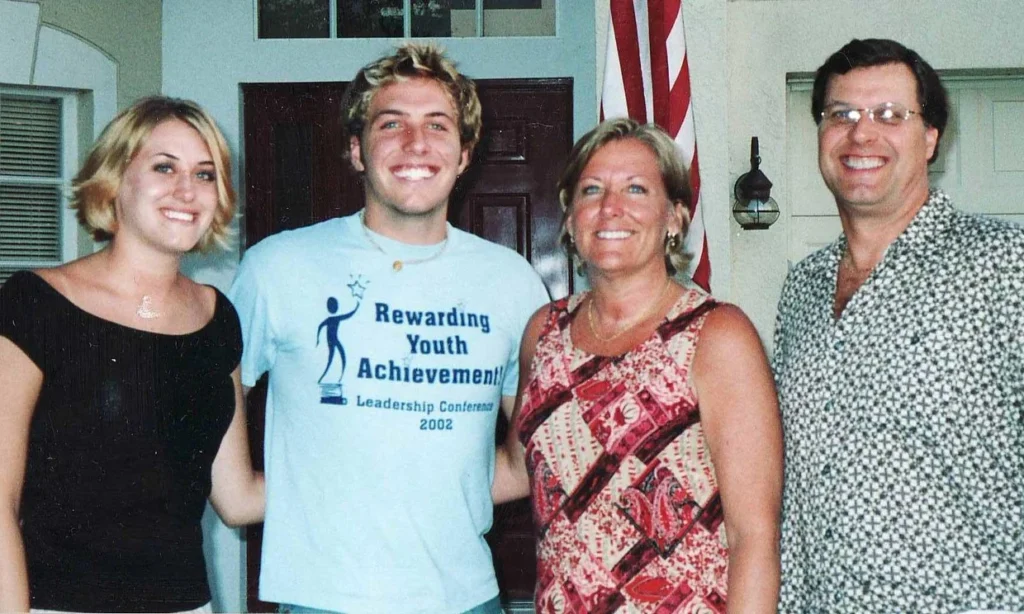
By upgrading the forensic profile using modern DNA technology, state labs added a few select individuals to their active list of persons of interest. The case was also upgraded out of ‘cold status’.
Where the Case Stands
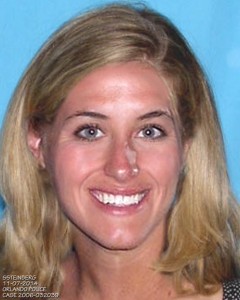
The FDLE’s renewed effort has produced significantly more traction than the case has seen in years. By May 2025, coinciding with what would have been Jennifer’s 44th birthday, the agency stated that it had reviewed thousands of pages and spoken to 45 people since taking over the case.
The agency also floated the idea that artificial intelligence tools were helping them to identify the individual seen in the original 2006 footage.
In late 2025, a viral social media rumour claimed that one of the construction workers had been tracked down through DNA evidence in South America and was being extradited to face charges. According to ABC 7, Drew Kesse publicly responded to these allegations, calling them completely untrue.
In January 2026, two decades since Jennifer went missing, FDLE Special Agent in Charge Felipe Williams confirmed the agency was still actively working on the case. In an official presser, he said, “Our agents are methodically pursuing leads, analysing evidence, and conducting interviews related to the case.”
He told reporters agents were methodically pursuing leads, conducting interviews, and analysing evidence.
Jennifer Kesse remains classified as missing and endangered by the Orlando Police Department, the FBI, FDLE, the National Crime Information Centre, and Interpol. She has a quarter-sized shamrock tattoo on her left hip and a surgical scar on the inside of her left elbow.
Anyone with information is asked to contact the FDLE Orlando office by cell at (407) 245-0888 or email them at OROCColdCaseTips@fdle.state.fl.us.
For more stories on unsolved mysteries or heroic escapes, explore our articles on the Disappearances of Lauren Spierer and the Tromp Family.