
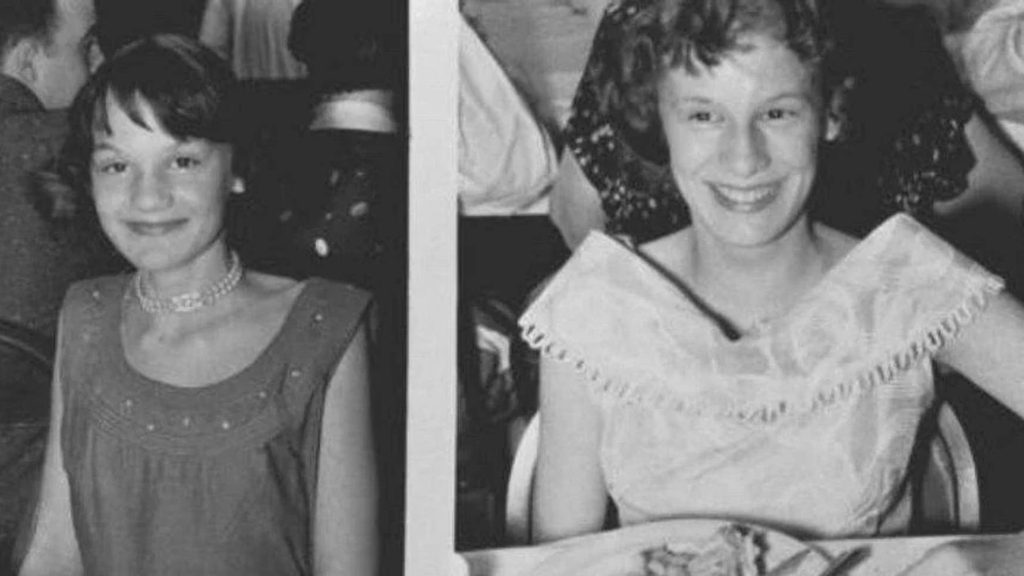
People kept reporting sightings of Barbara and Patricia Grimes after the night doctors believed the sisters died. In early January 1957, workers at a Chicago five-and-dime said they saw the girls listening to Elvis Presley records with two sailors. A woman traveling through Nashville said she encountered them in a bus-station restroom.
The reports fed the idea that the sisters had run away to be near Elvis. Even the singer appealed to them.
“If you are good Presley fans, you’ll go home and ease your mother’s worries.”
Barbara, fifteen, and Patricia, twelve, disappeared on December 28, 1956, after going to Chicago’s Brighton Theater to see Love Me Tender. The theater stood about a mile and a half from their McKinley Park home. It was a familiar outing, and they had watched the film repeatedly. Patricia’s thirteenth birthday was three days away.

Barbara was the quieter, more serious sister, a sophomore at Kelly High School. Patricia, known as Petey, was an exuberant seventh-grader at St. Maurice’s Catholic School. Their former neighbor Melanie Forgala remembered them as friends as well as sisters.
A schoolfriend, Dorothy Weinert, sat behind them at the theater with her younger sister. When the Weinert sisters left around 9:30 p.m., Dorothy saw Barbara and Patricia buying popcorn. Nothing about the encounter suggested an emergency.
By midnight, their mother, Lorretta Grimes, was still waiting for them. She sent their sister, Theresa, and brother, Joey, to the nearby bus stop. Three buses passed without bringing either girl. Lorretta called friends, then reported her daughters missing in the early hours of December 29.
Their enthusiasm for Presley gave strangers something recognizable to look for and an explanation for two girls apparently traveling together without any intention of going home.
Lorretta rejected the runaway theory. Their belongings were still at home. They carried only a few dollars when they left.
The search spread far beyond the route between the theater and their neighborhood. Police canvassed homes, volunteers joined in, and missing-person notices carried the sisters’ faces through the city. Reports placed them on buses, in hotels, and around a department store’s record counter. None provided a reliable trail to Barbara and Patricia. Their mother believed someone was keeping them from coming home.
On January 22, 1957, Leonard Prescott was driving along German Church Road, southwest of Chicago, when he noticed what looked like discarded mannequins beyond a roadside barrier. He went home for his wife and returned. The shapes were the naked bodies of two girls.
Barbara and Patricia lay frozen beside the road near Willow Springs. Their clothing was missing. No one knew when they reached that spot or what happened between the cinema and the roadside.
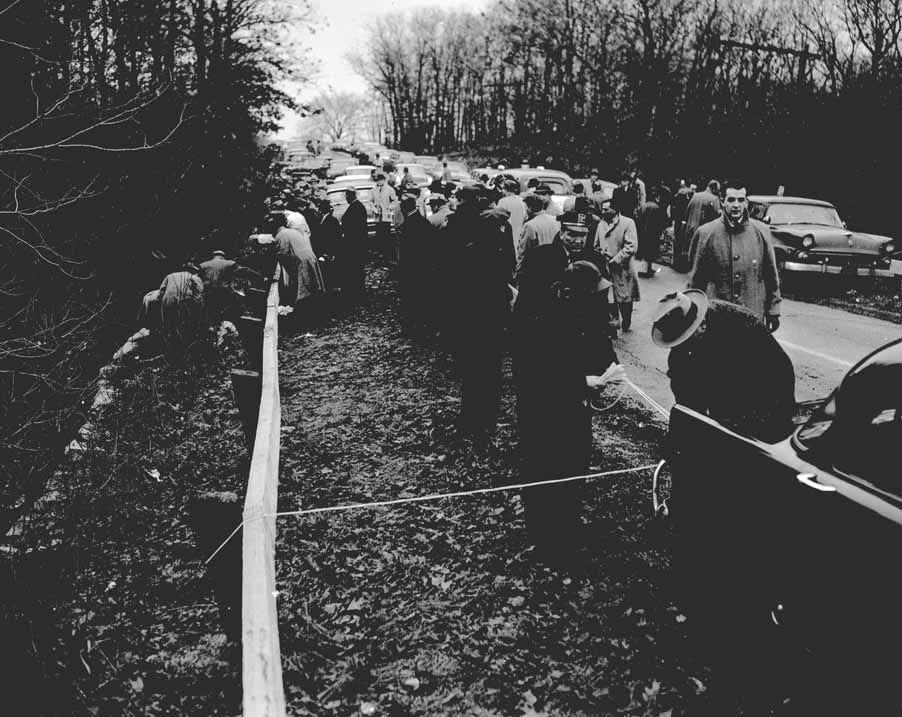
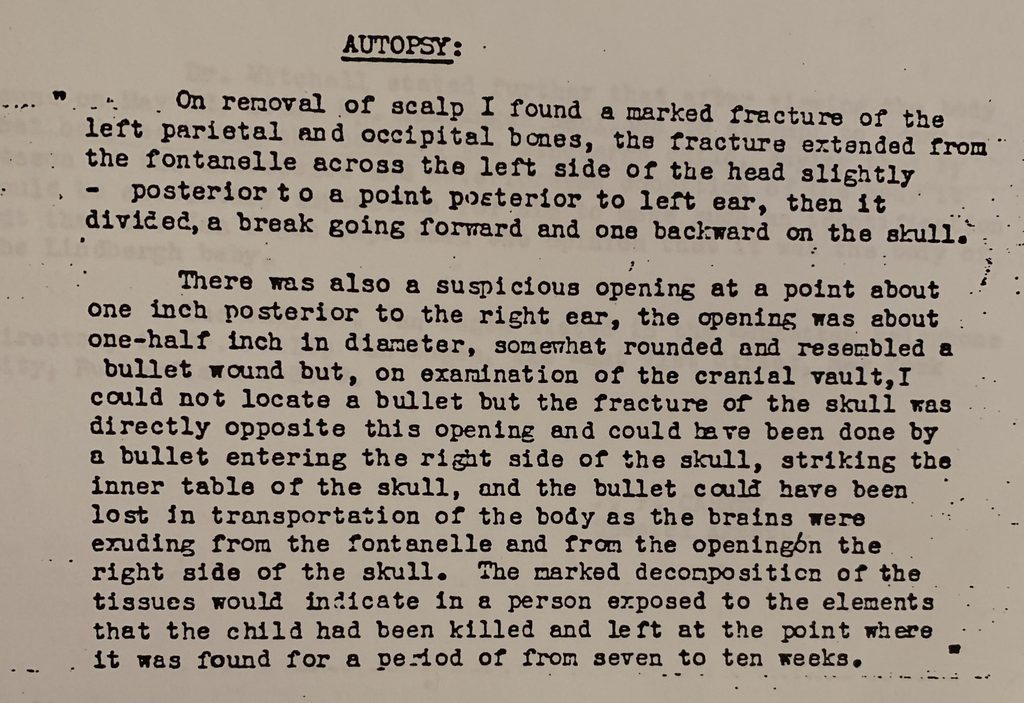
The examinations found no obvious fatal injury. Three pathologists investigated the deaths, with laboratory testing for possible poisons. The tests detected no alcohol, drugs or carbon monoxide, and the doctors found no injury they considered sufficient to have made the girls lose consciousness.
The eventual medical conclusion was death from exposure to cold. One pathologist put it plainly: “The girls were alive when frozen.”
The case was treated as homicide. Where the girls suffered that exposure, who was responsible and how they lost their clothes were still unknown.
Witnesses offered a possible explanation. They placed the sisters on West Madison Street, among the taverns and cheap lodgings of Chicago’s skid row, with a young dishwasher named Edward “Bennie” Bedwell.
Bedwell was twenty-one, from Tennessee, and wore conspicuous sideburns. By January 25, Sheriff Joseph Lohman said four people claimed to have seen the girls with him after their disappearance. Investigators questioned him at length.
His story changed. On January 26, Lohman announced that Bedwell admitted drinking with the sisters and another man, though he said he left the girls alive. In this version, the group went to a movie and the girls slipped away. Earlier, Bedwell maintained that the young women he accompanied were not Barbara and Patricia.
The next day, he signed a confession to their deaths.
Bedwell described days spent in taverns and lodgings, drinking. He named an accomplice he knew as Frank. After the girls rejected sexual advances, he said the men struck them, stripped them, and threw them beside German Church Road. They might still have been alive when abandoned.
The confession seemed to fit the sightings and the place where the bodies were found. It also put the two schoolgirls at the center of a widely circulated story about drinking and sex.
Police went looking for Frank and questioned William Cole Willingham, who knew Bedwell. A restaurant proprietor identified Willingham as the other man she remembered with him. Bedwell was less certain. Shown Willingham’s photograph, he said it resembled Frank.
Willingham denied involvement in the deaths. He acknowledged spending time with Bedwell and two young women after Christmas. He said the women were not the Grimes sisters.
Detroit police reported that nineteen-year-old Carol King confirmed she and her friend Irene Dean had dated the two men at the relevant time. At least part of the supposed trail of the missing sisters might belong to other women.
Cook County Coroner Walter McCarron publicly questioned the confession. If it was false, he said, that needed to be established quickly, “for the benefit of two girls who are dead and unable to defend themselves.”
Lorretta did not believe this version of her daughters’ last days. The medical findings gave her reasons beyond her own conviction. Food recovered from Barbara’s stomach was consistent with what she ate before disappearing. The pathologists placed the deaths on the night of December 28 or early the following morning.
Their estimate remained disputed. If they were right, the sisters could not have spent days drinking with Bedwell. There was no alcohol in their bodies, nor evidence of the beating he described. Factory records also placed Bedwell at work on the night the sisters disappeared, giving him an alibi for the period when the pathologists believed they died.
Bedwell recanted, alleging coercion during questioning. His lawyer, David Bradshaw, described him to reporters as “a young man who is wholly illiterate.”
At the inquest, Lorretta told Bedwell’s mother she did not believe he killed her daughters. He left jail on bond in February. The charges were subsequently dropped.
The coroner’s chief investigator, Harry Glos, challenged the medical findings. On February 14, he told reporters that the sisters had been beaten and that one or both had been sexually assaulted. He accused the authorities of withholding evidence.
“Half of the story has been told, and I don’t know why the other half has been withheld.”
The three pathologists’ findings contradicted him. Dr. Jerry Kearns disputed Glos’s qualifications to draw those conclusions and reaffirmed that the examinations had not established sexual molestation.
The argument took in the marks on the girls’ bodies, the credibility of the confession, and whether the sisters survived for days after disappearing. McCarron fired Glos after he refused to retract his statements. The public was left with incompatible explanations from people involved in the same investigation.
Lorretta kept helping police search for witnesses. Her daughters’ clothes had never been recovered, so she bought similar garments. Two of their friends wore the replacements for photographs intended to refresh memories of the night Barbara and Patricia vanished. No witness supplied the missing journey home.
Strangers continued calling the family. In May 1957, a man told Loretta he knew who killed the girls and claimed to have undressed them. He mentioned Barbara’s crossed toes, a detail her mother believed had not been made public.
The caller was never identified. In November 1958, another teenage girl’s body was found outside Chicago. Lorretta said a man with the same voice called again.
“I committed another perfect crime,” he boasted.
She believed she recognized the voice and the laugh. Her description of the calls offered another possible connection to examine, without establishing that the caller killed the sisters or the newly discovered girl.
The other victim was fifteen-year-old Bonnie Leigh Scott. She disappeared from Addison on September 22, 1958; her body was found in November in woods near a highway.
Charles Melquist, a young man who knew Bonnie, confessed to smothering her with a pillow in his car and leaving her unclothed body beside the road. His statement included details that could be checked against the scene, including the location of Bonnie’s discarded watch. A jury convicted him of murder and imposed a ninety-nine-year sentence. The Illinois Supreme Court upheld the conviction in 1962.
Melquist’s crime later drew the attention of Ray Johnson, a former West Chicago police officer who began researching the Grimes case in 2009. He pursued similarities between the cases and the anonymous calls. The victims’ ages, the locations, and the disposal of their unclothed bodies made the possibility worth investigating, in his view.
Melquist was never charged with killing Barbara and Patricia. His conviction established his responsibility for Bonnie’s murder alone. The Grimes sisters remain listed in the Cook County sheriff’s cold-case records, with an invitation for anyone who knows something to submit a tip.
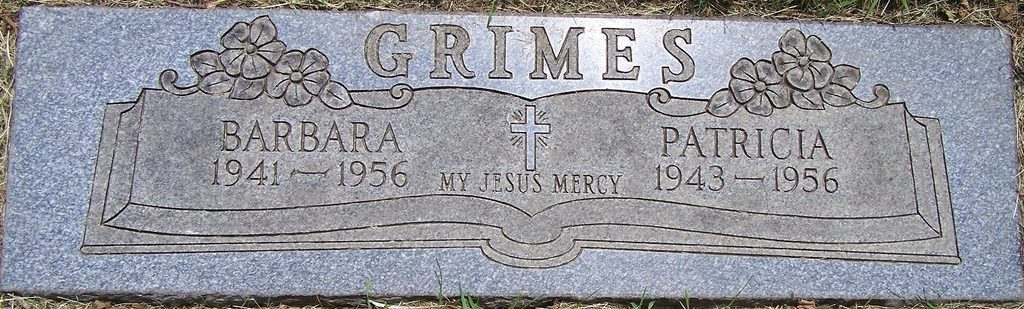
Lorretta died in 1989 without learning who killed her daughters.
Years after the murders, Melanie Forgala encountered her in a department store. Lorretta recognized the former neighbor, and they began talking. In an interview with A&E, Forgala remembered one of the first things the mother said.
“Did you hear about my girls?”