
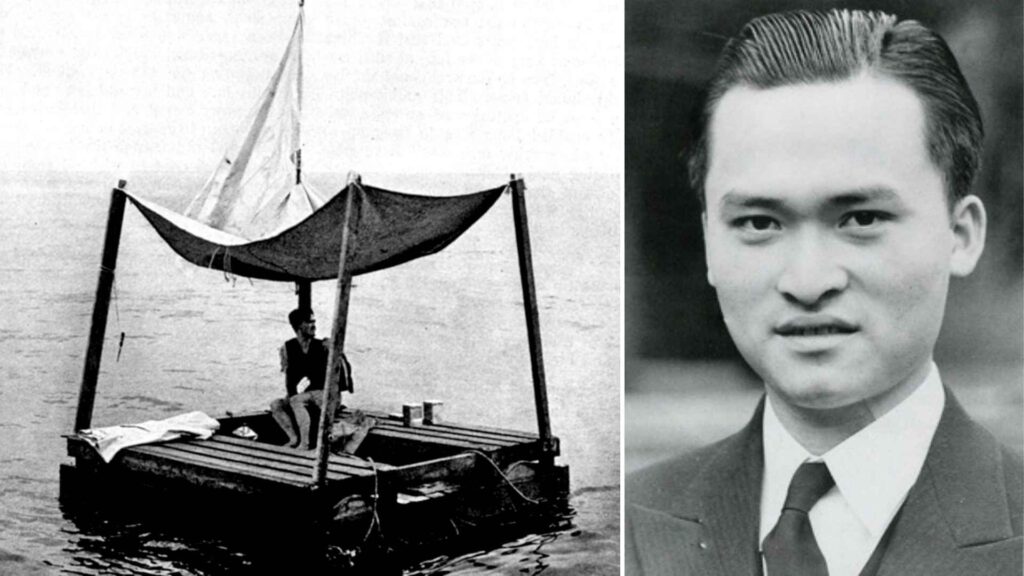
On November 23, 1942, the British cargo steamship SS Benlomond was travelling unescorted across the South Atlantic, bound for Paramaribo.
Because the ship was travelling in ballast, it sat high above the water. It also lacked internal structural reinforcement against significant impacts.
She was defensively armed, but the ship had no convoy or escort.
24-year-old Second mess steward, Poon Lim, was below deck going about his duties that day. It was a clear afternoon, and the crew had no radar or warning that a German submarine, U-172, had tracked them and manoeuvred into a firing position.
The U-Boat fired a number of torpedoes at the boat. Two of them found their mark with devastating force.
One tore directly into the engine room. The impact shattered the ship’s infrastructure, and because there was no cargo to slow the intake of water, the lower decks were almost immediately flooded.
Poon Lim and the rest of the crew had no warning. He later described a panicked scramble for a life jacket and heading to his boat station, where two officers and a seaman were trying to launch one of the lifeboats.
They desperately tried to detach the lifeboat from its metal chocks, but before they could even lower it, the deck pitched violently into the ocean. A massive wave overtook Poon Lim, washing him overboard.
As the SS Benlomond plunged into the depths, it created a downward vortex. Poon Lim was sucked into the deep by the suction caused by the ship.
Holding his breath and fighting the current, he was miraculously shot back up to the surface by a blast of trapped air from the sinking ship.
Upon reaching the surface, there were no boats, and the water was thick with oil, other debris, and the bodies of his crewmates.
The only survivors he could see were a group of five men huddled on a raft. As Poon Lim swam towards them, the German U-Boat surfaced and pulled them on board their craft.
Poon Lim observed from a distance, holding on to a piece of wreckage until the Germans were satisfied with their line of questioning. They then set the men back onto their raft and left them adrift.
The submariners laughed and waved at Lim as they sank beneath the waves. Lim managed to swim to and board a fully stocked 8-by-8-foot wooden Carley raft nearby. From the new vantage point, he could clearly see the men and the other raft.
The Raft and First Days at Sea
The men also spotted Lim, waved frantically, and beckoned him to join them. Neither of the two groups had sails or effective paddles to fight the heavy mid-Atlantic swells, though.
Lim’s raft was heavier and caught the winds more quickly compared to the makeshift setup on the other craft. This grew the distance between them, and within a few hours, the five men became nothing but a tiny speck on the horizon before they altogether vanished.
Unlike the Lim’s factory-standard survival raft, which had tins of chocolate and biscuits, the other men had nothing. Left to their own devices, they probably quickly perished in the open ocean.
Despite the survival rations, Poon Lim was in deep trouble. There were no navigational aids or methods of propulsion available.
He was not a strong swimmer, and the fear of being separated from his only hope in the night prompted him to seek secure bonds. So, Lim tied his wrist to the raft with a length of rope.
On the first day, he took stock of his iron water container and watertight bins. He realised there was a limited supply of hard tack biscuits, some chocolate chunks, and a tin of evaporated milk.
Lim also calculated that if he ate at a normal rate, he would probably die within weeks. So he decided to embark on a strict rationing regime, limiting himself to only a few bites of biscuit and a couple of sips of water twice a day.
To prevent himself from losing track of time, Lim began tying a knot in a piece of hemp rope each morning at sunrise.
The number of knots represented the exact number of days he had been lost at sea. Tropical heat blistered Poon Lim’s skin, and the salt water caused painful boils to erupt on his legs and back.
As Lim’s supply of food and water began to dwindle, he knew that he had to come up with creative strategies if he was to live. He unravelled the wire from the signalling flashlight to braid a tough but flexible fishing line.
He also set up a rainwater collection system using his jacket for drinking water.
The hemp rope was used to pry a large nail out of the raft’s framework, and the water jug became a hammer, which Lim used to bend the nail into a crude fishhook.
The remaining crackers were used as bait. When his cast was successful, Lim gutted the fish with a metal knife fashioned from the biscuit tin.
He then dried the fish on a hemp line. The system appeared to work for some time, until a storm hit.
Storms and Sharks
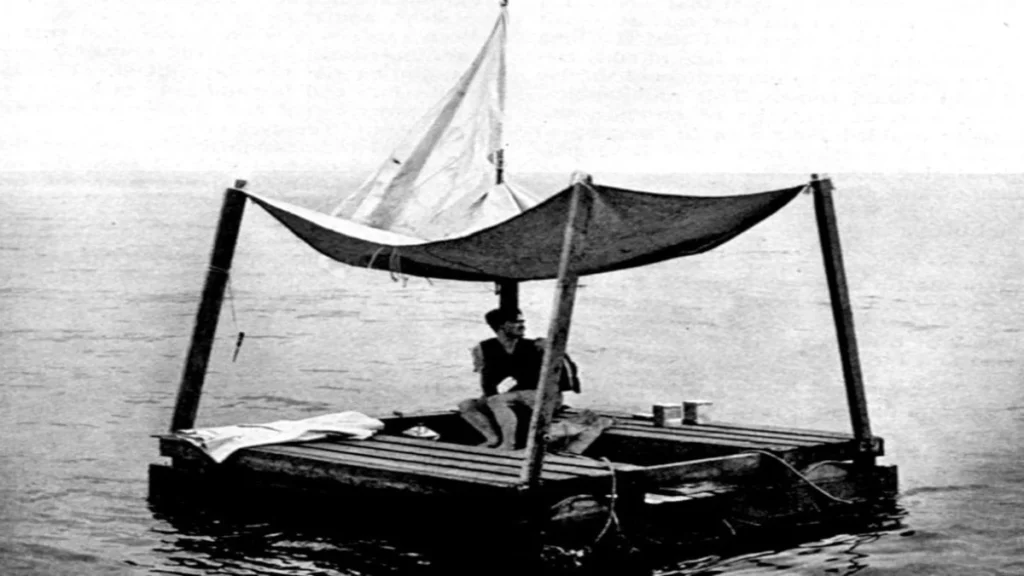
One day, the weather suddenly changed, and Lim witnessed towering 20-foot waves that tossed the small 8-by-8-foot craft. Knowing that one massive wave would be enough to wash him over, he used the remaining hemp rope to lash his body to the raft’s framework.
For several hours, Lim was slammed by walls of water. The raft pitched constantly, threatening to capsize. He ended up swallowing large amounts of salt water and was severely bruised after being thrown about against the planks.
The storm eventually passed, and Lim untied himself to assess the situation. All the containers of fresh water were contaminated with salt water.
The violent rocking of the raft had also washed away the flashlight, fishing wire, and the remaining dried fish. Lim was desperate now and set a trap with fish to lure the birds in.
It worked, and he was able to catch a seabird, kill it and drink its blood. He continued catching birds in this manner because they provided enough sustenance.
But the blood also began to attract sharks to his raft. The sharks circled constantly and occasionally rammed the craft’s underside.
Lim then removed a nail from the raft and attached it to a rope, bending it into another hook. He added some bird remains as bait to target sharks.
Before casting the line, Lim wrapped his hands in canvas to prepare for the struggle with a shark on the line. He also braided the fishing line to increase its strength.
When the shark attacked him, Lim pulled it onto the raft and used a water container to beat it to death. Eventually, he cut open the shark, drank its blood, and cut up the fins so they could dry.
Shark fins were a Hainan Chinese staple, so he wasn’t new to it.
Ignored by Everyone
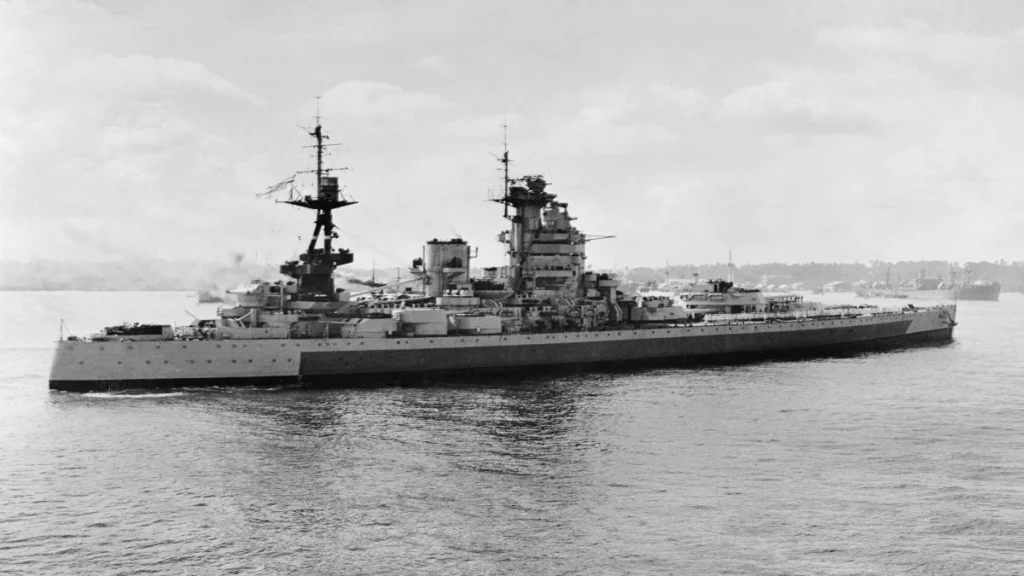
Over the next 100 days, Poon Lim would see rescue come close enough multiple times, only to disappear. Cargo ship crews saw him, but did not pick him up or even greet him.
This was despite his cries in fluent English. Lim considered that they opted not to rescue him because he was Asian, and they assumed he was a Japanese sailor.
Another explanation was that German U-boats often set a survivor on a raft as a trap to get a rescuing ship to stop, so that it would be easy enough to sink.
Once during his gruelling experience, a merchant vessel passed so close he could see the figures on deck. Lim shouted, waved, and even used the one remaining flare he had to draw their attention.
The ship and its crew ignored him and continued on their way. A squadron of United States Navy patrol seaplanes also saw him and dropped a market buoy in the water.
Unfortunately, a large storm hit the area that day, and it displaced him far from their estimated coordinates. The search vessels that were sent from Belem could not find him.
He was then spotted on one occasion by a German U-boat that was conducting gunnery drills in the area.
The crew just looked at him and moved on with their activities. Each time, Lim had no choice but to go back to fishing.
Drifting Further West
Noting that he was losing touch with reality, Lim stopped tying knots in his rope daily. He picked up a fish bone and scratched a mark into the wooden siding of the raft when he saw a full moon.
This allowed him to detach from the crawl of hourly survival. By his fourth month at sea, Lim’s body was breaking down.
His muscles had already atrophied despite attempts at some form of exercise. The intense tropical sun and saltwater exposure turned his skin into a layer of scar tissue, with infected boils.
His ship had sunk 250 miles from the nearest land in the South Atlantic, but the ocean currents drove him west toward Belem. Over the course of months, the raft had been moving toward the Brazilian coast.
By April 1943, Lim realised he was getting near land because the colour of the sea was no longer a deep blue. He had actually drifted west some 750 miles.
On April 5, 1943, three Brazilian fishermen found him 9 miles off the coast of Para, east of Salinas. When the fishermen pulled him on board, Lim was barely more than bones.
He had lost 20 pounds and was too weak to stand unsupported. His body had been ravaged by months of starvation and exposure. Lim was transferred to a hospital in Belem, where he recovered within three weeks.
The staff there could not believe his story. He later remarked, “When I told them how many days I had been at sea, they did not believe me. I showed them my rope — 133 knots. Then they fell silent.”
The five men that Lim had seen drifting off after being interrogated by German U-boat sailors were never accounted for.
Aftermath and Recognition
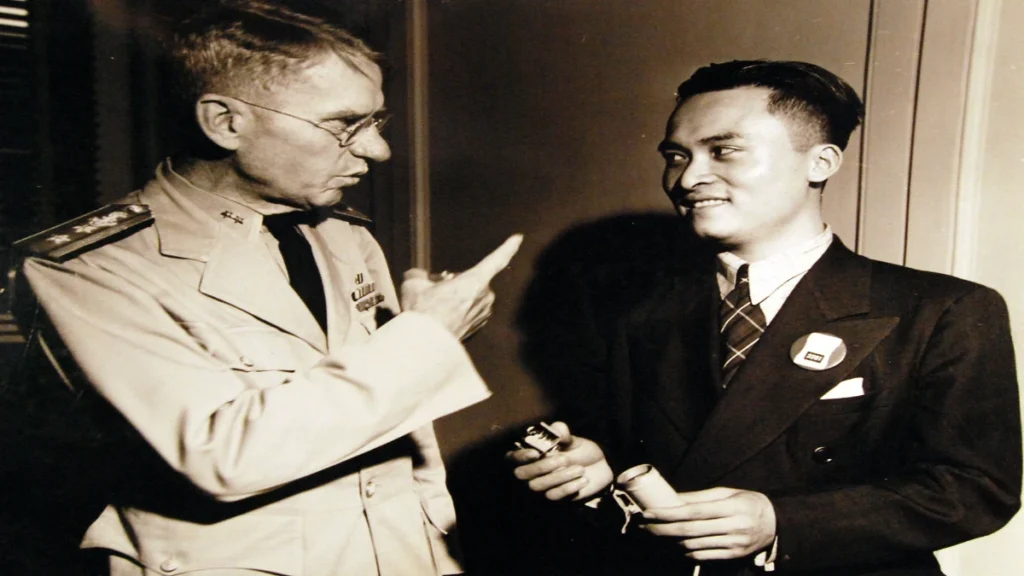
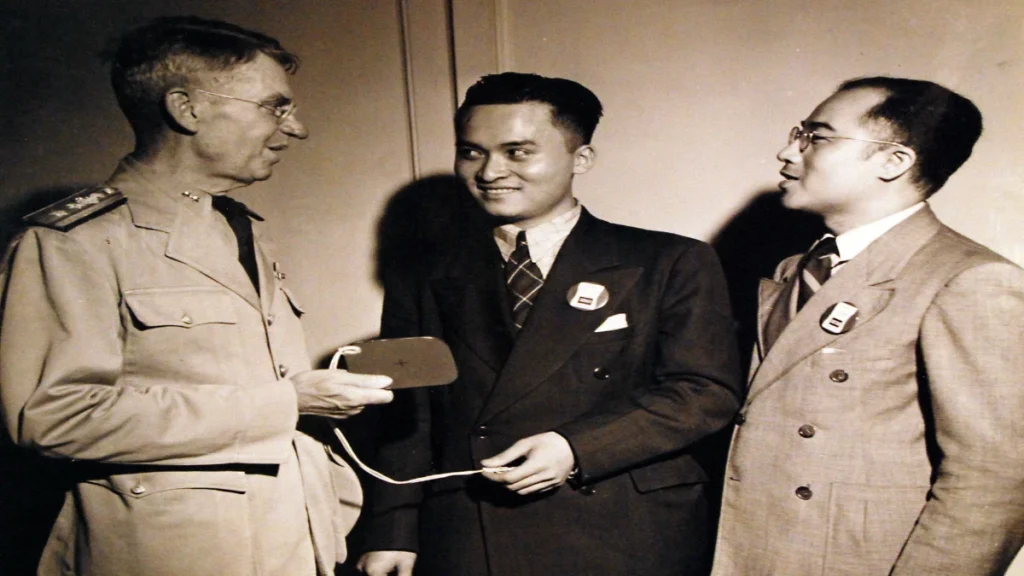
When Lim was fit to travel, the British Consul arranged for him to go to Britain via Miami and New York. At a ceremony at the Seamen’s Church Institute of New York and New Jersey on July 16, 1943, the Acting British Consul told Lim that King George VI was to award him the British Empire Medal.
The Royal Navy also validated this by incorporating his survival techniques, such as baiting hooks with shark liver and bird blood to rehydrate. These were incorporated into survival manuals for special operations forces and other merchant seamen.
His improvised tools and methods for catching birds and sharks were all studied. Following World War II, Lim applied for U.S. immigration, but he faced challenges due to quotas that limited Chinese immigration under prevailing laws.
His fame, though, as the record holder for the longest solo survival at sea, attracted intervention by U.S. officials, who granted him special entry permission.
He had surpassed the previous record of life raft survival of five crewmen of MV Zaandam who were also torpedoed by a German U-boat two months before his rescue.
They had spent 83 days adrift at sea before they were rescued. Lim declared, “I hope no one will ever have to break that record.”
The Guinness World Records formally recognises his experience as the longest verified solo survival experience on a life raft, based on rescue manifests and archival logbook entries by Lim himself.
Driven by a desire to serve, Lim even applied to join the United States Navy, but was ironically rejected for having flat feet.
In 1952, he married the daughter of one of his shipmates from a previous tour. They settled in Brooklyn and raised three daughters and one son.
Needing to support a growing family, Lim conquered his past trauma and returned to working maritime shipping routes. He was also hired by United States Lines and worked as a Chief Steward.
Because the early Cold War travel restrictions forbade U.S citizens from entering China, Lim could not easily go home to see his parents. Instead, he had to fly them out to meet him in British-controlled Hong Kong.
He eventually lived out his years privately in New York and passed away from illness at the age of 72 on January 4, 1991.
For more stories of survival at the edge of human endurance, read about Anatoli Bugorski, the scientist who lived after a proton beam passed through his skull, and Hisashi Ouchi, the nuclear worker whose body was pushed beyond imagination after a radiation accident.