
On the evening of August 1, 1989, Ronald (Ronnie) Paul Jack walked into the First Liter Pub, which was four blocks from the rented house on Strathcona Avenue, British Columbia, where he lived with his wife and two sons.
He was 26 years old and out of work due to a back injury at the sawmill, and the family had been surviving on welfare since they moved to Prince George.
A stranger approached Ronnie at the bar and struck up a conversation, offering a short-term, well-paying logging job. He also offered Doreen a camp kitchen placement after hearing about their plight.
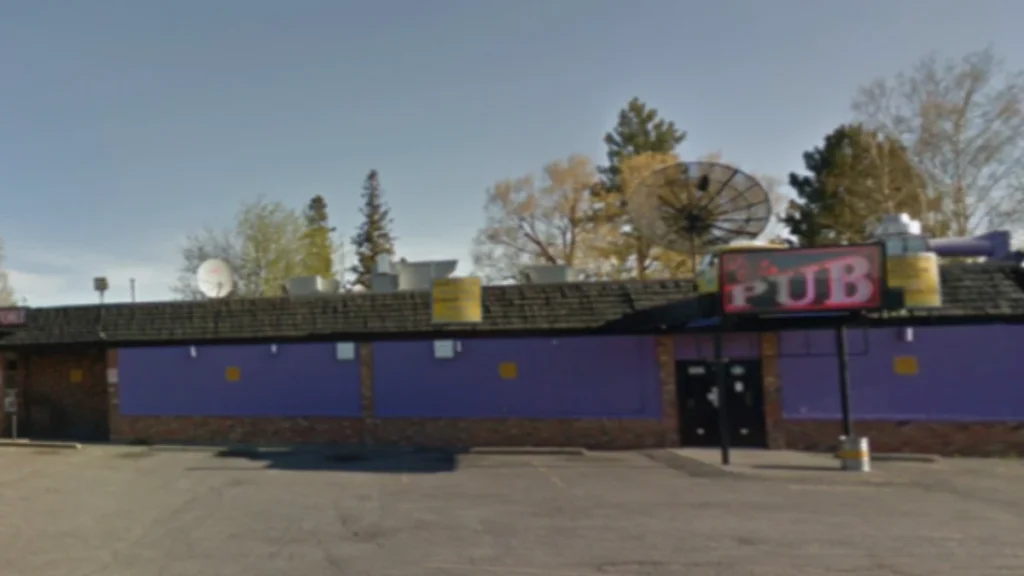
To sweeten the pot, their two boys, nine-year-old Russell and four-year-old Ryan, would have daycare at the work site. The job was supposed to run for 10 days to 2 weeks before the start of the school season.
The stranger was later described as caucasian, about six-foot-six with reddish hair and a full beard past his jawline. He also wore a ball cap, red checkered work shirt, faded blue jeans, and a blue nylon jacket.
Since the Jacks did not own a car, this man offered to drive them to the camp himself that same night. Ronnie left the pub with him at 11 pm, and they went to his house on Strathcona Avenue.
A Family Running Out of Options
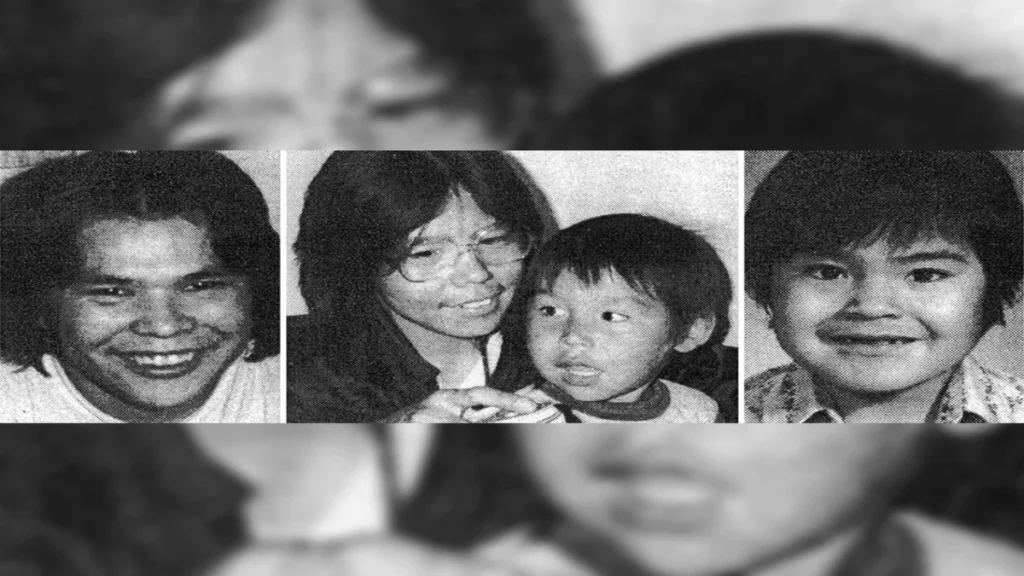
Both Ronald and Doreen Jack were 26 and members of the Cheslatta Carrier Nation. Doreen’s childhood had been marked by abuse, abandonment, and the Lejac Residential School.
The institution was designed to forcibly assimilate indigenous children into white Canadian culture by employing the theme of ‘killing the Indian in the child’.
She gave birth to Russell at 16 before getting into a relationship with Ronnie. When Ronnie and Doreen moved in together two years later, Ronnie fully accepted and loved Russell as his own son. Their son, Ryan, was born in 1985.
Ronnie Jack’s own childhood was vastly different from his wife Doreen’s, as it featured a highly supportive, close-knit family structure. And he hoped to bring this stability into his new family.
By the late 1980s, though, the family situation had collapsed. Ronnie had lost his job at the sawmill, and the family opted to relocate to Prince George in search of better prospects, relying on welfare.
Ronnie’s mother, Mabel, described her son at that time as ‘desperate to work’. Maria, Doreen’s sister, said she saw Ronnie hit Doreen more than once.
Doreen had also begun to drink heavily. Money got so tight that Doreen reportedly stole cough medicine for the children. Ronnie also told his mother that he owed money to unnamed people.
Whatever the stranger at the pub was offering, the family did not have anything to lose by pursuing it.
Doreen’s younger sister, Marlene Jack, would later tell CKPG Today, “It’s a lot of pain. It’s a lot of wondering, like your family is gone. You don’t know what happened. I love my sister with all my heart. I miss her. She was more like a mother figure for us; she always looked out for us. (…) If this didn’t happen, I would still be in contact with her.”
Two Phone Calls
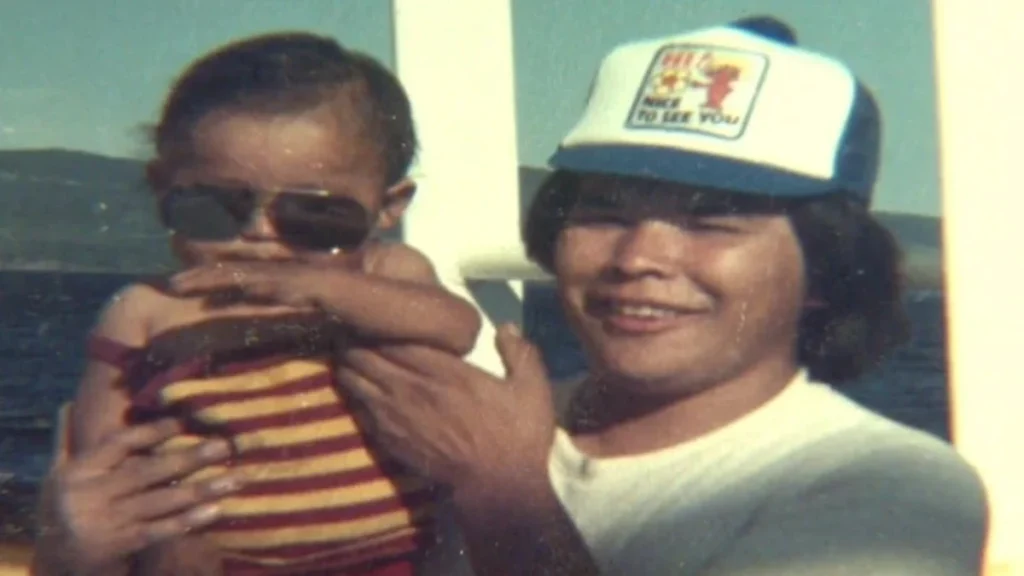
In the early hours of August 2, Ronnie made two phone calls. The first was to his brother in Burns Lake, asking if he could take Russell and Ryan and stay with them while he and Doreen worked the camp job.
However, they had missed the final bus to transport them there that night, so it wasn’t going to work out. Ronnie made the second call to his mother, who was also in Burn’s Lake.
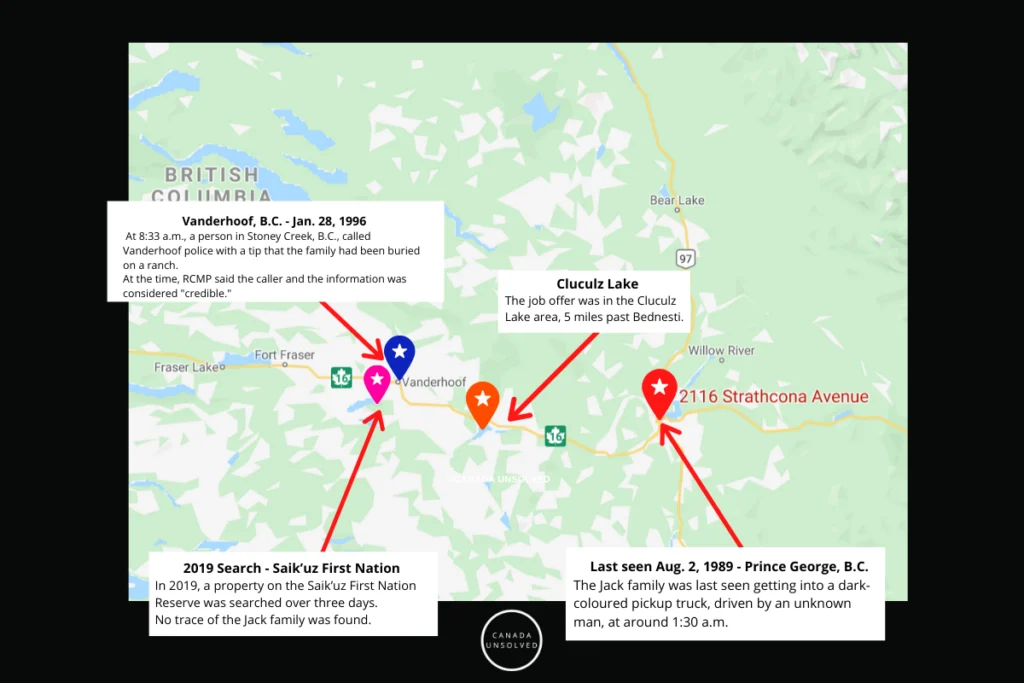
He told her about the man and the job. According to Stay Safe Vancouver, before hanging up, he left Mabel with a cryptic ending, saying, “If I don’t come back, look for me between Vanderhoof and Cluculz Lake.”
Mabel had no way of knowing this would be the only geographical clue she would have in the near future.
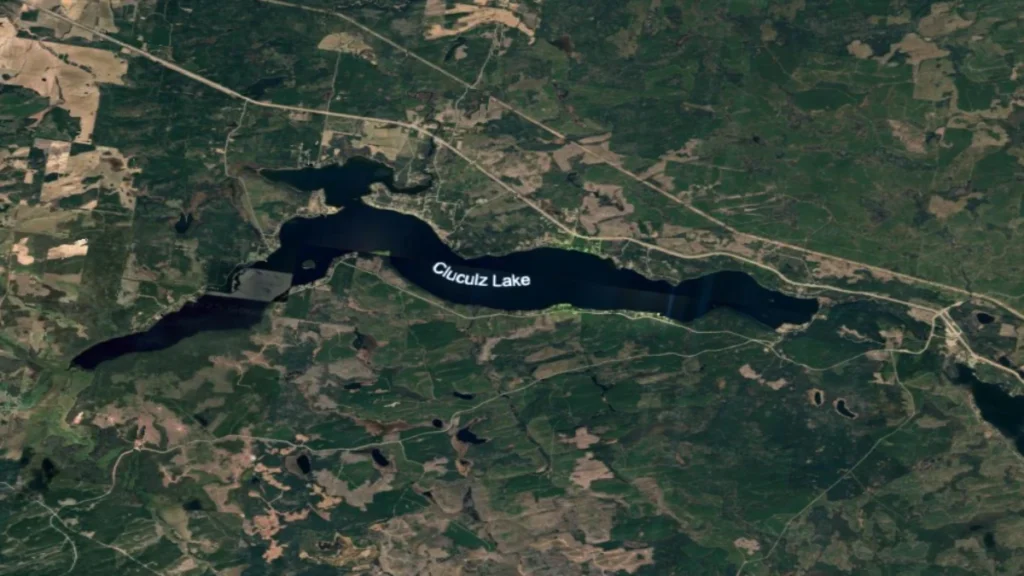
While the calls were being made in the house, the man waited outside. Doreen’s sister also came by the Strathcona Avenue house to see the family loading their belongings in the back of the caucasian man’s four-wheel-drive pickup truck.
It was clothes and provisions they thought they would need for two weeks at the logging camp.
At 1.21 am on August 2, 1989, Ronnie, Doreen, Russell, and Ryan were last seen climbing into the dark colored pickup truck outside their home. The vehicle drove away, and no one saw or heard from any of them ever again.
Initial Investigations Bear No Fruit
Mabel and Doreen’s sisters expected a phone call or a visit once the job wrapped up. After two weeks, when no one arrived, and the phone calls to the Jack home went unanswered, they realized something was terribly wrong.
The family then visited the rented home on Strathcona Avenue and found it the same as it had been the night they left. By the time they decided to officially report the matter to law enforcement, 23 days had passed since the Jacks left.
Initially, the Royal Canadian Mounted Police did not immediately suspect there was foul play. It was common practice at the time for police to assume that a young indigenous family struggling with poverty would just pack up and move to another town to start over.
The police initially maintained the theory despite significant red flags. For example, Ronnie had asked a neighbor to look after the family dogs for a ‘couple of weeks’, which meant they clearly intended to come back. The home was also left fully intact with food in the cupboards.
Officers went through their house and found Russell and Ryan’s school records. It was the kind of paperwork no one leaves behind if they are planning to be away long term.
On September 7, 1989, two weeks after the initial missing-person reports were filed, the RCMP Prince George detachment announced that the Jack family had been located and were safe.
The announcement was wrong, and it is not yet clear, even decades later, where that information came from or how it was verified. After aggressive reporting and pressure from Doreen’s sisters, the RCMP realized their error and formally reopened the case, upgrading it to an active missing persons investigation.
From October to December 1989, investigators began subpoenaing bank records and files from the provincial welfare administration. They discovered the family’s accounts were frozen.
No welfare checks had been cashed or money withdrawn anywhere in the country since the day they left. Considering that a destitute family could not survive or relocate without money or social services, the RCMP shifted its approach.
They publicly acknowledged that the family had probably been lured by a predator. The RCMP also released a composite sketch of the tall Caucasian male to the public and launched a tip drive.
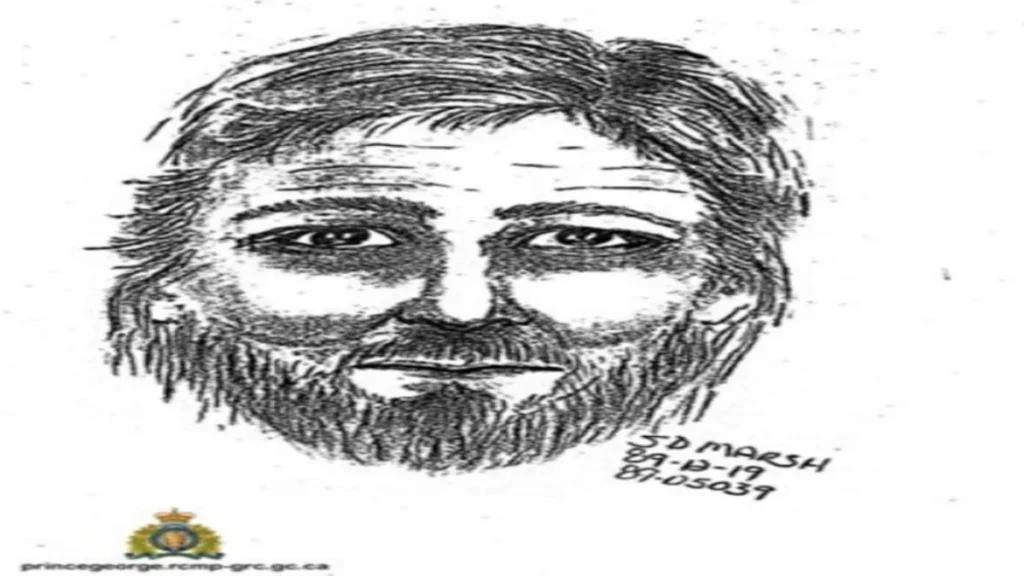
The investigation moved deep into the remote terrain of British Columbia, and detectives audited the check-in sheets, employment rolls and payroll records of every logging camp, sawmill and mobile kitchen in the Cluculz Lake and Vanderhoof regions.
There was no record of anyone named Jack and no camp matching the description given by Ronnie.
By 1992, Mabel Jack and the Prince George Native Friendship Center were fundraising to boost the reward and keep the case in the public. Crime Stoppers also placed a $2,000 offer for information leading to the family’s whereabouts.
The Call From Stoney Creek
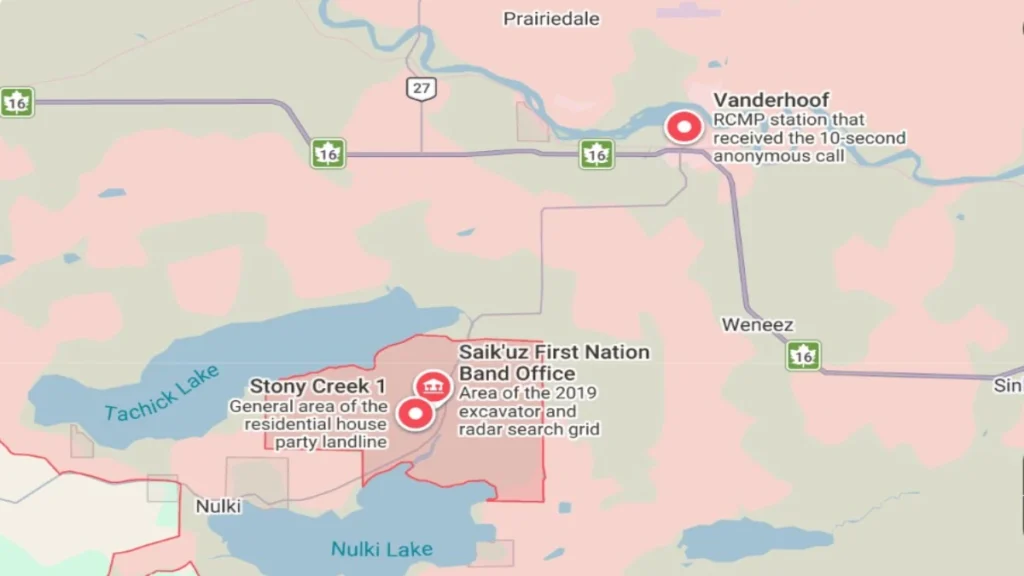
A significant break in the case came years later, in January 1996. A man called the RCMP detachment in Vanderhoof. His message was ten seconds long. According to Canada Unsolved, “The Jack family are buried in the south end of (?) ranch.”
From then on, investigators ran province-wide appeals in local newspapers, asking the caller to phone back and warning that they would publicize the recording if he did not. He never called again.
The audio was sent to the University of British Columbia for voice analysis, which traced the call’s origin to a house in Stoney Creek. Police followed the trail to a property in Vanderhoof where a loud, chaotic house party was ongoing.
Investigators found between six and nine heavily intoxicated partygoers inside the house. Because of the chaos and alcohol consumption, the responding officers failed to secure the scene and document everyone present.
After hitting a wall there, the RCMP focused on the 10-second audio recording. They sent the tape to the University of British Columbia for advanced forensic sound enhancement.
Technicians attempted to filter out the party’s background noise to isolate the caller’s voice and decipher the ranch’s name. While audio filtering suggested it sounded like ‘Gord’s Ranch’, it was mathematically impossible to confirm with 100% certainty.
Armed with enhanced audio, investigators also spent months searching for a property matching the description. They audited land titles, property deeds and local maps across the Vanderhoof and Saik’uz First Nation areas to determine ranches tied to the name ‘Gord’.
Eventually, they found a local rural property south of Vanderhoof which loosely fit the description. The RCMP mobilized forensic teams and brought ground-penetrating radar to the identified ranch.
Technicians scanned the southern part of the property, searching for any anomalies in the soil indicating a mass grave large enough to hold four human bodies. However, the search yielded nothing.
There were no human remains or pieces of clothing that were found, so the case went cold again.
The Launch of E-Pana
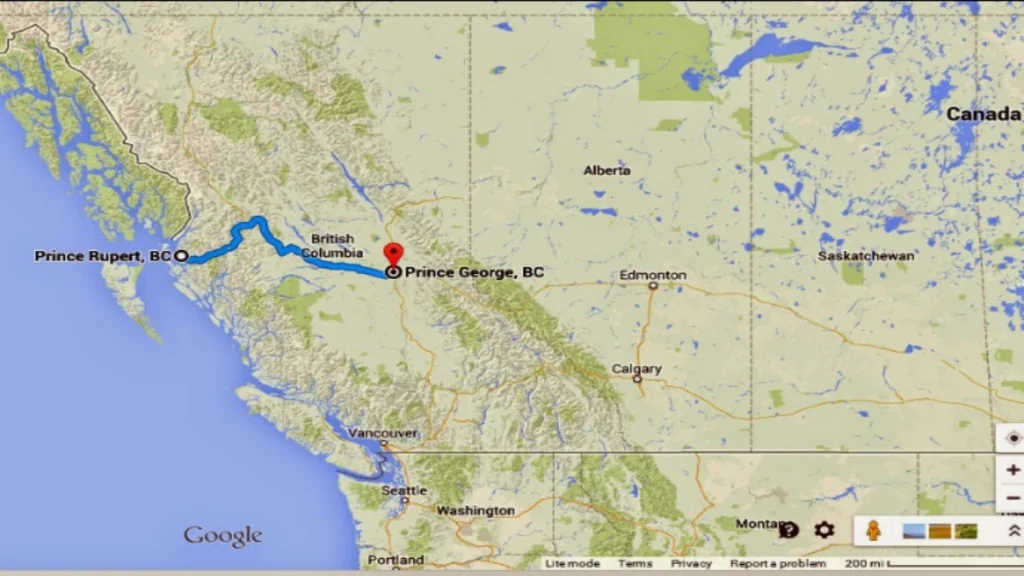
In the mid-2000s, there was systemic pressure in Canada due to the growing number of missing and murdered indigenous women along Highway 16. This forced an institutional shift.
In 2005, the RCMP launched Project E-Pana, which was a special task force designed to investigate whether a single serial killer or a network of predators was responsible for the victims along what became known as the Highway of Tears.
Since they disappeared along Highway 16, E-Pana investigators have flagged her file. The task force started cross-referencing the physical description of the tall caucasian male suspect with any known serial killers who operated in British Columbia during the late 80s.
Some of these included Bobby Jack Fowler and Christopher Below. Below especially had fled to British Columbia and was living there as an undocumented fugitive during the late 1980s.
Below had also been named as a significant person of interest in several missing-person cases in the United States, including those involving Heather Teague and Kristina Porco.
While E-Pana breathed life into the case, the task force was designed with female victims in mind. As Ronnie, Russell, and Ryan also disappeared, the Jack case did not neatly fit the serial killer profile.
Threats of Censure
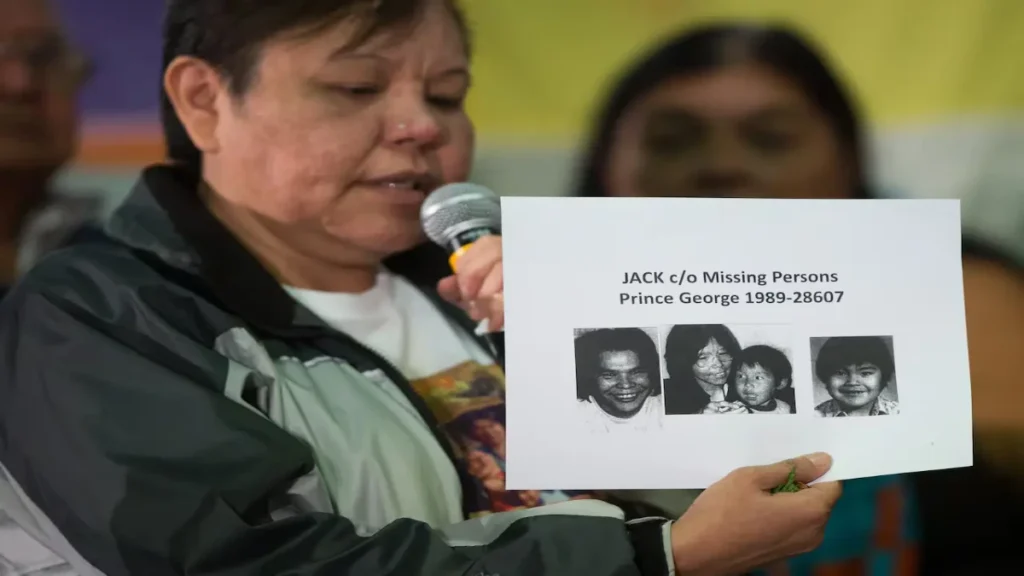
As the case reached the 20th and 25th anniversaries in 2009 and 2014, Doreen’s sister, Marlene, grew desperate. The original witnesses from the First Liter Pub were growing old, so their memories were fading.
Historically, the RCMP operated under a strict policy of information control. So the publicization of unreleased evidence outside official channels presented a risk. Marlene wanted to go to national outlets to blow the case wide open, but the police threatened her, warning that access to the evidence would be revoked if she spoke to national journalists.
Ultimately, in 2017, Marlene could not take it anymore and gave a formal testimony at the National Inquiry into Missing and Murdered Indigenous women and girls, in Smithers, British Columbia. It was also widely covered by CBC News Canada.
When she initially landed in Smithers, they reported her saying, “I might be able to speak, I might not be able to, depending on… I don’t know.”
Marlene not only covered her sister’s family’s story but also her own. She mentioned learning to fear authority, saying, “Always telling us how we’re gonna be so useless. For seven years, every day we hear that,” she testified. “I still haven’t gotten over those… I feel ashamed of my life.”
She reconciled, “So what if they cut you off [from investigation information]? There are other ways you can find out.”
Sudden Pivots to Forensic Action
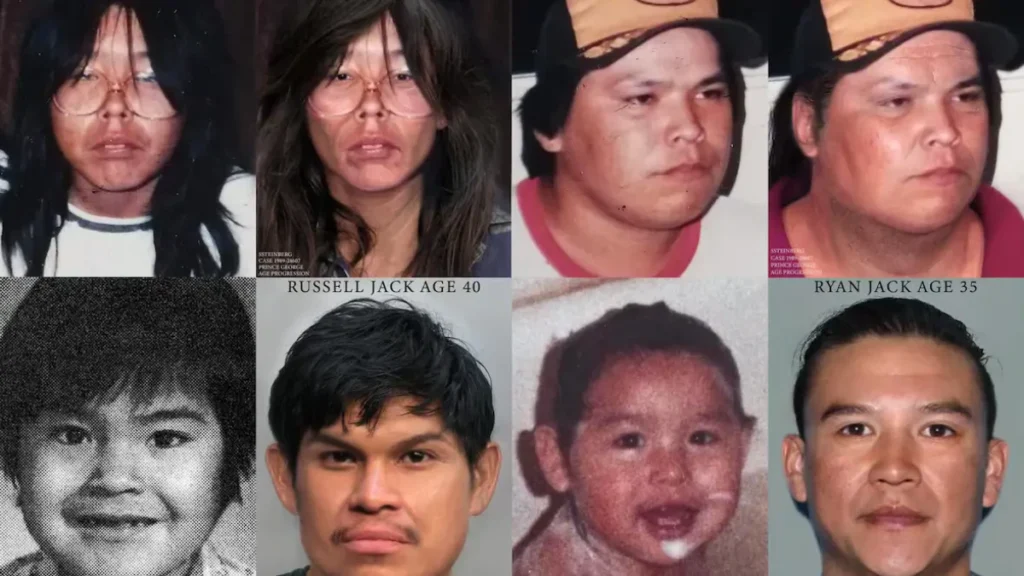
For over twenty years, the geographic leads from the anonymous 1996 Stoney Creek tip sat idle. The shame of the 2017 testimony forced the Prince George RCMP Serious Crime Unit to act on suppressed information.
Utilizing state-of-the-art ground-penetrating radar and machinery, the RCMP launched a three-day tactical excavation. They focused on a property within the Willowvale region, south of Vanderhoof on the Saik’uz First Nation Reserve.
It directly tied back to the 1996 ‘Gord’s Ranch’ lead. Investigators explicitly stated they were searching for buried human remains and the truck. While they tore up massive plots of land, the earth revealed no answers.
August 2024 marked 35 years since the family vanished, and the RCMP decided to use a media campaign to shake loose any deathbed confessions. Prince George RCMP CPL Jennifer Cooper released an address carried by Global News, saying, “We have ideas about where the Jack family may have gone, but we don’t have anything to concretely pinpoint what direction they left Prince George in, if their travel plans changed after the last time they spoke with their family.”
Cooper stated that cracking the case is more difficult, given that in 1989 the police did not have most of the tools they currently use. She added, “No banking records; we were still using cheques back then, no debit cards, no cellphones, no GPS in our cars. A lot of the tools we rely on in our current missing persons investigations just weren’t there for us to access.”
The RCMP also released highly detailed age-processed sketches showing what Russell would look like as a 44-year-old man and what Ryan would appear as a 39-year-old man.
Marlene and Maria still organize and host annual Jack Family Memorial vigils in Prince George. These gatherings take place a few blocks from where the family was last seen leaving.
Representing the next generation of the family, Marlene’s daughter, Bridget, has also stepped into a logistical role alongside her mother and aunt, assisting in the physical volunteer searches and awareness flyers.
Thus far, though the RCMP has conducted hundreds of interviews and reviewed thousands of pages of documents, there is no confirmed sighting, recovered vehicle, or identified suspects. The man from First Liter Pub, who was the last to have contact with the family, has never been named.
According to CKPG Today, RCMP Staff Sergeant Ron Palta said, “We’re appealing to the community and anyone with any information to come forward. That’s why it’s so important to attend these events and let people know we are dedicated to the case. We have investigators in place, but we really need the help of the community and the public to help us move this forward and to bring some closure to the families.”
Anyone with information on the disappearance of Ronnie, Doreen, Russel, and Ryan Jack is asked to contact Prince George RCMP at (250) 561-3300, or Crime Stoppers anonymously at 1-800-222-8477.
For more stories on unsolved disappearances, explore our articles on Craig Frear and Ryan Shtuka.