
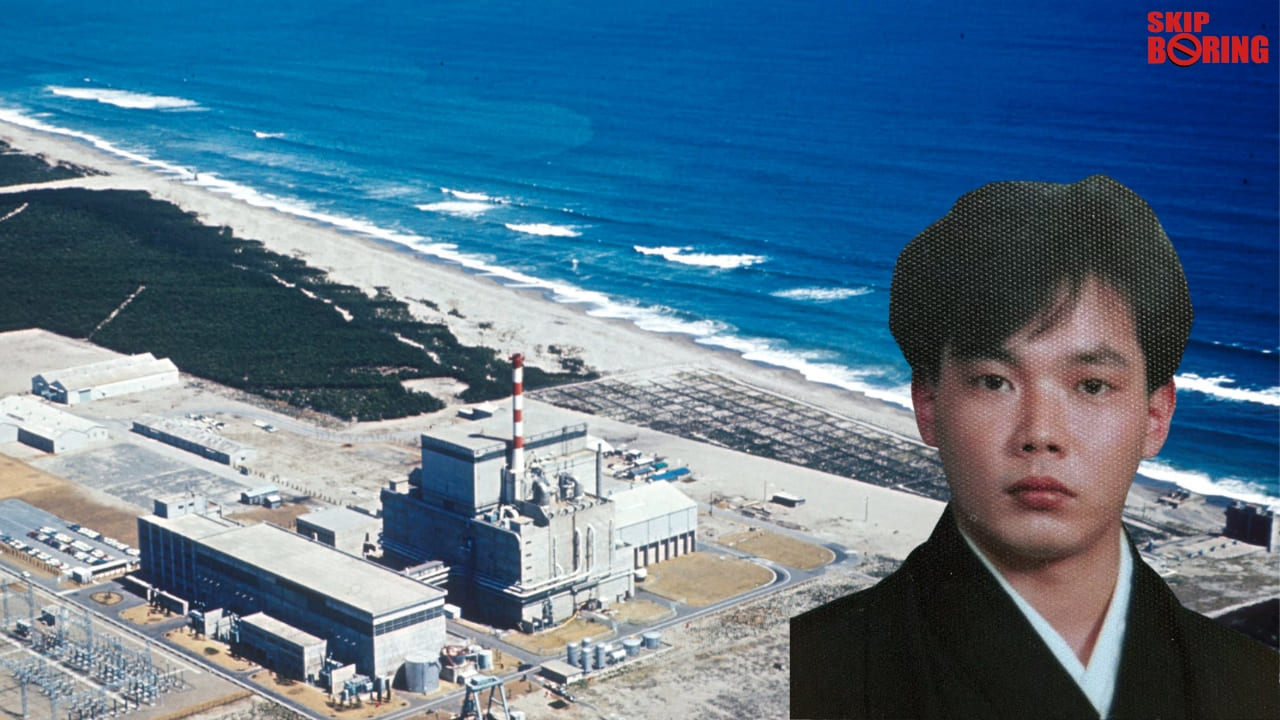
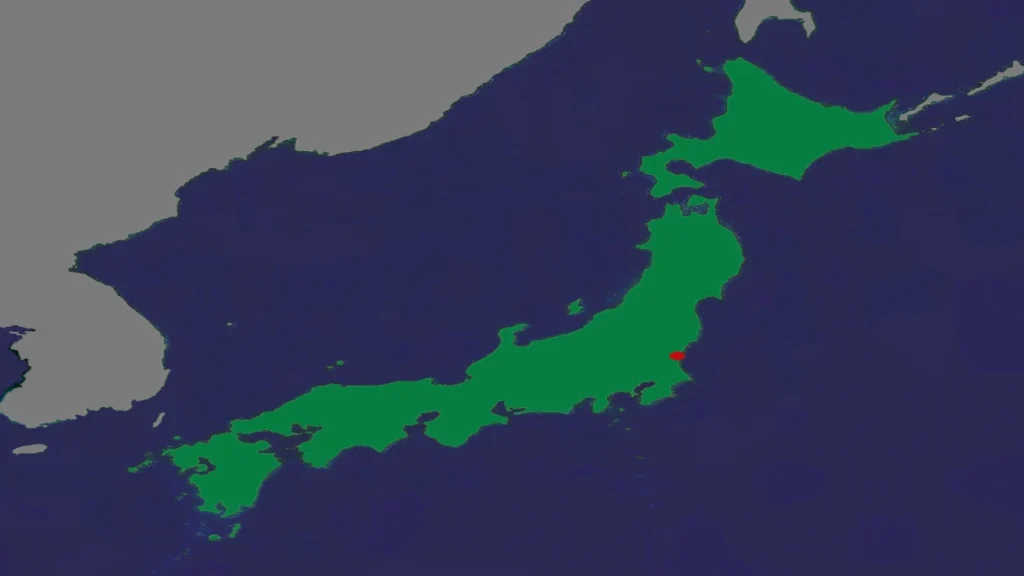
On September 30, 1999, Hisashi Ouchi, Masato Shinohara, and their supervisor, Yutaka Yokohawa, worked on a small batch of nuclear fuel at the Jōyō experimental fast breeder reactor.
The work was done at the JCO Tokai Plant in Tokaimura, Ibaraki prefecture. Their employer, the Japan Nuclear Fuel Conversion Co, or JCO, was a subsidiary of Sumitomo Metal Mining Co.
That day, instead of using the standard automated pump system in accordance with nuclear safety regulations, the uranium oxide was mixed with nitric acid. 54-year-old Yokokawa instructed Ouchi, who was 35, to do it manually to speed up fuel production.
That meant mixing uranium oxide with nitric acid by hand in steel buckets, then handing the bucket up to a colleague on the ladder so they could pour the mixture into the giant storage tank.
Their goal was to shorten the conversion process in order to meet a shipping deadline for the experimental reactor. Under this method, they were in fact adding more uranium to a single vessel than was safe.
Aside from the straightforward safety violations involved in handling uranium that way, they were also breaking regulations regarding the storage tanks. That precipitation tank was not designed to store or mix high-enriched uranium.
It was wide and cylindrical, favouring criticality, which is an uncontrolled and unintended nuclear fission chain reaction. The safe limit for this tank was also 2.4 kg of uranium, and they shovelled 16.6 kg into it.
In the room, they now exchanged positions. 39-year-old Shinohara was standing on a platform and handing the bucket to Ouchi. The latter leaned in and poured the mixture into the precipitation tank. Yokokawa was sitting at a desk some distance from the men.
As Ouchi poured the seventh bucket into the storage tank, disaster struck. Suddenly, the men witnessed blue flashes of light, a shockwave, and sounds they had never heard before coming from the tank.
Radiation alarms blared from the installed gamma-ray monitors. Yokokawa immediately screamed for the men to run for their lives. Within minutes of the men fleeing to a changing room, Ouchi began vomiting and lost consciousness.
The blue light the technicians saw was Cherenkov radiation. A phenomenon that happens when electrons go through nitric acid solution faster than the speed of light in that medium.
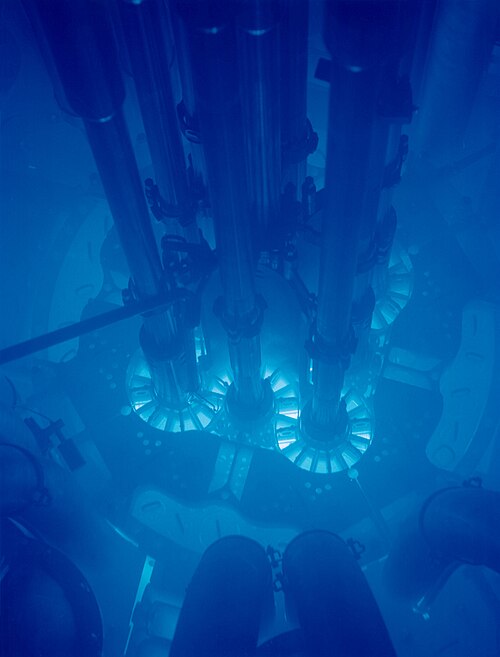
After Ouchi poured the seventh bucket into the solution, the uranium reached critical mass, triggering a burst of gamma rays and neutrons. The technicians were subsequently hit with a lethal dose of radiation travelling at the speed of light.
All three men were rushed to the National Mito Hospital at about 11.40 am for stabilisation. Once the doctors confirmed the victims had rapidly dropping lymphocyte counts, it became clear they had suffered extreme levels of radiation.
They were immediately transferred to the National Institute of Radiological Sciences via helicopter because of the specialised nature of the radiation injuries.
Ouchi had been the closest to the tank and got an estimated dose of 17 sieverts of radiation. Shinohara received about 10 Sieverts, while Yokokawa received 3 sieverts.
To put this into perspective, a dose that is higher than 4 sieverts is deemed lethal. In that scenario, it would take special medical intervention to save the patient. Even then, Hisashi Ouchi’s radiation injuries were likely to be fatal.
The extent of the radiation went beyond the three workers who were rushed to the hospital. A further 60 others, including the first responders that came and bystanders on a neighbouring golf course, had to be checked in for treatment because they had also been exposed to very high radiation levels.
Ouchi and Shinohara had experienced the highest exposure, and their condition was critical, so they were transferred to the University of Tokyo Hospital. Yokokawa remained at the NIRS and was discharged after three months.
Biology of Radiation
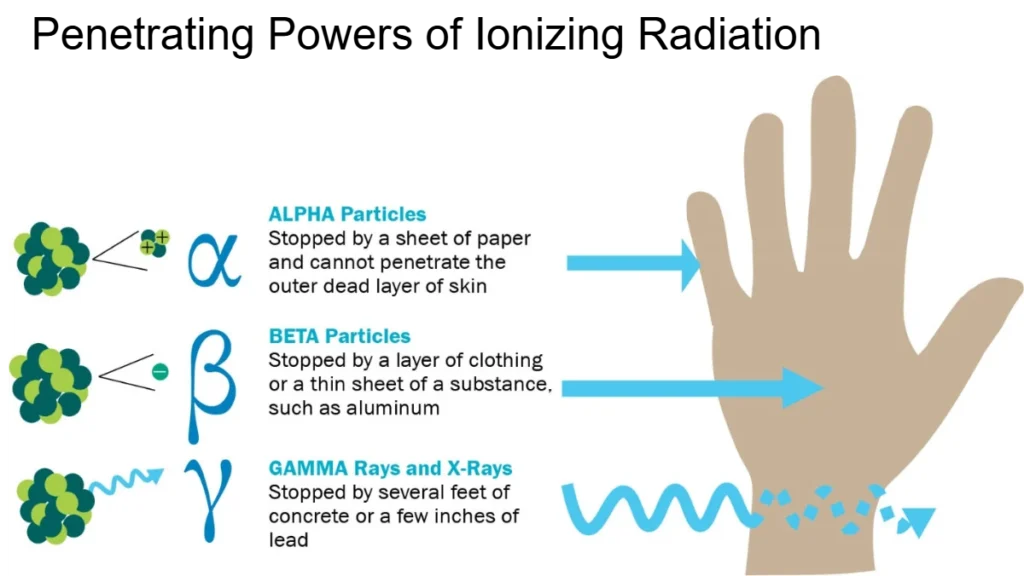
The effects of radiation on the human body are often misconstrued in the movies, as the audience only sees a person vomiting or losing all their hair. In the most literal sense, radiation entails the dismantling of the body at a cellular level.
During a criticality event, radiation strips the electrons from atoms as it goes through human tissue. This damages DNA and creates free radicals, which go on to cause further cellular destruction.
Now, tissue can repair itself following a certain amount of DNA damage. But after a threshold, the repair mechanisms become overwhelmed.
The cells in the body that are most vulnerable to this kind of damage include bone marrow, gut lining, and skin cells. These belong to the body’s main factories, replenishing blood and organ walls.
When radiation destroys the stem cells within the bone marrow, the body loses the ability to produce red and white blood cells.
In Hisashi Ouchi’s case, this presented as a shattered karyotype. This is a medical term for when radiation breaks down DNA to the point that the chromosomes are no longer able to hold their shape.
That meant whatever remained of his bone marrow could not produce any more functional cells. It also meant the transplanted cells would face a body that could not support tissue regeneration.
Eighty-Three Days of Medical Intervention
The University of Tokyo Hospital had one of the facilities in Japan at the time that was equipped to treat acute radiation syndrome. Ouchi was mainly treated by Dr Masamichi Aikawa, a specialist in haematology and radiation-based injuries.
Though this was at a level he had not encountered before. Ouchi had the worst radiation burns in recorded medical history in a living patient. The medical team decided to take the case, doing everything possible to ensure Ouchi survived.
Hisashi Ouchi underwent 83 days of radiation treatment, including multiple peripheral blood stem cell transplants.
Donations for these were provided by his sister to help reconstruct the bone marrow. Ouchi also got regular blood transfusions. He received experimental treatments and injections of skin cells derived from lab cultures.
The medical team’s objective was also to restore the skin barrier. During these interventions, the doctors kept him as sedated as possible. Ouchi’s heart stopped three times during this period, and each time, he was resuscitated.
Ouchi supposedly told doctors at various points of the treatment that he could not stand the pain anymore, and for them to let him die. At one point, he cried out, “I can’t take it any more. … I am not a guinea pig.”
It was unclear whether these words constituted a legally meaningful refusal of treatment. The question was whether the team was obligated to honour Ouchi’s requests. The technician underwent treatment for 83 days before ultimately dying on December 21, 1999.
Hisashi Ouchi’s injuries were too severe, and the official cause of death was listed as multiple organ failure. Ouchi never left the hospital and, for most of those three months, was in intensive care, without a hopeful chance of recovery.
Masato Shinohara was also admitted to the same hospital following exposure to 10 Sieverts. He survived for 211 days before also dying in April 2000 from multiple organ failure.
The Reckoning Following the Accident
Hisashi Ouchi’s case prompted discussion of safety and ethics in highly dangerous fields. Investigators found that JCO had modified its operating manuals without government approval, including dangerous shortcuts, such as using stainless steel buckets to hasten production.
Investigators determined that JCO plant workers were inadequately trained and that safety regulations were frequently violated. The police arrested six people on October 11, 2000, in connection with the accident at the facility.
They included 53-year-old Kenzo Koshijima, who was a former plant manager. Yutaka Yokokawa, the sole survivor of the accident, was also arrested for his role in what happened.
Hiromasa Kato, the chief of the production department, and other subordinates were also charged. The counts included professional negligence resulting in death. They were also charged with violations of nuclear safety laws and labour laws.
All six officials pleaded guilty to the charges of negligence and violations of safety regulations, which led to the deaths of the two men. They still faced a trial, and Koshijima was fined 500,000 yen, equivalent to $4,700 at the time.
He also received the heaviest sentence, three years, and was suspended for five years. Yutaka Yokokawa was given a 3-year suspended prison sentence. The other four officials received prison terms ranging from 2 to 3 years, with suspensions of up to 4 years.
JCO and its parent company, Sumitomo Metal Mining Co., paid 12.66 billion yen in compensation to the residents and local businesses. They also paid 50,000 yen to anyone living within 350 meters of the accident site.
In the aftermath of the accident, the Japanese power companies scaled back their plans from 20 new reactors to 13 by 2010.
Structural Issues, Systemic Failures, and Toxic Work Culture
The accident at Tokaimura was not a rogue act or unpredictable equipment failure. Rather, it was the product of consequential cultural factors that had eroded the adopted safety regulations, which were meant to prevent such incidents in the first place.
The kaizen trap is a key factor. Japanese philosophy emphasises Kaizen, or continuous improvement, prioritising efficiency in the workplace. To plant workers, this could have meant taking unauthorised shortcuts to speed up production.
Supervisors also viewed them as safe measures to reduce the workload, rather than dangerous violations.
Ritualised compliance also came into play. Corporate safety protocols were implemented without sufficient attention. The daily safety patrol records were usually rubber-stamped without necessarily being completed. Hence, safety checks were perceived as a bureaucratic formality rather than a defence.
On top of this, management exerted pressure to increase output and remain competitive. This is considering hierarchy played a significant role, where questioning superiors was seen as disrespectful.
Workers focused on maintaining harmony by agreeing to everything the management and supervisors ordered to meet the targets.
Even when technicians felt a method was improper, they continued. The sense of duty led workers to take risks for the company.
Aftermath
Hisashi Ouchi is known today through various internet discussions of what happened that day. The more sensationalised accounts focus on the physical details of his deterioration during the last 83 days.
Others ask what the case means for how Japanese nuclear fuel producers now perceive safety.
The Hisashi Ouchi story is not one of a soldier or a test subject who knowingly accepted the risk of harm. He was a victim of the institutional cracks that led to a criticality event. The pressure to work faster did not originate with him.
He poured a bucket of high-grade uranium solution into a tank that failed regulatory standards because that was what his job required.
If you’re interested in learning more about sealed systems, scientific ambition, and how people react under pressure, check out our articles on Project West Ford and Mars500.