

On the night of April 5, 1986, Penny Cayedito prepared to go out to a bar in Gallup, New Mexico. She had arranged to leave her three daughters, Anthonette, Wendy, and Sadie, with a babysitter at their apartment off Route 66.
Just before she left, a family friend named Emiliano ‘Emo’ Gardella paid a visit, bringing nine-year-old Anthonette flowers and gifts. It was the third time he had done so in the previous days, and it rubbed the girls the wrong way.
He also had Anthonette sit on his lap while talking to her, which made her even more uncomfortable. Sadie, who was 7 at the time, stepped in, grabbed Anthonette, and took her and five-year-old Wendy into their bedroom.
Gardella left shortly after. Penny, who thought nothing of it, also exited the house later for the Talk of the Town Bar. She met up with her friend, Ron Perry, but after a short while, they got into a loud, intense argument.
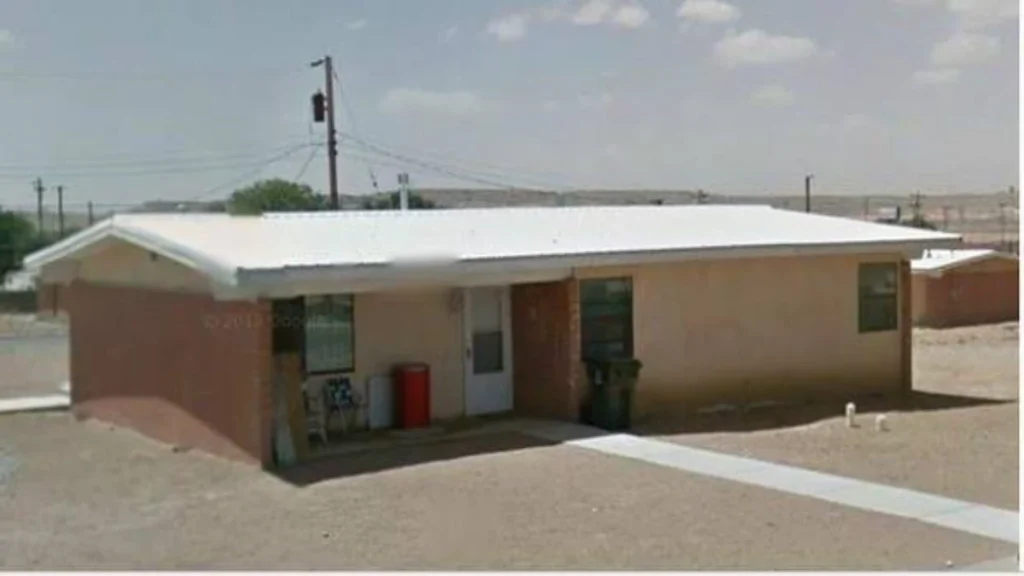
This prompted Penny to leave, and she got home around midnight and sent the babysitter home. Instead of going straight to bed, Penny stayed up with Anthonette playing cards in the kitchen for almost three hours.
Around 3.30 am, Perry knocked on the front door and began banging on the bedroom window. Penny told the children to ignore the knocking, and Perry left to stay at a house down the street.
Soon after, another knock was heard at the front door. Penny did not wake up, but Anthonette went to check. Wendy had heard a male voice at the door claiming to be their ‘Uncle Joe’.
She also went to check who it was, but she was far behind her sister, who was already at the door. Trusting the voice, Anthonette opened the door to see two unfamiliar men who grabbed her.
Wendy witnessed in shock as the men took her sister from the house and threw Anthonette into their brown vehicle parked outside before it sped away. Terrified and confused, the five-year-old went back to sleep, not understanding the gravity of what she just witnessed.
The Girl Who Loved Michael Jackson
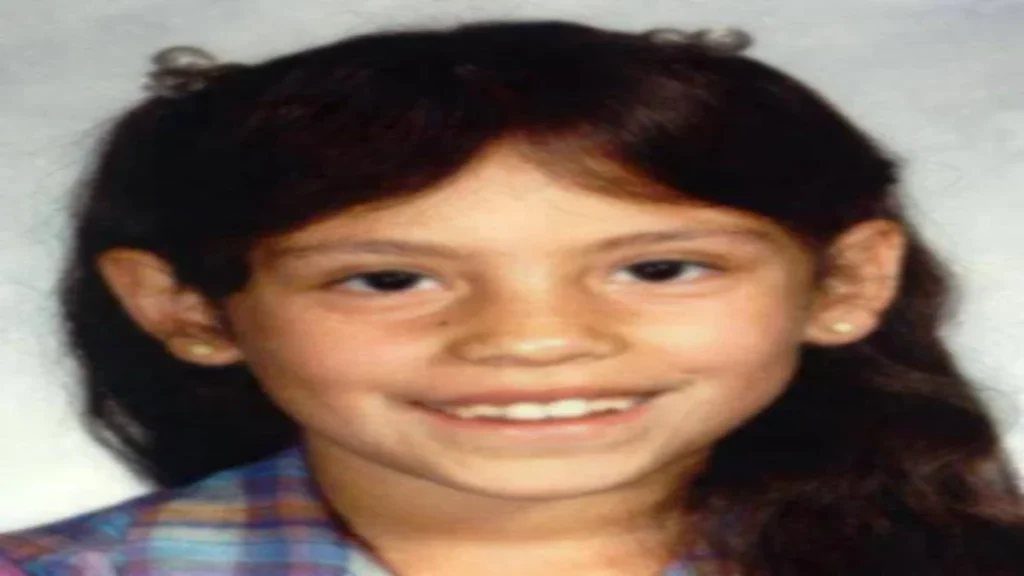
Anthonette Christine Cayedito was born on December 25, 1976, in Gallup. Her mother, Theresa Penny Cayedito, was a member of the Navajo Nation, and her father, Larry Estrada, was a carpenter.
A few years after she was born, her parents separated. Penny took custody of the children and moved Anthonette, Sadie, and Wendy into the duplex apartment off Route 66. From then on, Penny raised the girls as a single mother.
Growing up in a single-parent household came with its problems, as Anthonette became the unofficial other parent to her sisters.
At eleven years old, she enrolled at the Lincoln Elementary School in Gallup. Her teachers described Anthonette as level-headed, fiercely dependable, and exceptionally caring. Her father, Larry, summarized her maturity, saying she was 9 going on 15.
Anthonette showed strong physical drive, pushing herself at school and even winning the prestigious presidential fitness award during her fourth-grade year. Outside of school, she was a typical child of the 1980s.
She loved the color purple and spent her free time listening to Michael Jackson and Ronnie Milsap. Anthonette was also deeply involved in her faith and attended weekly local Bible Study meetings.
Morning After and a Fruitless Search
At 7 am, on April 6th, Penny got up to get the girls ready for Bible school and found Anthonette’s bed empty. Her clothes and other things were still there, but there was no sign of the girl.
She initially believed that Anthonette had just woken up early and stepped into her sister’s vacant bedroom.
When Penny didn’t find her there, she stepped outside the apartment and saw a large group of neighborhood children who were helping search for a missing dog. Penny assumed Anthonette had simply run out in her nightgown to assist.
She walked over and asked the group about her daughter, but they hadn’t seen Anthonette anywhere. Realizing she was actually missing, Penny returned to the house and called the Gallup Police Department.
Unfortunately, they met her with immediate resistance. In 1986, missing-child protocols were different, and they initially dismissed the urgency, telling Penny Anthonette hadn’t been missing long enough to warrant an official report.
Frustrated and panicked, Penny continued to search the neighborhood alongside the frantic neighbors. Later that day, the police agreed to publish a missing person report, and patrol units arrived at Penny’s duplex.
By then, Wendy woke to find the household in panic. Her mother was distraught, neighbors were in and out of the house, and police officers were questioning people.
Sadie did mention the knocking at night and told the police she and Anthonette heard it before going back to bed. Terrified that she may get in trouble for allowing a stranger to get into the house, Wendy kept her mouth shut about the events of the previous night.
Police found no evidence of forced entry or a physical struggle. Nothing of any value was also stolen. As a result, investigators confirmed that Anthonette’s regular clothing and the glasses she needed to see were left untouched in her room.
This meant she had not run away voluntarily. Police also noted that both the front door and the outer screen doors were left unlocked.
Investigators considered a high probability of foul play and requested the assistance of the New Mexico state police to launch a three-day grid search of southwest Gallup and the surrounding foothills.
Searchers scoured the rugged terrain in four-wheel-drive vehicles and dirt bikes. Scent-tracking search dogs were also brought to the Cayedito apartment, but they failed to pick up a trace of Anthonette’s scent leaving the house.
Hundreds of concerned citizens, friends, and neighbors swarmed the area in hopes of helping. But the heavy foot traffic proved counterproductive for forensics. State police Sergeant Bill Johnson said that if there were any clues left, they were trampled.
The physical search turned up only tire and footwear tracks that were already there before Anthonette went missing.
Investigators also questioned Ron Perry, and he said he and Penny had an argument that night. He said he came later that night to check on Penny, but she didn’t answer the door, so he left to sleep at a neighbor’s house down the block. Officers corroborated this alibi with the homeowner.
They conducted more than three dozen interviews during this time with friends, neighbors, and other relatives within the first 72 hours. At this point, Sadie mentioned hearing a knock and thinking it could be one of their uncles.
Morbidiology reported Gallup police detective Amon Hinshaw stated, “My gut feeling is that some family members may not be telling us all they know.”
They began tracking down a specific maternal uncle, but he had an airtight alibi, and investigators ruled him out. With the physical desert grid search yielding no clues, the focus turned to public appeals.
Within days, a formal financial reward was announced to incentivize tips, but it failed to generate immediate actionable leads. As the initial search wound down with no signs of forced entry or struggle, Penny explicitly told the Charley Project and investigators that Anthonette must have known whoever was at the door.
Penny claimed that her daughter was far too level-headed and cautious to ever open the door for a stranger at that time of the night. Five-year-old Wendy was too afraid to speak about the men she saw, and Penny hid the fact that Gardella had paid them a visit hours earlier, seeming particularly interested in Anthonette, so the investigation hit a brick wall.
The active daily field investigation stopped within weeks, and the investigation stalled until April 12, 1987, when a frantic untraceable 40-second call to the Gallup Police Department reignited the search.
The Call
On April 12, 1987, barely a year after the abduction, the Gallup police department got a call from a girl who claimed she was Anthonette. The dispatcher urgently asked where she was, and the girl replied that she was in Albuquerque, New Mexico, 140 miles east of Gallup.
Before she could give a specific address, the caller was interrupted by loud noises and a scuffle in the background. The Charley Project reported the voice of a male voice shouting, “Who said you could use the phone?”
The girl then let out a terrifying scream before someone else forcefully slammed the receiver down, cutting the transmission. Police then played this audio to Penny, who concurred that it was her daughter.
According to Unsolved, she said, “I listened to that tape over and over and over. And just by the way she says her last name, and the way she screamed, sent chills all over my body. A mother knows, and I know that was her.”
The phone call re-energized a case that had gone cold, and police had their first active reason to believe the girl was still alive and being held captive within state lines.
However, because 1987 emergency routing technology required a longer sustained connection to locate a terminal, the 40-second call was too short to trace. Investigators were left without an address, neighborhood, or a phone booth location.
The FBI and New Mexico state police did launch widespread sweeps of suspected safe houses, motels, and other places known for crime, but there was no trace of the girl. Police kept the audio restricted to the parties in the investigation for two years.
However, they became desperate for leads and released the audio over the radio for the first time in 1989. This triggered a flurry of new tips across the Southwest, but each led to a dead end.
Sightings of Anthonette
Tips still kept coming in. A man told police in October 1989 that he saw a girl he recognized from the missing-person posters at a truck stop off Interstate 70 in Missouri.
She was alone, in torn jeans and a dirty white T-shirt with a red bandana and a large watch. He noted the girl acted afraid of people.
Police and state troopers swarmed the I-70 corridor and truck stop to interview employees and review truck logs but found no vehicle descriptions, physical evidence, or directional tracking that proved the girl was Anthonette.
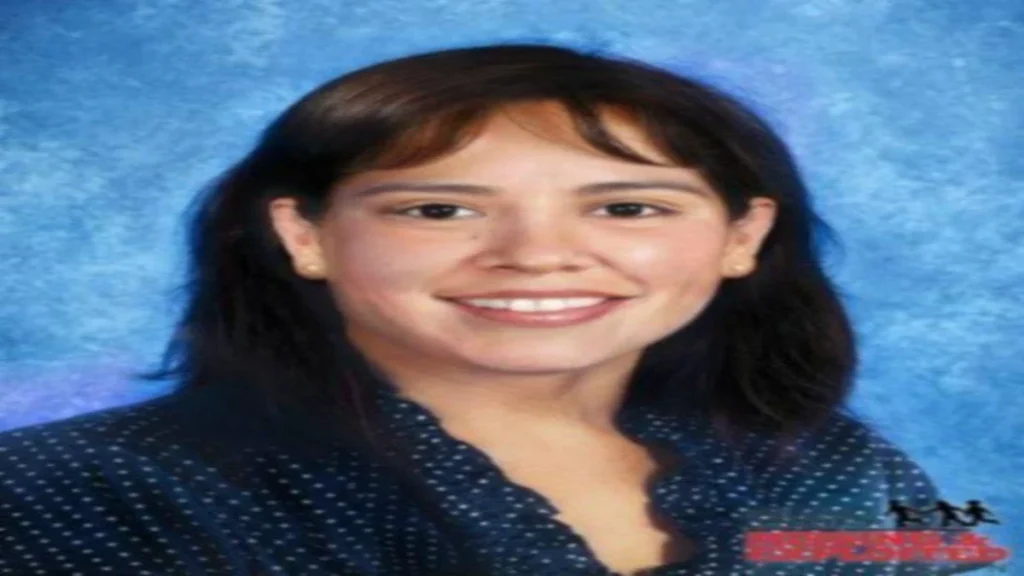
In 1990, the FBI also released two computer-enhanced photographs showing what Anthonette may have looked like at the age of 14. A few months later, FBI Agent Kevin Miles reported a possible sighting of Anthonette in Carson City, Nevada.
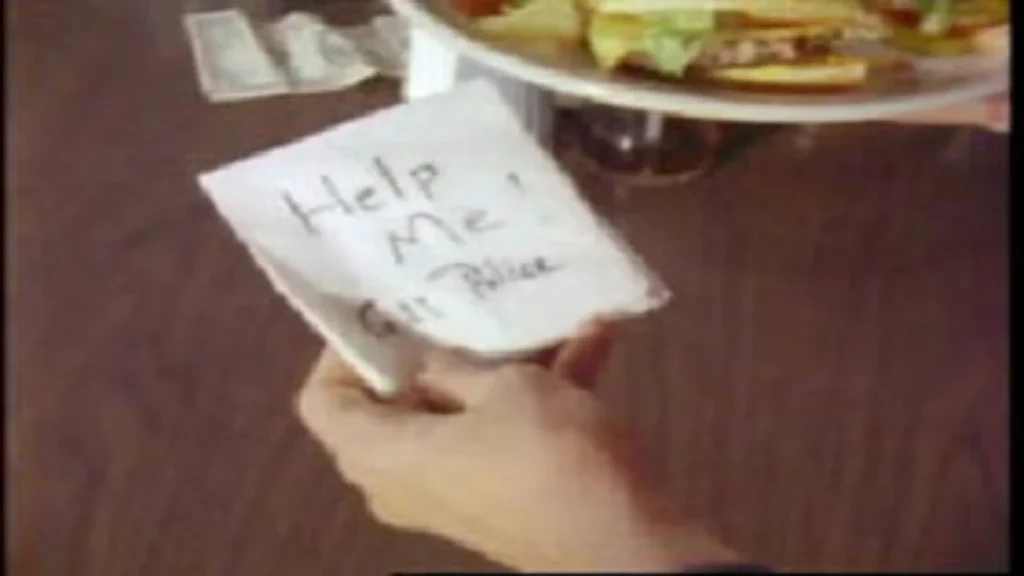
He told Unsolved, “A waitress in a restaurant in Carson City told the Carson City police about a strange incident that she had witnessed that particular day. She waited on a table where a male and a female sat, both rather unkempt, along with a small girl about 14 or 15. The little girl would deliberately drop a utensil on the floor. The waitress put the utensil back on the table, and the little girl grabbed her hand. And the waitress thought nothing of it and went about her business. The threesome left the restaurant, and the waitress went back to the table and began to bus the table. She lifted the plate belonging to the girl; beneath it was a napkin that said, “Please help me, call the police.” By the time she realized what had happened, the couple and the girl were gone.”
The lead ultimately went cold and remains an unconfirmed sighting because investigators could not track down the individuals or recover identifiable fingerprints. It led the FBI to re-interview the family, prompting Wendy to finally disclose what happened that night.
What the Sisters and their Mother Said
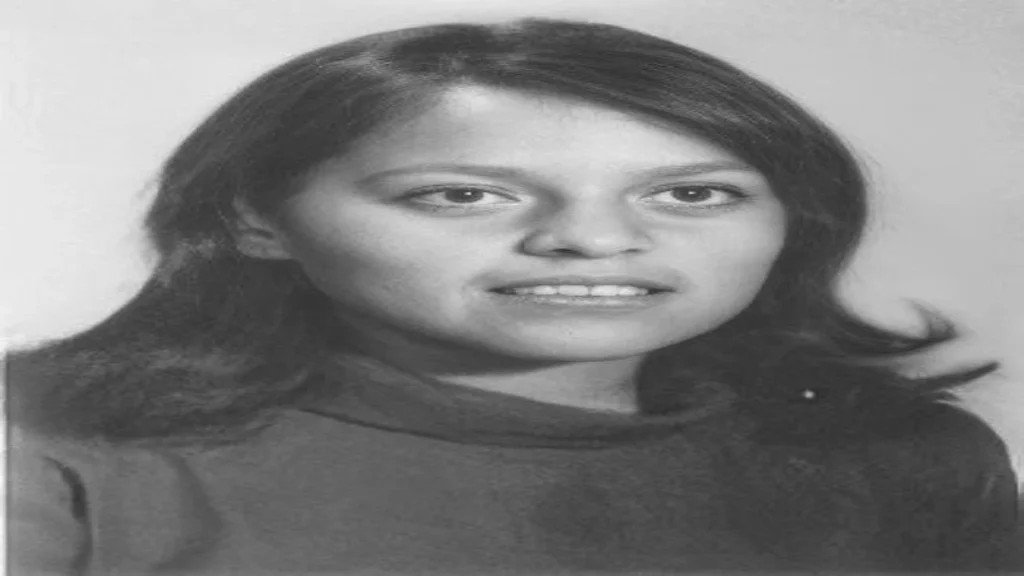
Five years after the abduction, 10-year-old Wendy was interviewed by detectives away from her home environment. This time she gave details about the second knock that fateful night.
She told them Anthonette went to answer the door after a visitor, calling himself ‘Uncle Joe’, asked to be let in. According to crimewatchers.net, Wendy said, “I remember the police asking me what happened, and I had thought then that it was one of our uncles at the door. That turned out not to be true,” she says. “Really, I’m not sure what happened to her.”
Wendy explained that as soon as the door opened, two unidentified men forcefully took Anthonette and dragged her to a brown van.
Because of the darkness and her position in the house, Wendy was not able to see the men’s faces. When asked why she kept this secret for five years, Wendy admitted she was paralyzed by fear and worried she would upset her mother.
When detectives cross-referenced Wendy’s new account with that of her older sister, Sadie, there were inconsistencies. Sadie, who was seven at the time of the disappearance, said she wasn’t sure a second knock ever happened.
Because Sadie fell back into a heavy sleep after the initial disruption, she could not back up Wendy’s memory of the ‘Uncle Joe’ van or the brown van. Penny also never once mentioned a second knock to the police.
That changed during an intense interrogation with the FBI in 1994. Penny changed her story, now admitting that she did, in fact, hear a second knock between 3.30 am and 4.30 am.
Penny claimed she told Anthonette to answer the door while she stayed in bed. She also told agents that she lay in bed for about an hour after the knock before finally getting up to check the house but could not find Anthonette. Apparently it was almost light by the time she got up.
This destroyed the original statement in 1986, which Penny gave police, claiming she went to bed at 3 am and woke up at 7 am to find her daughter missing.
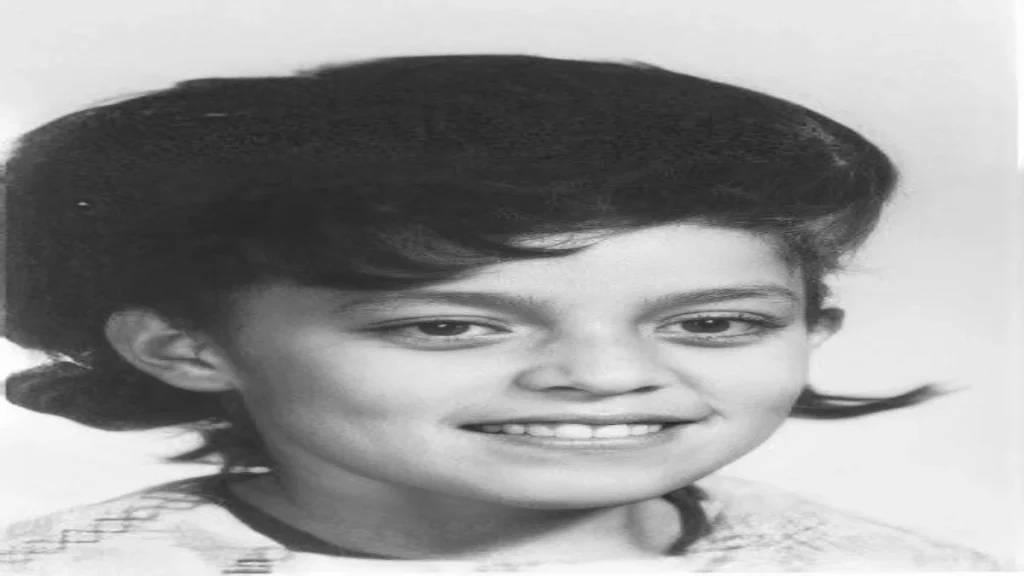
Faced with the realization that the investigators no longer believed her grieving mother’s narrative, Penny cracked, according to WebSleuths, and asked the agents, “What if I told you Emo and I did this, would we both go to prison?”
Penny admitted that she, Emiliano ‘Emo’ Gardella, and Ronald Perry had been together that night. She confessed to telling Gardella that Anthonette was becoming a problem, and that Penny wanted a better life.
Gardella agreed to an abduction, and Penny asked where and how it would happen. He told her she was better off not knowing the details, but when Anthonette answered the door, Penny knew what was happening.
Websleuths reported Gallup police department detective Marty Esquibel comment saying, “I’m pretty confident Penny had knowledge of who took Anthonette based on her failing a polygraph test administered by the FBI.”
Armed with this confession, investigators swooped in on Gardella. However, Gardella denied the entire plot and refused to cooperate. Law enforcement also lacked physical evidence linking him directly to the brown van.
Prosecutors evaluated the case but determined that Penny’s statement was phrased partially as a hypothetical question, and she was in severe substance use withdrawal. This was legally insufficient to get a conviction without corroborating physical evidence.
Cold Human Trafficking Case?
There was no body or crime scene. Gardella, Penny, and Perry could not be charged. Penny remained free, though her health deteriorated rapidly from years of heavy alcoholism.
The FBI kept the case file open with the intention of getting a high-pressure deathbed interrogation in early 1999. This was not the case, and she succumbed to liver failure and cardiac issues on April 18, 1999, in Tucson, Arizona, at 46.
The trauma of that April morning cast a permanent shadow over Anthonette’s sisters. NBC News reported Wendy’s statements later on, saying, “It just broke my whole family up. It was a very dark and dysfunctional time.”
She also expressed deep frustration over how the local Gallup police initially mishandled the investigation. When they also learned about the hypothetical confession, which was only disclosed to them after Penny died, it shattered their remaining sense of family structure.
Wendy then openly stated she believed Penny was deliberately involved in the disappearance of her own child. Sadie has remained private but has contributed to the case, revealing the unease she felt with Emiliano Gardella that early evening.
Anthonette’s father, Larry Estrada, never ceased efforts to find his daughter. He passed away in 2012 without ever learning the truth of what happened. Ronald Perry was admitted to the Noble Correctional Institution in 2016 to serve a prison sentence for unrelated sexual battery charges.
Because he was one of only two people alive who were persons of interest, cold case investigators sought him out. In 2026, investigative journalist Crystal Gutierrez located Perry in the Ohio correctional system, and he agreed to an interview.
He admitted being the first person to knock on the apartment door that night in April 1986. Perry claimed that he did not hear plans to explicitly sell or traffic Anthonette, but that Emo and Penny had an opportunity to plan for the abduction the night they were out.
His recollections clarify Penny’s intention and mood at the time. Forty years later, there is still no trace of Anthonette Cayedito. The FBI has released age-progressed photos in English and Navajo showing what she would look like
Anyone with any tips is encouraged to contact the FBI at 505-889-1300 or tips.fbi.gov, or the Gallup police at 505-863-9365.
For more stories on unsolved disappearances, explore our articles on Patricia Meehan and Amy Wroe Bechtel.