

Sometime between the night of May 26, 1973, and the following morning, 24-year-old Rory Gene Kesinger, who was being held at the Plymouth County jail in Massachusetts, managed to leave her cell and make her way into the laundry room undetected.
Using a smuggled blade, she began manually sawing through the heavy iron bars and spent hours quietly cutting away at the metal until she had removed enough to create a gap wide enough for her frame to squeeze through.
Rory then tied the prison linens in the laundry room into a makeshift rope strong enough to support her descent down the exterior wall. Securing the linens to the window frame, she exited through the now-open gap down the brick wall.
Once her feet hit the ground, Rory slipped away into the night. Plymouth County Sheriff Peter Forman said someone must have been waiting for her in a vehicle nearby and they sped off.
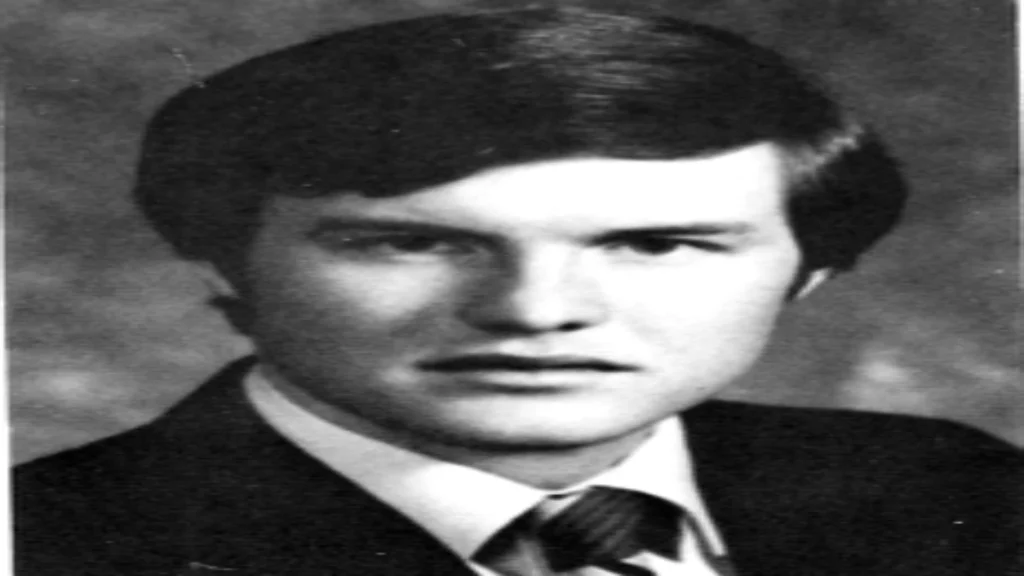
According to the Oak Hill Research blog, he stated, “In the old prison, which is still up, you can still see the cut marks on the bars where she cut out.” At 6 am, the morning bell rang for a mandatory head count.
A guard approached the cell blocks, ticking off names until he reached Rory’s section, only to find the cell empty. A frantic search of the cell led interior guards to the laundry room, where they found a gap in the wall where heavy iron bars once sat. A rope of sheets still dangled outside.
Police treated Rory as armed and dangerous during the ensuing search, considering her recent violent history. Roadblocks went up across Plymouth County and routes headed to Boston. Despite all this, no one ever saw her again.
The Arrest in Pembroke
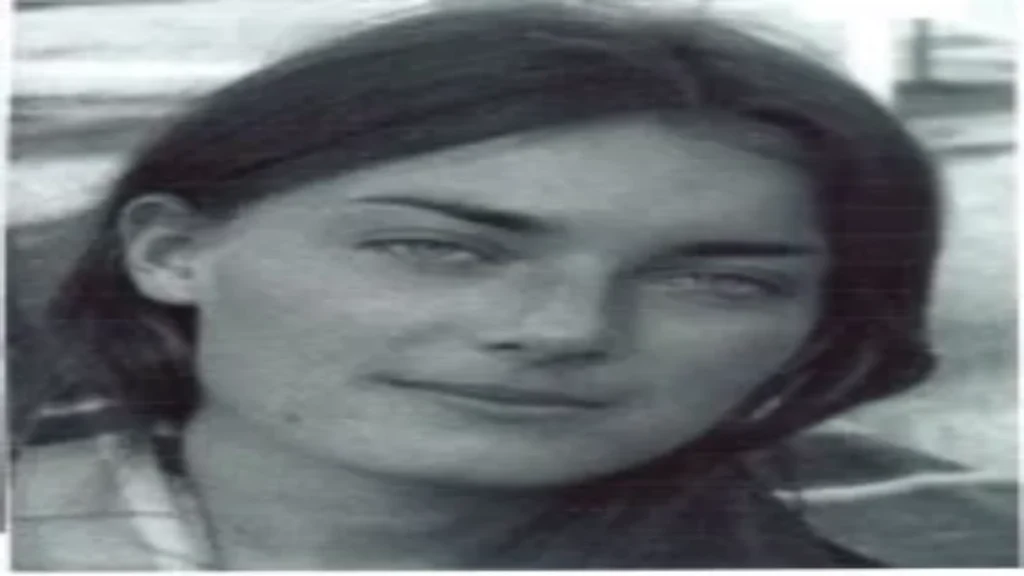
In January 1973, before her daring escape, Pembroke police lieutenant Willard Boulter helped neighboring Stoughton police serve a standard traffic violation notice at a local home. What was supposed to be a routine administrative check turned chaotic as several individuals, including Rory Kesinger, fled out the back door as police approached.
Police quickly realized the home was a fortified hideout for an organized crime group and gave chase. Rory bolted into the nearby woods wearing nothing but lingerie, and Boulter gave chase, catching her after she tripped over a rock.
She claimed to have been raped, and Boulter took her back to the house, believing that she was an innocent captive who may have been confused following the raid. At the house, sensing the lieutenant’s guard was down in a moment of distraction, Rory dropped the victim act and lunged at him, trying to get his service weapon.
Boulter reacted quickly and pushed her away, creating distance between them. Only then did he realize they were dealing with a highly dangerous suspect and immediately called out to other officers for backup.
Rory tried a different tactic and slapped the light switches off. Using the cover of darkness, she stripped Boulter of his service weapon and slipped away into an adjacent room to position herself.
Boulter turned the lights back on before finding Rory in the next room. According to a Medium piece, she calmly pointed the weapon at his head, saying, “I’m sorry, but I have to kill you.”
Before she could pull the trigger, Boulter closed the distance between them, knocking the muzzle of the gun aside. He used his weight to overpower Rory and slam her down onto the floor.
After a violent scuffle, Boulter managed to secure her arms and snap on the handcuffs. According to Crimewatchers, he said, “You would just not think that a nice- looking girl like that would kill you in a heartbeat.”
When she was taken to the hospital, Rory claimed that Boulter had assaulted her, backed by the fact that she had no clothing left. It had also come off during the fight. More officers arrived to find the young woman dressed in a hospital gown.
In a bizarre turn, according to Medium, Rory managed to steal another officer’s service weapon and hold it at him, saying, “Die, you f—king pig.” He managed to subdue her in another short scuffle over the weapon.
Realizing her extreme volatility and uncanny ability to disarm trained law enforcement officers, police had her placed in heavy physical restraints. She was also kept under 24-hour armed guard while doctors did an evaluation.
Once the hospital officially released her, the police refused to transport Rory under standard protocol, preferring a multi-officer detail for escort from the medical facility. This was to prevent any escape or disarming attempts.
At the police station, investigators officially processed her as Rory Gene Kesinger, but they quickly determined she had been using an extensive array of aliases across multiple states.
She had targeted two police officers with deadly force in a span of less than 24 hours. Prosecutors bypassed the lesser assault charges and charged her with two counts of assault with intent to murder.
Because of the gravity of her crimes and her history as a cross-country fugitive, a judge denied her standard bail, citing flight risk. She was remanded to the Plymouth County jail to await her upcoming trial.
Because of the violent arrest, the jailers were warned she was highly dangerous and unpredictable. Despite these warnings, Rory was still set up in the general population, and this eventually meant access to the laundry room.
It was during this holding period while she was awaiting trial that she may have corrupted someone from the inside who slipped her a hacksaw blade.
A Strict Household and an Ironic Turn of Events
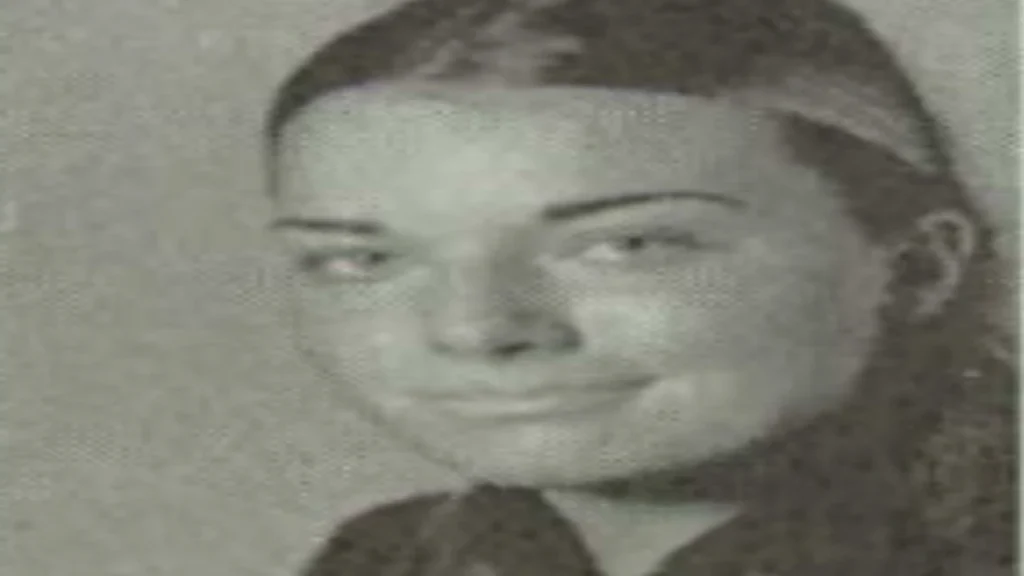
Long before Rory became the gun-running, jailbreaking outlaw, her upbringing was anchored by an authoritative father. Researchers at the Lost Girls blog uncovered a letter her father wrote.
At the time, her father was working as a security director tasked with preventing shoplifting at the Myles Brothers department store.
An excerpt of the letter read, “We in security realize that shoplifting is sometimes brought about in our younger set because of their desire to feel ‘in’ with friends. Whatever that ‘thing’ is, kicks derived from theft would no longer be if these same youths were educated as to the consequences a court conviction would have on their young lives.”
The tragic irony is that by 1963, Rory had already run away from home, and by 1969, when the letter was written, she was no longer shoplifting and robbing stores for kicks but doing it as a way of life.
That single act of rebellion by running away at 15 allowed her to permanently cut ties, and her parents never saw her again. Rory didn’t stay in one place and drifted across Kansas, California, Texas, and even Alaska.
She drifted from one state to another, embedding herself in heavy drug subcultures and escalating from petty crimes to high-stakes felonies. To successfully stay ahead of the local police, Rory became a master of deception.
She shed her identity, moving between fabricated personas which included ‘Linda Lynn, Kock’, ‘Jennifer Marie Lynn’ and ‘Penny Susan Johnson’. Rory even altered her documents, sometimes signing off as ‘Kessinger’, with a double ‘s’ to throw off the basic fingerprint and cross-state record checks.
As a result, she became a priority target. Provincetown police detective Warren Tobias summarized her according to Oak Hill Research, saying, “She was actively wanted all across the country.”
Rory’s criminal evolution culminated when she aligned herself with a violent organized bank robbery crew. By then, she wasn’t just a passive accomplice but an active threat.
The gang lived on borrowed time, though, and the law caught up to them with lethal force. According to the Oak Hill Research blog, one of Rory’s closest accomplices was soon cornered by the FBI during a subsequent bank robbery. Refusing to surrender, he engaged in a shootout with the authorities and was killed.
The Lady of the Dunes Theory
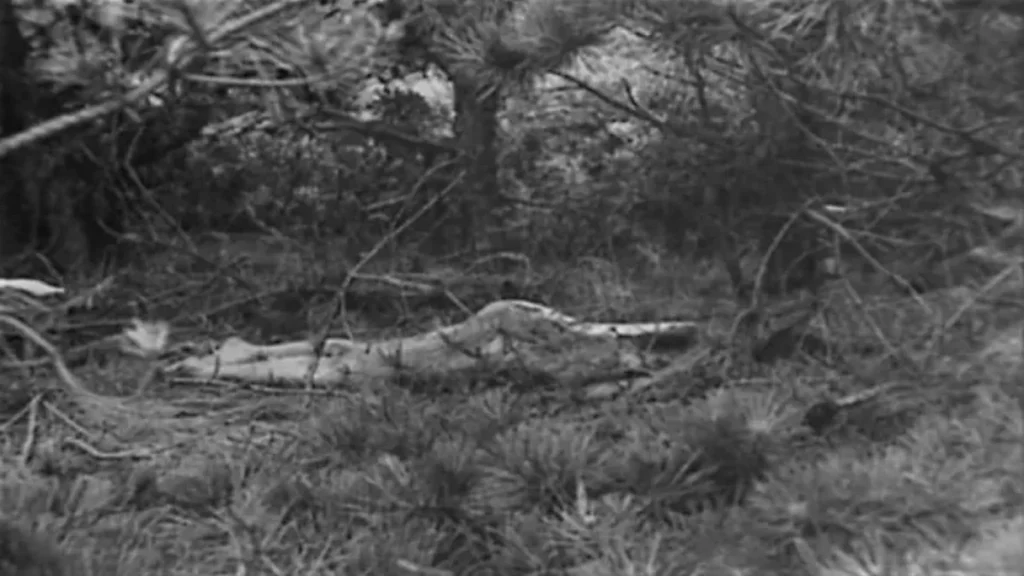
In July 1974, fourteen months after Rory pulled off her daring bedsheet escape from the Plymouth County Jail, a 13-year-old girl was walking her dog through the sun-bleached dunes of Race Point beach in Provincetown. The dog suddenly caught a scent and ran.
The girl followed and came upon a badly decomposed body of an adult female. She was lying face down on a beach blanket, and it appeared as though the perpetrator of this crime had gone to lengths to ensure the woman would never be identified.
The body’s hands had been severed, and several of her teeth had been violently knocked out. The woman’s skull was also crushed on one side, and her head was nearly severed from the body.
Because of the location, the nameless victim was dubbed by local media outlets as the ‘Lady of the Dunes. According to the Boston Globe, Detective Tobias, who later investigated the case, said, “I don’t believe she was a poor innocent.”
He believed this ‘Lady of the Dunes’ was, in fact, Rory Kesinger. The girl was not identified and was buried as a Jane Doe in an unmarked grave. For a few years, the police treated the escape of Rory Kesinger and the murder of the Lady of the Dunes as separate files.
However, by the late 1980s, investigators noted there was a haunting correlation. Rory had disappeared in May 1973. This lady of the Dunes, though, was murdered sometime in the summer of 1974.
Rory was also deeply embedded in a violent underground network of criminal fugitives. This was the kind of crowd that could disappear someone if there was a risk the individual would turn state’s evidence or become a liability.
Provincetown detectives also began to theorize that Rory had not successfully escaped the state and feared that her associates may have executed her, mutilated the body to protect their identities, and dumped her in the Cape Cod sandbars.
Apparently, the physical profile of the Lady of the Dunes did match Rory Kesinger’s description between 5’6 and 5’8. Both women had similar athletic builds as well, so the Massachusetts State Police officially exhumed the skeletal remains of the victim at the beach to extract genetic samples.
Detectives also tracked down Rory’s elderly biological mother in Colorado, and she provided a saliva sample to the state crime lab. For months, the Kesinger family and Massachusetts detectives waited to see if the puzzle pieces would lock together.
Unfortunately, in 2002, the forensic results came back with a negative match, meaning Rory was not the mutilated woman on the beach blanket.
Following the negative match, the collaborative task force between the Plymouth County Sheriff’s Department, Provincetown police, and the FBI was disbanded. For more than a decade, the investigators had funneled all their resources into the theory that Rory was the beach victim, and it had yielded no results.
Left with a blank slate, the FBI officially re-entered Rory into national databases not as a homicide victim but as an active, endangered federal fugitive. Because she had previously eluded authorities using multiple sophisticated aliases, investigators began monitoring Social Security numbers and banking logs across the states she frequented.
Did the Boston Mob Silence the Outlaw

The criminal landscape of Massachusetts dramatically shifted on June 22, 2011, following the capture of mob boss James ‘Whitey’ Bulger by the FBI, after sixteen years on the run. Bulger led Boston’s violent ‘Winter Hill Gang’ during the same period Rory Kesinger may have been operating in similar circles.
For the Massachusetts State Police and other investigators, Bulger’s capture provided a rare peek into vault files from the 1970s onward. Detectives began reviewing old intelligence logs linking Rory’s gun running and drug smuggling network to the Irish American mob syndicate.
This connection changed how investigators viewed Rory’s disappearance. She was previously considered a fugitive who successfully fled the state or even the country.
The Whitey Bulger element led investigators to consider that Rory might never have left Massachusetts. During the early 70s, the Winter Hill Gang maintained control over drug and weapon distribution pipelines.
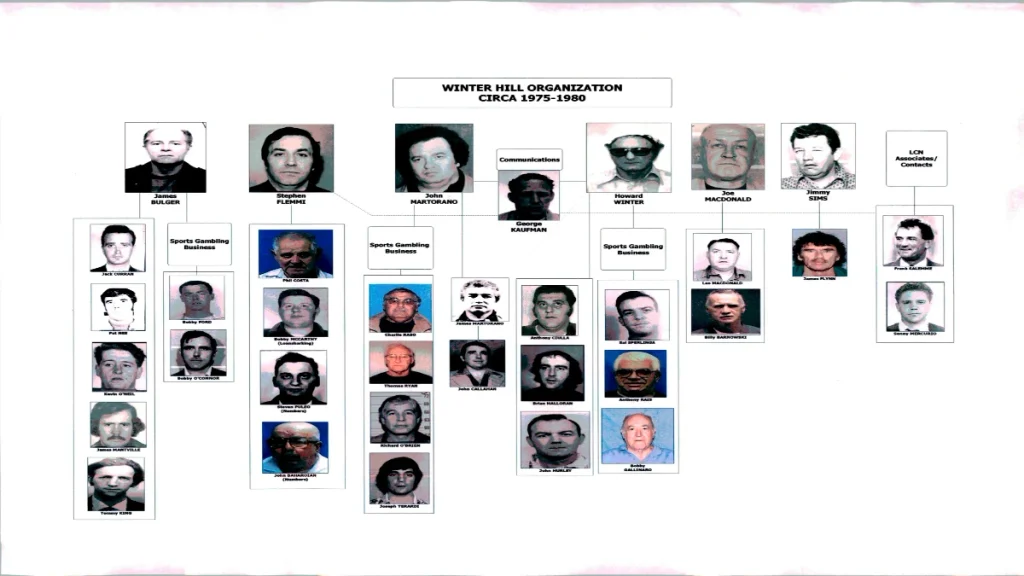
A volatile and armed 24-year-old woman who had just tried to kill policemen and staged a jailbreak would have been a significant liability due to the attention she brought. Detectives then hypothesized that Rory either sought refuge with high-level mob figures or threatened to expose their operations to negotiate a deal.
In Bulger’s circles, people who knew too much or drew too much police interest were routinely killed and buried in unmarked graves. But without a body or a confession, the case stalled.
The Whitey Bulger angle gained even greater significance after October 2022, when the FBI definitively identified the ‘Lady of the Dunes’ as Ruth Marie Terry. Even after the negative DNA match twenty years prior, the body was a roadblock in the investigation as investigators still believed she was Rory.
Division of Case Files and Hope for a Resolution
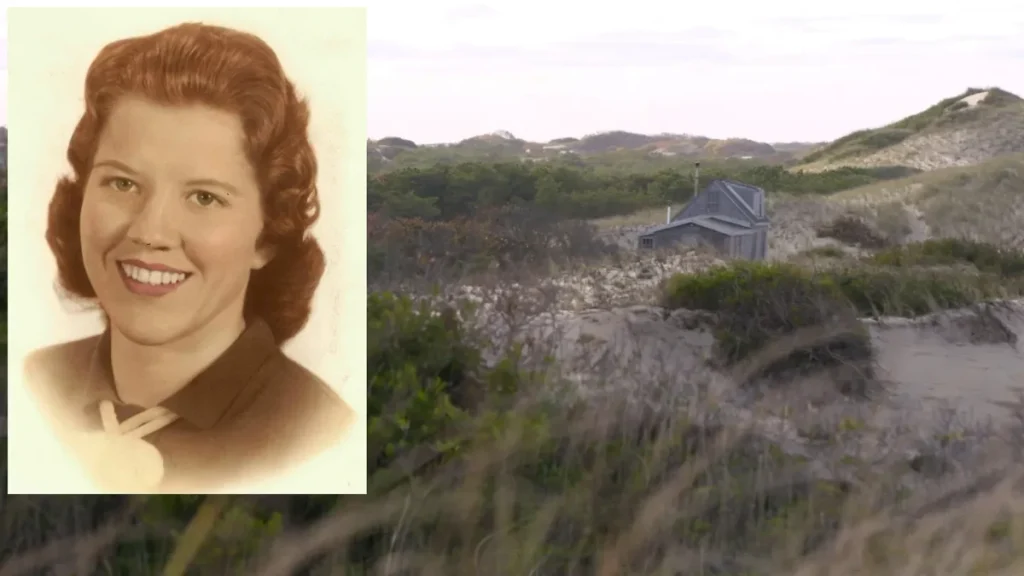
Immediately after the FBI announced the identification, the single joint investigation split into separate paths. While Cape Cod cold case detectives shifted their attention to investigating Ruth Marie Terry’s background, the Plymouth County sheriff’s office and Massachusetts state police focused on other theories.
This forced a deeper look into an archival lead from 1974. At the time, Provincetown detective Warren Tobias had arrested a close associate of Rory’s. When questioned where Rory had escaped to, the associate bluntly said she was ‘pushing up daisies.’
Before 2022, they thought it referred to the Lady of the Dunes. Now investigators were considering a renewed theory that the crew that sprung Rory from jail also killed her and buried her in a remote area.
In any case, forensic technology has come a long way since the early 2000s, so it should be easier to identify remains as they are presented. Because Rory’s biological mother provided a saliva sample during the early-2000s push, the genetic profile remains uploaded to modern law enforcement networks.
So the current strategy relies heavily on digital cross-checking. If an unidentified early woman dies anywhere in the United States with the aliases of Jennifer Marie Lynn or Linda Lynn Koch, or if unidentified skeletal remains from the 70s are pulled from the ground anywhere in the country, the system will run it against the Kesinger family DNA profile.
NamUS currently lists Rory Kesinger as an endangered missing person, and the Plymouth County Sheriff’s Office is the designated agency on file.
Anyone with information on Rory Kesinger’s whereabouts is encouraged to contact the Plymouth County Sheriff’s Department at 508-830-6200 or submit an anonymous tip through the active case file on the National Missing and Unidentified Persons System.
For more stories on unsolved disappearances, explore our articles on Craig Frear and Anthonette Cayedito.