

What could possibly make two young teenagers want their father dead?
This is, of course, a very difficult question to answer under any circumstances. But it would be much more complex for Alex and Derek King, two seemingly ordinary brothers from Pensacola, Florida, who actually carried out this macabre act.
A Troubled Home
On the night of November 26, 2001, Terry King was asleep in his home in Cantonment, just outside Pensacola, when his sons Alex and Derek King bludgeoned him to death with an aluminum baseball bat.
In what can only be described as a childish, yet terrifying, frenzy, the brothers then set the house on fire, apparently in an attempt to destroy evidence of the crime. At the time, Derek was thirteen. Alex was merely twelve, not even a teenager.
The first blow of the aluminum bat sounded “about like wood cracking or hitting concrete or something,” Alex said in his court statement.
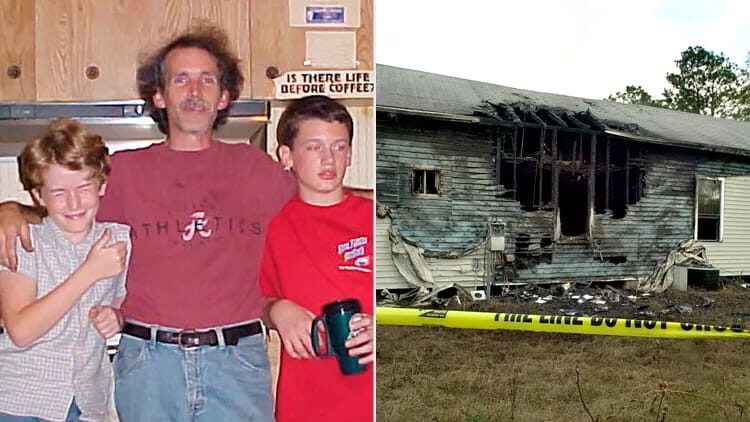
The boys had not been living an entirely stable life in the months leading up to the murder. Their mother, Kelly Marino, had not lived with them for several years. After financial difficulties, the boys had spent time in a boys’ home and subsequently in foster care. Marino later said she had remained involved in their lives, but had moved away in 1999.
Derek had returned to live with Terry only about seven weeks before the murder. Alex had been living with Terry for much longer, after spending more than six years with a foster family.
The Events Before Terry’s Death
The events that led up to Terry’s murder had begun several days earlier.
About ten days before the killing, the boys had run away from home and gone to stay with a certain Ricky Chavis, a family friend who was considerably older than them (he was about 40 years old).
Chavis had known the brothers for years and had become a familiar figure in their lives. Disturbingly, Chavis was already a convicted child molester and a known predator at this point.
The boys would eventually return to their father, but their association with Chavis was far from over. On the night Terry was killed, the boys called him, at which point Chavis came to pick them up and took them back to his home in Pensacola.
There, according to investigators, he washed their clothes and hid the boys from the police. The following day, he brought them to the Escambia County Sheriff’s Office, where Alex and Derek confessed to killing their father.
A Confession with a Catch
The boys’ first account to the police was remarkably straightforward, with Derek claiming that he had taken the aluminum bat and struck Terry while he slept. Alex told investigators that the idea had been his, saying they were afraid of what would happen when their father found out they had run away.
“Derek got bat and hit dad in head,” Alex wrote in his confession on a legal pad. “After a while, Dad didn’t move. We set bedroom on fire. Then we went to the store and called Rick. Rick picked us up.”
Interestingly, both boys insisted that Chavis had nothing to do with the killing.
The following day, both the boys were charged with an open count of murder and housed in the Juvenile Detention Center.
A little less than two weeks later, on December 11, a grand jury indicted them on first-degree murder charges, and they were transferred to the Escambia County Jail to await trial.
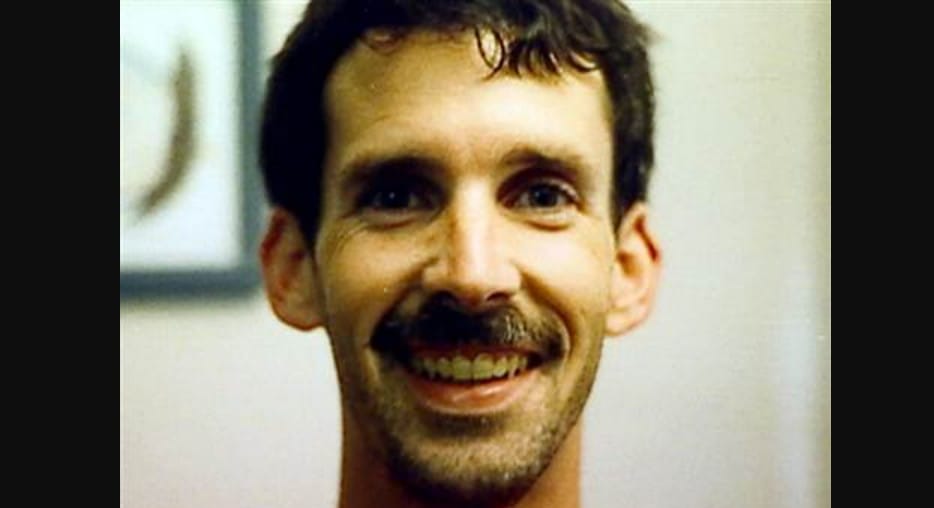
Chavis, meanwhile, was charged with being an accessory after the fact and tampering with evidence. He was later released on a $50,000 bond.
But Chavis’s attempts to remain in contact with Alex hadn’t stopped even when he had been behind bars. On January 19, 2002, jail deputies caught him scratching a message into the concrete floor of the recreation yard.
He had gotten as far as “Alex Don’t Trust” before he was stopped and dragged back to his cell.
In late March, another note was discovered scratched into a courthouse holding-cell wall, which said, “Hang in there. It will work out if nothing changes in the testimony. You know who not to trust. They are just keeping us apart.”
Chavis had been held in that cell shortly before the message was discovered, although the note itself was unsigned.
Two Stories, One Murder
To the surprise of many, despite having given the police detailed confessions only days earlier, the brothers actually prepared to fight the charges in court.
On December 12, both pleaded not guilty. The following day, they entered written pleas of innocence to the adult charges of arson and premeditated first-degree murder.
According to their lawyers, the boys had taken responsibility for Terry’s death in order to protect Ricky Chavis.
Soft-spoken and mild-mannered, Alex King explained that the boys had initially taken the blame because they wanted to live with Chavis, and he had told them they would be exonerated because they are juveniles.
“Everyone in this courtroom can repeat those details,” ridiculed James Stokes, the lawyer appearing for both the brothers. “The boys’ stories line up because the boys’ stories are rehearsed.”
In an even more disturbing turn of events, the attorney further mentioned that Chavis had motive for the murder because he wanted to keep Terry King from finding that he had been engaging in intercourse with the twelve-year-old Alex.

In the boys’ initial confession, though, they had included gruesome details about the attack, including the ‘fact’ that they had seen Terry’s brain through the wound in his head and heard his final, raspy breaths; details only someone who had actually been there would know.
Prosecutor David Rimmer therefore alleged that the boys had been telling the truth the first time. Their new story, he argued, was the lie.
Before Alex and Derek could get a resolution, though, Ricky Chavis would have to face a jury first.
Ricky Gets His Day in Court
In August 2002, Chavis went on trial for Terry King’s murder. Alex and Derek were called as witnesses against him, and both boys now testified that their earlier confessions had been lies designed to protect Chavis.
Alex said the brothers hid in the trunk of Chavis’ car while Chavis killed their father shortly after the boys returned home from running away.
“I wanted to be with Rick because I was in love with Rick,” the boy said. “He said my dad would have killed us before he would have let us go.”
Apparently, Chavis let the boys play video games, watch television as late as they wanted to, and smoke marijuana at his Pensacola home, which were some of the important (albeit silly) factors for the youngsters wanting to move.
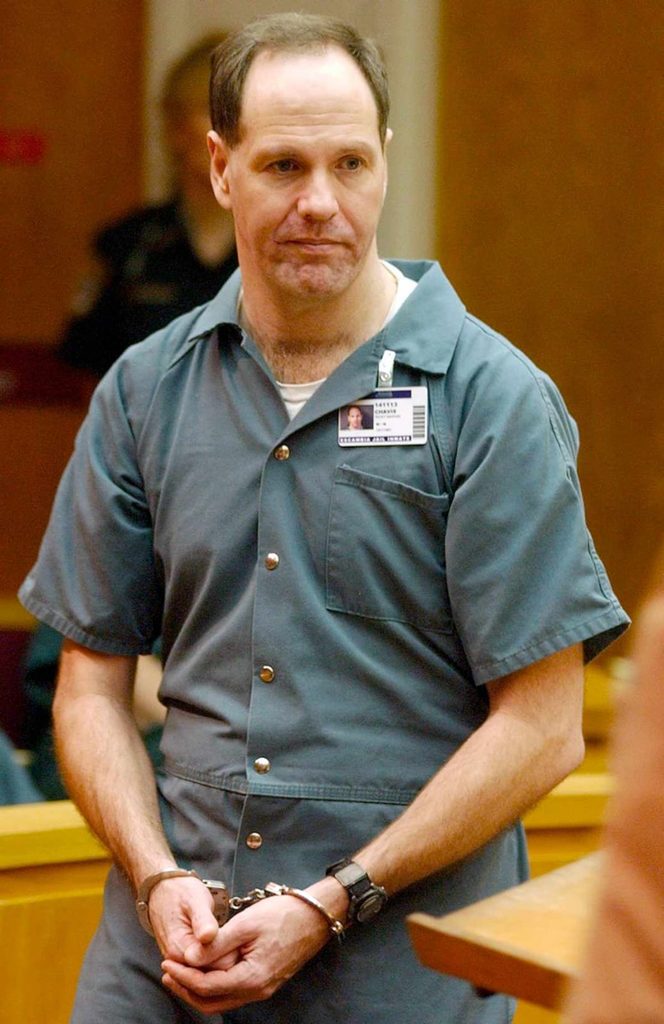
They had apparently been told they would be let off if they claimed self-defense.
On August 28, 2002, Judge Frank Bell said there was minimal evidence connecting Chavis to the killing and dismissed the prosecution’s alternative theory that he had encouraged the brothers to kill Terry.
Prosecutor David Rimmer ultimately did not ask the jury to convict Chavis of the murder.
The jury reached a verdict on August 30, but Judge Frank Bell ordered it sealed until the conclusion of the King brothers’ trial.
This strange arrangement meant that Alex and Derek would enter their own trial with no way of knowing whether the jury in Chavis’s case had believed their new story.
Two Boys in an Adult Court
On September 3, the much-awaited trial of Derek and Alex King commenced.
Again, Prosecutor David Rimmer argued that the brothers’ motive was to escape their father’s control and return to Chavis’s home.
The defense, naturally, saw things very differently and argued that two children had been manipulated by an adult they trusted, and that the similarities between their confessions were not proof that they were telling the truth, but rather evidence that they had been coached beforehand, making it premeditated.
The jury deliberated upon this conundrum for several hours before the final judgment was released on September 6th.
In the verdict, neither of the two brothers was convicted of the first-degree murder with which they had been charged.
Instead, both Alex and Derek were found guilty of second-degree murder without a weapon and arson. The murder conviction carried a possible sentence of 22 years to life, while the arson conviction carried a separate 30-year sentence.
“The older brother, Derek King, bowed his head as the verdict was read, while Alex King wiped away tears as his attorney draped an arm around his shoulders. Their mother [Kelly Marino] wept softly in the courtroom gallery behind them.” ABC News reported.
Unfortunate as the verdict sounded, the day’s strangest verdict was yet to come.
The Man at the Center of it All
About an hour after the brothers were convicted, the court finally opened the sealed verdict from Chavis’s trial, revealing that the jury had found him not guilty of both murder and arson.
The case had produced an almost impossible result.
The problem was that the King brothers’ jury apparently didn’t believe the boys had actually swung the bat.
In fact, the jurors later said they believed Chavis was the person who killed Terry, while Alex and Derek had nevertheless participated by allowing him into the house.
Juror Forewoman Lynn Schwarz elaborated on the fact that the six-person jury had arrived at a “third theory”, according to which Chavis wielded the bat, but the boys let him into the house, which made them guilty of second-degree murder without a weapon.
She also said the jurors were unanimous that “Chavis, and not the boys, killed Terry King.”
Extraordinarily, the man whom the second jury believed had actually swung the bat had already been acquitted of the murder. And the two boys, whom that same jury believed had not wielded the weapon, were nevertheless convicted of Terry King’s murder.
The Case Becomes a Paradox
It is to be noted that in Chavis’s trial, prosecutor David Rimmer argued that Chavis himself killed Terry with the baseball bat, while Alex and Derek hid in Chavis’s car. The boys had even been prosecution witnesses supporting that version.
Then, in the boys’ trial, the same prosecutor argued the opposite essentially, claiming that Derek had swung the bat, with Alex participating, and Chavis had motivated them to kill their father.
“The boys testified under oath in front of a grand jury that Chavis did it,” Rimmer had told reporters outside the courthouse after both verdicts were announced. “It was up to a jury to decide whether they believed him or not. The jury didn’t believe them.”
In his closing argument, Rimmer also read a letter that Alex had written to his father, accusing him of mental abuse and referring to their home as a prison.
This contradiction eventually caught up with the prosecution.
On October 17, Judge Frank Bell threw out the brothers’ convictions, ruling that their right to due process had been violated. He described the prosecution’s handling of the case as “unusual and bizarre” and said he would order a new trial if the two sides could not reach another resolution.
Back to Square One
The brothers would never face that second trial.
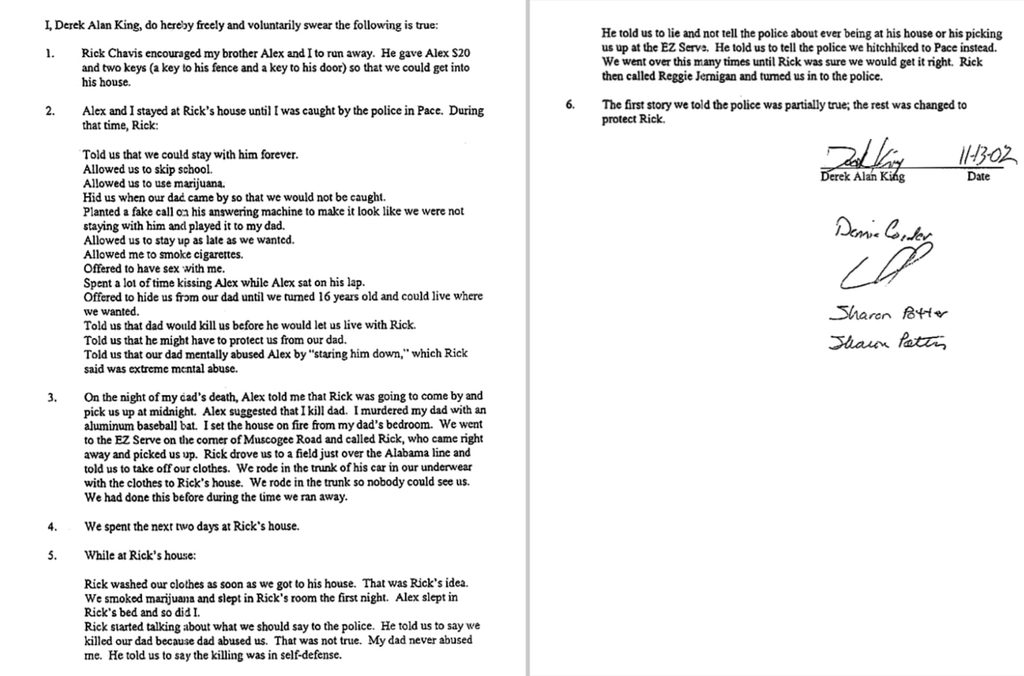
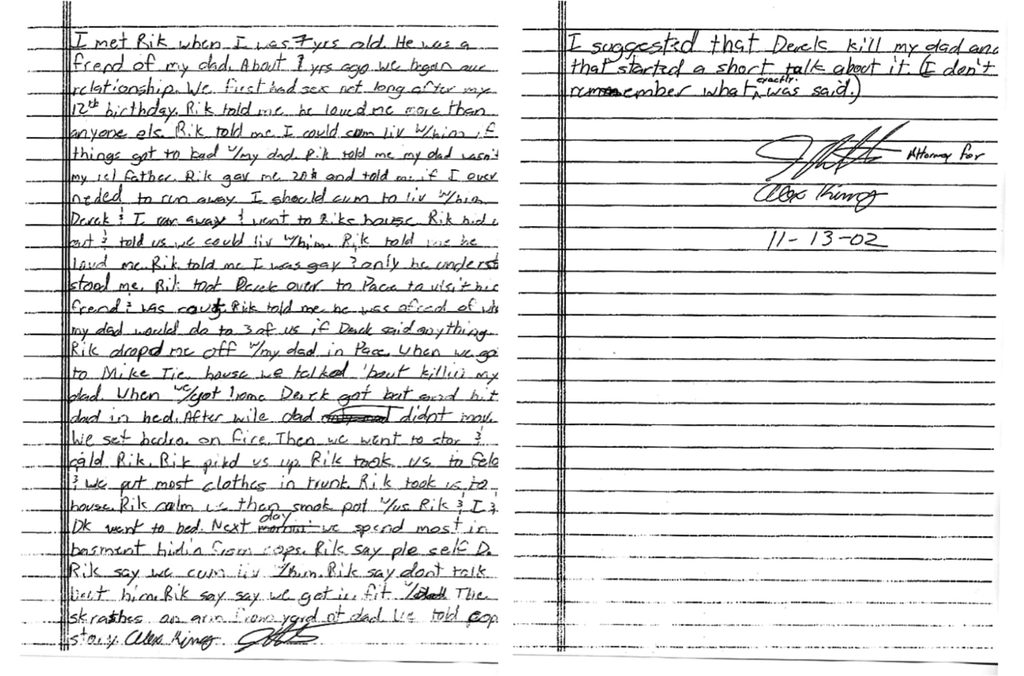
The negotiations instead produced a plea agreement, according to which, on November 14, 2002, Alex and Derek appeared before Judge Frank Bell and pleaded guilty to third-degree murder and arson, abandoning the second-degree murder convictions that had already been thrown out.
As part of their plea agreements, Derek, now 14, and Alex, now 13, were each required to submit two-page written statements describing their role in the murder of Terry King.
The boys then stood before Judge Bell and answered questions about whether they understood the agreement and were entering their pleas voluntarily. According to Los Angeles Times, both spoke clearly and said that they understood what they were doing.
Derek, now fourteen, was sentenced to eight years in prison. Alex, thirteen, received a seven-year sentence. Both sentences included credit for approximately a year they had already spent in custody.
Their mother, Kelly Marino, was furious. Before the pleas were entered, she had made a last-minute attempt to have the boys evaluated by mental-health professionals, arguing that they were too young to understand the consequences of what they were admitting.
Judge Bell rejected the request. Outside the courtroom, Marino condemned the agreement and said her sons did not understand what they were admitting to.
“This is not right. This is America. Unbelievable,” she said, shaking her head in disbelief. “We do plan to challenge this.”
Years Behind Bars
Although the boys had been sentenced to adult prison terms, they would not remain there for the duration of their sentences. In December, Florida’s Department of Juvenile Justice moved Alex and Derek into juvenile facilities, citing their ages and the availability of programs more appropriate for young offenders.
Bill Bankhead, the department’s secretary, explained that the brothers would have been among the youngest inmates in adult prison, making their incarceration difficult. Further, he elaborated that the juvenile system would give them education and treatment more appropriate to their age.
Circuit Judge Frank Bell strongly opposed the move, stating that they “should now be required to abide by what was presented in court.”
In 2005, while still in a juvenile facility, 15-year-old Alex attempted to escape, but was caught. Rather than adding another prison term, the judge ordered him to be transferred back to a juvenile facility to complete his sentence; he also received a 5-year probation.
Alex was released in 2008 after serving six years, while Derek followed in 2009 after serving seven.
In September 2009, NBC’s Dateline devoted an episode to the brothers titled “Second Chances: The King Brothers.”
Hosted by Keith Morrison, the 39-minute documentary featured the first interviews Alex and Derek had ever given, with the brothers discussing the murder, their years in prison, and their attempts to rebuild their lives after their release.
The two appeared together on Today to speak publicly about their lives after prison.
Proclaiming that they wanted to move forward rather than remain defined by what they had done as children, they announced that both planned on attending the same junior college.

Derek declared that they had made a mistake and wanted to become “productive citizens,” while Alex said that instead of dwelling on the past, they were spending their days thinking about jobs and the classes they would take.
Much like Reena Virk, the brothers’ childhood follies and a troubled home environment eventually caught up with them. But unlike Reena, whose life was tragically cut short at just fourteen, Alex and Derek got the chance to grow up and start afresh.
What Happened to Ricky?
Meanwhile, though Chavis may have escaped a murder conviction, he was far from free.
In February 2003, Chavis went on trial over allegations that he had kidnapped and sexually abused Alex. The prosecution’s case relied heavily on Alex’s testimony, with Alex telling the court that he and Chavis had engaged in sexual activity before Terry’s murder.
Chavis was acquitted of the kidnapping and molestation charges, but the jury found him guilty of the lesser charge of false imprisonment. He was sentenced to the maximum of five years in prison.
Subsequently, he was tried for hiding the boys, washing their bloodstained clothes, and helping them avoid the police. This time, the jury found him guilty of accessory after the fact to first-degree murder and evidence tampering.
On November 6, 2002, Chavis received the maximum sentence of 30 years for accessory after the fact, along with five years for evidence tampering, with the sentences running concurrently. He was later also sentenced to five years for false imprisonment.
Chavis remains incarcerated today, serving his sentence at Santa Rosa Correctional Institution Annex in Milton and is scheduled for release in November 2031.
What Became of the Brothers
The fresh start did not unfold quite as smoothly as the brothers had hoped. In 2011, Alex was arrested after leaving the scene of a car accident, violating the terms of his release. He was subsequently returned to prison and remained there until 2013.

On April 23, 2024, he died in Montana at the age of 35, with his uncle claiming that his death was caused by a drug overdose.
Derek, meanwhile, moved to Washington, D.C., and later to Virginia, where he married and had a child before eventually returning to Pensacola after getting divorced.
For more stories on true crime, please explore our articles on Kate Webster and Frauke Liebs.