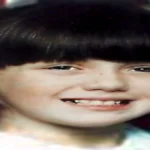

Jane Longhurst never lived to see the internet become the cultural force it is today. Her murder, however, became entangled with one of its most disturbing corners and helped ignite a debate that Britain would struggle to resolve.
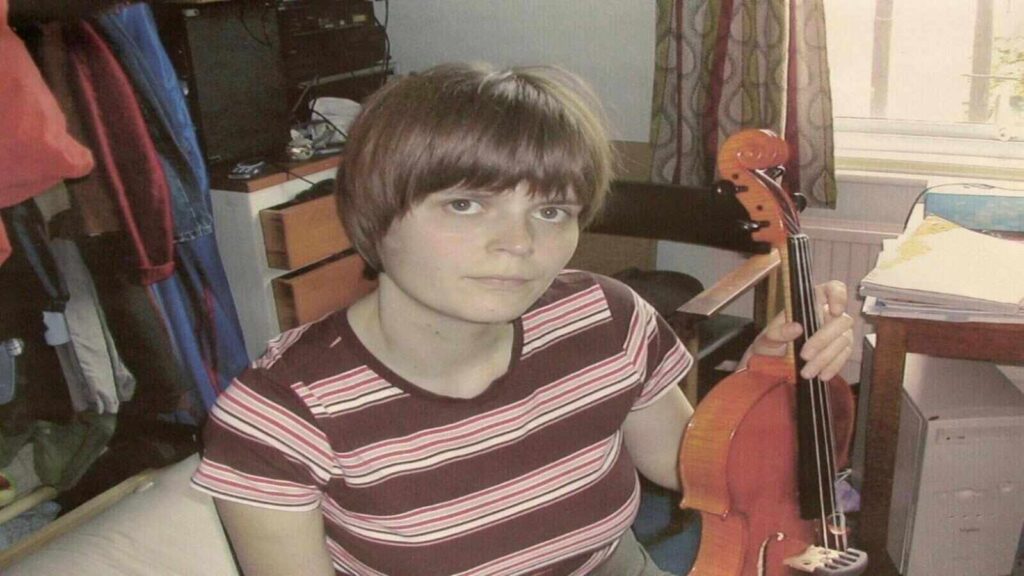
It all began on the morning of 14 March 2003 when Jane had taken a day off from her job as a special needs teacher at Uplands School and was enjoying her stay at home in Brighton.
31 years old and an active soul brimming with energy, Jane lived with her partner, Malcolm Sentance, an education welfare officer for West Sussex County Council.
The couple had been together for more than two years and, at this point, were already making plans for the future. They hoped to buy a home, get married, and spend the summer traveling around Europe.
The future Jane dreamt of with her partner was based on the life she had spent years building. To understand the woman at the center of those plans, it is worth looking back to where her story began.
The Early Life of Jane Longhurst
Jane was born on November 6, 1971, to Liz Longhurst and her husband. She grew up in the United Kingdom, along with her sister, Sue Longhurst.
Raised alongside her sister, Jane grew into a woman whose life revolved around helping others, a calling that eventually led her to pursue teaching as a profession.
By adulthood, Jane had built a life as a teacher for students with special needs at Uplands School in the Hollingdean area of Brighton, where she also taught music.
Jane Longhurst: Missing
Around 7 AM on the morning of 14th March, 2000, Jane’s partner, Malcolm, kissed her goodbye and left home. Never one to stay idle, Jane had planned to spend the weekend painting and re-decorating the flat with her partner.
Malcolm arrived home later that afternoon around 3:40 PM to an empty flat. Jane was not home, but that didn’t necessarily warrant an alarm.
Assuming Jane had gone outside to shop for supplies needed for the decoration, Malcolm decided to wait patiently on the sofa. As the afternoon rolled on, though, his anxiety would increase.
He had still not heard from Jane. Malcolm repeatedly tried calling her phone, but to no avail. As the hours passed, his worries grew, as it was extremely uncharacteristic of Jane to stay out late without leaving a message.
Concerned for her safety, Malcolm began calling friends and family to check if anyone had seen or heard from her. He would spend the rest of the evening trying to find his girlfriend. When his search yielded no results, he reported Jane missing to the Sussex Police at around midnight, distraught.
Though the police had initially treated Jane’s disappearance as a normal missing person case, expecting her to return home soon, the seriousness of the investigation increased as the weekend approached.
Initial Investigation
Law enforcement officers began going door to door in the hopes of obtaining any information about Jane from the general public. Further, they interviewed close friends and family to create a timeline of Jane’s activities on the day she was reported missing.
They noted that on the morning of 14 March 2003, Jane Longhurst had been shopping for groceries and had made phone calls to some friends, including Cynthia Eraut, a fellow member of an Orchestra group called Musicians of All Saints.
The conversation was short, with Jane informing her about an advertisement she had placed in a local newspaper for an upcoming concert.
The advertisement was also the last thing Jane and her mother had talked about. Jane had called her mother, Elizabeth Longhurst, while on her way to work, asking her to proofread the article before sending the final draft to the printer.
“I can’t remember the details of the conversation. It probably ended with her saying, ‘I’ve got to run’. She was always so busy. She wanted me to proofread (the advertisement). I made a couple of corrections and mailed it back. That was the last contact I had with Jane.”
Elizabeth Longhurst would later comment to the Telegraph UK.
Jane had then called her best friend and colleague Lisa Stephens on her home phone. This was the last known contact Jane had with anyone before her disappearance.
Interestingly, phone calls would play an important role in the disappearance of Jo-Ann Pederson as well, with her disappearing after a call through the payphone.
The Long Search for Jane Longhurst
By March 19, Jane had been missing for five days. Overwhelmed, Sussex Police launched Operation Keen, a major search operation to find Jane Longhurst, deploying over 100 police officers, including a cell of 20 detectives.
The officers searched the city for Jane, both from the air and on land. In fact, a helicopter was deployed, and an aerial search of the area was conducted. Officers also conducted a fingertip search in parks, nearby forests, and railway cuttings of Brighton.
Thorough as it was, the search didn’t exactly bear any results. Law enforcement officers were baffled by the lack of clues about Jane’s sudden disappearance. The police department announced a £5,000 reward for any information that could help them find Jane’s whereabouts.
“We hope that a reward would jog people’s memories. The investigation team is becoming increasingly frustrated by the lack of information. Since Jane went missing four weeks ago, officers have worked tirelessly and around the clock to try and find her,” Detective Inspector (D.I) Chris Standard, second-in-command of Operation Keen, mentioned.
However, even the announcement of the reward did not bring in any tips or information. Anguished and deeply worried, Jane’s family conducted an emotional press conference urging the public to come forward if anyone knew anything, in an attempt to aid the search for Jane.
“We are in limbo, and it is horrible. All we can do is take each day as it comes. We have got to be positive for Jane’s sake, because we simply do not know what has happened,” said Elizabeth Longhurst.
By April 18, Jane had been missing for more than a month. Since her disappearance, her bank account had not been accessed, and her mobile phone had been switched off. In fact, she’d not taken anything with her at all, which might indicate that she was leaving for a long duration.
At this point, senior detectives working on the case admitted that there was very little chance of her still being alive. D.I Standard said that when he talked about “finding Jane,” he was speaking about finding her body.
Further, he elaborated that his team had pondered over every possible reason for her disappearance, and boiled them down to two possibilities. She was either abducted and killed or had gone willingly with someone and then been murdered, he said.
The Burning Body
On 19 April 2003, around 8.30 PM, a man was driving down a forest road on Wiggonholt Common, West Sussex, when he spotted smoke rising from the woodland and immediately contacted emergency services, promptly reporting what he had observed.
The Fire and Rescue Service rushed to the scene, only to discover a pile of burning garbage, which they quickly began dousing, and managed to subdue the fire before it could spread to the surrounding forest.
As they were going through the fire residue, the firefighters were shocked to find a body buried in the charred remains. The body had been so badly burnt that it was impossible to determine the victim’s gender, or if the victim had even been clothed when the body was set on fire.

Law enforcement was immediately called to the scene, and the body was sent for forensic analysis, with an investigation being launched to identify the corpse.
The autopsy report determined the cause of death to be manual strangulation. Forensic scientists used DNA collected from the crime scene to identify the body, and to their shock, it was none other than Jane Longhurst.
Further, it was revealed Jane had been dead for a long time before her body was set on fire. Wiggonholt Common was merely a site of decomposition for Jane’s body.
Sussex Police turned to the public for any information regarding the crime, given the remote area where the body had been found, to find the identity of the killer.
“It must have been an urgent gut reaction – that whoever it was had to get rid of her body. It was a panic-type situation. This type of bizarre behavior ought to have caused someone some suspicion – and for the family’s sake I am asking you to come forward,” Chief Inspector Tony O’Donnell, Lead Investigator, requested.
The Last Phone Call
Phone records from Jane’s Phone showed that the last phone call she made lasted about seven minutes and was to her close, longtime friend Lisa Stephens.
Police then interviewed Stephens in hopes of finding some clues about Jane’s disappearance.
Lisa explained that she had not been at home when Jane called and had been down with morning sickness.
At that time, Lisa was pregnant with her boyfriend, Graham Coutts‘ baby, but despite feeling unwell, Lisa managed to pull through and went to work. When Jane called, Coutts answered the phone.
Given the circumstances, Detective Constable David Wright visited Coutts at his home for an interview.
Coutts, like Jane, was a local musician, working odd jobs to support his ambition of becoming a professional guitarist. At the time of Jane’s disappearance, he worked as a door-to-door salesman for Kleeneze .
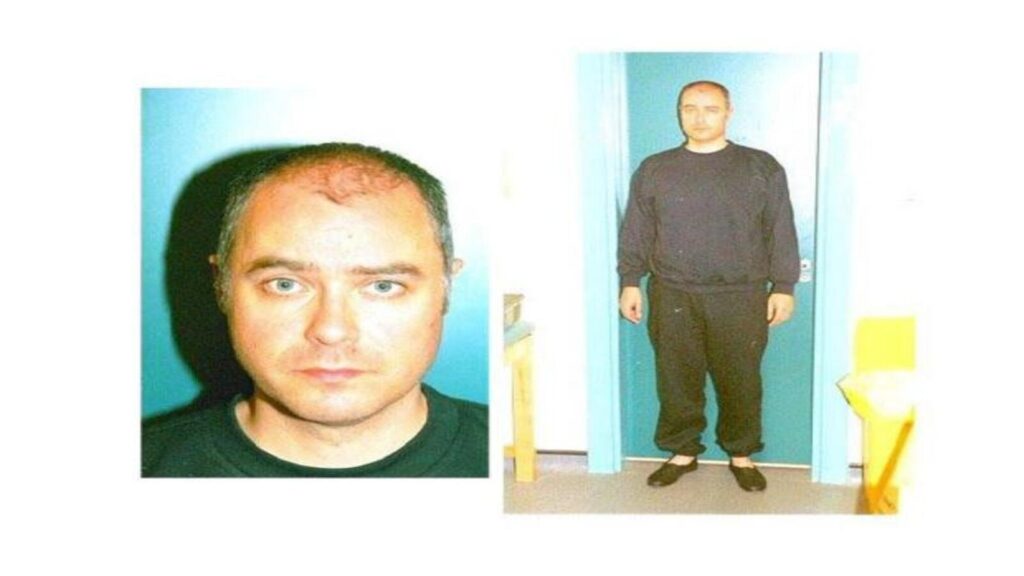
When asked to recount his activities on the day Jane’s body was found, Coutts told Wright that he had gone out intending to deliver Kleeneze products, but none of his customers had been at home. Thus, he had decided to drive around Hove in Sussex looking for catalogs to collect outside houses.
Wright later testified to the court that Coutts had appeared nervous during the interview and had been drinking lots of water and frequenting the washroom.
Arrest
Coutts was vague in his interviews, and his behavior raised serious suspicions. However, this alone was not enough evidence to allege him of Jane’s murder.
Police made a breakthrough when workers at the Big Yellow Storage Company flagged a customer’s suspicious behavior. They told the police that there had been a foul smell at the company storage, which disappeared after the customer had removed a package on April 18.
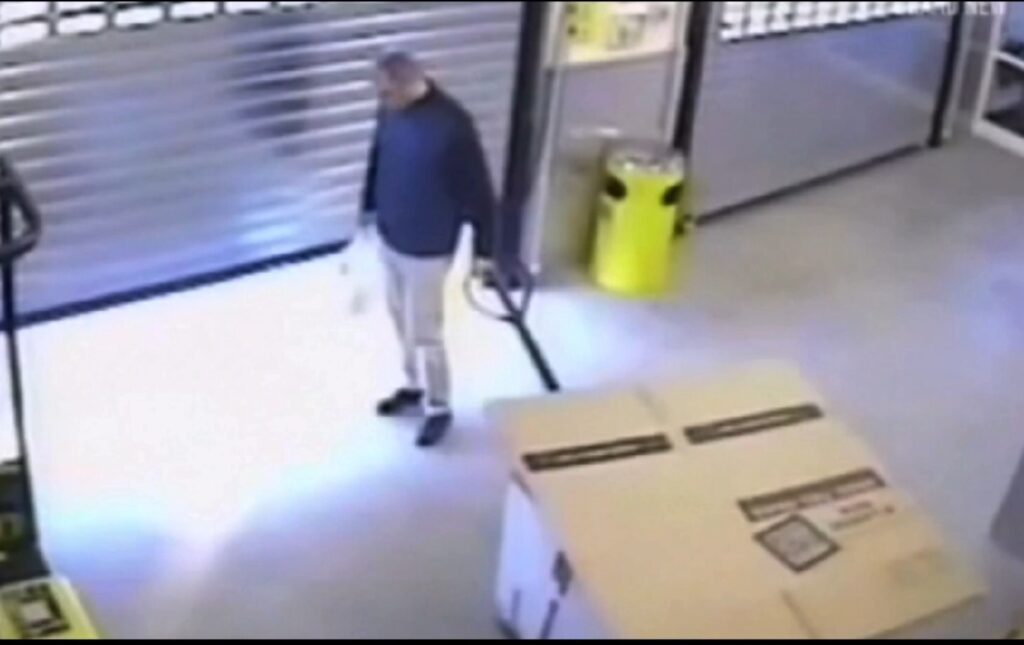
Police reviewed CCTV footage from cameras installed on the company premises and identified Graham Coutts carrying the package outside the storage facility. He was filmed entering the facility on April 18 at 6.45 pm on the day before the body was found. At 7.04 pm, he was seen wheeling out a large box on a trolley.
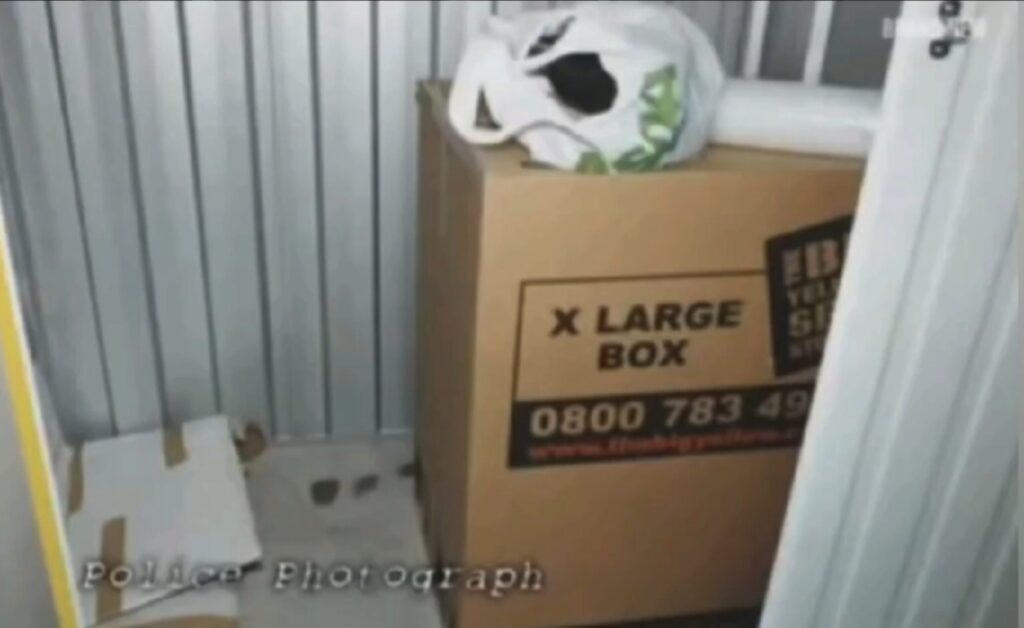
Detectives searched the storage facility rented by Coutts and found a box full of damning evidence, including a used condom which contained Coutts’ semen on the inside and traces of Jane Longhurst’s DNA on the outside.
They also found Jane’s clothes, a swimming costume, a mobile phone, a purse, and a petrol can. Graham Coutts was arrested on April 25, 2003. He refused to cooperate with the police, only saying, “I can’t talk about it.”
Police then checked with a petrol station in Kingsway, Hove, only to find CCTV footage showing Coutts buying a petrol can, toilet tissues and a roll of black tape at 7.40 pm on April 19, just 20 to 30 minutes before Jane’s body was found.
With evidence increasingly pointing towards him, Coutts was arrested and charged with Jane’s murder. The case would eventually proceed to trial in January 2004.
Trial and Sentencing
Coutts’ trial began on 25 January 2004.
A disturbing fact that came to light during the course of this trial was that Jane Longhurst’s body had been so severely burnt that it was practically impossible to determine whether or not she was sexually assaulted. Consequently, Coutts was tried for murder.
Coutts was tried before a jury of five women and seven men. He pleaded not guilty to the charge and maintained Jane’s death was an accident.
Coutts recounted the events that unfolded on 14 March 2003, and told the court that he’d answered Jane’s phone call and informed her Lisa was not home.
Further, he’d asked her if she had plans for the day and suggested they should go swimming. She agreed to the proposal and met Coutts.
It was to be noted here that Jane, Lisa and their boyfriends often met to go swimming and playing in the bars, and thus, by no means was it an unusual activity.
Coutts claimed that he picked up Jane in his car, but she seemed distressed. Hence, he’d invited her inside for a cup of tea.
This series of events led to them engaging in consensual asphyxial intercourse, Coutts testified to the court. He testified that Jane held his hand to her throat before agreeing to try something “different.”
Consentually, he tied a pair of stockings around her neck and choked her. He claimed in the heat of the moment, although unknowingly, he had strangled Jane and caused her death.
Coutts’ statements caused a stir in court, provoking reactions from her family and her boyfriend. His defense claimed Jane had fallen “into his arms” because she was unhappy with her boyfriend.
After Jane’s demise, Coutts had stored her body for 35 days in a grisly state. He had first kept her remains first in his car, then a shed before transferring finally it to a storage facility.
The CCTV footage from the storage facility revealed he had visited the body ten times, sometimes only for a few minutes. Lead investigator testified that he suspected Coutts indulged in necrophilic activity assaulting Jane’s dead body.
The prosecution then proceeded to present material found on Coutts’ computer and his internet history as evidence to prove he was obsessed with strangulation and asphyxial sex and Jane’s murder was premeditated, making his claims fall flat on their face.
It was found that Coutts constantly visited internet websites that hosted violent and disturbing sexual content. Further, records taken from his computer revealed that he had visited these websites on the day before Jane Longhurst was murdered, and again after he had burnt her body.
In evidence considered inadmissible at trial, a former girlfriend, Sandra Gates, revealed that he had made a frightening prediction as far back as the 1980s. She told police that Coutts had once said: “I get the most awful feelings that I am going to strangle, kill and rape a woman.”
Coutts admitted he had been having dreams about having sex with women in which he would be “tightening something round her neck” since the age of 15.
“I was worried that my dreams might lead me to rape and murder. There was no death, violence or rape but I was worried there were undertones of those things,” Graham Coutts mentioned in his court testimony.
Explaining why he had stored Jane’s body for so long, Coutts stated that he couldn’t bring himself to dump it, mainly because Jane was a friend and the discovery could shock his partner so much she might lose the child she was carrying.
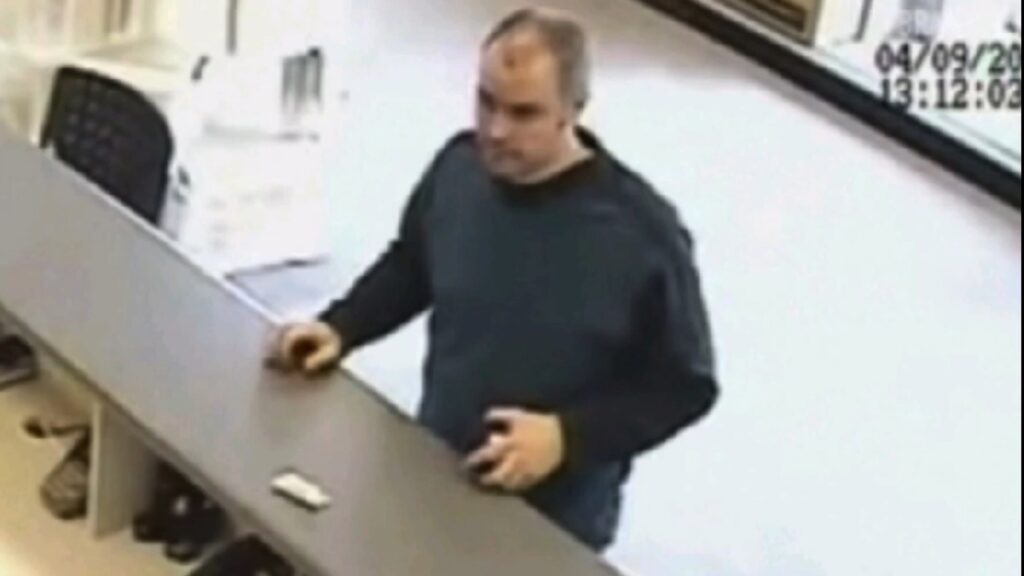
The Jury rejected Graham Coutts’ defense and found him guilty of murdering Jane after over 9 hours of deliberation. He was sentenced to 30 years in prison on 4 February 2004 after a 11-day trial.
Retrial
After his conviction, Coutts appealed the verdict, arguing that the jury had not been given the option of finding him guilty of manslaughter if they believed his claim that Jane’s death had been accidental.
The House of Lords agreed that this was a serious flaw in the original trial, ruling that the murder conviction was unsafe because the jury had been faced with an unfairly stark choice of either convicting Coutts of murder or acquitting him entirely. The conviction was therefore quashed, and a retrial was ordered.
Coutts was found guilty a second time on the charges of murder and sentenced to life imprisonment with a minimum term of 26 years.
Family Reaction
Jane’s death had a profound impact upon Jane’s family, particularly her mother, Elizabeth Longhurst. While grieving the loss of her daughter, Elizabeth channeled her grief into a campaign against violent pornography, arguing that greater restrictions were needed on material depicting extreme sexual violence.
Her campaign quickly garnered public attention, and she eventually presented a petition containing 50,000 signatures to the House of Commons, calling on MPs to take action and introduce a ban on violent pornography.
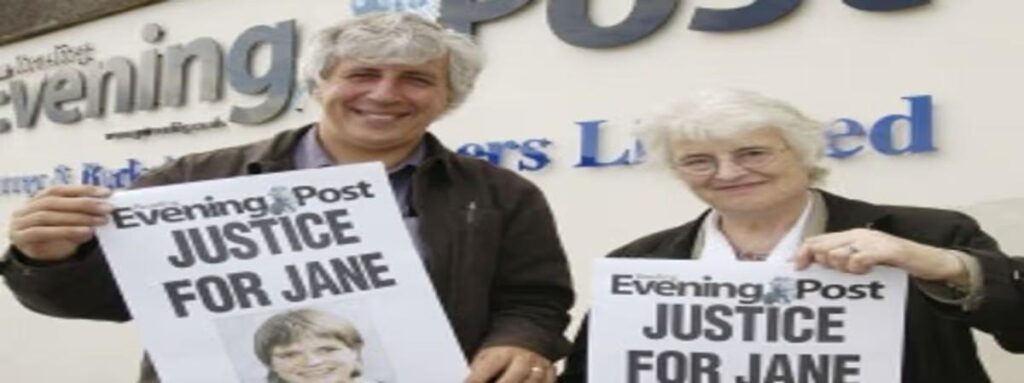
The Criminal Justice bill received royal assent in 2013, after which Elizabeth made a statement dedicating the law to Jane’s memory.
“I am very hopeful that there will be a change in the law, which will act as a memorial to Jane, who may still have been with us had her killer not been able to access these sickening Internet images, which fuelled his dangerous fantasies. This campaign has been excellent therapy for me. I feel I am perpetuating her memory. She was a wonderful person, very gifted, very witty, very loving, very kind and very loved,” she would say.
Final Statement
Jane’s boyfriend, Malcolm, expressed his grief at losing his partner in a final statement to the court. He said Coutts’ attempt to clear himself by claiming the murder was an accident had been the “biggest insult” to Jane and her memory
“We have to get on with our lives without this lovely person. That’s something we all have to live with, but Graham Coutts is subhuman; there is no truth in anything that he said from the word go,” Malcolm said.