
“Just stand right there by me, don’t move, okay?” Denise Fergus remembered telling her two-year-old son James inside A.R. Tyms butcher’s in Bootle on 12 February 1993. She was paying for two pork chops.
What began as an ordinary shopping trip turned into every parent’s nightmare. Moments before he disappeared, James had been laughing and moving around the small butcher’s shop. Denise drew him back to her side, held his hand, then reached into her bag for her purse while the butcher wrapped the meat.
When Denise looked down, James was gone. She turned towards Nicola and Vanessa by the fridge and shouted, “Where is James?” Then she rushed to the doorway, looking in both directions. “He was just right there!” she remembered saying.
At first, there was still every reason to believe James had simply wandered away. But inside the New Strand, security cameras had recorded something Denise could not yet see.
The Boy Behind the Photograph
James Patrick Bulger was born on March 16, 1990, weighing 6 lb 3 oz. His birth came just over a year after Denise and Ralph Bulger’s first child, Kirsty, was stillborn at 38 weeks.
As James grew, he became difficult to keep still. Denise remembered, “He never really walked anywhere; he ran at you, and everything in his little life was done at 100 miles an hour.”
Much of his short childhood unfolded around the family home in Kirkby. He played with cars, watched Thomas the Tank Engine and Teenage Mutant Ninja Turtles, and ate his meals from a small plastic football bowl.
Breakfast usually meant Frosties. When Denise asked what he wanted, James had a familiar answer: “I want Frostieeeeeees!” The drawn-out reply became such a family joke that relatives would imitate him at mealtimes.
He also shared Denise’s enthusiasm for Michael Jackson. James watched the videos closely before copying the dancing himself. Denise wrote that he would “get up and put on his own little concert for me.”
By February 1993, these were ordinary parts of life with an almost three-year-old. Then came Friday, 12 February. As Denise prepared to leave for the shops, she made a decision that was unusual for them.
“I didn’t ever take James anywhere without his pushchair. Ever.”
That afternoon, she left it behind.
The Grainy Images
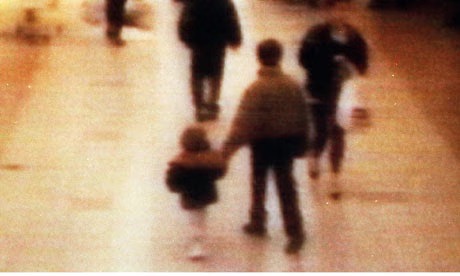
At 4:22 pm, PC Mandy Waller received the report of a missing two-year-old at the New Strand. At that point, officers were still searching for a child they believed might have wandered away. Waller later recalled, “We were just looking for a missing boy when in fact it was an abduction.”
The answer began to emerge from the shopping centre’s 16 security cameras. In Denise’s account, the first frame showed James leaving A.R. Tyms at 3:39 pm. A second, timed at 3:40 pm, showed Denise coming out to search for him.
Shortly after 3:40 pm, another camera captured James on the upper floor near two boys. At 3:42 pm, one of the most recognizable images from the case showed James holding hands with one of them.
The final frame was timed at 3:43 pm. It showed James and the two boys leaving through an upper exit towards the Leeds and Liverpool Canal. Denise later wrote, “I didn’t need to look twice – that was my James.”
The footage changed the inquiry. James had not simply disappeared somewhere inside the Strand. He had left the shopping center with two boys whose identities police still did not know.
According to The Guardian, Denise appealed publicly for James’s return, saying, “If you have got my baby, just bring him back.“
At 3:43 pm, the cameras lost sight of them. From that point on, police had to reconstruct James’s route one sighting at a time.
Walk Towards Walton
Once the CCTV lost James at 3:43 pm, the route had to be reconstructed based on witness testimony.
At about 4:30 pm, Elizabeth McCarrick encountered James with the two boys after collecting her seven-year-old daughter from school. They were asking for directions to Walton Lane Police Station but then walked the opposite way.
Her account later became one of several witness statements used to reconstruct his route, much as witness accounts became central to the search for Jo-Anne Pedersen.
In her evidence at Preston Crown Court, McCarrick told the jury, “I was going to take the boy to the police station myself,” as reported by The Guardian. One of the boys insisted they would take him, and she let them continue.
Around ten minutes later, Irene Hitman saw the three near the reservoir at Breeze Hill. James was crying and already appeared injured. “The baby was frightened. There was a lump on his forehead and a terrible lump on top of his head.”
At about 5:20 pm, William Howes saw James sobbing near an alley with the two older boys. One claimed James was his younger brother. Howes later told the court, “I didn’t stop. I didn’t know.”
By then, more than an hour had passed since James left the Strand. The witness trail was nearing its end.
Beside the Railway
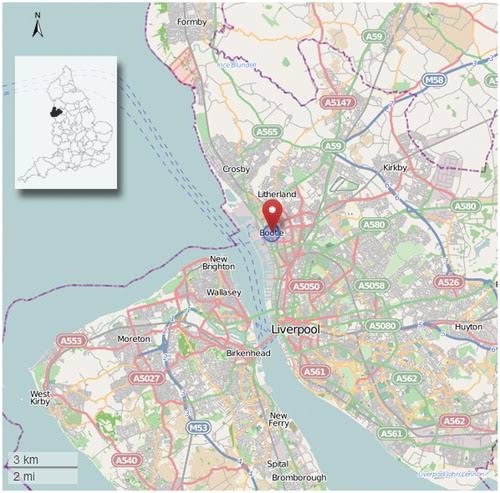
At about 3:15 pm on Sunday, 14 February 1993, four children playing beside the Edge Hill to Bootle freight line at Cherry Lane in Walton found James’s body and ran to alert police nearby.
Police sealed the railway and opened an incident room beside the line. James was formally identified later that day by a family member. The next question was what had happened to him after the witness trail ended.
At Preston Crown Court, Home Office pathologist Dr Alan Williams said James had suffered 42 external injuries, including 22 to his face and head and another 20 elsewhere on his body. He concluded that James had been struck at least 30 times and had suffered multiple skull fractures.
Jurors were shown 27 bricks collected from the railway scene, along with a blood-stained stone and a rusted railway fishplate measuring about 20 inches and weighing roughly 22 pounds. Williams said the injuries were consistent with blows from bricks and the iron fishplate.
Forensic scientist Graham Jackson also examined James’s clothing and material recovered from the scene. He found brick dust and damage consistent with forceful impacts, while blue modeling paint found on James was later compared with similar traces recovered from the boys’ clothing and footwear.
James had been stripped from the waist down, and evidence of injuries to his genital area was presented at trial. No sexual offense charge was brought, and the prosecution did not establish a sexual motive.
After the attack, James was placed across the railway line. Prosecutors argued that the boys intended a passing train to strike him and make the death appear accidental.
The train later struck and severed James’s body, but Williams established that James was already dead before it reached him. His death had been caused by the injuries inflicted beforehand.
The railway had given police the evidence of how James died. What it still had not given them were the names of the two boys seen walking out of the Strand with him.
The Boys in the CCTV
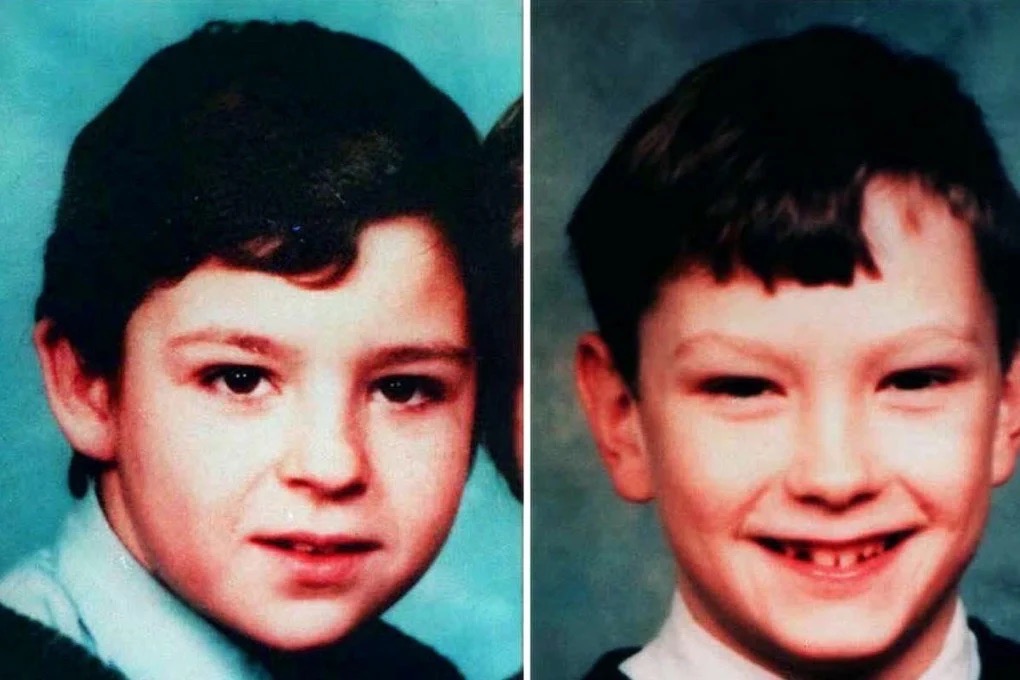
Late on Wednesday, 17 February, a woman went to Marsh Lane Police Station after recognizing Jon Venables in the CCTV images. She also gave police the name of the boy he was often with: Robert Thompson.
Plain clothes officers went to their homes the following day. Both suspects were ten, several years younger than police had initially believed. One of the officers who arrested Venables later recalled, “I was so shocked to see his age and his size, I just couldn’t get my head around the possibility that this tiny kid had committed such an evil act.”
Thompson and Venables were taken to separate police stations and questioned independently. Crimewatch broadcast enhanced versions of the CCTV images later that evening, but by then both boys were already in custody.
The physical evidence strengthened the case. At trial, Home Office forensic scientist Graham Jackson testified that blood on Venables’s right shoe matched James’s DNA profile, with the chance of it coming from another unrelated person put at about one in a billion.
Tests on the much smaller blood samples from Thompson’s shoes did not produce a DNA result. Other evidence connected him to the scene, including hairs found on his footwear and forensic comparison of a patterned injury on James’s cheek with Thompson’s shoe.
Blue modeling paint provided another link. Paint of the same chemical composition was found on James and on clothing and footwear belonging to both Thompson and Venables.
At 6:40 pm on Saturday, 20 February, Thompson and Venables were formally charged with abducting and murdering James. The police now had two defendants.
The Case Moved to Preston Crown Court
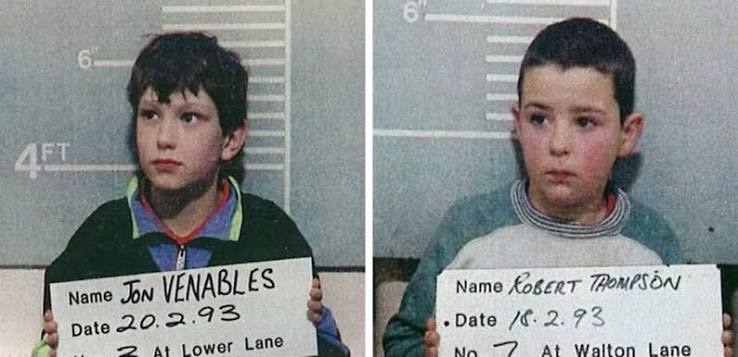
The trial opened at Preston Crown Court on 1 November 1993. Thompson and Venables were now eleven. Both pleaded not guilty to abducting and murdering James, as well as to the attempted abduction of another child.
Because they had been only ten when James was killed, prosecutors had to prove more than their involvement. The jury also had to be satisfied that both boys understood what they were doing was seriously wrong.
Much of the case was heard through recorded police interviews. Neither boy gave evidence in court. On the tapes, their accounts changed as questioning continued, while each placed much of the responsibility for the violence on the other.
In one recorded interview, one of the boys asked about James’s mother and told a detective, “Will you tell her I’m sorry? I was going to give myself up.”
As the trial neared its end, Mr Justice Morland told the jury, “You may think the evidence is overwhelming that James Bulger was unlawfully killed and whichever of the defendants it was who inflicted those injuries intended either to kill James Bulger or do him really serious injury.”
On 24 November, after about five and a half hours of deliberation, the jury found Thompson and Venables guilty of abducting and murdering James. They could not reach a verdict on the separate attempted abduction charge.
The verdict settled who was responsible for James’s murder. It did not settle how long two eleven-year-olds should remain locked away.
The Sentence Became a Legal Battle
After the guilty verdicts, Mr Justice Morland ordered Thompson and Venables to be detained during Her Majesty’s pleasure, the life sentence then used for children convicted of murder.
He described James’s murder as an act of “unparalleled evil and barbarity” and recommended a minimum term of eight years before either boy could be considered for release.
The figure soon increased. Lord Chief Justice Taylor raised the minimum to ten years. In 1994, Home Secretary Michael Howard extended it again to fifteen following a major public campaign for harsher punishment.
Howard’s decision was overturned in 1997. The House of Lords ruled that public pressure should not determine the minimum period Thompson and Venables were required to serve.
In 1999, the European Court of Human Rights also criticized the way the trial had been conducted. Because of their age, the court found that the boys had not been able to participate effectively in the formal Crown Court proceedings. Their murder convictions remained intact.
Lord Woolf eventually fixed the minimum term at seven years and eight months, expiring on 26 October 2000.
Thompson and Venables were eighteen when the minimum period ended. The next decision was no longer about the length of their sentence. It was whether either of them should be released.
One Stayed Out. One Went Back.
Robert Thompson and Jon Venables were released on license in June 2001, aged eighteen. The license lasts for life, meaning either man can be recalled to custody if authorities consider him a risk to the public. Both were also given new identities protected by a High Court injunction.
Robert Thompson
Far less has become publicly known about Thompson. In March 2024, the Government told Parliament that he had remained in the community on a license without further offense.
Jon Venables
Venables’s history after release was very different. He was recalled to custody in February 2010 and convicted that July of possessing indecent images of children. He received a 24-month prison sentence before the Parole Board directed his release again in 2013.
His freedom lasted four years. Venables was recalled again in November 2017 and, in 2018, received a 40-month sentence for further offenses involving illegal images of children. Three successive parole reviews kept him in custody, with the most recent of those decisions coming in December 2023.
A new parole review was underway in 2026. On 7 August, the Parole Board published an application from Denise and Stuart Fergus asking for Venables’s forthcoming hearing to be held in public. The deadline for representations on that request passed on 14 August.
The court orders protecting the new identities and whereabouts of Thompson and Venables remain in force.
“I Will Never Stop Fighting for James”
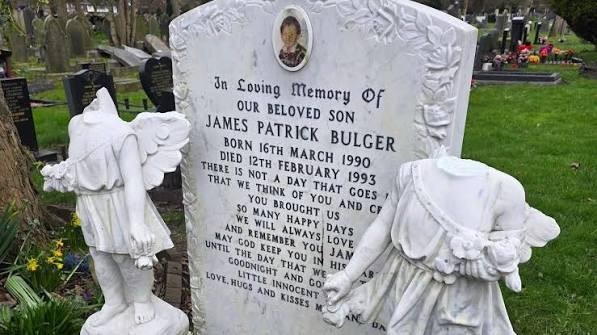
Less than a month after Thompson and Venables were convicted, Denise gave birth to another son, Michael James. She later described caring for him as something that helped her keep going after a year dominated by James’s murder and the trial.
James remained part of the family that grew around her. His younger brothers came to know him as their older brother, not simply as the child whose photograph had become familiar across Britain.
In 2011, the year James would have turned 21, Denise established the James Bulger Memorial Trust. The charity was created to support children and families affected by crime, hatred and bullying.
Her campaigning continued alongside the trust. In March 2024, a statement from Denise was read in Parliament, in which she said, “I will never stop fighting for James.” Hansard recorded the statement in full.
More than three decades after his murder, she was still challenging decisions connected with the case and speaking publicly in her son’s name.
In 2018, Denise published her memoir, I Let Him Go, recounting James’s life and the years that followed his murder.
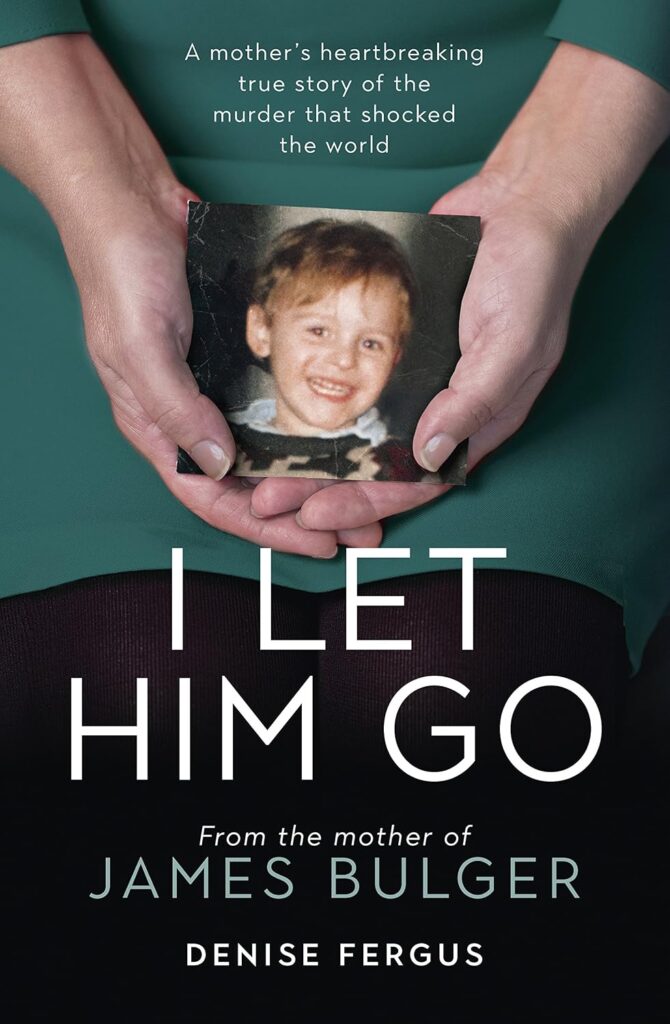
But Denise’s own account of James does not end with courtrooms, sentences or parole hearings. In her memoir, she wrote that she wanted people to remember the child she had known before February 1993: “my James was real and fizzing with life.”
For more true crime stories involving disappearances and unanswered questions, read our article on the disappearance of Jo-Anne Pedersen, Daniel Barter and Jasmine Block.