
This article contains graphic descriptions of violence and an actual postmortem photograph of the victim. Reader discretion is advised.
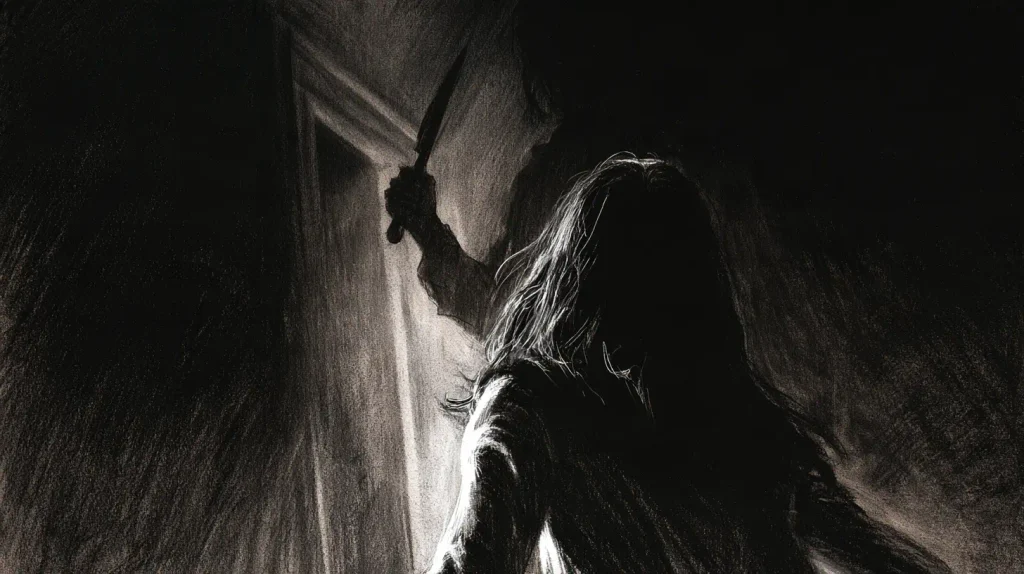
The wounds in Reet Jurvetson’s neck were so numerous that they initially appeared to be one gaping injury. A close examination at the morgue revealed the separate knife punctures. Most of the blows struck her neck, but the blade also entered her chest and abdomen and severed her carotid artery. Cuts on her hands suggested that she tried to defend herself.
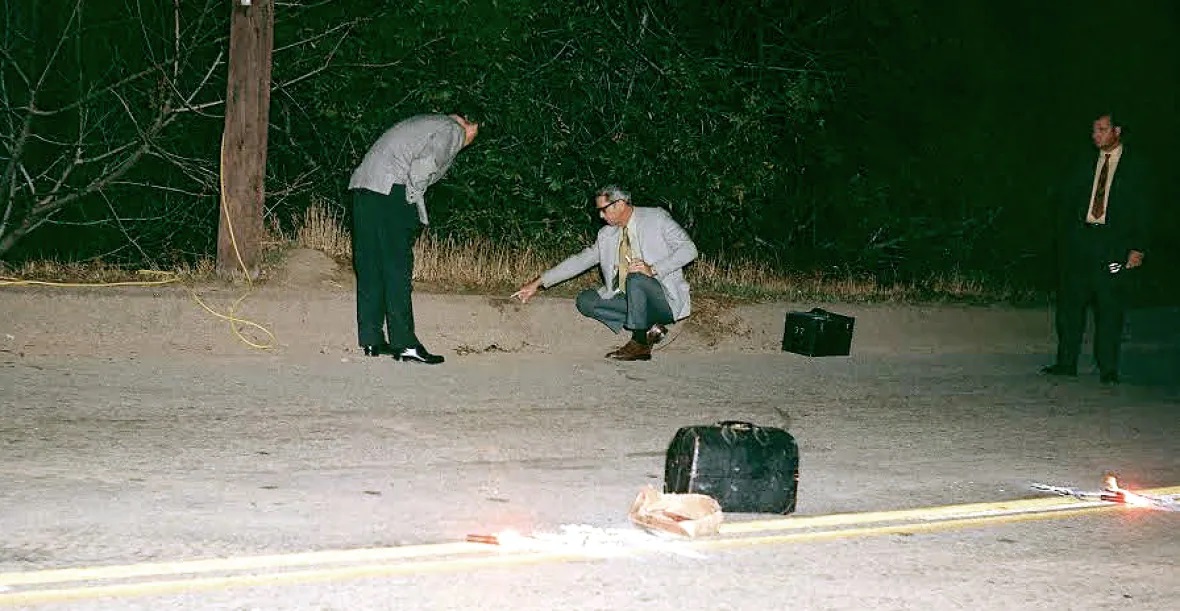
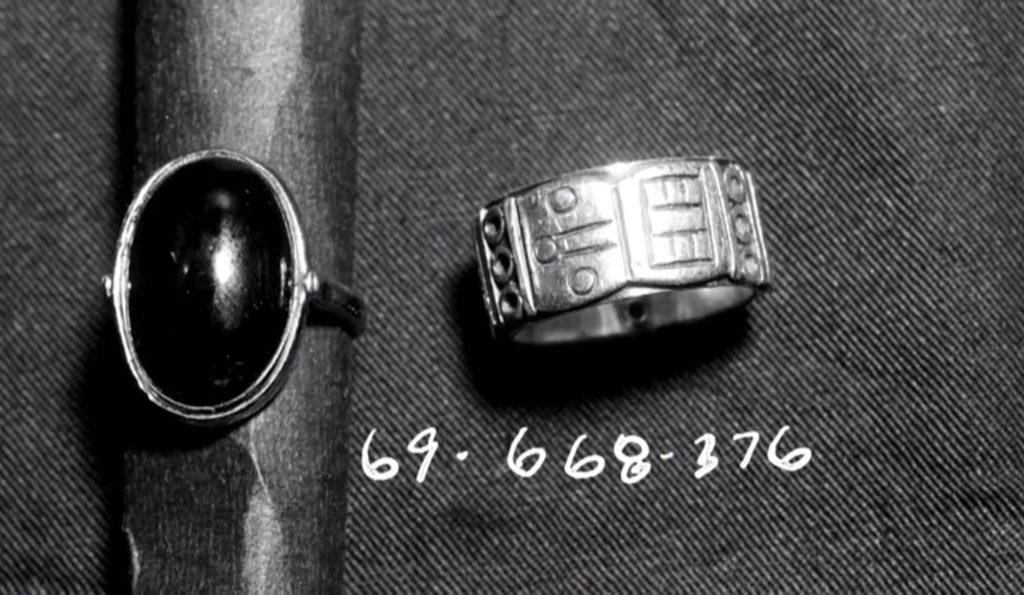
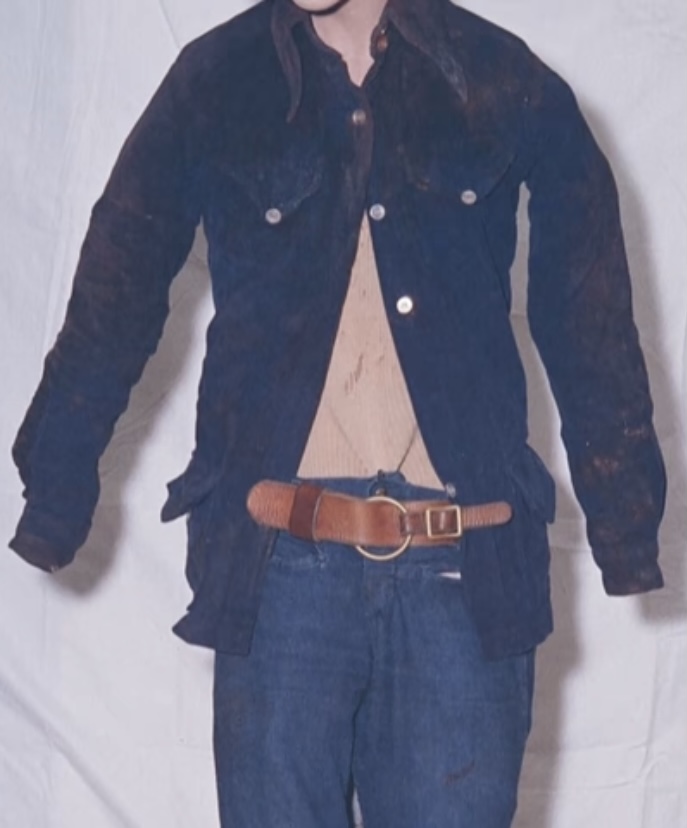
A fifteen-year-old boy found her while birdwatching near Mulholland Drive on November 16, 1969. Her body lay about fifteen feet below the road, caught against a branch that prevented it from falling farther down the hillside. She still wore her clothes and rings, but carried nothing that identified her. The coroner estimated that she died between twenty-four and forty-eight hours before the boy discovered her.
Investigators believed someone attacked her with a small knife, possibly a penknife. The concentration of wounds suggested she might have been held on her back while her attacker leaned over her. Evidence at the roadside indicated that someone transported her body there and dragged it from a car before dumping it over the edge. These were reconstructions of an unwitnessed killing, assembled from the injuries and the place where she was left. The police records CBC examined described the damage in considerable detail but didn’t explain who inflicted it.
Reet was nineteen. For the next forty-six years, the authorities knew her as Jane Doe No. 59.
The absence of a name prevented detectives from asking some of the most useful questions about her death. They could not speak to her family, find the people she spent time with, or establish where she lived. A Canadian label on her clothing offered a possible starting point, but investigators couldn’t identify her. Her jewelry made robbery seem less likely. The autopsy found no evidence of sexual assault and no drugs or alcohol in her system.
In Canada, meanwhile, her family waited for a letter.
Reet was the youngest child of Estonian refugees who settled in Montreal after she was born in Sweden in 1950. She grew up among other Estonian families, attended summer camps, joined the Girl Guides, and sang in a youth choir. She drew and made her own clothes. Her mother called her their “little brook in the woods,” a nickname her older sister, Anne, preserved in the memorial she eventually wrote for her.
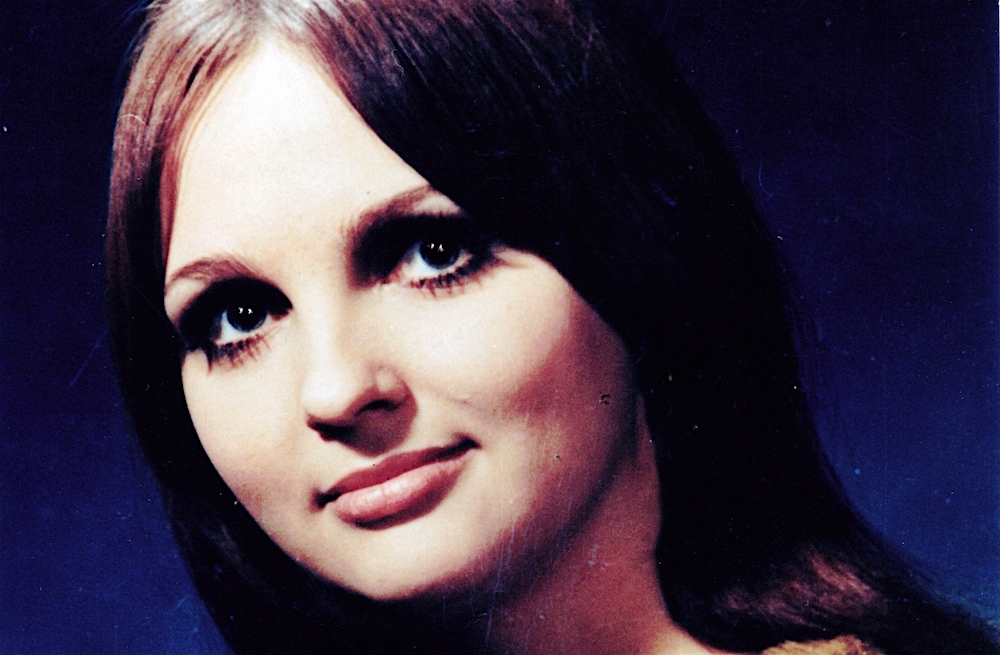
After high school, Reet moved to Toronto, lived with her grandmother, and found work at Canada Post. The arrangement gave her an income and a familiar place to stay as she began living away from her parents. By the fall of 1969, she had saved enough money to travel to California.
A young man was part of the attraction. Friends knew him as John or Jean, and Reet met him in Canada before he went to Los Angeles. She thought he resembled Jim Morrison, the singer of The Doors. Decades later, investigators could recall that impression more readily than his surname.
Reet went to see him. On October 31, she sent her parents a postcard in Estonian describing her new surroundings. She had a small apartment, went to the beach and liked the people she met. Nothing in the message suggested trouble.
When no further news arrived, her family tried to reach her. Her mother asked friends whether they knew anything. The inquiries went nowhere, but the family did not conclude that she was dead. They thought she wanted independence and would reach out when she was ready.
Anne acknowledged how difficult that explanation might be for others to understand. Her parents never filed a missing-person report. In the family’s account of those years, distance and uncertainty gradually hardened into an assumption that Reet was living somewhere beyond their reach. They did not know whether she remained in California, much less where to find her.
That assumption left the Los Angeles investigation without a corresponding disappearance to investigate. Reet had people who missed her, but no police file in her name for detectives to connect to the woman found on Mulholland Drive.
Instead, her death became attached to another story already consuming the city.
Three months before her body was discovered, Charles Manson’s followers murdered Sharon Tate and four other people at a house roughly six miles away. The timing, location, and repeated stabbing made another possible Manson victim an enduring subject of speculation. Ruby Pearl, a caretaker at Spahn Ranch, where the group stayed, thought the unidentified woman resembled someone called Sherry who visited the ranch. The resemblance never became an identification.
Vincent Bugliosi and Curt Gentry’s 1974 book Helter Skelter gave the theory a longer life, suggesting that Jane Doe No. 59 might have witnessed a death involving Manson’s associates and been killed to prevent her from talking. No evidence established that sequence. It remained a possible explanation attached to a woman whose actual movements were unknown.
Decades later, investigators still considered the connection worth checking. They interviewed Manson in prison in 2015 and obtained no useful information about Reet. Detective Luis Rivera subsequently told the Canadian Press, “There’s no link, there’s no evidence to it.”
By then, another detective’s work had opened a more productive route into the case.
In 2003, LAPD cold-case investigator Cliff Shepard came across a bloodstained tan lace bra among the old case papers. In his account to Crime Junkie, the garment was neither sealed nor properly tagged. It survived in a box while much of the other evidence was unavailable. The young woman’s unclaimed body was already cremated.
Shepard submitted the bra for DNA testing. Even a profile belonging only to the victim could help establish her identity, provided someone came forward with a name and a relative willing to provide a comparison sample.
That possibility took years to become useful. A postmortem photograph eventually appeared on NamUs, the national database used to help identify missing people and unidentified remains. In June 2015, Reet’s friends saw the photograph and recognized a resemblance.
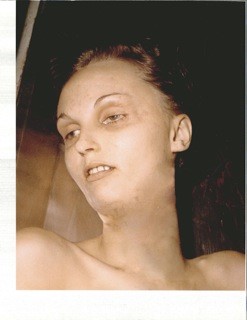
They contacted Anne.
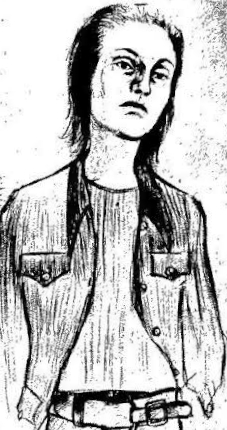
Earlier drawings of the unidentified woman had failed to produce that recognition. Anne believed they bore little resemblance to her sister. The actual photograph of Reet’s face provided something the drawings did not, although recognition alone could not settle an identification after so many years.
Anne supplied DNA. Investigators compared the family sample with the biological evidence preserved from the murder, and confirmation came in December 2015. The police publicly announced Reet’s identity the following April.
Anne was seventy-three and the last surviving member of Reet’s immediate family. Their parents died without learning what happened. Their brother, Tonu, died in 2014, still hoping to see his younger sister again.
His wife, Tiiu, remembered the student whose future once seemed full of possibilities. “She was exceptionally bright, a straight-A student,” she told The New York Times.
For Anne, the identification brought a form of knowledge she struggled to absorb. She read the findings about the absence of sexual assault and drugs, searching for anything that might make the circumstances less terrible. But the number of wounds remained almost incomprehensible.
“I can hardly grasp how she could have been stabbed over 150 times,” she wrote in the statement released after the identification.
The name allowed investigators to reconstruct the journey that preceded the murder. It also brought them back to Jean.
In July 2016, Rivera and fellow LAPD detective Veronica Conrado traveled to Montreal to interview witnesses. One person remembered seeing Reet and Jean at Café Image. The descriptions helped produce a sketch of a young man with long hair. Investigators also learned about a shorter companion, possibly another Jean, who wore his hair in a Beatles-style bowl cut.
The two men might have shared accommodation with Reet in Los Angeles. Finding them could establish where she stayed, whom she saw, and what happened between the postcard and her death. Their possible proximity to her made them important to the investigation, but did not establish that either man killed her.
Reet’s friend Gilda Green remembered an encounter with the shorter man in Montreal in the spring of 1970. She asked him about Reet. In Green’s recollection of their conversation, he said Reet stayed with them for a couple of weeks before leaving.
“She left on her own, and everything’s fine; she was happy.”
By the time of that conversation, Reet was dead. Green’s recollection, recorded decades afterward, could not establish what the man knew when he spoke to her. It did offer investigators an account of someone who claimed to have been with Reet in California, at a time when almost everyone else in her life could only wonder where she was.
Another piece of her stay survived in the family’s papers.
On August 20, 2016, Anne found the postcard Reet sent their parents. Its return address gave detectives a specific place to investigate: apartment 306 at 5311 Melrose Avenue. The building was formerly the Paramount Hotel.
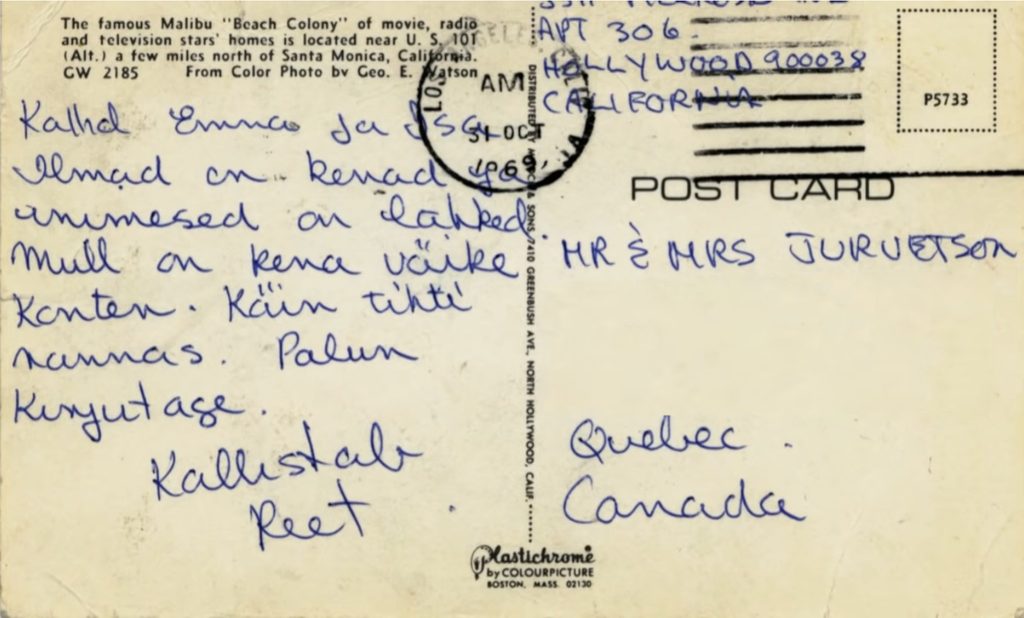
The address arrived too late for investigators to knock on Reet’s old door. The building was demolished in 1989. They sought people who remembered its residents, trying to reconstruct a household from a vanished apartment building and descriptions of men as they looked nearly half a century earlier.
The DNA that identified Reet could not perform the same service for her murderer. As author Catherine Fogarty explained in an account of her own investigation, investigators lacked the DNA profile of an identified perpetrator to pursue. The surviving biological evidence identified the victim. Finding her killer still depended heavily on records, witnesses, and people’s willingness to speak.
Fogarty began investigating the case after producing a podcast about Reet in 2021. Working with retired Montreal detective Don Simpson, she followed references to musicians who moved through the same cafés as Reet. Her 2026 book, The Girl with No Name, proposed that Jean might have been Jules “Jay” Boivin, a guitarist in the Quebec band Les Sinners.
In an excerpt published by The Walrus, Fogarty described comparing photographs of Boivin with the sketches and tracing his connections to California. The resemblance and overlapping social circles gave her a possible identification to investigate, not proof of murder.
Boivin died in 2021. His widow cooperated with Fogarty in the hope of clearing his name. As La Presse reported in October 2026, the theory remained unproven, and Reet’s killer remained unknown.
The postcard offered a more certain record of Reet’s life in Los Angeles. It was written by her, before friends had to reconstruct conversations and before investigators had to work backward from the injuries on her body. Its cheerful description of California helped her family believe she was happy there. Over the years, they came to understand her silence as a wish to live independently.
But Reet’s message to her parents ended with a request.
“Please write to me.”
For more disturbing true crime stories, read Inside Kermit Gosnell’s Clinic, Where Newborns Were Killed With Scissors and The Dnepropetrovsk Maniacs Who Filmed Their Victims’ Deaths.