


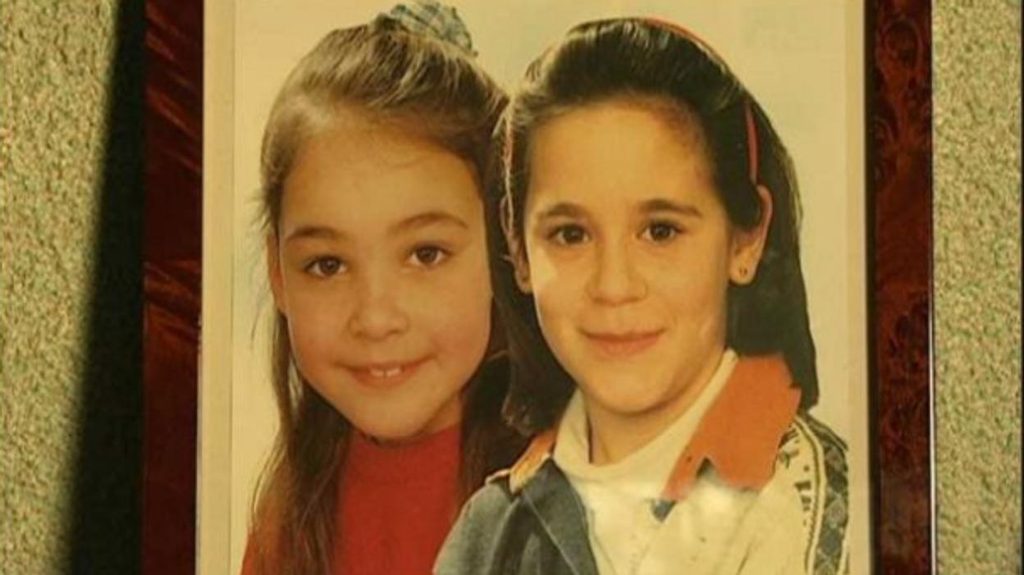
René Michaux heard children’s voices while searching Marc Dutroux’s house on December 13, 1995, but the police officer thought they came from the street. Behind a concealed door in the cellar were Julie Lejeune and Mélissa Russo, two school friends whose families had been looking for them for almost six months. Dutroux was already in prison over an unrelated vehicle dispute. The search ended without finding either girl.
Julie and Mélissa disappeared on June 24 in Grâce-Hollogne, near Liège. That afternoon, Julie visited Mélissa to rehearse a dance for their school festival. They rode their bicycles, played inside, and around five received permission to go out again. They wanted to wave at cars from a bridge over the motorway. When they failed to return, Mélissa’s mother, Carine, went looking for them on her bicycle. By early evening, she and Julie’s mother, Louisa, were searching together by car.
The man who took them had already been convicted of rape and unlawful confinement involving five girls. In 1989, Dutroux received prison sentences totaling 13.5 years for those crimes and others. He was released on parole in 1992. His subsequent supervision largely consisted of office appointments rather than home visits, and organizational problems interrupted it altogether for roughly a year.
There was a more direct warning. In 1993, an acquaintance told police that Dutroux had offered him money to help kidnap girls. The information did not stop what followed.
At his house in Marcinelle, Dutroux prepared a hiding place in an old water cistern beneath the building. Shelving concealed its entrance. He held Julie and Mélissa there while continuing to move around Belgium with criminal associates.
During the night of August 22–23, two more young women disappeared from the Belgian coast. An Marchal, seventeen, and Eefje Lambrecks, nineteen, were on holiday and had attended a hypnotist’s show in Blankenberge. Their late tram journey ended in Ostend, short of where they were staying. Dutroux and his associate Michel Lelièvre abducted them and took them to Marcinelle. They were drugged and held upstairs while the younger girls remained below.
An and Eefje suffered sexual violence before Dutroux disposed of them at another property. At his trial, the prosecutor explained that they had been drugged, wrapped in plastic, and buried. The autopsy evidence indicated that they were still alive when buried.
That September, Dutroux’s own mother wrote to a magistrate about girls being brought into and taken out of her son’s house at night. Her information passed through the judicial system without being connected to the missing teenagers.
Dutroux also tortured his associate Bernard Weinstein for money, drugged him, and buried him alive.
When Dutroux was jailed that December, Julie and Mélissa depended on his wife, Michelle Martin, for food. Martin knew they were there. She later said she was afraid to enter their cell, claiming she feared they would attack her. A former schoolteacher, she visited the house to feed Dutroux’s dogs.
The girls died of hunger and thirst.
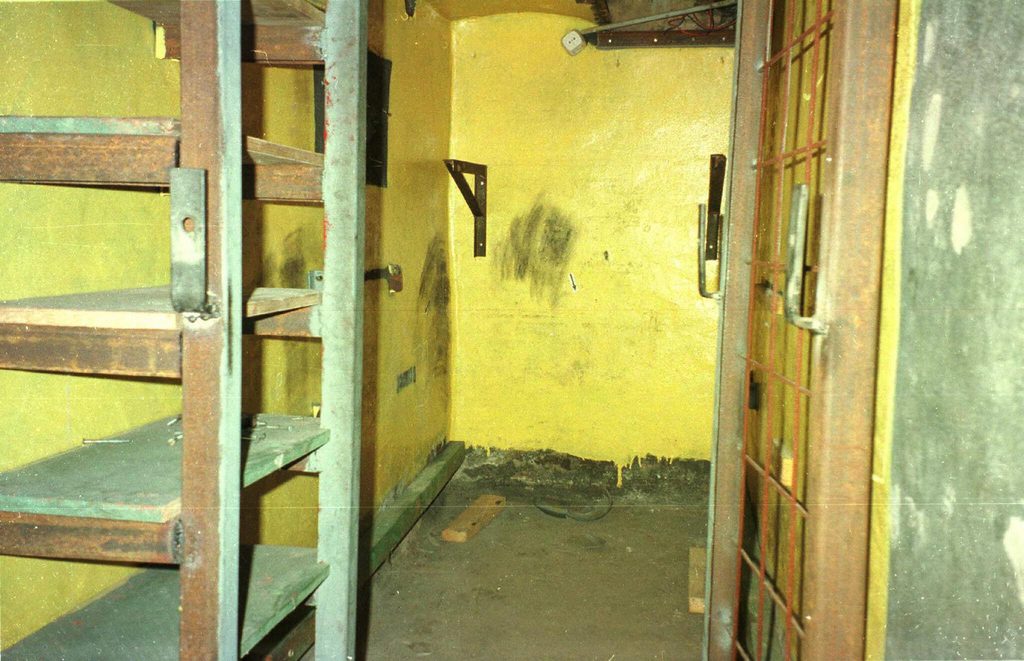
Dutroux returned from prison in March 1996. He gave contradictory explanations of whether both children were already dead when he found them. At trial, the judge confronted him with an earlier statement in which he claimed he had tried to revive them. Dutroux said that version was a lie.
He also explained what he did before burying their bodies.
“I put them both in the freezer for more than a week. I had other things to do.“
Within weeks, he was looking for another girl.
On May 28, twelve-year-old Sabine Dardenne was cycling to school near Tournai when she was abducted. Her bicycle and schoolbag were taken into the van with her. She was drugged, transported in a metal trunk, and imprisoned in the Marcinelle cellar. At first, Dutroux kept her chained by the neck to a bed. He repeatedly raped her.
Sabine used a bucket as a toilet and had to choose between drinking her limited water and using it to wash. Prosecutors said Dutroux also filmed the sexual abuse of his captives.
To explain her imprisonment, he invented someone more dangerous than himself. He told Sabine that a powerful boss controlled her fate and that he was protecting her from this man. Her parents, he claimed, would not pay the ransom demanded for her release. He made himself the only person she could depend on for protection and food.
Sabine tried to keep some connection with the life outside. She worked on school exercise books and tracked dates and family birthdays. She wrote letters home, but Dutroux never posted them.
In one, she mentioned flowers she wanted to pick for her mother’s birthday and a present she wanted to give a friend. By July, she was losing hope.
“I don’t think I will ever see you again,” she wrote to her family.
She asked for company without understanding that Dutroux would obtain it by abducting someone else. On August 9, fourteen-year-old Laetitia Delhez disappeared after visiting a swimming pool in Bertrix. Dutroux brought her into the cellar.
Laetitia carried information that contradicted what he had been telling Sabine. People outside were looking for her. Sabine had not simply been abandoned by a family unwilling to pay for her return. The two girls could now compare what they knew, although they still depended on their captor to open the door.
This time, witnesses had noticed the vehicle used in an abduction. Information about a suspicious van, including part of its registration number, helped lead police to Dutroux. He was arrested on August 13. Two days later, he led officers to the concealed cell.
Hearing unfamiliar men outside frightened Sabine. She thought they might have come to kill them. Laetitia recognized one of the officers from her village.
Sabine had spent eighty days in captivity. Laetitia had spent six. Dutroux’s lies had taken hold so completely that Sabine initially believed he had saved them.
“But when I came out, I thanked Dutroux. I thought he had saved us,” she told the court years afterward.
For the families of the other missing girls, the rescue brought a brief possibility that their daughters might also be found alive. On August 17, searchers recovered Julie and Mélissa’s bodies. Weinstein’s remains were also discovered on Dutroux’s property. Police found An and Eefje at another property on September 3.
As the captivity was reconstructed, the December search acquired its full significance. Police had been inside the house while Julie and Mélissa were alive. Michaux had heard them. His search report did not mention the voices.
A subsequent parliamentary investigation documented rivalry between police services, inadequate searches and failures to exchange information. Officers approached parts of the investigation without the information held by colleagues elsewhere. Evidence was poorly recorded, and officers returned items seized during searches. The earlier warning about kidnapping girls, the letter from Dutroux’s mother, and the noises in the cellar had each passed through official hands.
Public anger intensified when Jean-Marc Connerotte, the investigating judge associated with the rescue, was removed from the case. He had attended a fundraising spaghetti dinner for victims, which Belgium’s highest court considered incompatible with the impartiality his position required.
On October 20, 1996, roughly 300,000 people marched through Brussels. Families organized the White March, and participants carried white flowers and balloons through the capital. The demands for accountability extended beyond the prosecution of Dutroux and his accomplices to the institutions that had failed to find the children. The case helped drive major changes to Belgium’s police system and the creation of Child Focus, the organization for missing and sexually exploited children.

Even while awaiting trial, Dutroux exposed another failure in his custody. In 1998, he escaped for several hours before authorities recaptured him. The justice and interior ministers resigned.
The trial did not begin until 2004, nearly eight years after the rescue. By then Sabine was twenty. Dutroux continued to present himself as someone acting under the direction of more powerful people, and at times as a protector of the girls he imprisoned. His claims fed the suspicion that influential figures had been shielded from investigation. Prosecutors said they found no evidence of the powerful trafficking network he described.

For Sabine, appearing in court meant hearing him repeat the explanation he had given her in the cellar. She no longer accepted it.
“I am supposed to say thank you, if I understand correctly,” she said as he maintained that he had protected his captives. She asked the judge to “make him quiet.”
Laetitia objected to the standard oath requiring her to testify “without hatred or fear.” She was willing to tell the truth. She could not promise those feelings were absent.
Sabine also asked Dutroux a question about the difference between her fate and that of the girls whose bodies had been recovered from his properties.
Her testimony described the confinement, the assaults, and the efforts she made to endure them. She had seen no other abusers during her captivity. Her account to the jury came from the child who had lived behind the concealed door, not from the man explaining why he built it.
On June 22, 2004, Dutroux received a life sentence. Martin was sentenced to thirty years and Lelièvre to twenty-five. Outside the courtroom, Eefje’s father, Jean Lambrecks, spoke about what the verdict could not restore.
“But we are still the biggest losers because I lost a daughter and I’ll never get her back.”
When Sabine wrote her memoir, published in English as I Choose to Live, she explained that she wanted people to stop treating her as a curiosity. She also wanted to tell her story “so that no one ever asks me any more questions ever again.”
For more horrifying true crime stories, read about the newborns killed with scissors inside Kermit Gosnell’s Philadelphia clinic and the Dnepropetrovsk Maniacs, who murdered 21 people in Ukraine and filmed some of their victims’ deaths.