
This article contains graphic descriptions of violence against newborns, medical abuse, and disturbing photographs of human remains and crime scene evidence. Some readers may find the content deeply distressing. Reader discretion is advised.
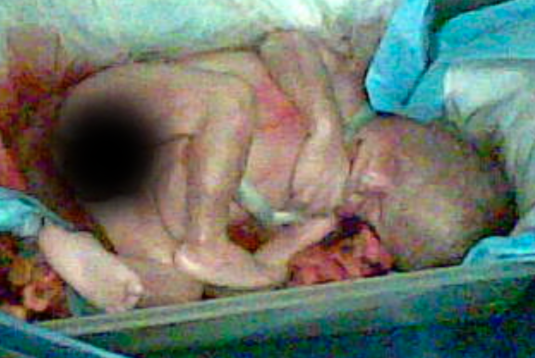
The baby boy was so large that three employees took photographs.
He was born during an abortion at Kermit Gosnell’s Philadelphia clinic in July 2008. His mother was seventeen, and an ultrasound placed her pregnancy at nearly thirty weeks. Kareema Cross, who worked there, compared him with her own daughter, who weighed more than six pounds at birth.
Cross said she saw the boy breathe and move. Gosnell joked that he was big enough to “walk me to the bus stop,” then cut his neck and put his body in a plastic shoebox.
When the grand jury asked why the employees photographed him, Cross answered, “Because it was big and it was wrong and we knew it. We knew something was wrong.“
Prosecutors called him Baby Boy A.
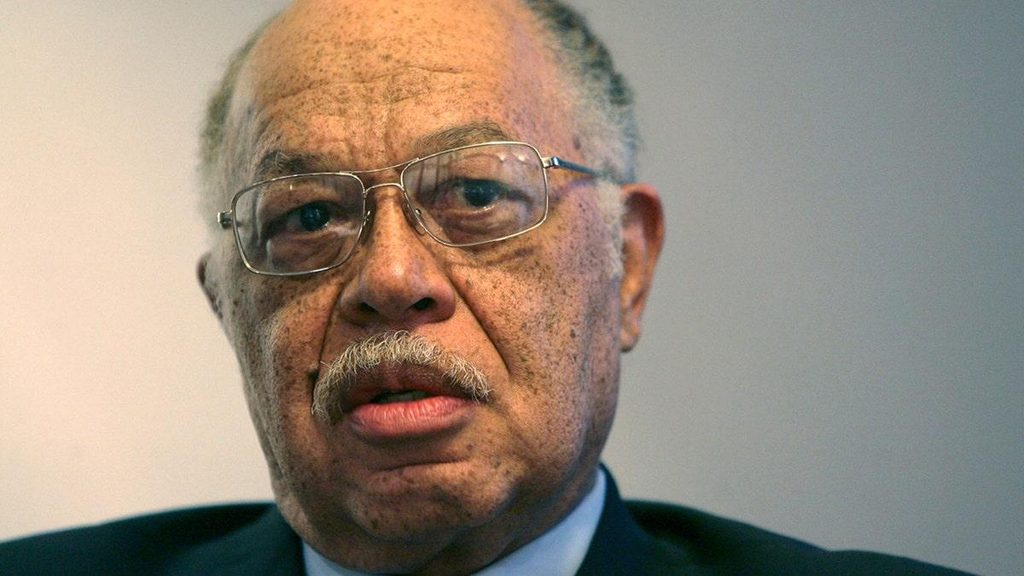
By then, Gosnell practiced medicine for more than forty years. He graduated from Jefferson Medical College in 1966 and returned to a Philadelphia neighborhood where community organizers welcomed a doctor. He made house calls, helped establish a methadone clinic, and treated people who struggled to pay. His childhood friend Walter Edmonds remembered a man who was “very dynamic, charming, and he had an inclination to make some money.“
There were serious warnings early in that career. During Mother’s Day weekend in 1972, fifteen women traveled from Chicago for abortions they could not obtain locally. Gosnell used an experimental plastic device called the “super coil” to induce them. Nine suffered serious complications, including hemorrhage, infection, and a perforated uterus. One needed a hysterectomy. Federal and city officials investigated, but Gosnell faced no criminal charges.
Decades later, he still offered opportunities that other medical practices would not.
Ashley Baldwin was fifteen and considering becoming a doctor when she joined the Women’s Medical Society, where her mother, Tina, already worked. She began by answering telephones. Soon she performed ultrasounds, administered intravenous drugs, and assisted with abortions. Gosnell gave her medical books and let her practice inserting an IV needle into his arm. He claimed that he had “grandfathered her in,” making her work legal.
Baldwin attended school while working as many as fifty hours a week, sometimes until one or two in the morning. She saw newborns moving and breathing, and watched Gosnell cut their necks with scissors. When she felt uneasy, he reassured her.
“He told me that’s how it was supposed to go.“
Women often spent hours at the clinic before Gosnell arrived for the night’s procedures. Unlicensed workers gave them drugs to induce labor and repeated doses of sedatives without proper monitoring. The clinic offered anesthesia packages at different prices. Tina Baldwin also described a racial distinction in care. White women from the suburbs received a cleaner waiting area and Gosnell’s personal attention to their medication. Black and Asian patients were routinely left to his assistants.
Pennsylvania generally prohibited abortions beyond twenty-four weeks, with exceptions for medical necessity. Gosnell concealed advanced pregnancies by falsifying ultrasound measurements and reports. Induced women sometimes delivered before he reached the clinic, leaving employees to deal with newborns in toilets and recovery rooms.
Gosnell called cutting their spinal cords “snipping.”
One infant, identified as Baby C, lay on a counter moving and breathing for approximately twenty minutes before employee Lynda Williams cut its neck. The testimony became central to one of the murder convictions. Another baby, identified as Baby D, was delivered into a toilet. Cross described movement in the water. Adrienne Moton lifted the infant out and cut its neck.
Cross estimated that she saw at least ten babies breathing before someone used the scissors. When she questioned Gosnell, he told her the movements were only reflexes.
His instruction extended to Steven Massof, a medical-school graduate who never obtained a medical license. Massof believed he was completing a residency under Gosnell, though the arrangement had no accreditation. He earned $300 a week and progressed from seeing patients and writing prescriptions on Gosnell’s signed pads to performing abortions himself.
At the trial, Massof asked jurors to feel the backs of their necks while he described where he used the scissors. Several followed his instructions.
“It’s like a beheading,” he said.
The women who survived sometimes left with injuries that required extensive surgery. Baby Boy A’s mother spent two weeks in the hospital after her abortion. She developed a blood clot to the heart and an abscess described as grapefruit-sized, and reported continuing fatigue, headaches, and shortness of breath.
Dana Haynes’s case showed how long Gosnell could delay getting help. During a November 2006 abortion, he tore her cervix, uterus, and bowel. The grand jury found that he kept her bleeding and in pain for four hours. Her cousins demanded access to the clinic and insisted that he call an ambulance. Hospital doctors discovered that most of the fetus remained in her uterus.
When a state attorney reviewed Haynes’s lawsuit in 2009, he decided an investigation was unnecessary. He did not interview her or examine Gosnell’s history. That history included Semika Shaw, a twenty-two-year-old patient who died following an abortion in 2000. The state closed its inquiry into her death in 2004. It also closed an investigation prompted by a former employee’s warnings about unlicensed workers administering anesthesia.
Karnamaya Mongar knew none of this when she sought an abortion in 2009.
She was forty-one, a mother of three and a grandmother, and her family was beginning a new life in Virginia after roughly twenty years in a Bhutanese refugee camp in Nepal. They arrived in the United States only four months earlier. A photograph showed Mongar and her husband, Ash, smiling together at the National Air and Space Museum.
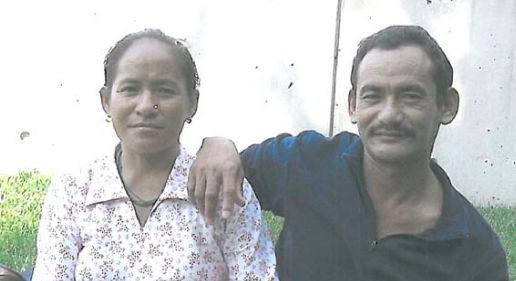
Her daughter, Yashoda Gurung, wanted her to continue the pregnancy. Mongar felt a fourth child would be too much.
“We’re just getting started here,” she told her daughter.
The family’s search for care took them through several clinics. One near their home would not perform abortions beyond fourteen weeks. Another referred them elsewhere, and a Washington clinic eventually directed them to Gosnell. By the time Mongar reached Philadelphia, she was approximately nineteen weeks pregnant.
On November 19, employees repeatedly administered Demerol and other drugs while she waited. She spoke no English. Her daughter accompanied her but could not remain beside her throughout the procedure.
Mongar stopped breathing. The clinic’s defibrillator failed. When emergency responders arrived at about 11:15 p.m., a fire lieutenant found Gosnell and an employee beside the unresponsive woman, with neither doing anything at that moment. Gosnell appeared confused and could not clearly explain what happened.
The hallways were too narrow for a stretcher. An emergency exit stood only a few steps from the procedure room, but it was chained and padlocked, and nobody could produce a key. Firefighters used bolt cutters to open it.
Mongar died at the Hospital of the University of Pennsylvania the following day. The medical examiner attributed her fatal brain injury to oxygen deprivation after an overdose of Demerol stopped her heart and breathing.
Her brother, Damber Ghalley, confronted Gosnell in the hospital parking lot. The doctor repeated that the procedure was complete when her heart stopped.
“I didn’t do anything wrong,” Ghalley remembered him saying. “I’ll be able to answer any question anywhere.”
Gosnell continued operating. He applied to join the National Abortion Federation, whose membership could lend his practice credibility. Before an inspection, he and his wife cleaned the premises, replaced bloodstained recliners and temporarily brought in a nurse. The effort failed. The federation’s president said inspectors found nineteen areas that did not meet its guidelines.
The clinic finally came under sustained scrutiny for a different reason. Federal investigators suspected Gosnell of selling prescriptions for narcotics without legitimate medical need. On February 18, 2010, agents and police entered the Women’s Medical Society.
They found blood on the floors, cat feces on the stairs, and women waiting under bloodstained blankets. Equipment was dirty or broken. The investigation uncovered the reuse of inadequately sterilized instruments. A state health nurse accompanying the raid found five women awaiting abortions, none connected to equipment monitoring their vital signs. She ordered two taken to a hospital.
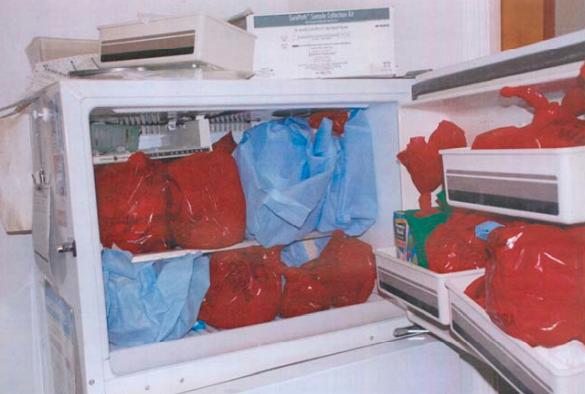
The emergency exit was chained and locked again.
Investigators also recovered the remains of forty-seven fetuses. Some were frozen in bags. Others were placed in cut-down water jugs or juice containers, while body parts were stored in cat- and dog-food containers. Gosnell disputed charges with his medical-waste disposal company and kept the remains in freezers while the disagreement continued.
Philadelphia’s chief medical examiner, Sam Gulino, faced the unfamiliar task of carefully thawing and examining them. One fetus, estimated at twenty-eight weeks, was frozen inside a water jug with a wound at the back of the neck. But Gulino could not determine whether it was born alive. The forty-seven remains were evidence of the clinic’s practices, not proof of forty-seven murders.
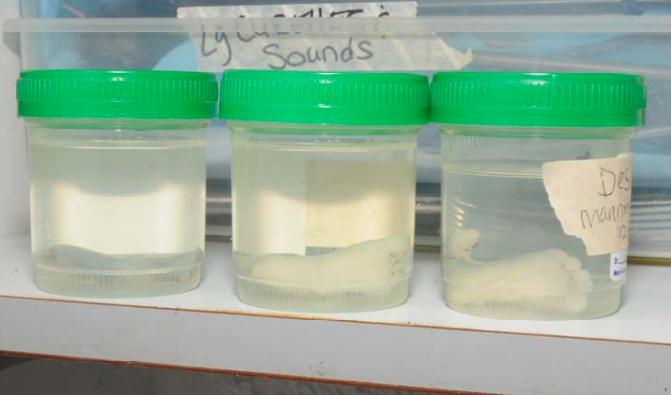
There were also dozens of specimen jars containing severed fetal feet.
Gosnell offered employees different explanations, including identification, DNA testing, and research. A neonatologist told the trial that he knew of no medical reason to preserve feet that way. Prosecutors suggested they might be trophies, but they never established that.
Much of the case depended on people who worked inside the clinic. Cross photographed its conditions and eventually contacted federal authorities. When Gosnell’s lawyer pressed her about continuing to work there despite what she saw, she answered, “I had a family to take care of.” She pleaded guilty in the separate federal prescription-drug case. Other employees, including Massof and Moton, admitted participating in killings and agreed to testify.
Their evidence also exposed how rarely anyone with authority entered the building. The Pennsylvania Department of Health last inspected the clinic in 1993, nearly seventeen years before the raid. Complaints, lawsuits and reports of grievous injuries failed to bring an inspection that stopped the practice.
At the 2013 trial, Gosnell’s lawyer argued that the infants were already dead from medication administered before delivery and that their movements were posthumous reflexes. Witness credibility and proof of live birth mattered. The judge dismissed three of the seven infant-murder charges, and the jury acquitted Gosnell of a fourth.
Jurors convicted him of first-degree murder in the deaths of Babies A, C and D, and involuntary manslaughter in Mongar’s death. He also received convictions for twenty-one illegal late-term abortions and numerous other offenses.
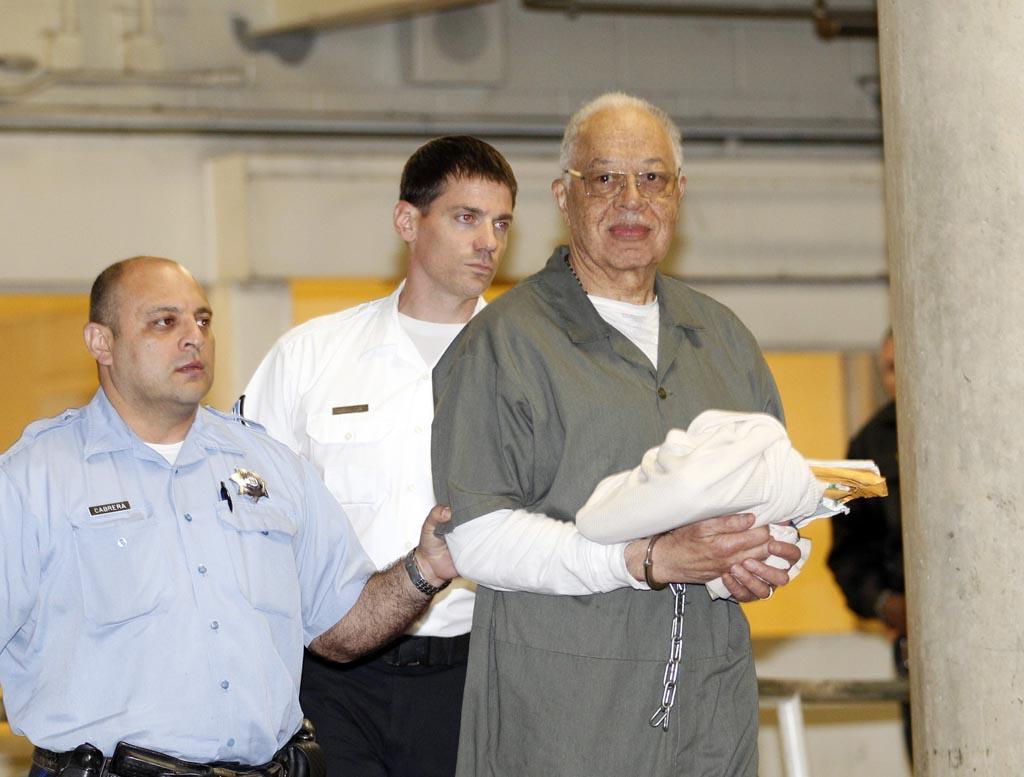
Gosnell surrendered his appeal rights in an agreement that spared him the death penalty and resulted in three consecutive life sentences without parole. A separate federal case brought another thirty-year sentence for running the prescription-drug operation. He remained in custody until his death on March 1, 2026, at eighty-five.
Among the evidence preserved against him was the photograph the FBI recovered from Adrienne Moton’s cellphone. Moton admitted cutting babies’ spinal cords herself. But when she testified about Baby Boy A, the boy she photographed in July 2008, she cried.
“I just felt he could have had a chance,” she said. “He could have been born any day.”
For more disturbing true crime stories, read about the Dnepropetrovsk Maniacs who filmed their victims’ deaths and the hidden face at the center of Jennifer Kesse’s disappearance.