

Four ambulances stood outside the courthouse in Dnepropetrovsk on October 29, 2008, as the court examined photographs and videos recovered during a murder investigation. Relatives of the dead were sent out before the recordings played. Some journalists who stayed in the room left in tears.
The pictures extended beyond the attacks. The killers photographed dead animals, posed beside people they murdered, and went to their victims’ funerals with cameras. Now, confronted with the collection, the defendants disputed what it showed. Their lawyers argued that the material should be excluded because police violated procedure when seizing it.
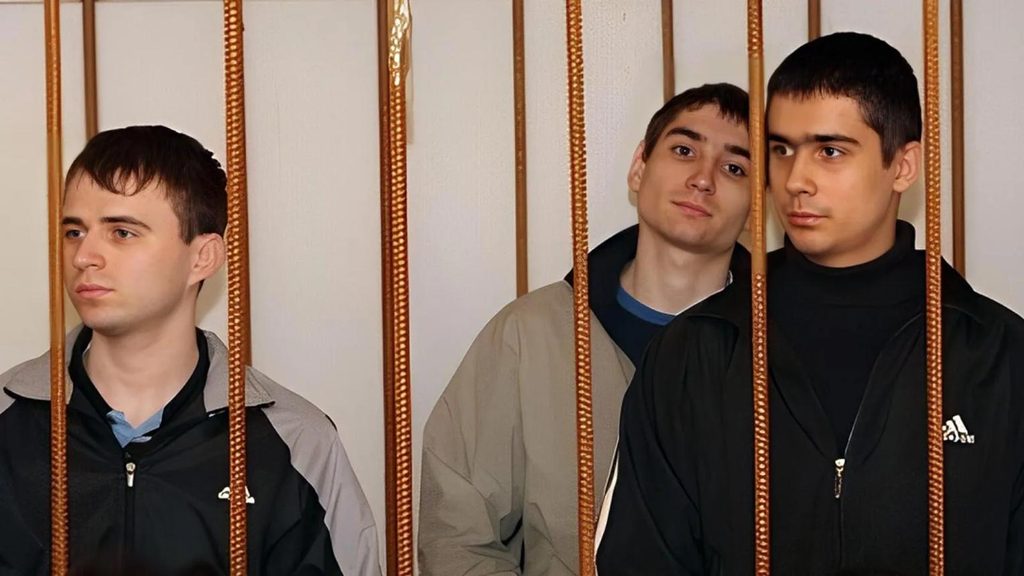
Igor Suprunyuk and Viktor Sayenko were nineteen during the killings that spread through the Ukrainian city and surrounding region in June and July 2007. Twenty-one people died. The men attacked with hammers and metal pipes, often striking from behind, and recorded some of the violence on mobile phones.
The first bodies gave police much less to work with. At dawn on June 26, a woman was found dead in the city’s Kommunar neighborhood. Two hours later, a man was discovered nearby with similar head injuries. More deaths followed. People grew afraid to walk along dark streets, and the victims’ differences made the danger difficult to define. Teenagers, working adults, and pensioners were among them.

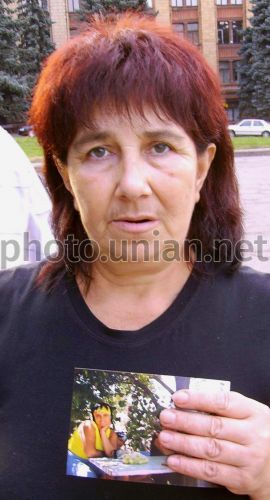
Elena Shram’s family initially thought she was working. A storekeeper who took extra shifts to support her son, Artyom, she sometimes went straight from one job to another. When she failed to return one night in early July, they could not call her because she had left her phone at home.
Shram once wanted to become a lawyer, but her parents lost their jobs, and she went to work. She wanted Artyom to have the education she missed. “I couldn’t, so he’ll be a lawyer,” she told her sister. She also promised him a seaside holiday that August, with his grandmother coming too. To save for it, she sometimes walked several kilometers to work instead of paying for a minibus.
When police showed her brother-in-law a photograph of a dead woman, he thought it was somebody else. Shram’s sister went to the station later and was asked about an operation scar. At the mortuary, she identified Elena by her toes and her recent pedicure.
A teenage boy who escaped the attackers gave police a description of the men, although officers initially treated him as a suspect.
Vadim Lyakhov and his friend Andrei set out on bicycles to go fishing at about three in the morning on July 7. As they passed two men beside a car, Vadim was struck in the temple and knocked from his bicycle. He got up and ran through trees, escaping a pursuer in the countryside he knew well.
After the men left, he returned to Andrei, who was still breathing. Vadim wrapped his shirt around his friend’s head, put a jacket beneath it, and tried to stop passing cars. Eventually, a driver helped. Andrei died.
Vadim and his mother later told Segodnya that police beat him and threatened detention unless he confessed to killing his friend. A police spokesman denied the beating. When the newspaper’s reporter visited, Vadim ran away. That night he began sending her text messages about the nightmares that kept him awake. He dreamed of Andrei, then of the attackers, and repeatedly of that day. His parents kept him from the funeral. Later he took wildflowers to his friend’s grave.
Other witnesses reinforced his description, saying they also saw young men. Police circulated details of stolen mobile phones to pawnshops, and an attempt to sell one helped lead investigators to the suspects. However little the men took from some victims, the stolen property provided a way to follow them.
Police arrested three former classmates on July 23. At least 2,000 officers worked on the investigation, Deputy Interior Minister Mykola Kupianskiy said the following day. Officials initially linked the suspects to nineteen murders, and the total rose as investigators examined more cases. The third man in custody was Alexander Hanzha. Although arrested with the others, he would eventually be convicted of robbery, not murder.
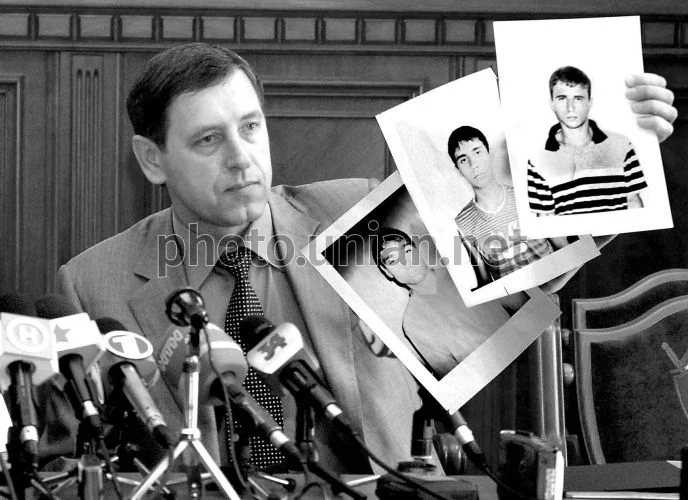
The arrests did not supply an obvious explanation. Some victims lost money or phones, but the men also discarded things they stole. “We still don’t understand the motives,” Kupianskiy said. He compared the crimes to a kind of hunting.
After the arrests, Shram’s ten-year-old son watched from behind a police cordon while suspects in helmets and bulletproof vests demonstrated how they killed his mother.
The suspects came from Krasny Kamen, a residential district where they attended School No. 96. Their arrests brought reporters to the school and to neighbors who knew them by sight, trying to reconcile familiar faces with what police were describing.
Sayenko left little impression on the headmistress, Natalya Morgul. He earned unexceptional marks, did not stand out in sport or music, and entered a metallurgy institute after school. Suprunyuk was harder to forget. In eighth grade, Morgul said, he beat another pupil so badly that the school asked his parents to move him elsewhere. She remembered his mother defending him, no matter what he did.
Older neighbors described Sayenko as calm and polite. A former friend in his building said they now did little more than exchange greetings. He found Sayenko withdrawn and secretive.
Before the murders, Sayenko and Suprunyuk tortured cats and dogs and photographed the results. Suprunyuk offered an explanation that Judge Ivan Senchenko repeated at sentencing. He claimed he wanted to overcome his fear of stronger creatures and read online that repeated exposure to something frightening would make the fear disappear. The court described the animal cruelty as preceding the murders.
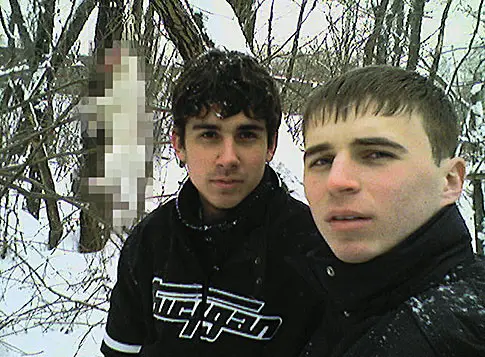
By the time they attacked people, they made practical arrangements for the aftermath. Yevgeny Khmara, a lawyer representing victims, described coordinated roles, hammers and iron pipes carried in plastic bags, water for washing, and changes of clothing. They took turns posing beside victims, and Suprunyuk collected newspaper clippings about the crimes.
They could wash, change their clothes and drive away from an attack, then read about it in the newspaper. The photographs remained in their possession alongside the things they stole.
Suprunyuk’s lawyer Viktor Chevguz disputed the psychiatric assessments that found the defendants legally sane. He wanted further examination outside Dnepropetrovsk and argued that investigators had not adequately explained the killings. Robbery seemed particularly unconvincing when a victim was a boy carrying fishing equipment or an elderly pensioner.
“They did not choose who had money or valuables and who did not,” he told Segodnya. Chevguz also alleged failures and misconduct in the investigation. The prosecutor’s office rejected his accusations, insisting that its work was lawful and thorough. The argument over motive continued into court, where the victims’ families had their own reasons to distrust what they were told.
When the trial opened on June 9, 2008, twenty-nine relatives arrived an hour early. Shram’s mother told a reporter she feared the wrong people were being tried. Others wanted a punishment more severe than life imprisonment.
Sayenko and Suprunyuk asked for their parents to represent them. Prosecutors wanted to call the parents as witnesses, and the court initially refused to admit them as defenders. During the argument over their participation, a lawyer called his client a child.
“A murderer, not a child! Where are our children?” came the response from the victims’ side of the courtroom.
The defendants said police coerced their confessions. Sayenko’s father claimed that incriminating video files were planted after officers seized the equipment. But the prosecution could put other evidence beside the recordings. Blood on clothing was matched to victims. Searches recovered victims’ bank cards and a stolen camera with undeveloped photographs taken at its dead owner’s country house.
Svetlana Fedina, who survived an attack, identified Suprunyuk from photographs while she was still in intensive care. She was on her way to withdraw her mother’s pension from a cash machine when she passed him beneath a streetlight and saw his face.
The recordings also showed recognizable faces. When Sayenko and Suprunyuk were asked whether they recognized themselves in photographs, they said no.
“The people judging you aren’t blind!” Senchenko protested.
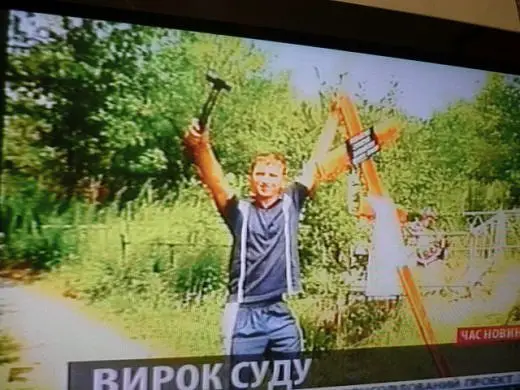
The court accepted the photographs and videos as evidence. The images were particularly difficult to dismiss because the men repeatedly included themselves, posing beside bodies, animals, graves and a stolen motorcycle.
Stories circulated that the killings were commissioned by buyers who wanted films of actual murders. Regional police chief Ivan Stupak said investigators had not confirmed a connection between the suspects and online purchasers. The commercial explanation remained unproven. The existence of a recording did not establish that someone paid for it.
Before the trial ended, one recording reached viewers who had nothing to do with the case.
In December 2008, the Ukrainian newspaper BLIK reported that footage of Sergei Yatzenko’s murder appeared on an American website on December 4. Yatzenko was forty-eight, and the killers took his motorcycle. In the leaked recording, Suprunyuk attacked him while Sayenko filmed. They discussed his suffering as they went, keeping the camera on him for several minutes. The website’s counter, the newspaper reported, approached half a million views.
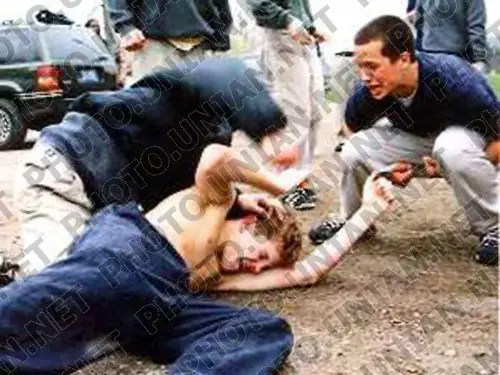
The court’s restrictions on who could watch the evidence meant little once a copy reached the internet. An adviser to the interior minister told BLIK that controlling such videos online was practically impossible.
The British columnist Caitlin Moran followed a link on a message board without realizing she was about to see a real murder. In a January 2009 column for The Times, she described stopping after a minute and forty-seven seconds, unplugging her computer and covering it with a cloth. Only afterward did another message-board user direct her to information about the killers.
On February 11, 2009, Suprunyuk received a life sentence for twenty-one murders, and Sayenko a life sentence for eighteen. Hanzha received nine years for robbery. The court attributed the killings to an aggressive desire for self-assertion and to overcome fear, citing the photographs and recordings as evidence of that motive.
One survivor, Senok Danielyan, accepted the distinction between the sentences. Hanzha returned the things stolen from his pockets, he told a reporter after court. He thought Hanzha was less culpable and that Sayenko and Suprunyuk deserved life.
Ukraine’s Supreme Court upheld the sentences that November. By then, strangers were encountering Yatzenko through a recording made by the men who killed him.
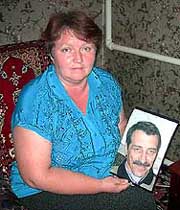
Cancer surgery left Yatzenko able to speak only in a whisper. His wife remembered him murmuring compliments into their daughters-in-law’s ears, always with humor. He took whatever work he could manage. He repaired cars, built things, wove baskets and cooked.
On July 12, 2007, he went out on his old Dnepr motorcycle. His wife reached him at 2:30. He said he would visit their grandson and come home. When he failed to return, the family searched places where he worked and posted his photograph around the neighborhood. They found his body four days later.
When his grandson Bogdan was born, Yatzenko showed his daughter-in-law how to swaddle and bathe him. He taught his own sons what he knew. His sister remembered what he used to say to the little boy.
“When you’re bigger, I’ll teach you everything too.”
For more extraordinary stories of true crime, read about the mysterious disappearance of Jennifer Kesse and Shasta Groene’s 47 days in captivity with a serial killer.