

When the bank manager asked Jennifer Hawke-Petit for identification, Jennifer opened her wallet and showed her photographs of her daughters. The men holding her family hostage had taken her identification and credit cards. She needed $15,000, she explained, and she needed to get back to the house.
It was the morning of July 23, 2007, in Cheshire, Connecticut. Jennifer’s husband and their two daughters were still inside their home on Sorghum Mill Drive, where two intruders had held them captive through the night. At the Bank of America branch, manager Mary Lyons approved the withdrawal. Jennifer said the men had promised to release her family when they received the money.
“They told her they wouldn’t hurt anybody if she got back there with the money,” Lyons told the 911 dispatcher. “She believes them.”
Jennifer left the bank and climbed into the family’s Chrysler Pacifica. Steven Hayes, one of the men who had invaded her home, waited behind the wheel.

The daughters whose photographs she carried were seventeen-year-old Hayley and eleven-year-old Michaela. Hayley had recently graduated from Miss Porter’s School and was preparing to enter Dartmouth that fall. She captained basketball and crew teams, won a journalism prize and earned an award for exceptional community service. After Jennifer developed multiple sclerosis, Hayley organized fundraising walks and raised about $55,000 for research. As college approached, she helped Michaela prepare to continue the work.
Jennifer, forty-eight, worked as a nurse at Cheshire Academy. Her colleague Debra Bond remembered her sitting beside a student suffering a panic attack, holding her hand and speaking softly until an ambulance arrived. Students once dedicated their yearbook to Jennifer, a gesture that left a woman who usually knew what to say temporarily speechless.
Michaela had her own small rebellions. A school friend, Elizabeth Ollero, remembered how their teacher periodically rearranged the classroom to separate desk partners. Whenever the girls were moved apart, they moved their desks together again.

The evening before the bank visit, Jennifer and Michaela went to Stop & Shop for groceries. Joshua Komisarjevsky noticed them there. In his subsequent statement to police, he said Jennifer drove a nice car, and he followed her home to a nice house. He spent part of the evening with his own young daughter and put her to bed before meeting Hayes to plan the robbery.
Komisarjevsky was twenty-six and Hayes forty-four. Both had substantial burglary records, and both were released on parole that spring. They knew each other through drug treatment and had shared a room in a halfway house. Hayes returned to his mother’s home in Winsted after prison. Komisarjevsky returned to Cheshire, where the two remained in contact.

Inside the Petit house, William, an endocrinologist, fell asleep on the sunroom couch. He had played golf with his father that afternoon and eaten dinner with Jennifer and the girls. In the early hours of Monday, Komisarjevsky entered through an unlocked basement door, found a baseball bat, and carried it upstairs.
William awoke to blows and blood running down his face. Komisarjevsky struck him repeatedly. Hayes carried what looked like a handgun, although it was a pellet gun. William heard one of the intruders tell the other, “If he moves, put two bullets in him.”
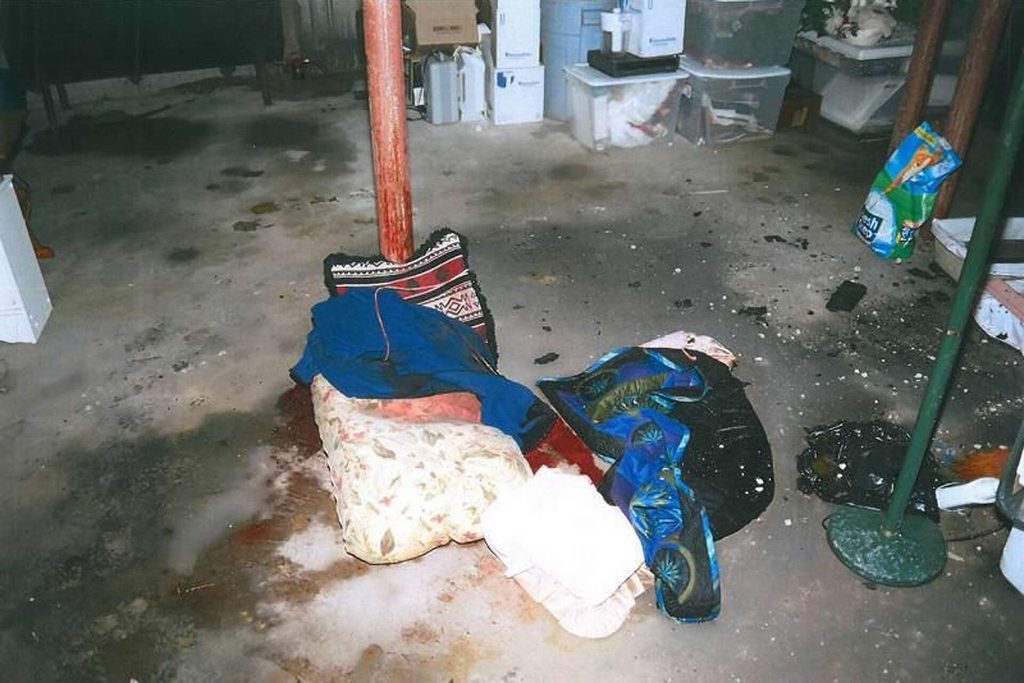
They bound his wrists and ankles. Eventually they took him into the basement and tied him to a support post, where he drifted in and out of consciousness.
Upstairs, the men restrained Jennifer and the girls. They searched for money, but financial records suggested they could get more from the bank. They decided to wait until it opened at nine and demand $15,000, an amount they thought would not attract undue attention. The girls were secured to their bedframes. At the intruders’ direction, Jennifer called William’s medical office and said he was ill, canceling his morning appointments.
Before the bank opened, Hayes was already making preparations for a fire. He emptied windshield-washer-fluid containers and drove to a service station, where he filled four of them with gasoline. The court’s reconstruction of the evidence placed that purchase at approximately eight in the morning. The gasoline was at the house before Jennifer left to collect the money.
During Hayes’s absences, Komisarjevsky sexually assaulted Michaela. He also took sexually abusive photographs of her with his cellphone. He told detectives he considered using the pictures as leverage against her mother during the bank withdrawal. He attempted to eliminate evidence with bleach. Investigators subsequently found bleach stains on Michaela’s clothing.
By the time Jennifer returned, police knew that a family was being held hostage at the address. Officers began surrounding the property, but they did not immediately enter. Captain Robert Vignola, who directed the response, later testified that he saw no activity inside and followed standard hostage procedures by establishing a perimeter.
More than half an hour passed between the bank’s warning and the intruders’ flight. Vignola defended the decision in court, saying that had he known what was happening inside, “I would have been the first one through that door.”
Jennifer brought back the money. Hayes raped and strangled her.
Her autopsy revealed fractures in her neck. The fire subsequently burned her body so badly that dental records were needed to identify her. Still, the medical examiner could distinguish the killing from the damage that followed. No soot was found in her lungs. Jennifer was dead before the house burned.
William remained below, unable to see what was being done to his family. He heard noises overhead, including thumps and moaning. Then an intruder said, “Don’t worry. It’s going to be over in a couple of minutes.”
William believed they were about to be shot.
He freed his hands, but his ankles remained bound. Trying to climb the basement steps, he fell. He managed to get outside, but crawling became too difficult, so he rolled toward his neighbor’s house. Doctors subsequently estimated that he lost as much as seven pints of blood. He reached the garage and called for help.
At 9:54 a.m., a police log recorded someone shouting, “Dave! Dave!” William lay in the driveway of his neighbor, David Simcik. Officers reached him and learned that his family was still inside. Almost immediately afterward, the two intruders fled, and the house erupted in flames.
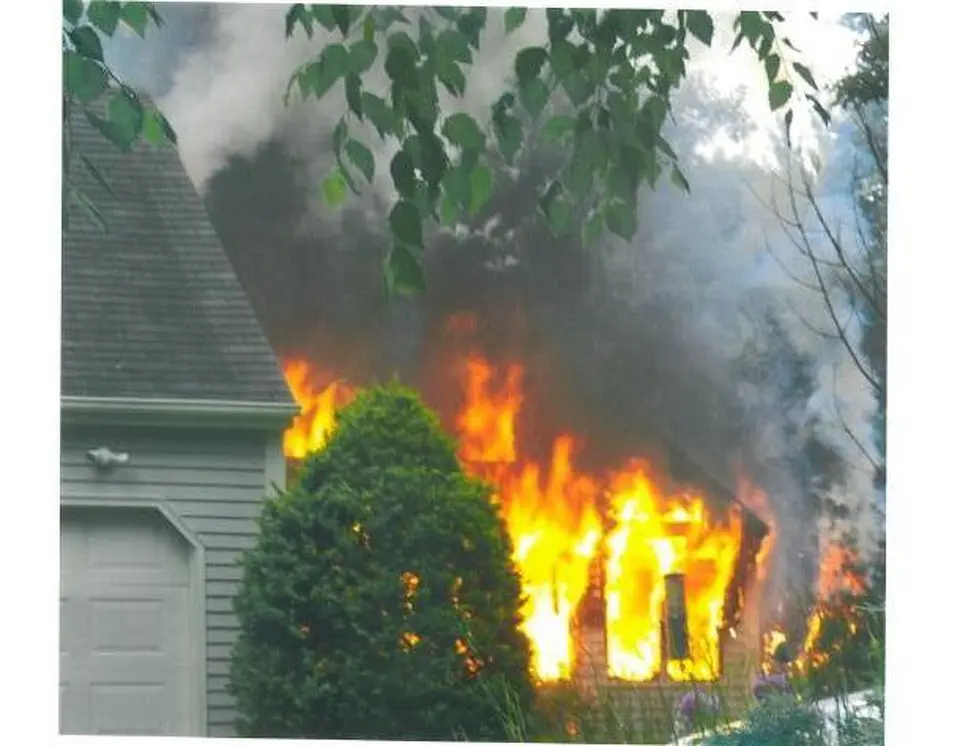
Gasoline had been spread through the house and onto or around the girls’ beds. In his confession, Komisarjevsky blamed Hayes for pouring it and starting the fire. He claimed he argued that the girls should live because they had cooperated. However, when asked about releasing them, he said it did not occur to him to untie them.
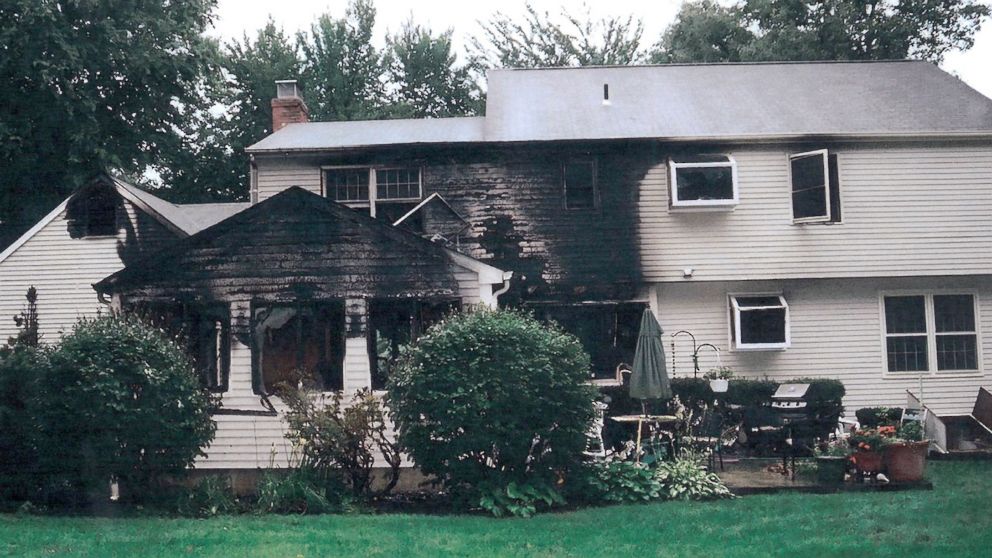
The men escaped in the Pacifica, but police vehicles blocked the street. They crashed into the barricade and were arrested. Officers trying to enter the house were driven back by the heat and flames. Inside, Hayley and Michaela were still alive when the fire began.
Hayley managed to get free of the bed. Firefighters found her at the top of the staircase, with remnants of bindings still attached. She had made it out of her bedroom but could not get downstairs. Michaela remained in her bed.
Both girls died from smoke inhalation. Hayley’s feet sustained third- and fourth-degree burns. At Komisarjevsky’s trial, medical examiner Malka Shah explained that breathing the hot, toxic air could have caused significant pain and that death could take several minutes. She could not establish whether Hayley experienced the burns before she died. William left the courtroom before that testimony began.
Michaela’s autopsy showed severe heat damage, particularly to the lower part of her body. Soot remained in her airways, and carbon monoxide changed the color of her internal tissues. Chief medical examiner H. Wayne Carver II could not determine whether she was still alive when her skin burned. When he took the witness stand to explain his findings, William and other relatives again walked out.
The trials required William to recount the night twice, first when Hayes faced a jury in 2010 and again when Komisarjevsky stood trial the following year. In the second proceeding, a defense lawyer challenged whether his head injuries and exposure to earlier testimony had affected his recollections. William could describe what he heard from the basement and what happened to him, but he could not identify every action upstairs. The lawyer pressed him on what he had not witnessed, including who poured the gasoline and lit the fire.
The juries nevertheless found both men responsible for the murders. Each received death sentences. Connecticut subsequently abolished capital punishment for future crimes, and a 2015 state Supreme Court ruling extended that protection to prisoners already on death row. In 2016, Hayes and Komisarjevsky were each resentenced to six consecutive life terms without the possibility of release.
At Hayes’s sentencing, William told the court that he had repeatedly considered suicide. He had lost his wife, his daughters and his home, and struggled to find an interest in continuing his own life. When he spoke about Hayley, he remembered a boy who would telephone on Sunday evenings. She would jump up to go and play basketball with him.
“She never got to love someone for a long time,” he said.
William eventually remarried and had a son. He met his second wife, Christine, while she volunteered for the Petit Family Foundation, which supported education, people living with chronic illnesses, and those affected by violence. By then, the foundation had given him work connected to Jennifer and the girls’ interests, and a life that continued beyond the courtroom.

One project began with something the fire had spared. Michaela and her father grew four-o’clocks in their garden, flowers that opened late in the day. After the murders, family members removed plants from the property. Her uncle Dennis Chapman helped develop a gardening project around them, and they planted seeds collected from those flowers elsewhere.
In subsequent summers, volunteers collected more seeds and passed them on. The flowers grown through Michaela’s Garden descended from the plants she tended with her father before anyone followed her home.
For more extraordinary true crime stories, read about the hidden basement where six girls were imprisoned in Inside Marc Dutroux’s House of Horrors, and the Philadelphia doctor who murdered newborns in Inside Kermit Gosnell’s Clinic, Where Newborns Were Killed With Scissors.