
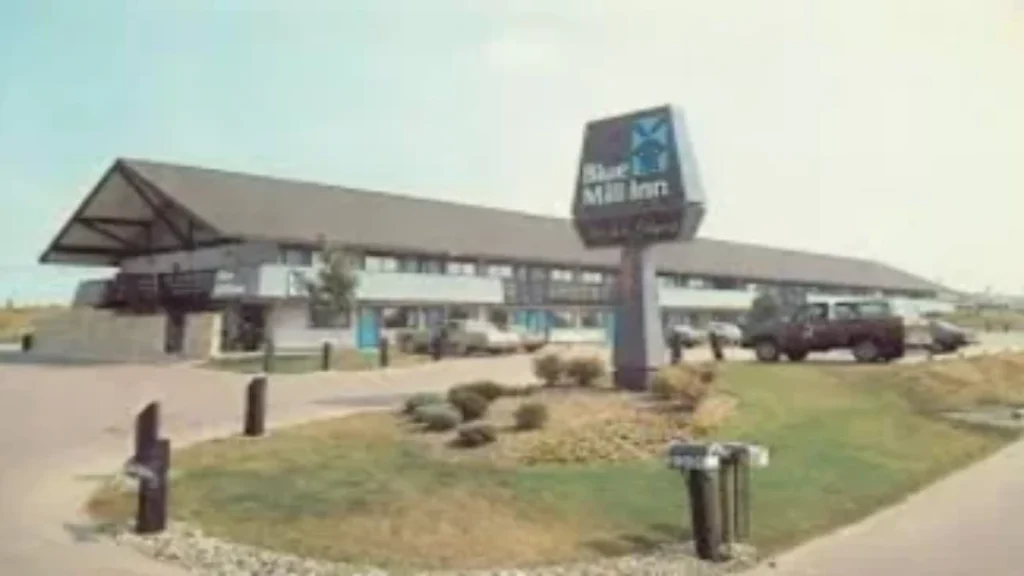
Janet Chandler clocked in at the front desk of the Blue Mill Inn in Holland, Michigan, just before midnight on January 30, 1979. Her parents had frowned on the 22-year-old taking a night job, but Janet had gotten used to the routine.
In the preceding weeks, the motel filled up with several dozen out-of-town security guards. They worked for the Wackenhut security firm and were in town to guard a local labor strike at the Chemetron paint plant.
The guards had also effectively taken over the motel during this time, turning it into a rolling room-to-room party that ran at all hours.
That night, Janet settled into the front desk with her notebook, where she liked to jot down her thoughts between guests.
Sometime after midnight, two of the guards, Robert Lynch and James ‘Bubba’ Nelson, approached her. They told her they were throwing a surprise party in her honor and that she needed to be blindfolded so she wouldn’t know where they were taking her.
Because she was already on friendly terms with most of the security guards, she agreed and left with them calmly. Just after 2 am, Lynch called the police to report a robbery in progress.
NBC News illustrated the call to dispatch where Lynch said, “I have reason to believe that there might be a robbery in progress down in the office or the lobby.”
When Holland police arrived, Janet was gone. She had left her coat behind and a cigarette still burning in the ashtray. Her purse oddly turned up later at her own apartment.
$500 was missing from the safe, and officers found two sets of footprints in the snow leading from the motel to a car that was long gone.
Detective Jim Fairbanks, who was first on the scene, interviewed Robert Lynch, who had placed the call, but the guard claimed he had seen nothing. In a motel full of witnesses, no one came forward.
A Daughter of the Church
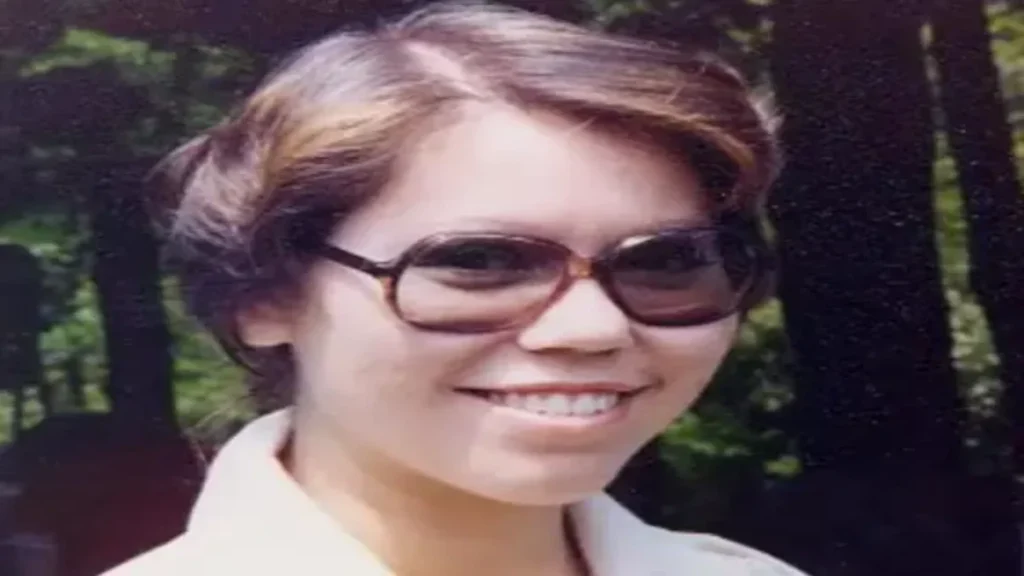
Janet Chandler was born on May 29, 1956, in Muskegon County, Michigan, to James and Glenna Chandler. Her parents were deeply devout, conservative Christians who structured their home around strong religious faith and morals.
As the middle child between two brothers, Janet had a very sheltered childhood. She was completely barred from attending sleepovers or visiting friends’ homes, especially if their parents kept alcohol in the house.
This made it hard for her to build a conventional social circle. Despite the constant rules and monitoring, she was described as ‘happy-go-lucky’ and a generally easygoing girl.
Janet was very active at church and sang in the choir. After high school, she pursued a degree in nursing, but it came with problems.
She felt alienated by what she described as the rowdy campus culture that involved drinking, smoking, and substance abuse, and it caused her significant emotional distress, leading her to drop out. Seeking a fresh start in an environment that was more aligned with her interests, Janet enrolled at Hope College in Michigan in the mid-1970s for a degree in music.
This time, she was a bit more relaxed and able to expand her social circle. While attending Hope College, Janet had her first serious relationship with a man in his 40s. The relationship ended in 1978, but by that time, Janet’s worldview had changed, leading her to seek independence.
After taking a job at the Blue Mill Inn, Janet moved out of her parents’ house and into an apartment. Exposed to the new environment, she started socializing with the Wackenhut security guards staying in the motel before her disappearance.
A Morbid Discovery Near Party Central
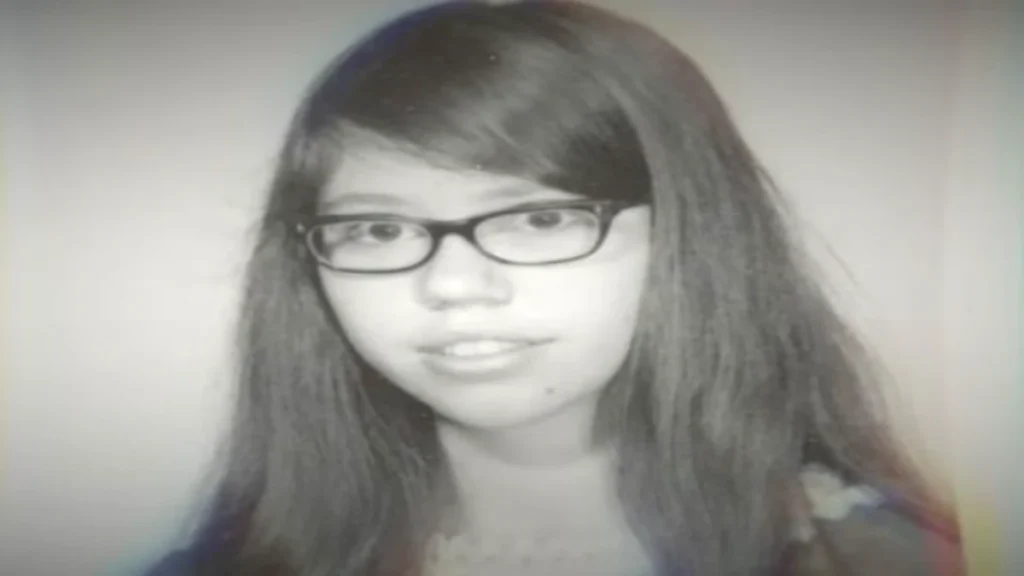
Because the scene had all the classic hallmarks of a commercial break-in, the early hours of the search were treated as an armed robbery and potential abduction. Police canvassed the hotel’s perimeter and placed alerts for any suspicious vehicles.
The weather was bitterly cold, and mid-winter snow covered the ground, so tracking tire marks nearby proved difficult. Janet’s hotel supervisor, Laurie Ann Swank, was also interviewed, and she acted distressed by her disappearance.
She painted a picture of an ordinary night, claiming she had no idea who would want to rob the motel or hurt Janet. The other guards also presented a rigid, uniform front, claiming they had been asleep in their rooms or out drinking at local bars.
Because they were technically contractors hired by a major security firm to protect a local plant, the police had no reason at the time to suspect foul play. However, the investigation shifted drastically on the morning of February 1, 1979.
James Chandler and his son, Dennis, had already spent the previous night driving the back roads searching for Janet but found nothing. A county snowplow driver clearing a wooded highway turnaround crossover on Interstate 196 spotted what appeared to be a human form buried in a snowbank.
It was about 35 miles south of the Blue Mill Inn. On clearing the snow, authorities uncovered Janet’s naked body. The local medical examiner confirmed severe signs of physical trauma and declared the cause of death as strangulation.
With the discovery of the body, law enforcement agencies like the Holland Police, Ottawa County Sheriff’s Office, and the Michigan state police were looped into the investigation. Unfortunately, the investigation hit a brick wall because of the lack of evidence and a wall of silence from witnesses.
Janet’s funeral was held in the same church where she had sung in the choir. They also played a recording of her singing, “My Jesus,” at the service. Her parents never listened to the recordings again because it was too painful.
Twenty-Five Years of Nothing
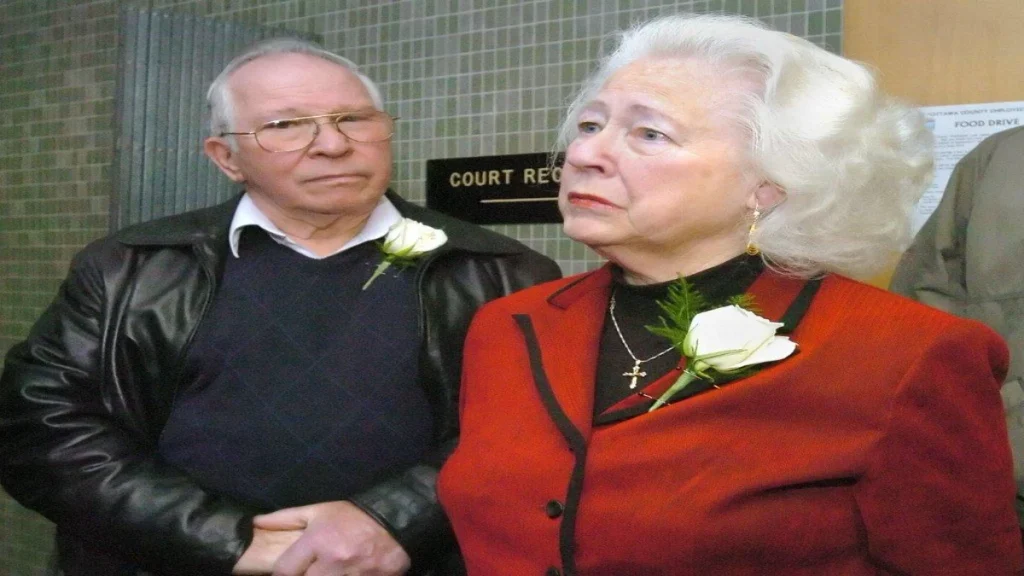
In the immediate years following the murder, the joint task force from the three law enforcement agencies aggressively pursued multiple angles. They were, however, crippled by the initial assumption that a highway robber was responsible.
Because Janet’s body was found dumped off Interstate 196, detectives spent months compiling the lists of long-haul truck drivers, interstate travelers, and known regional predators.
These were compared with motel robberies which had taken place across Indiana, Michigan, and Ohio. Thousands of hours were spent tracking a mode of operation and potential suspects that had driven the Holland routes that night.
Within months of the murder, the labor strike was over, and the Wackenhut security guards packed up and left the state. Because police accepted their initial alibis with little scrutiny, they let them scatter.
Investigators did issue polygraph tests to a few persons close to the motel circles in the early years. Though polygraphs at the time were highly fallible, the people tested produced inconclusive results, convincing police to look elsewhere.
By the mid-1980s, the flood of tips had dwindled to a small trickle. At the time, DNA profiling was still not an option as forensics relied on blood typing, hair analysis and fingerprints.
Since Janet’s body had been exposed to freezing snow and elements for over 24 hours, and because the perpetrators had washed her body to destroy any evidence, the physical clues from the scene were minimal.
The case’s lead detectives were also eventually promoted, retired, or reassigned to fresher homicides. All through the 1990s, the case remained stagnant.
Remaining witnesses from Holland who still had some snippets of information remained paralyzed by fear. The brutal nature of Janet’s death served as an unspoken threat that anyone who spoke up about what they saw could meet a similar fate.
By the turn of the millennium, twenty years had passed, and there was no traction yet. Janet’s parents were growing older and feared they would die without ever knowing who killed their daughter.
How a Student Film Set Off the Domino Effect That Solved a Cold Case
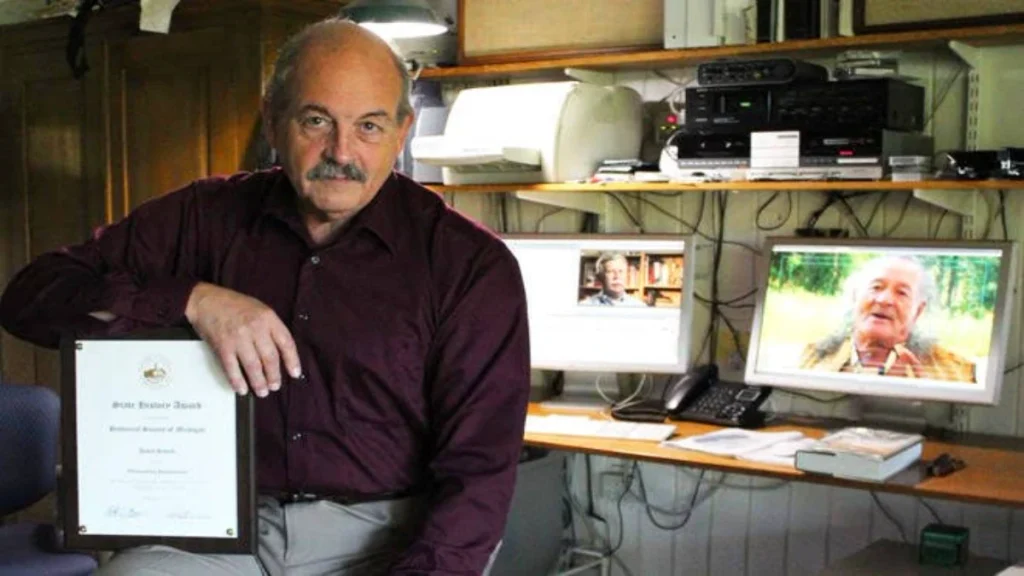
In 2003, Hope College communications professor David Shock assigned his class a documentary project based on the unsolved case. It was timed to the 25th anniversary of the murder. So the goal was to tell the story, not solve it.
A few students volunteered for the case after meeting the Chandlers, who brought out a trunk of Janet’s letters and photographs they hadn’t opened in 25 years.
The movie premiered at Holland’s Knickerbocker theater to a weeping crowd and was broadcast on local public television. It gained significant notoriety and local law enforcement decided to take a new crack at the case.
Again, the Michigan State Police, Ottawa County Sheriff’s Office, and Holland Police formed a cold case task force and began an 18-state sweep for the former Wackenhut security guards and motel staff.
They conducted 300 interviews and uncovered photographs and records from the era. They also confronted witnesses with inconsistent alibis or testimony. Considering the passage of time, former motel employees finally felt safe enough to admit the robbery story was staged.
Investigators who later reconstructed the case determined the Blue Mill Inn at that time was a den of unsupervised partying. Drinking, drugs, and a rotating cast of security guards who had gotten far too comfortable with the motel staff.
Janet worked the desk most nights after they started staying there in October 1978 and got roped into their shenanigans. Photographs later recovered by the police showed her drinking with the guards, wearing a guard’s uniform and sitting on their laps during parties.
Breaking Robert Lynch
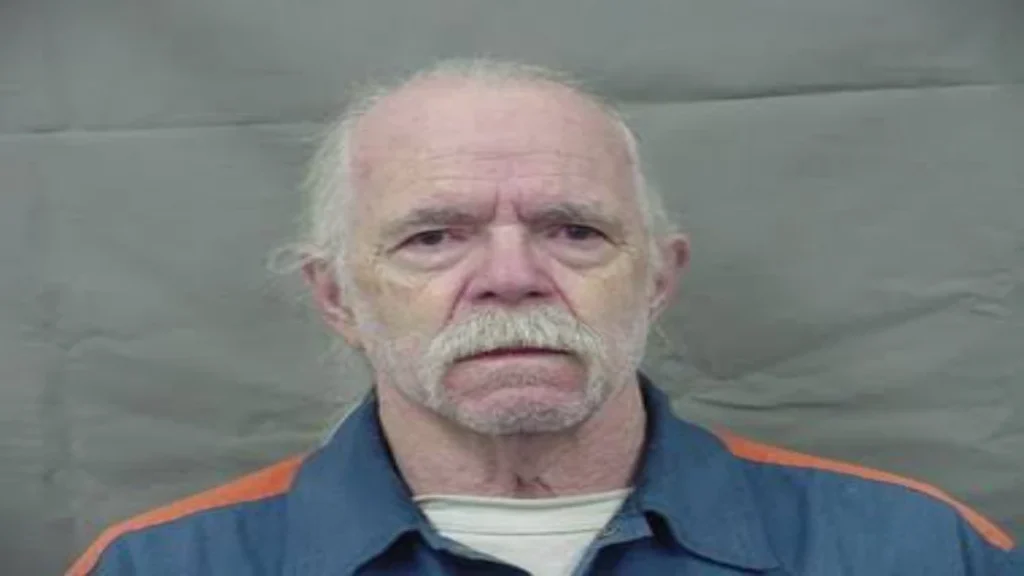
State police detective John Slenk assembled a team that included detective Geoff Flohr, known to colleagues as ‘The Closer.’ This was because of his skill in causing suspects to confess during interrogations.
They tracked down a former guard named Harry Keith, who had roomed with Lynch in 1979, and found that he still had a photo album of the parties at the motel, including one with Janet.
Detective Flohr also brought Lynch in for questioning. He conducted 18 separate interrogation sessions in total, eventually showing him footage of James Chandler from the student documentary, asking Lynch to imagine the grief as his own.
NBC News reported the conversation as follows:
“Geoff Flohr to Robert Lynch: You look at that dad, and that could just as easily be you sitting there. Do you understand?
Lynch: Yeah.
Flohr: You have children, right?
Lynch: Yes, three.
Flohr: You remember the first time you went somewhere with them, and you lost them?
Lynch: Yeah.
Flohr: You remember that feeling you got inside your body? Now imagine, just imagine, Bob, what that would feel like when you’re talking about a 22-year-old girl.“
Lynch eventually admitted the robbery was staged while the guards took Janet to a party. This party was being held at a Wackenhut Chemtron corporate guest house on Howard Avenue in Holland. It was also rented out at the time to Arthur Paiva and the rotating roster of guards.
After being pressed further, he admitted that the party was a gang rape and he had personally helped strangle Janet to death.
Detectives quickly determined Lynch and the other guards were not the only ones involved. Janet’s roommate, Swank, and two motel co-workers, Diane Marsman and Cheri Ruiz, were also key witnesses.
Marsman told the police she watched from a balcony as Nelson led Janet away and that she and Ruiz had gone to the party themselves. Marsman later said Nelson threatened her afterward and warned her to keep silent or the same thing could happen to them.
Marsman told NBC News, “I never expected them to kill her.” When Swank was questioned after Lynch’s confession, she initially maintained her innocence and even expressed disgust at the crime before Flohr eventually broke her down and she admitted to being part of the planning of the rape.
She was also present when Janet was sexually assaulted and killed.
What the Trial Revealed
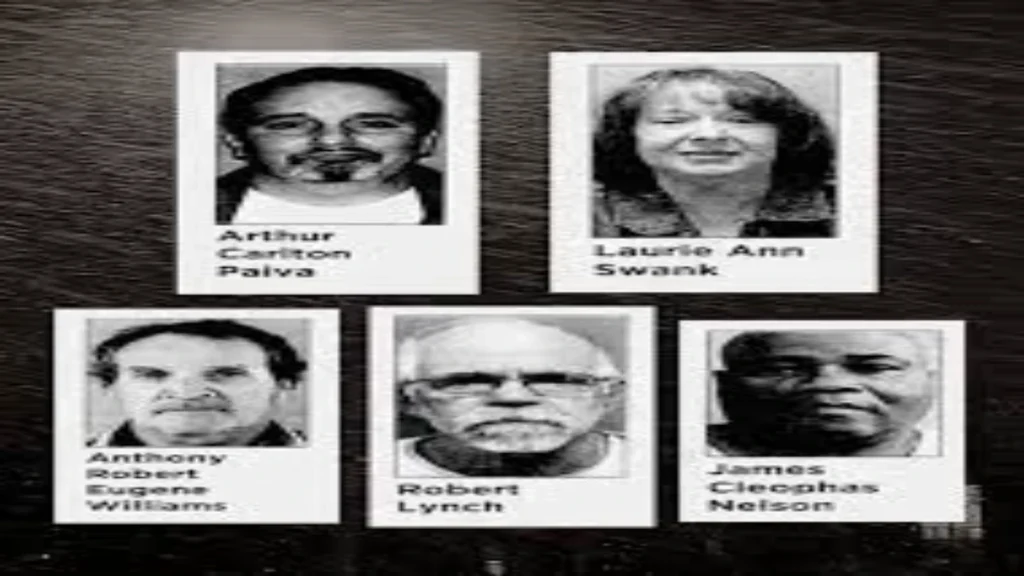
In September 2006, Michigan Attorney General Mike Cox filed first-degree murder charges against Lynch, Swank, Paiva, Nelson, Freddy Parker and Tony Williams. He told Fox News, “The case is about never giving up. Janet Chandler’s tragic death happened long ago, and unfortunately the trail went cold.”
Though the six defendants initially pleaded not guilty, Lynch and Swank changed their plea to guilty of second-degree murder
It was a plea deal for a reduced sentence, but the rest remained adamant and chose to go to trial.
Laurie Swank took the stand and admitted that her personal jealousy over the guards drove her to participate in the plot. She described seeing Janet in a bedroom bound with her wrists behind her back and ankles tied. A belt was around her neck.
The prosecution also called Cheryl Ruiz to the stand, and she testified to seeing Janet bound and abused. She claimed to have stayed silent for decades because the guards threatened to kill her if she ever said anything.
The defense responded by aggressively attacking the credibility of the witnesses, saying Laurie Swank was a master manipulator who engineered the stories to protect themselves.
According to Mlive, Joe Legatz, attorney for the defense, said, “This is the woman who started it all… She got a reduction from first-degree murder to second-degree… I’m not saying the police manipulated her. She has manipulated them.“
After deliberating for less than two days, the jury returned a guilty verdict for the four men. Arthur Paiva was convicted of first-degree murder. James Nelson, Freddie Parker and Anthony Williams were all convicted of felony murder and second-degree murder.
Ottawa County Circuit Judge Edward Post sentenced Paiva, Nelson, Parker and Williams to life in prison without parole. Robert Lynch was issued 20 to 30 years, while Swank got 10 to 20 years in prison.
James Chandler spoke out against the defendants to Mlive, calling them arrogant and noting that they never showed an ounce of remorse. “They all say they weren’t there, and they’re innocent. As a Christian, I just say we should probably forgive. However, you have to ask for forgiveness, and none of these arrogant people showed remorse, much less asked for forgiveness.”
This was echoed by State Police Lieutenant John Slenk, who said, “I don’t think you saw a bit of remorse in the eyes of the individuals, and neither did I.”
During an interview with former Michigan State Assistant Attorney General, Donna Pendergast, covered by NBC after the conviction, Swank was asked, “Did Janet’s relationship with the guards create any problems with you on a personal level?
Laurie Swank: Yes. Because I became jealous. She was more popular. I was less popular.“
Aftermath
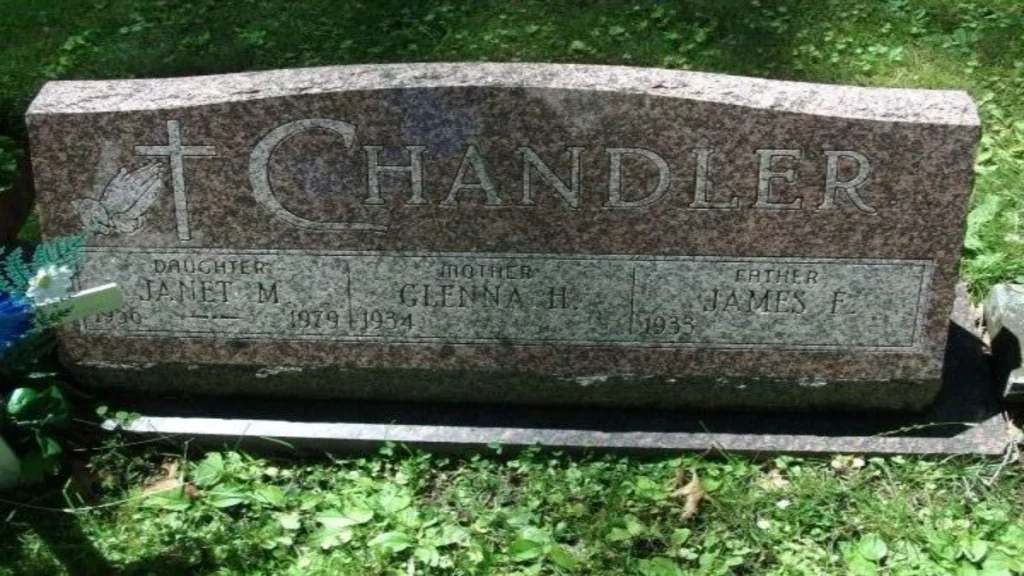
Of the six who were sentenced, two have since died, three are still in prison, and one has been released.
Robert Lynch, who cut a plea deal, remains incarcerated. Because he was issued 25 to 40 years, he remains under the supervision of the Michigan Department of Corrections.
After being transferred to a state prison hospital in Jackson due to failing health, Arthur Paiva passed away from respiratory failure on March 13, 2013. James Nelson died from natural causes in prison on June 8, 2020.
Both Freddie Parker and Anthony Williams remain incarcerated in Michigan state prisons. Laurie Swank served her time and was released on parole in 2016. She had since completed her out-of-state parole supervision and was fully discharged from state custody.
Investigators believed more people were present at the party than were ever charged, but the prosecution team determined that additional prosecutions risked undermining the convictions they already had, so they chose not to pursue it.
James and Glenna Chandler spent 28 years keeping their daughter’s memory alive. After the trial, they felt relief that, though true justice could never be fully served, it brought a measure of closure to their lives.
They have since stepped away from public life and maintain their privacy to continue processing their grief.
For other true crime stories involving murders, read our articles on Derrick Robie and Maddie Clifton.