

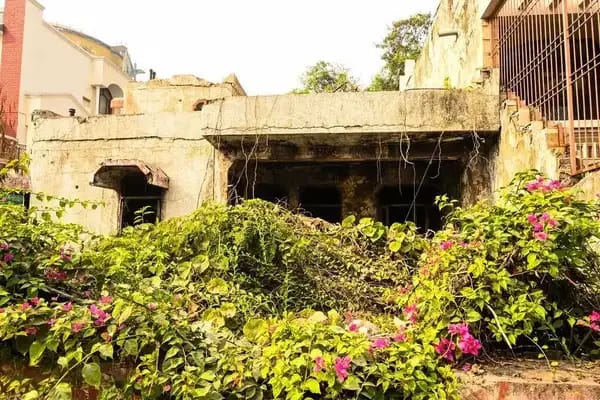
Nithari isn’t the sort of place people remember. If you happen to cross the D-5 bungalow in Nithari village in Noida, India, that saw 16 gruesome killings, chances are you’ll miss it. The bungalow that came to be known as the ‘House of Horrors’ after the killings of children surfaced in 2006 is nearly hidden under dense overgrowth today.
The House of Horrors
The Times of India, reporting on December 30, 2006, said children had been disappearing from Nithari for two years, and that parents had approached police but were essentially told that the police were “looking” for them.
More importantly, a large section of the population living in this area consisted of undocumented migrant workers who were wary of attracting official attention, and thus feared to approach the police.
In May 2006, 22-year-old Payal Sarkar left her home after receiving a call about a possible job for her brother from Surinder Koli, a domestic worker at the bungalow of Moninder Singh Pandher, locally known as D5.
Payal told her family she was going to discuss the job, then left in the afternoon and never returned.
When she still had not come home by around 7.30 that evening, her father, Nand Lal, began looking for her, even going to Nithari that very night to find the bungalow where she had said she was going.
The following morning, he found D-5 with the help of a local guard and knocked on the door; Koli answered, promptly denied ever visiting the house, and closed the door in Lal’s face.
Distraught, Lal tried leaving no stone unturned in trying to find his daughter, frantically scouring for anything that might lead him to her. A few days later, he found a telephone number written on a piece of paper in Payal’s room and called it. It belonged to Pandher, who said he was in Chandigarh and denied knowing Payal.
Around the same time, Nand Lal mentioned his daughter’s disappearance to an autorickshaw driver while traveling home. Coincidentally, the driver, Amar Haldar, remembered taking a young woman from Sector 19 to Nithari on the afternoon of May 7. When Nand Lal showed him a photograph of Payal, Haldar instantly recognized her.
Nand Lal Searches for his Daughter
With this information, Lal went to the local police outpost and told the officer in charge, K.P. Singh, what he had learned. Singh subsequently called Koli and S.K. Sharma, Pandher’s manager, in for questioning. But according to Nand Lal’s later statement, the questioning yielded little, and the officer ‘scolded’ him and told him to return home.
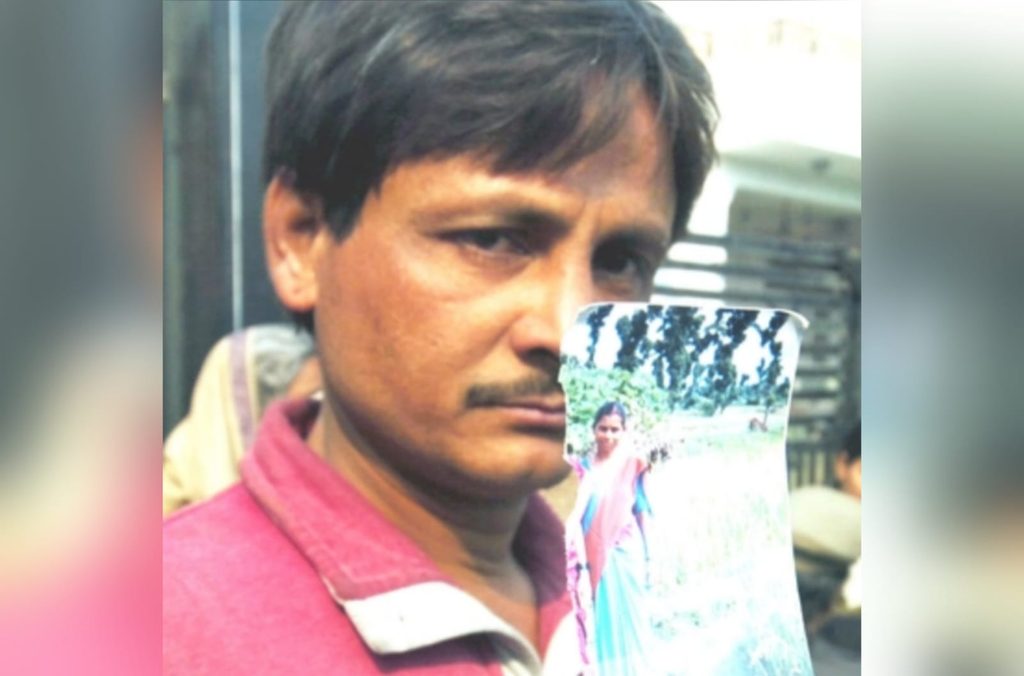
Undaunted, Lal went to the Sector 20 police station, where he met SHO Deepak Chaturvedi and narrated the entire fiasco; on hearing this, the police began examining the details of Payal’s disappearance. One of the first things they checked was her telephone activity.
Police found that a call had been made to Payal’s mobile phone from a local STD booth. They traced the number to the booth and questioned its owner, who identified Koli as the caller.
When questioned, Koli reportedly said he had made the call at the direction of a woman named Neelam, who, when questioned, said she had arranged for Payal to meet Pandher about work. Pandher, according to Nand Lal’s account, subsequently acknowledged knowing Payal.
Nand Lal repeatedly went to the police for help, but only on 29 June was a missing-person complaint finally recorded. Even then, there was no FIR against the people he suspected, with the police claiming that there was no need to do so, because “Payal was an adult” and had supposedly eloped.
Nand Lal eventually filed an application under Section 156(3) of the CrPC (Code of Criminal Procedure) on 24 August, requesting the court to direct the police to register an FIR against Moninder Singh Pandher and Surendra Koli.
The Chief Judicial Magistrate subsequently ordered registration, and Case Crime No. 838/2006 was finally registered on 7 October, under Sections 363 and 366 IPC (Indian Penal Code).
Police recovered Payal’s Nokia 1100 from Koli’s possession. According to a Times of India report, Koli had inserted his own SIM card into the phone. Police also found her red purse beneath his pillow.
Tracing Payal’s Calls
The former investigating officer later recalled that police had been looking into Payal’s phone records and, initially, had followed a different lead involving a man named Rahul Sahni in Mumbai, with whom she had reportedly been in frequent contact.
“A police team was sent there to speak to him, but it was a dead end,” the officer told the Times of India.
“We probed whether there was a gang of beggars or sex workers active in the area. We deployed teams in crowded places, bus stands and railway stations to keep watch on women and children. We also visited Delhi, Rajasthan and other places,” he further said.
In Rajasthan, the police team received information that Payal’s mobile phone was recovered with Koli’s SIM card in it. “Koli had used his photo and ration card to get this SIM from a local shop,” police said.
Koli, who had been staying in his hometown of Almora, Uttarakhand, was brought back to Noida in a cab Pandher arranged.
The Interrogation of Surinder Koli
Interrogating Koli turned out to be another daunting task.
“He had no emotion on his face. He neither smiled nor cried during interrogation,” an interrogator later recalled. For the first two days, he added, Koli revealed nothing. But on the third, the domestic help apparently described how he had murdered Payal and dumped her body in a drain.
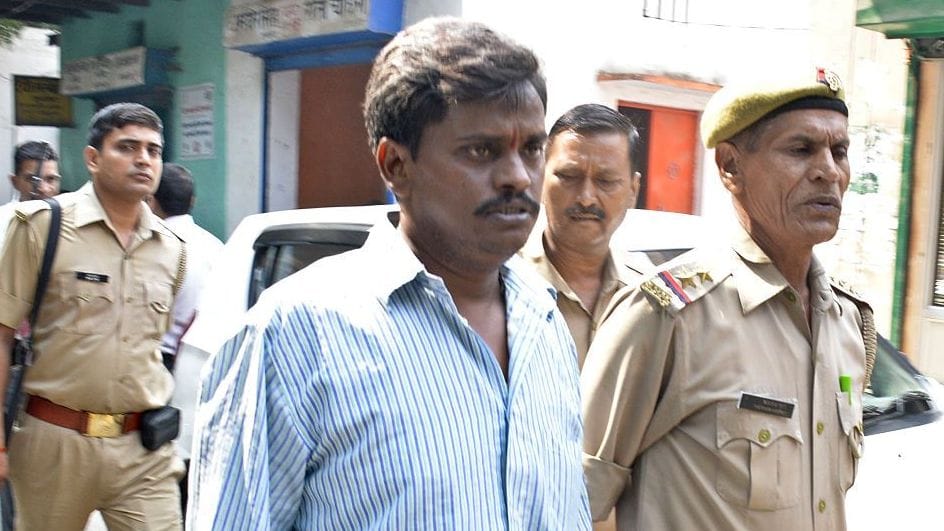
The investigator further claimed that Koli had told police that he’d called Payal to D-5 intending to pursue an intimate relationship with her, not for an actual job offer.
Payal had allegedly asked for money and, when Koli said he had none, refused his advances, after which he reportedly killed her.
Armed with this ‘confession’, the police returned to D-5 on 29th December, 2006.
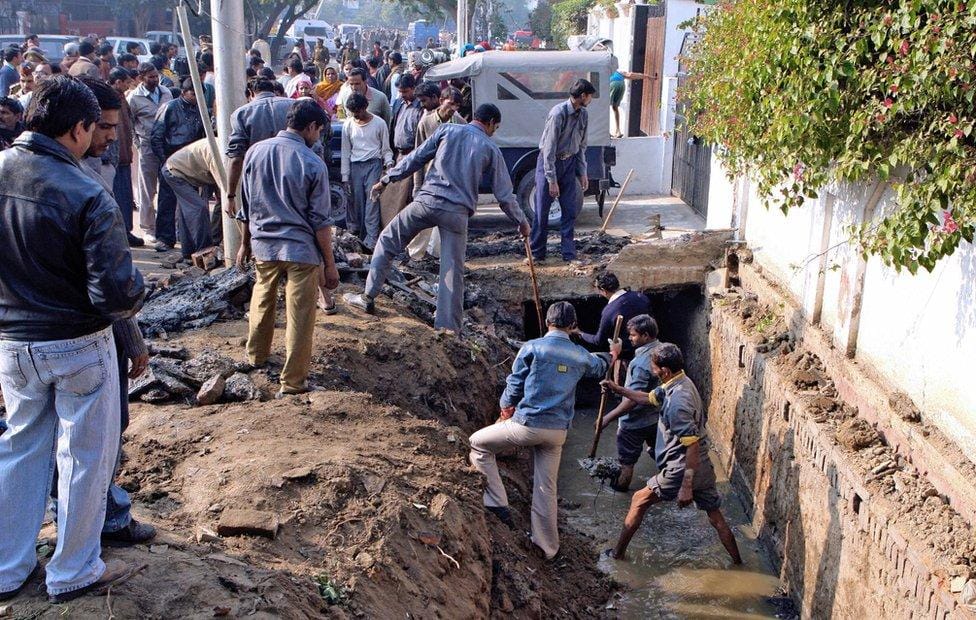
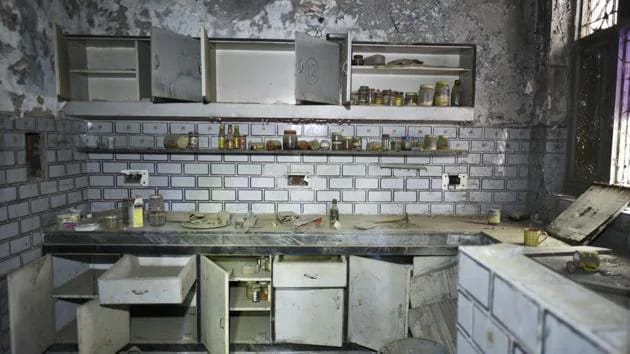
During a search of a drain (a local ‘nullah’) adjoining the bungalow, close to a water tank, officers recovered eight skeletal remains. The remains were accompanied by clothing and other belongings, and the discovery immediately raised the possibility that the missing-person cases in Nithari were connected.
Koli and Pandher were arrested that same day, with police claiming that this would help them solve the disappearance of nearly 38 children, found missing from Nithari village in the past one-and-a-half years.
On the day of the arrest, a 12-bore licensed gun along with some documents were also seized.
Jhabbu Lal, the parent of a 10-year-old child who had recently gone missing, and a washerman, spoke to the media, revealing an instance when Koli had given him one of Pandher’s shirts to wash, and it had been bloodstained.
“He (Koli) said it was from ‘sahab’ slaughtering a chicken…” had been the explanation.
Further Remains get Discovered
On the very next day, December 30th, more remains were discovered, upping the tally to a total of sixteen skulls of children and women.
On the 30th, Surendra allegedly admitted to having killed 15 women and children, a senior police official commented, adding that five police officials were suspended and one was sent to the police lines after investigations showed their laxity in conducting probes when complaints of missing children were made through the nearly two-year-long period.
Of the skeletal remains of 16 people that police found, ten were initially identified, either through photo identification by the killer or through clothes and belongings by the victims’ relatives.
On disclosures by Koli, the official said, “The accused has confessed to having raped and killed nine children and six women.“
Often preying on the underprivileged or vulnerable, police noted that Koli’s victims were either children or “maids or [people] who did petty jobs” and were lured into the house where the accused lived.
On the 29th, Koli had claimed to have killed six children. The number rose to nine the next day.
Sarees, bangles and other belongings of women were also recovered from the ‘excavations’ done over a 100-meter stretch of the about 5-feet-wide ‘nullah’, besides the remains of their torsos.
The Unfathomable Scale of the Murders
Apparently, Koli had committed these heinous crimes at the behest of his employer, Mohinder Singh Pandher, a manufacturer and supplier of earth movers and bulldozers, who was also a party to all that happened in the house.
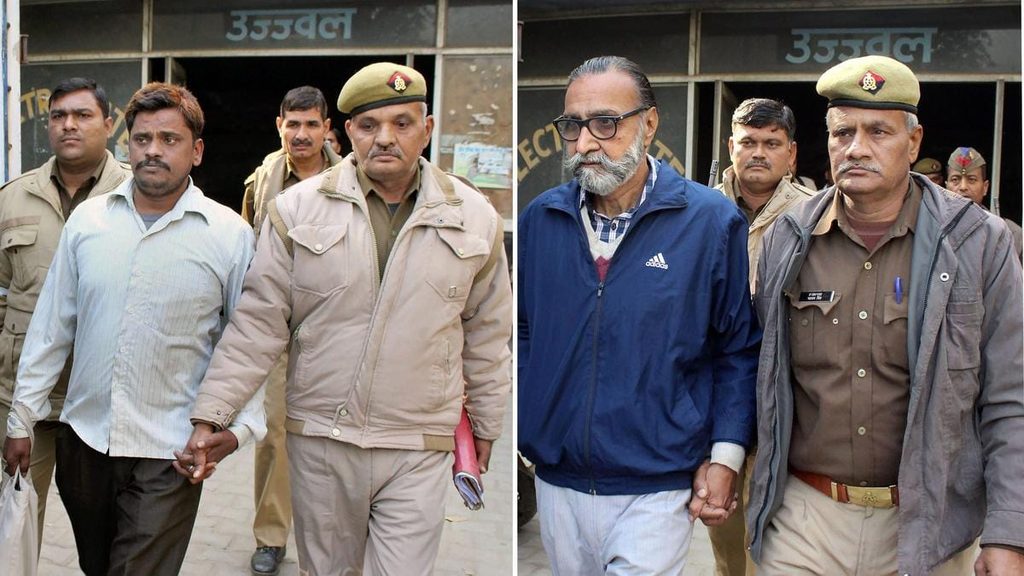
After the Uttar Pradesh police completed the initial investigation, the Central Bureau of Investigation (CBI) took over on January 11, 2007, and filed 16 charge sheets.
Koli was charge-sheeted in all the cases for murder along with the other relevant sections of the Indian Penal Code (IPC). However, Pandher was charged in only one case under the Immoral Trafficking Act and was later summoned as co-accused in five more cases by the trial court.
In February, CBI Director Vijay Shanker said investigators had unraveled the crime “to a great extent,” but still needed corroborating evidence from forensic and scientific examination.
Asked about the respective roles of the two accused, he said the investigation suggested that most of the murders appeared to have been committed by one of the two, but that the agency was still examining Pandher’s role “in totality.“
CBI Takes Over the Case
The CBI, in a press conference, said Koli was a necrophile and suffered from necrophagia, a disorder in which a person eats human flesh.
Further, Joint Director Arun Kumar admitted that although it was surprising, “the fact was that the businessman was not in his house when Koli committed 16 murders, nor was he aware of his murders.“
“On two occasions, he was in and around Australia. During the time of nine other killings, he was out of Delhi, and five other times, he was nowhere near Nithari,” the CBI official said, adding that all this was found through the mobile towers used by him to make calls on the ill-fated days.
It was also found that there had been instances where Koli had cooked the flesh in a pressure cooker and also eaten a child’s raw liver, Kumar said.
When asked about the evidence, Kumar said, “He gave a live demonstration about how he used to cut the cadaver, dismember the bodies, and dispose of them. We have videographed it. This is good evidence.“
The Case Goes to Trial
The first verdict came nearly two years later. In February 2009, a special CBI court in Ghaziabad convicted both Surendra Koli and Moninder Singh Pandher for the rape and murder of 14-year-old Rimpa Haldar, describing the crime as one of the “rarest of rare” cases and sentencing both men to death.
However, in September 2009, the Allahabad High Court acquitted Pandher in the Rimpa Haldar case while upholding Koli’s death sentence, finding that there was no evidence on record establishing Pandher’s participation in Rimpa’s rape and murder. Koli, meanwhile, remained convicted.
Other trials continued for years. In a later case that involved a 25-year-old domestic worker, both men were again sentenced to death by the CBI court in 2017.
The Allahabad High Court’s own account records that, of the 16 cases tried, Koli was ultimately sentenced to death in 13, while he was acquitted in three; Pandher received the death penalty in two cases and a seven-year sentence in another.
Koli’s confession recorded under Section 164 of the CrPC and recoveries investigators said had been made at his instance were the two main pieces of evidence.
Confessions Under Scrutiny
All these convictions would not survive appeal, though.
The first major reversal came in October 2023, in which the Allahabad High Court acquitted Surendra Koli in 12 of the Nithari cases before it and Moninder Singh Pandher in the two cases in which he had been sentenced to death. The court held that the prosecution had failed to establish their guilt beyond reasonable doubt.
In particular, the judgment was critical of how the investigation was conducted.
Koli’s confession, which had been recorded before a magistrate after he had spent around 60 days in police custody, was questioned. The circumstances in which it had been obtained, noting the absence of a medical examination, the failure to provide legal aid in the manner required, and allegations of torture contained in Koli’s own statement, made matters worse, due to serious violations of Section 164 of the CrPC.
By the time Koli was brought to the site, the remains had already been found by the police, and thus, the High Court found that the prosecution could not simply treat the discovery of the bones as brought about by Koli’s confession.
The absence of independent forensic evidence connecting Koli to the individual murders further complicated matters.
How the Mighty Fall
Even after the High Court’s 2023 acquittals, Koli remained convicted in the Rimpa Haldar case.
A trial court had convicted Koli and Pandher in 2009, but the Allahabad High Court subsequently acquitted Pandher while leaving Koli’s conviction standing. Koli’s death sentence was later commuted to life imprisonment in 2015 because of the prolonged delay in deciding his mercy petition.
Thus, Koli was acquitted in 12 cases on the basis that the central evidence against him was unreliable, yet paradoxically remained imprisoned on a conviction resting substantially upon the same evidentiary foundation.
The court also noticed the contradiction, and in 2025, the Supreme Court held that the two outcomes could not logically coexist where the prosecution’s case rested on the same confession and recovery evidence.
Therefore, it exercised its curative jurisdiction, set aside the remaining conviction, and acquitted Koli in the final Nithari case as well. The Court described the earlier conviction as a “manifest miscarriage of justice” and referred to “structural infirmities inherent in the mode of proof relied upon across the Nithari prosecutions.”
The court recorded, “Suspicion, however grave, cannot replace proof beyond reasonable doubt.”
A Case Without Closure
Extraordinary as it sounds, both Koli and Pandher ultimately walked essentially scot-free after nearly two decades of investigation and appeals.
As a leading legal journal put it, the murders were attributed primarily to Surendra Koli during the investigation and trials, but after the 2023–25 appellate proceedings, his convictions were overturned, and the courts ultimately held that the prosecution had failed to prove who committed the murders beyond reasonable doubt.
On October 20, 2023, just days after the Allahabad High Court acquitted him in the two remaining Nithari cases in which he had faced the death penalty, Pandher walked out of Luksar jail in Greater Noida, donning sunglasses and carrying a small bag, accompanied by his lawyer.
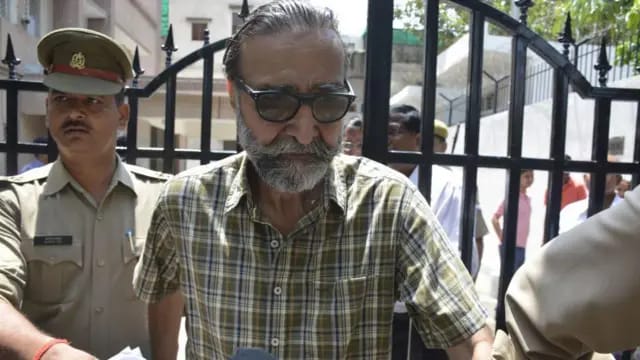
He largely disappeared from public view thereafter, with reports later locating him in Chandigarh, India, living away from the attention.
When Koli’s final conviction was overturned in November 2025, the reaction in Nithari was one of disbelief and despair, but his life outside prison was markedly different from Pandher’s.
After almost nineteen years behind bars, Koli emerged from prison with little obvious path back into ordinary life.
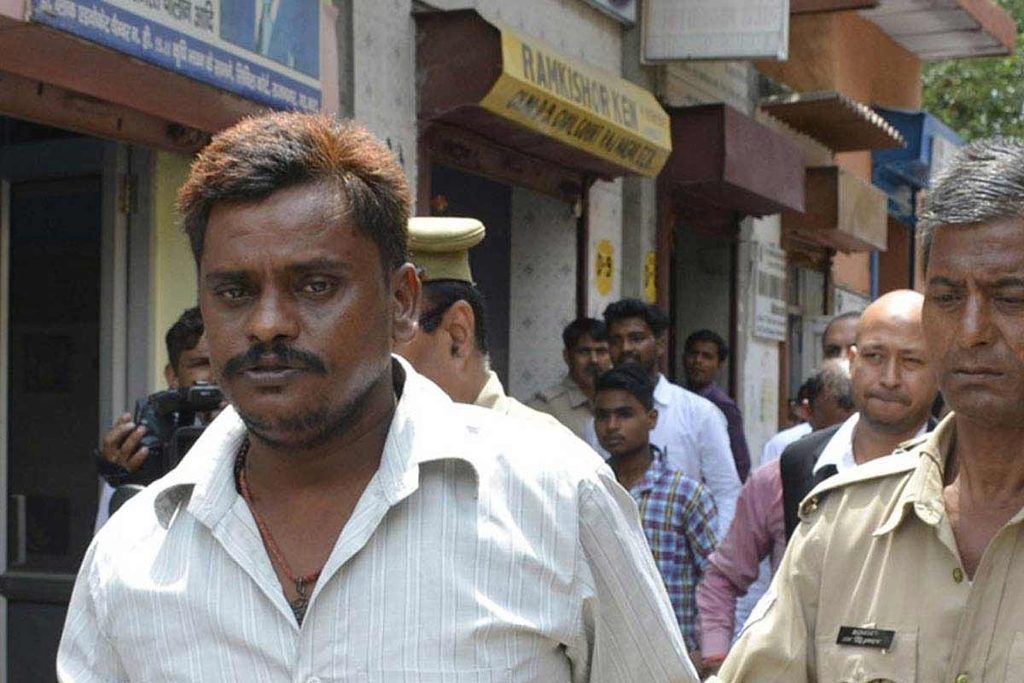
For a time, he lived in Uttarakhand and worked as a security guard. He eventually moved to Haridwar, where he began using the name “Sada Ram,” lived under the radar, and worked at a small tea stall in the Bhupatwala area.
One man who helped him find accommodation and work said that Koli had presented himself simply as someone from Almora looking for employment.
Hindustan Times reported that relatives were reluctant to accept that neither man was responsible, while NDTV, reporting from Nithari after the Supreme Court’s decision, described the families as being left in despair.
One victim’s father, speaking after the final acquittal, questioned how the men could have spent so many years in prison if neither was ultimately responsible.
On September 18, 2026, Koli was found dead at the tea stall in Haridwar. His body was found hanging, and police initially treated the death as an apparent suicide, but no suicide note was found.
It was found through a post-mortem examination that Koli had died from asphyxia caused by ante-mortem hanging.
Uttarakhand Police have said that there was no forensic evidence, CCTV footage, or suspicious activity that might indicate the involvement of another person. His death has therefore been treated as suicide.
Koli was cremated in Haridwar in the presence of his family.
Whether it was unbearable guilt, foul play, or, as some would like to put it, divine intervention.
Koli’s death closes one more door without answering the logic behind a court ruling, and relatives of the victims continue to be distraught.
For people who have spent over two decades waiting for answers, neither a conviction nor an acquittal can provide them with the mere knowledge of what happened to their children.
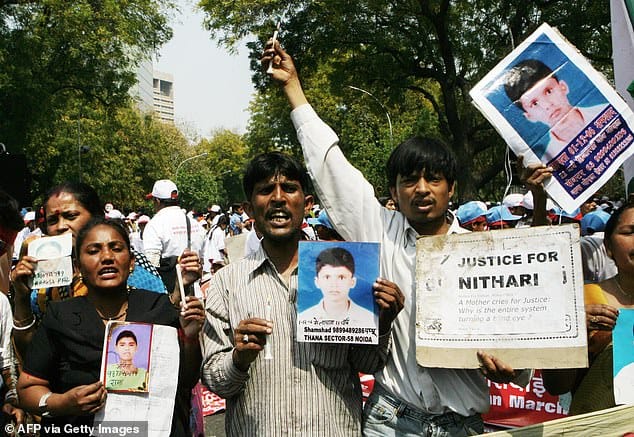
As Lois Bujold said, “The dead cannot cry out for justice. It is a duty of the living to do so for them.“
In Nithari, the uncomfortable question is whether the living have done enough, because the victims cannot tell us what happened to them anymore. Their families can only keep asking, and after twenty years, they are still waiting for an answer.
For more unusual cases involving unexplained behavior and unresolved questions, explore our stories on the Tromp family disappearance and The Burari Deaths.