
Demetrius McCants stood in a protest, holding a placard that read “No justice, no peace.” He was a friend of Christopher Thompkins and had joined a demonstration of his supporters and relatives.
The family believed the Harris County Sheriff’s Department had left many stones unturned in their investigation. “It doesn’t seem like they were really actually trying to find out what happened to Chris.” His aunt Roselyn Mathis said
Sheriff Mike Jolley believed Christopher had simply walked away. But that didn’t fit with the experiences of those who knew him. “He’s not the type of person who’s just going to walk away,” said Jasmine Houston, another of his friends.
Their call for answers soon drew the support of civil rights groups, and it turned into a movement seeking justice for the missing young man. But before the protests & media attention, the Thompkins family led a very normal life.
A Young Man in Search of Salvation
Christopher lived with his mother in Ellerslie, a small rural community in Harris County known for its rolling hills and walking trails. Not much is known about his life, except the days just before his disappearance.
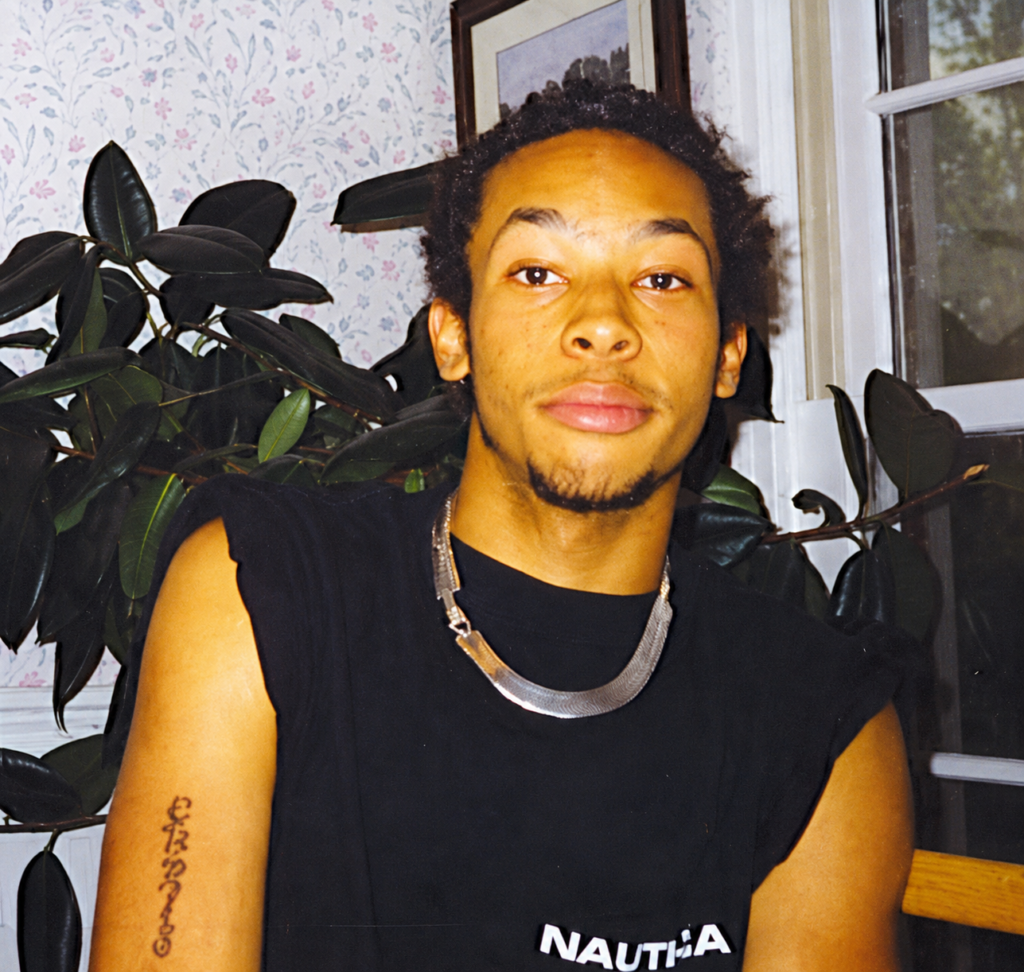
He worked as a member of a land surveying crew. According to secondary sources, Christopher had embraced Christianity and was actively attending church. Two weeks before his disappearance, his grandma had helped him purchase a car.
The 20-year-old was living a normal life, with no signs of any mental or physical struggles. From his family’s perspective, he just went to work one day and never came back.
The shocking thing about Christopher’s disappearance is that he vanished within sight of his co-workers. All he left behind were a few traces and a mystery that was never solved.
The Christopher Thompkins Disappearance
25th January 2002 began like any other workday. Christopher left home at about 8:10 am, and his mother, Martha McKenzie, accompanied him to work. At the time, she was babysitting for his boss.
When they left home, she didn’t know she’d be seeing her son for the last time. “He parked his car at work and drove to the job site with the surveyor he worked for.” His mother said in an interview.
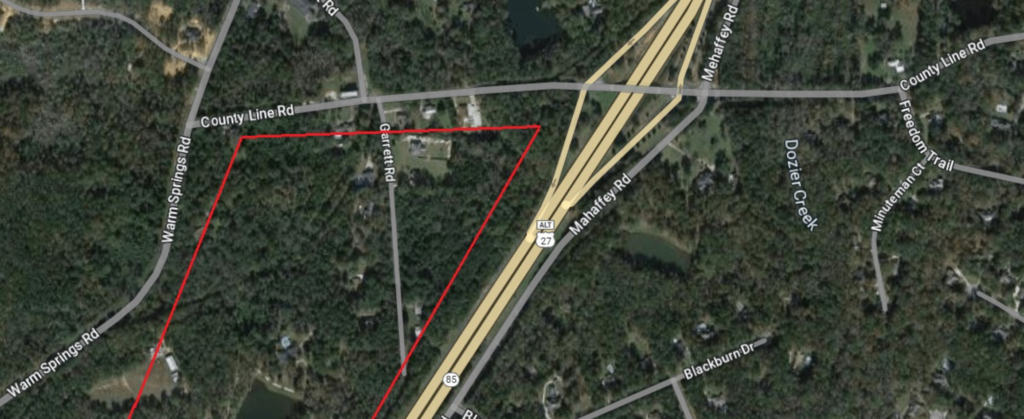
Christopher’s job site that day was a lightly wooded area near County Line Road, off Warm Springs Road, in Harris County. Apart from him, there were three other members in the surveying crew.
Each crew member was 50 feet apart from the others. One of them said that Christopher was walking in the same direction as the others. They had looked away only for a moment, and when they looked back, he was gone.
It’s ironic that a member of a survey crew went missing, but it’s not an isolated incident. Many people involved in mapping the outdoors go missing, such as Amy Wroe Bechtel, who was mapping a route for a 10K race.
Just like in her case, Christopher’s case also lost crucial early hours due to lapses in communication and investigation.
There are conflicting records about the exact time of his disappearance, but his mother claims the surveyor called his wife around 1 pm and informed her of Christopher’s disappearance.
McKenzie was only informed hours later, around 5 pm. This was the first big blow to any hope of finding him. The first few hours are usually critical in a missing person case and offer the best chance of finding them.
The reason for this delay was never confirmed. No one knows what happened during those 3-4 hours. But as soon as McKenzie was informed, she sprang into action and decided to take matters into her own hands.
A Boot, a Few Tools, and 12 Cents
“They called me about a few minutes to five to tell me that they couldn’t find him, and they found one of his boots,” McKenzie told WVTM9. The family immediately tried to report Christopher missing, but couldn’t.
The Harris County Sheriff’s Department told them to wait 24 hours before filing a formal missing persons report because he was an adult. But the family didn’t wait; they launched their own search.
That day, the family went out searching with very little daylight left. At that point in time, there was no assistance from law enforcement. The family searched on their own.
They couldn’t find Christopher that evening. So they returned for another search the next morning on Saturday. The search party, consisting of family and friends, combed the woods and the survey site thoroughly.
Christopher still wasn’t found, but they stumbled upon a few traces of him. “At the barbed wire fence in the area where they were surveying, there was change on the ground.” Mathis, Christopher’s aunt, said.
“There was a snag of the pants that Chris had on, which is a pair of navy blue dickies, in the barbed wire fence, and one of his Timberland boots that he was wearing at the time was found in that area.”
It isn’t publicly known when law enforcement joined the search, but according to a reproduction of a Ledger-Enquirer article from September 2002, both bloodhounds and cadaver dogs were used to search the area, including two lakes.
No evidence of foul play was found. For several months, no additional evidence was discovered. And then in July 2002, something turned up at an unusual location.
At a property near the I-85 (Interstate 85) freeway, the property owner found the other boot… miles away from where the first boot was found. There’s no mention of foul play, signs of struggle, or an animal attack for this boot either.
That was the last confirmed piece of evidence in the case. Law enforcement had their own theories, which were firmly refuted by family and friends.
What Happened to Christopher Thompkins?
“So the assumption at that time was that he walked off the job site, which was consistent with what the coworker said, walked through the woods, and went over toward the interstate.” Harris County Sheriff Mike Jolley told WVTM9 News.
He believed Christopher got into an automobile and left. But when the family didn’t hear from Christopher for four months, his assumption changed.
My biggest fear is that when he went missing in 2002, he went to a large city.” Sheriff Jolley said, “He might have overdosed or something else might have happened to him because he had no identification on him, and the city went ahead and disposed of him.“
Christopher’s family firmly disagreed with this theory, maintaining that he didn’t have a drug problem. Even when his employer claimed that he’d been “acting strangely” in the days preceding his disappearance, the family disagreed.
McKenzie refuted the claim publicly. “Chris lived with me, and I saw him every day. There was neither strange behavior on his part nor any distress,” she said. In the family’s opinion, the authorities weren’t trying hard enough to find out what happened.
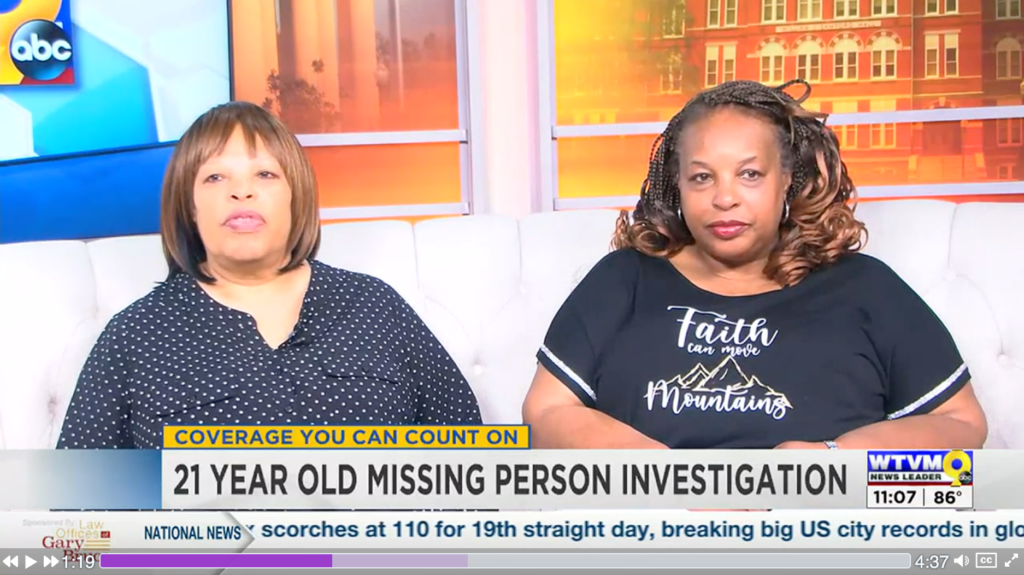
This dissatisfaction didn’t stay limited to just the family, though. The search for Christopher soon garnered public support and became a decades-long movement.
Public Outcry And the Skeletal Remains
About 50 people, including friends, relatives, and supporters of Christopher Thompkins, gathered outside the Harris County Sheriff’s Office to protest the handling of the case.
Antonio Carter, Leader of the National Action Network, also joined the fight, and several protests were held. One of the demands was greater scrutiny of coworkers, and Carter even called for polygraph tests to be administered to them.
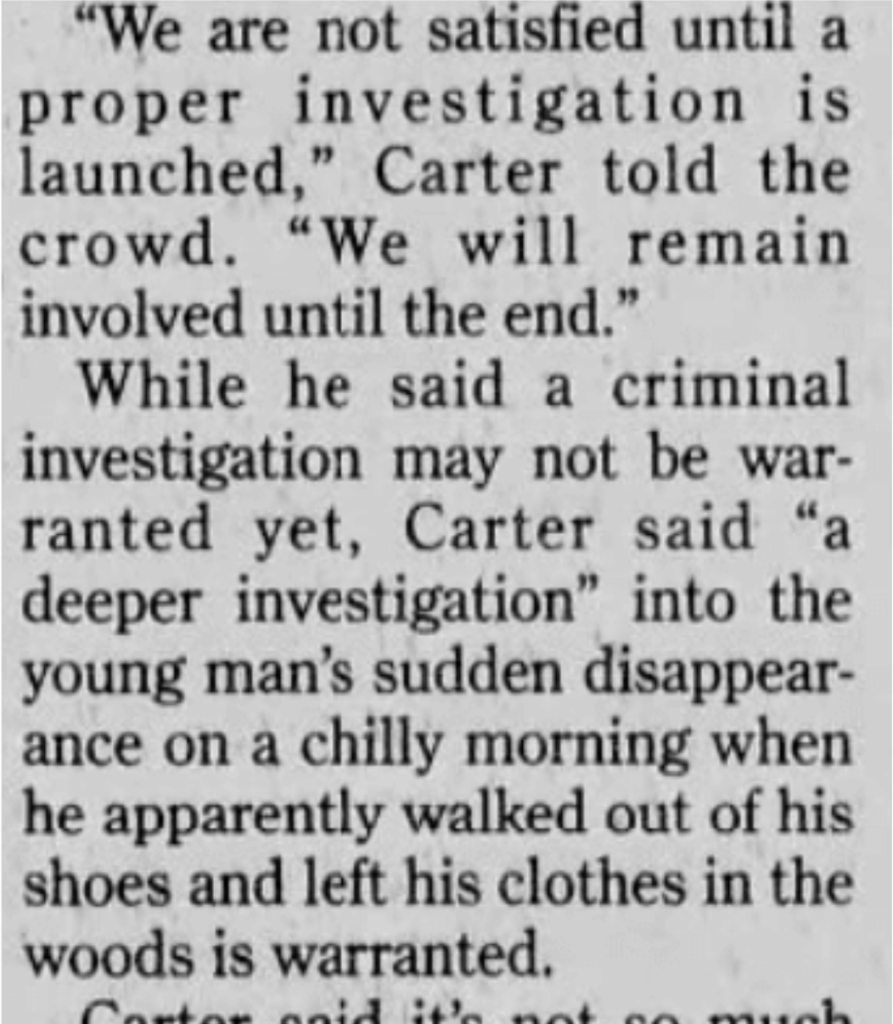
Due to public pressure and the Sheriff’s Department’s resource limitations, the GBI (Georgia Bureau of Investigation) took over the case and continued the investigation.
Then, in 2009, a hunter found a human skull and bones near the Pine Mountain Exit for Interstate 185. GBI investigators and volunteer firefighters searched the woods around the freeway.
“We’re concentrating in the area right there around the remains, and we’re expanding out from here, so it’s a large wooded area,” said Special Agent in Charge Rodney Wall with the Georgia Bureau of Investigation.
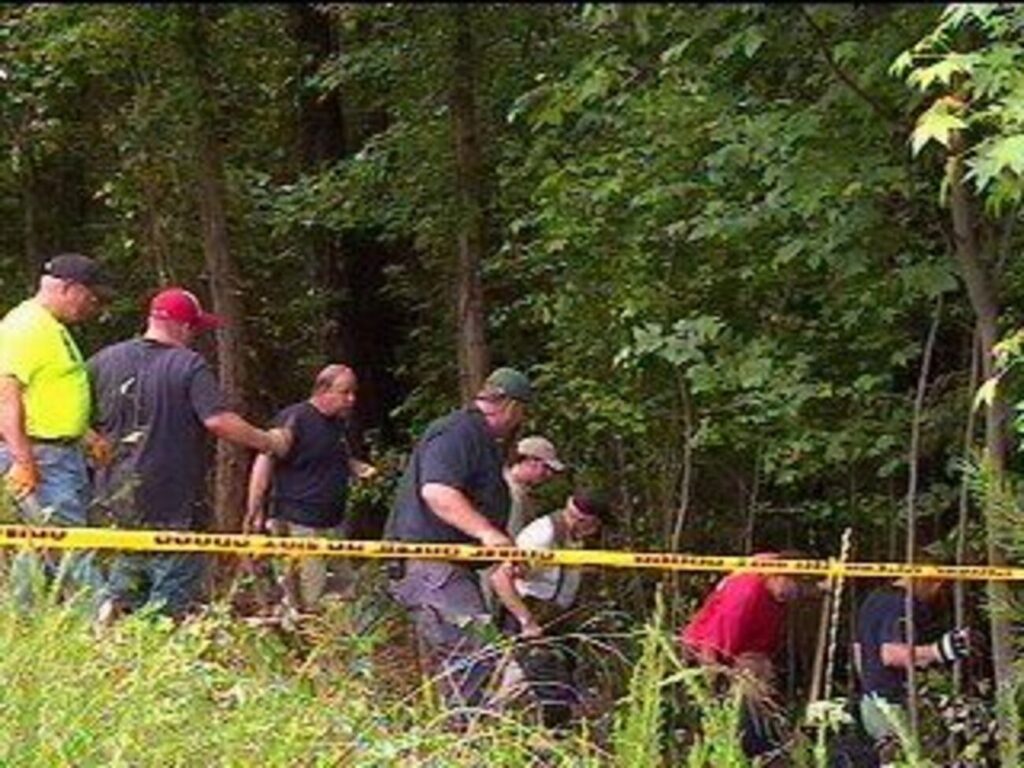
During that week, they also found some pelvic bones. Investigators believed the bones were there for at least a year. During the identification of the remains, Christopher’s case was one of those considered possible.
“There are missing persons cases in this area that we know of that are working out of this office, but there are also missing persons cases that we’re aware of throughout the state,” Special Agent Wall of the GBI said.
The bones were sent to the State Crime Lab in Atlanta for identification, where an anthropologist would review them to determine the person’s age, race, and sex. As of yet, no link to Christopher has been confirmed.
There was no further official evidence on record, but in 2026, an independent investigation revealed previously unheard information from one of Christopher’s coworkers.
Coworker Breaks Silence
The Missing Enigma, an investigative YouTube channel, recently spoke with Randy Riser, a member of the surveying crew working that day. His claims conflict with a lot of the earlier information.
According to official statements, one coworker had earlier stated they looked away for a moment, and then Christopher disappeared. But Riser told a different version of events.
The following video features an account of the disappearance, including Riser’s in-depth testimony and never-before-heard details about the case.
He claimed that at one point a coworker told Christopher to turn off his pin finder – a magnetic device used to locate underground property markers.
A few seconds later, Christopher turned the device off and then broke into a sprint. There was neither a warning nor any cue that it was a joke. He dashed northwest towards Warm Springs Road.
Riser reportedly chased behind him, but lost track. As he continued moving forward, up a small hill, he found Christopher’s pin-finder and pink tape on the ground.
Eventually, Riser was given the polygraph test and passed, but his version of events never made it to the official case records. Despite such investigative shortcomings, the family kept the search alive.
Two Decades Later, Hope Still Remains
The disappearance of Christopher Thompkins remains unsolved to this day. And the family continues to demand answers. ‘’We just want justice done for Chris; he deserves it, we deserve it,” Mathis said.
When the GBI formed a cold-case unit, her hope was renewed. “Yeah, it’s about time because it took a long time. It doesn’t seem like they were really actually trying to find out what happened to Chris,” she said.
Christopher’s mother also spoke out about her need for closure. “I am not a citizen with great influence,” McKenzie said.
“I am simply a grieving mother who wants to keep this case in the public light in hopes that one day someone will come forward with some information about what happened to my son.“
This wasn’t the only instance where a family was ill-served by shortcomings in the investigation. Read about Craig Frear, a 17-year-old who disappeared into dense woods in New York just two years after the disappearance of Christopher Thompkins.
Craig was also assumed to be an intentional runaway. There was no immediate police grid search, deployment of a tracking dog, or a secured forensic perimeter around the woods.
Another case that screams of negligence on the part of the authorities is the disappearance of Molly Bish. She vanished in 2000 from her job as a lifeguard at Comins Pond, and the authorities didn’t inform her mother for three hours.