
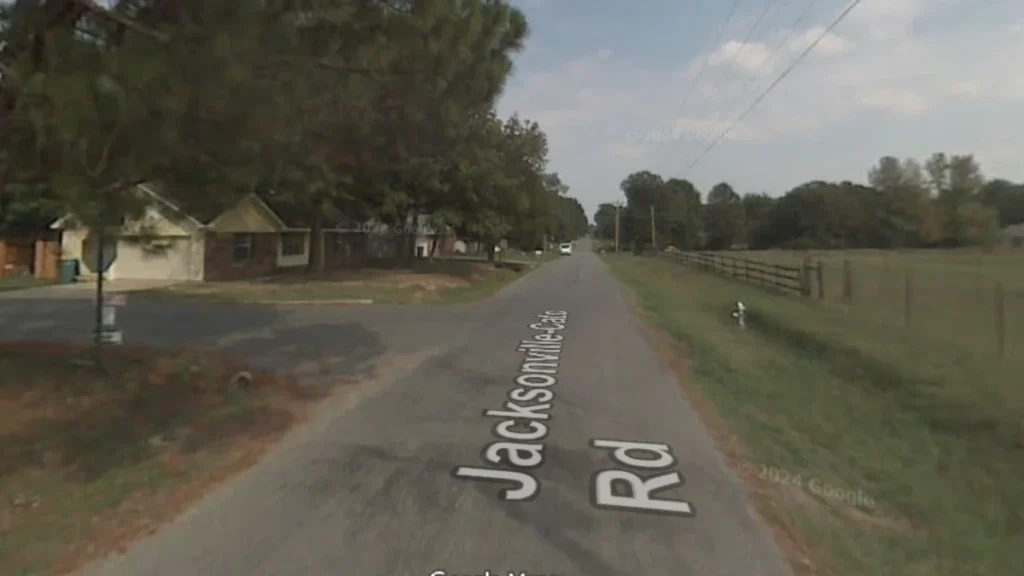
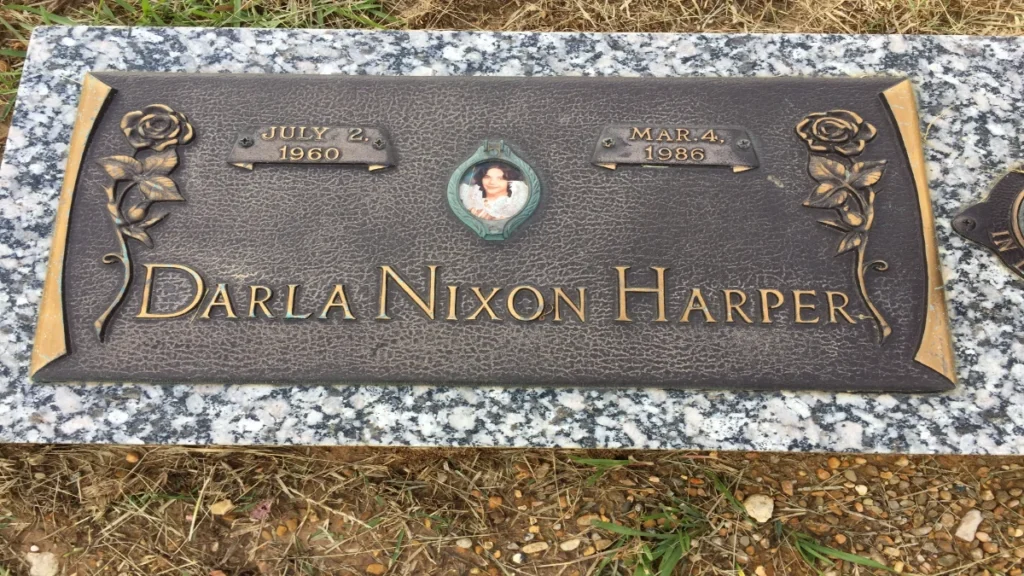
Darla Harper spent the evening of Tuesday, March 4, 1986, much as she had most evenings that spring, at home with her two-year-old daughter, Leslie. They lived in a small apartment in Gravel Ridge, Arkansas, just outside Little Rock.
A neighbour stopped by the apartment to visit her and stayed until around 9.30 pm, leaving Darla and Leslie alone. Darla was 25 and working as a personnel clerk at the IRS Little Rock office.
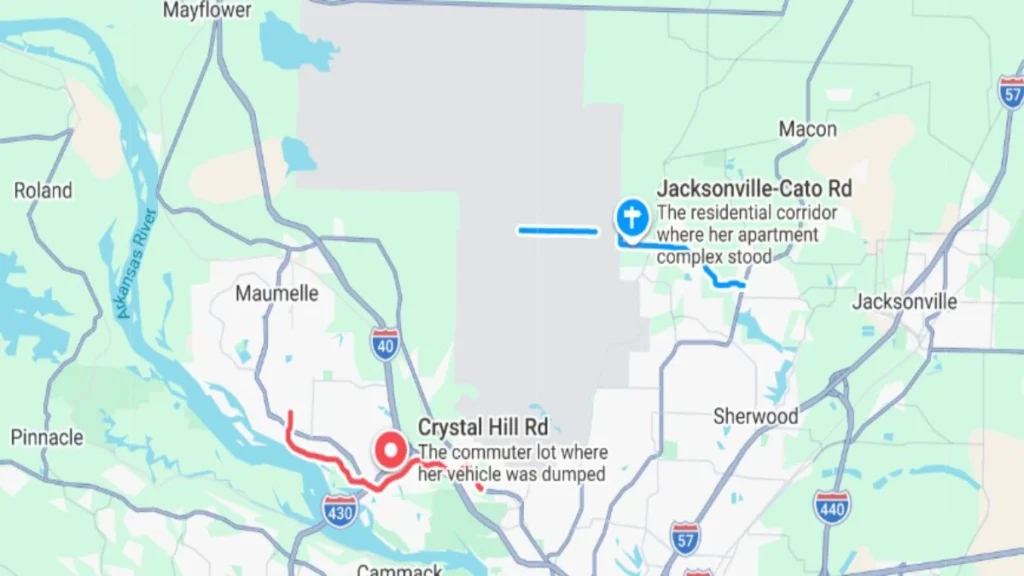
She had been living in the apartment off Jacksonville Cato Road after separating from her husband, Barry Harper, and their divorce was in the final stages.
Between 11 and 11.30 pm, the same neighbor heard muffled strange noises coming from Darla’s apartment. It sounded like furniture being moved or shuffled, but it wasn’t alarming, so she didn’t call the police.
Nine miles away at a convenience store near a parking lot in Crystal Hill, an employee would later tell police a vehicle matching Darla’s was there around midnight. No one ever saw Darla Harper alive again.
The Door that Wouldn’t Open
At 8 am the next day, Darla failed to show up for work. This was highly unusual as she was considered reliable and had never missed a day of work in four years without calling first. Co-workers repeatedly dialed Darla’s home phone line, but it rang unanswered.
An hour later, a worried co-worker drove 20 minutes from the Little Rock office to the Gravel Ridge apartment complex to check on her. She arrived to find the apartment’s front door locked.
The co-worker called the police for a welfare check, and when they arrived, they also knocked and tried to open it, but it was completely secured. Neither the co-worker nor the officers got a response until they heard a tiny voice coming from the other side.
This prompted them to immediately breach the door and find Leslie, apparently left alone for hours, and a small smear of blood on the outside of the front door. Nothing appeared out of place inside the apartment, though.
Darla’s purse, belongings, and her daughter were all left behind. Police first ensured that she wasn’t hurt and removed her from the scene to protect her from further trauma, considering the developing crime scene.
They also contacted Darla’s family and transferred Leslie into the care of her maternal grandparents. Investigators knew the testimony of a two-year-old would likely not hold up in court but talked to her anyway because she was the last person at the scene.
Over the following days and even years, her account never changed. According to Chip Chick, she said she saw “three men come in funny hats.” They came in and put “Mommy in a bag.” Leslie also mentioned that Darla’s feet looked broken.
Forensics teams also focused on the smear of blood on the exterior of the front door, swabbing it for lab testing. Inside, the investigators were also baffled by the lack of signs of a visible struggle.
Pulaski County Sheriff’s Department soon issued a ‘Be On the Lookout’ (BOLO) alert to all local law enforcement agencies for Darla Harper and her car.
Detectives also started knocking on doors throughout the Gravel Ridge apartment complex, asking neighbors whether they had heard anything. It was at this time that they were told about the reports of muffled noises the night before.
Based on the current information, the police opted to treat the case as a suspected abduction.
The Car at Crystal Hill
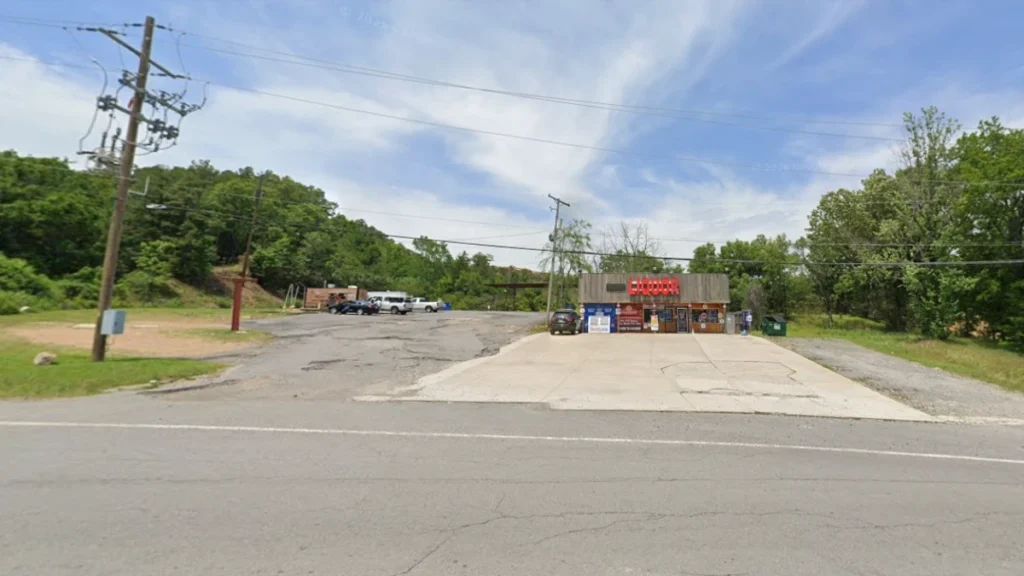
The day after Darla was reported missing, her 1981 Honda Accord turned up in a commuter parking lot near Crystal Hill, about nine miles from her apartment.
It was not a route she had reason to drive, and the vehicle was heavily caked in mud, indicating the perpetrator had driven it off-road through a rural or unpaved area. Twigs, weeds, and tree branches were found wedged in the vehicle’s rear bumper, proving it had been driven deep into the brush.
The interior of the vehicle was also wiped down in an attempt to destroy trace evidence left by the abductors. Despite these attempts, investigators still found unidentified fingerprints on the passenger door and rearview mirror. There was also a small amount of blood inside the vehicle.
Investigators took this information and went back to Darla’s apartment complex. Three painters who were working on the property that week were questioned and cleared of suspicion.
Five months after Darla Harper vanished, a neighbor came forward to the Pulaski County sheriff’s department and claimed to have seen Darla being dragged from the apartment that night.
The timeline also matched the 11 to 11.30 pm window during which other tenants reported hearing muffled, violent thumping sounds.
Detectives treated this claim with heavy skepticism, though, because of the five-month gap. They questioned why any person who truly witnessed a violent kidnapping would remain silent during the massive initial search efforts.
The witness also could not give specific verifiable details like the descriptions of the faces of the abductors, physical builds, or getaway vehicles that could be matched to physical evidence like the fingerprints found in Darla’s abandoned Honda Accord.
Since the statement could not be verified and lacked any supporting proof, prosecutors could not use it to secure an arrest or present it as evidence before a jury.
A Marriage Ended by Drugs

Darla Nixon got married to Barry Harper in the early 1980s. She was a focused 21-year-old employee at the time, trying to build her career with the IRS in Little Rock.
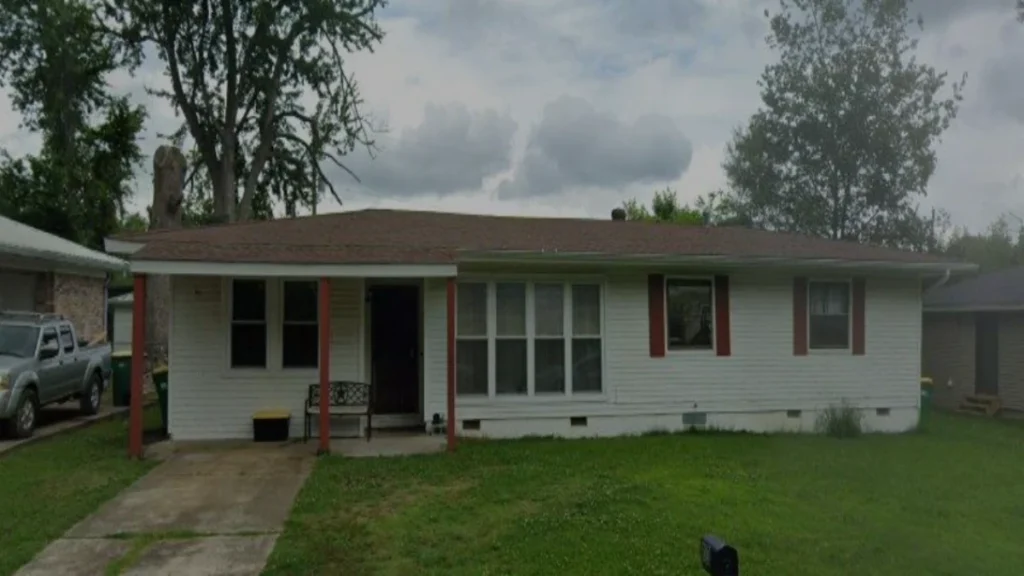
Things were great between the two in the beginning. They had Leslie in 1983 and purchased a home together. To those close to them, they appeared to be happy.
Unfortunately, things took a turn, and Barry began a habit of substance abuse that quickly escalated. Barry also began dating a married co-worker from Southwestern Bell.
This only amplified the marital issues, eventually leading to the breakdown of the marriage. But the root cause of the separation was Barry’s drug dependency.
Darla moved out of their marital home in late 1985, and leased an apartment off Jacksonville Cato Road. On paper, the divorce proceedings were non-contentious. They were also working out a legal settlement concerning child custody, support, and the division of their shared property.
When she suddenly vanished, the proceedings were halted, which piqued investigators’ interest, and they deduced that Barry’s non-contentious attitude during court negotiations could have been a front.
Knowing his drug dependency was a significant money pit, the police theorized that Barry determined a divorce would legally strip him of marital assets, making it harder to afford his lifestyle. It would also take away Leslie’s custody.
Upon learning of Darla’s mysterious disappearance and the criminal investigation, the judge refused to finalize the divorce or award property in default to Barry. Instead, they placed the divorce proceedings on a legal hold.
Noncooperation Strangles the Investigation
Police had also questioned Barry about his whereabouts during that late-night window of March 4, and according to AY Magazine, he said, “Just driving around.”
Detectives interpreted this as him being on the streets looking to score illegal drugs. He had no witnesses to corroborate his location during the hours Darla was taken.
As part of the elimination process, the police asked those closest to Darla to submit to a polygraph. Barry refused to take the test.
Now, Darla had also been dating a new individual at the time. Her new boyfriend willingly cooperated and passed his polygraph and also provided a verified alibi. The apartment complex maintenance workers also agreed to the lie detector test and were cleared.
Considering everyone else was cleared of suspicion via the polygraph, Barry became the main person of interest. In the weeks following his initial questioning, his actions drew more interest.
Observers and investigators noted that in the week following Darla’s disappearance, Barry was walking around with heavily bandaged hands, claiming that he had hurt them after trying to remodel his bathroom.
Barry also declined to contribute to the welfare of his own child, refusing to allow two-year-old Leslie to see a child therapist or speak with police investigators who were trying to decode her statements about the men.
The investigation then hit a roadblock, considering Leslie was legally a minor and her father had control over her medical and legal cooperation. With their eyewitness silenced, the Pulaski County sheriff’s department had to pivot.
Forensic Analysis and Tracking Barry’s Inner Circle
Detectives poured their efforts into the unidentified fingerprints that were left on the rearview mirror and the passenger door of the mud-caked Honda Accord.
Unfortunately, in 1986, automated fingerprint-matching databases were still in their infancy. So, without a direct match in the local system, the prints sat there.
The small traces of blood that were also found on the apartment door and inside the vehicle confirmed evidence of foul play. However, DNA profiling was not a standard tool in 1986.
The samples were only able to confirm the standard blood type matching, and this was not enough to legally identify the killer.
Since the police did not have the evidence to arrest Barry, they intentionally kept tabs on his personal life. They bet his drug-fueled lifestyle would eventually cause someone close to him to yield something usable.
Barry eventually married the co-worker from Southwestern Bell. A woman who had two kids and drug dependency issues of their own. In 1990, following the deterioration of their marriage, the woman came forward to the police, insistently telling them that Darla was buried in the shed in the Harpers’ backyard.
Armed with a search warrant, the police descended on the property and tore down the backyard shed. They dug deep into the earth behind the shed but found nothing. Refusing to let the warrant go to waste, the investigators pivoted to the main house and checked all of the crawlspaces.
Inside the crawlspace, the searchers unearthed a handful of degraded bone fragments. These were rushed to the Arkansas State crime lab.
However, DNA profiling was limited in 1990, and they could not conclusively determine whether these fragments belonged to an animal or a person, let alone whether they were Darla’s. No charges were filed against Barry Harper.
Digging in Sherwood
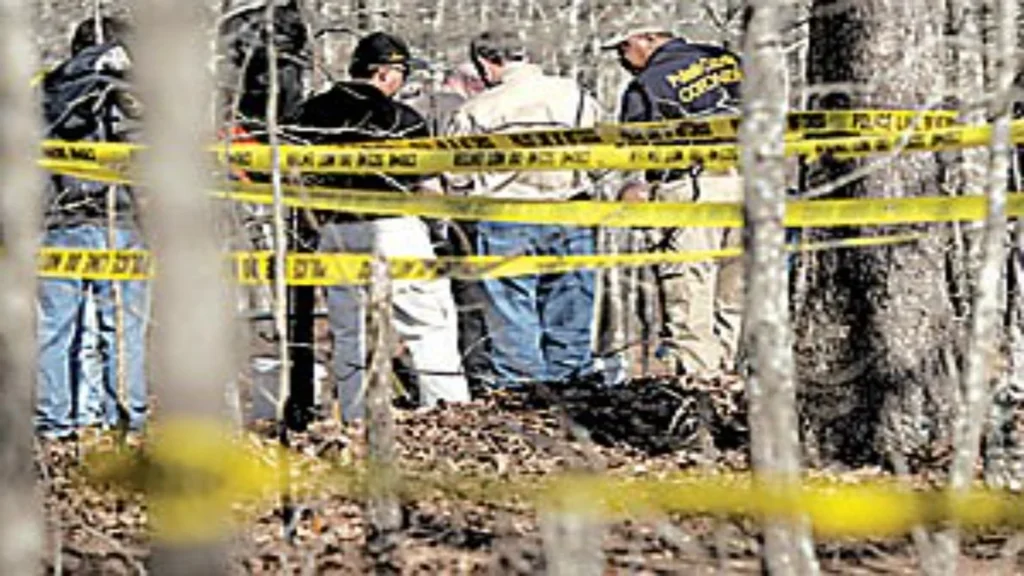
The case went quiet for nearly two decades before another lead surfaced. In 2009, a local resident was walking through a heavily wooded area in northern Sherwood, Arkansas.
While navigating the off-road trails, the walker noticed an unusual, isolated earthen mound sloping downhill. Recognizing that there were no similar mounds elsewhere in the immediate vicinity, the citizen suspected it was an artificial burial site and contacted the police.
When Sherwood detectives arrived on the scene and cross-referenced the coordinates with regional cold cases, they flagged Darla Harper’s 1986 case. This earthen mound was also three miles south of the Gravel Ridge apartment complex.
The mud and dense twigs caked onto the bumper of the car proved the abductors had driven Darla into a wooded terrain, so it fit with the situation. Believing they might have found Darla’s grave, the county attorney for Pulaski ordered a formal court order to excavate the site.
A multi-agency task force comprising the Sherwood police, Pulaski County Sheriff’s Office and forensic anthropologists set up a grid around the mound and began digging.
Unfortunately, the effort yielded no evidence at the site linking back to Darla Harper. Officials considered it could have been a historical native American burial ground, because artifacts had previously been found in the Sherwood woods.
Barry Harper Dies and the Case Today
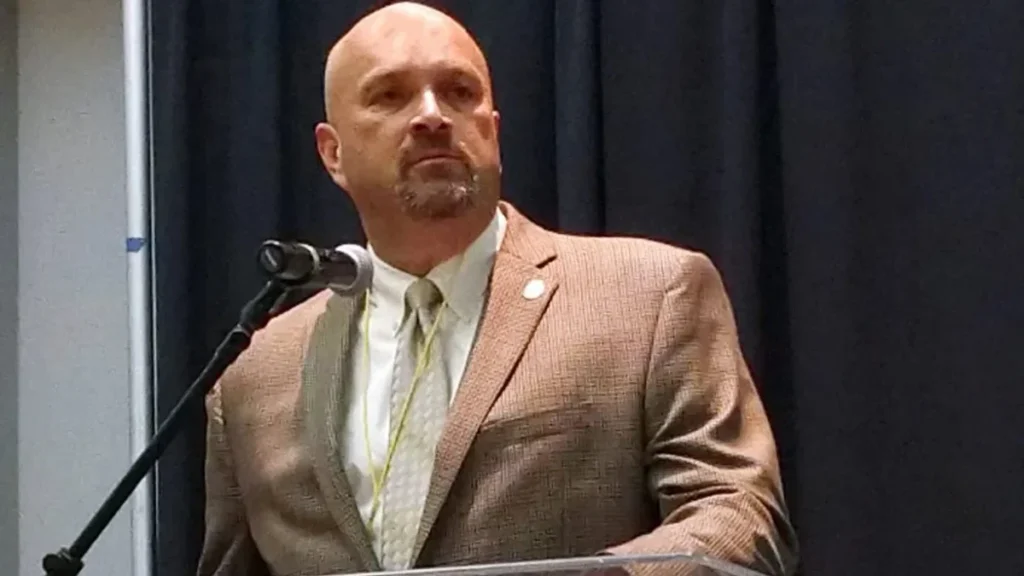
On December 2, 2013, Barry was driving a commercial tanker truck when he became involved in a violent, fiery collision that killed him on impact. He died without ever facing a grand jury or being indicted.
Barry had already lost legal custody of Leslie in 1988, when the Arkansas Courts resolved the stalled proceedings. They awarded custody of Leslie to Darla’s parents, Mel and Carl Nixon.
Leslie Bourne grew up under her grandparents’ roof and, as an adult, has spoken publicly about what happened to her mother. It has always been with the same uncertainty about her memory.
In one interview, Tapa Talk reported she said, “I feel like I saw what happened that night, and I feel like maybe I could remember. I just remember seeing, I can’t remember how many, but people in black and ski masks coming up the stairs.”
Mel Nixon said, “In the beginning she said things like, ‘Mommy is in a bag. Mommy’s feet were broke,’ like she was witnessing somebody carrying Darla out, maybe limp.”
Leslie mused, “Growing up I always wondered why they left me there.”
Sgt. Mike Blain of the Pulaski County Sheriff’s Office cold case unit stated they believed the crime scene had been deliberately cleaned up in the hours after Darla went missing and new DNA testing on evidence collected decades earlier could be the answer.
According to Tapa Talk, Captain Kirk Lane with the Pulaski County Sheriff’s Department said, “I think it’s important for those who perpetrated this crime to know this will keep going. Technology is going to get better, and eventually Darla will be found.”
However, after Barry died, the list of persons of interest has dried up. Darla Harper is still classified as an endangered missing person because no body was ever recovered.
Her tragic case also bears similarities to Amy Wroe Bechtel, whose vehicle was also left abandoned and her personal items left behind. In both cases, the spouse was the main person of interest, though a lack of evidence stalled investigations.
Her family has said they made peace with the possibility that Darla was killed the night she was taken, but they would like to bring her home and give her a decent burial.
Anyone with information is asked to contact the Pulaski County Sheriff’s Office at (501) 340-6601 or their dedicated Missing Persons unit at (501) 340-6616.
For more stories on unsolved disappearances, explore our articles on Jodi Huisentruit and Ryan Shtuka.