
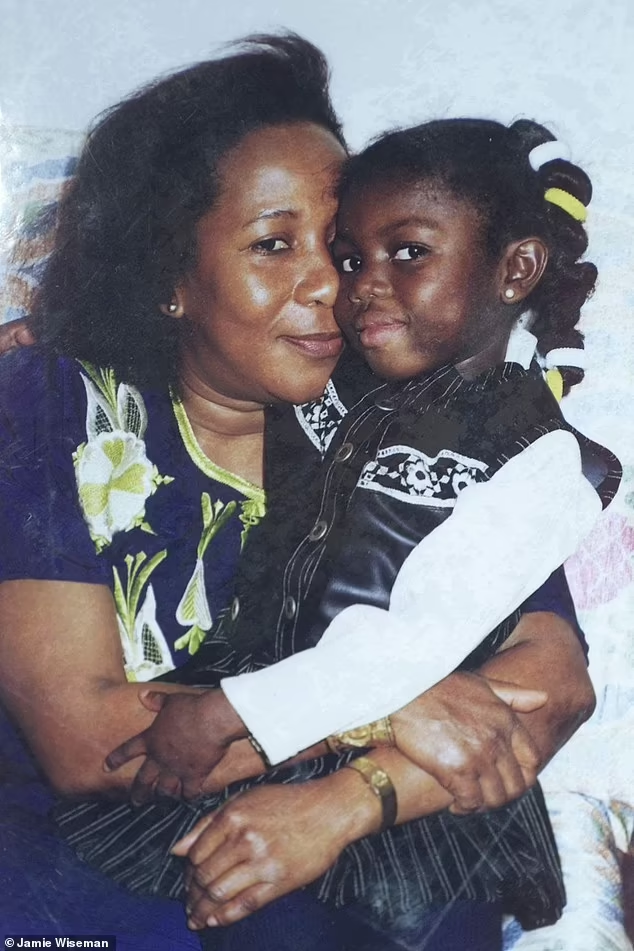
Lord Herbert Laming, a member of the House of Lords, opens his 432-page report with a quote from a man whose mother was Victoria Climbié’s childminder. “Victoria had the most beautiful smile that lit up the room.“
This quote is immediately followed up by a more disturbing one, by Neil Garnham QC, Counsel to the Inquiry. “To say that Kouao and Manning treated Victoria like a dog would be wholly unfair; she was treated worse than a dog.“
Victoria was an 8-year-old girl from West Africa who had been brought to London for a better education. She died a year later, succumbing to abuse and mistreatment by none other than her great-aunt and the great-aunt’s boyfriend.

The Childhood of Victoria Climbié
Victoria was born on 2 November 1991 near Abidjan, a metropolis in the West African country of Côte d’Ivoire (French for Ivory Coast). She was the fifth of seven children of Francis Climbié and Berthe Amoissi.
The parliamentary summary says the girl was an intelligent, articulate child who did well in school. She had a happy, healthy childhood. Until her great-aunt, Marie-Thérèse Kouao, came into the picture.
At the time, in 1998, Kouao was widowed and living with her three sons in France, claiming welfare benefits. Her brother had just died, and she was attending his funeral when she visited the Climbié family.
She told Francis and Berthe that she was prepared to take one of their children to France and arrange for their education. Of the seven children, they chose Victoria.
In parts of West Africa, where Victoria’s family was from, children often lived with relatives for better schooling, work opportunities, and support. Marie promised the Climbié family the same.
First Signs of Trouble in Paris
Victoria left with her aunt Kouao for Paris most likely in November 1998. But the eight-year-old didn’t travel under her own name. Instead, Kouao took her to Paris on another child’s French passport, Anna.
Anna was another girl Kouao planned to take to France, but her parents changed plans at the last minute. So here Victoria was, in a new country, with a new ward, living under a new name.
Kouao presented Victoria as her own daughter. And during the five months they spent in Paris, she was enrolled in Jean Moulin primary school in Villepinte – the place where first glimpses of abuse were noticed.
By December 1998, the school had started to notice absenteeism. She also tended to fall asleep in class and would be frequently unwell. Some of Victoria’s absences were justified by medical certificates stating she needed rest.
The head teacher, Monsieur Donnet, also recalled Kouao mentioning that Victoria was suffering from some form of dermatological condition.
Based on these observations, the school assumed Victoria was clinically unwell and was being monitored and treated by doctors. But by February 1999, things had gotten more serious. A formal ‘child-at-risk’ notification had been issued.
A child-at-risk notification (known as information préoccupante or a signalement) is a legal duty for anyone—including private individuals and professionals—who witnesses or suspects a child is in danger or at risk.
As part of the standard notification procedure, a social worker became involved and described the bond between Victoria and Kouao as a ‘difficult mother and child relationship’.
A month after the notification, Kouao gave notice to the school that she was removing Victoria so that she could receive treatment in London. When the little girl went to say goodbye to her classmates, Monsieur Donnet noticed something.
Her head was shaved, and she was wearing a wig. Even on the flight to London, they made Victoria wear the wig so she could resemble the ‘Anna’ in the passport. But soon after they landed, the mistreatment became impossible to ignore.
An Advertisement for Action Aid
When the duo arrived in the UK, they went to Acton and moved into a double room in a bed and breakfast in Twyford Crescent.
The very next day, at about 4:30 pm, Kouao and Victoria paid an unannounced visit to Ms Esther Ackah, a distant relative whose home address Victoria’s school in France had listed as a forwarding address.
While there, Ms Ester and her daughter, Grace Quansah, noted a few peculiarities. Quansah had removed the wig from Victoria’s scalp and noticed that her head was shaved and covered with patchy lesions.
She also thought the eight-year-old looked rather small and frail. Apart from this, they noticed nothing disturbing or inappropriate about Kouao’s interaction with Victoria at that point.
Over the next few weeks, Kouao and Victoria visited Ealing Social Services General to collect subsistence payments and, on one occasion, to complain about the standard of their accommodation.
During the visits, the staff there started to notice warning signs. There was a marked difference in appearances.
Kouao was always well-dressed while Victoria looked far shabbier and untidy. A staffer, Deborah Grant, even described Victoria as an ‘advertisement for Action Aid’.
The girl wasn’t enrolled in any school or day care activity. Nor are there any recorded friends or playmates. But the girl wasn’t completely isolated from society.
Kouao took her to a nurse for a checkup, but Victoria had no health complaints. Because there were no visible child protection concerns that required reporting to other agencies, the nurse didn’t perform any physical examinations.
Shortly after the nurse’s visit, Victoria began showing visible signs of harm. When Ms Ackah bumped into her and Kouao on the street, she noticed a new scar on her right cheek. Kouao told her it was from a fall on an escalator.
Ms Ackah couldn’t stop thinking about what she saw that day. So three days later, she decided to investigate. She visited Kouao at her residence on Nicoll Road.
As per her, the accommodation was “dirty, cramped and ill-equipped”. Victoria had also lost weight since their meeting on the street.
A Ghanaian man in the area told Ms Ackah he was concerned about how Kouao treated the little girl. With her suspicions partially confirmed, she decided to take things into her own hands.
Ms Ackah made an anonymous call to Brent Social Services reporting what she saw. “I made it clear that the child’s life was in danger and somebody should go to see her,” she told The Guardian.
Brent Social Services didn’t respond until a month after the call, but until then it was too late.
The Childminder’s Testimony
In mid-June, Victoria was kept under the supervision of Prescilla Cameron, a child-minder – the UK equivalent of a paid babysitter. Kouao would drop Victoria off at her place at 7 am and pick her up as late as 10 pm.
Cameron treated the little girl kindly, and they developed a good relationship. But the experienced childminder noticed some alarming behaviors.
Kouao spoke harshly to Victoria and called her a ‘wicked girl’ on multiple occasions. The girl also often turned up with small cuts to her fingers. Kouao lied, saying Victoria caused them by playing with razor blades.
Cameron had also heard from people living nearby their double room that the woman used to beat the girl every night. A few weeks later, they moved somewhere else.
Kouao had just begun a relationship with Carl Manning – a bus driver working in north London. And she’d decided to move in with him a few weeks later. Naturally, she also took Victoria with her.
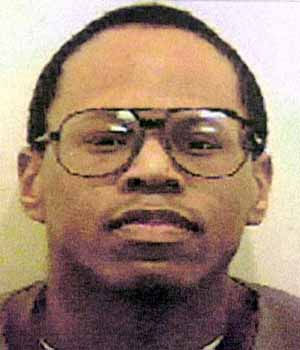
But the living conditions were far from ideal. It was a cramped, one-bedroom flat with a separate kitchen and bathroom. Owing to space restrictions, the girl was made to sleep on a sofa bed while Kouao and Manning slept in the same room.
Manning confessed in a report that Victoria had started experiencing urinary incontinence during this time. That prompted him to strike her, and by July 1999, the abuse had progressed to the use of fists.
When her boyfriend could no longer tolerate Victoria’s presence, Kouao brought the little girl to Cameron’s house. She pleaded with the child-minder to take Victoria in for good.
Since the girl looked ill, Cameron agreed to let her stay for one night. During Victoria’s stay, Cameron noticed there were signs of assault on her face, her jaw and around her eyes.
In the middle of the night, the girl was groaning. When Cameron checked on her, her condition had worsened, and she had to be taken to the Central Middlesex Hospital.
“Little Ray of Sunshine” in the Hospital
During her first hospital visit, a number of injuries were recorded all over her body.
The pediatric registrar concluded that at least some of her bodily injuries were deliberate. Due to this, she was placed under police protection at the hospital. The little girl also contracted scabies and was placed in isolation for a day.
The next morning, when the girl’s condition improved, police protection was lifted, and Kouao took her back home. A week later, Victoria was rushed to the hospital again, this time by Kouao.
There was a serious scalding burn on her face. Kouao said that the girl herself put her head under warm tap water to relieve the itching from scabies. But hospital staff observed something else entirely.

The nurses who looked after and bathed Victoria saw signs of deliberate physical harm. Even when Kouao and Manning visited the girl, she appeared shy and timid. On one occasion, Victoria even wet herself while Kouao was telling her off.
Although when the great-aunt and her boyfriend were not around, the little girl was a “little ray of sunshine”, Dr Rossiter expressed in the official inquiry. She liked to play dress-up, and the nurses even took her to see babies in the neonatal ward.
They even gave her sweets and treats. Just like Victoria, Reena Virk also interacted with welfare authorities who ultimately failed to protect her, resulting in a fatal amount of abuse.
Like Reena, Victoria would also end up succumbing after a long ordeal spanning months.
The Last Seven Months of Victoria Climbié
While Victoria was back at Manning’s Somerset flat, she had limited contact with the outside world. Lisa Arthurworrey, Victoria’s assigned social worker, didn’t note anything out of the ordinary on her first visit.
The little girl wore nice clothes and played with a doll. Seeing that everything ‘looked’ normal, Arthur Worrey didn’t think to ask why the girl wasn’t enrolled in any school.
By October 1999, Victoria’s situation had deteriorated further. Her sofa-bed was thrown away, and she was forced to sleep in the bathroom. The room was windowless and cold.
When the girl was inside, the lights would be shut off, and the door would be closed, leaving the toddler alone, cold and in pitch-black darkness.

During Arthurworrey’s second visit on 28th October 1991, everything was made to appear normal. The flat had been tidied in anticipation of her visit, and Victoria had been told to behave in front of the social worker.
At one point, Victoria acted out. She shouted something to the effect that she didn’t respect her mother and needed her own house.
While this behavior surprised Arthurworrey, she didn’t think the girl was at ‘risk of serious harm’, a status that called for separate accommodation.
To purposely get that status and get rid of Victoria, Kouao alleged the girl was sexually abused by Manning. But later, she withdrew the allegations herself and continued to live at Manning’s flat on Somerset Road.
This was the time when Victoria was last seen alive. In the months that followed, she was kept in the bathroom not just at night, but during the day as well. She’d be tied up in a black plastic bag to seal in the excrement and piss and avoid ruining the bath.

The little girl spent long periods in her own bodily waste. It began to corrode her skin, leading Manning and Kouao to abandon the method because it would have raised undue questions from outsiders.
For food, they gave her cold leftovers. They placed the food in a plastic bag and put it in the bath next to Victoria. Because her hands were tied, they forced her to eat by pushing her head toward the food, like a dog.
Adding to this, the girl was also regularly assaulted. They used a variety of weapons, including a shoe, a hammer, a coat hanger, and a wooden cooking spoon. Manning later admitted in court that he also used a bicycle chain at times.
Meanwhile, Victoria’s birth parents were oblivious to how their girl was being treated. In the month before her death, they received Christmas photographs of a smiling Victoria.
On the back of one photograph, writing in French read, “She’s growing up well, and she finds herself… well.”
In the week approaching her death, Kouao took the little girl to the church a few times. But even in the house of god, the severity of Victoria’s condition went unnoticed.
On 24th February 2000, Kouao approached Pastor Alvaro Lima for help, stating the girl had been asleep for two days and hadn’t eaten or drunk anything. He immediately advised them to take her to the hospital.
She was unconscious and suffering from severe hypothermia. Her body temperature was only 28.3°C. She suffered a number of respiratory and cardiac arrests. Even her renal system had begun to fail. CPR was attempted, but to no avail.
Victoria Climbié was declared dead at 3:15 pm on 25th February, at the age of eight years and three months.
Post-Mortem of a Failed System
Doctors recorded 128 separate injuries on Victoria’s body. She had been repeatedly assaulted with blunt and sharp instruments. Dr Nathaniel Carey, the pathologist who examined her body, detailed his findings in a news report.

“She was malnourished. She was in a very damp environment, and her movement was limited through being bound – all these would act to prevent the body from being able to maintain its temperature.”
“If you then combine that with a cold, damp environment such as you would get in a bath, and wet clothing, you have an effect that is similar to being lost on the hills with no food and getting exposure.”
Kouao and Manning were arrested shortly after Victoria’s death, and are currently serving life imprisonment sentences for her murder. But the repercussions didn’t end there.
Victoria Climbié’s death quickly became understood not as a single criminal case, but as a multi-agency safeguarding failure involving social services, the NHS, and the police.
In April 2001, the Home Secretary and the Health Secretary set up an independent statutory inquiry and asked Lord Laming, a former Chief Inspector of Social Services, to chair it.
Laming’s report, published on 28th January 2003, said that on twelve occasions, the opportunity to protect Victoria was missed. “The suffering and death of Victoria was a gross failure of the system and was inexcusable.” He says in the report.
The inquiry led to the creation of a national framework called Every Child Matters (2003), shifting policy to a child-centered approach. The focus was not just on preventing abuse, but also on promoting overall well-being.
The Children’s Act 2004 directed social services, police, health services, and schools to work more closely together to protect children, and required them to appoint a Director of Children’s Services for education and child protection.
Local Safeguarding Children Boards (LSCBs) were created to coordinate child protection work across agencies. As for Victoria’s parents, Francis and Berthe Climbié, the aftermath was devastating.

Speaking about the authorities that came in contact with Victoria, her mother said, “They could have saved her. You can’t just let a human being die.“
Her father, too, got emotional looking at photographs of what had happened to his daughter. “She was not like this before. She was a very pretty girl.”
The heartbroken parents didn’t break from the grief, though. They turned their tragedy into an opportunity for change. At their request, the Victoria Climbié Foundation UK was established.
It was an independent body that could keep pressing agencies to protect children properly, ensuring what happened to Victoria Climbié wouldn’t happen to any other child in the future.
Grace Quansah continued speaking out for Victoria in black lives protests later on, as shown in the video below, where she recites a poem based on the girl and keeps her memory alive.
Despite such efforts, children today are much more inclined to be abuse victims. Like Leigh Occhi, a 13-year-old who appeared at school with bruises and a black eye, her abuse wasn’t flagged in time to prevent her disappearance.
But not all cases end with the victim. Sometimes, victims become a wake-up call to save others, like Molly Bish, whose unsolved disappearance led to the creation of The Molly Bish Foundation.