

A day after Tristan’s funeral, the police got a call. The man, calling himself “Dirk Meier”, told the police that he was Tristan’s murderer. After he gave away his location (a telephone at Frankfurt-Höchst station), he asked the police to arrest him.
A year after Tristan’s funeral, his grandma visited his grave, but she saw it had been dug up to 1.2 meters. Whoever had done it hadn’t managed to reach the boy’s coffin, and it looked like they had given up midway.
The case remains shrouded in mystery, and hasn’t been solved even after almost three decades. And it all began on a grim note, in a family that just witnessed another demise a few years ago.
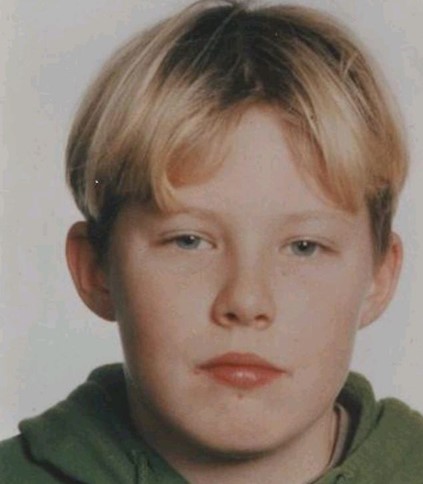
A Sweet Boy Going Through Puberty
Tristan Brübach was just 10 years old when his mother, Iris, killed herself. The cause of the suicide is unconfirmed. After the tragedy, the boy moved with his father, Bernd, to a small apartment on Leiderbacher Street in Frankfurt am Main.
For two years, Bernd raised Tristan alone. “He was a sweet boy. Of course, there were conflicts; he was going through puberty after all,” he said, talking about the period during which his son was murdered.
At the time, Bernd was working full-time, and Tristan’s grandmother was helping take care of him. According to some sources, the press described Tristan as a Schlüsselkind – literally meaning “latchkey kid.”
This meant the boy was a fairly independent teenager who spent considerable time unsupervised. Most of the time, Tristan was by himself and loved to spend time with his pet rabbit, Hoppelfried, or playing video games or soccer.
His teachers in the Meisterschule in Frankfurt-Sindlingen described him as quiet and unremarkable. The one thing Tristan also kept quiet about was being the victim of frequent bullying.
He was frequently attacked by teenagers, even robbed. But he himself tried to avoid any conflicts and told no one about these issues. The boy frequented the Frankfurt-Höchst station and the surrounding streets.

It is possible he may have had fleeting contact with criminal elements in the region, but the Federal Criminal Police Office (BKA) refrained from classifying Tristan as a member of the underworld in any way.
There was nothing apparently alarming to his parents or teachers, apart from a teenager’s usual struggles. Even on the day he disappeared, like every other kid, Tristan woke up wanting to skip school.
The Day Tristan Brübach Should Have Stayed Home
March 26, 1998. Bernd Brübach began his day at 4:30 am, getting ready for his shift at Frankfurt Hauptbahnhof (Main Railway Station). Tristan woke up a little later, and by the time his father had already left for work.
At 8.00 am, he called his father at work from a phone booth near their apartment. The boy complained of back pain and said that he didn’t want to go to school. Bernd refused and persuaded him to go. He told the kid to visit a doctor later.
None of them knew it would be their last conversation. After Tristan hung up the call, he ran into his friend Boris, and the duo decided to have a cigarette before school. That’s why he reached school late that day.
At 1:30 pm, he complained of severe back pain and requested to go see a doctor. When the teacher asked what had caused it, the boy claimed he had fallen out of a tree. But that was just a cover-up.
In reality, he and his classmate Malik had been throwing stones at each other the previous day. One of the stones had hit Tristan and injured him. Not knowing this, the teacher bought his excuse and agreed to the request.
According to the Federal Criminal Police Office, a classmate from another class saw Tristan boarding the bus at the Allesinastraße stop, near the school, heading towards Höchst train station.
Coincidentally, Boris spotted him between 2.00-2.20 pm, while on a different bus. He tried to get Tristan’s attention but couldn’t. So he got off the bus and tried to take a shortcut to Höchst train station to meet him.
Upon arriving at the Höchst train station, Boris couldn’t find Tristan, so he went home. Another student from the Hostato School spotted Tristan on his way home at Höchst train station between 2:15 and 2:25 p.m., sitting alone on a bench.
After that, Tristan went to a park-like area near the Höchst bus station. He was sitting on a bench when a woman walking her dog passed by. Tristan was someone who loved animals.
So he struck up a conversation with the lady, and even petted her dog at one point during the encounter. After some time, the woman went on her way. But when she glanced back, she saw something odd.

There were two men, possibly of foreign origin, sitting on the bench next to Tristan. The identities of the men were never confirmed. This was the time the boy was last seen alive: at 3:20 p.m., according to the woman.
No one knows what exactly happened after that, but it happened in the Leiderbach tunnel. It’s a dark pedestrian underpass and river egress near the Frankfurt-Höchst train station, running beneath the railway tracks alongside the Liederbach river.
Such places are often infamous for poor visibility, isolated incidents, and attracting criminal elements. That is why 71.8% of pedestrians choose to avoid underpasses. But two children returning to the children’s home decided to take the Ledierbach tunnel as a shortcut.
And right there, on a concrete ledge, they found Tristan’s body.
The Murder of Tristan Brübach
The children found his body at about 4:00 pm. Upon reaching the children’s home, they informed the caretaker. The caretaker took it upon himself to go and verify.
At about 5:08 pm, the police were informed. Once the investigators arrived, the whole area was cordoned off from the general public. Tristan’s body was left in a very horrific state.
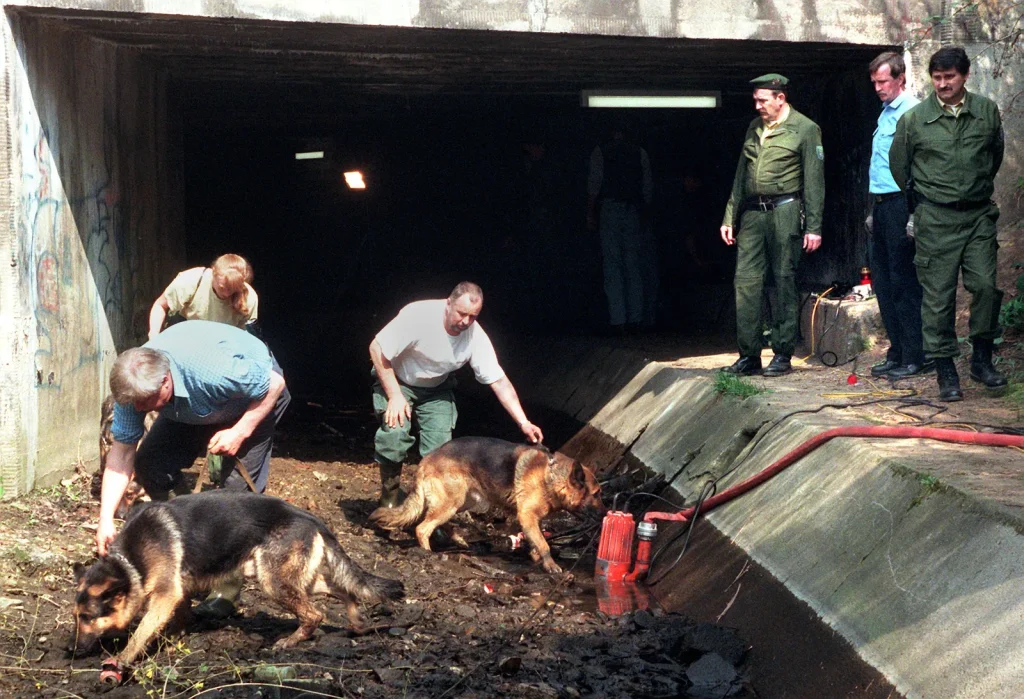
According to Polizei Hessen (Hesse State Police), there were multiple deep stab and cut wounds. It appeared that certain body parts and tissues were also removed. A comprehensive autopsy would reveal more details later.
But until then, the crime scene had to be searched. Forensic personnel and officers with sniffer dogs could be seen scouring for any evidence. And thankfully, the search yielded one of the strongest clues in the case.
They found the contents of Tristan’s backpack empty, but the backpack itself was nowhere to be seen. Among them was a German textbook with partial prints on it, left in blood.
The police believed the prints potentially belonged to the murderer, but despite an extensive search later involving 13,500 traces and 9,500 comparison fingerprints, the perpetrator was never identified.
That night of the murder, the body was taken for autopsy. Frankfurt forensic pathologist Prof. Hansjürgen Bratzke examined it thoroughly for six hours. Details of the attack were too morbid to mention, but it did reveal some new findings.
The attack on Tristan and the subsequent mutilation of his body had happened in a relatively short time. There was also evidence of sexual assault.
The police later spoke to a group of three children who had passed through the tunnel at 3:30 pm, half an hour before the body was discovered. They’d seen a man leaning over an object near the concrete ledge.
They had unknowingly witnessed the possible perpetrator. Based on their statements and interviews with a few other witnesses in the area, a composite sketch was created for circulation on TV.
It was a man with a ponytail and a cleft lip. Despite interviewing men with similar appearances, no one was successfully identified. There were many obstacles in the investigation, too, such as strict data protection regulations.
The authorities couldn’t investigate patients registered in hospitals with a cleft lip due to privacy rights. The police were able to reconstruct the timeline of events before Tristan’s demise, but that still left a few questions.
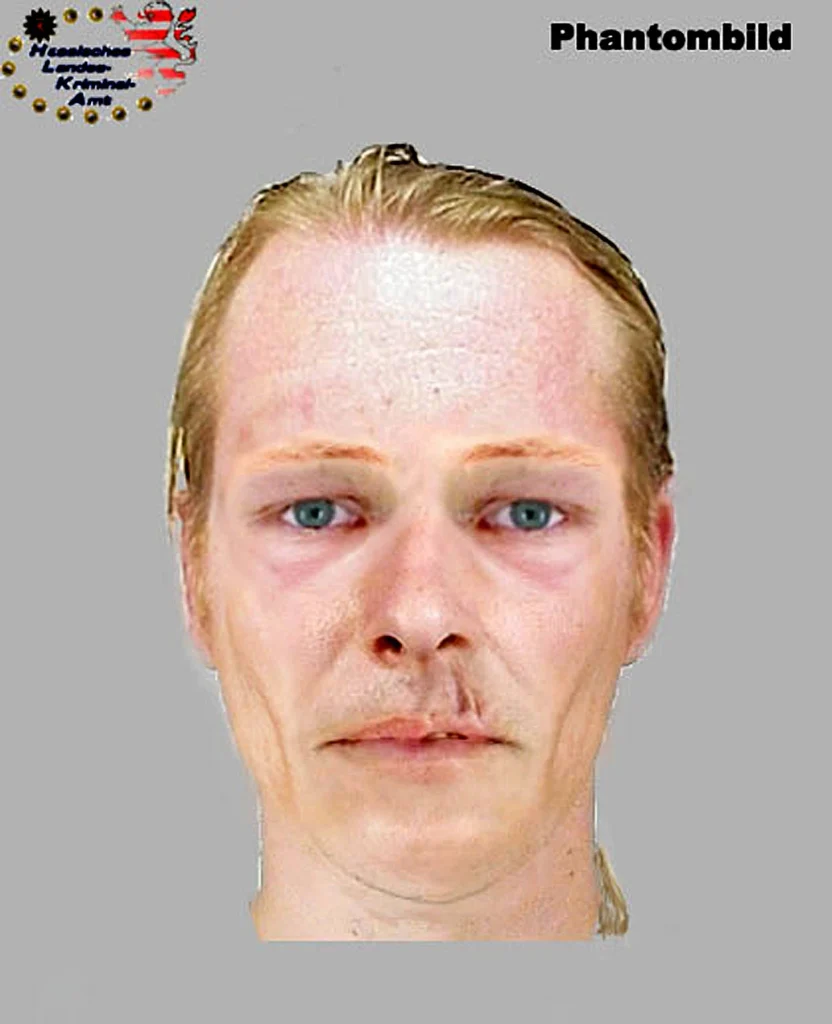
They couldn’t ascertain whether the man with the cleft lip was one of the men who had been sitting on the bench next to Tristan earlier, nor whether more than one offender was involved.
This is a testament to the fact that a composite image doesn’t guarantee success. The Molly Bish murder case, too, had a police sketch and several suspects were produced from it, but none of them were proven to be the killer.
With questions buzzing and no closure gained, Tristan Brübach was laid to rest on 6th April 1998 at Höchst Cemetery. The police apparently monitored the funeral – they believed the perpetrator might make an appearance.
Nothing happened that day, but the case didn’t get buried. In fact, a few shocking discoveries were yet to happen, one of which came the very next day after the funeral.
The Burial isn’t the End
The day was 7th April 1998. It had been 12 days since Tristan was killed, and hardly 24 hours after his funeral when the police got a call from a mysterious man claiming to be Tristan’s murderer.
He told them he was at a telephone at the Frankfurt-Höchst station and asked them to come and arrest him. When the officers arrived at the station, the man was nowhere to be seen.
The call recording was later released to the public, where he can be heard saying “Hier ist Tristans Mörder,” translated as “This is Tristan’s murderer.”
The video shows the composite sketch of the cleft-lipped man alongside the call transcript, but no link has been confirmed yet. For a year after the call, no new evidence surfaced.
On 25th March, 1999, an employee of a Frankfurt energy supplier was conducting a routine inspection in a wooded area near Niedernhausen, roughly 35 km from the crime scene.
There, near a power pole, the employee saw a backpack. It was olive green and from the Fishbone brand. It had been there for months, but the witness only reported it after seeing it on police posters.
The backpack had a map of Germany in Czech and a blue garbage bag. Suspicion immediately fell on a few Czech workers living near where the backpack was found, but no confirmed links emerged.
A few months later, something weird happened. Tristan’s grandmother was visiting his burial site when she found his grave open. Whoever had dug it had carefully removed the flowers from the grave and placed them beside the grave.
They had also placed a plastic sheet, on which the excavated soil was kept. Only 1.20 meters were dug up, though. The digger hadn’t managed to reach the grave, presumably because they were disturbed and fled.
“It’s quite possible that he was the perpetrator,” Investigator Uwe Fey told Frankfurter Rundschau. Unable to complete the mutilation on the day, he had come back after a year to complete his act. But this remained a theory, and no one was identified.
For more than a decade, the police made multiple efforts to solve the case – from the release of the composite image and fingerprint comparisons to a foreign legion lead and more. Everything led to a dead end. But the year 2016 came with fresh hope.
A Serial Killer Back From the Grave
Manfred Seel, also known as the Hesse Ripper, was a suspected serial killer in Germany. The police believed he had murdered at least five women between 1971 and 2004. He died of oesophageal cancer in 2014.
All his alleged victims were marked by similar mutilation and extreme post-mortem injuries, just like Tristan. Naturally, investigators saw some resemblance in the manner of killing and decided to investigate.
They exhumed Seel’s body, and prints from six fingers were taken. But alas, there was no match with the print on Tristan’s book.
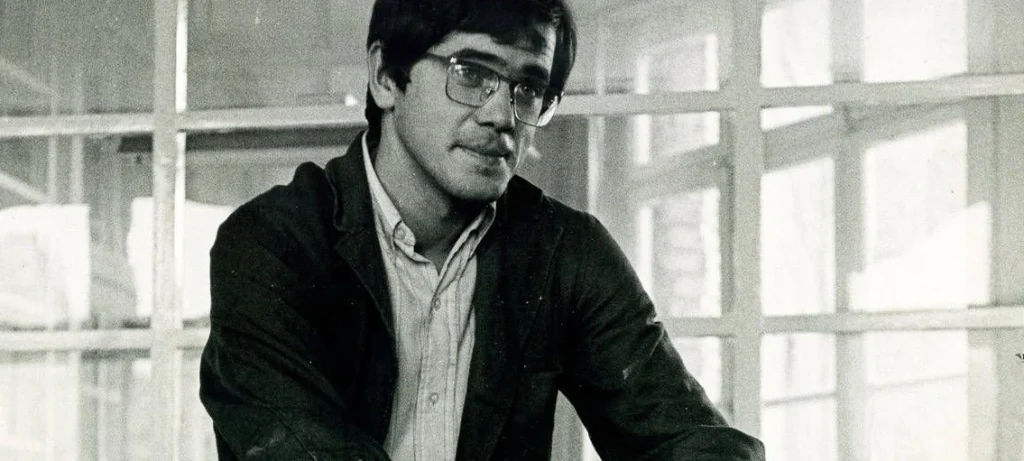
There was another suspect in 2020 named Christian Brückner. He was the prime suspect in the disappearance of three-year-old Madeleine McCann. The most striking similarity is that, in both cases, the victim was an unsupervised child.
And Christian’s appearance also bore a lot in common with the description and sketch of the Tristan Brübach murder suspect. But an announcement from Nadja Niesen, spokeswoman for the Frankfurt public prosecutor’s office, squashed all remaining hope.
“As part of the local investigation into the murder of Tristan Brübach, the possible involvement of Christian B., who was under investigation in the ‘Maddie’ case, was also examined. However, no concrete suspicion of guilt emerged.” She told RTL.
These were the two most promising among the thousands of leads pursued. Since Tristan’s death, the police had received 23,000 tips, and the investigation file continued to grow with each tip.
Now the case encompasses 400 binders, and yet, most of the leads have gone cold. “The last colleague who knew the case from the beginning has retired,” says Thomas Hollerbach, press spokesman for the Frankfurt Police Headquarters.
He added, “The investigative leads obtained so far have been exhausted according to current possibilities of criminal tactics and technology. However, we will, of course, continue to follow up on any lead that could contribute to solving the crime.”
The Polizei Hessen website lists it as an unsolved murder and a cold case. It has been assigned to Kriminalpolizei K11, and authorities continue to urge anyone with information to come forward.
But whether the case gets solved in the future or not, it has left a permanent scar on the townsfolk.
A Wounded Town
The memory of Tristan’s murder lives on in a small memorial site, 80m from his original grave. The site was blessed by Pastor Christian Enke, and after a minute of silence, flowers were laid.
The original grave has long since been leveled. But child protection activist Michael Fiedler, who repeatedly visited the grave, said: “It’s like a wound; we mustn’t forget it.”
He describes a lingering sense of horror in Höchst.
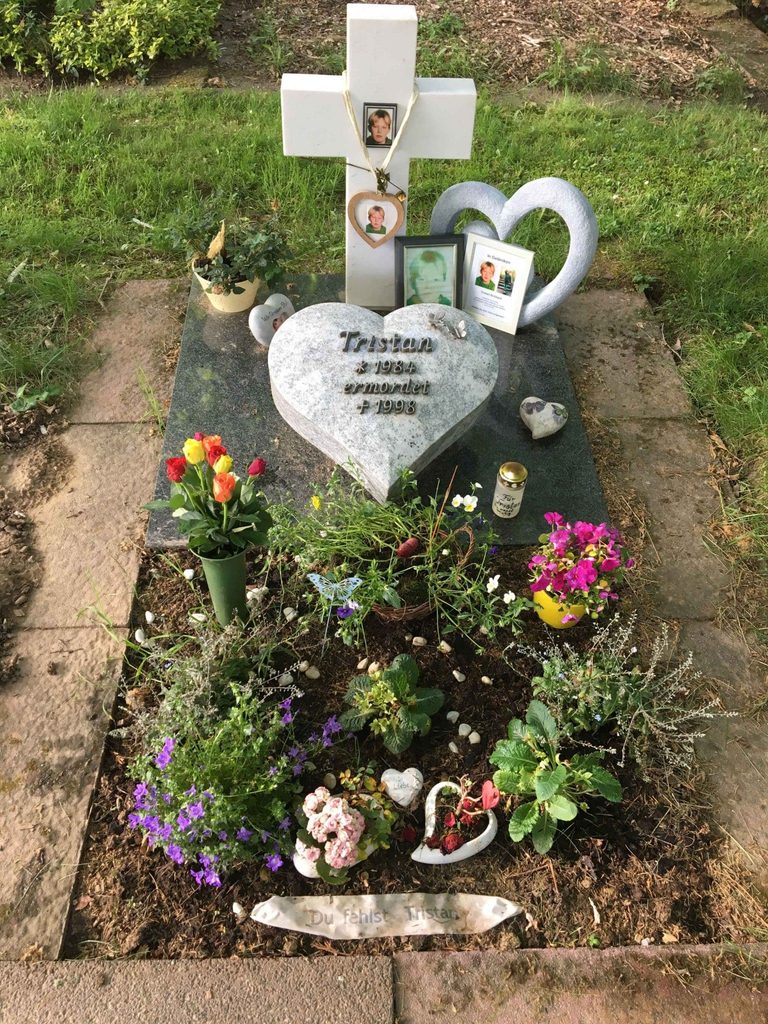
A child had been killed in daylight hours, at a public place – leaving an indelible mark in the collective memory of the town.
And it is one of several such horrifying cases where children were harmed in known locations – like in the case of ten-year-old Jo Anne, who was abducted from a payphone in British Columbia.
Public places are dangerous, but private spaces are not completely crime-proof either. Leigh Occhi, a thirteen-year-old, disappeared from her home and was never seen again. Read all about it to learn what happened.