53-year-old Oakey Al Kite was found dead in the basement of his apartment on May 25, 2004, after his sister requested a wellness check on him. What happened the night before remains unsolved.
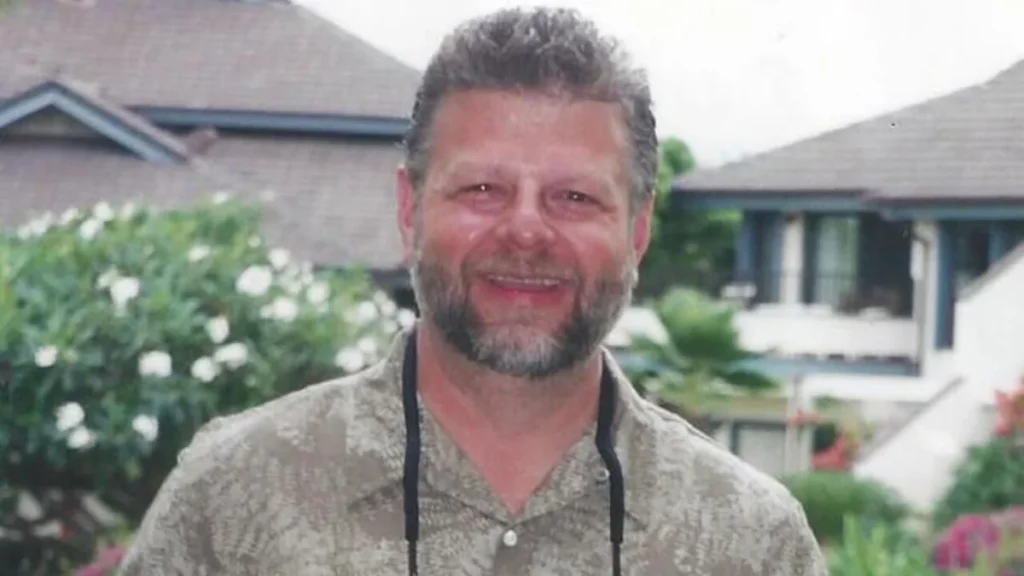
Who Was Oakey “Al” Kite?
Oakey Albert “Al” Kite, Jr. was born in Nash County, North Carolina, on May 7, 1951. He spent most of his childhood in Weldon, a small town in Halifax County, North Carolina.
His father, Oakey Albert Kite, Sr., was a veteran and the co-founder of a regional dog-training enterprise. Al’s mother, Edith Irene Davis Kite, was a homemaker who focused on raising their family.
He was really close to his older sister, Barbara Kite-Hanna. She was his emergency contact despite living on the East Coast. According to Westword, she remembered him as a “very compassionate, very trusting (which may have led to his death); he had a goodness about him.”
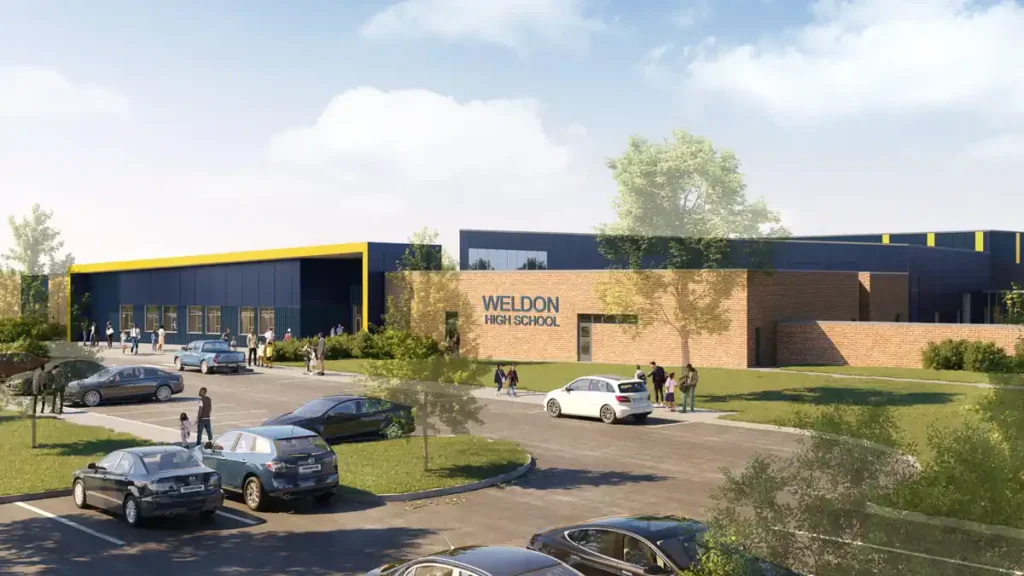
Al studied at Weldon High School. He met his future wife, Gail Kay, there before graduating sometime in the 1960s. He later earned a bachelor’s degree in Business Administration at Barton College in Wilson, North Carolina.
He was 18 when his mother, Edith, passed away in January 1970. He eventually completed college and began his career as an entry-level timekeeper at Stone & Webster Engineering Corporation.
Al started working at the Surry Nuclear Plant near Virginia. By 1972, he had been promoted to accountant and became department head in 1976. In the same year, he married Gail and became stepfather to her daughter, Julie.
Their relationship was smooth sailing at first, but the pressure of his professional life began to catch up with him. He started relocating to multiple domestic sites across Massachusetts, Texas, New York, Nevada, Wyoming, and Tennessee.
During this period, Oakey also went to Algeria for a brief stint as a senior timekeeper. In 1988, the couple split amicably and remained on good terms.
By the 1990s, he moved to California to manage project administration for federal and municipal projects, like the San Francisco International Airport expansion, the Bay Area Rapid Transit (BART) system, and Lawrence Livermore National Laboratory.
Eventually, Stone & Webster transferred him to Aurora, Colorado, in 1998, where he bought a two-story townhouse on South Helena Street. His journey with the company ended in 2002 after layoffs following company restructuring.
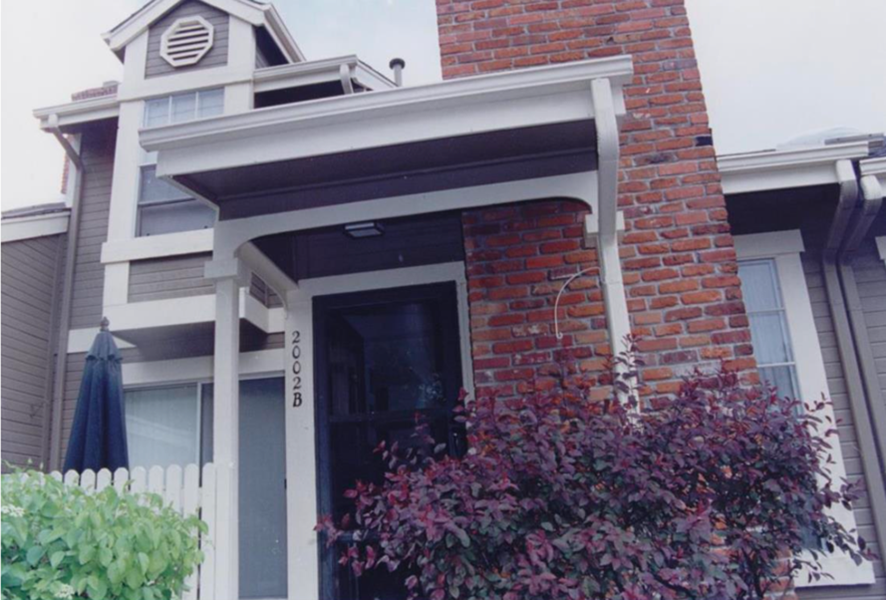
Later that year, Oakey began working as a project manager and consultant for Denver-based firm Carter Douglas. He also rented out the lower basement apartment of his townhouse to pay off the mortgage sooner.
The tenant stayed for the next two years. In early 2004, Oakey met Linda Angelopulos, and the two started seeing each other. By May, he posted classified ads online and offline to find a new tenant.

Robert Cooper responded to the ad and showed up on May 18. He claimed to be an East Coast professional transferring to a local Wells Fargo branch. Al gave him a physical walkthrough of the apartment.
According to Linda’s description, Robert was a Caucasian man in his late 30s to mid-40s. She noted that Robert was approximately 173 cm tall, had darker hair, and walked with a limp while using a cane.
Although he seemed well-behaved, his demeanor was rushed. When Linda wanted to meet the potential tenant, he seemed to be reluctant. In a Denver Post report, Linda remarked about the encounter, saying, “He did not want me to see him at all.”
Robert paid a $500 cash deposit and signed a basic rental lease agreement. On May 19, he called Oakey “Al” Kite to discuss the specifics of his move.
The Chilling Events Leading Up to the Death of Oakey “Al” Kite
On May 22, Al drove Linda to the airport for her trip to Virginia Beach. During the drive, they agreed to date exclusively. That evening, they had a brief yet pleasant phone call.
Around 9:30 pm, Robert came to the townhouse, pretending to move into the basement apartment. He ambushed Oakey “Al” Kite from behind, catching him off guard.
Al had been dragged to the basement bedroom by 11:30 pm. Robert hogtied him with 40 feet of rope and used a specialized “torture kit” to inflict physical trauma for several hours.
Al was repeatedly beaten with multiple blunt objects. He also suffered a laceration from a massive blow to the back of his head. His feet showed massive contusions and deep bruising from the prolonged torture.
Oakey “Al” Kite sustained 11 to 22 separate stab wounds from knives taken from his own kitchen. According to medical examiners, these wounds were given to maximize pain rather than to take his life.
Robert almost decapitated Al with a fatal slash to the neck. By 2:00 am, he began cleaning up the basement to cover up the crime. He put the bindings, clothes, and other tools in various plastic bags.
He dunked the murder weapons, Al’s house keys, and a drinking glass in a chemical bath to remove DNA evidence. He also took a shower and stole Oakey “Al” Kite’s clothes, wallet, and pickup truck.
Around 3:45 am, he left the townhouse in Al’s silver pickup truck. He drove to a Wells Fargo ATM wearing a mask and surgical gloves and used his debit card to withdraw $1,000 in cash.
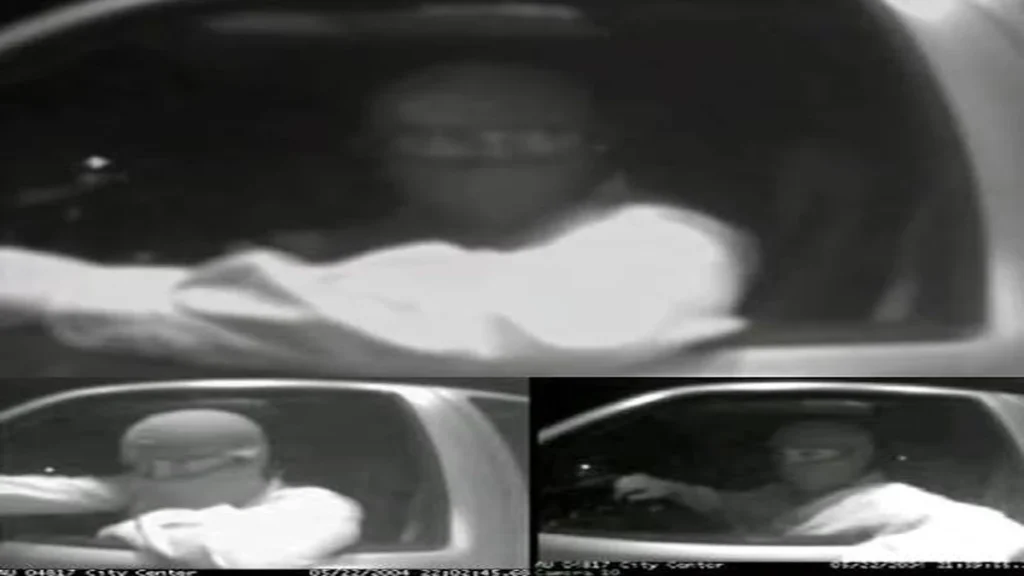
Robert returned to the neighborhood and abandoned Oakey “Al” Kite’s truck a few blocks from his house by 5:00 am. He walked to a nearby payphone booth to drop his phone and vanished into the morning.
Robert returned to the neighborhood and abandoned Oakey “Al” Kite’s truck a few blocks from his house by 5:00 a.m. He walked to a nearby payphone booth to drop his phone and vanished into the morning.
That evening, Linda called Al, but his home and mobile numbers went straight to voicemail. On Monday, May 24, Oakey “Al” Kite didn’t show up for work without prior notice, which was completely out of character for him.
His co-workers at Carter-Douglas repeatedly called his personal and home numbers but couldn’t reach him. Eventually, they contacted his sister Barbara Hannah, listed as his emergency contact. When Hannah couldn’t reach him either, she contacted the Aurora Police Department.
She requested an official welfare check by 11:00 am. Authorities went straight to his townhouse and rang the doorbell but received no response. By 3:30 pm, officers breached the entrance to secure the premises.
Everything looked normal until officers discovered the kitchen sink filled with a bleach solution with knives, a knife-honing steel rod, a drinking glass, and keys submerged in it.
Eventually, officers stepped into the lower basement bedroom where Al lay dead. According to My Dark Path, Detective Thomas “Tom” Sobieski, who was among the first to encounter the crime scene, described it as “the worst I’d ever seen.”
Investigation into the Murder of Oakey “Al” Kite
Aurora Police Department opened Homicide Case No. 04-25362 to investigate Oakey “Al” Kite’s murder. They assigned the case to Officer Sobieski. Barbara was later informed of the circumstances surrounding Al’s death.
By evening, Al’s family had shared the devastating news with Linda. According to Denver 7, she was in disbelief upon hearing the news, saying, “We’re going to find him. They’re going to find him. I just know it. I have hope. He was a very nice guy, and he would give the world to anybody who asked.”
Officers and medical examiners noted that Robert had spent hours cleaning the blood off the basement walls and floors before fleeing the scene. Around May 25th, forensic technicians discovered a trace of unknown male blood on the basement stairwell walls.
The blood profile was uploaded to the FBI’s CODIS database, but it yielded no matches. The detectives then attempted to trace Robert using his rental application information.
During the investigation, Detectives found that Robert’s Social Security number belonged to an 80-year-old woman in Indiana, while the address on his application was traced to a Denver elementary school. His listed reference also led to a dead end.
In June 2004, detectives traced the digital footprint of Robert’s burner phone back to a 7-Eleven store near Colorado Boulevard. However, after obtaining a warrant for the surveillance footage, they learned the tapes were deleted after 30 days.
Even after discovering the $1000 theft from Al’s bank account, Officer Sobieski remained unconvinced that robbery was the motive for the crime. According to Denver7, he stated, “He’s a very thorough psychopath killer. We don’t think robbery was the motive; we think that the suspect was looking for someone to kill.”
Detectives identified that Robert used the same burner phone number to inquire about multiple other properties. One of the property owners even remarked that Robert spoke with a subtle Romanian accent
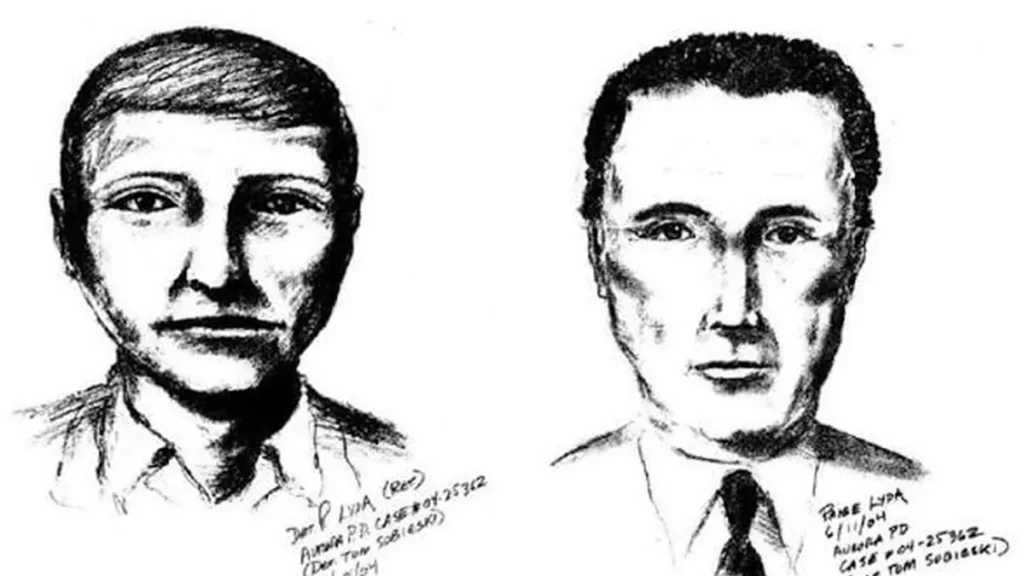
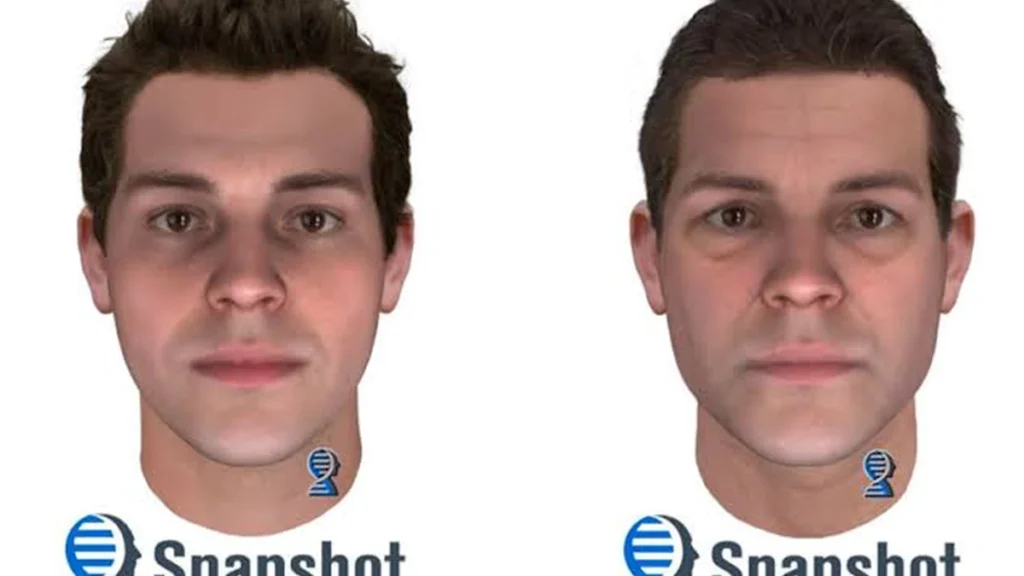
The FBI officially took the case under the Violent Criminal Apprehension Program (ViCAP) database in 2005. Immediate biometric data generated no leads. By December 11, 2017, the Aurora PD officially released Robert Cooper’s composite image, generated through DNA phenotyping by Virginia-based Parabon NanoLabs.
In 2019, Oakey “Al’ Kite’s case regained attention after it was featured on the Oxygen Network television series The DNA of Murder with Paul Holes. According to Oxygen True Crime, Detective Sobieski was also stunned by the case’s excruciating details.
He remarked, “The bottoms of his feet were up in the air with the bindings, and they were bruised. The coroner felt the torture went on for several hours; some of the injuries were things I’d never seen before, like a knife into the eye, into the ears, down through the shoulders, just a crazy amount of torture.”
The behavioral analysts speculated that Robert may have received military or torturer training abroad, since some of the methods used in the attack resembled those associated with extremist factions like Turkish Hezbollah.
In 2022, the composite image of Robert was updated to show what he might look like in his 50s or 60s. As of October 2026, the FBI’s ViCAP unit and Aurora Cold Case detectives continue to investigate the case using investigative genetic genealogy.
For more bone-chilling unsolved mysteries, dive into the stories of Molly Bish and Frauke Liebs.