

“A horrific crime strikes three innocent children in a down-and-out Siberian steel town. But the townspeople are too preoccupied with their own struggles to express alarm,” The Moscow Times reported on 14th June, 1997.
The ‘steel town’ where this massacre took place, Novokuznetsk, is an industrial city in southwestern Siberia, home to one of Russia’s largest steelmaking centers.
Throes of Struggling Town
By the late 1990s, Novokuznetsk’s citizens were dealing with the consequences of a country in the throes of a painful transformation.
The Soviet Union had collapsed in 1991, and the transition to a market economy had left much of the population struggling to make ends meet. Given the circumstances in which the adults of this town themselves were, it is hardly difficult to imagine the plight of their children.
Vanora Bennett’s report in The Moscow Times described a city struggling with poverty, unpaid wages and widespread social neglect. Homeless children lived in cellars, begged on the streets and sniffed glue. Many kept their distance from adults, whom they associated with drunkenness, violence or trouble with the police.
It was among these vulnerable children and young people that Alexander Spesivtsev, later dubbed ‘The Siberian Ripper,’ found his victims.
A Bitter Mama’s Boy
Alexander Nikolayevich Spesivtsev was born on 1 March 1970 and raised in an apartment on Pionerskiy Prospekt in central Novokuznetsk, the largest city in Kemerovo Oblast, in Siberia, in the former Soviet Union.
According to a 2024 investigation by the Russian regional publication NGS42, he was born at home, and his birth was registered only two years later.
In 1974, the Spesivtsevs moved into an apartment in a nine-story building at 53 Pionersky Prospekt, in the very center of Novokuznetsk. Years later, it was there that Spesivtsev would commit his atrocities.
From birth, Spesivtsev had a rather unusual relationship with his mother, Lyudmila Spesivtseva, who worked at a nearby school and the prosecutor’s office.
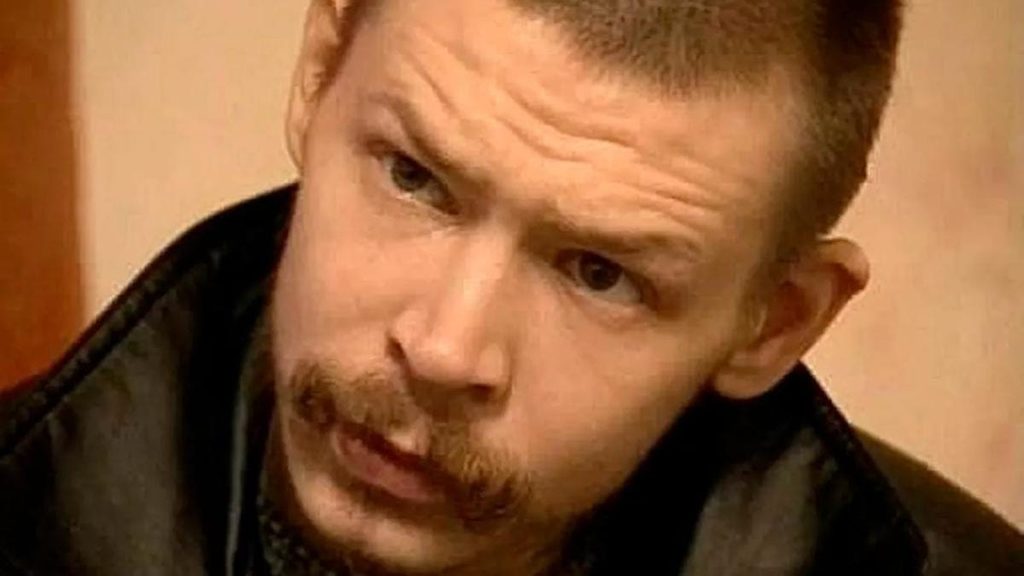
Reports describe Spesivtseva as being very affectionate toward her son, even saying she was ‘his only true friend’. But that wasn’t the unusual part.
Apparently, Lyudmila would bring home photographs of corpses from work, and she and her son spent hours gazing at them.
“He was raised under an overprotective mother, who considered him “weak and vulnerable.” She didn’t particularly indulge his whims, but when he misbehaved, she always took her son’s side, actively defending him, believing he was indisputably right,” his case file states.
Spesivtsev’s father, on the other hand, was an abusive alcoholic who had abandoned the family.
Spesivtsev’s in School
A schoolmate, journalist Rostislav Bardokin, recalls a particularly compelling incident involving him.
“He [Spesivtsev] identified some boys who were influential in the class and could potentially pose a threat to him. To gain their favor, he handed out Makarov pistol cartridges to the boys, real ones he’d gotten hold of somewhere,” he said.
He added that, rather than spending breaks with other boys, Spesivtsev often went to his mother’s office, where she worked at the same school.
During his final year of school, in 1985, Spesivtsev was caught stealing for the first time. He was caught twice more in 1987 and 1988, following which he was detained and sent to pretrial detention.
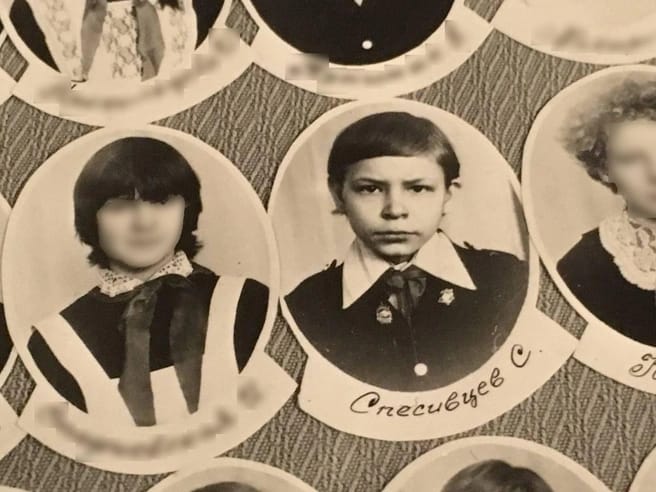
In 1988, during a routine court hearing, Spesivtsev reportedly began to bang his head against the bars and scream, “I won’t go to jail! I don’t want to! I don’t want to!” This prompted a forensic psychiatric examination, which found him ‘insane,’ and he was diagnosed with schizophrenia.
Following this, Spesivtsev was sentenced to compulsory treatment at the Novokuznetsk Psychiatric Hospital, where he remained from October 1988 to March 1989, after which he escaped and lived with his mother, hiding from hospital staff and the police.
Even during his time at the hospital, he apparently beat weakened patients, took medications that were not prescribed to him, and was ‘deceitful and devious’.
The Siberian Ripper’s First Victim
Spesivtsev’s first known victim was a teenage girl whom he met in 1991. Kommersant, reporting on his October 1997 trial, identified her as Evgeniya Guselnikova, or Zhenya, and noted her age as 16.
According to this report, Guselnikova frequently visited Spesivtsev’s apartment before failing to return home one day. Her family reported her missing, but they could not find her.
Months later, Lyudmila called an ambulance, whose medical personnel discovered Guselnikova alive but in a profoundly deteriorated condition, suffering from extensive wounds and severe physical neglect.
Her head had been partially scalped, with bedsores, festering wounds, and cigarette burns. The girl had lost almost a third of her body weight. Soon after, she succumbed to her injuries.
NGS42’s report adds that Spesivtsev had repeatedly beaten the girl on previous occasions as well. On one occasion, she had to be hospitalized with a head injury, and a criminal case was opened against him for assault.
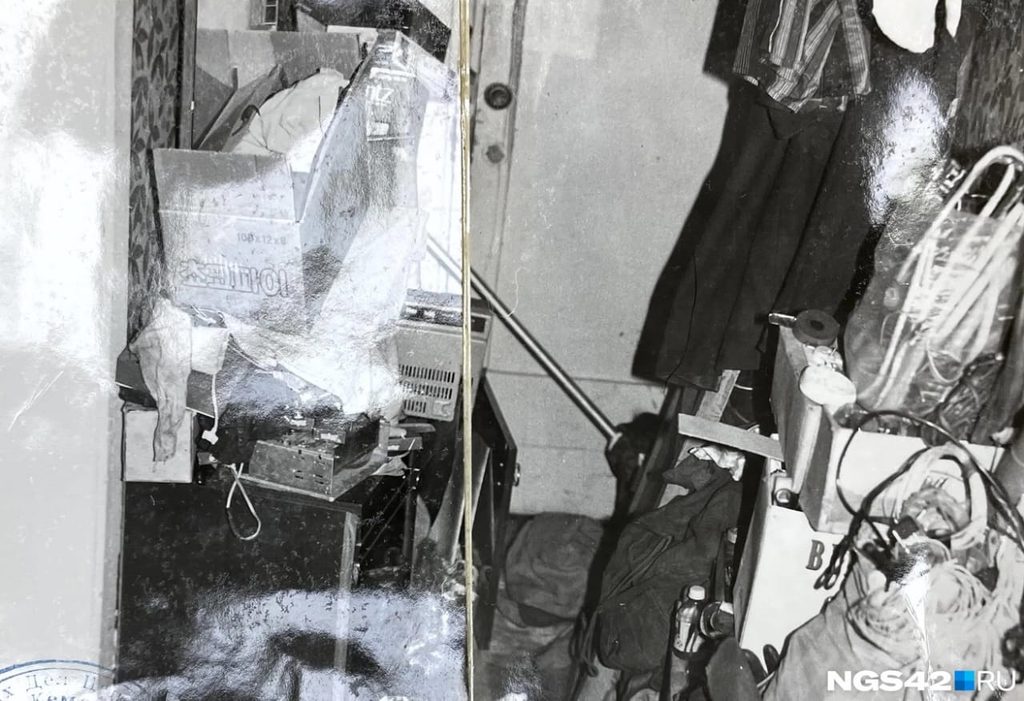
When her body was eventually discovered on 13 June 1991, investigators added a murder allegation.
Spesivtsev denied responsibility, claiming that she had arrived at his apartment already injured.
Investigators arrested Spesivtsev on 27 June 1991. A forensic psychiatric examination followed, and doctors recommended compulsory psychiatric treatment at a specialized hospital in Oryol. As a result, the case did not immediately lead to a prison sentence.
Following further psychiatric assessments and compulsory treatment, on New Year’s Eve, 1995, Spesivtsev was declared sane and discharged from the hospital, allowing him to go free.
In early February 1996, he encountered a woman named Elena Trunova while visiting a neighbor. As he explained, he had met her at a party the previous evening, and as he was about to leave, Spesivtsev invited her to come over to his residence.
Alone with her, he tried to become intimate, much to Trunova’s discomfort.
“After we had sex, something didn’t sit right with her, and she started swearing at me. I didn’t like it, I got angry, and decided to scare her. I went into the kitchen, picked up a kitchen knife from the table, went back into the bedroom, and stabbed her in the chest and stomach,” Alexander Spesivtsev testified during interrogation.
The Killing Spree Begins
Elena died from her wounds, and Spesivtsev reportedly asked his mother to remove the body once she returned. He claimed that he went to bed soon afterward, and when he woke up, neither his mother nor the victim’s body were home.
According to investigators, either Alexander, his mother, or both of them dismembered the body that evening, with Lyudmila Spesivtseva then removing the remains from the apartment piece by piece and burying them in a nearby vacant lot.
Macabre as this sounds, this was only the beginning of Spesivtsev’s killing spree.
Spesivtsev later confessed to investigators to 15 murders he’d committed between March and August 1996. Among the victims were 11 minors, consisting of both boys and girls.
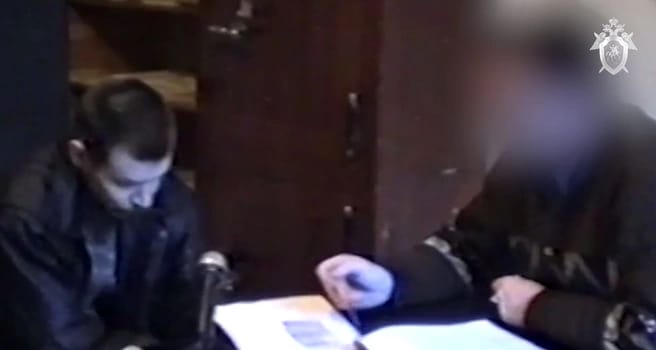
He described them as behaving like hooligans, allegedly smashing the windows of a kiosk with a bottle and sniffing glue.
According to his account, the boys approached him to ask for cigarettes. After a brief conversation, he invited the group back to his apartment.
Once there, Spesivtsev claimed he began lecturing the children about life, but they dismissed his interference, telling him their behavior was none of his business.
Angered by their response, he allegedly seized a knife and killed the five boys. He subsequently killed the two girls, claiming that he had learned they were ‘prostitutes’ and that this had provoked his disgust.
Interestingly, Spesivtsev did not specify that his mother had disposed of the bodies in this case. Instead, he vaguely repeated the trope of his mother coming to the apartment and discovering the bodies, after which Spesivtsev would go to bed or leave the apartment; when he woke up or returned, nothing was there.
It is believed Lyudmila would dispose of unwanted remains by throwing them from buckets into the Aba River, late at night, which is also supported by the fact that gangrenous severed heads, torsos, and arms of unidentifiable children were found washed up on the banks of the River Aba.
Spesivtsev allegedly never asked his mother where the bodies had gone.
The Bait
In the summer of 1996, Alexander asked his mother to find him a ‘girlfriend’, according to his criminal case file.
On 24 September that year, Lyudmila Spesivtseva encountered three schoolgirls near a shop in Novokuznetsk who were patients at a local hospital and had gone out to buy batteries for one of their music players.
Lyudmila approached them and asked them to accompany her to her apartment, ostensibly to help her open the door.
Of course, no assistance with the lock had been provided. After bringing the girls upstairs, Lyudmila knocked on her son’s apartment door. Once inside, she forced the schoolgirls into a room.
Spesivtsev stabbed one of the girls to death. According to the account given by the sole survivor, she’d attempted to fight back with a bottle, hoping to escape, but struck him on the shoulder instead of the head. He then allegedly ordered the two surviving girls to dismember their dead companion, handing them a saw and forcing them to carry out the task.
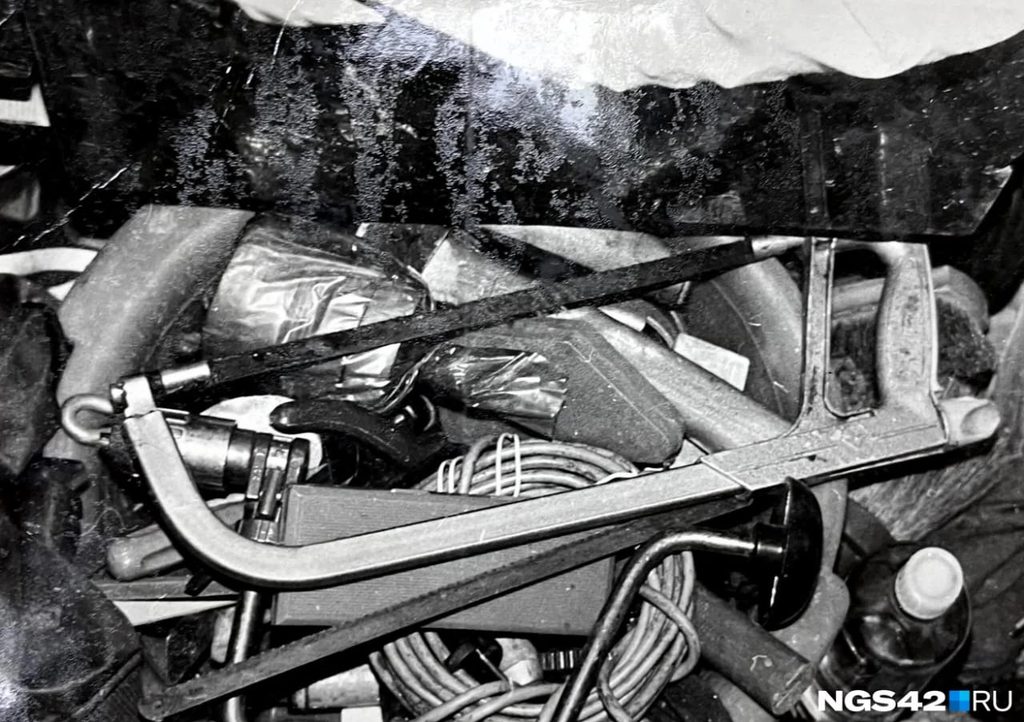
In his initial testimony, Spesivtsev claimed that his mother had deliberately brought the girls to the apartment at his request, knowing that he intended to harm them. Lyudmila denied this.
Soup Made from Human Flesh
Much of what occurred behind those fatal doors is known from the testimony of the only victim who had survived for long enough to be found, Olga Galtseva.
Recounting the ordeal, she described how Alexander, who had introduced himself to the victims as Andrei, served her soup allegedly made from the flesh of their murdered companion, Katya.
“He fed us soup made from Katya’s flesh, although I didn’t see whether he ate any himself. The old woman had cooked it. She knew where Andrei had obtained the meat and what it was. I also saw her leave with a bag containing body parts, which she carried away to an unknown destination. They never discussed what she did with them. From their conversations, however, I gathered that Andrei had paid her for bringing us to him. He always addressed the old woman simply as ‘eh’ and never called her by any other name,” she recalled.
Two and a half weeks later, Spesivtsev killed a second girl and ordered the only survivor at the time, Olga Galtseva, to saw up her body as well.
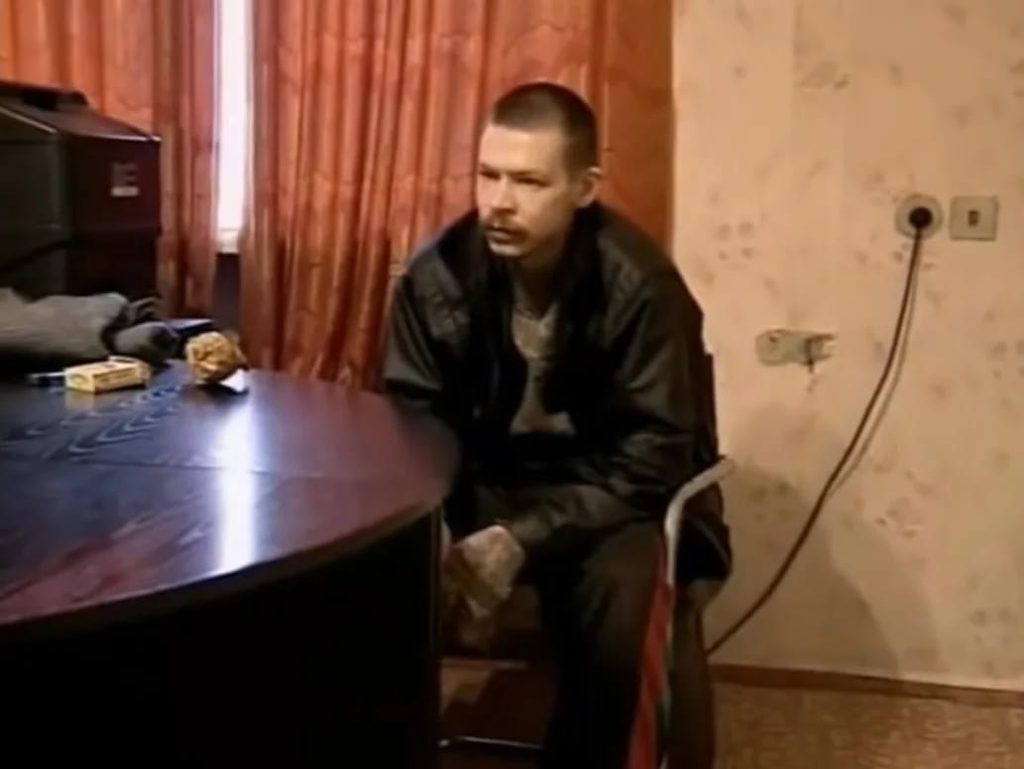
In her testimony, Olga recounted the escalating violence she and her companion, Marina, endured. Andrey repeatedly assaulted and abused them, eventually leaving Marina critically injured after a brutal beating. Despite the survivor’s attempts to revive her, Marina died.
Andrei (Alexander) then left her body in the apartment for three days before ordering the surviving girl to dismember it and dispose of the remains. The testimony also describes the continued sexual violence and confinement the survivor suffered during her captivity, in harrowing detail.
The Last Survivor
At this point, Spesivtsev decided to get rid of his final victim, Olga Galtseva.
Spesivtsev first electrocuted the schoolgirl, then stopped feeding her, and finally stabbed her in the stomach. Despite all the brutality, the girl remained alive.
By an extraordinary stroke of luck, the very next day, October 24th, utility workers knocked repeatedly on Spesivtsev’s door and asked him to open it so they could check the heating system.
When he refused, they said they’d return with police force and break the door if necessary, which is exactly what happened.
While they broke down the door from the outside, Spesivtsev went out onto the balcony and used the fire escape to flee, though they caught him only two days later.
When utility workers and police finally entered the apartment, to their utmost horror, they found human remains scattered throughout the ransacked premises, along with a severely injured schoolgirl who was still alive.
She was rushed to hospital, but despite the doctors’ efforts, she died on 28 October 1996. Before her death, however, she managed to recount the horrors she had witnessed, providing investigators with crucial testimony that would prove instrumental in building the case against Alexander Spesivtsev and his mother.

Olga’s Testimony
In her testimony, the surviving girl, Olga Galtseva, recalled that on the afternoon of 24 September 1996, an elderly woman approached her, Katya, and Marina near a row of kiosks. Recognizing her, the girls agreed to help her open her apartment door and followed her to a ninth-floor flat.
Instead, they were confronted by a man who introduced himself as Andrei and ushered them inside, accompanied by a large black dog to scare them further. When the girls begged to leave, he refused, saying someone would have to come and examine them first.
Realizing they were in danger, Katya (one of the three girls) suggested striking him with a bottle and escaping. When Andrei returned to the room, she attempted to do so, hitting his shoulder rather than his head.
He retaliated by stabbing her repeatedly before strangling her. The surviving girl recalled that the elderly woman briefly entered the room and asked what was happening, but Andrei ordered her away and threatened to do the same to her.
The girl later testified that, on the second day of their captivity, Andrei photographed the three of them and threatened to send the image, smeared with blood, to her mother. By then, Katya was dead, and the surviving girls had been forced to help dismember her body.
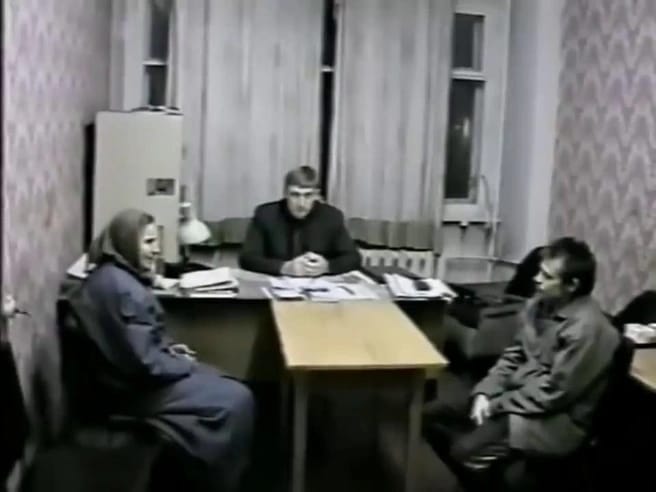
Alexander and Lyudmila denied ever feeding their victims human flesh. Nadezhda Spesivtseva, Alexander’s sister, claimed she was in another room the entire time, saw the girls only once, then left the apartment, and knew nothing about what happened to them.
She was never charged.
The Trial and its Aftermath
Spesivtsev initially confessed to killing around twenty children and adolescents, but later retracted his admissions.
According to Kommersant’s reporting, he claimed that he wanted to turn the trial into a spectacle and hoped that someone would eventually write a book about him.
In 1997, he was sentenced to 10 years in prison for the murder of three girls, and at that time, an expert examination found him to be of sound mind. Based on the evidence found, he is suspected of having committed over 80 murders starting as early as 1991. However, he was only convicted of four of these murders.
In 1999, a fresh psychiatric assessment by Moscow’s Serbsky Institute concluded that Spesivtsev was legally insane in connection with the later killings.
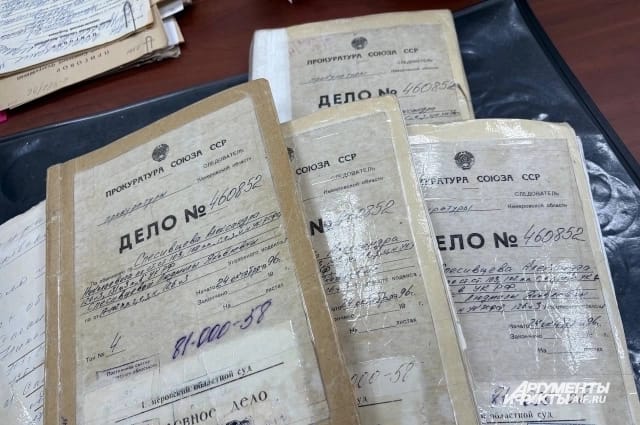
Spesivtsev’s mother, Lyudmila, was charged with the kidnapping of three girls and complicity in their murder under aggravating circumstances in a joint criminal case with her son. She was found guilty in 1999 and sentenced to 13 years in a general regime penal colony.
After her release, she and her daughter, Nadezhda, were spotted near the same apartment on Pionersky Prospekt in Novokuznetsk, sparking outrage among local residents. The women decided not to live there, took their belongings, and soon moved out.
Alexander Spesivtsev remains confined to a specialized psychiatric hospital. In May 2024, the Kemerovo Regional Court found him responsible for fifteen additional murders committed in 1996, eleven of the victims being minors, and ordered that he continue to receive compulsory psychiatric treatment.
A former staff member interviewed by V1.ru described Spesivtsev as outwardly calm and polite, adding that he repeatedly asked to be released. The same employee said he doubted he would ever leave the institution.
AIF Kuzbass very recently investigated rumors that Lyudmila Spesivtseva had died at the age of 87 after her records disappeared from Russia’s bailiff debt database, but these rumors haven’t been confirmed yet.
For other true crime stories involving serial killers or unsolved deaths, read our articles on Stephen Griffiths and Surinder Koli.