

It was February 19, 1983. 10-year-old Jo-Anne Pedersen, her elder sister, Anna-Lise, and her 14-year-old cousin spent their Saturday at the Chilliwack Mall in British Columbia.
On their way back to the family townhouse in the Fraser Valley community, a minor argument broke out between Jo-Anne and 11-year-old Anna-Lise.
Angered by the dispute, Anna-Lise and their cousin ran ahead, reaching the house first. As a prank, they locked the front door behind them, leaving Jo-Anne stranded outside.
It was 8.05 pm and a cold, heavy rainstorm began to pour over Chilliwack. Shivering and crying, Jo-Anne walked two blocks to the Penny Pinchers convenience store at the corner of Watson and Vedder Roads.
She walked inside to talk to the store clerk, clutching a phone directory from the store and a few coins. The clerk directed her to use the payphone outside, and Jo-Anne stepped outside to the corner of the building.
Because she did not have enough money or the exact number, she told the operator to manually connect her to the Chilliwack Legion Hall. A few minutes later, her mother, Angela, was pulled away from the birthday party she was attending to answer the phone.
Jo-Anne explained, through tears, that she was locked out in the rain and needed a ride. While Jo-Anne was still talking, a tall man wearing a sports jacket approached and took the receiver from Jo-Anne.
He spoke directly to Jo-Anne’s mother. Angela later recalled him saying, “You’d better get here within half an hour, or I’m phoning the police.” He then hung up the phone.
Inside the Chilliwack Legion Hall, Angela was panicked by the man’s warning and grabbed her husband. They immediately rushed out to their car to drive to the Penny Pinchers store.
As they were driving back, passing motorists and local witnesses noticed the brightly lit glass payphone booth outside the convenience store. They later reported seeing a young girl standing inside the booth with a tall man in a sports jacket.
By 8.40 pm, Jo-Anne’s parents were at the corner of Watson and Vedder Roads. The phone booth was empty. Jo-Anne and the tall man were gone.
RCMP Launches Massive Search
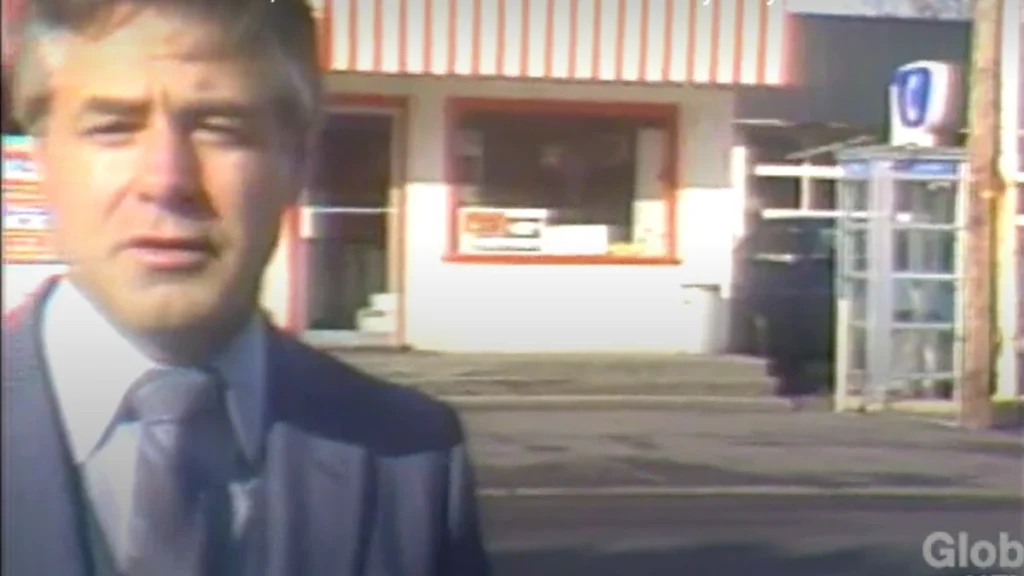
Angela rushed from their vehicle into the Penny Pinchers convenience store. Assuming her daughter had gone inside to escape the rain, she asked the store clerk if Jo-Anne was waiting inside.
The clerk answered that she was no longer there. Visibly panicked, both split up and began scouring the parking lot and the building’s perimeter. They checked behind the store, trash bins, and around the payphone booth, yelling Jo-Anne’s name into the rain.
Thinking their daughter may have walked back home after the call, her parents drove two blocks back to their townhouse complex. They burst through the door demanding to know where Jo-Anne was, only to find Anna-Lise and her cousin waiting inside.
The girls confirmed that Jo-Anne hadn’t returned to the house after they locked her out. Without sparing a moment, Angela and her husband got back into their vehicle and started driving up and down Vedder Road and Watson Road.
They scanned the dark alleyways and ditches as well as nearby storefronts, hoping to spot her pink jacket in the storm. Realising she was nowhere to be found, the parents contacted the Chilliwack Royal Canadian Mounted Police.
As Jo-Anne was only 10 years old and a strange man had issued an ultimatum to her mother, the Chilliwack RCMP bypassed the routine intake protocols and upgraded the case to a child abduction investigation.
Mounties immediately set up roadblocks at the major intersections leaving Chilliwack, at the Vedder Crossing neighbourhood, and on the highways leading out of the Fraser Valley. Officers stopped all cars to look in the back seats and trunks, looking for a girl in pink.
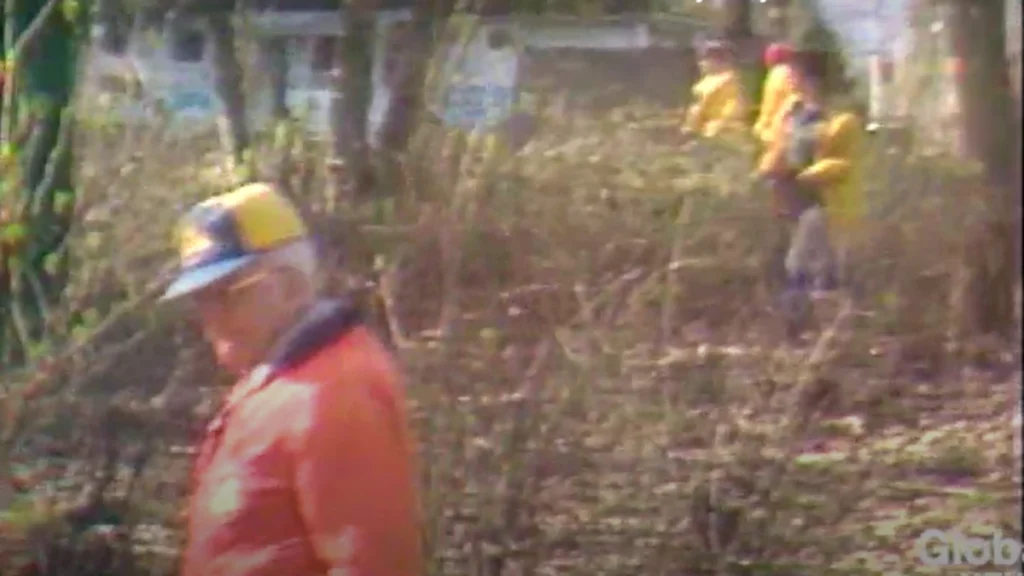
Officers swarmed the Penny Pinchers store, interviewing the clerk to confirm the timeline and collect immediate information regarding anyone who matched the description of the tall man in the phone booth.
By the second day, RCMP requested backup from Camp Chilliwack, a large Canadian Armed Forces base located next to Vedder Crossing. Armed forces and RCMP officers formed tight grid lines to search the surrounding woods and rural fields.
Helicopters equipped with spotlights also scanned the waterways. RCMP tracking dogs were brought directly to the payphone to get Jo-Anne’s scent.
They tracked her around the perimeter of the convenience store parking lot, but the trail ended at the edge of the asphalt. This was a strong indicator she got into a car, possibly against her will.
A Distressing Phone Call And the Phone Booth Guy
Two weeks into the investigation, Jo-Anne’s grandmother, Mary Riley, received a call at her home. When Mary picked up the phone, a heavy male voice said, “Listen to this.”
It was followed by the sounds of a young child sobbing hysterically into the receiver. Mary firmly believed this voice belonged to her granddaughter, then the line went dead.
This detail alarmed investigators because Mary’s home phone number was unlisted and Jo-Anne was one of the very few people who might have known the private number by heart.
It either meant the abductors got the number directly from the girl, or the caller was someone deeply embedded in the family’s personal circle. The lead investigator, Sergeant David Ayres, took the call seriously.
Because of the secrecy surrounding the grandmother’s number, the authorities ruled out the possibility it was a random prankster. They also concluded the call was authentic, providing proof that Jo-Anne was still alive and being held captive.
Despite the significance of the lead, 1983 telecommunications technology was largely limited. As the caller hung up quickly, it was practically impossible to trace the geographical origin of the signal.
Because the call was a dead end with no follow-ups or ransom demands, the RCMP poured their resources into hunting down the man at the phone booth, believing he was the key to the girl’s disappearance.
Based on the description provided by the store clerk, locals suspected that the man may be an army combat engineer, or sapper, stationed at the military base. Investigators checked all personnel at the base, but every lead hit a brick wall.
With no physical evidence or vehicle descriptions or signs of Jo-Anne’s body, the initial task force assigned to the case was downsized. The file was then moved to the RCMP’s cold case repository.
Effect On Family Dynamics
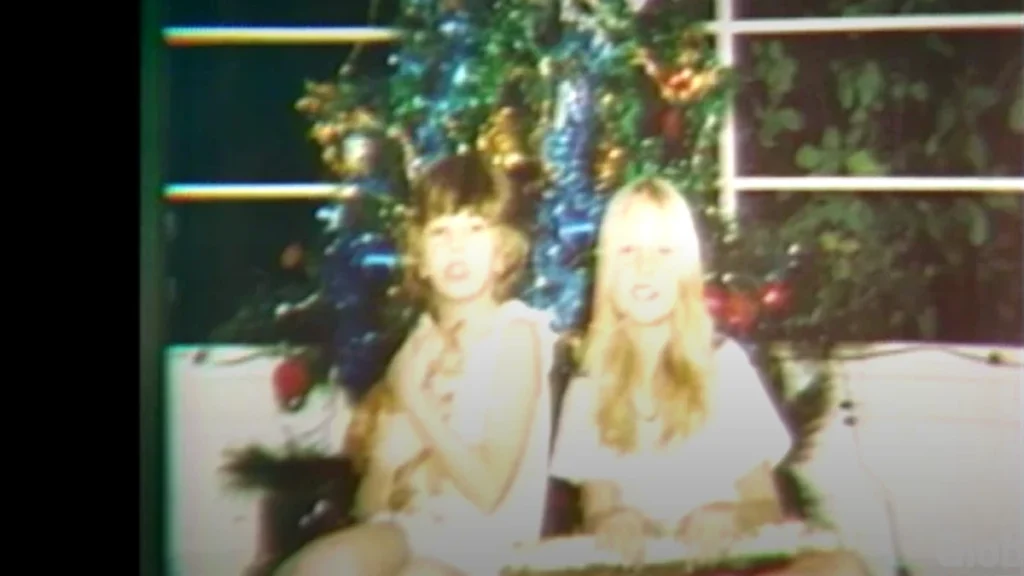
Jo-Anne’s disappearance had a profoundly negative effect on the family dynamics. Angela entered a state of intense flight.
Jo-Anne’s biological father, Leo Pedersen, continuously tried to keep in touch with his remaining daughters after the abduction because they kept moving so much. He told local journalists, “I tried very vigorously to track them down, but what I’m told is that she (Angela) moved away every one or two months.”
Leo Pedersen was already divorced from Angela at that point, but the abduction and subsequent frequent moves severed his ability to co-parent or maintain a functional relationship with Anna-Lise and her other sister, Louise.
Though Angela’s husband, who preferred to keep his identity hidden throughout the investigation, was initially present as they searched by Jo-Anne immediately after she disappeared, his presence gradually faded in the subsequent public appeals and re-enactments.
The abduction of Jo-Anne also made Anna-Lise and Louise grow up under a cloud of extreme hypervigilance, with their mother paralysed by the fear that another child could vanish within an instant.
Media Reenactments
Jo-Anne’s name mostly disappeared from the news for the next twenty years. In 2004, though, technological updates allowed the RCMP to release age-progressed photographs of what Jo-Anne would look like as an adult.
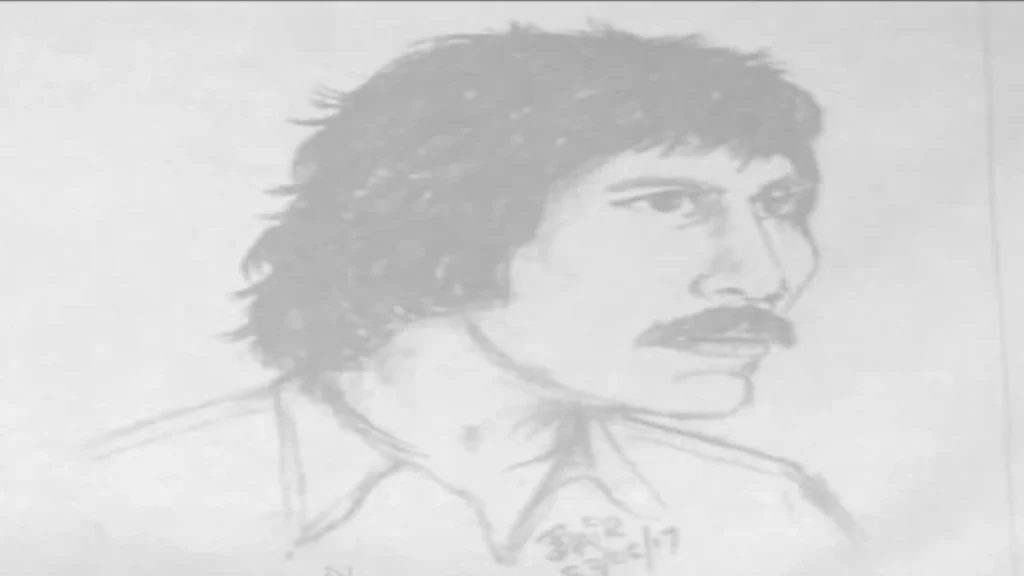
In February 2008, ahead of the 25th anniversary, Chilliwack RCMP released a composite drawing of the man from the phone booth and liaised with Crimestoppers on a video re-enactment of that Saturday night.
Retired Global BC crime reporter John L. Daly, who covered the case, described the footage as unsettling years later.
“It grabbed at everybody’s heartstrings — it was a very, very troubling case,” recalled the retired Global BC crime reporter. “It’s like something out of a movie, and yet it’s real.”
Alongside the reenactment, RCMP released a direct appeal from Angela addressed to the man in the booth. “Please come forward; that would really relieve me of so much grief. Please come forward. As a mother, I’m pleading for you to come forward; please do that for me.”
The campaign worked to the extent it generated fifty new tips and, more significantly, an anonymous letter that investigators came to believe had been written by the man from the booth.
By this time, police had shifted their focus away from the individual and no longer treated him as a suspect. They believed he might have actually been trying to help her.
The Letters
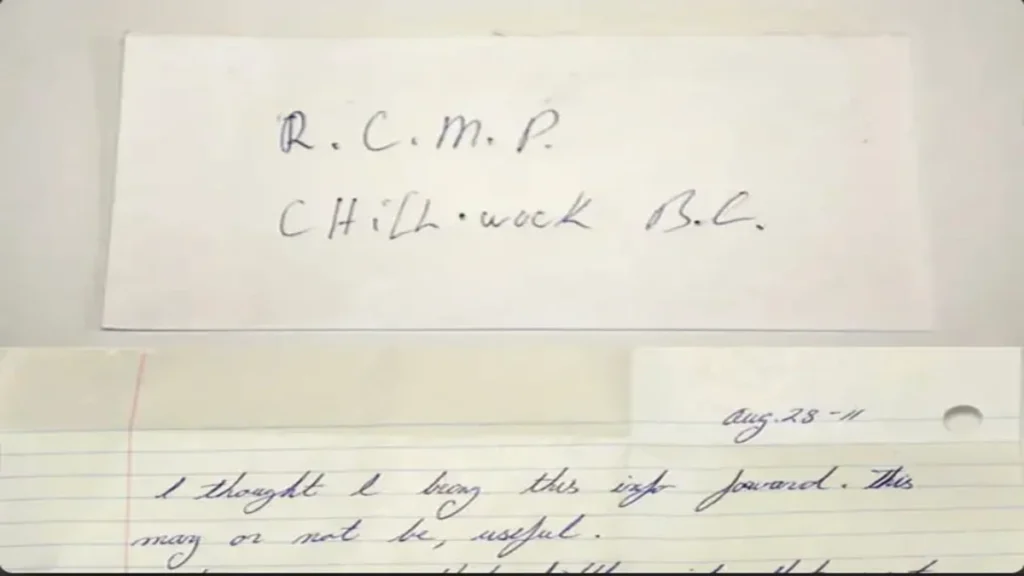
The first anonymous letter was received by the Chilliwack RCMP in 2008, in response to the television broadcasts and re-enactment video. In it, the author claimed to be the mystery man from the phone booth who had been seen with Jo-Anne before she vanished.
This letter contained specific details of the case confirming a sequence of events from the Penny Pinchers store. It aligned with what Jo-Anne had heard over the phone and what passing motorists saw in the rain.
The letter also explained that he was entirely innocent and that he was just a passerby trying to look out for a child in the rain. He allegedly stayed out of concern but eventually walked away to continue his night, leaving her alive and well.
Because the letter provided believable insider context, the Chilliwack RCMP credited it as well. They believed it proved the phone booth man was still alive, living in the Fraser Valley and actively following the news coverage.
Three years later, on August 28, 2011, a second anonymous letter was delivered to the Chilliwack RCMP. Investigators would not detail the contents but confirmed it had information significant enough to act on.
Corporal Tammy Holingsworth, who was handling the file for the Upper Fraser Valley RCMP, said investigators believed the author was a genuine witness to the events leading to the girl’s disappearance.
During an official Upper Fraser Valley RCMP news release, Holingsworth stated, “It is imperative that the police speak to this witness as soon as possible.”
Investigators were unable to confirm whether the 2011 letter came from the same individual who wrote the 2008 letter. What they knew was that whoever wrote it had specific information worth pursuing.
Caught between the fear of exposure from the broadcasted handwriting and the weight of the 30th anniversary media campaign, the author decided to mail a third letter in 2012. This was a continuation to the narrative providing more details about the mystery man.
RCMP Sergeant Graham de la Grorgendiere, working the tip line, told reporters the department was following up on what had been received but had not broken the case. It generated calls, but the person behind the letter remained anonymous.
For Angela, these developments came after decades of not knowing. She said in a videotaped statement around the same time as her plea, “As a mother, I have suffered very much through the years. I really miss Jo-Anne.”
New Information After Decades
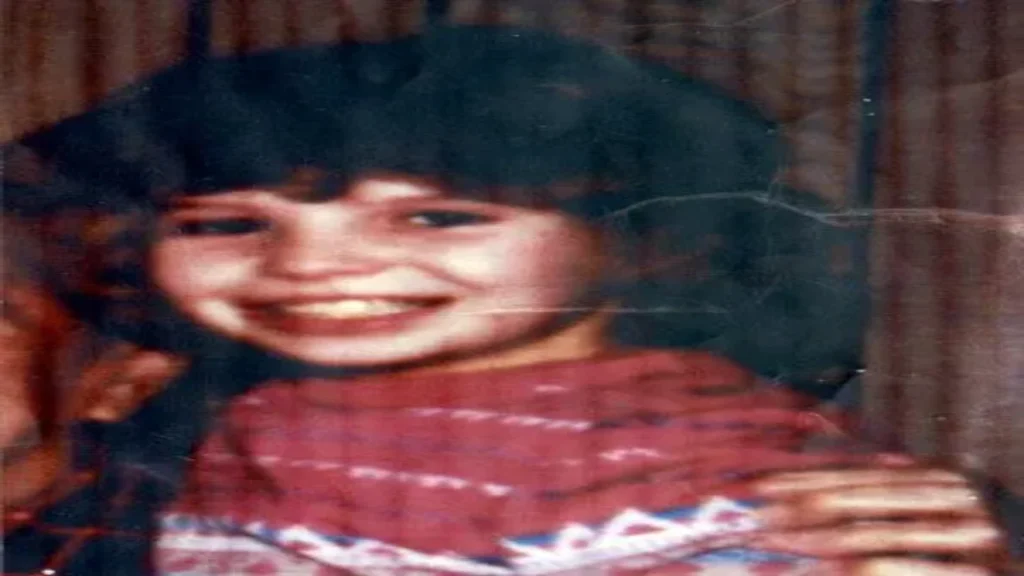
By the 30th anniversary in 2013, the letter’s author still had not come forward. Angela informed reporters she still had hope that Jo-Anne might be alive. She told Vancouver City News, “I always believed that Jo-Anne will come home one day and to just keep her in their prayers… if it is God’s wish he will allow this to happen and she will come back.”
The next ten years were equally silent until a significant update happened in February 2023. The Chilliwack RCMP serious crime unit announced they had tracked down the mystery man from the phone booth in 1983.
After locating and interviewing the man, investigators officially ruled him out as a suspect. They also verified that he was genuinely a concerned witness who saw a distressed child, took the phone to demand that her parents pick her up, and then walked off.
As he was not pertinent to the case, the RCMP hid his identity to prevent harassment from the family or the wider public. By clearing him, the police realised they had also spent 40 years tracking the wrong person.
The current active theory maintains that Jo-Anne was left alone in the illuminated phone booth for a short time. Then a predator using a vehicle along Vedder and Watson roads spotted the 10-year-old isolated in the storm.
It is likely this person snatched her right before her parents arrived at the scene.
The Case Today
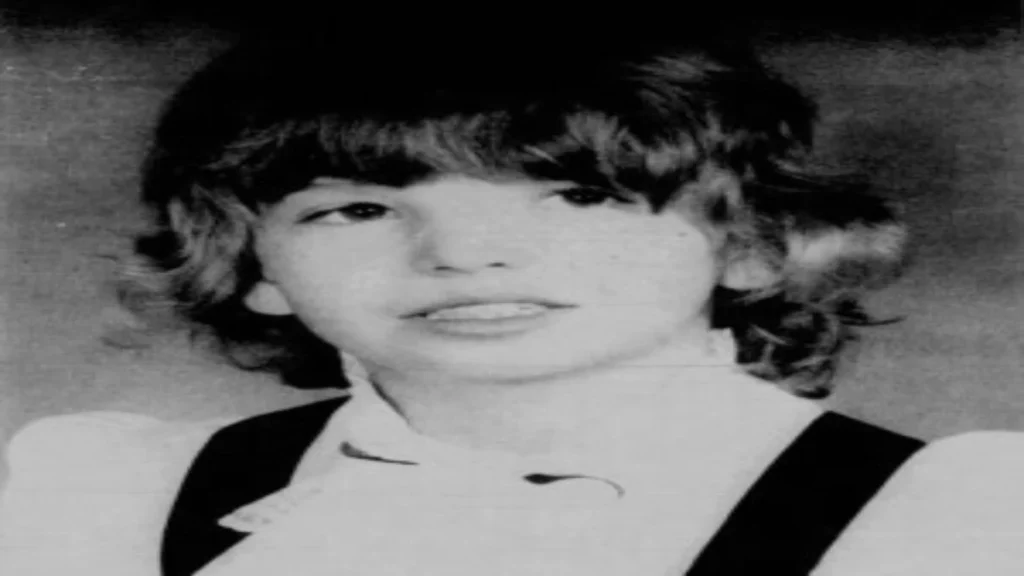
Jo-Anne’s case file with the RCMP is numbered 1983-2535, and it is still classified as an active investigation. Her listing stays on the Canadian missing children database, carrying a request that has not changed in forty years.
“We are still searching for Jo-Anne. Our hope is that if you know something about that little girl who was taken from a payphone in Vedder Crossing, that you speak up now.”
Unlike her mother, Angela, who became the public face of the investigation for decades, Anna-Lise has deliberately avoided making regular media appearances. As an adult, she lives a quiet life out of the public eye.
If Jo-Anne is alive, she turned 54 in May 2026. Her mother has spent more than four decades not knowing whether to grieve her or keep waiting for a call that answers what happened outside Penny Pinchers on a rainy Saturday in February 1983.
The Penny Pinchers store is gone, and Vedder Crossing has changed enough since then that the spot the booth stood is only remembered through old newspaper photos. The only thing that remains is the fact that a ten-year-old girl made a phone call, and by the time her parents arrived in 20 minutes, she was gone.
Anyone with information on Jo-Anne Pedersen is asked to contact the Chilliwack RCMP’s Serious Crime Unit at 604-792-4611, or Crime Stoppers at 1-800-222-8477.
For more stories on unsolved disappearances, explore our articles on Brian Laspisa and Amy Wroe Bechtel.





Very well written, Nicholas. Poor Joanne! I bet the guilt has done a number on her sister as well! I really hope they find out what happened to this little girl.
Thanks! One can only imagine the weight of that guilt.
Why tf did the phonebooth guy leave Jo-Anne unattended after finding her and doubly why tf didn’t he come forward to help police with their investigation??
I lived across the street from Tom
Unfortunately she was definitely raped and murdered. Sad story. May she rest in peace.
Really sad story
The store clerk should have called the parents, and if it took too long, the police!
Yes, they definitely should have reported it.