
January 25, 1998, was a hot and still Sunday over Port Douglas, Queensland. Just after 8 am, 26 passengers gathered at the marina for a day trip with Outer Edge Dive.
They included nine certified divers, eleven students working to get their certification, and another six people who tagged along just to snorkel.
Tom Lonergan, 33, and his wife, Eileen, 28, had been married ten years and were among the experienced divers. They were travelling on the last leg of a trip which was supposed to end in Hawaii.
The two had arrived in Cairns days earlier and had previously attempted dives, but the storm-churned water turned them back. The couple waited it out at the Gone Walkabout Hostel until conditions cleared, then booked the Outer Edge trip.
The boat visited three sites, arriving at the final stop, St Crispin’s Reef, after 2 pm. It was a remote spot 38 nautical miles off the coast, chosen less often because its currents could change without warning.
The water was warm enough at 29 degrees that some of the group swam in nothing but their bathing suits. Tom and Eileen wore full wetsuits, gloves, and caps.
They also asked to dive as a buddy pair rather than with an instructor. Considering their previous experience of more than 80 logged dives each, the crew obliged. The dive log entries showed that they entered the water with everyone else at 2.20 pm.
It did not show them coming out.
At the first two sites that day, the couple returned to the boat up to 15 minutes behind everyone else. It was a pattern the crew apparently normalised, setting a precedent for a delayed alarm when they failed to surface.
At the last site, the boat’s dive instructor, Carl Jezanowski, pulled the anchor at 3 pm and believed he was the last person out of the water. The engine idled for ten minutes before departing.
When the captain called for a final headcount, the tally came up two short of the original 26. One of the crew then indicated that two divers had jumped back into the water near the bow for a swim, so the count was adjusted to include them and the boat turned for home without the Lonergans.
The Outer Edge craft docked at 5 pm, and the crew found a dive bag and plastic bag left behind. This wasn’t unusual, as divers often left things behind, and they set them aside for someone to claim later.
A bus scheduled to carry the group back to the lodging also noted there were two fewer passengers. The driver checked a nearby ice cream shop, café, and pub before giving up and dropping off the rest.
No one could fathom that the two missing individuals might still be abandoned at sea.
Bound by Adventure: The Journey of Tom and Eileen
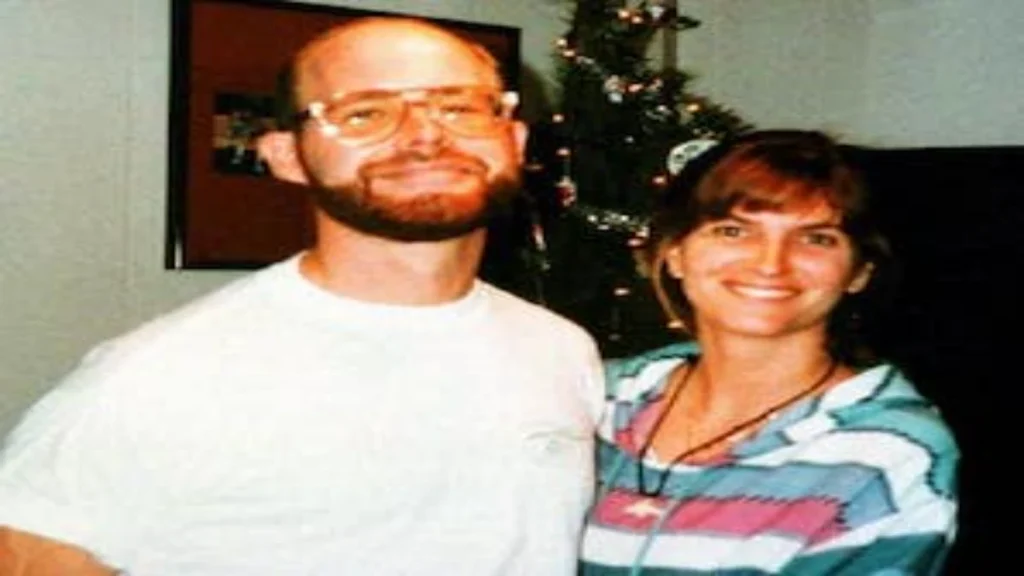
Tom Lonergan and Eileen Hains met at Louisiana State University in Baton Rouge. Tom was a quiet, practical student focused on his engineering curriculum while Eileen was an outgoing, vibrant personality, pursuing a degree in Education.
They quickly bonded over deep shared values, as both were from Catholic homes and shared a desire to travel the world. By 1988, they were deeply in love and busy finishing their college educations.
Wanting to avoid the high costs and stress that came with large traditional family weddings, they made the spontaneous decision to elope to Texas. The couple chose the historic town of Jefferson as a romantic weekend destination.
On June 24, 1988, they crossed state lines and officially married in Jefferson before returning to Baton Rouge to finish their degrees. After graduating, Tom began a successful career as an industrial engineer.
Eileen secured a job as a local school teacher. The couple also chose not to have children, instead focusing on their careers, marriage, and their long-term goal of joining humanitarian efforts.
After working several years in Louisiana, Tom and Eileen decided they were ready to join the United States Peace Corps. In 1995, they were deployed to Fiji, where they lived in a remote village.
Tom utilised his engineering skills to build vital water and sanitation infrastructure for the locals. Eileen dedicated her time to teaching English and primary education at the village school.
In 1998, their Peace Corps contract ended, and they decided to take an extended vacation through the South Pacific and Australia to celebrate their transition back to civilian life.
By that time, they had become certified scuba divers, logging dives in the Great Barrier Reef in Australia.
Days Before a Horrific Realisation
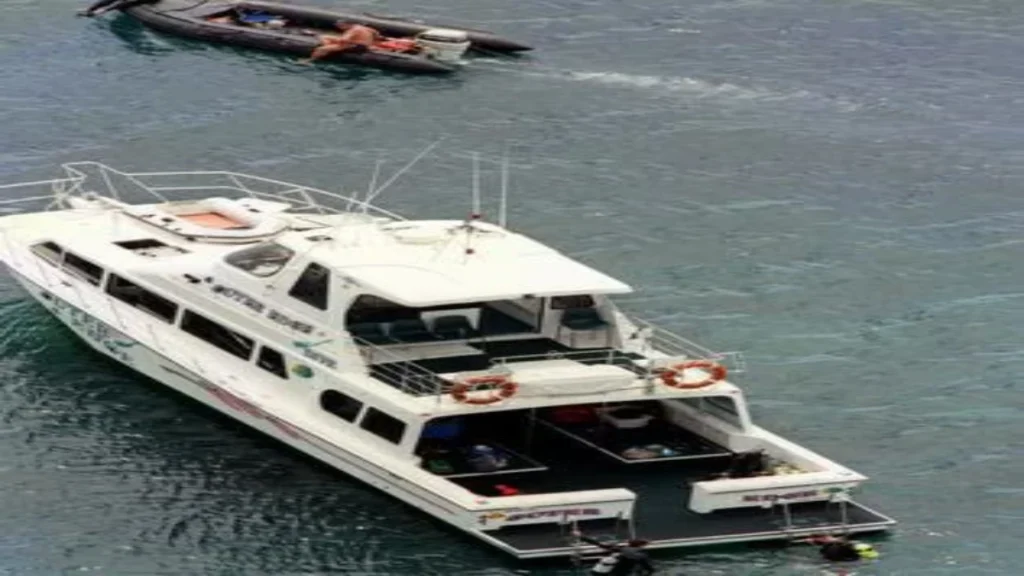
The MV Outer Edge embarked on another diving charter on Monday, January 26. One of the crew members then noticed a bag on board but assumed it had been left by someone from that day’s group.
It was not until Tuesday morning that the captain, Jack Nairn, opened the bags to search for identification. Inside, he found Tom and Eileen’s shoes, wallets, dry clothes and logbooks.
These were next to their unopened US Passports. It dawned on the captain that these items belonged to people from Sunday’s trip.
There were no snorkels, wetsuits or fins among these items, and when he checked the rental log, two air tanks were still unaccounted for. According to the Casefile True Crime Investigation, Nairn called it “really sus”.
He phoned the Cairns hostel where the couple had been staying and learned they had not been seen since leaving for the reef. Their shoes were still sitting in the rack at the dock as well.
At that point, it became clear the couple had not stepped off the boat that Sunday afternoon. Nairn contacted the Queensland police, and a responding officer reportedly told the crew this was not the moment to worry about covering themselves.
When investigators pressed the crew concerning who was responsible for the head count, though, no one provided a straight answer. Both the divemaster and the dive instructor pointed at each other.
The instructor eventually explained that he had told the captain there were 24 passengers aboard and was reminded that two people had jumped in for a swim near the bow, so they revised the number to 26.
However, they never confirmed that the two swimmers and the Lonergans were not the same people. As Outside reported, the count that sent the boat home was based on an assumption rather than a recheck.
Search Against the Clock
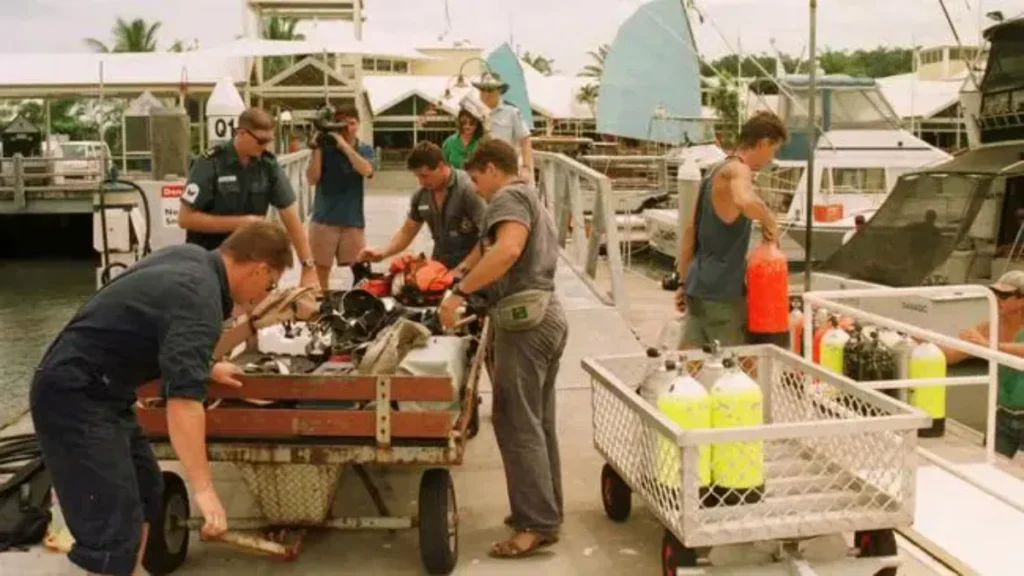
Word reached the U.S Consulate in Sydney on the 27th, and by 10.20 pm, the Australian national search and rescue authority was mobilised. Because the alarm came in 51 hours late, the search-and-rescue area quadrupled.
At first light on Wednesday, January 28, 17 aircraft, two helicopters and a fleet of police, navy and civilian boats spread out to cover the Coral Sea. They were joined by Nairn as well.
Navy divers concentrated on “Fish City”, the last spot another diver recalled seeing the couple. Tom and Eileen’s families in Louisiana learned the news from the consulate but were cautioned against hope.
Eileen’s father, John Hains, told reporters all the family could do from that distance was pray. His wife, Kathy, told the Brisbane Times, “We don’t know anything. We are praying for our children and for the people who ran that boat and for the people who are searching for them.”
Two days later, deteriorating weather and the mathematics of survival odds ended the search by air. Police told the media the couple’s chances were close to zero.
The full search had been called off that evening, though volunteers kept walking the coastline for days afterwards.
What the Sea Gave Back
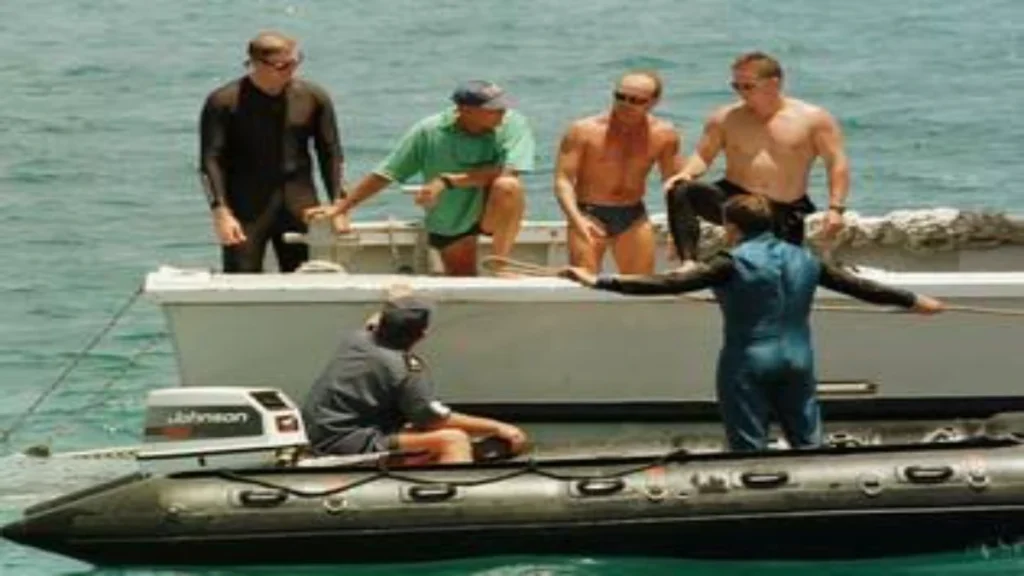
The South Pacific returned pieces of the story slowly over months. On February 1, an inflatable life vest marked, “Tom Lonergan, Peace Corps, Fiji,” washed up at Cowie Beach. This was about 65 miles north of the original dive site.
A week later, a fin marked “Eileen L” turned up 80 kilometres further north on Indian Head. It was remote enough to raise hope that the couple could have reached land.
More gear followed in the next days, including an underwater camera, dive tanks and a hood with Eileen’s name. They were in perfect condition.
Both vests had been deliberately unbuckled. Around that time, an employee from a neighbouring dive operation found a green and grey woman’s wetsuit matching Eileen’s size snagged on a pontoon.
University of Queensland experts examined the barnacle growth on the zipper and determined it had been in the water since late January. There were tears at the buttocks and underarms initially feared to be from sharks, but it was proven to be from coral instead.
The reigning theory was that Eileen may have removed the suit herself once the chafing and heat became too much to bear. This decision would have also cost her the fins.
After that, she probably experienced exhaustion, dehydration, and drowning in close succession. Five months later in June, two fishermen working a mangrove swamp near Archer Point, some 175 kilometres north of Port Douglas, found a weathered diver’s slate that was half buried in silt.
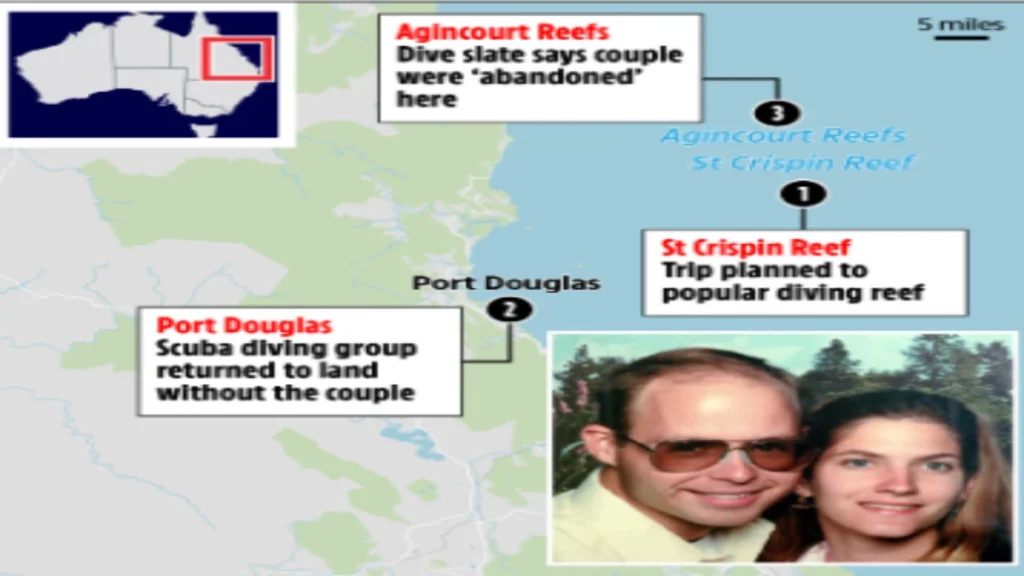
The algae growth on it suggested that it had remained in the water for several months. Handwriting analysis also matched to Tom Lonergan.
It was dated the morning after the boat left them out to sea, and it read, “Monday Jan 26; 1998 08 am. To anyone [who] can help us: We have been abandoned on A[gin]court Reef by MV Outer Edge 25 Jan 98 3 pm. Please help us [come] to rescue us before we die. Help!!!”.
The Diaries
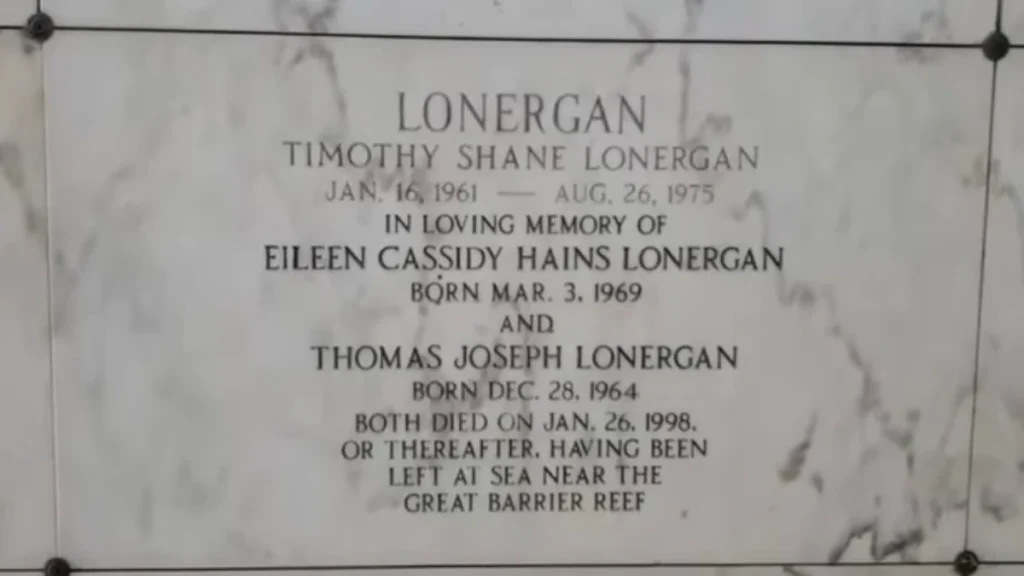
During the initial search, police checked their hostel room in Cairns and recovered personal handwritten journals belonging to both Tom and Eileen. These spanned their two years volunteering with the Peace Corps in Fiji.
Before the diaries could be analysed, though, dark out-of-context quotes were leaked to the media, sparking conspiracy rumours.
Tom’s entry six months before their disappearance stated, “I feel as though my life is complete and I’m ready to die. As far as I can tell, from here my life can only get worse. It has peaked, and it’s all downhill from here until my funeral.”
Eileen also wrote an entry expressing anxiety over her husband’s frame of mind, noting that Tom seemed to have a death wish or sought a quick demise. She stated, “Tom explained to me that he is ready to die. Tom, you have a death wish. I believe this wish may very well put you in the right place at the right time to get what you want. And I might get caught up in that since we remain together all of the time. Love, Eileen.”
When a Sunday newspaper published the larger entries, the context shifted considerably. Tom’s ‘life is complete’ passage continued with a note about not dwelling on how long anything lasts and instead enjoying each day.
The staged death or suicide theory also made no sense as their bank accounts sat untouched. They also had a combined life insurance totalling $45,000, which was never claimed.
The Trial of Jack Nairn

Queensland coroner Noel Nunan opened an inquest in September 1998, which brought in investigators, 800 pages of statements, and almost 60 exhibits.
Staff from the Outer Edge, including Nairn, declined to answer questions at one point. A recorded police interview was played in court, though, depicting the moment Nairn understood the charges he was facing.
Considering the number and severity of the mistakes made that day, the coroner believed a jury could convict. Nunan dismissed the staged death theories and committed Nairn to stand trial for criminal negligence.
The trial opened in Cairns Supreme Court in November 1999. He would face 20 years in prison if convicted.
Nairn’s defence used the diary excerpts and the absence of any bodies to tell the jury that, without proof of death, they had to acquit.
After deliberating for less than 90 minutes, the jury returned with a verdict of not guilty. The presiding judge, Stanley Jones, noted in his summation that the case was a tragedy for the Lonergan family and for Nairn.
However, as there was reasonable doubt whether the couple died, it mandated acquittal.
Outer Edge Dive Travel later pleaded guilty in a separate proceeding to negligence under workplace safety laws and was fined $27,000. Combined with the legal costs, it ended the company and cost Nairn the boat and his home.
With his reputation in the diving industry destroyed, Nairn abandoned the commercial tourist charter business and avoided media appearances. In remarks to close associates, he expressed sorrow concerning the tragedy.
Jack Nairn lived quietly in Queensland with his wife and their two children until his death on December 31, 2015.
Policy Changes and Aftermath
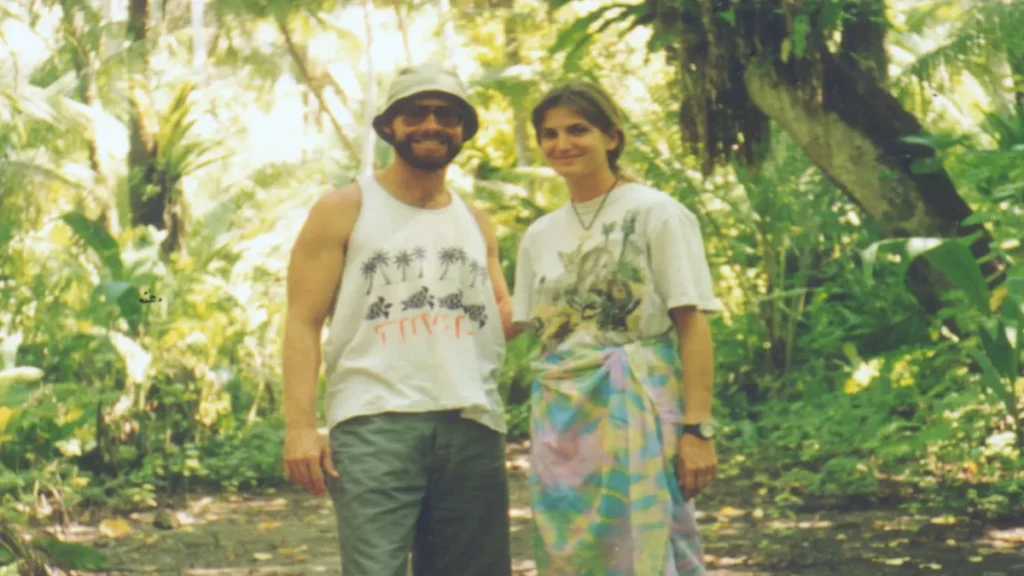
The case gained significant media coverage and reshaped diving regulation across Queensland. A government task force was subsequently convened following the inquest and recommended mandatory, independently verified headcounts. It also required dive logs for entry and exit from the water with trained lookouts on every boat.
Eileen’s father spoke to the press without bitterness toward Nairn. He told the New York Times, ”For the captain to have taken the full load would have been an injustice. But I would have liked to see some way for a group to be held responsible.”
Though he did not blame Nairn, Hains was deeply frustrated that the trial focused on the defence theories, and was distressed with how they aired the couple’s diaries. He told the Guardian, “I was disappointed in the verdict [in which Jack Nairn was found not guilty of manslaughter]. I felt like the jury didn’t believe that they were dead, and to me that was the essence of the trial, was to prove that they had died.”
For her part, Tom’s mother, Betsy, rejected every theory, telling reporters that whatever else people wanted to debate, the fact was her son and daughter-in-law were left behind at sea and not reported missing for more than two days.
The story reached a wider audience in 2003, following the release of ‘Open Water’, a low-budget thriller inspired by Tom and Eileen’s case. It was, however, relocated to a Caribbean setting with fictional names included.
When it came out in theatres, the families were initially deeply upset that the filmmakers had proceeded with the movie before consulting them. Betsy Lonergan took a pragmatic stance, hoping the movie would serve as a warning for others, saying, “You know what? Maybe if it makes people think twice about scuba diving in Australia, maybe that’s a good thing.”
Tom and Eileen Lonergan were never found. No trace of their remains was ever found during the months of searching or in the years that followed. The case remains unsolved almost three decades later.
For more stories on unsolved disappearances, explore our articles on Brian Laspisa and Jo-Anne Pedersen.
Image notice: All third-party images used in this article are credited to their respective sources and are included for editorial reporting, commentary, historical context, identification and public-interest documentation.
Skip Boring does not claim ownership of these images. Copyright remains with the original owners. If you are a rights holder and have concerns about any image, please contact us with the relevant details. We will review the request and remove the image where appropriate.