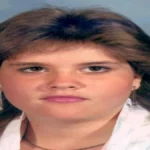

On the morning of August 8, 1994, Shaylene Farrell opened the refrigerator at her home on Haverhill Drive in Piqua, Ohio, looking for something cold to drink.
She specifically wanted Lipton iced tea but couldn’t find it. The 18-year-old grabbed her mother’s keys and told her younger sister, Colleen, 14, that she was running to the store and would be right back.
She was wearing a boys’ white T-shirt with “No Fear” written in blue lettering on the front, blue Piqua High School shorts, and black sandals.
Colleen watched from their window as Shaylene backed her mother’s silver 1981 Chevrolet Malibu out of the driveway and headed to Pick-N-Save grocery store, where she also worked. It was about a mile and a half from the house.
Shaylene had begun working there two weeks earlier on a part-time basis. She had just started learning the register and was on a first-name basis with all of the staff. None of them saw her come in, though.
Her mother, Darlene, was out of the state that week, visiting her own mother in New Jersey. And when Shaylene didn’t make it back right away, Colleen wasn’t alarmed.
Her sister had just turned 18 and had recently moved back home after weeks spent with a friend, so it seemed reasonable that she had run into friends and probably lost track of time.
Her stepfather, Duane Childers, was also asleep after working an overnight shift, so there was no immediate alarm at home.
That afternoon, there were some unconfirmed sightings of the Chevy Malibu being driven around Piqua. However, it is unknown if Shaylene or someone else was behind the wheel of the vehicle.
Her best friend, Amy Forsythe, later spotted the Malibu parked in the Pick-N-Save parking lot at around 6 pm. There was no cause for concern then, considering Shaylene was scheduled to start her shift in an hour’s time.
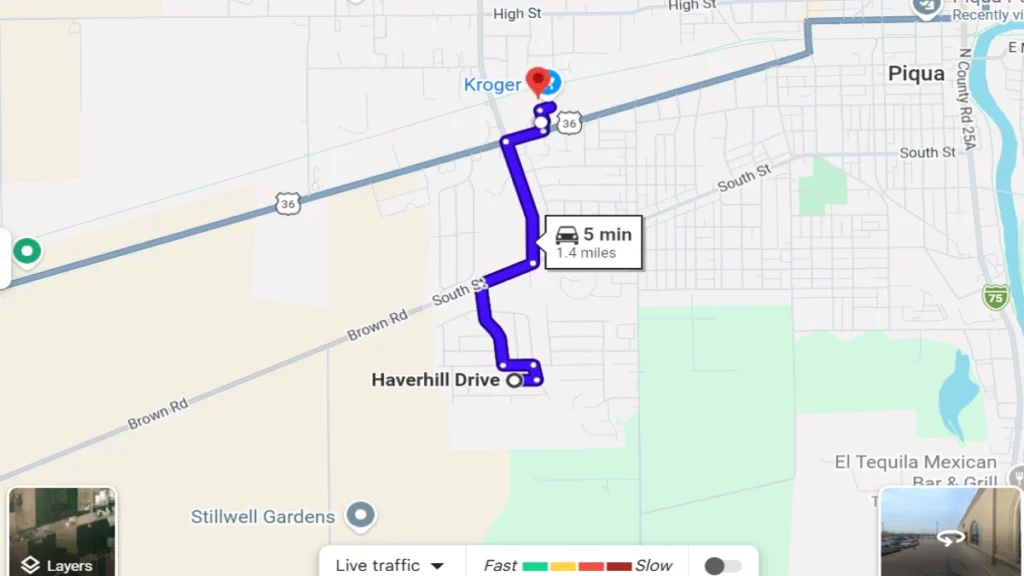
Amy just assumed Shaylene had arrived earlier for her shift, but she never actually showed up. Colleen’s worry also intensified overnight when Shaylene still didn’t come home.
On Tuesday morning, August 9, after realizing Shaylene never came home from her overnight shift and hadn’t been around the previous day, Childers began making calls.
The first was to Amy, who informed him about the car sitting at the grocery store parking lot. After confirming her absence from work, Childers called the Piqua Police Department to report her missing.
When police found the vehicle, they noted no signs of forced entry or any sign of Shaylene. The car’s interior was tidy and undisturbed.
It was locked, though, meaning Shaylene or someone else had locked it after parking. Her blue sapphire-and-diamond heart-shaped keyring was missing.
As Shaylene was legally considered an adult, the police initially assumed she left voluntarily. They considered that she may have parked the car or willingly gotten into another vehicle to skip town.
Believing no crime had been committed, the police did not process the scene, dust the steering wheel or door handles for prints. Instead, they released the Malibu into Childers’ care, and he drove it home.
Family Dynamics and a Turbulent Summer
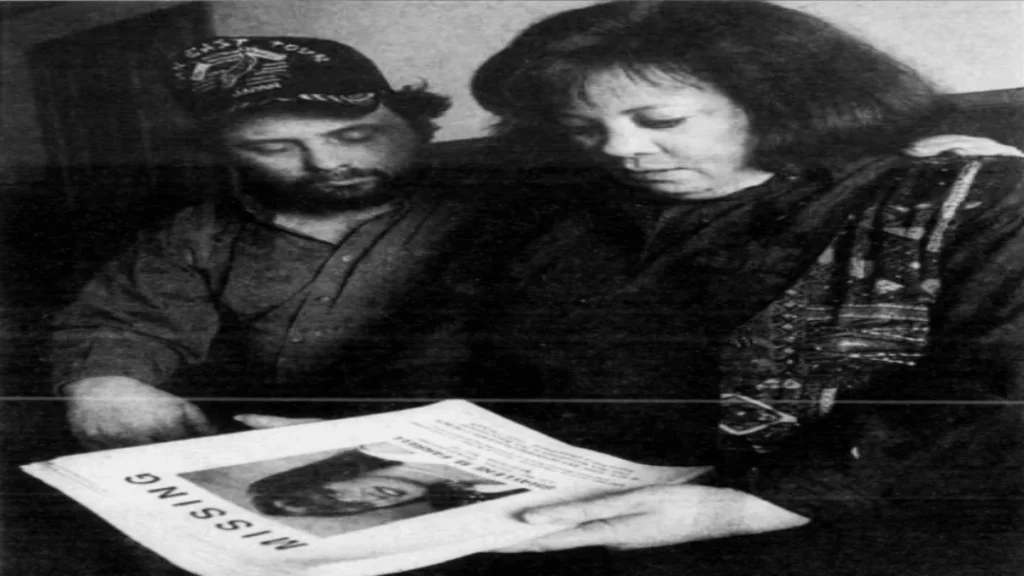
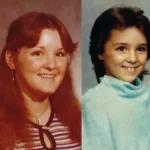
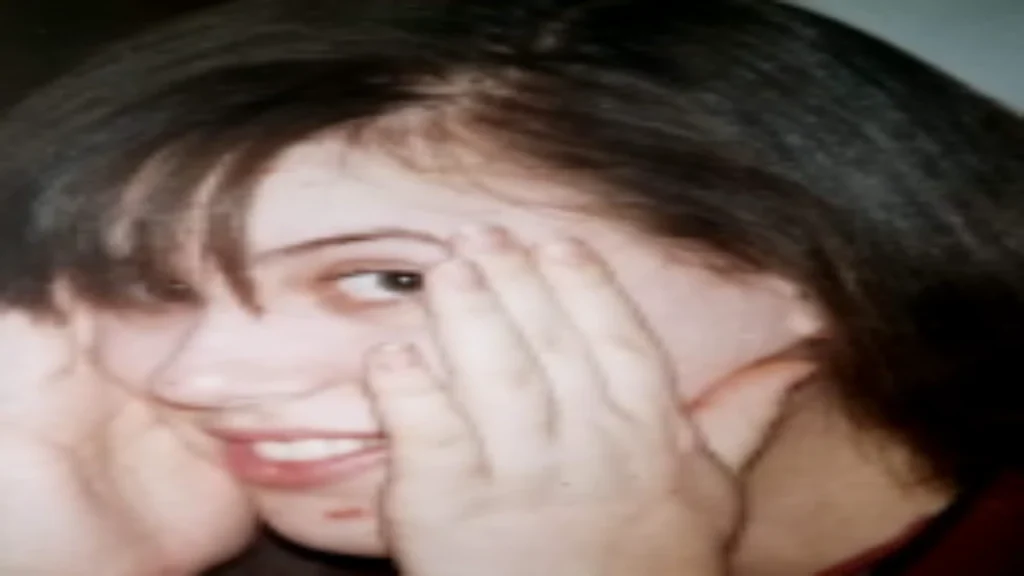
Shaylene Marie Farrell was born on June 19, 1976, as the firstborn daughter of Darlene Farrell. She spent the early years of her life in Canada alongside her younger brother Michael, before the family relocated to New Jersey.
For the majority of Shaylene’s upbringing, Darlene raised them as a single parent. She worked very hard to support the household, often balancing three jobs to keep it afloat.
The family eventually moved to Piqua, Ohio, a tight-knit community, and Darlene became engaged to Duane Childers. Childers moved into the family’s Haverhill Drive home and stepped in as Shaylene’s stepfather.
In the summer of 1994, Shaylene’s relationship with her mother was strained. Darlene had recently caught Shaylene smoking marijuana, and the resulting tension prompted her daughter to move out and stay with a friend for weeks.
The split didn’t sever the relationship, though, as Shaylene stayed in close contact with her family, and she eventually moved back in. By the time of her disappearance, the friction that had pushed her out the door was behind her.
She had a new job, a senior year ahead, and a family she had chosen to come back to.
Runaway or Taken
Despite the police department classifying the case as a voluntary adult runaway, Darlene kept constant pressure on the police department to take the case seriously. Her relentless advocacy forced the authorities to change their minds.
Police monitored Shaylene’s Social Security number, bank accounts, and state records. As the weeks gradually turned into months with no financial footprint or contact with loved ones, investigators abandoned the runaway theory.
In September 1994, the case was reclassified as a suspected homicide, though Police Chief Phillip Potter told the Dayton Daily News, “We really haven’t come across anything to totally secure in our minds that she is deceased.”
The investigation then focused on local classmates, friends, and acquaintances. Shaylene’s family members accepted the grim possibilities and put up a memorial service for her in 1995. They even made arrangements for a grave.
The Greenville Lead
While interviewing friends and co-workers to map out her final weeks, detectives learned that Shaylene had visited a specific social club in Greenville, Ohio. According to the Justice for Shaylene Facebook page maintained as an information hub for the case, she was reportedly seen there in the days leading up to her disappearance.
It proved she had expanded her social circle beyond the immediate town of Piqua. Detectives also ascertained that Shaylene actively interacted with a group of local young adults.
Through the subsequent interviews, police identified two male acquaintances within this broader, Greenville social group. One of the men was dating Shaylene’s close female friend.
By cross-referencing the witness statements, detectives developed the theory that an argument may have boiled over between Shaylene and someone she met through the Greenville circle.
This confrontation might have directly resulted in her murder on August 8. Investigators considered that after the crime was committed, members of this circle panicked. Instead of leaving the body in Piqua, they might have driven it west toward the state lines to hide their crime.
The culmination of this lead occurred in 1998, when an informant came forward with details linking the suspects to a specific disposal location. He claimed Shaylene’s remains were hidden in a rural wooded area near Union City, along the border dividing Ohio and Indiana.
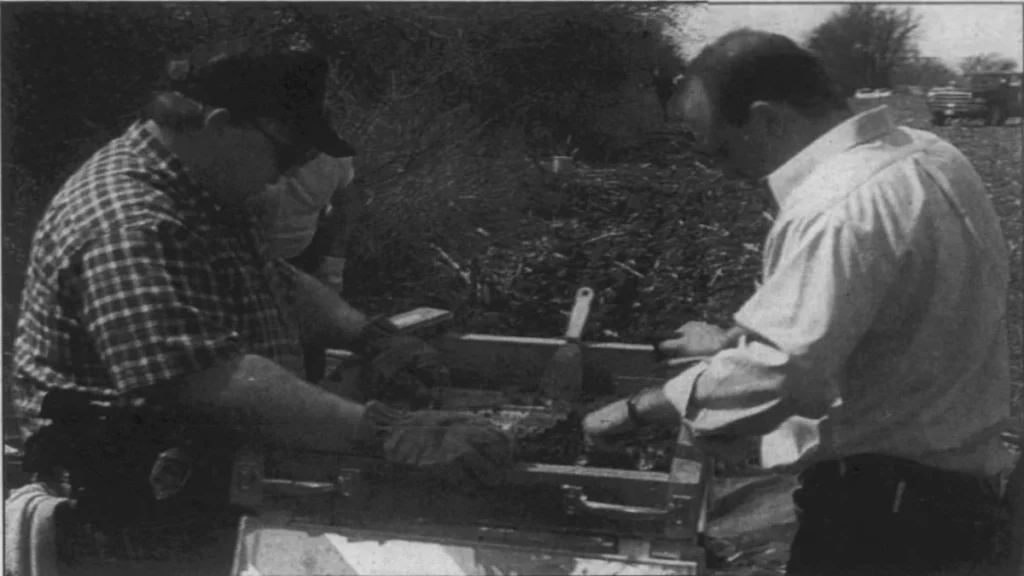
This aligned well with the investigators’ working theory, so they deployed cadaver dog units and forensic teams to excavate the Union City border site. Ultimately, it failed to unearth any remains or clothing.
Incidentally, both of the primary male suspects were later incarcerated in separate states on entirely unrelated charges. Prosecutors also lacked physical evidence to tie them to the Pick-N-Save parking lot, so no formal homicide charges were filed.
Voicing her frustration on the case’s progress, Darlene told the Dayton Daily News, “Up to six months ago, I wanted the SOBs killed. Now I don’t care. I just want to know what happened, and where the body is, and where the remains will be found. I’m tired. You talk to other members of my family, and they’ll tell you killing is too good for these guys. I might feel that way again when I find out what happened.”
The Link to Christopher Below
This significant break in the case didn’t come until years later, after a man confessed to a completely different crime.
In 2003, Christopher Below was in an interrogation room at the Evansville Police Department when he admitted to Detective Scott Thomas of the Evansville Police Department that he had shot Kathern Fetzer in his apartment and disposed of the body in a commercial trash bin.
Her remains were never recovered, and Below pleaded guilty to involuntary manslaughter. Following the confession, Detective Thomas recognized that he exhibited the traits of a sexual predator.
He also noted Below had a preference for hunting petite young women with dark hair. State and federal investigators soon formed a task force to cross-reference Below’s historical truck-driving routes and past addresses.
They were looking for young, dark-haired women who fit these geographical filters and vanished without a trace. When Ohio state investigators ran the data, Shaylene’s file was flagged.
She matched Below’s physical type as a target. Piqua also sat within the regional Midwestern geographical loop where Below lived and traveled during the mid-1990s.
He was also a person of interest in the active missing person cases involving Kristina Porco and Heather Teague, so he fit the profile perfectly.
Cold case detectives meticulously mapped out his verified employer logs, gas receipts, and residential timelines for August 1994. Despite these efforts, they were not able to find concrete receipts, witnesses, or records that placed Below near or in Piqua on the day Shaylene disappeared.
Since the Piqua police department had immediately released Shaylene’s mother’s Chevy Malibu back to her family without dusting it for prints or processing it for DNA, the detectives had no physical evidence to get from the scene.
They could not run fingerprint or trace forensic matches against him to see whether he had ever been in her vehicle. The Charley Project has since reported, “It should be emphasized that he has not been charged… and only conjecture links him to Farrell’s case.”
Authorities shifted their resources to consider localized theories, including the Greenville club associates.
Convicted kidnapper, rapist, and suspected serial killer Larry DeWayne Hall was also suggested as a suspect because of his movements through the Midwest during the 1990s that drew scrutiny.
These included several unsolved missing-person cases involving young women. Hall and his twin brother Gary frequently traveled throughout the Midwest to participate in historical Civil War reenactments.
Local investigators and researchers noted, though, that Hall was believed to have been in Miami County, Ohio, around August 1994 to attend Piqua’s annual Heritage Festival. That would place him at the scene when Shaylene disappeared.
He also typically targeted young petite women with shoulder-length dark hair. Hall commonly stalked strip malls, shopping plazas, and grocery store parking lots, which again fit with Shaylene’s story.
Following his arrest in 1994, Hall was questioned about the disappearance of women who went missing during the 80s and 90s; he admitted to it in a blanket-style format, saying he routinely targeted, abducted, and killed women.
When pressed for the location of the bodies of the women he claimed to have killed, Hall gave detectives a vague, generalized location like a river or a remote field.
Despite his known presence in the area and matching behavioral traits, investigators were unable to find forensic evidence linking Hall to the Chevrolet Malibu.
While Christopher Below was released in 2021 after completing his sentence, Hall is currently still serving his life sentence in federal prison for a 1993 kidnapping he confessed to.
Systemic Hurdles and Continued Advocacy
On December 12, 2008, Shaylene’s file was formally entered into the National Missing and Unidentified Persons System. This action preserved her physical descriptors, including the birthmark on her left leg, a distinct mole under her lip, and a scar above the right knee.
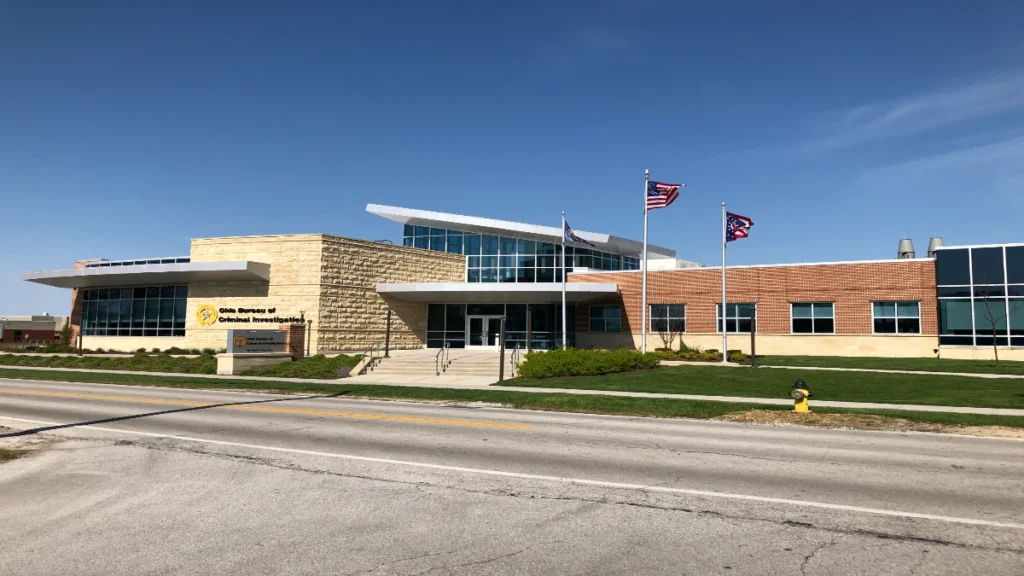
As the years passed without local breakthroughs, the Piqua Police Department integrated efforts with the Ohio Bureau of Criminal Investigation and the Ohio Attorney General’s Missing Persons Unit.
The Ohio BCI also began releasing age-progressed forensic sketches to the public, simulating what Shaylene would look like in her 30s and 40s. In 2019, Detective Bruce Jameson of the Piqua police department, who was the primary keeper of Shaylene’s file, retired from the force.
This broke the primary bridge between the Piqua Police Department and the family. Darlene also voiced that the police essentially stopped returning her calls and failed to provide formal case updates.
The Justice for Shaylene Facebook page reported, “Piqua Police say that the case is still active, but they haven’t returned Darlene’s calls or provided any updates in six years. The family and I have worked tirelessly, and if anyone has felt the need to close this, or simply ignore it, it has been the Piqua Police Department.”
Recognizing that local police resources were drying up, Darlene began opening her records and personal recollections to independent cold case investigators, including ‘The Skeleton Key Chronicles’.
Darlene’s focus at this point was a recovery mission to locate where Shaylene’s body had been hidden so her family could finally lay her to rest.
In recent years, she also escalated the initiative by targeting city politicians. Through public petitions, covered by the Justice for Shaylene Facebook page, Darlene was able to put pressure on Piqua Mayor Kris Lee: “Thirty-one years of pure heartbreak and mental anguish that no one on this earth should ever have to endure. So I am begging /pleading with you, Mayor Kris Lee, and the Piqua police department to please help Darlene Farrell get some closure to this tragedy and put Shaylene to rest.”
Darlene has continued to support and participate in annual public vigils and memorial updates on August 8th. Anyone with information regarding her disappearance or whereabouts is urged to contact the Piqua Police Department at (937)778-2027.