

Phoebe Handsjuk survived the descent through 12 stories of a Melbourne apartment building’s garbage chute. At the bottom, the rubbish compactor almost severed her right foot and pushed her into a wheelie bin. She managed to tip the bin over, get out, and drag herself across the floor. By the time the building’s concierge found the 24-year-old near the refuse-room door on December 2, 2010, she had bled to death.
The injuries recorded at autopsy were extensive. Her right foot remained attached by a tendon, with the surrounding muscles and blood vessels severed. Both bones in that lower leg were fractured, as was her left thigh bone. Cuts around her left ankle exposed tendons. A wound at her hip reached muscle, and beneath parts of her hips and thighs, skin had separated from the underlying tissue. These details appeared in the coroner’s eventual finding, alongside the account of her attempt to escape.
The blood on the floor helped explain what happened after she reached the bottom. Establishing how she entered the chute was harder. Police initially treated her death as suicide. Her family rejected that explanation and pressed for an inquest, which would produce a different conclusion without resolving their doubts. Much of the disagreement came down to a small opening on the 12th floor and what an intoxicated woman could have done to get through it.
Phoebe’s family did not conceal her difficulties. She suffered from depression, sought counseling, and used alcohol to manage anxiety, sometimes with damaging consequences. But their memories of her also included a competitive basketball player who became almost unstoppable after someone fouled her. Other parents wondered why she did not play that way all the time. She had a quick temper, a playful sense of humor and a fierce attachment to her friends and younger brothers. She painted, confided in her grandmother and wanted to travel to India to do aid work.
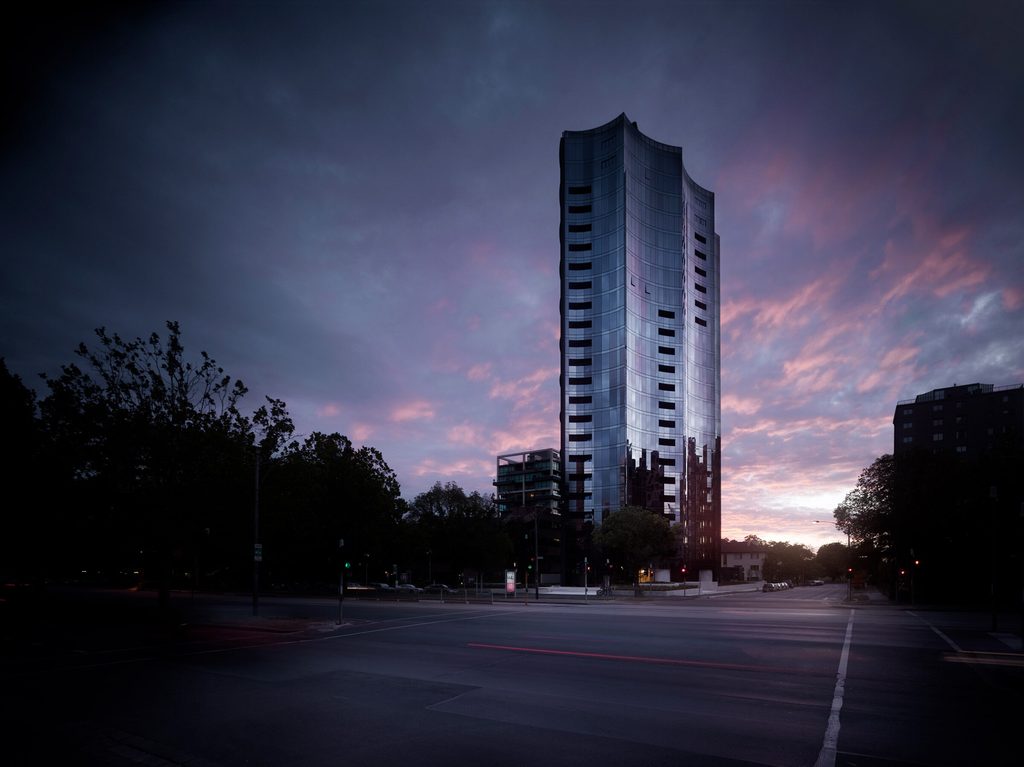
By 2010, she lived at the Balencea apartment building on St Kilda Road with Antony Hampel, an events organizer roughly 20 years her senior. Their relationship was unsettled. In the weeks before her death, she repeatedly left and returned. Her mother’s partner, Russell Marriott, saw her a few days before she died and remembered her being upset and considering another separation. He also remembered that she was looking forward to her brother’s birthday party. Her younger brother Nikolai was about to turn 18.
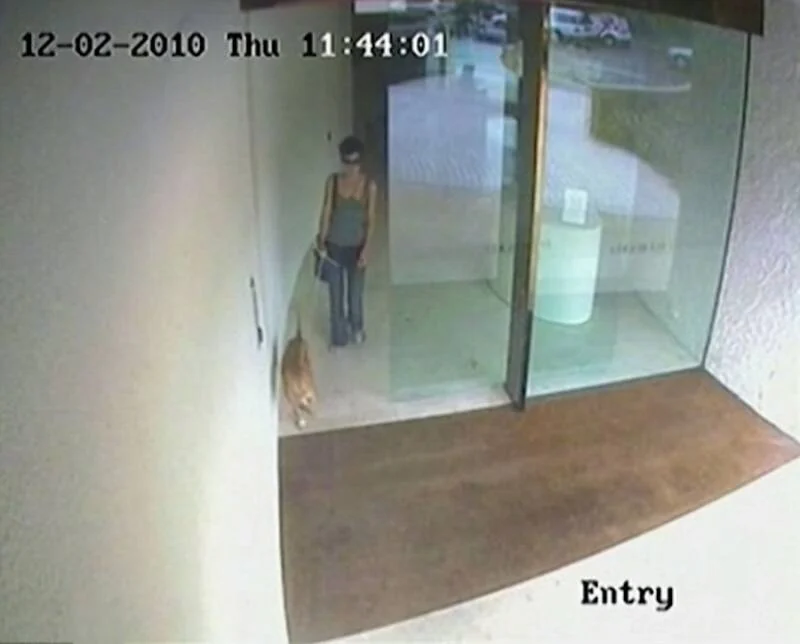
They also had plans for December 2. That evening, Phoebe, Hampel, and her father, Len, were supposed to have dinner to celebrate Len’s recent birthday. Shortly before midday, a fire alarm brought Phoebe out of the building with the dog, Yoshi. Security footage showed her returning a few minutes later. It was the last recorded public sighting of her alive.
When Hampel returned home that evening, Phoebe was absent, but her handbag and keys were still there. There was broken glass on the floor and blood in the apartment. These would become important details in the inquiry, though they did not, by themselves, establish that a confrontation had taken place.
Len called about dinner and learned that his daughter was missing. In Robin Bowles’s account of that evening, he began contacting family members while others tried Phoebe’s friends. Hampel ordered takeaway. When the delivery arrived, he learned that police were downstairs. He went to the foyer and was told that a woman’s body had been found.
The emergency response produced another troubling question. Paramedic Kristie Cooke arrived at the refuse room but was prevented from entering because police were preserving a crime scene. From the doorway, she could see that the woman on the floor appeared blue and was not breathing, but she could not conduct a hands-on examination. The coroner later criticized the refusal of access, while concluding that Phoebe was already dead when the ambulance officers arrived.
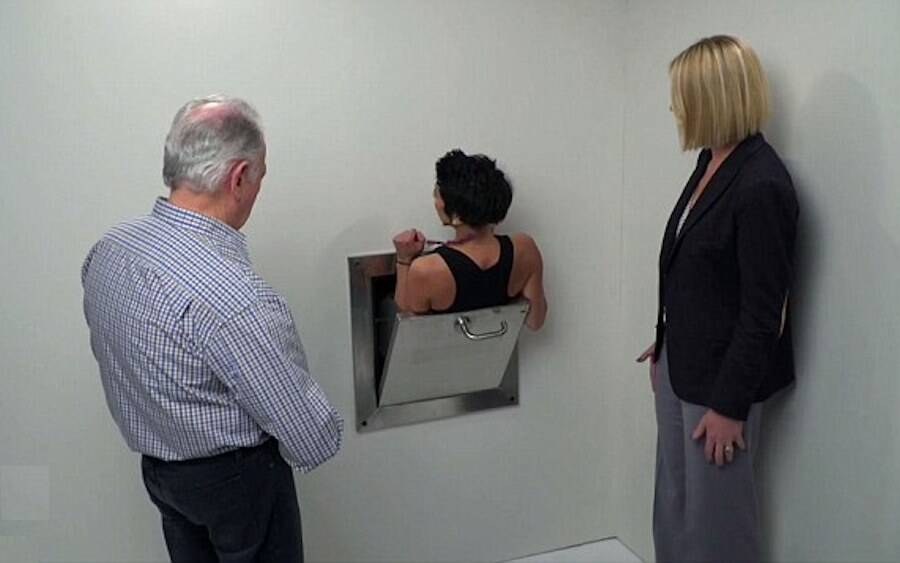
For Phoebe’s grandfather, Lorne Campbell, the early assumption of suicide was difficult to accept. A retired detective sergeant, he began examining the circumstances himself. The chute’s entrance measured approximately 37 centimeters by 22 centimeters and stood more than a meter above the floor. Getting inside required more than stepping over an edge.
Campbell arranged a reconstruction using two young women of similar build to Phoebe, secured in safety harnesses. Both managed to enter the actual chute opening, but with difficulty. The experiment did not establish that entry was impossible. It sharpened his objection to the suggestion that Phoebe could have accomplished it in her condition.
Toxicology showed a blood-alcohol concentration of 0.16 percent, along with the sleeping medication Stilnox and an antidepressant. Stilnox contained zolpidem. To Campbell, the combination made the required maneuver less plausible, not more.
“I remain convinced it is not within the capacity of someone so drunk,” he said in evidence reported during the inquest.
He also wanted explanations for evidence that did not fit comfortably into the initial account. Phoebe had bruises on her upper arm and wrists. No usable fingerprints were found on the chute opening. Her jeans were down around her knees when they found her. None of these observations proved someone had put her into the chute. The pathologist said the arm bruising could resemble grip marks but was not specific to them. Nevertheless, the family wanted each possibility examined before investigators settled on a cause.
Some opportunities to do that were already disappearing. Police failed to secure all the building’s CCTV footage. The building manager warned that the recording system reused its storage and urged officers to download what they needed. Computers in the apartment were not immediately seized. Officers did not examine two drinking glasses for fingerprints or their contents.
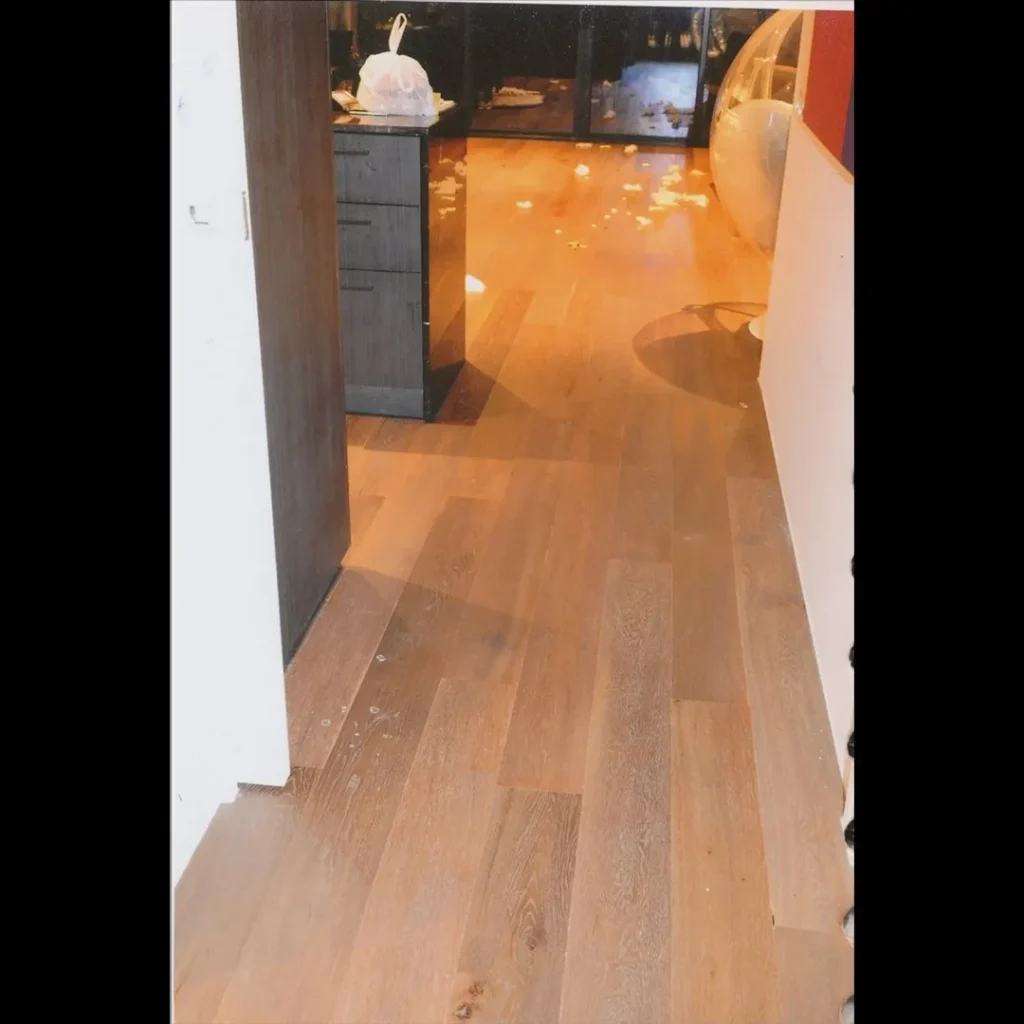
Those omissions mattered because the inquiry needed to reconstruct several unobserved hours. Questions about who entered the building, what happened inside the apartment, and whether anyone else was present were questions that collecting evidence might have helped answer. Missing material could not prove foul play, but neither could investigators recover every opportunity they lost.
Even a handwritten record became uncertain. Concierge Betul Ozulup told the inquest that, when she returned to work, she discovered that the logbook page for December 2 had been removed. The book recorded tradespeople visiting the building. Her testimony did not explain who removed the page or why.
The inquest opened in 2013, almost three years after Phoebe’s death. It brought her relationships, drinking, medical treatment and final movements into the same proceedings as the machinery and forensic evidence. Her family’s conviction that she could not have entered the chute unaided was met with a different interpretation of those same circumstances.
On December 10, 2014, Coroner Peter White ruled out both suicide and another person’s involvement. He concluded that alcohol and zolpidem left Phoebe in a state resembling sleepwalking, or so confused that she could act without understanding the danger. He also considered her enthusiasm for climbing and physical challenges relevant to why she entered the chute.
“The precise effect that (sleeping pills) and alcohol had upon her cannot be established to a great degree of certainty,” White acknowledged. Even so, he was satisfied that their combined effect significantly altered her mental state and led to her entry.
Her physical condition helped shape his reasoning. Despite the catastrophic injuries to her legs, she lacked the extensive internal damage he expected from an uncontrolled fall through that distance. He interpreted this as evidence that she exercised some control during the descent, rather than being dropped unconscious or deliberately falling to her death. Her survival at the bottom, followed by her escape from the bin, also factored into that assessment.
The finding therefore depended on reconstructing actions nobody witnessed. White considered the physical evidence and medical testimony sufficient to support it. Others involved in the proceedings did not believe the evidence allowed such a definite answer.
Deborah Siemensma, the counsel assisting the coroner, favored leaving the circumstances unresolved. In her assessment, the unexplained observations and weaknesses in the original investigation prevented a confident conclusion about another person’s involvement. That was not an allegation that someone killed Phoebe. It was a distinction between finding no adequate evidence to implicate someone and having enough evidence to exclude the possibility.
Hampel denied involvement. Asked at the inquest whether he had anything to do with Phoebe’s death, he answered, “Absolutely not.” White expressly exonerated him. After the finding, Hampel issued a statement describing the allegations against him as false and unjustified.
“My hope is now that we can allow Phoebe to rest in peace,” he said.
For the family, the finding did not settle the matter. Natalie had raised about $50,000 from savings and donations to meet legal costs. Challenging the outcome would require more money, and the advice they received offered little encouragement. The available grounds for appeal concerned errors of law, making it difficult to challenge the coroner’s interpretation of the facts.
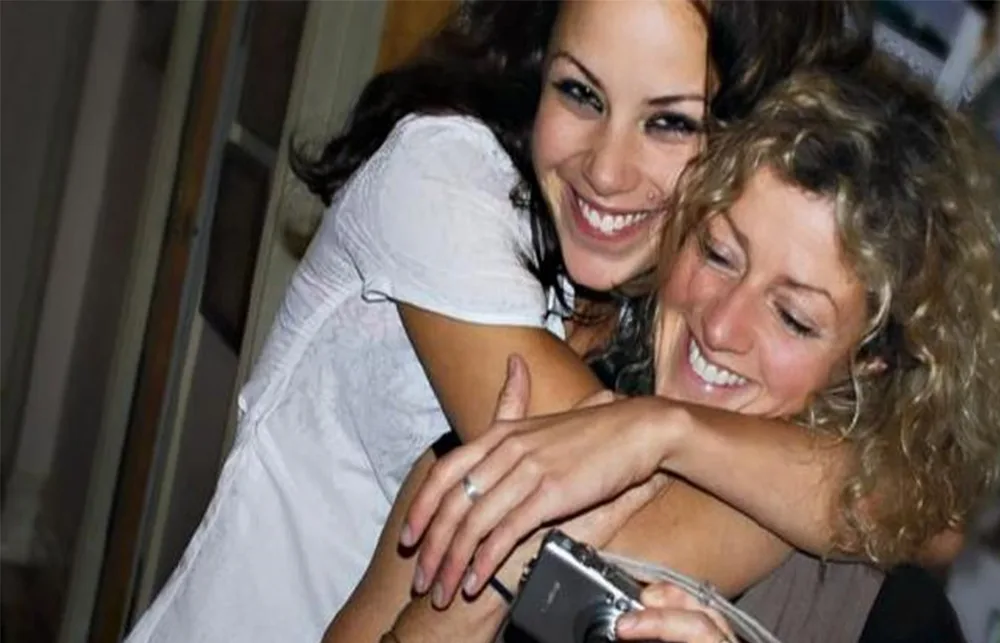
Their objections reached a much larger audience in 2016 through Phoebe’s Fall, the investigative podcast produced by journalists at The Age. Richard Baker and Michael Bachelard’s reporting revisited the evidence and allowed listeners to hear from the people who knew Phoebe. Her death became a case through which to examine how an investigation could reach a firm conclusion while leaving a family convinced that fundamental questions remained unanswered.
The consequences extended beyond the Handsjuk family. Public concern prompted a review of Victoria’s coronial appeal arrangements. In 2018, the state government introduced legislation to clarify appeals and improve opportunities to reopen findings. The reforms also addressed problems highlighted by the ABC’s Trace investigation into another death.
That was a tangible result of the family’s persistence, but it did not establish what happened outside the apartment on December 2. The surviving evidence still supported sharply different readings of Phoebe’s last hours. A difficult entry was not an impossible one. Missing evidence was not proof of a crime. Nor did identifying the injuries that killed her explain every action that brought her to the compactor.
“It is the truth we are missing here,” Natalie told Marie Claire.
Alongside the family’s appeals and updates, their website preserved memories sent by people whose encounters with Phoebe never appeared in the forensic reconstruction. One message to her brother Thomas came from Elia Barresi, who remembered arriving frightened for the first day of Year 1. Phoebe was the older student assigned as a buddy. She approached with a rose, listened to the younger child’s fears, then took Elia’s hand and walked upstairs to the classroom.
At the desk, Elia remembered. Phoebe said, “She wouldn’t leave until she saw me smile.”
For more harrowing true crime stories, read about the Stanford church murder that fueled a satanic legend for decades or the lawyer who had to read her own daughter’s autopsy after a brutal murder.