

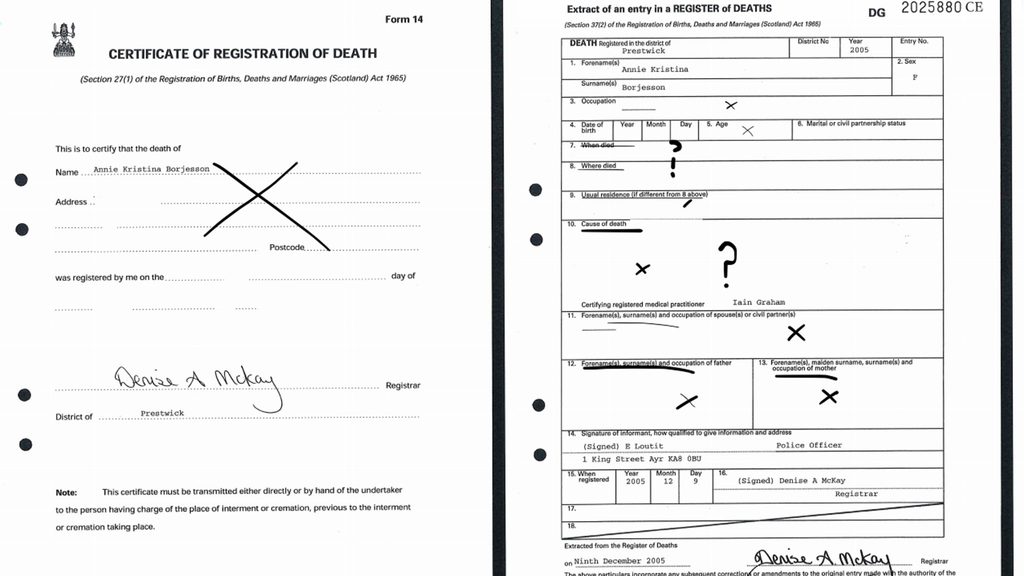
When the Swedish Foreign Ministry released correspondence related to Annie Börjesson’s death in Scotland, the files were heavily redacted. The cause of death, time and location of death, nothing was revealed.
All critical information related to her death was classified as secret, and officials stated that ‘a disclosure will harm Sweden’s international relations or in other ways harm national interests’.
The day before she died, Annie spent 5 minutes at an airport that was known for being used by the CIA frequently to transport terror suspects across international borders outside of standard extradition or legal processes.
To this day, the case remains shrouded in mystery and conspiracy theories. But the beginning of Annie Borjesson’s story wasn’t so complicated.
Hope Of A New Life In Scotland
“Annie was a beautiful young woman and was like a sister to me. She was independent, she was strong and had long, blonde hair. She was like a Viking princess,” recalled Maria Jansson, her friend, in an interview.
Annie Kristina Börjesson was one of three siblings and grew up in Tibro, a small municipality in Sweden with only around 8000 residents. Despite growing up in a small community, she had friends from all over the world.
She could also speak Swedish, English, Finnish and French, and was also fluent in Hungarian. Naturally, when she visited Scotland with a friend, she fell in love with the country and figured that she could have a life there.
In fall 2004, Annie decided to move there and pursue studying English at the Aspect Language School, in the centre of Edinburgh, the capital of Scotland.
From her apartment in Linton Court, Murieston Road, she would routinely call her mum and tell her about how much she loved her work, meeting new people and her life in the town.
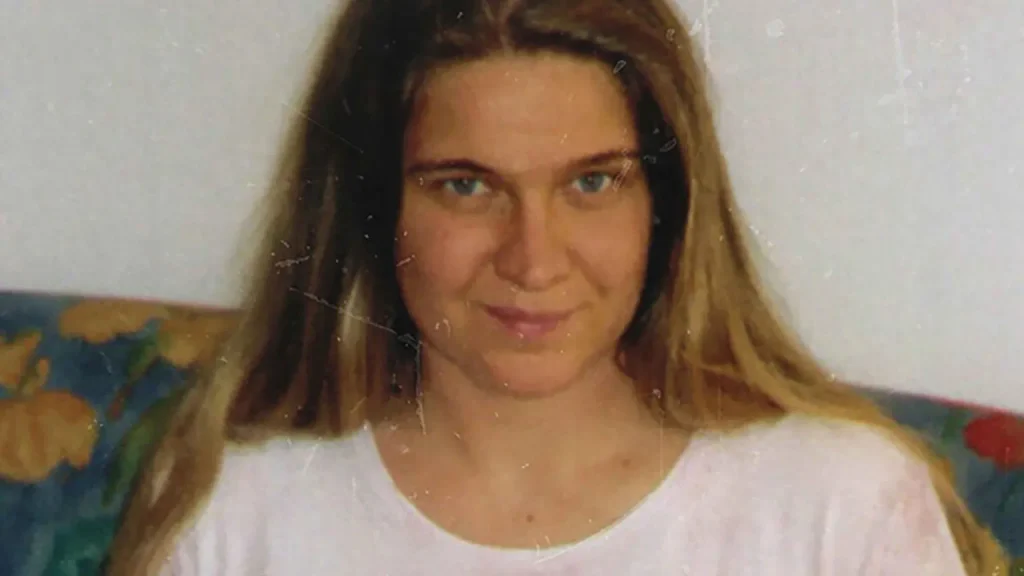
By the end of 2004, her English course had ended. During the course of the coming year, Annie would end up going back home multiple times and then returning to Scotland.
The first time she returned in February 2005, she worked at the Scotch Whisky Heritage Centre on Edinburgh’s Royal Mile, where she worked for six months doing pop-up performances to entertain the guests.
The second time she returned to Scotland was in October 2005, when she decided to look for a permanent job. She gave herself three months to find one. If she didn’t, she’d return home to Sweden.
It was during this stint that things started to go downhill.
Annie Börjesson Struggles With Her Dream
Six weeks before her death, Annie wasn’t having much luck with finding a job. Application after application was unsuccessful, leaving her frustrated yet hopeful for a breakthrough.
Despite being down on her luck, she continued to find time for walking and swimming, getting to know Edinburgh better, making new entries in her Filofax, and attending rugby games.
She would often frequent a nightclub called Mood, where she met an imposter claiming to be Martin Leslie, a famous Scottish Rugby player at the time. Sources say she was instinctively attracted to him and was seen talking to him animatedly for hours.
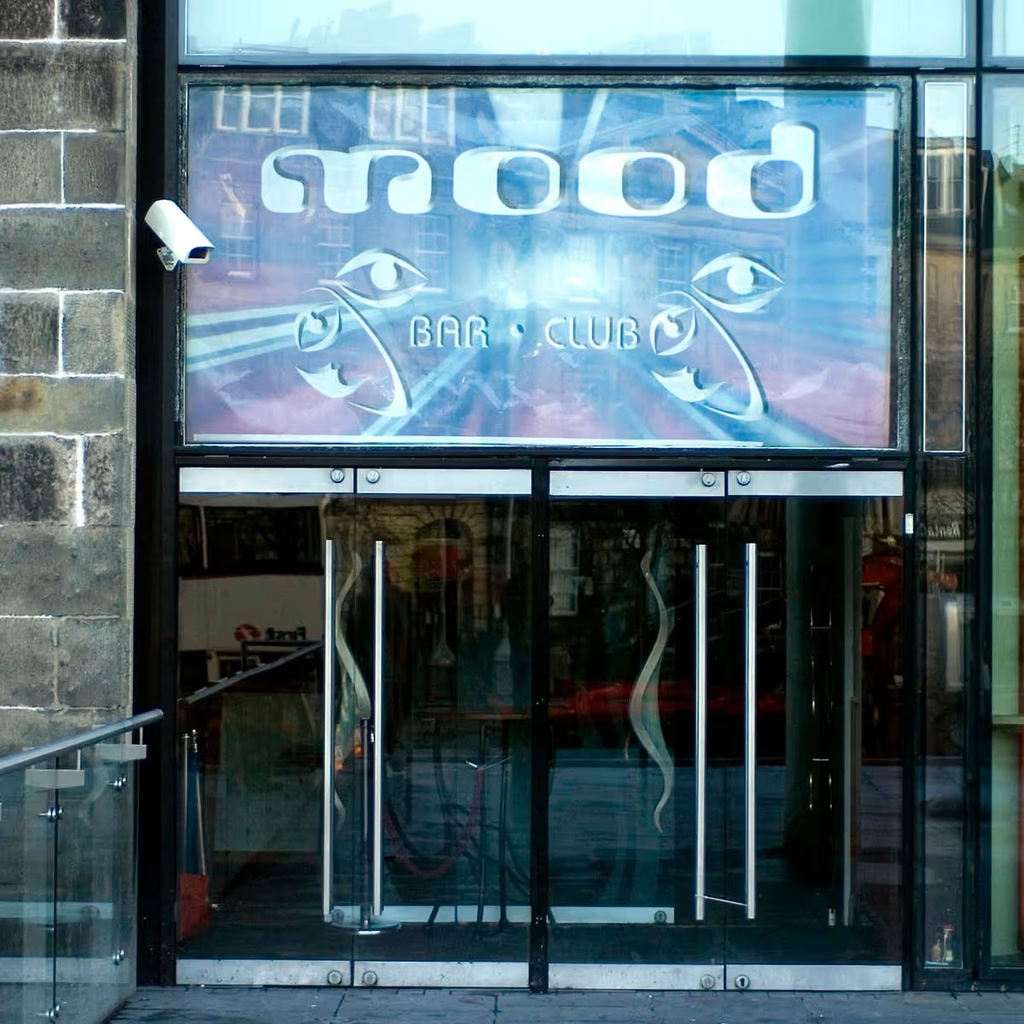
The same man would turn up a day after her death, swimming in the pool she frequented. But Annie didn’t immediately vanish after meeting him. In late November, her family started to notice some troubling signs.
“Annie was the kind of girl who, if she had a problem, she would discuss it,” recalls the Guje Börjesson, her 54-year-old mother. “She called her brother a few times, once to ask how people could be traced on computers. She didn’t explain why she wanted to know.”
Then Annie mysteriously told her family they shouldn’t call her anymore. But that didn’t stop her loved ones from contacting her in the few days preceding her death.
The Days Leading Up To Her Death
On December 1, Annie’s best friend, Maria Jansson, tried calling her, but Annie didn’t answer. Jansson knew about her plans to go to the pool and to a work fair and later to the Murrayfield Warriors rugby club, so she wasn’t concerned.
Around 5:30 pm on December 2, Annie unexpectedly visited the Scotch Whisky Heritage Centre on the Royal Mile where she had worked before. Kat Dalmo, her friend and former colleague, was the first person she saw.
Dalmo didn’t sense anything off and thought Annie was her ‘usual happy and talkative’ self. But in a 6:15 pm call with her mother, Annie seemed dismissive. Here’s how the call went according to her statement.
‘How are you doing? Daddy and Charlie have been talking to you and they are
worried.’
‘I cannot talk right now. I am sitting here with Kat.’
‘But Annie, tell me, what has happened? We are worrying about you.’
‘You have to respect this, but I have to take care of myself.’
‘Okay. But call me tonight… or tomorrow.’
‘Well. We’ll see about that.’
Between 6 and 8 pm that night, she had a final call with one of her friends in Sweden. Annie told her she had plans to attend a party at 10 pm. She seemed positive about going but didn’t divulge any details.
On December 3rd, it seemed like Annie was in two places at once. She made two failed attempts to withdraw money from an ATM in Glasgow Central Station. At supposedly the same time, she was seen 32 miles away near Prestwick airport.
The credit card company later cleared up the confusion, saying that they had recorded the transactions in Swedish time.
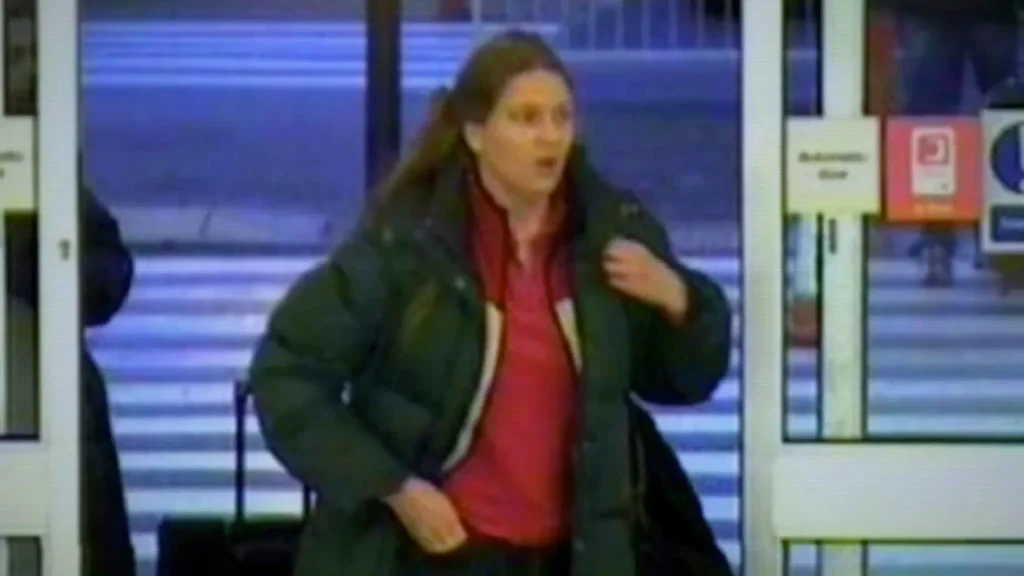
At Prestwick Airport, a CCTV camera captured Annie wearing a dark winter jacket, red and white fleece, trousers and trainers. Her hair was done up in a ponytail, and she had a bag over her shoulder.
At 3:16 pm, another CCTV camera saw her at a car park near the airport. According to the authorities, a woman of Annie’s age and fitness would have taken 1 minute 32 seconds to make the journey but she only took 55 seconds.
Then she started walking a mile towards the town of Prestwick while dusk started to fall on that winter afternoon.
A CCTV sighting at 4:05 pm showed someone resembling her walking along Station Road. Then at 4:30 pm, two people on a walk saw someone standing motionless on the water’s edge at low tide.
It hasn’t been confirmed whether that was Annie, but that was possibly the last time she was seen alive.
The Mysterious Annie Börjesson Death
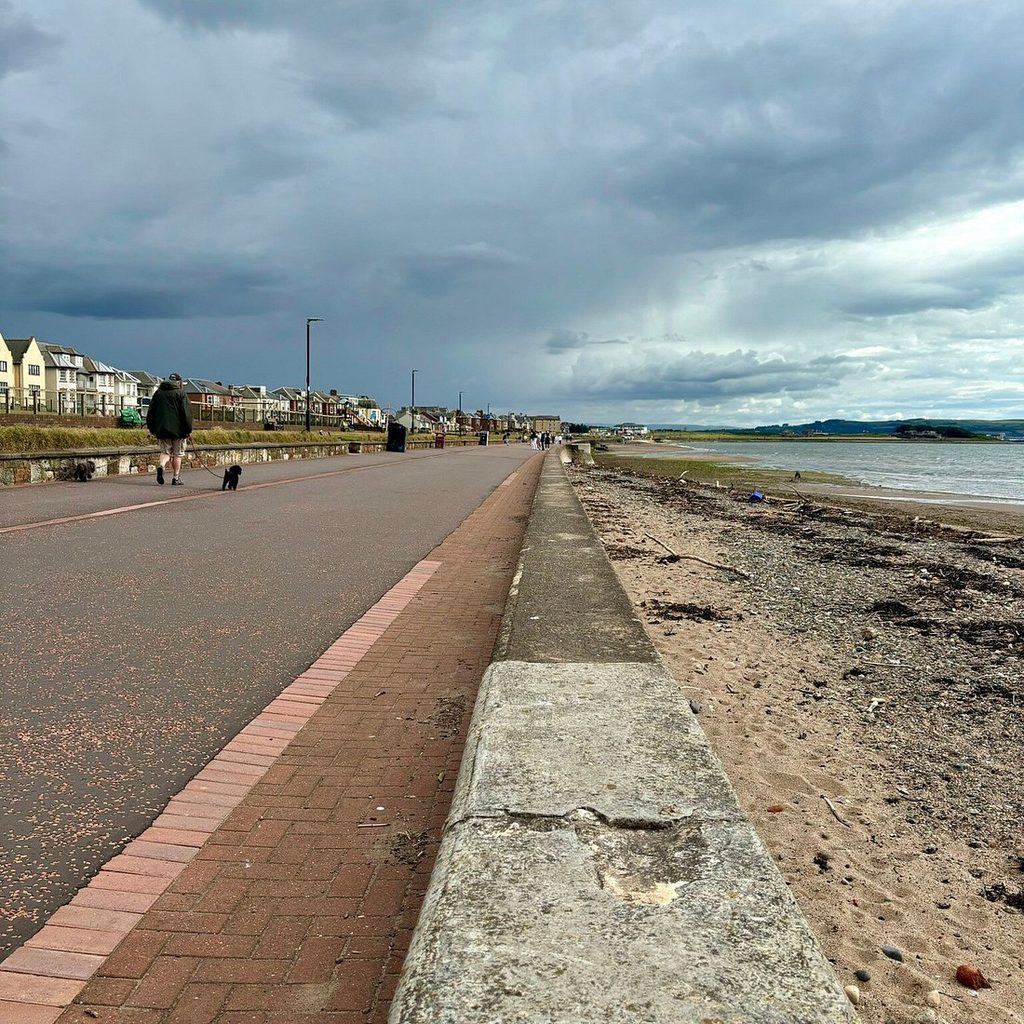
At 8:23 am on 4th December 2005, a man walking a dog discovered her dead body lying face down in the sand on Prestwick Beach. She had a top, jeans and sneakers on. Her jacket and her bag with clothes and two borrowed books were next to her.
Police immediately cordoned off the site, and the body was taken for post-mortem examination. The police had declared there were no suspicious circumstances surrounding her death, and the autopsy report confirmed the same.
The post-mortem detailed that the body was heavily contaminated by sand and seaweed, the lungs were congested, and the air passages contained ‘a frothy
material’. The conclusion was that Annie had drowned.
Scottish authorities informed her family that she had died by suicide, but when Annie’s body was brought home on December 16th, her mother found something odd. Her daughter’s waist-length blonde hair had been cut.
“She never allowed anyone but me or her hairdresser here at home to cut her hair,” Guje argued in an interview. When Annie’s coffin was opened, the undertakers discovered palm-sized bruises on her right arm as well as bruising behind the ear.
It was far beyond what was mentioned in the autopsy report. This led Guje to believe it wasn’t a suicide. She delayed the burial of her daughter, and the family decided to investigate on their own.
The Börjessons Take Initiative
They arranged more examinations of Annie’s body while they independently distributed leaflets around Ayrshire and Edinburgh in order to shed more light on the circumstances around her death.
A website named Annie Rockstar was also created, offering Annie’s Harley-Davidson motorcycle or its value in cash as a reward for whoever helped them find her murderer.
Guje and Jansson travelled between Sweden and Scotland multiple times, speaking to potential witnesses, approaching authorities. They also tried to get the authorities to reconsider her death as a crime, but failed.
The following video consists of audio interviews by Guje and other people who knew Annie, talking about how they struggled to find clarity and closure.
Then in 2009, Guje contacted Justice Denied, a national advocacy organization dedicated to addressing systemic failures within the legal system.
Justice Denied eventually got forensic pathologist Dr Glenn Larkin to review Annie’s autopsy reports. Larkin concluded that Annie Börjesson might have drowned in a freshwater body and was brought to the beach by the assailant.
The evidence in the autopsy wasn’t credible enough to conclude that she drowned in the shallow bay where the beach was. He also noticed a pale depression on her forehead and a pale area on her nose.
That suggested the body might have been lying against something after death, but
Annie wasn’t found lying against any article on the beach. Though this raised questions, it didn’t answer exactly how she died.
He requested post-mortem photographs to try and fill in the gaps in the autopsy reports, but the Scottish authorities refused, leading to a dead-end. But Guje didn’t lose hope.
Knocking On The Doors Of The Parliament
She met with Alex Salmond, the First Minister of Scotland at the time, and handed over a letter requesting a FAI (Fatal Accident Inquiry) in the Annie Börjesson case. Although Salmond listened to her concerns, he couldn’t make any promises.
In 2010, Guje’s relentless campaign for justice reached the doors of the Scottish Parliament. A committee met on October 5th to consider Guje’s petition PE1332. After deliberations, the committee proposed and unanimously agreed to three steps:
- To seek a response from the Scottish Government and the Crown Office and Procurator Fiscal Service regarding the family’s petition.
- To clarify whether the new specialist deaths unit could investigate suspicious deaths, including previously investigated cases. If not, the committee wanted to know why.
- To ask when the Scottish Government would respond to Lord Cullen’s recommendations concerning Scotland’s Fatal Accident Inquiry legislation.
The official report of the committee, however, didn’t mention anything about getting the Annie Börjesson case reopened. Guje continued her efforts with marches, vigils and independent investigations while her health declined.
The next big development in the case happened in 2020, but it didn’t bring the kind of relief the Börjesson family hoped for.
Government Secrecy And Redacted Closure
In March 2020, the Swedish Foreign Ministry released never-before-seen correspondence with the Scottish authorities detailing the exact manner, cause and location of Annie’s death.
But most of these details were redacted. The Swedish Government refused to disclose the files, claiming that doing so would harm national interests. This further fueled theories of this case being linked to the CIA.
Prestwick Airport, where Annie was seen a day before her death, was notorious for CIA rendition flights. Terror suspects would often be transported on these flights secretly and taken to isolated parts of the world to be interrogated under wraps.
According to an article, the airport served as a popular refuelling spot for these CIA-linked flights between the US and the Middle East. But CIA involvement in Annie Börjesson’s death was neither explored nor proven.
A minor theory also emerged linking Annie to an award-winning US journalist. Kristina Borjesson was an active critic of US national security agencies, and since Annie’s middle name was Kristina, it was believed that she was killed due to a case of mistaken identity.
But no further evidence popped up in relation to this theory. After more than a decade, Annie’s death is still unsolved, and her family has received no closure in their fight for justice.
Life After Annie
The search for answers consumed several years of Guje’s life, and it also affected her health. She kept campaigning until as recently as 2020. Not much is known about the life of Annie’s siblings or her father after her death.
Annie’s case was widely reported in podcasts, articles and documentaries. The most significant of them was a 2023 BBC documentary named Body On The Beach: What Happened To Annie.
It was a four-part documentary by journalist Hazel Martin, revisiting Annie’s final movements, questioning forensic findings and exploring theories ranging from a possible stalker to intelligence-agency involvement.
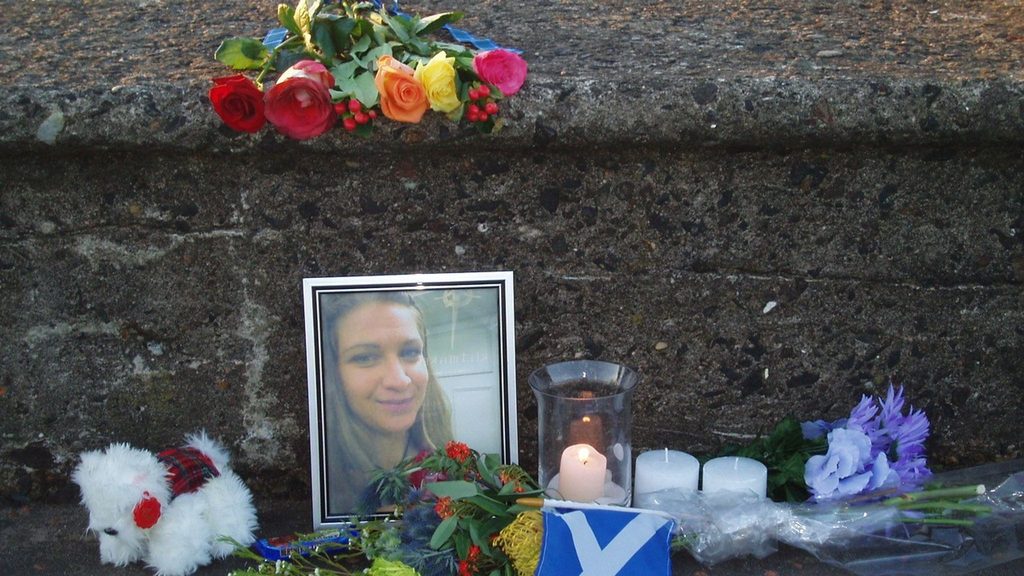
Jansson participated in the documentary, bringing new attention to the family’s quest for justice. But despite these efforts, the Scottish authorities have maintained that there’s no evidence supporting criminal involvement.
There have been multiple cases like this. Less than 2 years before Annie Börjesson died, a 17-year-old Brianna Maitland mysteriously disappeared, leaving behind her car and some personal belongings. Her disappearance remains unexplained to this day.
In 2000, a 16-year-old Molly Bish disappeared from her lifeguard post, leaving her shoes and equipment behind. Her remains were found in 2003, but her family kept seeking answers for decades without closure.