

Jeju Island is one of the busiest holiday destinations in South Korea, drawing over 15 million visitors every year, 8.8 million of whom are Korean tourists. In a missing person’s case, rapid police response can make all the difference.
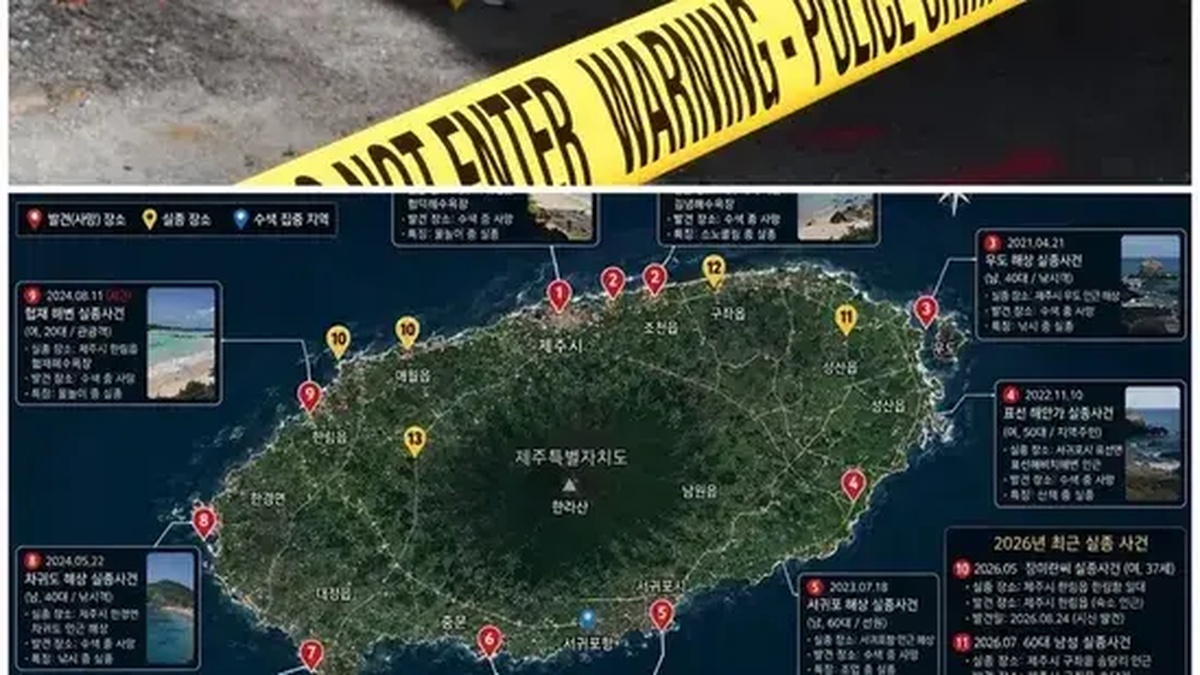
In 2026, it took the disappearance of 37-year-old Jang Mi-ran to raise questions about how Jeju Island missing person cases were reported, investigated, and followed up by the authorities.
Jeju Island Missing Persons: What Happened to Jang Mi-ran?
In early May 2026, Jang Mi-ran traveled to Jeju Island with her boyfriend. The couple rented a residential unit in Hallim-eup. Everything appeared normal until May 12, 2026, when Jang Mi-ran quietly left their residence and never returned.
The security cameras captured her leaving the building in a hooded cap, carrying her mobile phone and an electronic cigarette. By 10:16, she walked directly into the dark, isolated road.

Jang Mi-ran’s phone was last traced 400 meters from the nearby palm tree farm before the network disappeared at 10:20. By midnight, her boyfriend realized she still wasn’t home and tried calling her, but to no avail.
On the morning of May 13th, with no way to reach her, he left the villa and began searching for her. He scoured the streets, nearby spots, and the area around the Hallim-eup palm trees.
Between May 13th and 14th, he kept looking for her. By May 15th, 48 hours had passed, and there was no trace of Jang Mi-ran.
At that point, her boyfriend was sure that something was wrong with her. On May 15th, at 6:43 PM, he filed an official missing-persons case at the Seobu Police Station in Jeju.
How Jang Mi-ran’s Jeju Island Missing Person Case Was Dismissed
Within two hours of the case being filed, Officer Bu logged that the missing person refused to meet with police and requested that their phone number not be disclosed, thereby falsifying electronic evidence rather than investigating the case.
Officer Bu closed the case before it could be investigated further. He lied to Jang Mi-ran’s boyfriend and family; they took his word for it, and the search came to a halt.
By May 16th, Jang Mi-ran’s phone was permanently powered off near Hallim Port. When 2 months passed without any sign of her, her family started fearing the worst.
On July 17th, her boyfriend tried to refile the complaint with Jeju Police, only to find the case had already been closed. Fed up with the Jeju police’s inaction, her cousin traveled back to Seoul and requested that the Nowon Police Station re-investigate her disappearance.
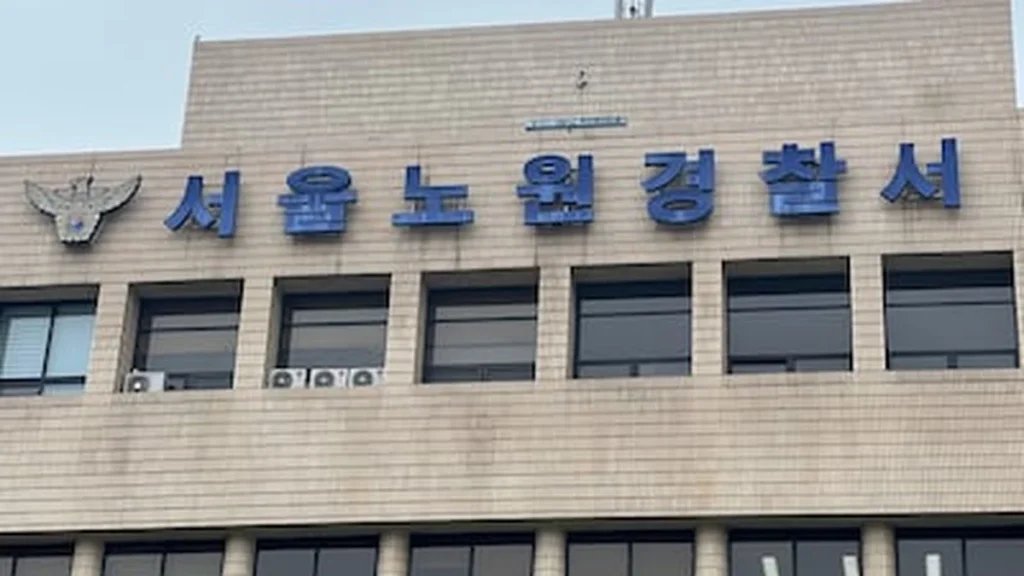
On 19th July, 2026, the case was finally reopened, but there wasn’t much the Seoul Police could do because the incident took place on Jeju Island, so the case was immediately handed over to the Jeju Western Police Station.
When the authorities questioned Officer Bu regarding the case, he maintained that he had already spoken with Jang and confirmed that she was safe. This claim stalled any active search operations that could’ve led authorities to Jang Mi-ran.
The Actual Investigation into Jang Mi-ran’s Disappearance
Once the authorities realized that Jang Mi-ran’s family was not going to back down, they formed a dedicated investigative team on August 4th.
Between August 5th and 11th, the team made multiple attempts to secure evidence. The delay had already cost them surveillance data, since CCTV footage is only retained for 30 days. None of the 118 cameras had any relevant footage.
During this period, Officer Bu was officially removed from standard duty following a misconduct charge, as he tried to break into a women’s restroom at a police station.
Jang Mi-ran’s family realized the authorities wouldn’t be able to find her anytime soon. On August 19th, they started printing flyers, contacting media outlets, and spreading Jang’s face and story across social media in the hope of answers.

The disappearance of Jang Mi-ran rapidly gained traction online and received widespread media coverage. The police’s negligence sparked outrage among Korean netizens, who demanded answers.
On August 24th, the case was cracked open when police finally found Jang Mi-ran’s decomposing body in a palm tree farm just 400 meters from the guesthouse where she had been staying.
The Jeju police immediately arrested Officer Bu on 25th August for negligence and for falsely creating electronic evidence to close cases prematurely.
According to the National Police Agency, she most likely died by hanging. The investigators claimed that they found a rope nearby and also had autopsy reports to support their claims.
According to the National Forensic Service, the exact cause of her death couldn’t be determined via autopsy. Her boyfriend also refuted the suicide claims, saying that she had always avoided palm tree farms and wouldn’t have gone there voluntarily.
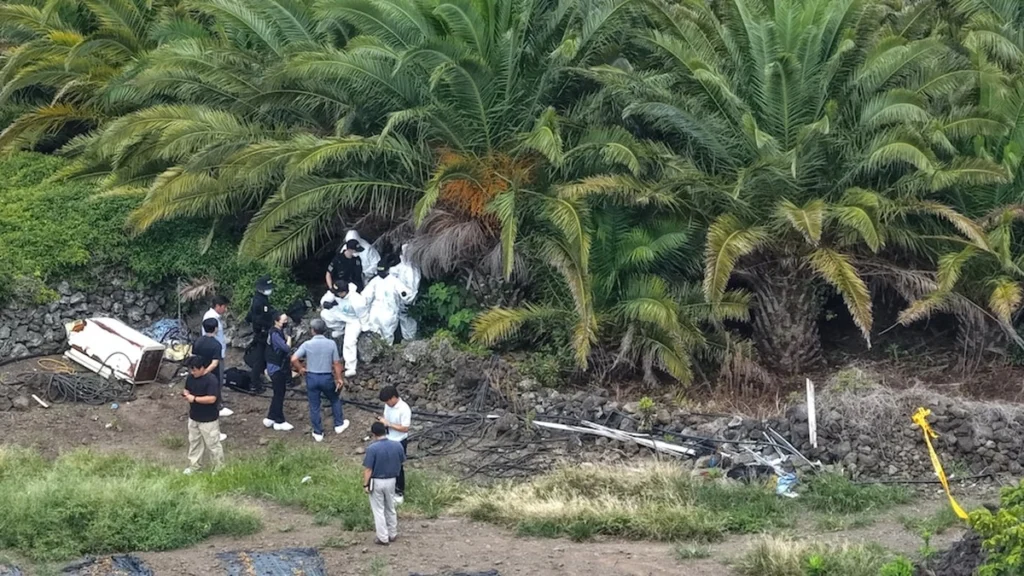
On August 27th, Jeju police reenacted the circumstances around her death. According to The Straits Times, Police stated, “The results of the reenactment will be considered as part of the investigation, and we will keep various possibilities open throughout the investigation.”
After the reenactment, the police found that the circumstances were consistent with the claims. However, they later confirmed that reaching a definitive conclusion would require expert analysis.
As reported by ChosunBiz, Hong Sug-gi, head of the National Office of Investigation, addressed the cause of Jang Mi-ran’s death on August 31. He stated, “Because the body was severely decomposed, we are investigating while keeping all possibilities open.”
Jang Mi-ran Wasn’t The Only Jeju Island Missing Persons Case Mishandled
While Jang Mi-ran’s case was tragic, it was not isolated. On August 22, police found the remains of a man in his 60s near a construction site in Gujwa-eup.
He had been reported missing 51 days earlier. During that time, Officer Bu reportedly told his family that he was safe and didn’t wish to disclose his location.
New Nation reported that his son addressed his disappearance, stating, “We believed the police when they said my father was safe and waited, but after 51 days, what returned was his body. The police only suggested that the family investigate privately.”
Around the same time, another man in his 70s was found dead. On August 23rd, a local fisherman found his body floating in the waters near Sin Kong-ri.
Unlike the previous two cases, his case was seriously investigated as soon as his family reported him missing on August 22.
The Man Behind The Jeju Island Missing Person Scandal
These revelations led to serious concerns about the previous cases he had handled. The authorities began an internal audit of all 298 cases assigned to him between 2025 and July 23, 2026.
After working with the Missing Persons Investigation Team at the Jeju Seobu Police Station for more than 17 months, Officer Bu allegedly mishandled more than 63 cases. He falsely closed cases, fabricated evidence, and lied to the families in most of them.
In cases like Jang Mi-ran’s, he went so far as to falsely label her as a “casualty of a traffic accident” simply to close the case as soon as possible.
According to the BBC, Officer Bu admitted, “The missing person was a typical adult, so I thought about it carelessly. If the case had not closed, there would have been a lot to take care of, and out of a sense of pressure over the case handover, I falsely closed it.”
After his arrest, he was escorted to the Jeju District Court on 25th August 2026. The judge heard the case and inspected the evidence before issuing a pretrial warrant.
His colleagues were baffled by his actions. Speaking to Korea JoongAng Daily, one of them commented, “We honestly have no idea. Why on earth would he do something like that?”
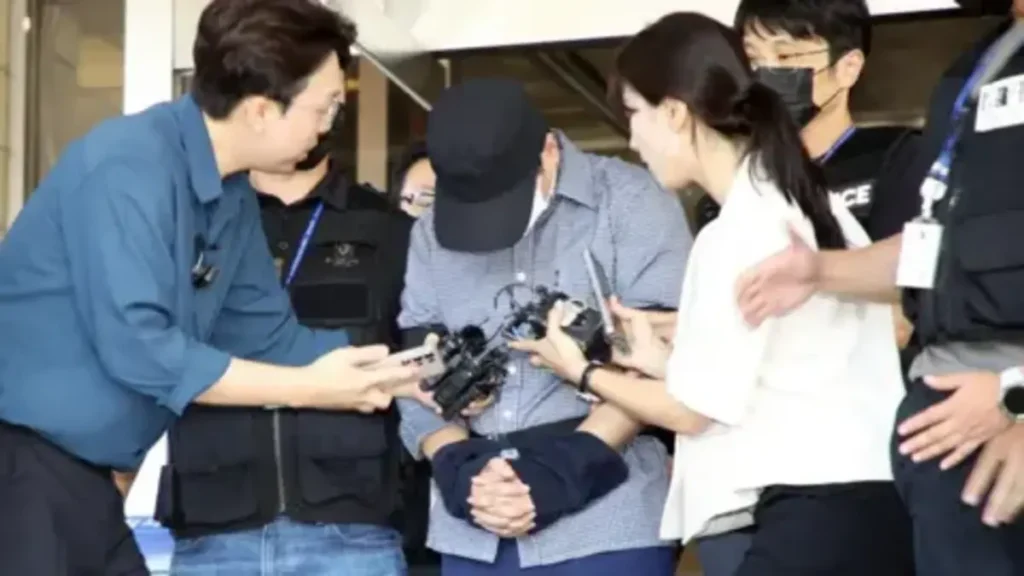
Before the truth came to light, he was praised for reuniting missing persons with their loved ones. He accumulated 10 official commendations between 2020 and early 2025.
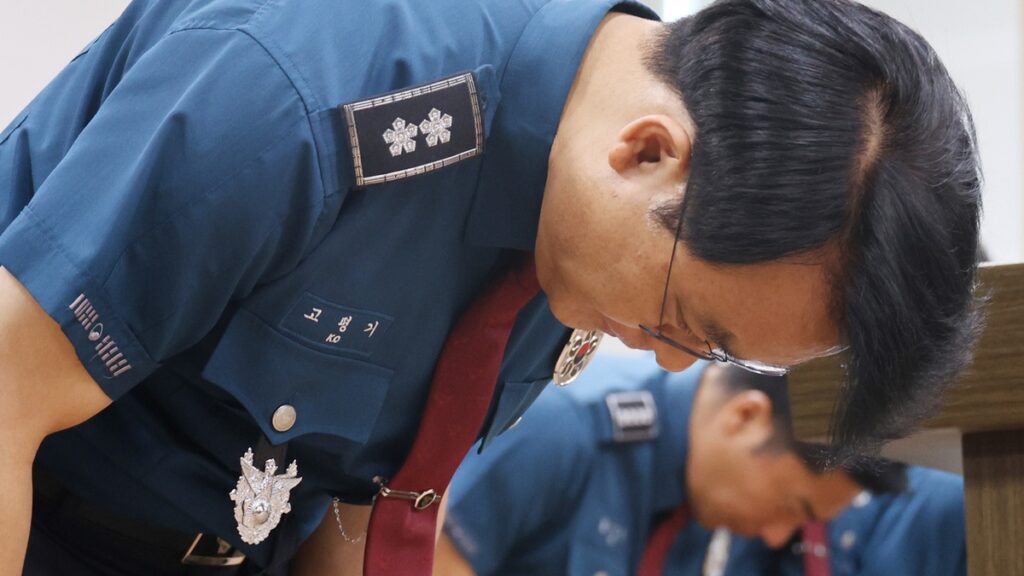
According to the Strait Times, Jeju Police Commissioner Ko Pyeong-gi apologized to the local residents at the Jeju Provincial Police Agency.
He bowed to them and stated, “I bow my head in apology to the two deceased people who never made it back to their families, and to the bereaved families suffering grief beyond description.”
By September 1st, Jeju police completed logging the evidence and formally transferred Bu’s custody to the Jeju District Prosecutors’ Office. He’ll remain in detention until state prosecutors finalize his trial date.
What About the 63 Jeju Island Missing Person Cases?
While addressing officials at the Blue House, President Lee Jae Myung said, “Police will exercise the greatest power among state institutions in the future, responsibility must be strengthened in proportion to the magnitude of authority”, according to Korea JoongAng Daily.

The Jeju Provincial Police organized the cases into three categories:
- Legal Omissions: Cases that did not really need to be included in the official Missing Persons Profiling System. These included false alarms and resolved issues.
- Multidepartment Clearances: Cases in which the missing person case was picked up by another police department and solved successfully.
- Malicious Deletions: Cases where Officer Bu deleted information or lied about the whereabouts of the victim to close it.
The police organized specialized anti-corruption and cybercrime units to close the gap left by Bu as quickly as possible. Some of these cases were resolved or taken over by other departments; the rest remain unsolved.
After seeing how one police officer’s negligence could delay justice in so many cases, the government ordered a national audit for 310,000 cases. As of 31st August 2026, 15,000 missing-person cases have been audited.
Jang Mi-ran’s case played a pivotal role in exposing how delayed justice can cost lives. It also highlighted systemic issues that can only be addressed through accountability.
The Molly Bish, Ryan Shtuka, and Jennifer Kesse cases highlight why time is of the essence in these situations, because any delay can be detrimental to the case.