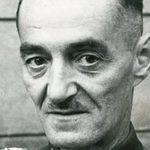

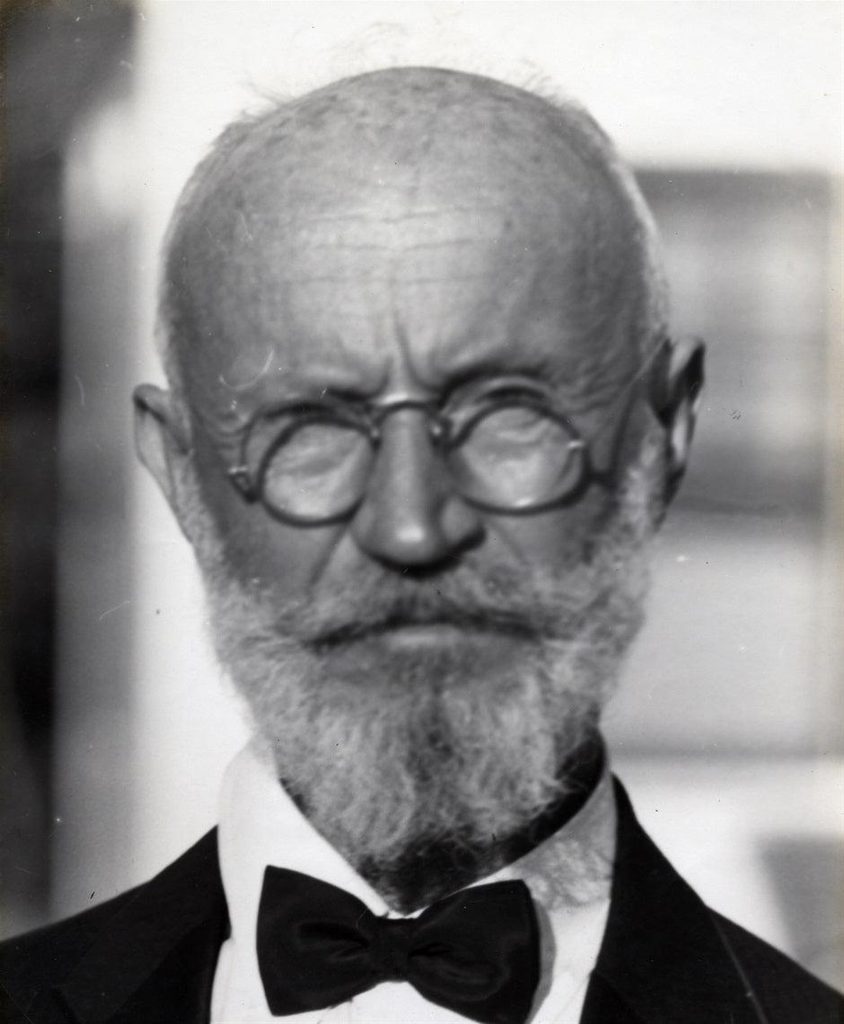
In October 1940, more than 2,000 people passed through a Key West funeral home in a single day to look at a woman who had been dead for nearly nine years. Elena Hoyos’s body had just been recovered from the home of Carl Tanzler, an X-ray technician who stole it from her tomb and kept it for seven years.
Her sister, Nana Medina, wanted her buried again. Some of the people following the case wanted the body returned to Tanzler.
Louis A. Harris, the lawyer who volunteered to represent him, feared another burial would kill his client. “I think it would be a crime to take the old man’s dream away from him,” he told the Associated Press.
Tanzler first met Elena on April 22, 1930, when she arrived at the Marine Hospital in Key West for tests to assess her tuberculosis. She was twenty. He was the technician assigned to draw her blood and take her X-ray, a German immigrant in his fifties who called himself Count von Cosel.
He later claimed that he recognized her from visions he experienced long before they met. She was the woman he was supposed to love, and he believed he could save her.
Tanzler came to Key West in 1927, a year after emigrating to the United States. His wife, Doris, and their two children remained elsewhere in Florida. Along with his aristocratic title, he claimed an impressive assortment of academic qualifications. The writer Ben Harrison, who later investigated his life, could not verify the degrees.
His hospital position nevertheless put him in contact with a seriously ill young woman, and he offered her a cure. He began treating Elena with radiation and continued his efforts at her parents’ home, where she occupied a small room. He brought electrical apparatus of his own devising and expensive gifts, combining the attentions of an admirer with the promises of someone who said he could keep her alive.
Elena was already married, although she and her husband were separated. She was back with a family that had little money, accepting help from a man determined to provide it. Her mother encouraged her to be kind to someone who was being kind to her.
“She never loved him,” Nana later told the Miami Herald, in an interview quoted by This American Life. “She looked upon von Cosel as a grandfather.”
Elena rejected his proposals and reminded him of their age difference, Nana said. Eventually his persistence became so unwelcome that the family asked him to stop coming to the house.
Elena died on October 25, 1931, at twenty-two, about eighteen months after their first meeting. Tanzler paid for her funeral and later obtained the family’s permission to move her remains into a mausoleum he financed in the city cemetery. He continued visiting her there for hours at a time.
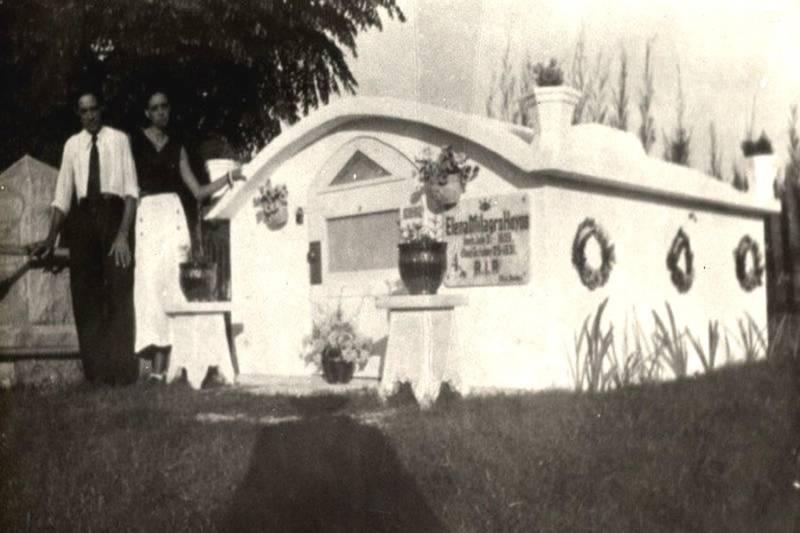
Looking after her increasingly meant looking inside the coffin, where her body was deteriorating. Tanzler tried to arrest the decay with chemicals. He also began describing conversations in which Elena spoke to him, apparently willing to enter a relationship her sister said she refused while alive.
Among the things he claimed to hear was La Boda Negra, or “The Black Wedding,” a Spanish-language song about a lover who opens his dead bride’s grave. The lover carries her home, places her on a bed of flowers and says his marriage vows. Tanzler said he heard Elena singing from her coffin.
When he later explained to a deputy why he removed her, he spoke about what would otherwise have happened to her remains.
“I did not want one so beautiful to go to dust.“
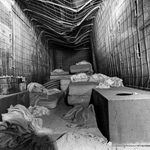
In 1933, without the family’s permission, he took the body from the mausoleum. He initially kept it in a wingless airplane near the hospital, where he had access to his laboratory. The aircraft was his own project, and his plans for it included Elena. He imagined flying her into the stratosphere, where cosmic rays would cure her.
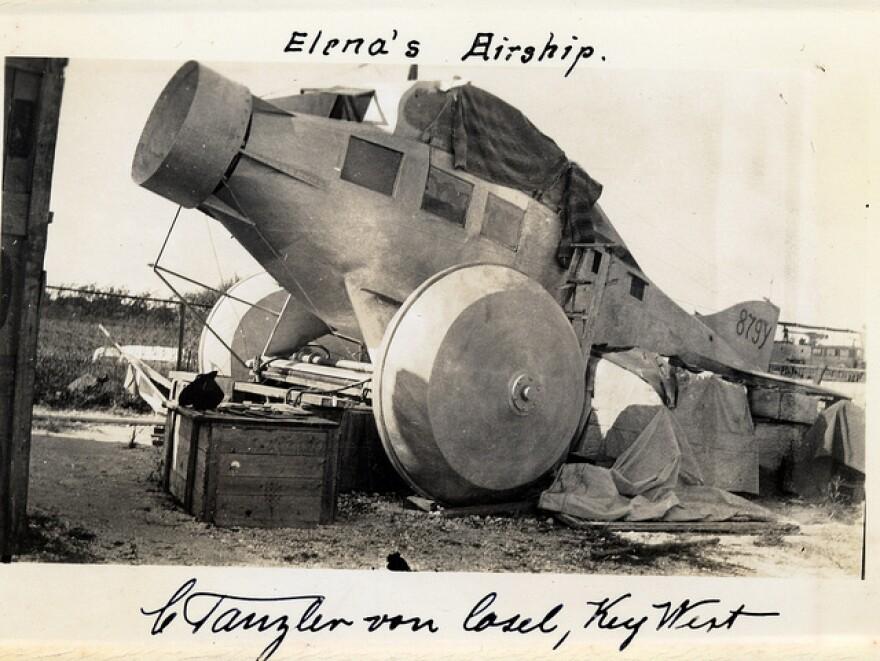
To keep the body intact, he reconstructed it with materials including wax and wire. He rebuilt her face with plaster, silk and wax and inserted glass eyes. Wire held together her bones, and clothing covered the figure he remade as her remains deteriorated. He used oils, spices and perfume while tending the body, dressing it in silk.
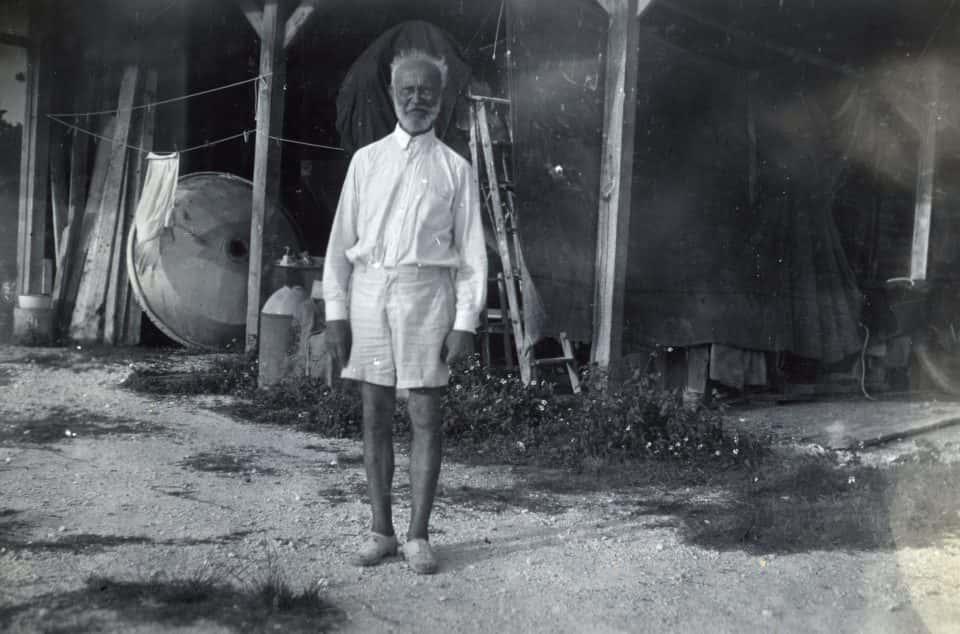
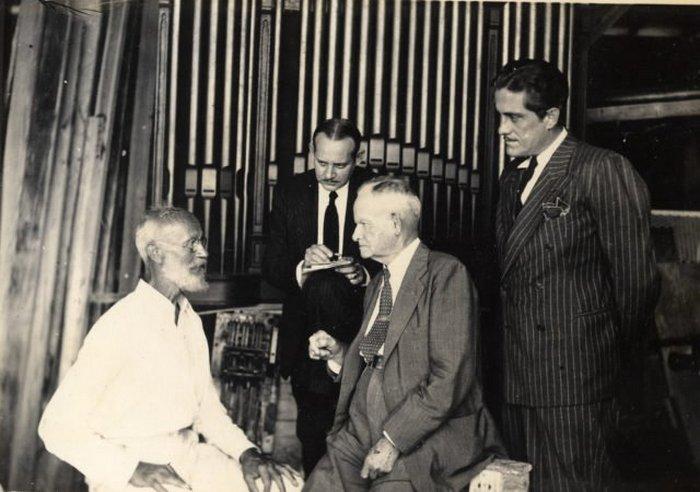
He moved his work more than once, eventually settling in a ramshackle building on Flagler Avenue. Inside were an elaborate bed and a homemade pipe organ. In the household routines he later described, he played music in the evenings and prepared eggs, toast, and Lipton’s tea in the mornings, then carried breakfast to the bedside and invited Elena to join him.
The mausoleum still stood in the cemetery. By the autumn of 1940, Nana wanted to look inside it. Tanzler refused to open the coffin.
Their confrontation eventually moved to his home. In his own account, written afterward, Tanzler described inviting Nana and her husband to see Elena, expecting the sight of her dressed and lying in bed to reassure them. He presented himself as the person who kept her safe and Nana as someone who could not appreciate what he had done.
Nana wanted her sister put back in the coffin, and she wanted to be there to see it done. Tanzler’s account preserved his answer, beginning with a reminder that he paid Elena’s expenses and ending with a claim of ownership.
He told her, “You forget that I own that tomb with everything that is inside, not you!”
Nana turned to the authorities. On October 6, deputies arrested Tanzler and removed the body. A contemporary report described Elena lying in a single bed near the one he slept in, dressed in a silken robe and veil, with gold bracelets and an artificial rose in her hair. He readily acknowledged taking her from the tomb.
Elena was taken to an undertaker’s, where the crowds began arriving. The family had recovered her, but now thousands of strangers could inspect her remains. Photographs recorded the reconstruction Tanzler kept hidden for years.
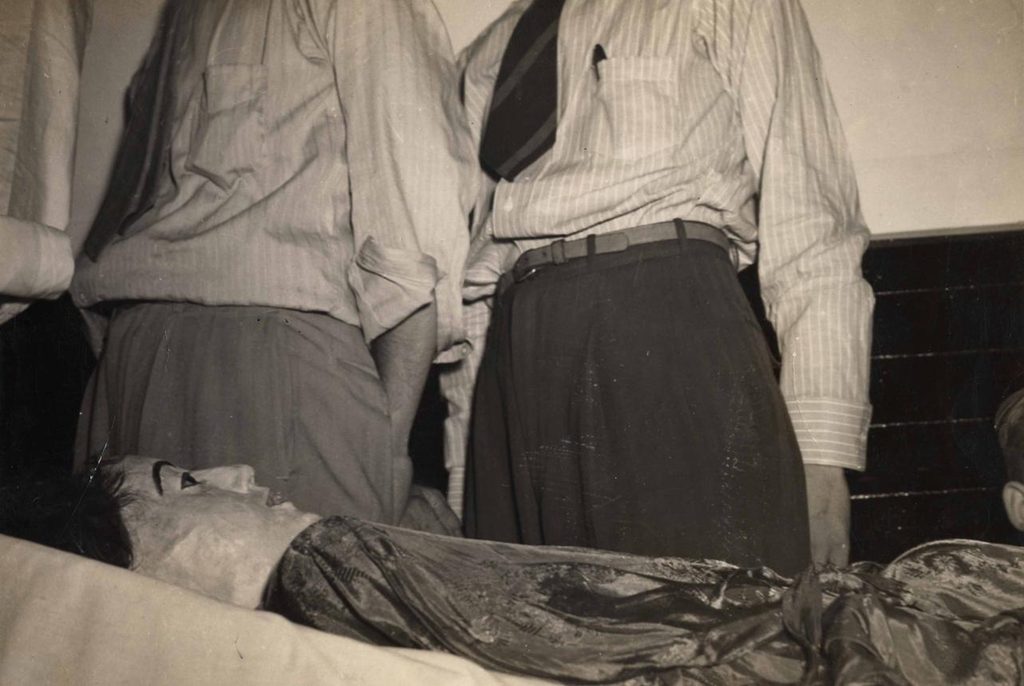
A physician present at the examination, Alvan G. Foraker, would later describe alterations beyond those visible to the visitors. In a recollection quoted in the historical journal Tequesta, he reported a vaginal tube “constructed so that intercourse could be simulated.” That account, published decades after the examination, underlies allegations that Tanzler also used the corpse sexually. The prosecution he faced in 1940 concerned grave disturbance.
Tanzler seemed surprised that anyone considered his actions grounds for arrest. He told reporters he promised to care for Elena and that her father permitted him to look after her body. The permission to place her in a vault became part of his explanation for taking her out of it.
An Associated Press dispatch reported widespread sympathy in Key West, including wishes that the body be restored to him. Harris offered his legal services without charge and worried aloud about separating his client from Elena. The account of a bereaved man facing the loss of his beloved left little room for Nana’s description of a sister who repeatedly told him no.
The prosecutor, Allen B. Cleare Jr., wanted a psychiatric examination, whatever happened to the grave charge. He worried about how Tanzler would react to losing the body permanently and did not want responsibility for releasing him without an assessment. A court-appointed commission examined Tanzler in private and pronounced him sane on October 10. The contemporary report noted that he answered technical and scientific questions.
Supporters were already making a more ambitious argument on his behalf. Preserving a body for so long, they reasoned, demonstrated scientific ability. Perhaps the authorities were punishing someone whose work they did not understand.
On October 12, the Key West Citizen printed a letter three people sent to Harris, two from Deerfield Beach and one from New York. They objected to the imprisonment of “such a noble person” and argued that his treatment of the body should count as valuable research rather than a crime.
Their letter contrasted a world bent on killing and destruction with a man who might restore someone to life. Even a million-to-one chance, they thought, justified the attempt. They wanted him “liberated, with compensation” and permitted to continue his work, provided he obtained permission from the custodians of his subject.
The newspaper inserted a qualification. Harris said his client had never claimed that he expected to bring Elena back to life.
The sympathy also produced practical help. That same day, a tourist-camp proprietor and a barbecue-stand operator provided a $1,000 property bond. Tanzler once befriended the first man. He did not know the second. After a week in jail, he returned to the abandoned warehouse where he lived with Elena’s body.
The prosecution eventually failed because too much time had elapsed since he removed her from the tomb. The statute of limitations barred the case. He escaped punishment for the removal, but his release did not restore the arrangement Nana ended. Elena remained out of his hands.
Tanzler continued telling his story. In 1947, Fantastic Adventures published his account as The Secret of Elena’s Tomb. Readers could follow his version from their first encounter at the hospital to the officials who took her away. He described conversations with Elena and treated the recovery of her body as an intrusion into their life together.
When officers searched his home after he was found dead in 1952, they discovered a wax replica of Elena’s body and a separate wax likeness of her head. Photographs in albums titled The Secret of the Tomb and Elena in the Battle of Life. The Associated Press still introduced him to readers as a romantic older man who believed his love was stronger than death.
Years before that discovery, Nana arranged what she wanted for her sister. The Key West Citizen recorded the burial in a brief notice on December 19, 1940. Nana instructed the Lopez Funeral Home to hold Elena’s body until three o’clock the previous afternoon. At half past three, the funeral home buried her in the city cemetery.
They placed her in a grave rather than the elaborate vault Tanzler owned. The location was not disclosed.
For more disturbing stories from history, read about Oskar Dirlewanger, the Nazi commander even the SS wanted arrested, or the $5 million kidnapping plot that left 26 schoolchildren buried alive in California.