
More than a month after Regina Kay Walters disappeared, a man telephoned her father with news about her hair.
“I made some changes. I cut her hair.”
The calls reached Jerry Walters at work and at his unlisted home number. The man said Regina was in a barn loft. When Jerry asked whether she was alive, he hung up.
Regina was fourteen. Her parents, Carolyn and Jerry, were divorced, and she usually lived with her father in Houston. As The FBI Files later recounted, she was visiting her mother, a department-store clerk, in nearby Pasadena when she disappeared. The last time she was seen at her mother’s apartment was February 3, 1990.
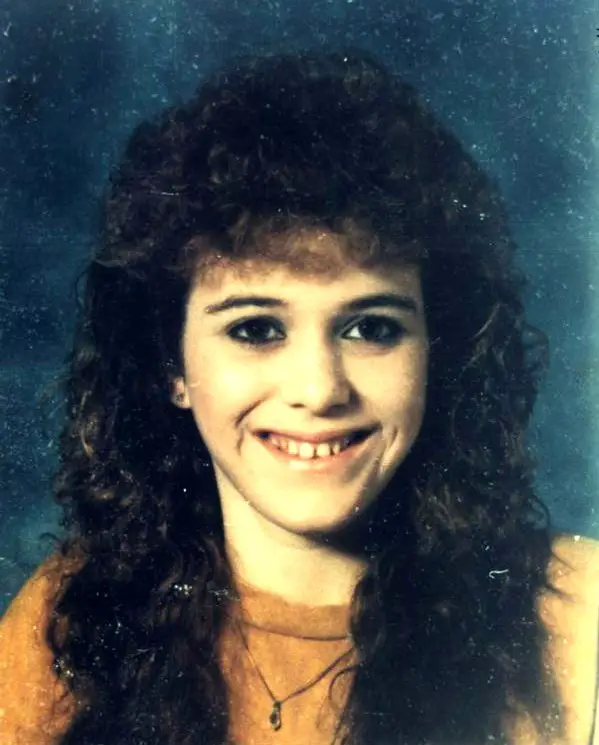
She had left home before, but she generally checked in. “Regina would normally call her mom,” Pasadena detective Suzanne Jackson recalled in an interview for the documentary. She would say she was all right and would return when she was ready. This time, she hadn’t called. Carolyn put up flyers and offered a reward.
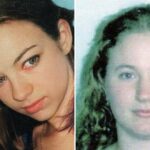
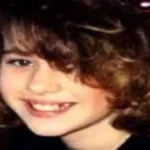
A family photograph her mother later supplied to the FBI shows Regina laughing in the back seat of a car. Sunlight falls on her long hair. It preserves an ordinary moment before her disappearance, without explaining what prompted her to leave.
She went with her eighteen-year-old boyfriend, Ricky Lee Jones. He told friends they planned to hitchhike to Mexico. Their precise movements would prove difficult to reconstruct, but the investigation eventually placed Regina in the truck of Robert Ben Rhoades, a long-haul driver based in Houston. He was forty-four, thirty years older than she was.
Behind his truck’s front seats was a sleeper compartment, screened from outside view. Rhoades had equipped it with restraints, including handcuffs attached overhead. The arrangement allowed him to imprison a passenger while continuing to drive. Someone accepting a lift could enter a space already prepared for captivity.
Years earlier, Debra Davis had met Rhoades wearing a pilot’s uniform. He was a trucker calling himself Dusty, presenting himself as something he was not. In the account she later gave for Discovery’s Evil Lives Here, deception was followed by pressure over what she would accept sexually.
Rhoades wanted to restrain her with handcuffs. When she refused, he accused her of being cold and immature. Davis began to think something was wrong with her. Her refusal became, in his telling, a defect she needed to overcome.
Her account describes a pattern within their relationship: he sought to define the acceptable response, then made resistance a reason for humiliation. It cannot establish when he began attacking strangers. It does show how he could present coercion as a problem belonging to the woman subjected to it.
In a letter to his wife later examined by journalist Vanessa Veselka, he wrote, “I always told you there were three things you could do: play, pass, or run.” There was little room for those choices inside the truck’s sleeper compartment.
Early in 1990, a woman abducted from California escaped after roughly two weeks chained inside his truck and repeatedly raped. Police found Rhoades, but she was too frightened to identify him. He went free.
Her account described captivity sustained over days and across state lines. The distance she had travelled with him offered no protection; the truck carried the restraints along with her. Within weeks, police in another state would encounter a second woman who could not leave.
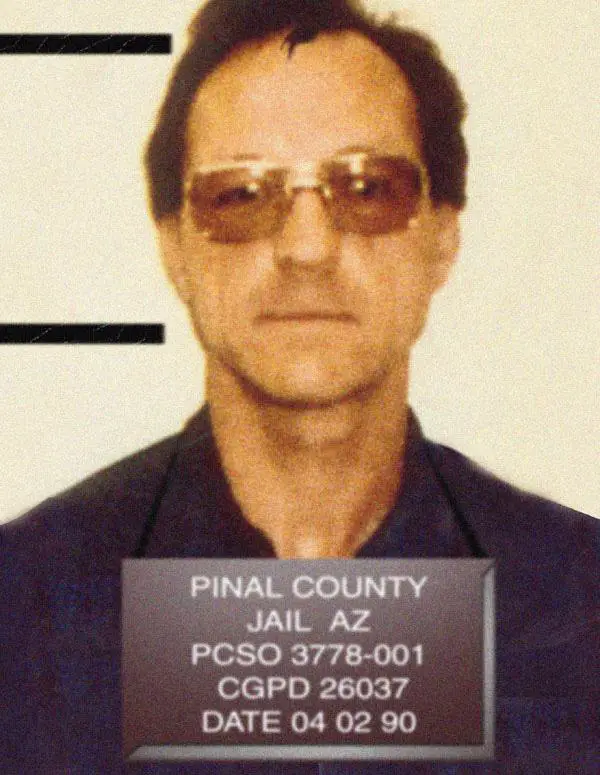
In the early hours of April 1, 1990, Arizona state trooper Mike Miller approached a tractor-trailer beside Interstate 10 near Casa Grande. Its hazard lights were blinking. He stopped to see whether the driver needed assistance.
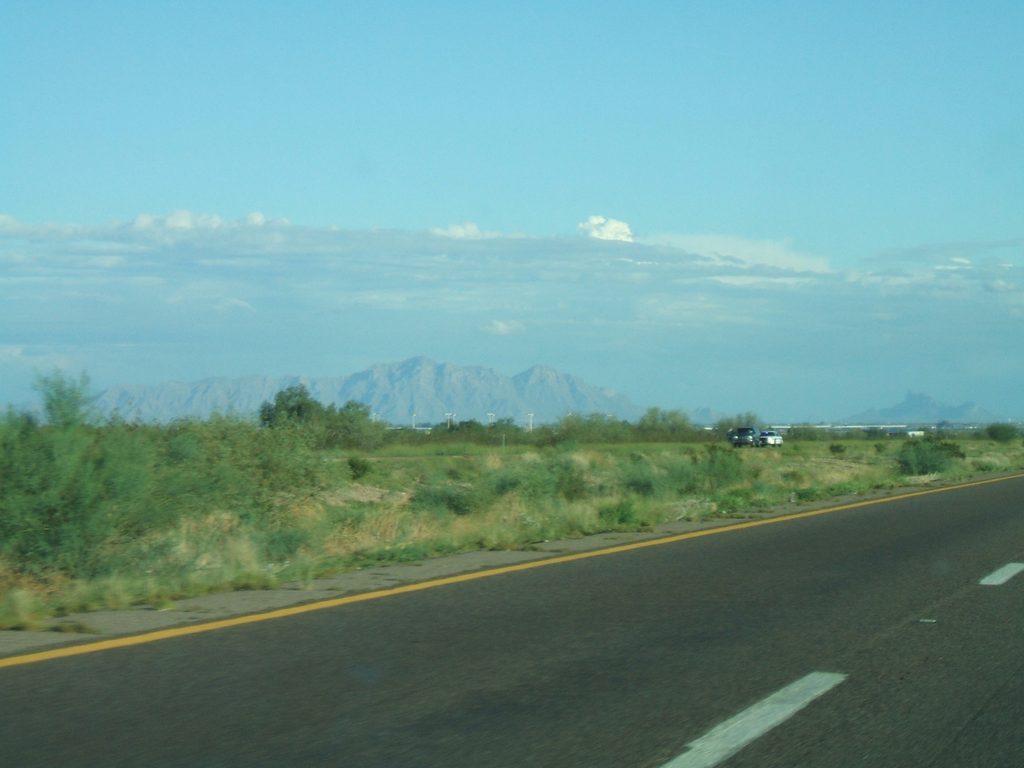
Inside the sleeper compartment, a woman was chained and shackled to the wall. She began screaming when he shone his light into the truck. Rhoades emerged from the cab.
“Nothing, officer, we’re doing just fine,” Miller later recalled him saying.
Miller handcuffed him and returned to the captive woman.
The woman was freed and Rhoades arrested. She told investigators he had whipped and tortured her. He had called himself “Whips and Chains.”
The arrest led investigators to his Houston apartment. Among the items recovered were photographs of a teenage girl, restrained in some pictures and posed at a barn in others. They did not yet know her name.
On September 29, 1990, Regina’s decomposed body was found in a barn beside Interstate 70 in Bond County, Illinois. She had been strangled with baling wire. Dental records sent from Texas confirmed her identity.
The evidence was accumulating in different states, in investigations that did not yet tell a single story. Police in Texas had begun with a missing teenager. Officers in Arizona had rescued a woman from a truck. Investigators in Illinois had a body recovered hundreds of miles from the victim’s home.
Such distances created a persistent problem in highway murder investigations. A missing-person report, an assault and unidentified remains could reach separate departments without anyone recognizing their connection. The FBI would later describe how investigators worked backward through trucking logs, fuel receipts and other records to reconstruct a suspect’s movements. A driver’s working day could carry him through several states; following him required finding the records and people who could place him along the way.
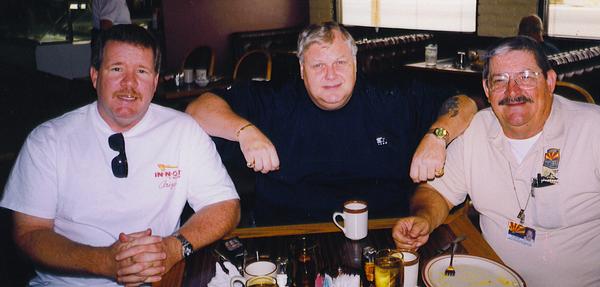
In Houston, FBI agents Mark Young and Bob Lee were working on different parts of the evidence. Young was investigating Regina’s murder; Lee had the material seized from Rhoades. After Lee overheard Young discussing his case, they compared information.
“This is Regina Walters,” Young recalled saying when he saw the photographs. He obtained family pictures to verify the identification.
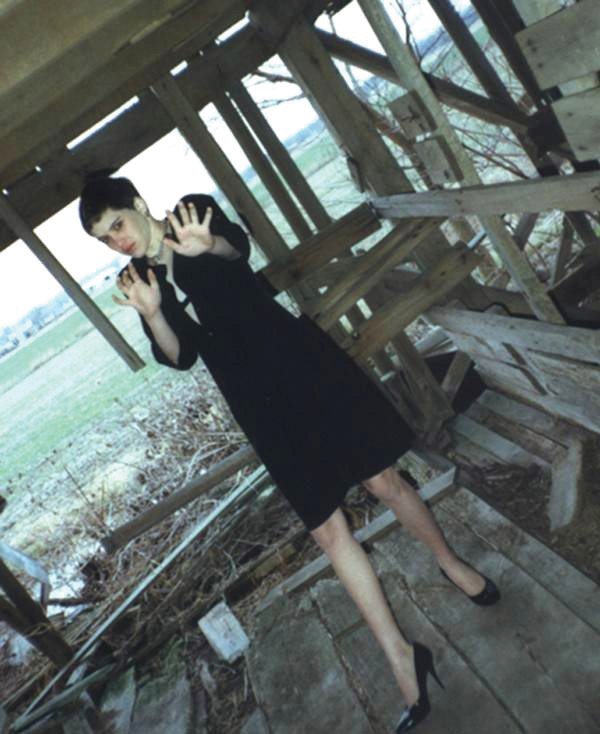
In the best-known photograph, Regina wears a dark dress and high heels. Her hair is short. She stands inside the deteriorating barn with her hands raised toward the camera.
The photograph preserves the position of her hands, the clothes she was wearing and the building around her. It does not preserve what was said. The intensity of the image can make it seem to supply a complete account of the encounter, although much of what happened remains outside its frame.
For investigators, the pictures established concrete connections. They showed Regina in Rhoades’s truck and at the barn where her body was recovered. Clothing found in his apartment resembled clothes she wore in the photographs. His employment logs placed him on Interstate 70 in Bond County during February or March.
The murder count he eventually admitted alleged a date between February 3 and March 17. The record does not establish that the familiar photograph was taken seconds before she died.
His logs also matched the anonymous calls: Oklahoma City on March 16, where he bought fuel at the truck stop from which one call originated; Ennis, Texas, the following day. Regina’s notebook, recovered from his truck, contained her father’s unlisted number. It explained how the caller could reach Jerry.
The notebook also contained a threat: “Ricky is a dead man.”
Lee interpreted the evidence as sexual sadism: gratification in another person’s suffering. The restraints, prolonged captivity and repeated assaults showed a sustained exercise of control. Rhoades had prepared a place where he could keep victims available to him over time, punish resistance and make leaving impossible. That preparation gave investigators something firmer than his explanations or boasts on which to base their understanding of his conduct.
In 1996, Davis described her reaction to the Tucson Weekly: “He killed a 14-year-old. I have a 14-year-old daughter myself.”
On September 11, 1992, Rhoades pleaded guilty to Regina’s murder in Illinois and received a life sentence. The admission came more than two years after his arrest in Arizona. By then, the investigations had connected the child missing from Pasadena with the photographs in Houston and the body in Illinois.
Prosecutors had sought the death penalty; the negotiated plea brought natural-life imprisonment. Rhoades subsequently challenged aspects of the proceedings. In 2001, the Illinois appellate court affirmed his conviction and sentence.
Other families were still waiting.
Before Regina disappeared, Rhoades had encountered another travelling couple in Texas. Patricia Candace Walsh, twenty-four, and Douglas Scott Zyskowski, twenty-eight, were newly married and travelling to preach the Christian gospel. Investigators believed he killed Zyskowski soon after picking them up, then held Walsh captive before killing her.
Zyskowski’s body was found in Texas in 1990 and identified in 1992. Walsh’s remains were discovered by hunters in Utah in October 1990, but her name was not established until 2003, through dental records. That identification linked the two slayings. DNA recovered from items belonging to Rhoades subsequently connected him to Walsh.
Utah authorities charged him with her murder in 2005, then dismissed the charge the following year so that Texas could prosecute both deaths together.
On March 26, 2012, Rhoades pleaded guilty to both capital murders. Judge Brock Jones imposed two additional life sentences, consecutive to each other and to the Illinois sentence. Relatives of both victims attended the hearing and delivered victim-impact statements afterward.
The agreement addressed the possibility that the Illinois conviction might someday cease to hold him. Rhoades agreed to waive parole and appeal rights in the Texas cases. Prosecutor Laurie English gave up the death penalty in exchange for terms intended to keep him imprisoned for life. Under the Texas law applicable to the 1990 crimes, an ordinary life sentence could have allowed parole eligibility; the negotiated waivers were therefore a consequential part of the agreement.
Ricky’s case remained separate. The Doe Network’s historical archive records that his remains were discovered in Lamar County, Mississippi, on March 3, 1991, and identified in July 2008. Authorities have suspected Rhoades in his death, but Ricky was not among the victims named in those murder pleas.
The number of other people Rhoades may have attacked remains uncertain. “He was on the interstate everywhere,” Texas prosecutor Steve Smith told ABC News in 2012. His mobility left investigators with possible connections to examine; passing near a crime scene could suggest a lead without proving a killing.
Rhoades remains imprisoned at Menard Correctional Center in Illinois. His state prison record lists a life sentence and no eligible discharge date.
Among the objects that helped investigators connect him to Regina was her notebook. It held telephone numbers for her mother and father, her grandmother and her friends.
If you enjoyed this story, I’d really appreciate it if you checked out some of my other articles. The Fatal Obsession With Becoming Rachel Barber is about a woman who became so obsessed with a 15-year-old girl’s life that she wanted to become her.
I’ve also written The Doctor Who Tried to Remake His Patients’ Minds, about a psychiatrist who subjected his patients to brutal experiments designed to erase their memories, break down their identities, and rebuild their minds from scratch.
If you have any ideas for what I should write about next, please leave a comment below. I’d love to hear them. If you like getting lost down rabbit holes, then please do add us to your bookmarks. Every day we post a few new stories about everything from true crime, weird history, science and tech. You may just find yourself lost in some fascinating stories!