
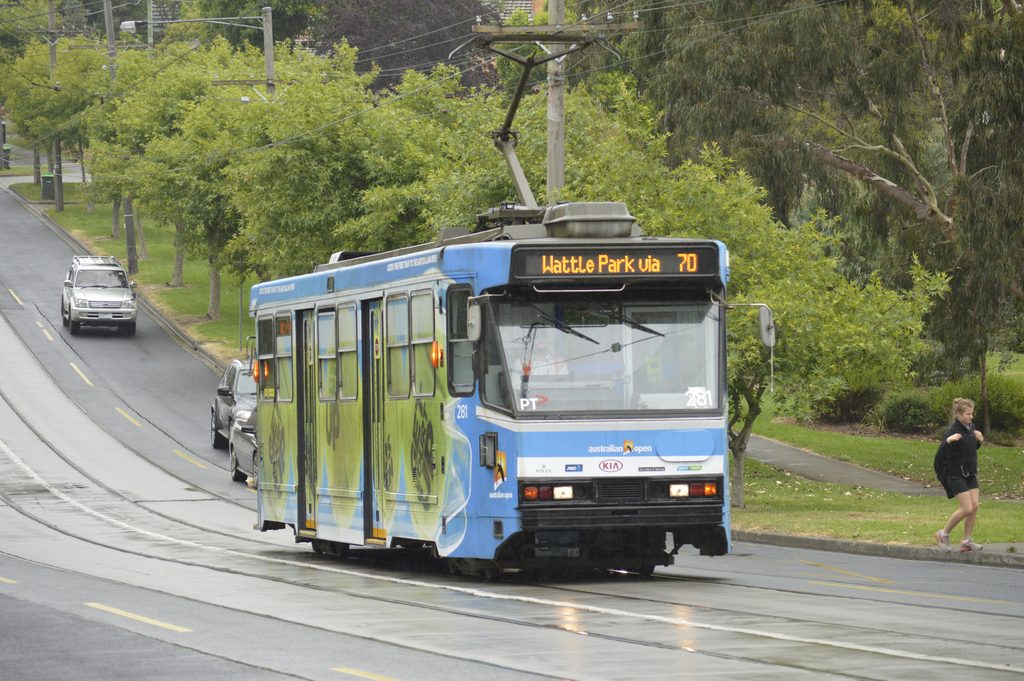
On March 1, 1999, Michael Barber was supposed to collect his daughter from a tram stop at Wattle Park, in Melbourne’s eastern suburbs. Rachel had spent the day at the Dance Factory in Richmond. They had agreed to meet at about 6:15. She did not arrive.
He waited an hour, then called Elizabeth from his parents’ house at 7:40 to ask whether Rachel had telephoned. She had not. Father and daughter had confirmed the arrangement that morning, Elizabeth later recalled. Rachel had said, “Love you, Dad.”
Rachel was fifteen. She lived in Bayswater North with her parents and two younger sisters, Ashleigh-Rose and Heather, and had left conventional schooling to train full time in dance. Her boyfriend, Manni Carella, attended the same school. That afternoon she had shown him shoes costing 100 Australian dollars and said she would buy them the following day.
She expected to earn the money that evening, doing a job for an old female friend. The friend was Caroline Reed Robertson, who had once babysat the Barber children. Rachel had not told her parents she would be late. That evening, Michael reported her missing at Box Hill police station.
Long before she was old enough to travel across Melbourne for classes, Rachel made space to dance by pushing furniture aside. She searched the dress-up box for scarves and skirts and demanded an audience. “Watch me, watch me,” Elizabeth remembered. Lessons began at five; eventually the family moved from the country to Melbourne to support her training.
When Elizabeth was working, Michael finished his own work at three, picked up the girls and prepared them for dance class, including doing their hair. He remembered the sisters singing together at home, with Heather, the youngest, sitting in the middle.
At thirteen, ill health and an excessively strict teacher interrupted Rachel’s progress. She stopped ballet and became afraid to return. A year later, she told her father: “I know why I am so miserable, it is because I am not dancing.”
She found her way back through musical theater and contemporary dance. The Dance Factory in Richmond offered singing and drama as well as dance. Conventional schooling had made her unhappy, and her father supported her wish to audition for performing arts training. By the time she disappeared, she had committed herself to it full time.
Robertson’s acquaintance with the family reached back to late 1992 or early 1993, when they lived in Mont Albert. Rachel and Ashleigh-Rose were friends with Robertson’s younger sisters. Robertson babysat during 1996 and 1997, and in 1997 photographed Rachel for what she described as a school project.
Later, Rachel told her mother that Caroline knew someone who might arrange photographic work for her. During the summer holidays of 1998–99, Robertson asked Ashleigh-Rose for the girls’ birth dates, again invoking a project. At some point, she also applied for a copy of Rachel’s birth certificate.
On February 28, two calls went from Robertson’s home to the Barbers’: the first lasted about fifteen minutes, the second nearly half an hour. By the following afternoon, Rachel was telling fellow students that she would earn substantial money that night. She said she would explain the next day.
After classes ended at about 5:35, Rachel walked along Church Street with other students. She declined a lift from Manni’s brother and an offer from a classmate to walk with her to the tram stop. At about 6:40, Allison Guberek saw Rachel and Robertson board a tram at High and Chapel streets in Prahran. They got off near Trinian Street, where Robertson lived.
Robertson had devised a confidential psychological study to explain the meeting. Her handwritten instructions proposed A$100 plus transport expenses. Rachel was to tell no one: “Not even your boyfriend/parent.”
The plan called for Rachel to bring identification, photographs, clothes, ballet shoes and a teddy bear. Robertson would discuss the objects’ significance and use relaxation techniques. Her notes also contemplated drugging pizza, using a toxic substance and disfiguring the body.
Robertson later told Michael Crewdson, a psychologist who treated her in prison, that she and Rachel had collected pizzas. Rachel had shown little interest in alcohol. Robertson asked her to undertake a relaxation exercise, she said, then strangled her with a telephone cord.
The precise time of death remained uncertain. A neighbor heard crying in the early hours, but it was never clear whether the voice was Rachel’s or Robertson’s. Robertson told Crewdson that the body remained in a wardrobe for two days. She then wrapped it, put it in an army bag and hired a taxi truck.
She said she told the driver the load was a sculpture. The destination was her father’s property near Kilmore, where she buried Rachel in a shallow grave. The journey probably took place on March 3. She had called a taxi-truck company and repeatedly asked a colleague to repay a debt, saying she needed it for a removalist. On March 3, the colleague gave her A$200.
On March 2, the Barbers returned to police with photographs. Elizabeth recalled a desk officer unfamiliar with their report; another officer retrieved it from a hook. That afternoon, they showed Rachel’s photograph to tram passengers near the dance school. A shopkeeper made a poster, which they photocopied for Manni’s family and dance students to put up.
Around March 3 or 4, Rachel’s wallet was found in her locker at the Dance Factory. Inside were A$1.20 and a used tram ticket from the morning she disappeared.
Robertson, meanwhile, told colleagues that the missing girl might have run away. On March 7, she telephoned the Barber household. A family friend, Andrew Southall, took the call and recorded her name and number among the callers.
On March 10, Elizabeth crossed to a petrol station to buy newspapers carrying Rachel’s disappearance on their front pages. She later described seeing her family become a story strangers would read and judge: “Not strangers. Me. Us. Our family.”
Police media staff arranged for television and newspaper reporters to visit the house together so the Barbers would need to tell their story only once. Furniture was moved; lights, cameras and microphones filled the living room. Elizabeth remembered wondering: “Will they help us find our beautiful daughter?”
That same day, Robertson went to a Bank of Melbourne branch on St Kilda Road and applied for an A$10,000 loan. She needed the money urgently to buy a car, she said, although she had no driver’s license. The following day she called the branch three times to ask about the application.
On March 11, Guberek helped police construct a computer image of the woman she had seen with Rachel on the tram. Officers visited Robertson’s apartment at 9:20 the next morning and received no answer. They returned at about 5:30 that evening with keys obtained from the property’s agents. The keys did not get them inside, and repeated telephone calls went unanswered.
Firefighters entered through an open bedroom window and found Robertson apparently unconscious on the floor at the foot of her bed. An ambulance took her to hospital, accompanied by Detective Senior Constable Neil Paterson of the Missing Persons Unit. At 9:52 p.m., she admitted to him that she had killed Rachel.
The following afternoon, March 13, police searched trees on the Kilmore property and recovered Rachel’s body, wrapped in blankets, with a cable around her neck. The next day’s autopsy identified probable ligature strangulation. The cable was electrical or telecommunications wire; its origin could not be determined. The search had ended twelve days after the missed pickup.
Among the papers recovered from Robertson’s apartment was a proposed life for someone called Jem Southall: sixteen years old, with an invented family history. Southall was the surname of Rachel’s grandfather, the writer Ivan Southall. Robertson had set down fictitious details about the new persona’s parents, giving a background to the younger person she intended to become.
Robertson pleaded guilty. At sentencing on November 29, 2000, Justice Frank Vincent found that envy of Rachel’s family, appearance, personality and anticipated future success had motivated her. He also read the parents’ account of Rachel’s academic difficulties and interrupted training. The life Robertson coveted included struggles she had scarcely understood.
Robertson’s letters and diaries expressed loathing of herself, yet she had functioned reasonably well in administrative jobs in telecommunications. The court considered reports from a psychiatrist and two psychologists alongside those writings. Vincent found that an entrenched personality disorder had contributed to the offense and made public protection a significant concern. He declined to establish her allegations about family mistreatment as facts.
He sentenced Robertson to twenty years in prison, with a non-parole period of fourteen years and six months, crediting 627 days already spent in custody. He accepted that she felt remorse, while questioning her insight and suspecting that much of her reaction was “based on self-pity.”
Elizabeth had been keeping journals and writing letters to Rachel. In 2003, those writings formed part of Perfect Victim, the account of the Rachel Barber murder she published as Elizabeth Southall with court reporter Megan Norris.
The book supplied the true story behind In Her Skin, also known as I Am You. On January 20, 2015, Robertson was released on parole from the Dame Phyllis Frost Centre. Elizabeth spoke publicly that day about what she wanted to happen next.
Elizabeth would have preferred a longer period in prison and believed Robertson had shown no remorse. Yet she opposed harassment of Robertson and her family, arguing that it would make the return to the community less safe. Speaking to Fairfax radio, she said that “justice, as far as Rachel is concerned, will never be done.”
The parents also resisted a simple description of their position as forgiveness. Elizabeth explained that Michael considered the word too strong. “We just can’t hate her,” she wrote. Refusing hatred did not mean endorsing Robertson’s release; they had opposed it and supported parole reform.
Television’s interest in the case also reached the courts. In 2016, Justice Lex Lasry refused an application for Robertson’s recorded interview of March 13, 1999. She had answered no questions, and the recording had not formed part of the sentencing evidence. Lasry warned against presenting her exercise of the right to silence as evasion. This interview was separate from the hospital conversation in which she admitted the killing.
Michael’s recollections returned to the years before the disappearance: Rachel coming home from school and changing into costumes, or learning a whole dance after seeing it once. Her ability onstage had been obvious, he wrote, but “what I remember is the everyday things of Rachel.”
Even in the weeks before her death, she had asked him for extra sweets at supermarket checkouts. They cost only a few dollars. Trying to save money, he usually refused. “Now, of course, I wished I’d just let her have them.”
Read next:
A student documentary helped reopen Janet Chandler’s murder investigation.