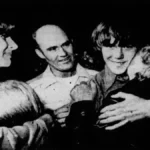

When police found security-camera footage of James Bulger with two older boys, his mother felt relieved. Her missing two-year-old was holding a child’s hand. In her later account of the search, Denise Bulger remembered believing that the boys would not hurt him because they were children themselves.
The boys in the pictures were Robert Thompson and Jon Venables, both ten. On February 12, 1993, they took James more than two miles from a shopping center in Bootle, near Liverpool, and killed him beside a railway.

Denise’s shopping trip that Friday was almost over when she stopped at the butcher’s. James, a little over a month away from his third birthday, stood beside her while she was served. She looked down, and he was gone.
In the statement later read to the jury, Denise described running out of the shop and asking people whether they had seen him. Nobody had. She went to the shopping center’s security desk and reported him missing.

Cameras at the New Strand shopping center recorded James leaving and his mother coming out to search for him.
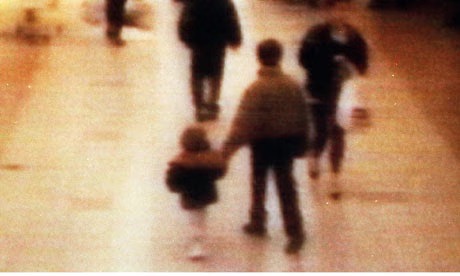
Beyond the shopping center, Thompson and Venables took him across roads, past shops and through residential streets. Witnesses saw them pulling him by the arms, carrying him and, at times, hurting him in public.
A van driver saw James leaning backward while each boy held an arm and tried to drag him across a road. His face was red, and he was crying. Looking back in his mirror, the driver saw one of the boys kick him. Another witness noticed a fresh bump on James’s forehead and looked again, concerned.
A woman walking her dog saw the boys pulling a toddler up a bank and challenged them about the injury to his head. She thought they were brothers. Her testimony differed from her earlier police statement about what the boys said, but both versions described her questioning them.
In Walton, Elizabeth McCarrick saw two boys with a toddler near a pedestrian subway. They were asking another woman for directions to a police station, and McCarrick offered to take the little boy herself.
James was quiet, his head lowered, and McCarrick thought he looked tired. Her daughter took his hand.
The older boys insisted on taking him to the police. One took James’s hand back, and McCarrick watched the three cross the road and continue walking.
Months later, McCarrick cried while giving evidence. She recalled the moment when “my little girl actually held his hand.” She could not positively identify the defendants.
Those encounters became part of the accusation that dozens of adults had ignored James. Psychologist Mark Levine, who examined accounts from 38 witnesses, found that some of the witnesses were children and that several people had intervened.
Levine argued that assumptions about family relationships helped shape what witnesses thought they were seeing. People who took the boys for older brothers could understand a toddler’s distress differently, while the boys’ claims that they were taking James home or to the police offered reassurance.
Thompson and Venables reached the railway embankment in Walton with James still in their custody. His partially stripped body was found there on February 14, two days after he disappeared. A train had cut it in two.
Denise later recalled being out searching in a police car when the officer was called back to the station. She expected to be reunited with James. Instead, a detective knelt beside her and told her they had found him, and it was not good news.
Pathologist Alan Williams counted 42 injuries, including multiple skull fractures. James had been struck at least 30 times. Bruises, cuts and grazes covered his head and face and extended across his shoulders, chest and legs.
A patterned bruise on his cheek was consistent with kicking or stamping. Brick dust on his clothes and body helped establish what had been used against him. Williams testified that the multiple head injuries caused James’s death before his body was placed on the line.
The boys threw blue paint into James’s face and attacked him with bricks, stones and an iron bar. They left him across the track so that a passing train would make his death look like an accident.
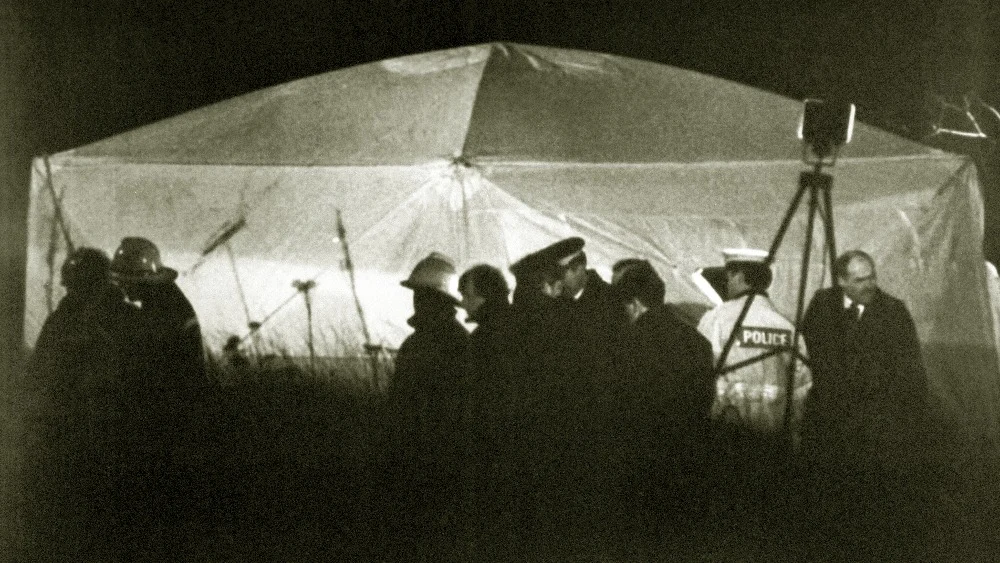
As police tried to identify the boys in the nationally broadcast CCTV images, witnesses began recognizing James as the toddler they had seen. Before the arrests, Thompson accompanied a neighbor to the railway embankment when she went to leave flowers. According to her statement, later read at trial, he walked away looking at the other tributes.
Police arrested Thompson and Venables on February 18, six days after James disappeared. When officers arrived at Venables’s home, his mother expected questions about his truancy. Instead, they arrested her son for murder and abduction. She sat with him during his early interviews as he cried and changed his story.
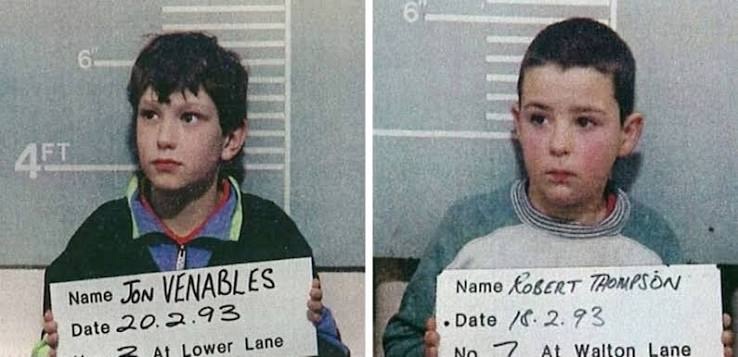
Venables initially denied going to the Strand on the day James disappeared. Then he admitted being there but claimed that Thompson had taken James and abandoned him. His mother asked, “You wouldn’t do that to a boy, would you?” He continued crying and asked to go home.
Told about the CCTV, Thompson offered a simple objection: “Many jackets get sold the same as mine.”
When detectives challenged Thompson’s account, he kept changing the place where he said they had left James. He first claimed they had left him earlier in the journey, then eventually acknowledged reaching the railway. Venables also admitted more, while blaming Thompson for the violence.
DNA testing matched blood on Venables’s shoe to James. The blood sample from Thompson’s footwear was too small for DNA testing.
Blue paint on both boys’ clothes matched the paint found on James. In his police interviews, Venables described their shoplifting, including stealing paint.
By the time their trial began at Preston Crown Court in November, both defendants were eleven. The court allowed shorter days and regular breaks, with social workers beside the boys to help them follow proceedings. They sat in a raised dock intended to give them a better view, which also made them more visible to the crowded public gallery.
Outside court, vehicles carrying the boys were attacked. In the adult criminal trial, the prosecution also had to establish that they understood their conduct was seriously wrong, beyond ordinary childish misbehavior.
The jury heard the evidence about James’s injuries and examined the objects recovered near his body. The bloodstained bricks, stones and metal bar were handed to jurors in clear bags.
On November 24, the jury convicted both boys of abduction and murder. Denise and James’s father, Ralph, attended the verdict after staying away from much of the evidence. Their lawyer said the family had obtained the only acceptable verdict, but the trial had supplied no real answer to why James was killed.
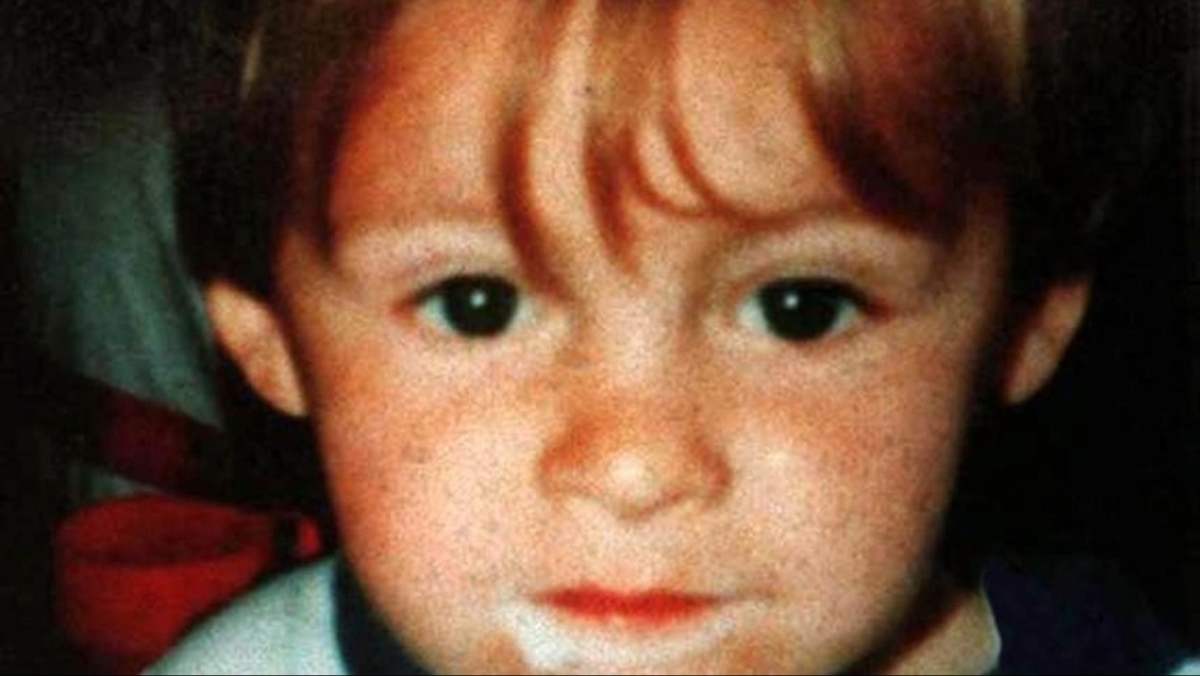
Neither boy supplied a reliable account of his own part in the attack. Michael Morland, the trial judge, later recorded that he could not determine their relative culpability.
Both boys received indefinite detention during Her Majesty’s pleasure. Morland recommended an eight-year minimum, after which release could be considered. His report explained the timescale: “They are now children. In 8 years they will be young men.”
The Lord Chief Justice recommended ten years, but Home Secretary Michael Howard set a fifteen-year minimum, taking account of public demands for longer punishment. Howard’s decision was overturned in 1997.
In 1999, the European Court of Human Rights found that the public, highly charged trial had prevented the young defendants from participating effectively in their defense. The judgments in Venables’s and Thompson’s cases concerned how they were tried. Their convictions remained in place.
Thompson and Venables were released with new identities in 2001, after the Parole Board decided that continued confinement was no longer necessary to protect the public. Their indefinite sentences continued under license conditions that allowed their return to custody and prohibited contact with James’s family or each other.
Venables was recalled to prison in 2010 and again in 2017 after child sexual abuse images were found in his possession. In November 2026, another parole review kept him imprisoned. He told the panel he needed more time in custody and was not seeking release.
Denise, who remarried after James’s death and became Denise Fergus, opposed the boys’ release in 2001. “Those two had murdered him and were getting their lives back. James wasn’t getting his life back,” she said in a 2018 interview. She also rejected vigilantism and said she did not want them dead.

On March 16, 2011, what would have been his twenty-first birthday, Denise launched the James Bulger Memorial Trust. Its work included respite holidays for children and families affected by crime, bereavement and bullying.
As she raised three more sons, Denise said, she tried to keep her anger out of the home so they could grow up in a happy household. A large picture of James hung above the fireplace.
She remembered him trying to copy the dance routine to Michael Jackson’s “Thriller.” If a cousin wanted the toy he was using, he handed it over and found something else.
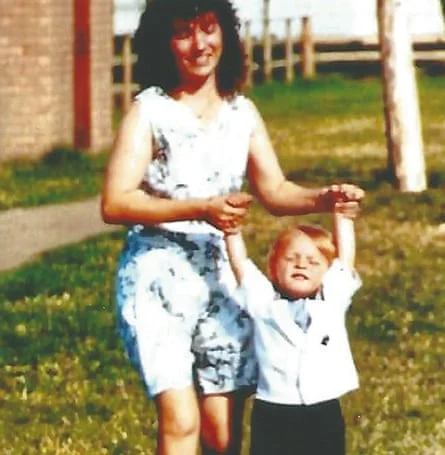
On the twentieth anniversary of James’s death, Denise told ITV she saw something of James in each of his brothers. She had spent too little time with him to know what he would have been like as an adult.
In a photograph published with her 2018 account, her three younger sons posed together at a charity ball with a portrait of James. The caption called it “the only picture of all four of my boys together.”

For more stories of child abduction and its aftermath, read about Mary Bell, who killed two small boys while she was still a child, or Steven Stayner, who escaped his kidnapper to bring another boy home.
Image rights notice: If you are a copyright holder and have concerns about an image used in this article, please contact us. We will review your request and remove the image where appropriate.