
The subject of attractive privilege is controversial and inspires heated debate. In circles involving customer care, education, and hospitality, the theme comes up now and again, especially if some individuals feel they are at a disadvantage.
Testing this theory in real life is not exactly politically correct, but the right set of circumstances presented during the COVID pandemic. When most people were working or taking classes remotely, it had the unexpected result of levelling the visual playing field.
Adrian Mehic, a graduate student at Lund, initiated a study on discrimination during the pandemic. He focused the study on the effects of student attractiveness on academic results.
This was particularly true for female students during in-person study and remote instruction. He got data from five different cohorts of students in a Swedish University.
The students attended a portion of the course remotely during the COVID-19 pandemic, when classes were online. Lectures and seminars were also held online.
Students were also told to turn on their videos, but it was not mandatory. The results then revealed that switching the classes online eliminated the beauty premium.
Overall, the attractive female students experienced a decline in their grades during remote instruction. But the attractive males continued to enjoy the advantage.
Mehic stated, “I’m interested in discrimination generally. In economics research, lots of attention is given to discrimination based on gender and/or race. While these are important issues, there has not been much research on beauty-based discrimination in the educational setting, so the paper fills a gap there.”
Mehic drew a distinction between the premiums that persisted for men, but not for women. For men, he argued, the advantage reflected productive qualities such as confidence and assertiveness.
There remains a question about whether the study inherently involved bias. Beauty lies in the eye of the beholder, so what would be the classification of beauty standards for a female student at the university?
The same can also be said for attractive men. This article also indicated that attractive male students tend to have greater influence over their peers.
This confirms the same attractive privilege, meaning that attractive females affect teachers and others around them.
For males, it could be linked to other factors coinciding with beautiful features, such as being well-groomed and charming. These have a positive effect on their grade point average, aside from facial attractiveness alone.
Overall, the study posits that attractive privilege has always existed in society across various fields. It was only in isolation that it was easy to point out.
What is Attractive Privilege, and How Long Have We Known About It

The favoured attractive privilege definition is an unearned social or economic advantage given to a person because they fit a general metric of beauty in that society.
Academic studies on physical attractiveness as a social advantage date back to the early 1970s. Psychologists like Ellen Berscheid and Elaine Walster coined the phrase “what is beautiful is good.”
This is a heuristic bias in which people unconsciously attribute positive characteristics, such as morality and intelligence, to beautiful people.
Before that, the Gestalt theory determined that the whole is greater than the sum of its parts. It is theorised that people tend to organise objects according to their sensory perception process.
In the process, individuals’ cognitive processing is not dependent on separate assessments but rather on holistic assessments of the stimulus.
Hence, people may be more likely to attach to attractive people because their sensory perceptions of them are stimulated.
Later, economist Daniel Hamermesh turned the phenomenon of attractive privilege into an empirical science in the 1990s. The paper titled “Beauty and the Labor Market,” co-authored by Jeff Biddle, discussed the wage gap between attractive and unattractive workers.
Findings demonstrated that workers in the lower levels of attractiveness rankings typically earned up to 9% less than their average-looking peers. The top percentiles earned 5% more than the average.
The study conducted at Lund University was not the first to document a beauty premium in the education sector. Hamermesh authored a paper that analysed student evaluations of instructors at the University of Texas.
The more attractive the lecturer, the higher the teaching scores. This was also independent of measurable differences in teaching quality.
The dynamic also worked in the other direction. Research showed that teachers also tended to have higher expectations of students.
This was connected to the Pygmalion effect, the tendency for expectations to shape outcomes. A teacher who unconsciously expects a student to do well may give encouraging feedback, offer more second chances, and be generous in awarding marks.
What made the Mehic study forensic in its precision was the experiment the pandemic provided. Without eliminating visual cues, COVID-19 created a control group, unlike the researchers, who artificially created one.
The classroom did not change, nor did the curriculum or the professors. The main variable was visibility and the grade gap for attractive women, which narrowed after their faces left the screen.
Parallels in the Justice System

The stakes of attractive privilege are significant in many fields, such as education and the workplace, but they are even higher in the courts. This is because the results are measured in years in prison.
According to a Cornell University study, unattractive defendants received prison sentences 22 months longer compared to the attractive defendants who received similar convictions. The mechanism appeared to be rooted in emotional reasoning.
Jurors who intuitively processed information had a higher likelihood of imposing harsher verdicts on unattractive-looking defendants. This was especially in scenarios where the evidence was ambiguous.
An analysis of sentencing data from Philadelphia and Pennsylvania courts also found that criminals rated low in attractiveness were sentenced to 4.1 years. This was compared with 1.87 years for those deemed highly attractive.
One data analysis even found that the disparity concerning sentencing according to physical attraction was four times greater than the disparity based on race. This figure is not widely publicised in mainstream discussions concerning criminal justice reforms.
The ancient Greeks also understood the power of attractiveness in their justice system.
In the tale of Phyrne, an Athenian courtesan, she was tried for impiety around 350 BC. Allegedly, her defence lawyer was running out of arguments to use, so he just unveiled her body before the jury.
She was acquitted of all charges. The episode sparked a scandal, and after that, a law was passed banning defendants from attending their own trials.
The Effect of Social Media
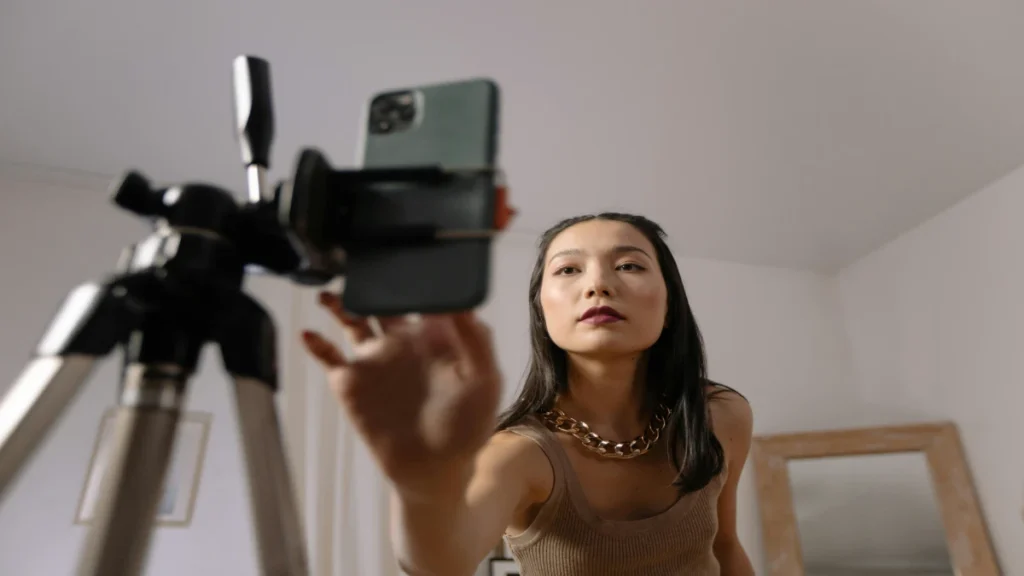
If attractive privilege has always been present beneath the surface of interactions, the digital age has heightened its relevance. Social media has created new economies based on physical appearance or lifestyle.
In these economies, attractive people can now monetise their physique without intermediation from an employer.
The implication is that bias based on appearance has been written into the algorithm. Studies of online behaviour have shown that attractive users tend to receive more engagement.
Those in the attractive privilege club also get more credibility and followers, as well as the benefit of the doubt in disputes.
On professional platforms such as LinkedIn, profile photos may influence recruiters’ impressions of an individual before they say a word, or even before their resume is assessed.
The era of deepfakes adds a wrinkle. A 2024 study used deep-faked job applications to isolate the effects of attraction on hiring decisions. It found that the benefits of beauty depend on context and are gendered.
This was a mirror to the patterns that Mehic found in his study. The tools of synthetic media currently enable a precise study of bias, and the results show that attractive people are treated somewhat better.
The Halo Effect
The cognitive mechanism that underlies these effects is known as the halo effect. Identified by Edward Thorndike in the 1920s, this refers to the tendency for a positive impression of physical attractiveness to spill over into unrelated assessments of honesty and intelligence.
As previously mentioned, attractive people are perceived as more socially competent. They are also considered more likely to be mentally stable and trustworthy.
None of which may be true, of course, but it affects the manner in which they are treated. Employers also tend to extend them more latitude. Teachers can be graded more generously by attractive people, and strangers are more likely to assist them.
Double Standards in the Swedish Study

The beauty premium for men also persisted during remote learning, whereas that for attractive women disappeared. Mehic determined that men’s advantage is earned through attributes such as assertiveness, confidence, and peer influence.
These express themselves regardless of whether the teacher can see the student’s face. The advantage for beautiful women in the classroom stemmed from how male teachers responded to their physical attributes.
This is a microcosm of a broader pattern. It could be hypothesised that the attractiveness of women operates differently in social and professional contexts than that of men.
In the work environment, an attractive woman may experience what researchers have called the bimbo effect. This paradox indicates their appearance attracts preference in certain aspects, but it also undermines the idea that the person is competent.
This is especially the case for women, who can be barred from accessing senior or technical roles. In the legal system, female defendants who are attractive tend to fare better in charges of murder, where the perception is that a less attractive person would have done it.
However, these same attractive females would fare worse in cases involving fraud, because jurors believe they must have exploited their looks. What the Swedish study revealed was not just that beauty matters in education.
It shows how “Beauty Matters” is structured by gender. Women tend to be exposed to the discriminatory elements of the beauty premium compared to men.
The Pandemic Held a Mirror to Society
COVID-19 was an unlikely laboratory for human bias. Remote work surfaced the assumptions about productivity. The study does not also indict male professors as all vain or corrupt.
It confronts a system of evaluation in which impressions of human beings bleed into what are supposed to be objective assessments of their work. It also demonstrated that beautiful women were getting grades they had not earned.
This was entirely dependent on being seen. The moment that ceased to be the case, the advantage was lost.
Many beautiful women are intelligent, of course, and have earned their grades fairly, but the study showed that less attractive individuals doing equivalent work were getting less.
The halo effect has winners and losers. Unfortunately, the losers rarely know why they are on the losing end. Unfortunately, the beauty premium continues to shape hiring decisions, grading, and prison sentences.
It is measured in points and, at worst, in years in prison. Unlike race or gender, which have been specifically grouped and acknowledged with the need to treat everyone fairly, appearance-based discrimination largely remained unaddressed.
It is also not yet acknowledged in the work environment because doing so would lead to an even worse cascading bias. For one, attractiveness is subjective. Even then, it is on a scale going from very unattractive to very attractive for everyone.
There are some individuals that the majority of society would agree are considered beautiful, but it would be considered uncouth to equally group people as unattractive just because they do not possess these dimensions. Hence, the bias is largely covered up to avoid seeming unprofessional or vain.
Perhaps the best approach would be to create awareness about beauty premiums. This would lead to policies favouring objectivity in hiring, in the classroom, and in the court system.
Each decision would be weighed and checked to see whether the person’s physical features are affecting the result.
If you are interested in learning more about aspects of beauty and Western cultural phases, check out our articles on Tulip Mania and the 1960s Counter Culture.