

“There is no pain, you are receding
A distant ship, smoke on the horizon
You are only coming through in waves
Your lips move,
but I can’t hear what you’re saying”
A Specter in Vienna
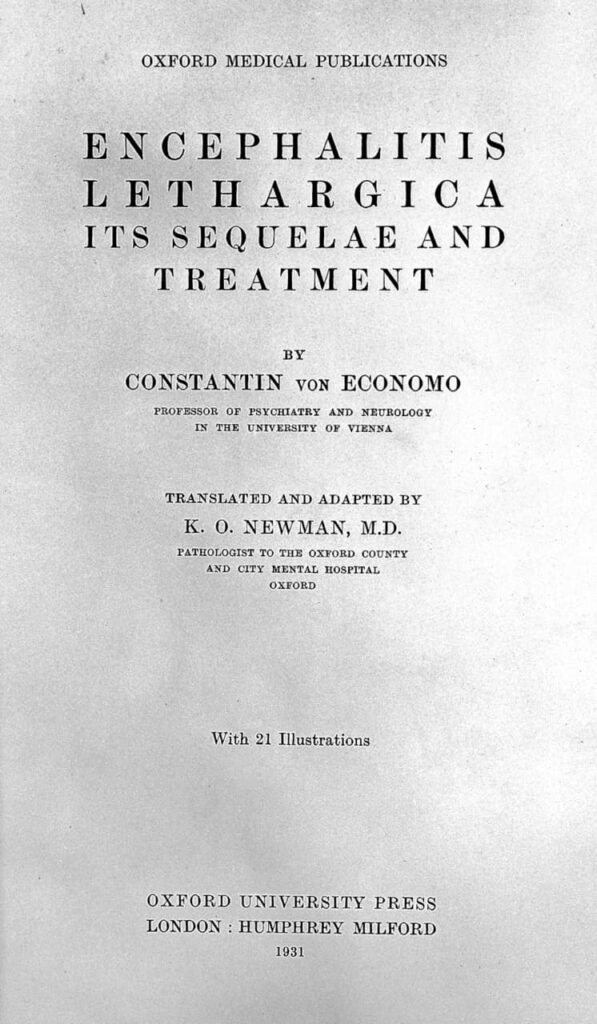
First detected by the Austrian neurologist Constantin von Economo in Vienna in 1917, encephalitis lethargica was an unfortunate discovery right during the chaos of the First World War and the influenza pandemic that soon followed.
Although patients initially presented with relatively common symptoms such as fever, headaches, sore throats, and fatigue, they’d soon enter uncharted territory.
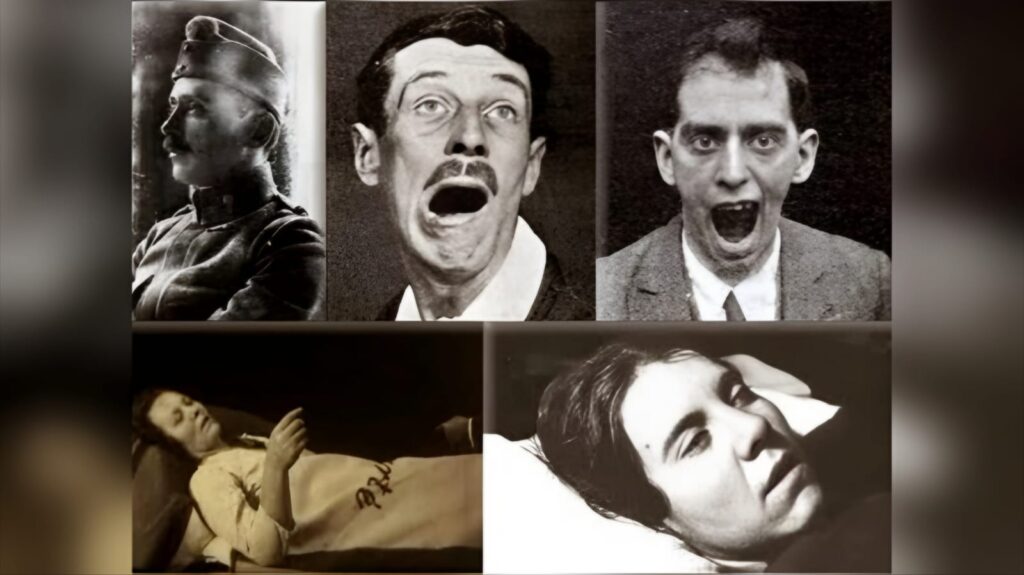
Inexplicable drowsiness, often accompanied by uninterrupted sleeping for days at a stretch, was common among many who had been affected, while others developed psychosis, involuntary movements, paralysis, double vision, or other such behavioral changes.
In the most severe of cases, patients would even enter into a coma-like state or start compulsively screaming (a variation of the vocal tic).
Children of the Sleeping Plague
Among the children affected by this ailment, there seemed to be a stark change in behavior, with many of them even becoming ‘delinquents’, as quoted by Vilensky and Foley in their study.
Changes in personality, sudden aggression, restlessness and irregular sleeping habits (and other such habits described to be ‘morally insane’ by Economo) seemed to affect older children, while children younger than five experienced developmental delays.
Ghosts in the White Wards
Medical knowledge in the 1920s seemed advanced enough to understand the grotesque transformations the disease wrought, yet still primitive enough to leave physicians helpless. To make matters worse, the sheer unpredictability of the disease seemed to terrify physicians all over.
This was almost unprecedented in human experience. Encephalitis lethargica appeared to alter one’s personality, movements, sleep, and perception all at once, as if it were attacking the very processes that make an individual human.
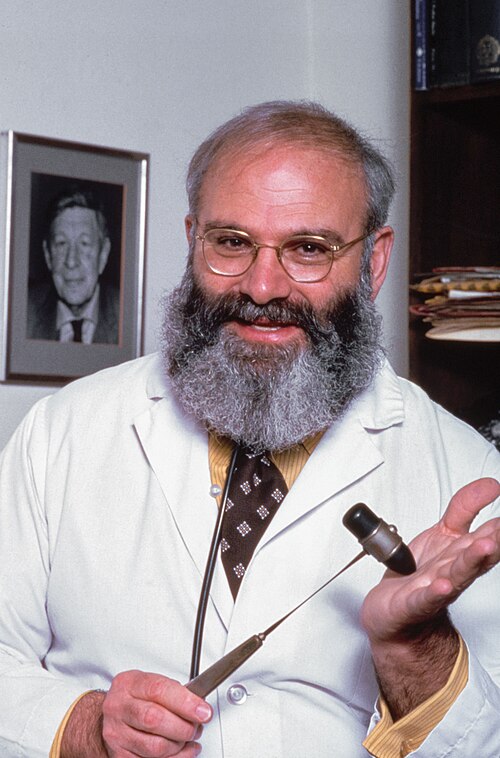
“They neither conveyed nor felt the feeling of life; they were as insubstantial as ghosts and as passive as zombies,” said neurologist Oliver Sacks in his book, Awakenings.
Physicians could document all the symptoms with painstaking precision, sketch patients’ rigid postures into notebooks, but in the end, they remained helpless as patients slipped into unnatural sleep, developed bizarre compulsions, or became prisoners within their own bodies.
When the human body becomes extraordinary, it can sometimes become a spectacle, too. For instance, Grady Stiles, better known as “Lobster Boy”, was born with a rare physical deformity that would eventually make him a sideshow attraction, a deformity that would similarly blur the line between a person’s body, their identity, and the way the world perceived them.
As von Economo observed, many patients appeared “fully conscious and aware of their surroundings” despite lying mute and motionless for hours at a time.
Spanish Flu and Encephalitis Lethargica
Because it emerged during the devastating influenza pandemic of 1918, many physicians naturally assumed a connection between encephalitis lethargica and the so-called ‘Spanish Flu’. Both illnesses had spread rapidly across continents and appeared during a period of immense social upheaval and overcrowding.
To support this belief, some researchers claimed the influenza virus may have directly attacked the brain, while others proposed that the body’s immune response might have inadvertently damaged neural tissue after the Spanish Flu (i.e., it was an autoimmune disease).
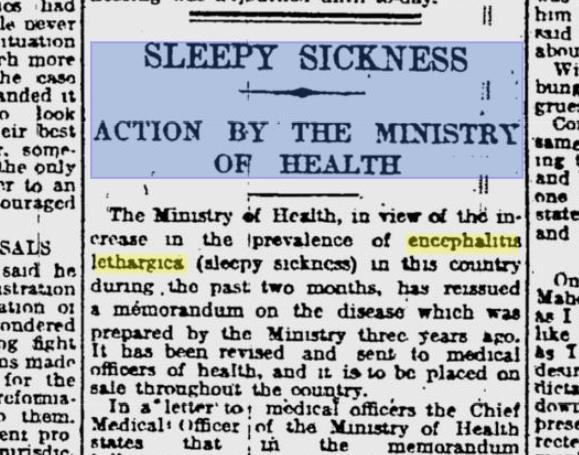
However, many modern scholars, including McCall, refute this claim. “There is little direct evidence supporting influenza in the etiology of EL,” he says, mentioning that it’s difficult to justify an actual cause for the disease, even a hundred years after its outbreak in 1920.
Felix Stern and the Three Stages of Decline
One of the first people to develop a structural method to diagnose encephalitis lethargica was the German neurologist Felix Stern, who classified the disease into three main stages of symptoms.
The first symptom was usually extreme sleepiness or wakefulness, followed in the second stage by a stark spasm in the eyes that locked them in a fixed position.
In the third stage, patients would briefly make a full recovery before entering almost complete paralysis or displaying Parkinson like symptoms.
Although Stern suspected a close association between encephalitis lethargica and poliomyelitis, the connection was never proven.
“It Was Such a Cruel Dream”
For those familiar with the Robert De Niro and Robin Williams film Awakenings, it’s not hard to see that the cruelest aspect of encephalitis lethargica was the illusion of recovery it often provided.
Many patients who survived the initial stages of the illness appeared to temporarily regain a semblance of normalcy before gradually deteriorating further. Over the months and years that followed, survivors frequently began developing severe muscular rigidity, tremors, frozen facial expressions, and an almost unbearable difficulty initiating movement, which finally resulted in total paralysis.
As Oliver Sacks described, survivors of encephalitis lethargica increasingly became “imprisoned in their symptoms”, trapped within rigid and increasingly immobile bodies for decades at a time.
The Search for a Cure
Sedatives, stimulants, hypnosis, electrotherapy and countless experimental treatments were attempted throughout the early twentieth century, yet none seemed capable of producing any meaningful or permanent recovery in the face of this ruthless adversary. Instead, hospitals became long-term ‘holding spaces’ for survivors of encephalitis lethargica, many of whom remained totally paralyzed.
Only in the 1960s did a glimmer of hope appear on the horizon. Researchers such as Arvid Carlsson discovered that dopamine played a crucial role in regulating movement and that patients suffering from Parkinsonism possessed abnormally low levels of it within certain regions of the brain.
Gradually, physicians discovered L-DOPA, a biochemical that can cross the blood-brain barrier and convert into dopamine once inside the brain. Unlike dopamine, however (which could not effectively enter neural tissue), it seemed to replenish what the diseased brain appeared to lack.
There and Back Again
“I have been half in love with easeful Death.”
– John Keats
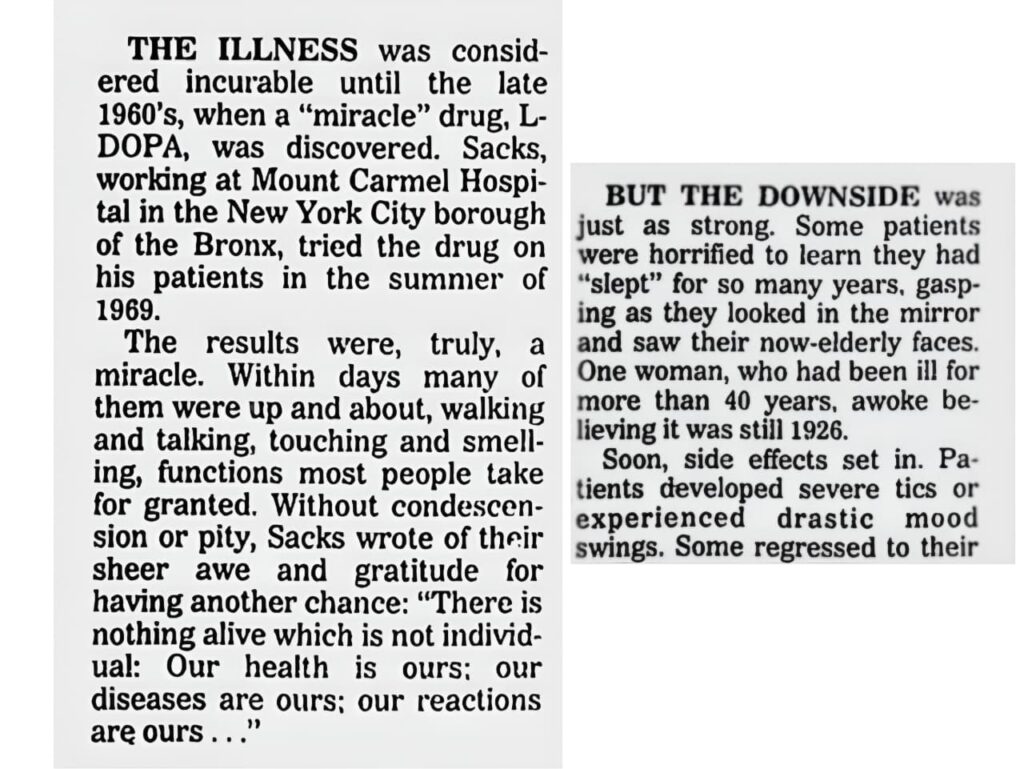
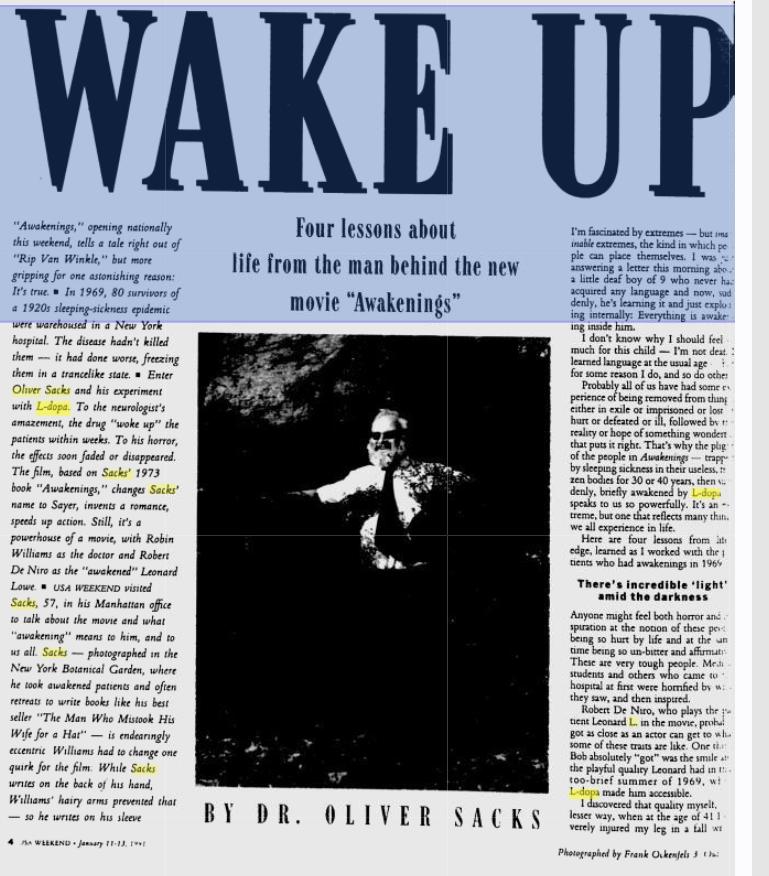
It was the spring of 1969, in the chronic wards of Beth Abraham Hospital in New York, that neurologist Oliver Sacks decided to administer L-DOPA to a group of post-encephalitic patients who had remained virtually motionless for years.
Like Robert De Niro’s character in Awakenings, many had long since been abandoned by medicine; they sat silently in wheelchairs or lay motionless in their beds, trapped in bodies they could no longer control, yet aware of the world around them.
What followed next can hardly be called a miracle. It was, to put it mildly, a godly act; at least temporarily. Patients who hadn’t walked, talked, or even moved a single muscle for decades suddenly began conversing, laughing, walking, writing, and interacting with the world around them again.
It was almost as if a sleeping tomb had been awoken overnight. Patients danced through hospital corridors, while others spoke endlessly to compensate for decades of silence, while some could hardly believe that they could move again.
Sack’s Nobel seemed almost certain.
Nurses and physicians watched in astonishment as individuals who had seemed irretrievably lost to the disease appeared to awaken from a kind of living entombment.
On Borrowed Time
The euphoria was not to last.
As the weeks passed, the so-called ‘miraculous’ effects of L-DOPA seemed to recede. Patients who had briefly returned to life started developing violent tics, uncontrollable movements, emotional instability, hallucinations, and terrifying psychological crashes.
Many patients started developing insomnia, and even spiraled into manic states that bordered upon psychosis. The drug that had once appeared to resurrect them now seemed to be consuming them from within.
Even more tragically, some patients eventually stopped responding to L-DOPA altogether. One by one, almost all went right back into the same rigid immobility from which they had so briefly emerged.
In his 1994 Berkeley lecture, Sacks wistfully described the L-DOPA period as a “window into life” that then “closed” again, as the patients again became trapped within increasingly rigid and immobile bodies.
The Humanist of Beth Abraham
“I feel like Rip Van Winkle.”
– Leonard L., Awakenings
Ever the humanist, Sacks became determined to learn more about the lives, personalities, and memories of the individuals he had treated, rather than abandoning them as the twisted results of a failed experiment.
Throughout the 1970s, he continued working closely with many post-encephalitic patients at Beth Abraham Hospital, recording their experiences in painstaking detail in the book that would become Awakenings.
Dead Ends All Around
Despite a hundred years having passed since the disease was first discovered, its causes are still debated. A considerable fraction of researchers believe in the viral or bacterial infection theory, speculating that a strain of streptococcus is to blame, while others think the influenza virus is to blame.
Another camp of researchers staunchly supports the claims of an ‘autoimmune disorder’, believing that this could be the exaggerated response of certain bodies after a mild infection.
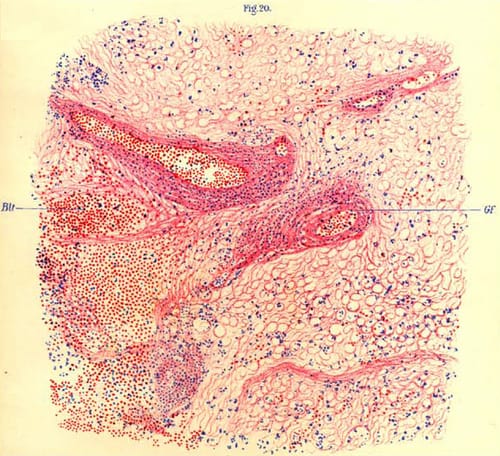
This theory, however, remains the weakest, with considerable proof proclaiming that encephalitis lethargica was far too aggressive to be the body’s own response.
Thirdly, some claim that the disease is the result of a neurological reaction caused by exposure to chemicals or environmental toxins.
Encephalitis Lethargica in the 21st Century
“I had encephalitis in 2004 when I was 14/15. Was in the hospital for 2 months (with very minimal memory of it). It started with a cold, turned to the flue, then [I] had extreme pain in my head. Woke up 2 weeks later in the hospital with no memory of those 2 weeks..
..after I got to go home, and I was done with it, I have not been able to smell anything, 21 years later.”
For the people affected by encephalitis lethargica, a lasting impact always remains. Because no definitive pathogen has ever been isolated, physicians cannot conclusively say whether the epidemic truly vanished, although reported cases have dramatically decreased in the 21st century.
The recent COVID-19 pandemic only rekindled these long-forgotten fears. Almost overnight, reports of symptoms such as brain fog, chronic fatigue, sleep disruption, cognitive dysfunction, autoimmune neurological disorders, and post-viral psychiatric issues revived scientific interest in encephalitis lethargica.
The Great Neurological Mystery
Unlike smallpox, polio, tuberculosis, or many other ailments humanity has managed to tame, encephalitis lethargica was never truly defeated because we couldn’t understand it in the first place.
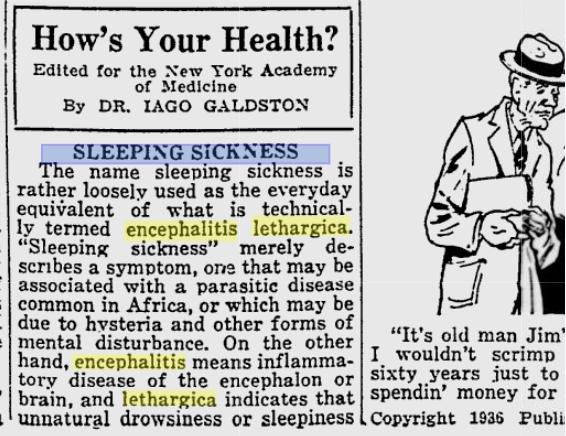
Unlike the deceptively benign nickname ‘sleeping sickness’ that people sometimes prefer to call it, it wasn’t merely a disease of sleep, paralysis, or psychosis, but a gripping ailment that brutally destroyed literally everything that makes a person human. Even today, in an age of MRI scans, neural mapping, and artificial intelligence, it remains one of modern science’s last undiscovered frontiers.
If you enjoy reading about medical marvels and other such mysteries, the stories of Anatoli Bugorski and Leonard Dirickinson might intrigue you.