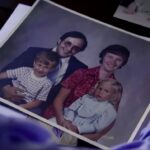

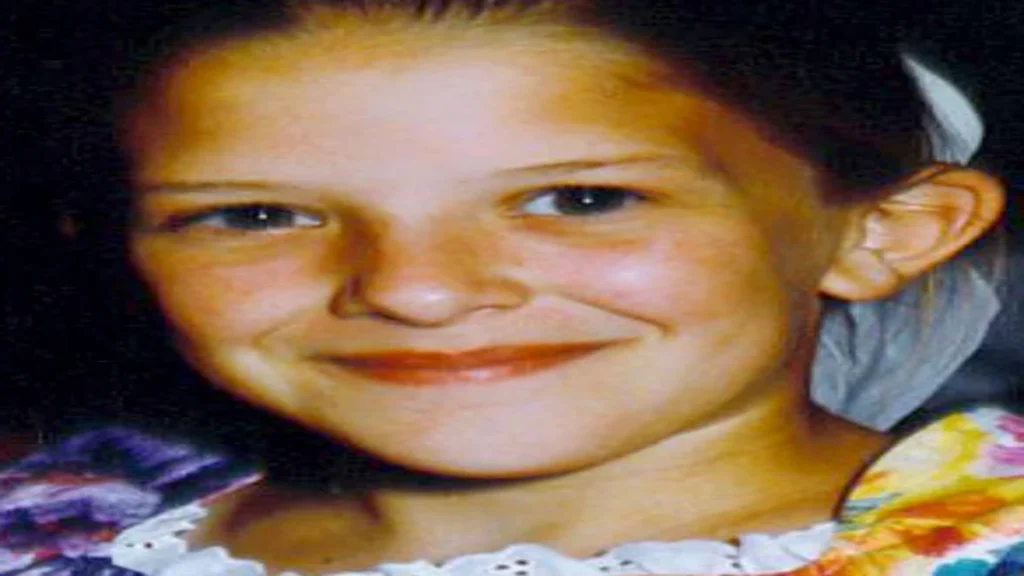
On the morning of August 27, 1992, Leigh Occhi was still in her pyjamas when her mother prepared for work. It would be the first time her mother, Vicki Felton, had ever allowed the 13-year-old to remain alone in their home in Tupelo, Mississippi.
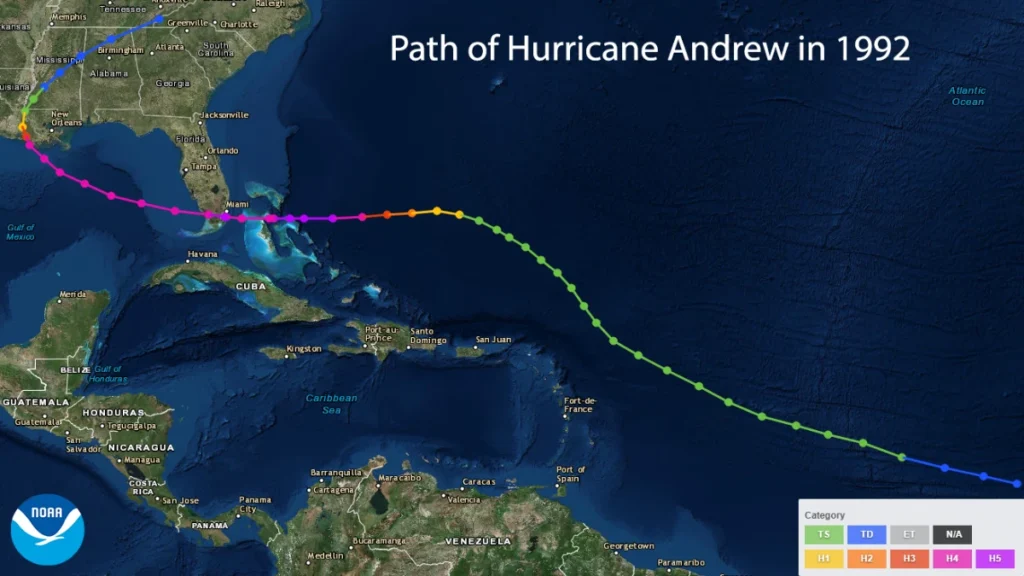
That night they had plans for an open house at Leigh’s new middle school, followed by dinner at Taco Bell. Bands of rain from Hurricane Andrew were already moving through northeast Mississippi, and the Gulf Coast was also under a hurricane alert.
Upon arriving at her job, Vicki was notified of a severe storm front from Hurricane Andrew that was headed for Tupelo.
Concerned for her daughter, Vicki called the house. The phone rang without an answer. For the next ten minutes, she repeatedly called, but Leigh didn’t answer.
Panicked by the lack of response, Vicki left her office at the Legget & Platt manufacturing plant less than a mile and a half away. She took only a few minutes to get to her home on Honey Locust Drive.
When Vicki pulled into the driveway, the garage door was standing open, and the light inside was on. The scene felt off because the light only triggered when the door itself was activated.
She walked into the house, calling Leigh’s name, but heard no response.
Blood was smeared on the side of the wall in the hallway and pooled on the floor. She went room to room looking without result. Finally, Vicki ran into her daughter’s bedroom, where Leigh’s favourite blanket lay crumpled on the floor.
Vicki also checked the pool, backyard, and the storage shed but found no sign of Leigh. At that point, she frantically called 911 to report her daughter as missing.
Vicki also alerted other family members, including Leigh’s grandmother, Georgia Ludwinski Borroughs. Tupelo police arrived and cordoned off the scene.
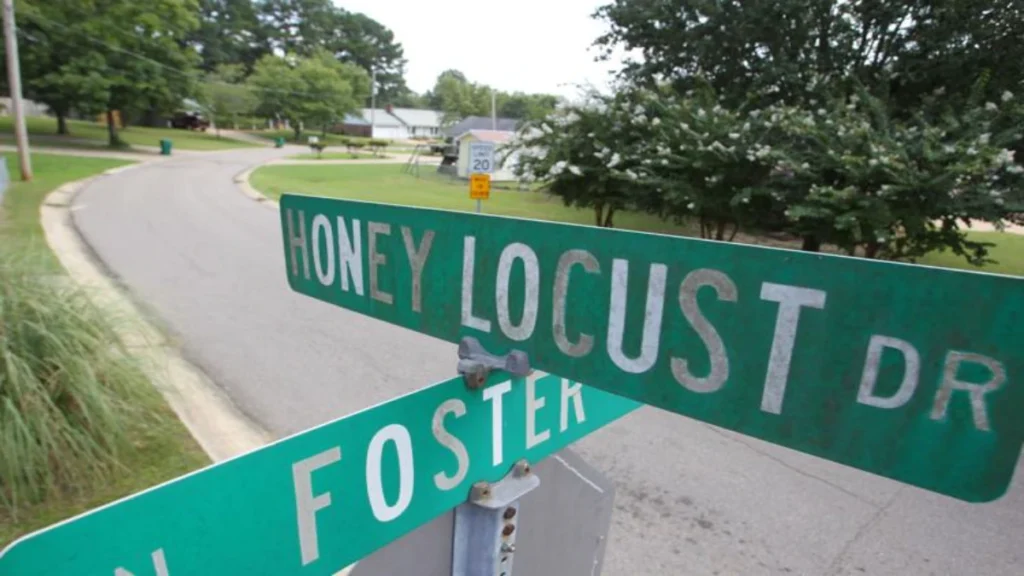
Georgia arrived on the scene right as officers were setting up a perimeter. She was met outside by Vicki, first responders, and a frantic environment clouded by the oncoming storm.
According to CNN, Captain Bart Aguirre, one of the original investigators assigned to the case, said, “Leigh had been alone for less than an hour.”
Almost immediately, they noted there were no signs of forced entry. No valuables were missing from the house, and it had not been ransacked. Police noted a small pool of blood in the hall outside of Leigh’s bedroom.
The blood was still wet, and there was also splatter on the door frame that was consistent with head trauma to someone about 5 feet tall. Leigh stood at 4 feet 10 inches tall.
In the laundry basket, police also found her nightgown soaked in blood. Aguirre noticed a faint pink haze across the countertop in the master bedroom. It was the kind of residue a wet rag left behind when someone tries to wipe blood away.
In the same CNN report, he said, “It’s pretty obvious to us that someone tried to clean up the scene or the countertop, but we couldn’t find the rag or towel that had been used. We couldn’t find it anywhere.”
Vicki and Georgia told the police the same thing about Leigh. She would not have opened the door for someone that she did not know.
The Search for Leigh
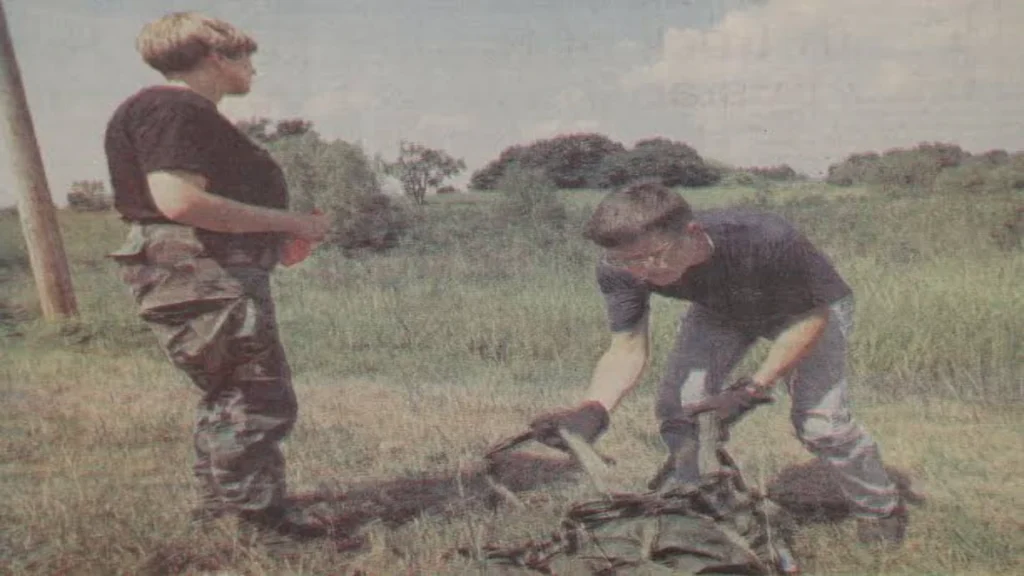
Law enforcement then launched an immediate ground search with bloodhounds, helicopters, and hundreds of volunteers. They worked a half-mile radius from the house, but the storm undercut them from the beginning.
Investigators later said the dogs would have had a workable scent if they had not been fighting driving rain and wind the whole time. An officer manually scoured a 10-foot drainage ditch running along the property.
Teams were also deployed to look through the Knox landfill in Chickasaw County. Before the end of the day, investigators impounded the family vehicles.
Bloodhounds were used to sniff the interior of the cars to determine if Leigh was recently transported in them, but no scent was recovered.
On the second day, hundreds of residents joined the police to create organised search grids across Tupelo. They focused on the local woods, vacant lots, and any thick brush.
On Saturday the 29th, the weather cleared enough to allow helicopters to do aerial searches over an area of 80 acres of dense trees and fields surrounding the neighbourhood. By this time. because of the sheer volume of fresh blood found inside the home, investigators shifted focus.
They openly told search volunteers they were now doing a homicide recovery mission for a body. By the fourth day, a $1,000 reward was publicly posted to incentivise tips from the community.
On September 1, realising the local department was out of its depth, Tupelo Police Chief Billy White officially set up a special four-investigator task force dedicated to finding Leigh Occhi.
Leigh’s middle school boyfriend, Jordan Morse, had made a habit of calling her every afternoon after school without fail before the abduction. That fall, he called as usual, and Vicki answered instead.
He told the Washington Times, “I asked where Leigh was, and (Vicki) said she was missing. I don’t know what missing is. I’m 12 years old. What do you mean missing? She said, ’We don’t know where she is. We can’t find her.’”
A Family Under Suspicion
Leigh’s parents were already divorced by 1992. Her father, Donald Occhi, was in the army and stationed in Virginia when his daughter disappeared.
Donald immediately got emergency leave and reached Tupelo by mid-September, joining volunteers to search the fields around the neighbourhood.
According to the same Washington Times piece, Donald said, “I stayed for about a month. We searched all around Tupelo. People called me and contacted me all the time. It was mostly stuff about like she was a great little girl. Or look at her mother, look at her mother. I already was doing that.”
This was a suspicion that he was already turning over on his own. Almost immediately, Donald also shared that he felt Leigh was dead and that someone had entered the home and beat her to death.
Vicki had also separated from her second husband, Leigh’s stepfather Barney Yarborough, just a few weeks before Leigh vanished. He had moved out of the home as well.
Rumours circulated that Yarborough mistreated Leigh, and there were reports she had shown up to school with bruises and a black eye. Though it was never substantiated.
The police initially subjected both Vicki Felton and the stepfather, Barney Yarborough, to polygraph tests. While Yarborough passed his test and had a solid alibi, Vicki’s results came back inconclusive.
Considering the results of the first polygraph, CNN reported they subjected Vicki to another. Captain Aguirre said, “We let the FBI do another poly, and they said they found deception.”
Vicki claimed the first polygraph was administered within hours of her daughter vanishing and the others within the following weeks. She told CNN reporters, “I couldn’t tell you why. They measure changes in your body, and when your daughter has gone missing, and they strap you up to things, I can’t imagine anyone’s body not reacting.”
Investigators never named her a suspect, but they also never fully cleared her. According to Crimeblogger1983, Retired Lt. Ronnie Thomas, who ran the investigation for several years, weighed in, saying, “We won’t be sure (Leigh is dead) until we find a body. After this period of time, the likelihood of her being alive is not great.”
The Package from Booneville
A month after Leigh disappeared, an envelope arrived at the house on Honey Locust Drive addressed to Yarborough. Inside were Leigh’s glasses, and it had been mailed from Booneville, thirty miles north of Tupelo.
Both the sender and the receiver fields were listed with the same name, “B. Yarborough”. There was no ransom note, letter, or anything else in the package.
The FBI crime lab tested the envelope and stamps for anything that could be used. Unfortunately, the stamps had gotten wet, and no usable prints or biological material came off the package.
The stamp was affixed without saliva, and the handwriting was deliberately disguised. It suggested a premeditated effort by the suspects to misdirect investigators.
Lt. Thomas told the Associated Press, “We didn’t bother with the state crime lab. I was hoping to get DNA off the back of the stamps. But the stamps were wet with water. The package had more than enough postage on it and was dropped in a mailbox in Booneville.”
Aguirre came to believe the glasses had been sent through the investigation off course, rather than to communicate anything real. According to the same AP news report, he said, “There was no ransom letter or anything like that that came with those glasses. It was just those glasses. You would think if it was an actual kidnapping, you would have expected a little more to come along with that.”
False Hopes in Nettleton
In November 1993, some skeletal remains turned up south of Nettleton, Mississippi. A farmer working in a rural area stumbled upon human bones.
The remains, consisting of a skull and other assorted bones, were severely weathered. The skull was also significantly damaged, leaving four intact teeth available for identification purposes.
Mississippi’s state Medical Examiner’s office handed the dental analysis over to a local contract dentist. After comparing the few remaining teeth in the skull to medical files, the contract dentist concluded the bones belonged to Leigh Occhi.
The state medical examiner prematurely leaked the breakthrough in the case to the local media outlets. Soon after, the Jackson Clarion Ledger ran a front-page story announcing the mystery had been solved, and Leigh’s remains had been recovered.
On reading the newspaper headlines, Leigh’s dentist contacted the state medical examiner’s office in a panic. He explained to state officials that the contract dentist must have used outdated dental X-rays of Leigh from years before.
The contract dentist had failed to cross-reference the skull with Leigh’s most recent dental records. When the updated charts were compared against the four teeth, it became clear that the remains did not belong to Leigh Occhi.
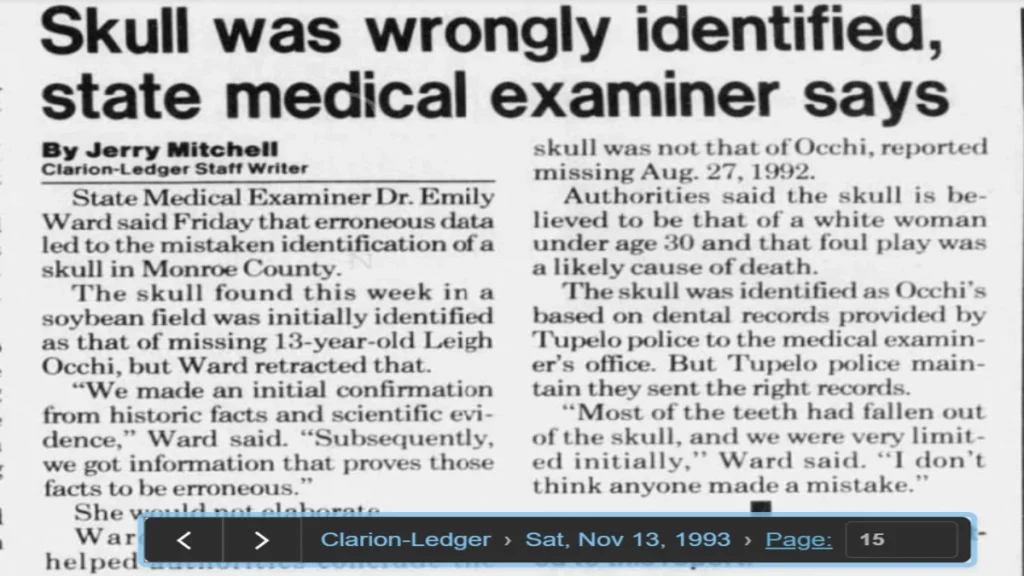
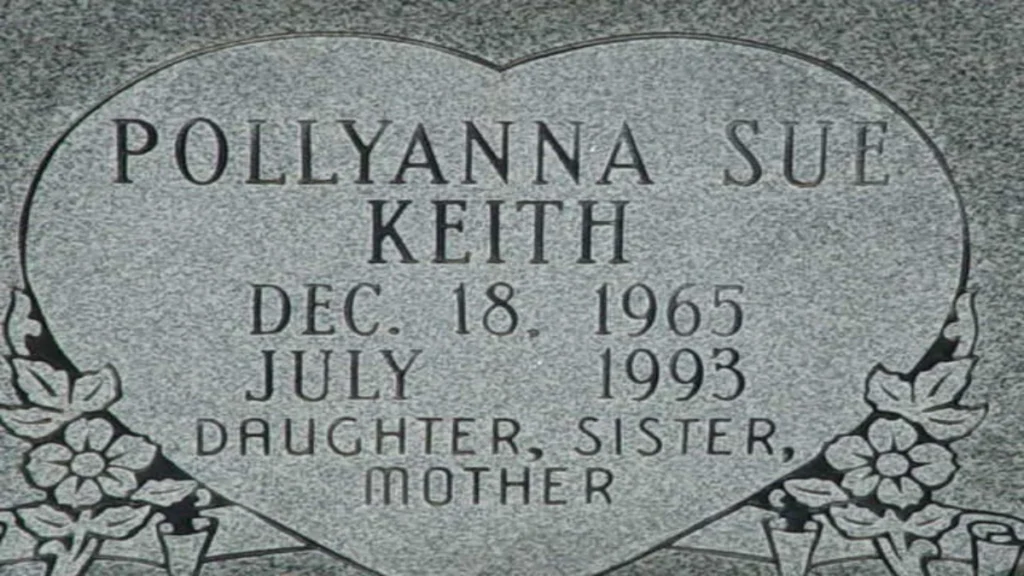
The Dispatch reported the medical examiner’s office had to issue a very embarrassing public retraction. Further forensic analysis revealed that the teeth and other bones belonged to Pollyanna Sue Keith. She was a 22-year-old woman who had gone missing in Shanon, Mississippi.
The Man from Sunday School
Vicki had named a local man named Oscar ‘Mike’ Kearns as being responsible for Leigh’s disappearance. He was a Vacation Bible School and Sunday School teacher, working for the Holy Trinity Lutheran Church.
Kearns also shared Leigh’s love of horses and horseback riding and had once asked the girl if she wanted to go riding sometime. This fit in with the police’s line of thinking because there was no forced entry and they suspected Leigh opened the door for someone she trusted.
Kearns also lived only a mile away from Leigh’s neighbourhood, meaning he had the opportunity to stalk the family and time the moment Vicki left for work.
He also fit in as a suspect due to later similar crimes. Eight months after Leigh vanished, Kearns drove to Memphis and abducted a 15-year-old girl he knew through the same church.
He lured her under the pretence of driving her to school before assaulting her in a remote part of DeSoto County. Kearns dropped her off at school afterwards, and she immediately contacted the authorities.
He pleaded guilty to rape and was sentenced to eight years in prison, but served less than half, getting released in 1997. Less than 18 months after his release, Kearns intercepted and kidnapped an adult couple in Union County, Mississippi.
He bound the husband and sexually assaulted his wife. Kearns was again caught and pleaded guilty in court. The judge sentenced him to twenty years at the Mississippi State Penitentiary.
He spent 19 years there before being released in 2019.
During the initial investigation, Tupelo law enforcement tried to question Kearns about his involvement. He teased investigators by saying he would agree to a polygraph but only if his defence attorney, Joey Langston, approved it.
Langston blocked the test, and Kearns shut down. He refused all requests for interviews with police or the FBI. Years later, when investigators made a final attempt to interview Kearns, detective records note Kearns just gave a hostile two-word answer.
Mike Kearns died in May 2021, two years after the final prison release. Despite authorities hoping for a deathbed confession, Kearns took his secrets to the grave.
Despite this, Vicki still had faith that her daughter would be found. She told the North East Mississippi Daily Journal, “You hear about cases all the time where years later, something finally comes up or someone comes forward, and the case is solved. Obviously, it has been a long time, but I am not changing my opinion. I still have hope that one day she will be found alive.”
Three Decades Later
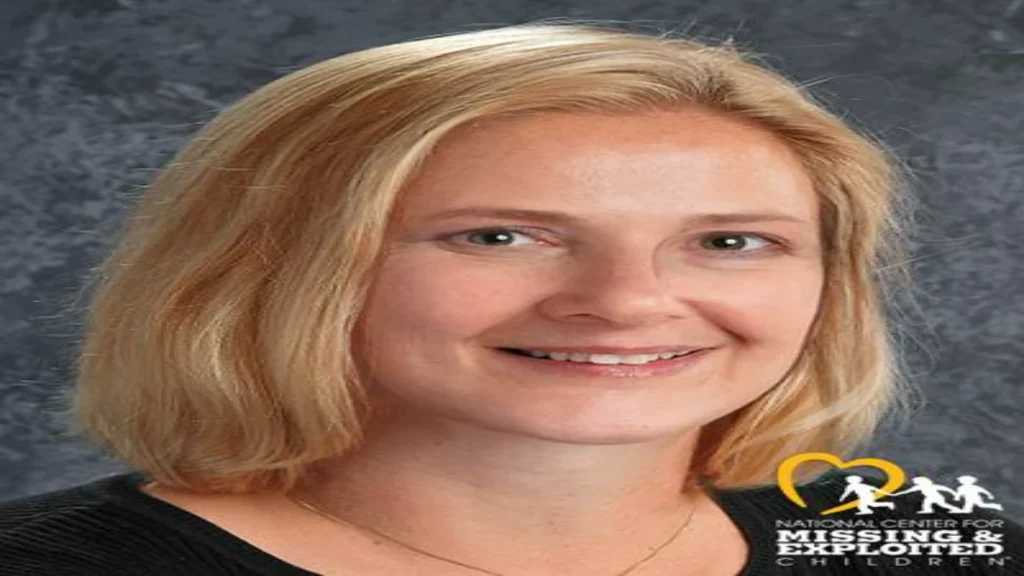
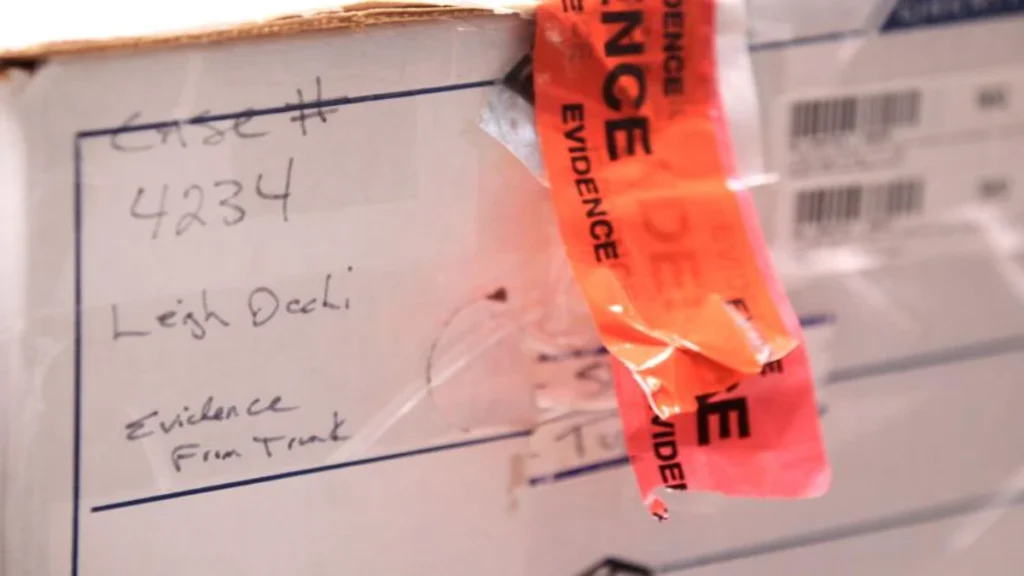
DNA testing was barely considered an investigative tool in 1992. Police could ascertain the blood type from a scene but not much else. The boxes of interviews that investigators compiled on friends, teachers, neighbours and family also failed to produce a clear suspect.
Tupelo police were never able to close the file. Tips still trickle in, and these are reportedly usually clustered around Leigh’s birthday and the anniversary of her disappearance.
Lt. Thomas ran the investigation on the case until he retired in 2009. He kept case boxes in his office the entire period. In the same Daily Journal report, he explained, “One of the first things they teach you in criminal investigation school is all crimes are not solvable. But you don’t ever quit looking, even after 25 years.”
“You might get (a lead or some new evidence) in two months that dovetails with information you’ve already got.”
Vicki has consistently pushed back against the theory she was involved. Over the years, investigators including former police chief Aguirre and Major Ronnie Thomas noted that she maintained a somewhat aloof demeanour.
However, Vicki did not cut off communication with the police. She repeatedly sat down for interviews and agreed to several polygraphs by the FBI.
After decades of keeping the case a missing person investigation, Vicki finally took the definitive step in October 2024 to have Leigh declared legally dead.
According to a different piece from the Northeast Mississippi Daily Journal, when asked about her sudden push to change her daughter’s status, she said, “I just decided that I wanted to do it. I felt it was time to do it. It has been 32 years.”
2025 Update and the Case Today
On January 29, 2025, the Mississippi Bureau of Investigation Cold Case Unit, the FBI, and the Tupelo Police Department launched a surprise joint operation on Honey Locust Drive.
Law enforcement and forensic teams were particularly focused on a cul-de-sac and a perpendicular drainage ditch near the home from which Leigh disappeared. WTVA 9 News reported that police were utilising K-9 units and high-tech ground-penetrating radar.
After the active search, Mississippi State University forensic anthropologist Dr Jesse Goliath said investigators still believe Leigh Occhi’s body remains buried somewhere on the property.
While Dr Goliath confirmed the team used advanced recovery tools, official entities released a statement declaring the findings cannot be publicly disclosed due to the active, ongoing nature of the case.
Like the case of Jo-Anne Pedersen, who also disappeared during a storm after being left alone briefly, Leigh’s case has also generated decades of public and repeated investigations. Likewise, no body has surfaced, nor has anyone been charged over the years.
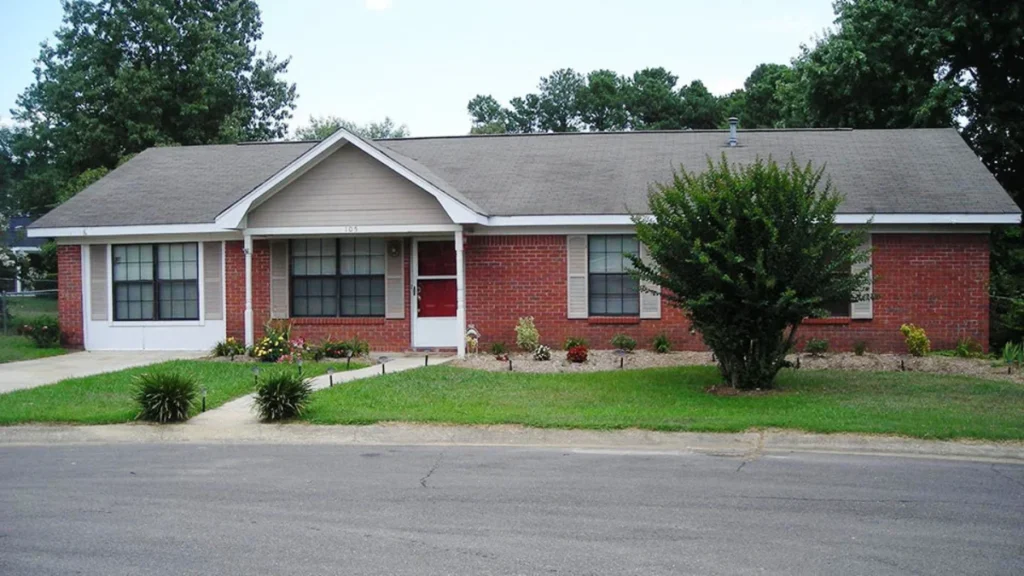
The house on Honey Locust Drive still stands, but Vicki no longer owns the home. She relocated and maintains a life of obscurity.
If you lived in or visited Tupelo or Booneville, Mississippi, in August and September 1992, or if you have information concerning Oscar McKinley Kearns, please contact the Tupelo Police Department at (662) 841-6491 or the Mississippi Bureau of Investigation (MBI) at (601) 987-1212.
For more stories on unsolved disappearances, explore our articles on Amy Billig and Kayla Berg.