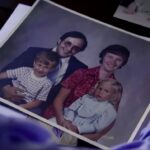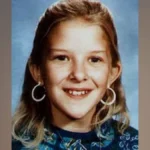

Heather Teague, a 23-year-old from Clay, Kentucky, drove to Newburgh Beach near Spottsville on August 26, 1995. The beach sits on the Kentucky side of the Ohio River across from Newburgh, Indiana, in a stretch of county land known for farming.
The 23-year-old was in a red plaid bathing suit and set up a lawn chair on a stretch of riverbank quiet enough that you could hear the water and not much else.
At approximately 12.45 pm, a man named Tim Walthall was looking through a telescope from his home on the Indiana side of the river, directly across from the beach. He told police he saw a man approach Heather, grab her by the hair, and pull her off the lawn chair.
The man had a gun and dragged Heather back into the wooded area bordering the beach. Walthall watched the scene for another twenty-five minutes, waiting to see if she would walk back out, but she didn’t, and he called 911.

He described the abductor as a white male, roughly 6 feet tall, weighing between 210 and 230 pounds, with brown hair. Walthall also told investigators the man was shirtless and in jeans.
He also appeared to be wearing a wig and mosquito netting over his face. By the time the police reached the Newburgh beach that afternoon, Heather was gone.
Search teams went through the woods with dogs, checking the river, and a helicopter equipped with infrared cameras passed over the property. They only managed to find a towel, one of Heather’s notebooks, and part of the bathing suit in the woods where she was taken.
Her 1990 Nissan hatchback was still parked at the beach. Nothing else indicated where the man had taken her, and Heather Teague has not been seen since.
Who Was Heather Teague
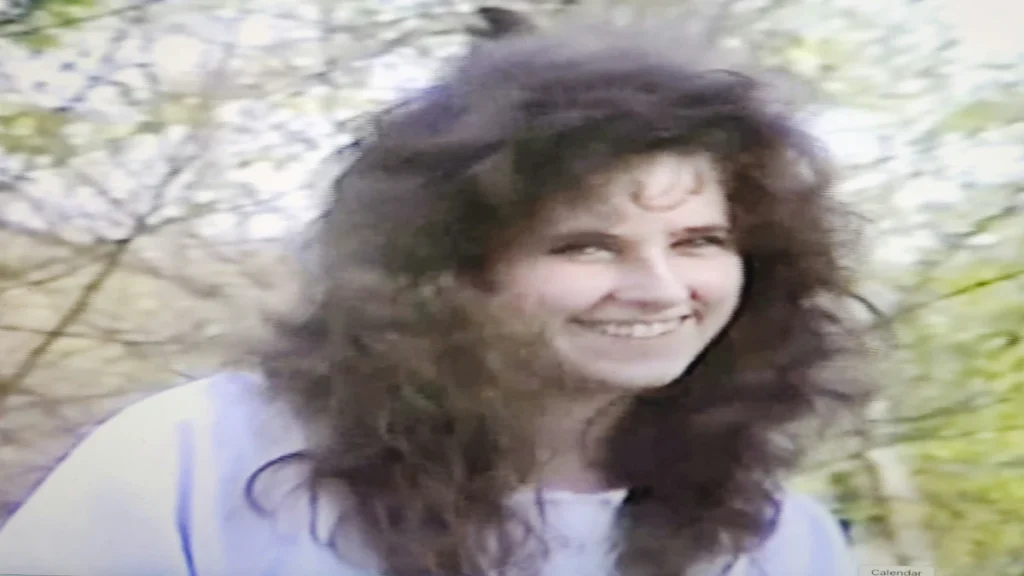
Heather Teague was born on April 25, 1972, in Kentucky. She grew up in Webster County, where she spent her formative years surrounded by a strong community.
As the firstborn of four children, Heather shared a tight bond with her siblings and her mother. She experienced an incredibly active and well-rounded upbringing.
Her parents had divorced when she was young, and other family members claimed the separation made Heather very protective of her other siblings.
During her teen years, Heather was a standout figure at Webster County High School as an honour roll student and star athlete. She was also extremely popular among her peers and was elected the school’s Homecoming Queen.
After graduating from high school in 1990, Heather hoped to take a few years off from education to work and find her footing. Her mother’s plans for Heather to enrol at Western Kentucky University to study Psychology unfortunately came to nought.
By 1995, Heather was living in Clay, Webster County, and in a relationship with a man about twenty years her elder. She had also become involved with drugs in the years leading up to then and was, by multiple accounts, behaving erratically.
Two weeks before she was taken, Heather had been reported missing. When the police located her shortly thereafter, she brushed off the incident, telling investigators she “was just running around.”
In the first 48 hours, Sarah Teague and Heather’s siblings joined local volunteers and launched immediate foot searches through the dense, swampy woods surrounding Newburgh beach.
The family’s panic quickly turned into anger at the Kentucky State Police. Because Heather had disappeared two weeks earlier, the local authorities initially treated it as a standard missing person case involving a runaway or troubled adult.
The Bronco, Traffic Stop and Marty Dill
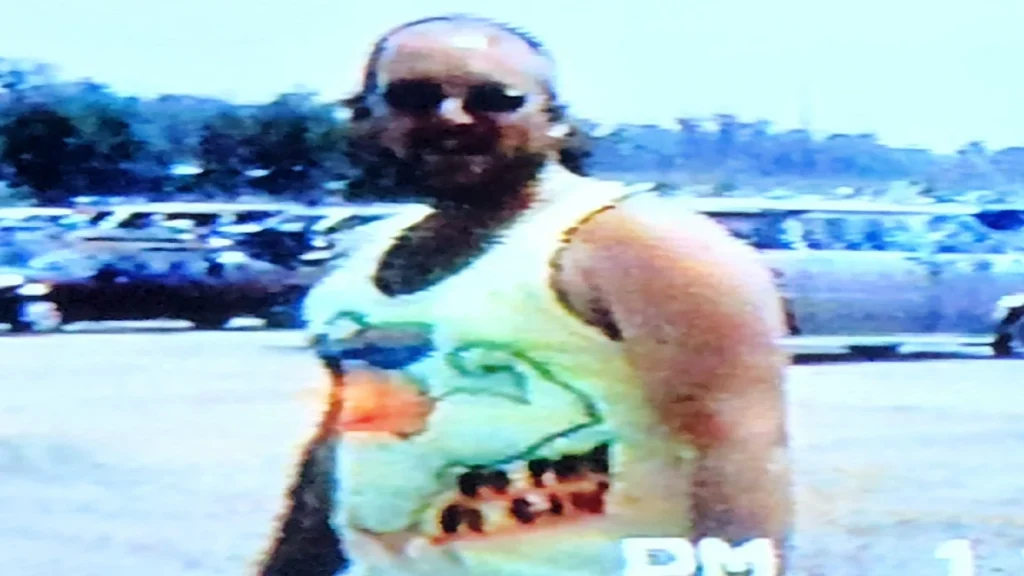
In the days after she vanished, farmers in the area who had been monitoring their crops for vandalism gave the police footage showing a red and white Ford Bronco near Newburgh beach at the time of the abduction.
It belonged to Marvin Ray, also known as “Marty” Dill, a county resident. Police soon pulled him over during an unrelated routine traffic stop not long after Heather went missing.
The officers found two guns, duct tape, rope, rubber gloves and strands of hair that resembled Heather’s, according to the Charley Project. His vehicle also reportedly had blood stains on the inside tailgate.
Dill resembled the composite sketch that was drawn from Walthall’s description, and his truck was seen parked near Heather’s car that day at the beach. Investigators kept getting tips linking Dill to the case through that August.
On September 1, 1995, in Kentucky, five days after Heather disappeared, the Kentucky State Police went to his home and served a formal search warrant. Dill reportedly told his wife to leave the house, while they were staging outside.
When they went inside, police found Dill dead of a self-inflicted gunshot wound. However, there was no sign Heather had been there.
A grand jury was convened to review the evidence against Marty Dill. His widow was called to testify there, but she invoked her Fifth Amendment rights and did not answer any questions.
The family felt an immediate wave of devastation because Dill took all his secrets to the grave before the police could interrogate him. Sarah felt that if the police had handled the initial days of the case with more urgency, they would have been able to arrest Dill or find Heather within days.
The family also looked at the timeline and the telescope witness’s description of a wild-haired, bearded man, comparing it to Dill’s appearance at the time. As Dill was completely clean-shaven that August, Sarah simply stated, “He didn’t kill my daughter.”
Christopher Below
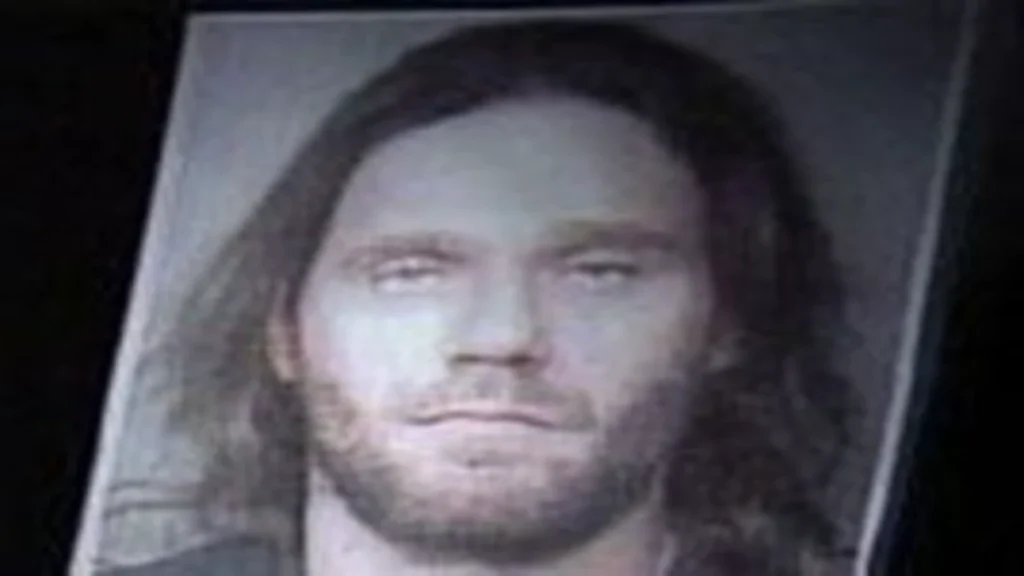
For several years, Dill’s death was treated by the public and by some investigators as the end of the story. However, in 2004, another Henderson County individual came under scrutiny: Christopher Below.
Below had pleaded guilty to attempted involuntary manslaughter in 1991 for the death of Kathern Fetzer. She was a woman he had been having an affair with, and he confessed to shooting her with a .380 calibre pistol.
He was sentenced to 11 to 18 years in prison. He had also been named as a person of interest in the Mary Kushto case. She had been missing in Florida since May 1995. He was also linked to the cases of Kristina Porco and Shaylene Farrell.
The reason he was considered in Heather’s case was that he was in the area at the time of the abduction and left the county the same day Dill died. Below is believed to have targeted women that bore a resemblance to Fetzer, and Heather was close to her height and build.
Below has since denied any involvement in her disappearance and refused to answer any questions regarding the case.
Some theories suggest Dill and Below worked together. One grabbed Heather, and the other was the getaway driver.
Looking for the Truth

Sarah Teague spent decades pushing the Kentucky State Police for records, testing, and an answer about what happened to her daughter. In 2007, she legally declared Heather dead because this was required for her to obtain the FBI’s file on the case.
In 2013, she filed a lawsuit against the agencies that investigated the abduction, claiming there was a cover-up. The core of her accusation was that law enforcement deliberately forced a tunnel-vision narrative that centred solely on Marty Dill.
During an interview at her Madisonville home, she said, “The things I know now are heartbreaking and disturbing.”
She argued that investigators used his sudden suicide as a convenient scapegoat to prematurely close the case. By painting Dill as the solo perpetrator, despite him being clean-shaven when witnesses described a bushy-haired abductor, she claimed police actively ignored valid leads.
She told WDRB News, “We were told Marty had done it, so that’s what we believed.”
Kentucky State Police captain Robert Schoultz told WDRB in 2018 that investigators did not treat Dill as the only possible suspect even after his death. However, he declined to discuss the specifics of the open case.
Partial FBI records obtained by Sarah suggested more than one person may have been involved in the abduction. It also implied Heather may have been on her way to a witness protection program.
A 2005 FBI memorandum stated, “Presently, attention is primarily being focused on the strong possibility of drug/prostitution (strip club)/public corruption link to Heather Teague’s abduction. Investigation continuing.”
The most direct piece of evidence was the 911 call that Tim Walthall made from his home the day that Heather was taken. In 2008, after years of requests, the Kentucky State Police let Sarah Teague and her attorney, James ‘Chip’ Adams, listen to what police determined as Walthall’s original 911 call.
In the recording, according to both Teague and Adams, Walthall described the individual as having bushy hair and a beard along with mosquito netting. In 2016, a different officer played them what they have claimed was a different recording.
That one did not mention netting or a wig. Sarah forwarded this discrepancy to the Franklin Circuit Court. Adams told the presiding judge the two recordings were evidence of a cover-up.
The attorney representing the Kentucky State Police said he had no explanation why the recordings sounded different but maintained there was only one valid call to 911.
Presiding judge Phillip Shepherd stated, “There is no dispute that you all have heard two calls.” He ordered the KSP to release the recordings, logs of personnel who handled them, and other case records, ruling the agency’s state concerns about releasing the evidence were vague and speculative.
In December 2018, Shepherd found KSP had acted in conscious disregard of Sarah’s rights, and they were ordered to pay $25,000 in attorney fees and court costs.
Lawsuit and an Exhumation After 30 Years
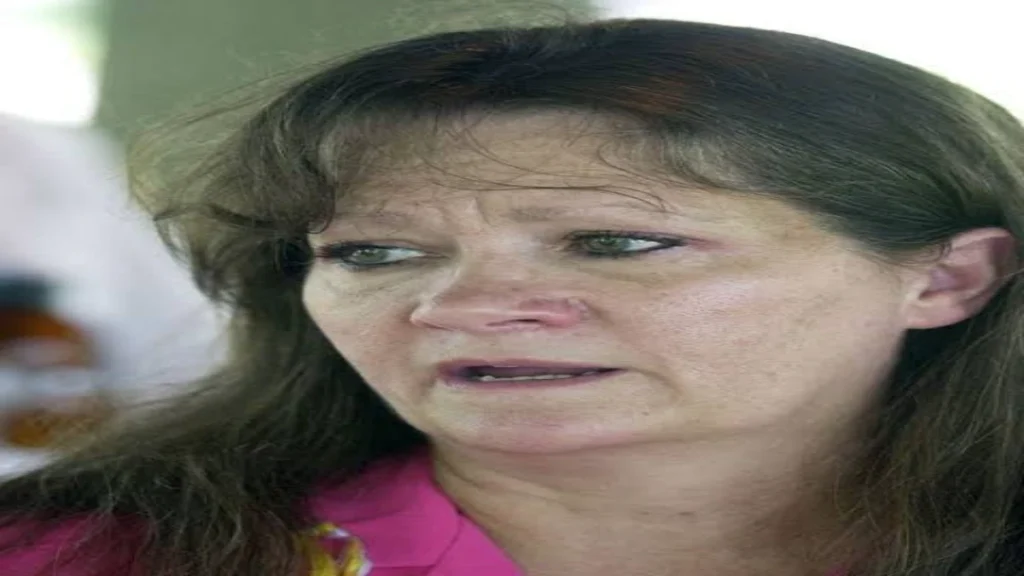
In 2012, the Kentucky State Police printed Heather’s case on decks of playing cards distributed within state prisons. This was a tactic used on cold cases to reach potential witnesses behind bars, but it did not yield much progress.
As podcast coverage intensified around the 30-year mark, an anonymous donor put up a $10,000 reward for any information that led to a resolution. In late July 2024, 29 years after the abduction, Sarah Teague levelled another attack against the government.
Armed with newly unearthed audio and documents obtained from prior records victories, she filed a $29 million federal lawsuit naming the KSP and the FBI. The suit alleged wrongful death, civil rights violations and massive negligence.
She also accused investigators of deliberately ignoring evidence to shield the local crime syndicates. The move suffered a significant setback after a federal judge officially dismissed it in August 2025. The family has since aggressively appealed the ruling.
In early 2025, though, Kentucky State Police sent the remains of Heather’s bathing suit bottoms to an independent lab for new DNA testing. In late August, the KSP also exhumed Marty Dill’s body from the Henderson County cemetery to collect DNA samples.
They reburied him two hours later.
No official confirmation was released by the police indicating whether Dill’s DNA was a match, but the records showed that none of his DNA was found on Heather’s recovered swimsuit.
This exhumation was requested by special prosecutor Ramsey Dallam, who had earlier taken custody of Heather’s bathing suit bottoms from the KSP. Sarah indicated prosecutor Dallam made it clear she only became involved in a case when there was something to prosecute.
Sarah also told WDRB News, “There was another person that Kentucky State Police went to on July 7 to get his DNA. So now that they’ve exhumed Marty’s body, there is no doubt there is viable DNA found on Heather’s bathing suit bottoms.”
The Case as it Stands
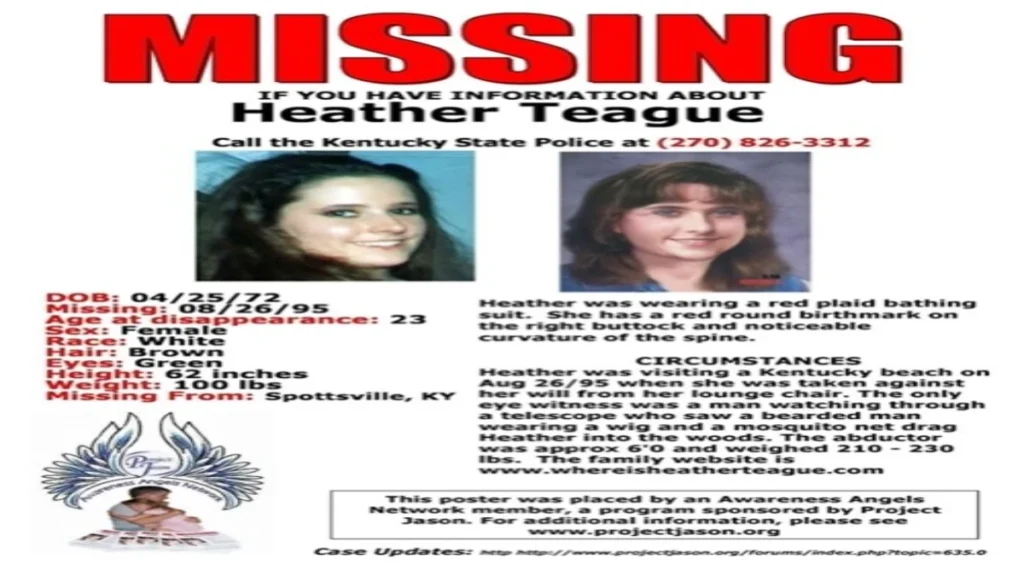
Thirty years later, Heather Teague has never been found, nor has any arrest been made. The description provided in 1995, indicating a heavyset, bearded man in a wig, has never matched clean-shaven Marty Dill.
Christopher Below also remains in prison for a different crime and has never answered for what may have been his role in Heather’s disappearance. Sarah Teague is currently in her seventies and keeps a room in her Madisonville home which is filled with her daughter’s clothing, stuffed animals and thousands of case documents.
During a broadcast reflecting the multi-generational impact of her daughter’s case, Sarah said, “None of us is the same people”
She has spent three decades filing records requests, sitting through court hearings and pushing investigators who she believes know more than they have said. In 2025, she said, “I don’t think I’m doing anything that any other mother wouldn’t do.”
Anyone with information on Heather Teague’s case is asked to contact the Kentucky State Police at (270)-826-3312, or the CUE Centre for Missing Persons tip line at (910) 232-1687.
For more stories on unsolved disappearances, explore our articles on Amy Billig and Jo-Anne Pedersen.
NOTE: Third-party images are credited to their respective sources and used for editorial and public-interest reporting. Rights holders may contact us with any concerns, and we will review or remove the image where appropriate.