
In 1963, the United States military launched almost half a billion thin copper wires into orbit in an attempt to create a ring around the Earth. This was known as Project West Ford.
The Air Force envisioned a ring around the planet to function as the largest radio antenna ever developed. The goal was to protect the United States’ long-range communications in the event of a large-scale Soviet attack.
Long-range communications until then had relied on undersea cables or over-the-horizon type radio.
These were strong in themselves, but the mechanism was vulnerable to attack. If the Russians cut off the undersea cables, America would be able to communicate only by radio broadcasts overseas.
However, radio was dependent on the state of the Ionosphere. This is the atmosphere layer that enables long-range radio broadcasting, and it depends on the sun. If solar storms occur, they effectively disrupt any communication relays.
In the midst of growing anxiety, Walter E. Morrow, a researcher at MIT Lincoln Laboratory, suggested mitigating the potential threat. He began Project Needles at the MIT lab in 1958.
Engineering the Solution
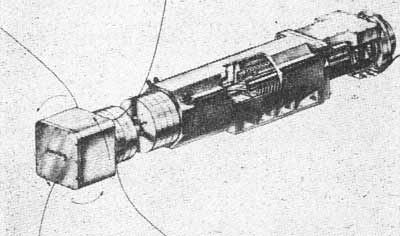
The architecture of the project was extremely unique for its time. Needles used were small copper wires, 1.8 centimetres long. They were selected to be half a wavelength at an 8.4 GHz signal.
At that length, each wire could act as a dipole antenna, catching incoming radio signals and reflecting them back. If hundreds of millions of these wires were spread in a belt formation around the planet, it would create the largest radio antenna ever made.
The needles inside the West Ford space vehicle were tightly packed into blocks of naphthalene gel, which would quickly evaporate in space.
The assumption was that the structure would quickly release the package and the gel would sublime, leaving the needles to scatter uniformly. The practical of this experiment was much messier.
Space rockets for the mission were launched from the Vandenberg Air Force Base in California. This was the only site at the time that could conduct polar-orbit launches over unpopulated areas.
After deployment, the copper wires were expected to form a ring in 40 days. They would be spaced about 1,000 feet apart.
The initial trial was done on October 21, 1961, and it was not successful. Cylinders were intended to spin at 6 revolutions per second upon release, but this did not happen. Similarly, the naphthalene did not heat up and disperse the needles as planned. Instead, it formed clumps, some of which remained in orbit 50 years later.
The second launch attempt was done on May 9, 1963, via the Midas 6 satellite. It was partially successful, as the package deployed an estimated 190 million needles that actually functioned as intended.
For several weeks, the Earth had copper rings that apparently reflected radio waves. It was said that the earth had 20,000 bits per second of data transmission capabilities between California and Massachusetts.
This would be equivalent to a dial-up modem in 1992, which was unheard of in 1963. Voice communications were also described as intelligible.
The launch proved that the theory was feasible and that radio signals bounced off the copper dipoles as intended. This created an artificial ionosphere that reflected transmissions around the world.
As the needles continued to disperse toward their final cloud, the transmission capabilities dropped off. This was so much that, within two months, only 400 bits per second could be transmitted.
The experiment was subsequently terminated. By then, the needles were 400 meters apart from each other.
ALSO READ: Mars500 Was a 520 Day Mock Mission to Mars That Revealed What Long Isolation Really Does to People
An International Incident
The scientific community’s reaction to the world over to the US military’s decision to give the planet rings bordered on outrage. British astronomer Fred Hoyle termed the project a major intellectual crime.
Sir Bernard Lovell from the Jodrell Bank Observatory said the damage lay not with this experiment but with the attitude of mind that took it from the planning stage to action without international agreement of safeguards in place.
The International Astronomical Union also officially condemned the project, and the Royal Astronomical Society organised opposition.
Radio astronomers considered that the needles would cause interference with observations, as optical astronomers worried about the potential for reflective contamination.
These issues were sound considering the needles were bright enough to be photographed from the earth.
It was not only a technical issue but a political one. When the project was raised at the United Nations, Ambassador Adiai Stevenson had to defend the U.S.’s decision to wrap the planet in copper wire without consulting any relevant global communities.
He provided a successful defence, preventing punitive measures by the United Nations. However, the backlash from the other nations was significant.
Stevenson maintained that solar radiation pressure would eventually push the needles out of orbit in a few years, hence making the contamination temporary.
Sensing weakness, the soviets also joined in with the bashing as the newspaper, ‘Pravda’, released the headline “U.S.A Dirties Space”.
That said, information related to the project was still classified, and those who believed the dipoles were less effective than other alternatives had to debate based on the limited information available.
ALSO READ: Beatriz Flamini Spent 500 Days Alone in a Cave and Came Out Wanting a Beer and a Shower
Other Technology makes the Project Obsolete
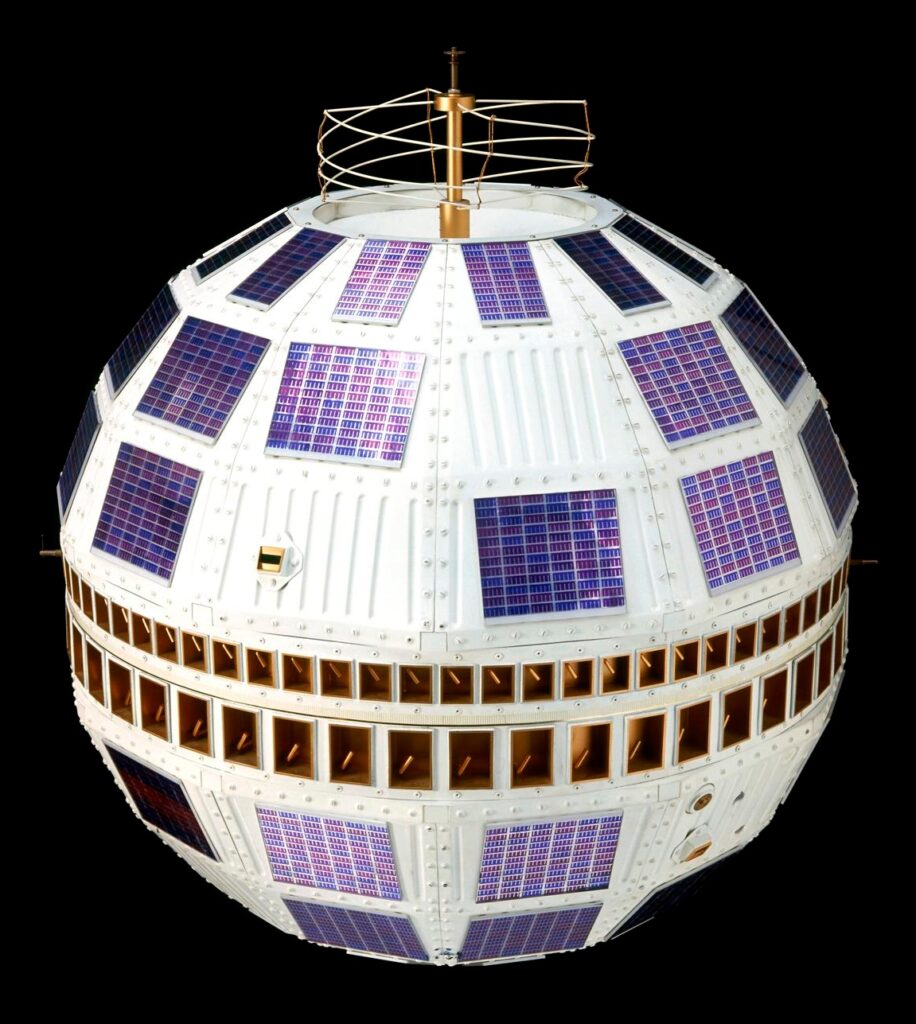
The Telstar 1 satellite was launched on July 1, 1962, and demonstrated that a single active communications satellite that bounces signals back and forth, amplified, could perform better than millions of copper wires.
The West Ford needles were passive in structure, meaning they reflected signals only to and from the earth. During this era, emerging technology from the space age made active systems more popular.
Hence, the West Ford Project was already a relic by the time it had gained partial success. Compared to the first satellites, the low-tech needles were cumbersome and unnecessary.
However, the project’s engineers remained convinced of the feasibility of their work. They blamed the program’s end on scientists opposed to its progress.
Debris from the Project
The American military initially promised that the copper needles would disappear in a few years of use. This was partially true. The majority of the West Ford dipoles re-entered the Earth’s atmosphere by 1970.
They slowly drifted down to the Earth’s surface, unscathed by the frictions of re-entry because of their small size. However, the failed 1961 deployment left debris behind. Clumps formed following the launch remained in orbit.
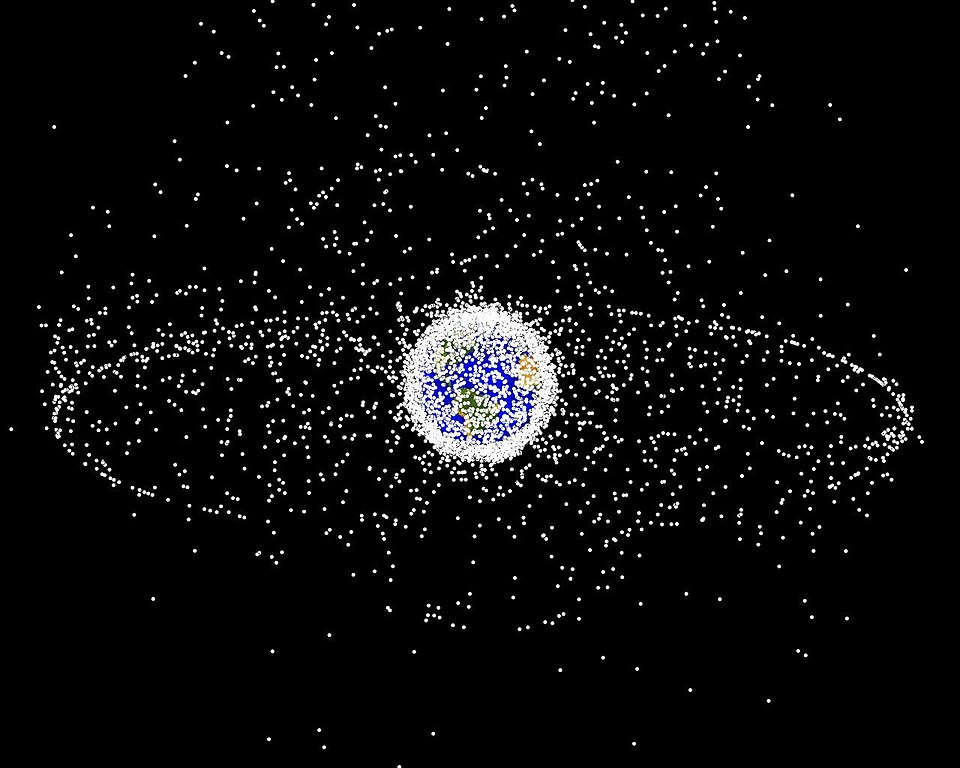
144 small objects have since been identified as debris related to the project. As of 2013, 46 were still in orbit at an altitude of 2000 km above Earth.
The International Academy of Astronauts considers Project West Ford as the worst deliberate release of debris recorded. By 2024, 44 needle clumps that are bigger than 10 centimetres were still being tracked by space agencies. These copper remnants still pose a collision risk for modern satellites.
In a big ironic twist, the MIT Lincoln Laboratory, which created the copper wires, now operates the radar systems that track the debris. This is to clean up the mess using technology that did not exist when it was made.
A Treaty Follows
The project’s most significant legacy is not the concept of copper rings surrounding the planet for communication purposes. It was the legal policy that helped inspire. Project West Ford ultimately led to the 1967 Outer Space Treaty.
This was initially intended to prevent space from becoming a military theatre, so it would remain peaceful for all humanity. The treaty prohibited the use of nuclear weapons in space and banned national sovereignty claims to celestial bodies.
Article 9 of the treaty requires that launching states exercise regard for others’ interests. They also have to consult before taking actions that may cause harmful interference with other nations’ activities.
The International Astronomers Union expressed concerns about Project West Ford, stating that it would have moral and material consequences.
The treaty also included a provision allowing nations to complain about space junk. This treaty has become even more relevant as other countries and private entities build their space industries.
Precedent from Project West Ford
It is easy to see similarities between Project West Ford and current debates concerning orbital infrastructure. The rapid development of low Earth orbit by private and national entities poses a new threat due to the debris they generate.
The same arguments that astronomers made against copper needles interfering with the radio telescopes in the early 60s appear in current protests against SpaceX’s Starlink constellation.
Current complaints centre on space pollution, astronomical interference, and lack of consultation. It is just that the scale has evolved from 500 million copper wires to 42,000 active satellites around the earth.
The conversation centres on the unresolved question of who decides what humanity does with its shared orbital environment. What Project West Ford forced was a reckoning with the idea that space was for everyone.
That filling the space, even with seemingly harmless materials such as thin copper wiring, came with consequences that do not respect national borders. This, the Astronautical Space Protests of the 60s and the Outer Space Treaty marked the birth of space conservation.