

The Game of Thrones soundtrack catapulted composer Ramin Djawadi to celebrity status. But even before he took on the medieval project, he had a slew of masterpieces, including Prison Break (2005-2009), Iron Man (2008), Clash Of The Titans (2010), and many more. Here’s what makes him so creatively successful.
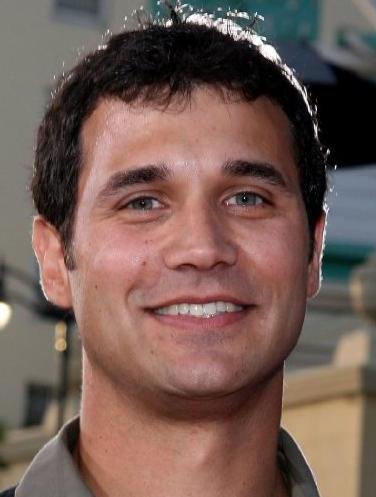
From Boy To Berklee Boy
Ramin Djawadi was born into a hotpot of cultural influences, owing to his Iranian father and German mother. Growing up, he absorbed the traditional Iranian music his father listened to. And being raised in Europe made him familiar with Western classical and popular music.
Even as a boy, he was a voracious musician. At the age of 4, he started playing the Hohner (electronic) organ. “I was so little that I had to stand to reach the pedals,” Djawadi confessed in a profile done by Berklee.
At 13, when ‘The Final Countdown’ song broke the charts, he started playing guitar and pursued the craft with serious conviction. Meanwhile, his parents used to send him on summer breaks to the US. The teenage musician grew to love the country.
When it was time to study music, Djawadi knew it had to be a college in the States. At that time, Berklee kept popping up as the best possibility. At that time, it was one of the most progressive music institutions in the world.
Attending Berklee was a fantastic experience. “I showed up from Germany with just a guitar—no equipment or amps. Berklee’s top-quality technology allowed me to better my craft.” Djawadi reminisced on his college days in an interview. In 1998, he graduated with majors in Film Scoring and Guitar Performance.

After college, Djawadi played in a pop band called My Favourite Relative with classmates from Berklee. They were nominated for seven Boston Music Awards and even won two. The future composer also took up a job composing and doing sound design for a regional video game company.
Djawadi always wanted to go to LA, the country’s film hub. But his chance came serendipitously when he went back to his homeland for the winter. When visiting an old guitar store owner in Cologne, Germany, Djawadi told him that he wanted to go to LA.
That was the day Djawadi’s fortune took off. The store owner connected him with one of the industry’s biggest composers. Want to guess who?
ALSO READ: Arnold Schwarzenegger’s Highest Paying Movie Wasn’t Terminator and It Earned Him $40 Million
Jamming With the Greats
The store owner said he knew someone who knew Hans Zimmer. Djawadi ended up going to LA in 2000 and joining Hans Zimmer’s Remote Control Productions as an intern. At that time, he had no experience with ultra-professional equipment used on large-scale projects.
In Berklee’s official magazine, Djawadi described the experience of entering Zimmer’s studio for the first time. “When I walked into this place and saw all the gear, it was a complete overload. I’d never seen so much equipment in my life.” Djwadai’s early days were anything but glamorous.

“I started out fixing things. A computer would crash, and I’d need to reload the samples and do other things. So I learned how everything operated. The quality of the demos they were doing was so exceptional that I had a lot to learn.”
Djawadi would be the first to come to work in the morning and the last to leave. Working directly under composer Klaus Badelt, he progressed towards writing music to picture in three years. His first big break was Pirates Of The Caribbean: Curse Of The Black Pearl.
Djawadi recalls composing for one tricky scene – where Johnny Depp and Orlando Bloom fight in the blacksmith shop. “I worked through the night and wrote the piece. The next day, it was accepted to be finalised for the recording into the film,” he said in an interview.
While at Remote Control Productions, Djawadi worked on music for a few more blockbusters: Something’s Gotta Give (2003), Thunderbirds (2004), Blade: Trinity (2004), and Batman Begins (2005). Blade: Trinity was Djawadi’s first project as a lead composer.
By now, the teenage prodigy had turned into an A-list composer. Djawadi went on to compose music for some very instrumental films and TV shows. He scored for Prison Break (2005). Later, he also scored for Iron Man (2008) – the success of which gave rise to the Marvel Cinematic Universe.
ALSO READ: Balloon Boy Was a Wild 2009 Colorado Panic That Turned Into a Reality TV Hoax
A Game Of Notes
David Benioff and D.B. Weiss approached Djawadi with the first two episodes of Game of Thrones and asked him to develop ideas for the score. The showrunners wanted a departure from overused cliché fantasy music. Instead of the typical lutes and flutes, Benioff and Weiss wanted something darker and heavier.
Hence, Djawadi built the score around low strings, particularly the cello. It became the defining sound of the series. In an interview with the Television Academy, the composer recalled working on the famous opening sequence after seeing the rough cut in the effects studio.
“I came up with it on my way back from the effects house when I was in the car. I was so inspired. As I was driving, that’s when that, “Pum pum, da-da da dum,” just came up. I ran in here, and I started playing it and capturing it, and I went from there.”
Throughout the soundtrack of Game of Thrones, Djawadi has exhibited many masterful techniques – many of them a result of his training at Zimmer’s studio.
While talking about his rationale for the opening sequence, he explained, “The opening starts in minor, then goes to major, then back to minor. The thought behind that was that the whole show was based on backstabbing, lying, and cheating. You don’t know who you can trust.”
“Before you settle into a key, there is this slight turn into a different key, and then it brings you back — it doesn’t settle down for you just yet. That was just a little hint of what the overall show is and what’s to come,” he elaborated in an article.
Djawadi also used the technique of leitmotifs, where certain characters or houses are represented by unique musical arrangements. For example, the Stark Theme, The Lannister Theme (The Rains of Castamere) and The Daenerys Theme.
He also experimented in certain sections of the show. Before the explosion of the Sept of Baelor, he used a piano – which was never used before in the show – to create a sense of unease and not knowing what’s coming. For his work on the show, Djawadi received multiple nominations and awards.
The Dragon and The Wolf (2018) and The Long Night (2019) were his Emmy-winning compositions, bagging the award for ‘Outstanding Music Composition for a Series’. He also won multiple IFMCA (International Film Music Critics Association) awards for best television score and best television theme.
While a major part of his genius stems from hard work, he also owes part of his creative flair to a biological condition – one that he hadn’t even noticed until his wife pointed it out.
The Creative Condition
Djawadi’s wife, Jennifer Hawks, is a music executive and supervisor in the film industry. While she doesn’t compose music, she is involved in production. One fine day, she asked him about his process.
He explained, “I paint. I see colours. Certain notes are certain colours to me, and then it just kind of blends together, and I paint.” Jennifer went back, looked it up, and told him it’s a condition called Synesthesia.
Synesthesia is a neurological condition in which stimulation of one sense can trigger another. For example, a person might hear a sound and simultaneously experience colour, shape or taste. It’s not categorised as a disorder and is completely harmless.

Many modern musicians reportedly experience synesthesia; Pharrell Williams, Billie Eilish, and Lorde are among them. In an interview, Djawadi shared his personal experience with the condition in great detail.
“It’s very hard for me to describe, because it’s not just, ‘there’s this colour, so it’s this note.” Visuals are so beautiful because it all blends together. There might be a person onscreen wearing a red dress, but then in the background, you see green trees.”
“Or there’s the ocean, or the blue sky. Or even the camera filters might do something for me, with a little more blue or yellow tone. It somehow puts me down a path where my hands move, and it just goes from there.”
“It’s a process I don’t really understand. I almost don’t want to understand it, because I feel it keeps me free. I don’t try to mathematically analyse why these things get triggered for me.”
With his work ethic, musical appetite and his synesthesia, Ramin Djawadi has created some phenomenal pieces of music, and is poised to succeed (or perhaps eclipse) Hans Zimmer in the near future.
Upcoming Masterpieces
Djawadi has an impressive lineup of scoring work ahead of him. In the next few years, some very exciting movies and series featuring his work are set to be released. The major ones are Supergirl (2026), House of the Dragon Season 3 (2026), FallOut Season 2 and The Three-Body Problem (upcoming seasons).
It will be exciting to see what orchestral masterpieces he has in store for the audiences!