

For those of you familiar with Tolkien, imagine the vast cavernous halls of Moria beneath the Misty Mountains.
Or imagine Jules Verne searching for inspiration while writing A Journey to the Centre of the Earth. He might have done well to visit central Turkey. Because beneath the town of Derinkuyu lies a subterranean world carved deep into the rock, a city that descends nearly twenty storeys below the surface.
Even better, if you’ve played Assassin’s Creed: Revelations, you’d be more than familiar with the logistics of the city, although in that case, the labyrinth is fictionalised for gameplay.
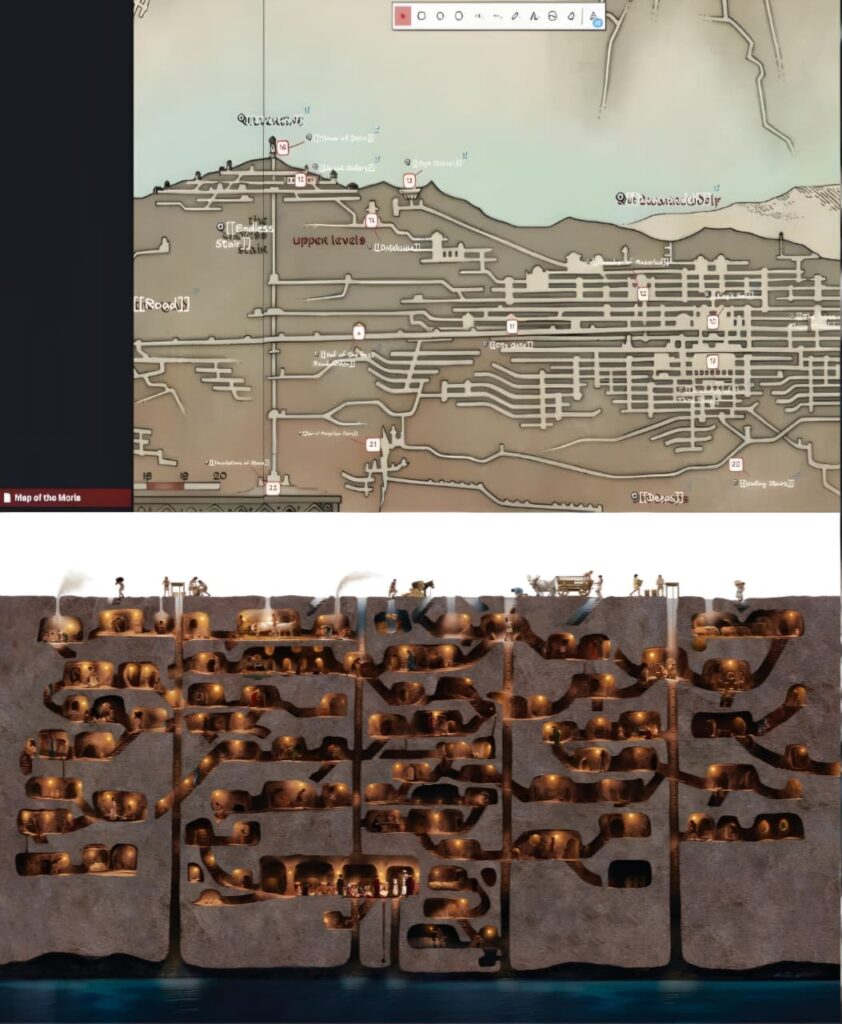
The comparison to fiction is difficult to resist, but the historical reality of Derinkuyu is arguably more impressive than the myths.
The Construction of Derinkuyu
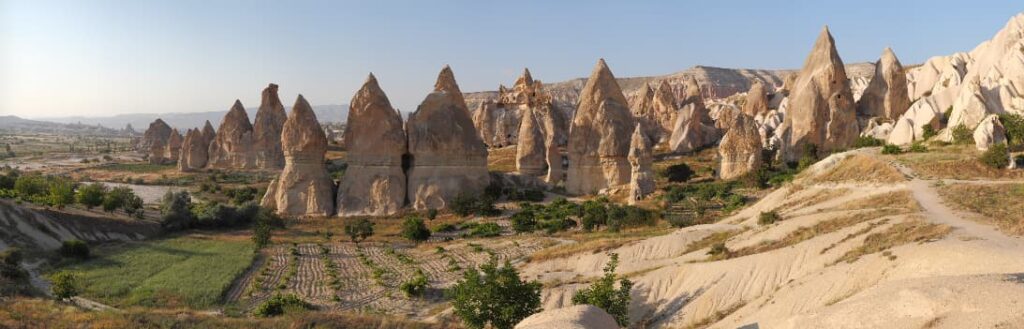
Derinkuyu lies in the Nevşehir Province of the Cappadocia region in Central Anatolia, Turkey, and sits atop many layers of tuff, a soft, porous rock formed from the compression of volcanic ash deposited in the area thousands of years ago. Tuff rock is hard enough to support construction, and soft enough to carve through with basic tools like picks, chisels, and wooden wedges. Once people living in the area discovered this, they began carving small storage spaces and living spaces directly into the rock beneath their feet.
Rather than digging an entire underground city at once, it is believed that the construction occurred incrementally, as needed. This essentially meant that whenever a family or community needed space, they would simply dig it underground, as required. The rock was removed and carried away through tunnels and shafts, expanding the space downward and away from the Earth’s surface. Over time, these individual expansions merged to form the massive underground space visible today.
The History of an Underground City
Derinkuyu was known to its former Greek inhabitants as Malakopeia. Most of the city’s expanse is concealed underground, with only a few skylights allowing air and sunlight to pass through.
The first few levels were possibly dug by the Hittites to protect themselves against the Phrygians. But eventually the Phrygians took over and dug out the bulk of Derinkuyu over the course of the 1st millennium BC. It consists of an 18-level deep network of tunnels extending to around 85 metres below the surface, covering an area of 170 sq miles (445 sq km) and built to shelter approximately 20,000 people.
Having the distinction of being the largest excavated underground city in the world, it has been in almost continuous use for thousands of years, passing from the Phrygians, to the Persians, and finally to the Christian inhabitants of the Byzantine Era.
It was finally vacated in the 1920s by the Cappadocian Greeks upon realising their imminent defeat in the Greco-Turkish War, after which they fled to Greece.
Not only do the cave-like passages extend for hundreds of miles, but it is believed that the over 200 small, separate underground cities found in the area may be connected to these tunnels.
The Functioning of the Ancient Tunnels
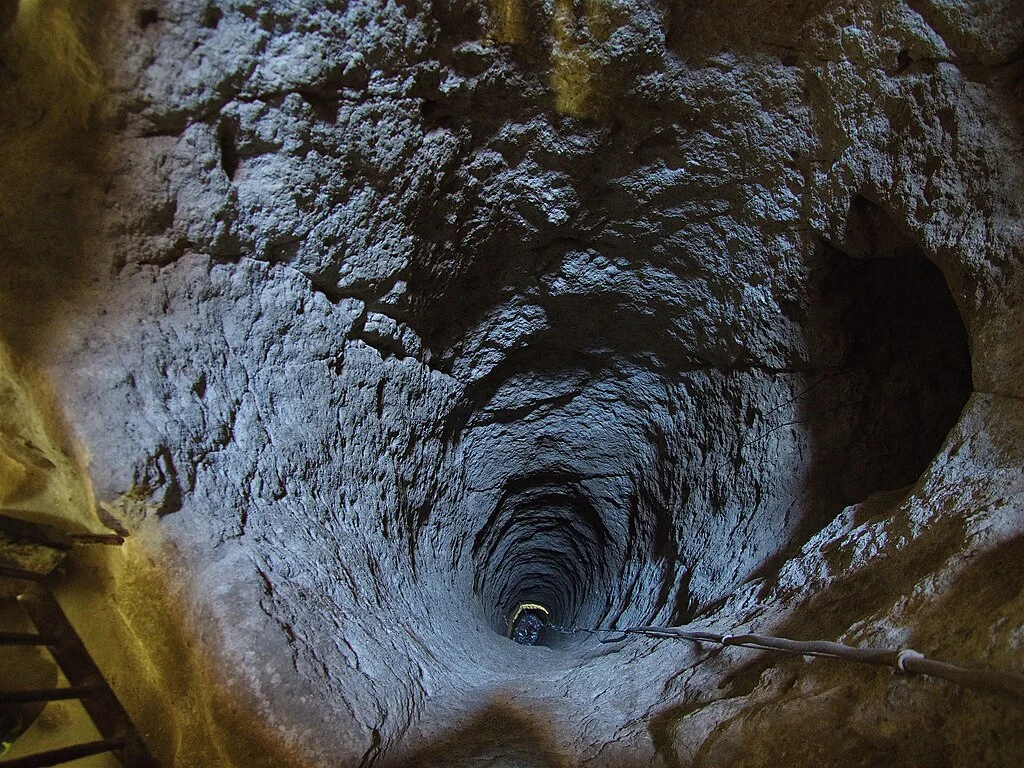
The inhabitants had built a large ventilation shaft in the middle of the town that also served as a well. Smoke and tainted air would be aspirated out, and fresh air would come in through various chimneys built throughout the galleries. Grey and brown water would be collected and discarded. This being terribly convenient, it incentivised continuous habitation, with people going out only to farm or trade.
Each level was designed with scientific precision: livestock were kept higher up to reduce odours and toxic gases and create an insulating layer during the winter, while living spaces were in the lower, more impermeable levels.
There was a complex ventilation system with over 50 air shafts to minimise the chances of being choked off. The well mentioned above was heavily protected and went 180ft (55m) below ground. The people living below could easily cut off the water supply to the surface above.
Further, in case of problems, inhabitants could seal the doors with large round stones and wait it out for months. Funnily enough, as they had some terraces on the hillsides and the top, they could literally grow vegetables while they were being besieged.
The large number of underground cities in the area is mainly due to the area’s geology, characterised by a lack of groundwater and a high tuff content, as previously mentioned. The same geomorphology created the region’s famous “fairy tale chimneys”.
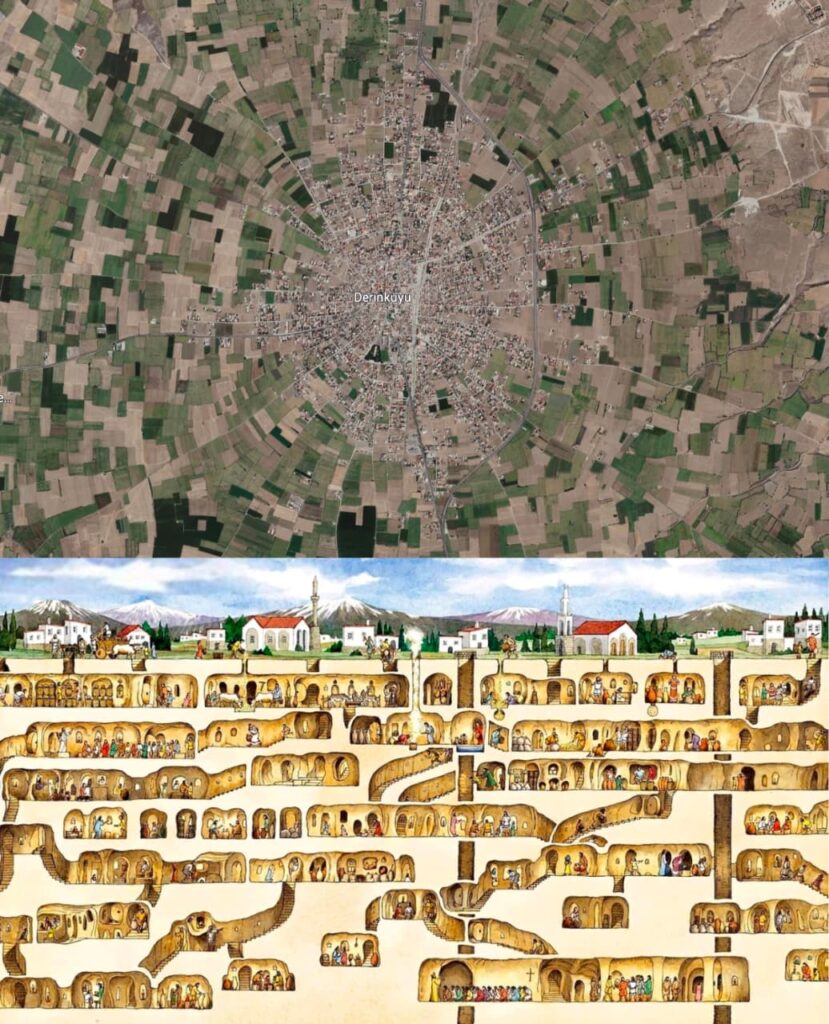
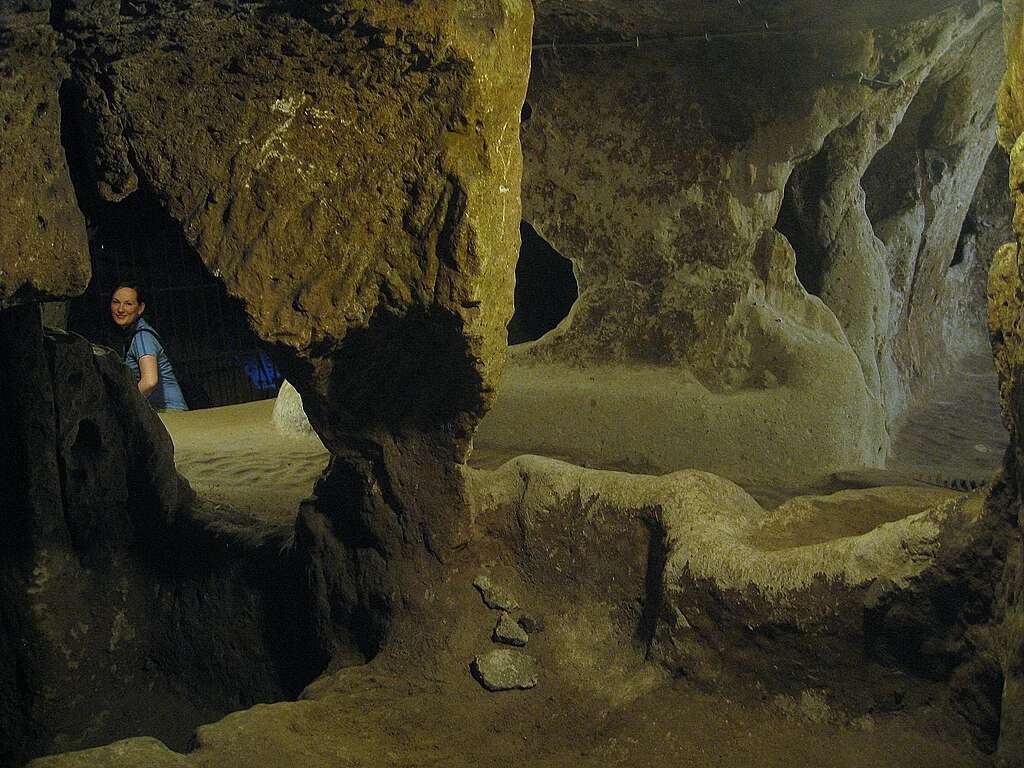
Surprisingly innovative contraptions are found within the tunnels, including wine and oil presses, stables, cellars, storage rooms, refectories, and chapels. On the second floor, Derinkuyu consists of a spacious room with a barrel-vaulted ceiling, which was supposedly used as a religious room, with the rooms on its left used as studies.
A flight of staircases between the third and fourth levels lead to a church on its lowest, and most protected fifth level.
ALSO READ: America Once Built Giant Arrows to Guide Pilots Across the Country, and Some Still Exist Today
Life Beneath the Siege
Anatolia has long been the junction between Europe and the Middle East, and for much of its history, armies moved through it with alarming regularity. Hittites, Persians, Romans, Arabs, Seljuks, Mongols, and Ottomans all marched across the plateau at different times. To the people living in the Cappadocia area, it was vital to be able to disappear before the armies arrived to survive. Thus, Derinkuyu served as a refuge for its inhabitants almost always.
Historical records suggest the city reached its peak of importance during the Byzantine period, especially during the Arab-Byzantine wars from the 7th to the 11th centuries, when Christian populations sought refuge from Arab raiders in the area.
It was also besieged unsuccessfully by Timur in the 14th century. One can only imagine the frustration of Timur’s troops as they watched the troglodytes go about their daily lives, gardening their cabbages and waving their hands, while the troops tried in vain to enter the city.
Even in later centuries, during periods of persecution and unrest in the late Ottoman Empire, Armenian and Cappadocian Greek communities reportedly used the underground tunnels again as temporary refuges. Some accounts even suggest that residents sought shelter there as late as the early twentieth century, including during the upheavals surrounding the First World War and the Armenian genocide.
The last known ‘refuge’ that it provided was in the early 1920s, when the Cappadocian Greeks who had lived in the region for centuries were forced to leave during the population exchange between Greece and Turkey following the Greco-Turkish War. When these communities departed for Greece, they took much of the living knowledge of the underground city with them.
A Chance Discovery
According to widely repeated accounts, a local resident in Derinkuyu was renovating his home when he knocked down a wall in his basement. However, instead of gaining more storage space in his home, he found that removing the wall opened into a narrow passageway that seemed to lead even further into the earth. As he continued to descend into the passageway, he quickly realised that he had stumbled into something larger than he could have ever imagined. This passageway opened into an immense underground city that descended rather deeply into the earth.
As it turned out, the individual’s discovery of the passageway into the underground city attracted the attention of many scholars. Further exploration led by these individuals uncovered an immense underground city that descended 85 meters into the earth.
In 1969, parts of the underground city were cleared and opened to visitors. However, it is important to note that, even today, only a small fraction of the underground city is accessible to the general public, with the rest sealed off.
Some critics claim that the whole “discovered in 1963” claim is a form of sensationalism to sell the story. It is believed that some locals might have been aware of it all along, perhaps not revealing it to the outside world, as the whole purpose was to hide from invaders when needed.
The Hidden Network Beneath Cappadocia
While Derinkuyu might be the largest underground city unearthed, it is not the only one. There are over 200 underground cities in the Cappadocia region of central Turkey, most carved into the region’s soft volcanic soil. While some of these underground ‘cities’ might contain only a handful of rooms, others have many levels of elaborate living spaces. Additionally, it has been discovered that some of these underground cities may be connected to neighbouring ones, allowing people to travel between them.
An underground tunnel connecting Derinkuyu and Kaymaklı was actually discovered, suggesting that these underground cities were not simply created as refuges but were part of an overall system of underground dwellings that developed over time.
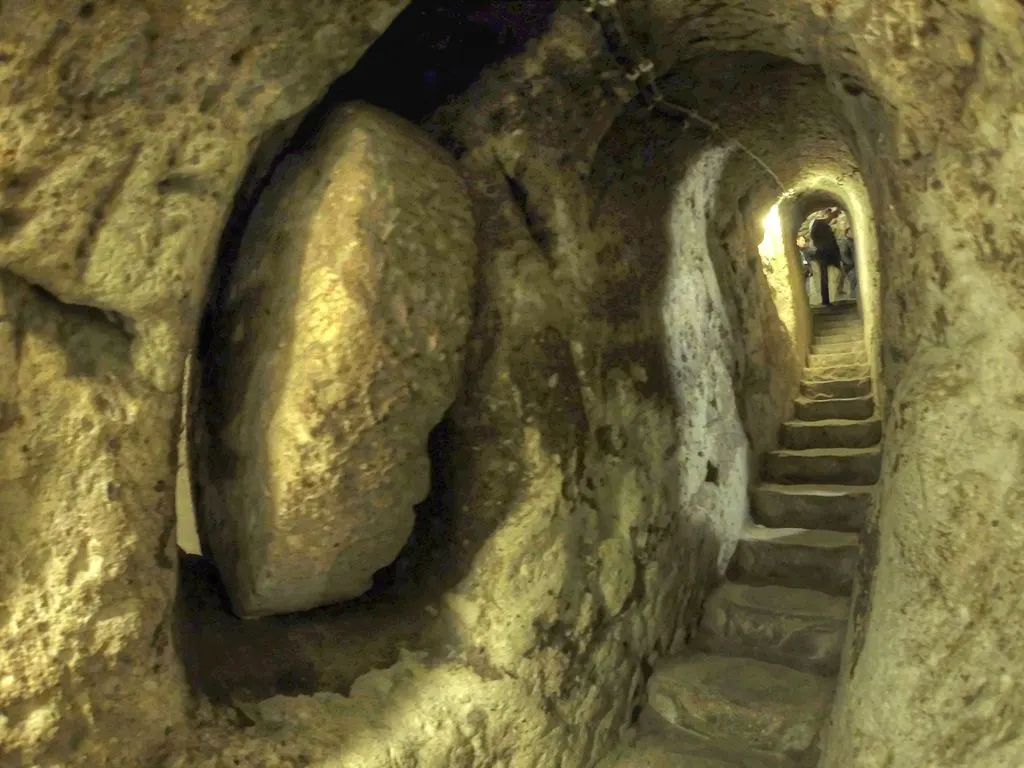
For many centuries, people in the region of Cappadocia adapted to an environment that was rather unique. While many homes, churches, monasteries, and even towns were carved directly into rock faces above ground, underground cities served as refuges in times of danger.
Today, archaeologists believe that a significant part of this underground structure remains unexplored. Only a small part of Derinkuyu’s underground levels is accessible to visitors, with the remainder of these underground tunnels in the region, however, being unexplored. The true extent of Cappadocia’s hidden underground world may still be hidden under the surface of the region.
Derinkuyu in Modern Culture
For a structure that has not seen the light of day in centuries, Derinkuyu has certainly managed to dig its way into modern popular culture.
It has been featured prominently in documentaries, travelogues, and even speculative historical writings that aim to understand the enigma of this structure’s massive scale. Yet perhaps its most well-known appearance in recent times is in video games.
In Assassin’s Creed: Revelations, released in 2011, the player explores a fictionalised version of Derinkuyu in Cappadocia. The game, of course, takes artistic liberties with its scale to make it part of the Assassin Brotherhood’s secret city, but it is evident that inspiration was drawn from the region’s underground cities. The history of the city that is presented in it, however, is completely fictionalised.
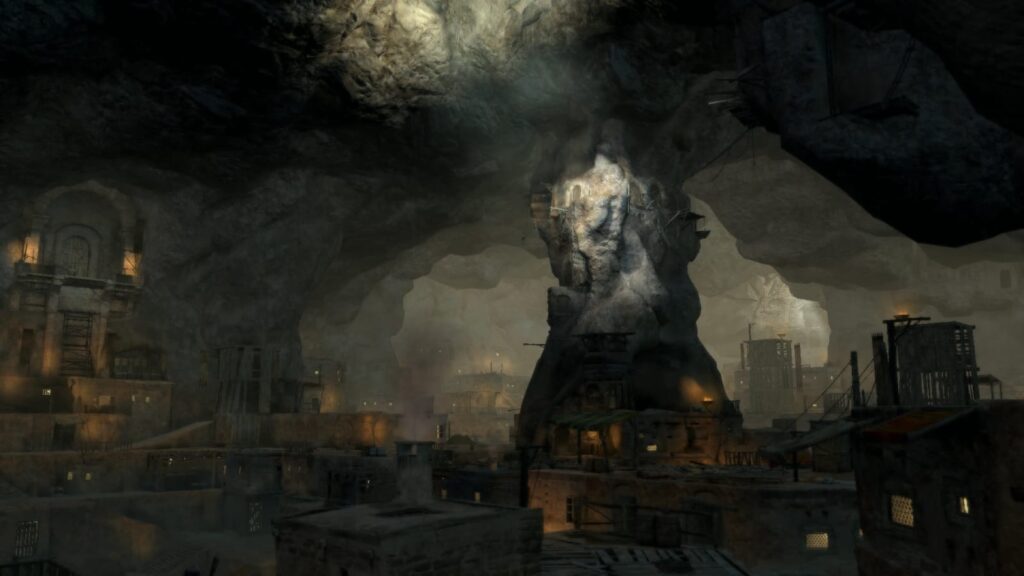
As previously mentioned, Tolkien’s Mines of Moria, as well as the dwarven cities under the Misty Mountains in The Lord of the Rings, bring to mind a similar sense of scale in these underground cities, although perhaps not as visceral as Derinkuyu.
What Lies Beneath the Village Today
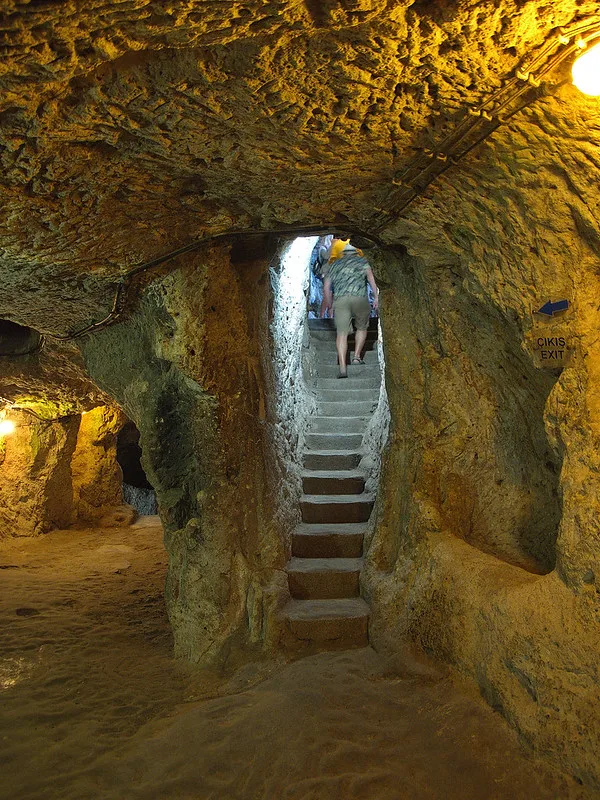
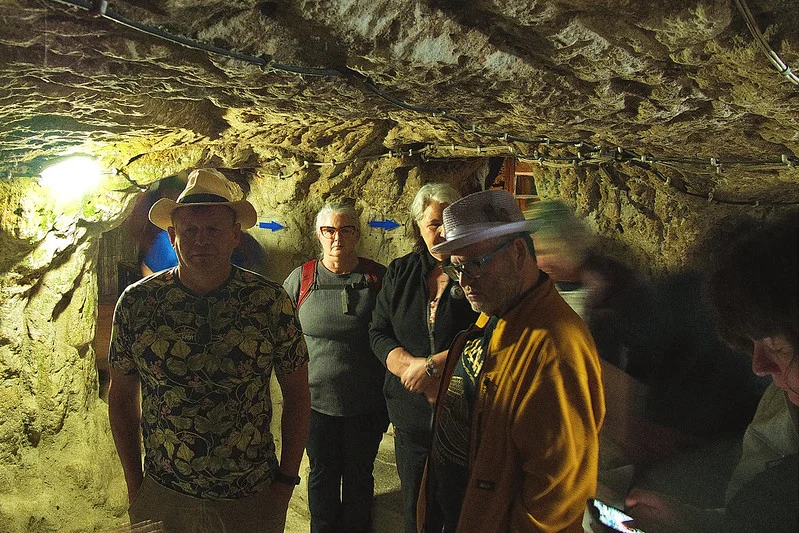
A stroll through the excavated passages today offers an extraordinary (albeit a tad bit claustrophobic) insight into the scale of the project. The narrow tunnels still require visitors to duck as they progress through the various rooms, and the ventilation shafts rise through the earth towards the surface, still in operation today.
However, despite the extent to which the site has been excavated, it is still not fully understood. Experts believe there may be additional levels and sealed tunnels hidden beneath the areas already excavated, though the fear of complete collapse prevents further work.
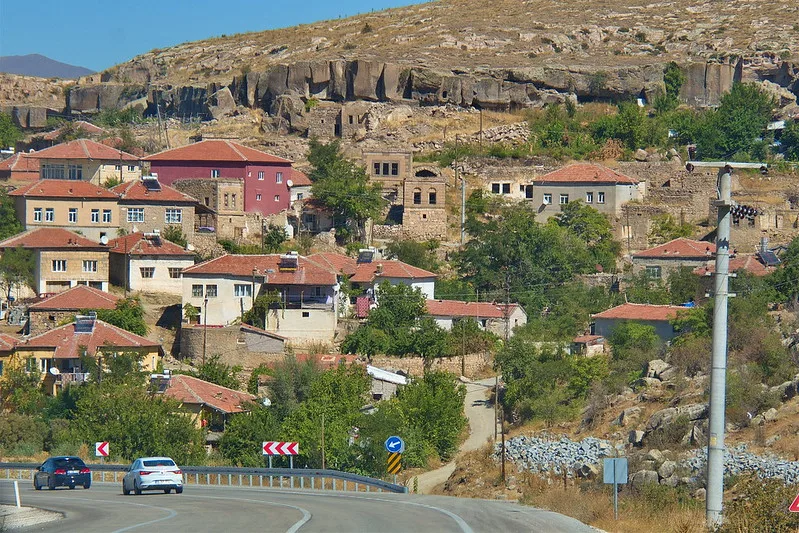
The landscape above, however, reveals nothing of the vast tunnel systems below. The modern town of Derinkuyu is like any other in Anatolia, with lively streets and colourful shops abound. Unknowing visitors to the town would find it difficult to even fathom the extent of the city below.
The People Who Built It Are Long Gone
Every inch of Derinkuyu epitomises practicality. Unlike monumental structures built as extravagant displays of opulence, the underground city was created for a far simpler purpose: protection.
Modern visitors who descend into the tunnels are struck by an odd feeling of both familiarity and alienation. The rooms appear to be smaller, the corridors narrower, and the air eerily cool and still. Yet the layout reveals the everyday infrastructure of life. Kitchens, chapels, storage rooms, schools, and stables all exist here, as they do in the world today, but they’re simply beneath the surface.
Having been battered by countless sieges, the fact that Derinkuyu remains standing even today is an ode to the ingenuity of the communities who built it, long gone now, yet leaving their indelible mark upon the very surface (or rather, the very interior) of Earth.