
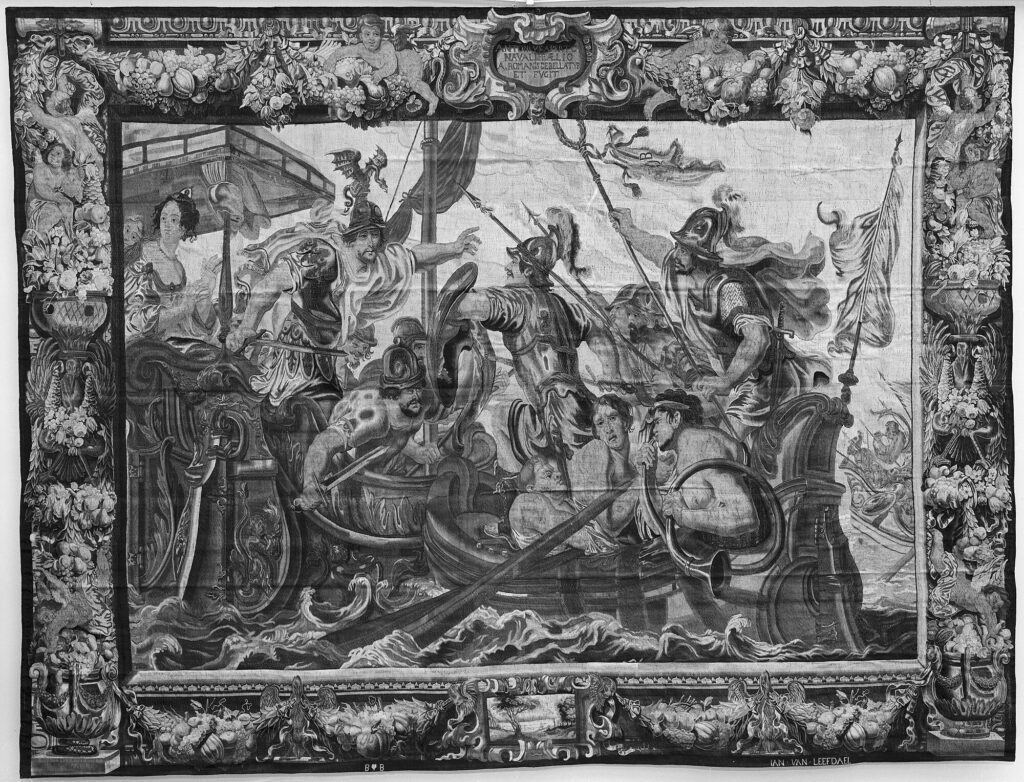
Following the disintegration of the Second Triumvirate (a legally sanctioned, five-year political alliance between Mark Antony, Octavian and Marcus Lepidus to avenge Julius Caesar’s assassination), Octavian and Antony increasingly found themselves in a struggle for supreme power over Rome.
This struggle reached a decisive climax in circa 31 BC, off the western coast of Greece at Actium. Octavian defeated the combined forces of Mark Antony and Cleopatra in the Battle of Actium, effectively ending the last great challenge to his Roman campaign. Within a year, both Antony and Cleopatra were dead. When Cleopatra VII died, the Ptolemaic kingdom that had ruled Egypt for nearly three centuries effectively died with her. The Romans came to consider it the final act in the civil wars of the late Republic and the symbolic triumph of Octavian (soon to be Augustus) over a rival world.
Romans considered their victory over Egypt as a victory over a seductive and alien monarchy that had threatened to corrupt the essence of Rome itself. However, the antiquity, luxury, mystery, opulence, and, above all, the bewildering pantheon of Egyptian gods made Egypt an object of both fascination and discomfort to them.
The Roman Appropriation of Egyptian Culture
If Rome distrusted Egyptian religion, it had far less reservation about appropriating Egyptian symbols. The cults of Isis and Serapis faced suspicion and political scrutiny in the capital, but Egyptian commodities faced no such hesitation. Edible items, papyrus, Egyptian stone, statuary, and ceremonial objects began being transported and used to proclaim imperial power (this almost never ended well, think of the Trojan Horse).
Grain was the most vital commodity, feeding Rome’s swelling population and making Egypt indispensable to the imperial food supply. Glass, luxury textiles, and spices were transported freely too, but having quickly stocked their granaries with essential commodities, the Romans turned their attention to the satiation of their finer senses.
Rome had long admired (and plundered) the art and architecture of the people it conquered. Egypt’s art and architecture were older than the Romans themselves, and moving them to the Roman capital would have been nothing less than an opulent display of their dominance. A statue could be pettily plundered, and a temple could be easily copied. But an obelisk, with its towering red granite structure overseeing the conquered lands, commanded reverence. Thus, this became a favourite spoil of War among the Romans.
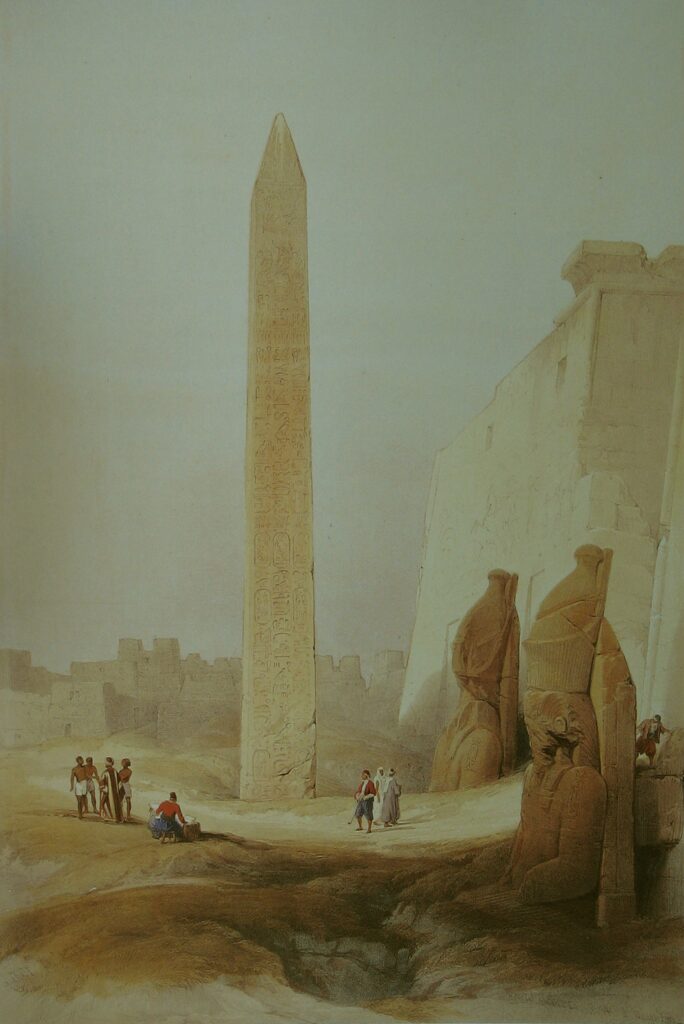
Obelisks of Ancient Egypt
In Egypt, Obelisks were considered sacred solar monuments, often constructed in front of temple entrances in obeisance to divine rule, solar light, and the cult of Ra. Romans couldn’t care less about them, but the sheer scale of these objects made them irresistible propaganda, and moving them to Rome would imply that Rome had not only defeated Egypt, but it was powerful enough to carry Egypt back home with it.
The Transport of the First Obelisks
Thus began the arduous task of transporting parts of Egypt back to Rome. Augustus was the first to transport Egyptian obelisks to Rome after the conquest, with at least two arriving in Rome in 10 BC. One was placed on the spina of the Circus Maximus (this is the Flaminio Obelisk found in Piazza del Popolo in Rome today, which was found broken into three pieces in 1587, and subsequently re-erected under Sixtus V).
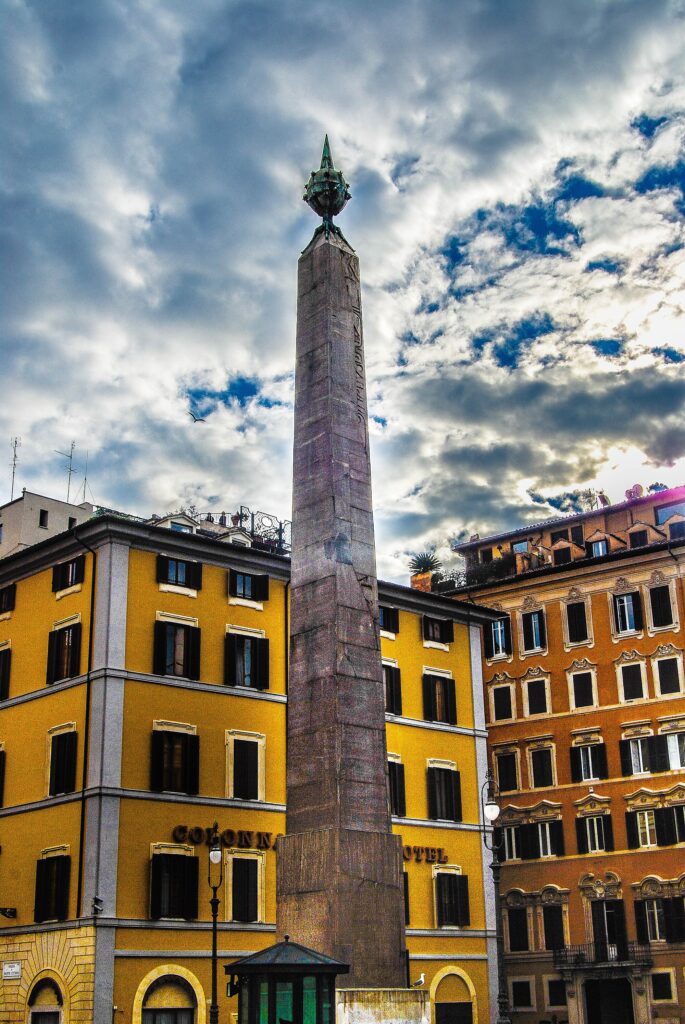
The second was placed in the Campus Martius (Field of Mars) as a part of the great solar meridian, or sundial, known as the Horologium Augusti (this is the Montecitorio Obelisk which had fallen and broken into five pieces, but was later restored and re erected in Piazza di Montecitorio, with some missing portions being reconstructed using granite from the damaged Column of Antoninus Pius).
Recent scholars (especially Armin Wirsching’s research on Roman obelisk transport) suggest that the Egyptians had already been transporting these structures downstream to Alexandria along the Nile River before the Roman annexation, and that the Romans probably learned from these Egyptian techniques after 30 BC.
Pliny the Elder’s Natural History remains a reliable source describing this feat. It marvels at the extraordinary difficulty of transporting obelisks and notes that the ships used became famous spectacles, which tells us the operation was regarded as highly unusual and technically daunting.
In particular, he mentions that one such ship, used under Augustus, was apparently preserved at Puteoli as a kind of marvel (later, it was reportedly destroyed by fire). The enormous vessel associated with Caligula’s transport of the Vatican obelisk (as discussed later in this article) was later said to have been sunk and reused in the foundations of the harbour works at Portus.
The Vatican Obelisk
Among the many feats of Augustus was a symbolic ‘refashioning’ of Egypt. Egypt was placed under a new administrative system headed by an equestrian prefect directly answerable to the emperor, the Egyptian trade was heavily monitored, and Egyptian revenues flowed freely into Roman coffers.
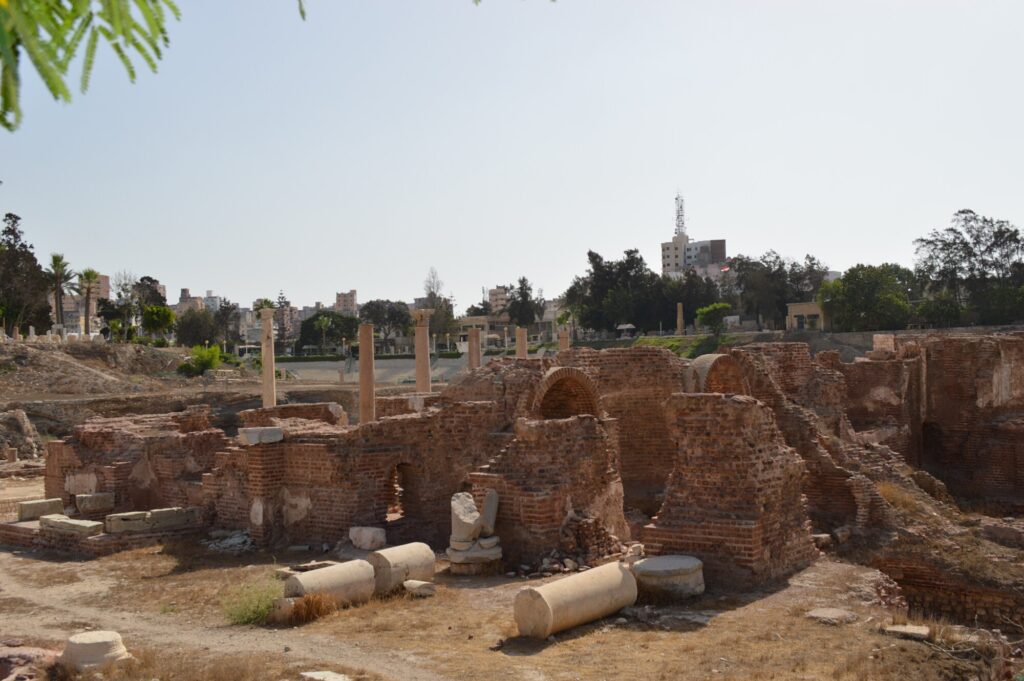
Alexandria, the old Ptolemaic capital, obviously had to be redesigned to suit Roman fancies. Pliny the Elder, states that a “third obelisk in Rome”, had been transported “by order of the son of the deified Caesar” (i.e. Augustus) and that it had stood in the Forum at Alexandria (Caesareum of Alexandria). This obelisk would attract the attention of Caligula (Augustus’s grandson), nearly seven decades later.
Caligula’s Ascent to the Roman Throne
Caligula became the newly established ruler of the vast Roman empire upon Tiberius’s death in AD 37. Keen to assert his authority through opulent displays of grandeur, he began to construct a circus arena in the Vatican plain (later known as the Circus of Gaius and Nero) within the imperial gardens that had belonged to his mother, Agrippina the Elder.
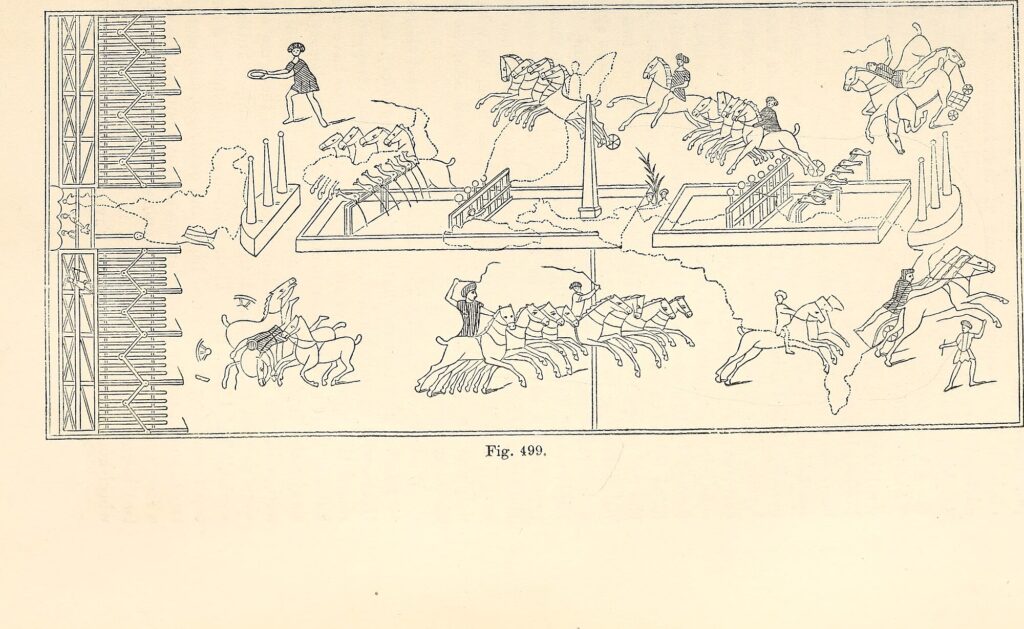
What could be more intimidating amidst clouds of dust thrown up by racing horses than a monolithic shaft of Egyptian granite, he might’ve thought. This sparked the idea of bringing a massive Egyptian tekhen (today called the Vatican Obelisk) to Rome. This wasn’t Rome’s first skirmish with Egyptian monuments, and it would definitely not be the last (if they could, they’d probably have brought the Sphinx back to Rome in all probability!).
Preparation of the Obelisk’s Relocation
The ‘Vatican’ obelisk consisted of a single piece of red granite over 25 metres tall, weighing well over 300 tons, in its entirety. Unlike many of Rome’s other Egyptian obelisks, this one was plain, devoid of hieroglyphs, essentially making it a giant granite monolith. A crack at any stage of the operation would destroy the prestige of the entire enterprise and thus, this was a task to be dealt with extreme care.
The first phase would have been preparatory work in Alexandria itself. If the obelisk did indeed stand in the Caesareum, as Pliny suggests, then, it would have to be carefully lowered from its standing position right from the base; an ordeal as delicate as the later voyage.
Once lowered, the obelisk would have had to be encased or cushioned for transport; reportedly, 120,000 modii of lentils (800-900 tonnes) were used as ballast on the ship. The monument was likely rolled to the port using sledges or rollers with timber supports, and loaded via a purpose built multi hull vessel.
The ship transporting the obelisk was an engineering marvel in itself. Research today suggests that the monolith may have been suspended between two joined hulls, stabilized by massive longitudinal beams, while a third vessel helped tow or guide the whole contraption. The vessel used to convey the obelisk was almost certainly purpose-built.
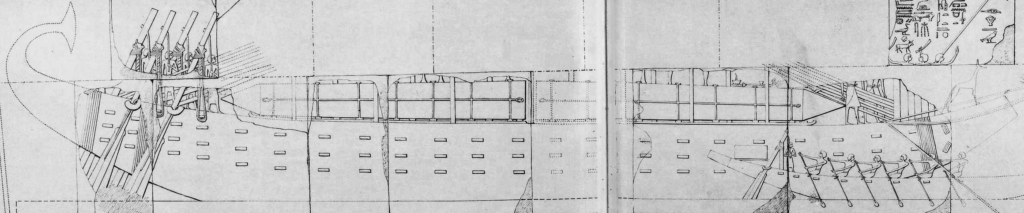
Pliny states that the ships used to carry obelisks to Rome drew crowds of spectators, and in the case of Caligula’s obelisk, the vessel was remembered long after the voyage, as previously mentioned. Certain texts mention that its length took up a large part of the left side of the harbour of Ostia, and it was crowned by a fir mast so thick that four men could barely span it.
A Journey Across the Mediterranean Sea
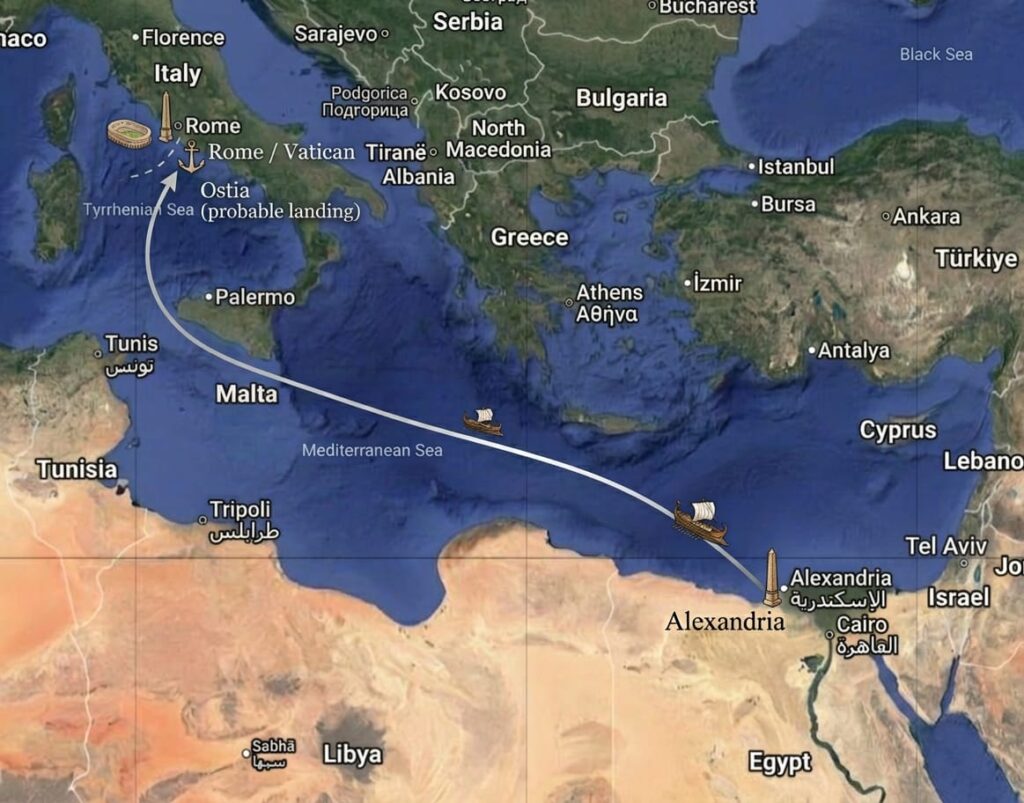
Once the Vatican Obelisk had been loaded in Alexandria, the most perilous phase of the process began. As stated by Pliny the Elder, “among all the obstacles connected with the transportation of obelisks, the most difficult problem was their transportation by sea.” The Obelisk was transported horizontally, presumably suspended lower to achieve greater stability, and then sailed across the sea from Alexandria to Ostia.
The path it followed is widely believed to be westward across the Mediterranean sea, close to the Italian coast, before docking at Ostia and continuing overland to Rome, as shown in the given map.
The Obelisk Arrives at Rome
The obelisk finally reached Ostia, Rome’s main maritime port situated at the mouth of the Tiber River. From here, it would have to be transported to the Roman capital.
This final leg was far shorter in absolute distance than the crossing from Alexandria, but for Roman engineers it may have been no less delicate. The distance of the coast from the capital was only some 15 to 20 miles, yet that last stretch involved navigating a massive monolith of through shallower waters and narrower channels, and finally onto land without cracking the granite that had already come so far.
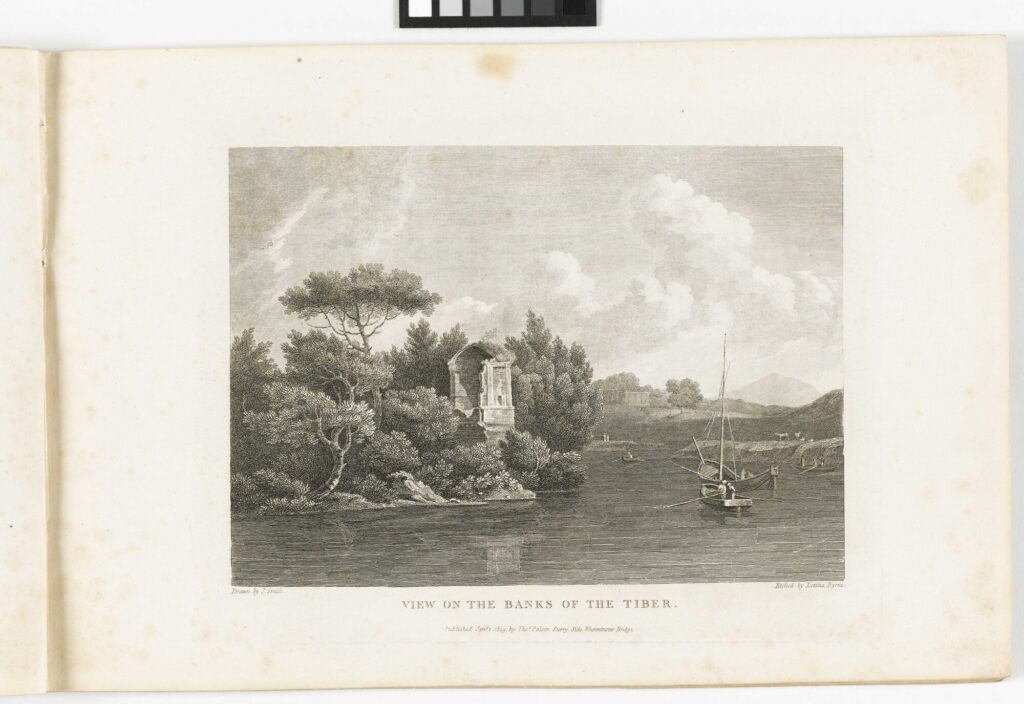
The obelisk was almost certainly brought as far inland as possible by water, likely using the lower Tiber system after reaching Ostia, since the Vatican plain itself lay close to the river and Roman heavy transport always preferred waterways over dragging such loads across long distances. Only the final stretch would then have required overland hauling.
The granite shaft was probably kept horizontal, locked into a massive timber cradle or sledge, and drawn in agonizing increments over rollers, greased beams, or prepared trackways, under the pull of ropes, capstans, work gangs, and animal draught.
In all likelihood, the Romans did not so much “carry” the Vatican obelisk from Ostia to the circus as inch it there in small increments with each stage carefully controlled, lest a single slip, twist, or uneven shift in weight might shatter the monument at the very edge of success.
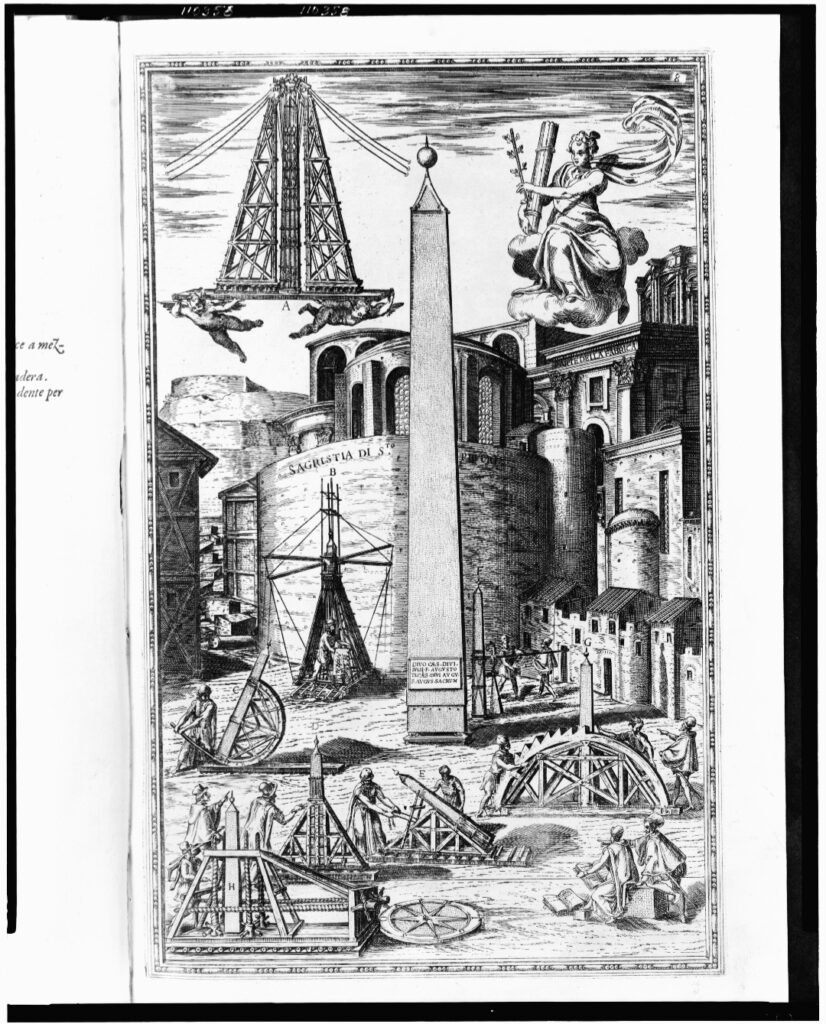
Pliny states that four blocks of the same granite intended for the Obelisk’s base had been transported too. Today, these form the Vatican Obelisk’s base. Once on site, the monolith would have been maneuvered horizontally into position, then elevated by a carefully staged combination of earth ramps, timber lifting frames, ropes, capstans, and controlled traction (again a massive marvel of Roman engineering acumen).
From Caligula’s Circus to St. Peter’s Square
One of the main reasons behind the religious gravitas of the Vatican Obelisk is the fact that it has never fallen over the course of its ~4000 years of existence, although it did have its fair share of vagaries.
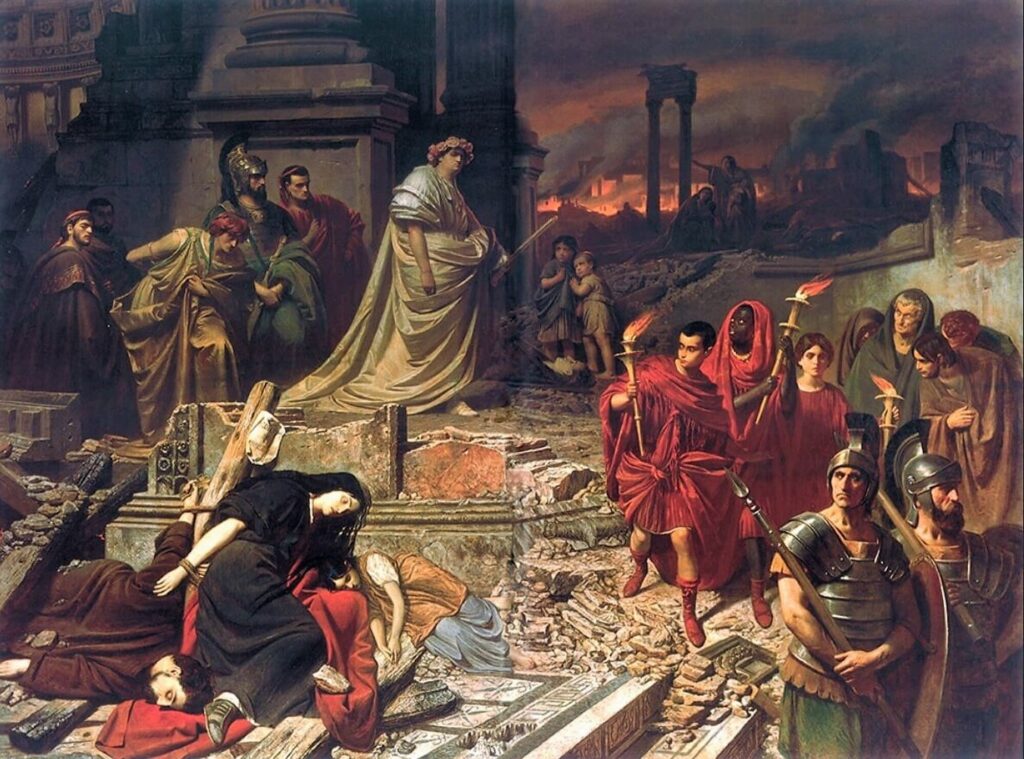
By the first century, Caligula’s circus had come into the possession of Nero (a worthy successor of Caligula’s tyranny). It thus became the site of the persecution of Christians in the aftermath of the Great Fire of Rome in AD 64. According to Tacitus (Latin text to be translated) after the Great Fire, Nero used his gardens and spectacles, including the Circus of Nero, as spaces to mete out savage punishments to Christians.
The Great Fire of AD 64, which decimated a large portion of Rome, surprisingly did not affect much of the monument. Neither did any of the subsequent fires, sackings, and other vagaries that befell the city throughout the imperial and medieval eras. Granite, of course, is far more resilient than brick or timber, and the circus around it gradually disappeared long before the obelisk did.
By the late medieval period, it had become inseparable from the memory of Nero’s circus and the martyrdom tradition associated with Saint Peter (or San Pietró).
Even during the Renaissance, the obelisk still stood near the old basilica of St. Peter, though now the stuff of Christian legends. Medieval scholars had come to believe that it marked the place of Saint Peter’s martyrdom, and that the ancient bronze globe that crowned the obelisk contained the ashes of Julius Caesar or Trajan.
Baptizing an Empire
If the transfer of the monument to Rome as a showpiece of Roman opulence was not enough, the monument was to experience a second act of symbolic appropriation, this time at the hands of the papacy.
This was carried out by Pope Sixtus V, (1585-1590) whose pontificate was marked by an unrelenting ambition to reorder the very fabric of Rome. Bent on propagating his ideology, he went on a frenzy of straightening roads, developing pilgrimage routes, and utilizing ancient monuments as new landmarks in the newly formed papal capital. The Obelisks of the ancient Roman Empire, (whether used as emblems of imperial vanity or pagan religiosity), were perfect for this purpose.
Acqua alle funi!
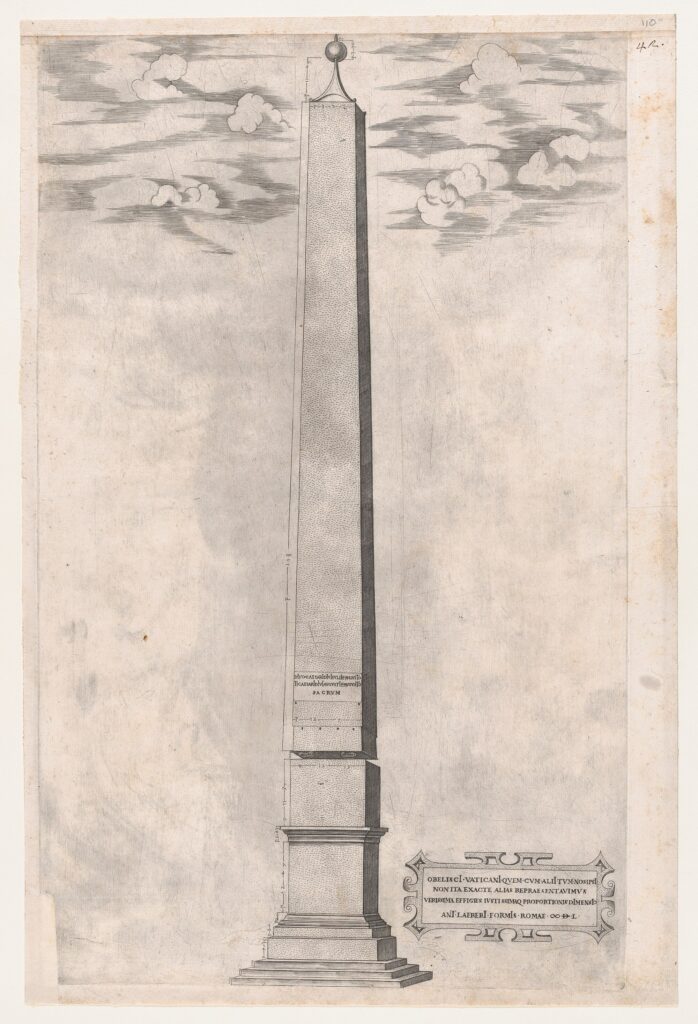
In 1586, Sixtus ordered the monument to be moved from its former position beside the old basilica, to a new site in front of St. Peter’s, where it could occupy the central ceremonial space that would go on to become St. Peter’s Square. This feat was tasked upon Domenico Fontana, the papal architect and engineer, who later recorded his experience in the 1590 book Della trasportatione dell’obelisco vaticano.
Requiring thirteen months of preparatory work, 800 men, 160 horses and 45 winches to carry out the work, Fontana managed to move the Obelisk over a staggering 260m in a single day on September 10, 1586.
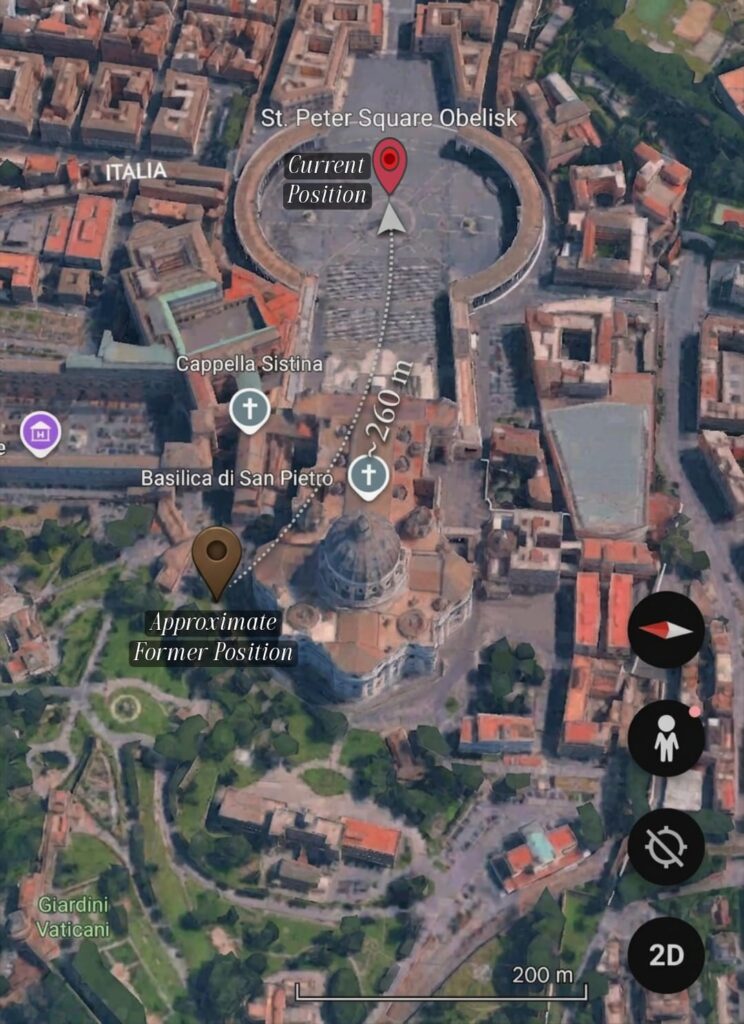
During the final transport, one of the most famous anecdotes of the operation records that, as the ropes strained under the immense weight of the obelisk and seemed close to breaking, a sailor, Benedetto Bresca reportedly broke the enforced silence with the cry “Acqua alle funi!” (“Water on the ropes!”), doing which apparently prevented the ropes from snapping.
After the obelisk had been successfully erected again, Sixtus V completed its symbolic Baptism by ordering the ancient bronze globe at its summit to be removed and a great bronze cross to be mounted instead.
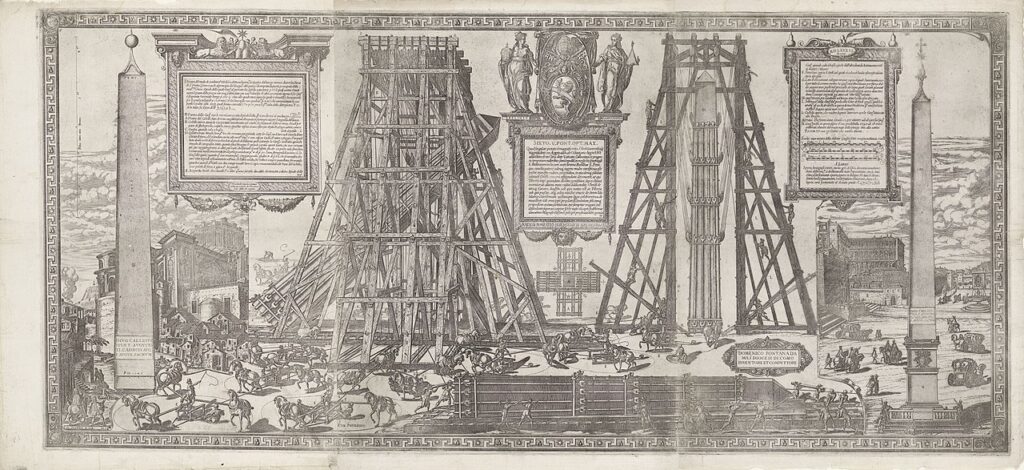
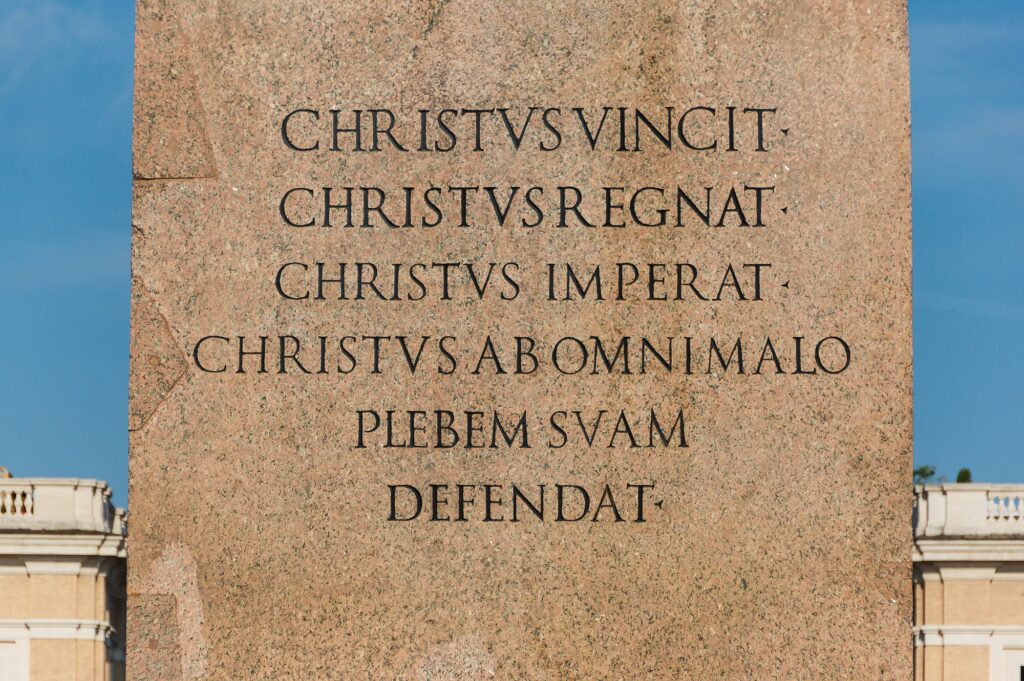
The papal intentions were made unmistakably clear by the new inscriptions on the pedestal, which proclaimed that Sixtus had transferred a monument once dedicated to pagan gods and consecrated it instead to the Invincible Cross.
On 26 September 1586, Sixtus V granted a perpetual indulgence of ten years and as many quarantines to those who venerated the cross by reciting the Our Father and Hail Mary before the obelisk. Naturally, people were quick to assume that the bronze cross enclosed a fragment of the True Cross itself. Yet when the cross was opened during a later restoration, no relic was found.
I’m still standing better than I ever did
Today, the Vatican Obelisk stands right in the middle of St. Peter’s Square, swarmed by pilgrims, tourists, clergy, cameras, processions, and quite a literal circus. It has outlived the pharaohs who quarried it, the emperors who seized it, the circus for which it was raised, and the popes who re-consecrated it, and many of the Pilgrims who worshipped it.
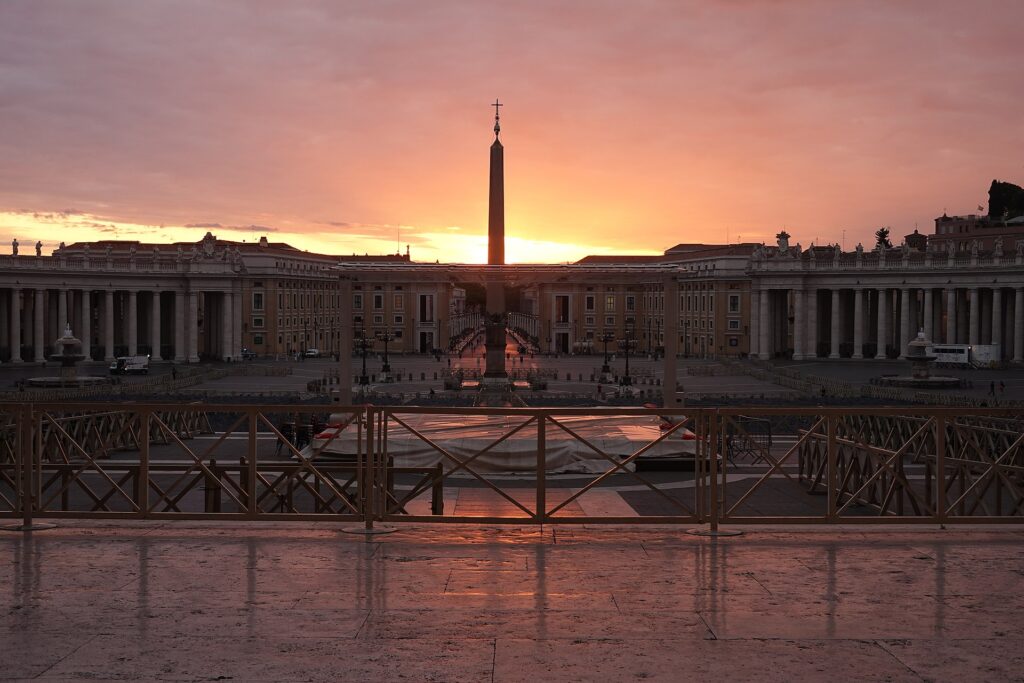
To this day, it remains perhaps one of the most symbolically overburdened stones on earth, a monument so ancient that every power which sought to possess it has instead become part of its vibrant history.