
The light along the Nile falls away fast. On October 28, 2015, as evening pressed in over Murchison Falls National Park, twenty-one-year-old Dutch medical student Sophia Koetsier told her friends at the Uganda Wildlife Authority Student Center that she was going to the toilet and walked toward a low concrete block near the trees. She did not return.
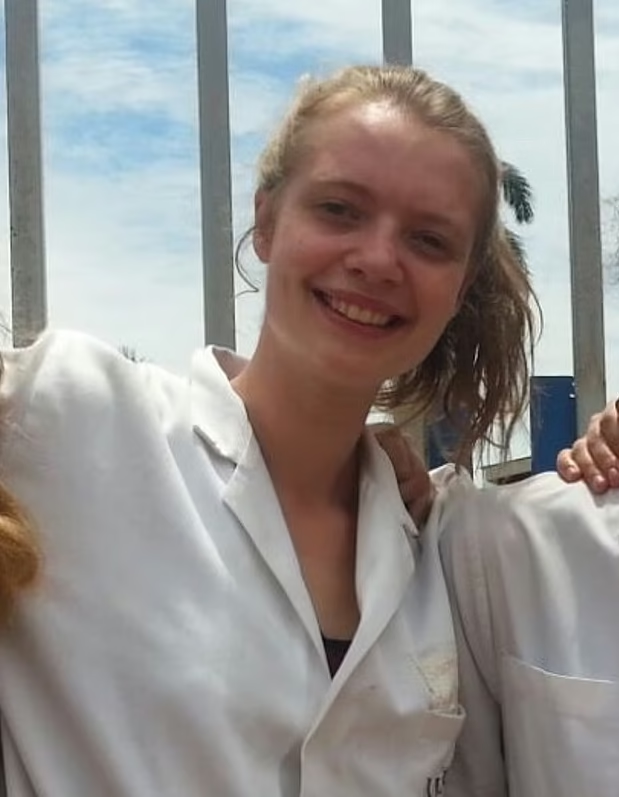
She came from Amsterdam, the eldest of three children, the only daughter, tall, direct, sharp, the kind of person who treated medicine as both duty and structure. Friends and family describe a young woman who moved quickly, argued hard, laughed easily, held people close, took extra shifts, and still turned up for dinner.
By 2015, she had finished her bachelor’s degree in medicine at the University of Amsterdam. She built a careful gap before her master’s. Uganda sat inside that plan as a step. She wanted work that involved real patients, absolute pressure, and real responsibility. She chose Lubaga Hospital in Kampala and treated it as a posting, a path that later appears in the official Dutch National Police
record of her disappearance.
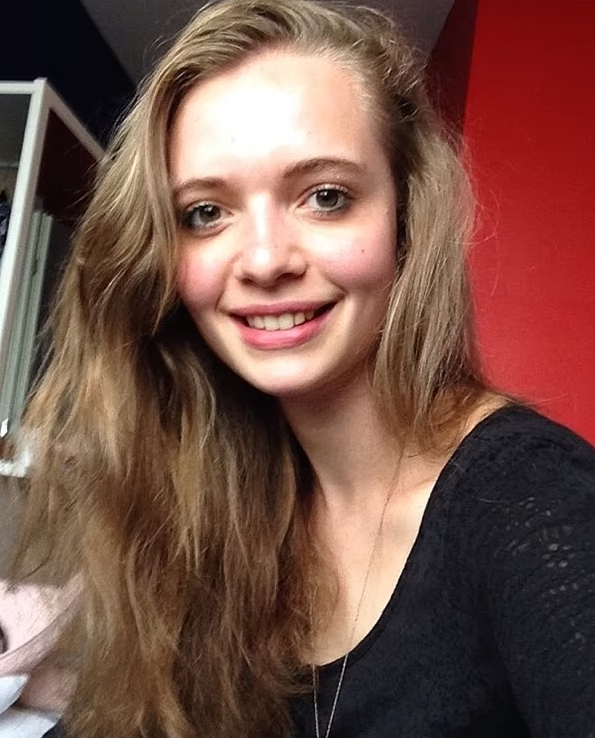
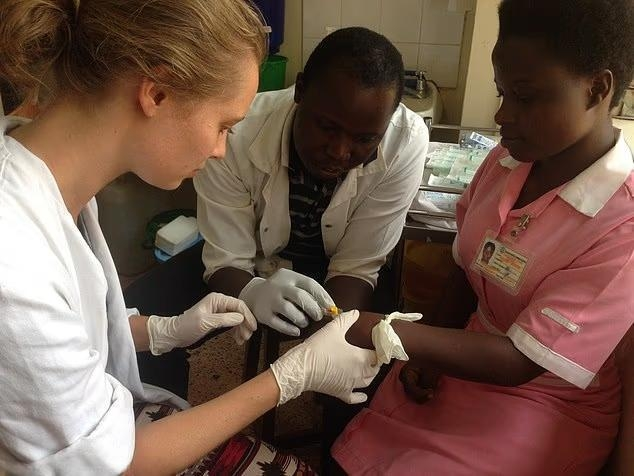
For eight weeks at Lubaga, she rose early and navigated crowded wards that smelled of disinfectant and dust, assisted in the maternity ward, observed harrowing cases, and made decisions that came without comfort. In her regular reports at home, she wrote plainly about what she saw, who she worked with, and what she learned. Her messages sounded tired, involved, and often cheerful.
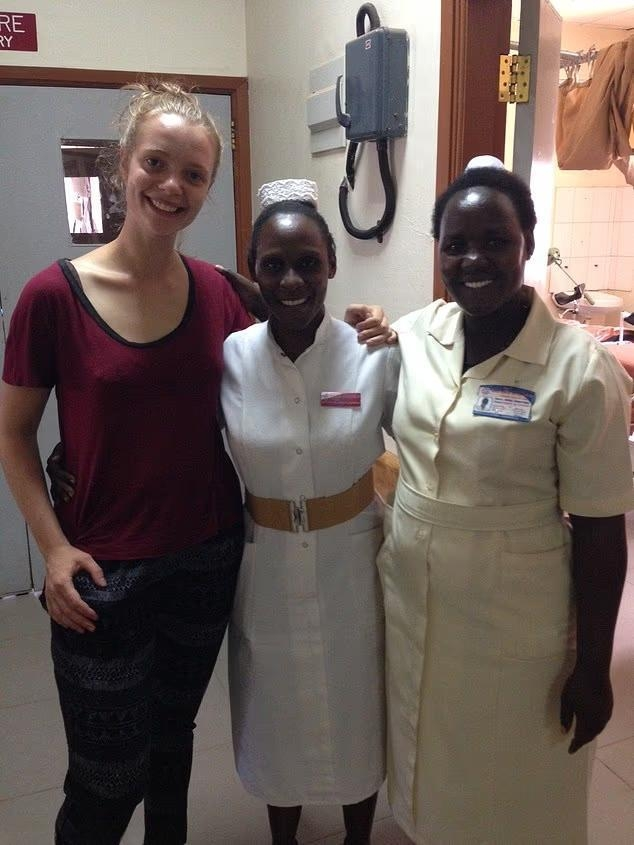
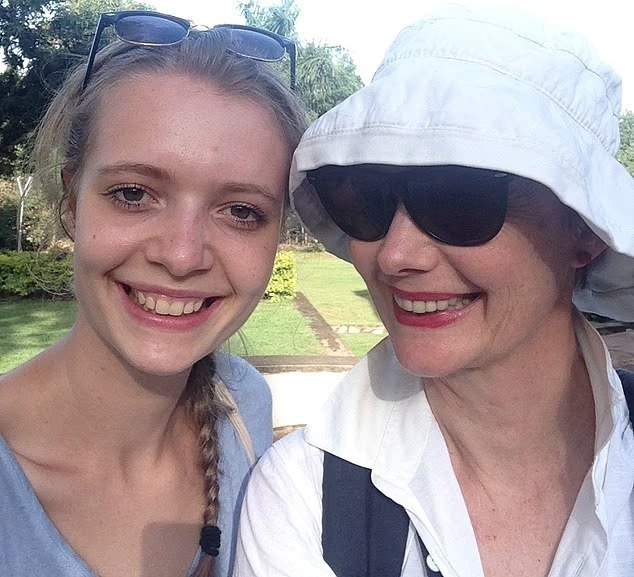
Her mother, journalist Marije Slijkerman, stayed in Kampala for part of that time. They met often. They put rules in place, including check-in calls, agreed-upon times, and clear routes. Both saw Sophia’s stay as serious but safe with ordinary caution. That baseline matters because in the months and years that followed, officials reached for one line in her medical file and tried to stretch it across the entire story.
Sophia Koetsier’s journey from Amsterdam to Uganda
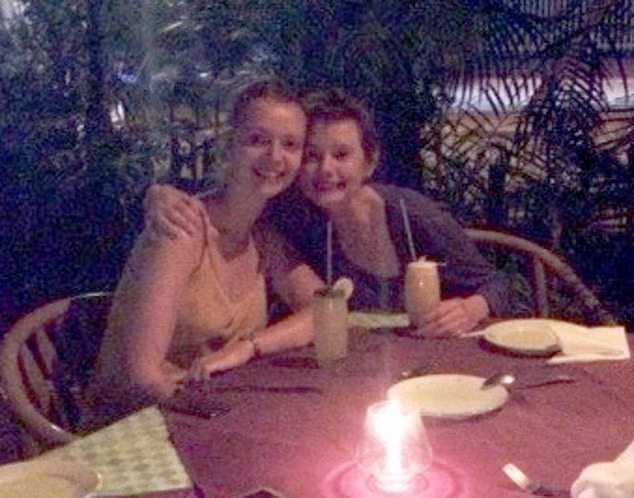
At sixteen, Sophia received a diagnosis of bipolar disorder. For her, symptoms appeared rarely and followed a pattern. Overstimulation, less sleep, sudden energy. Her family understood how to respond. Encourage rest, adjust her medication with a doctor, and stay close until she settles. She finished school, held various jobs, attended university, lived abroad, completed internships, and steered those periods as part of a managed condition.
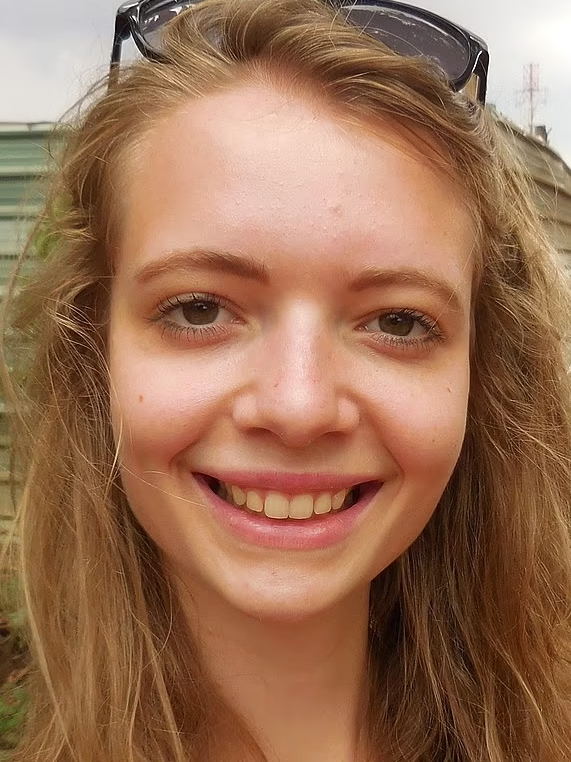
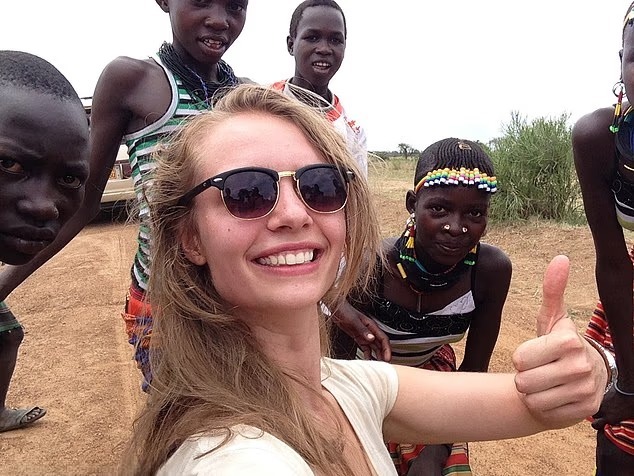
Her Lubaga internship ended on October 22. She wanted to see more of the country before her flight home, a wish that felt ordinary after months on the wards. She and two fellow Dutch students booked a tour with Ugandan driver and guide Michael Kijjambu. The agreement covered transport, simple accommodation, and national park visits. It ended with Murchison Falls, where the Nile narrows and drops through rock.
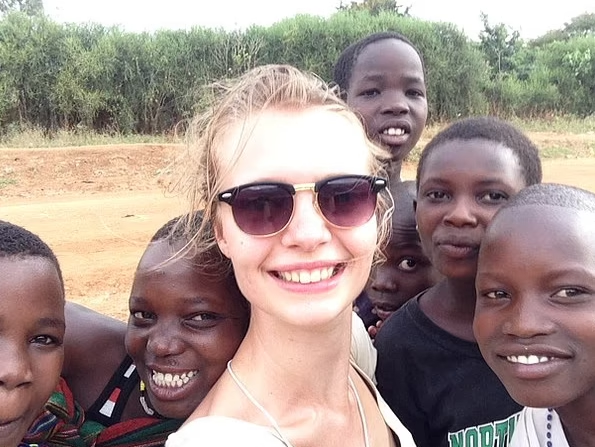
The first days looked like a standard overland route. They drove long stretches through heat and dust, camping in basic stops, sharing space with other travelers, and swapping stories over cheap meals. Somewhere across those days, according to her companions, Sophia began to sleep less, speak more quickly, and move with a restless brightness that felt familiar to those who knew her history. This time, her mother was in the same country, waiting in Kampala.
On the afternoon of October 28, Sophia called from a boat on the Nile. The line cracked. Her mother heard excitement and admiration for the river and the falls. Later that day, the tone changed. One of the other Dutch students described behavior that sounded like the start of a manic phase. Together, they agreed on a clear, simple solution. The guide would drive Sophia and her friends back to Kampala the next morning so she could rest with family support.
The guide knew. He heard about her mother’s concerns and that Sophia had a known condition that required a quick return, quiet surroundings, and structure. He drove them instead into Murchison Falls National Park that same evening. He checked the group into the Uganda Wildlife Authority Student Center at Paraa, a training compound near the river used for staff and instructors, not a secure tourist lodge.
A Dutch medical student’s final trip through Uganda
The Student Center was situated close to the Nile, featuring plain rooms, shared showers, intermittent lighting, and a mix of UWA instructors, trainees, and Uganda People’s Defence Forces personnel rotating through. It costs less than standard safari camps. It did not have controlled access for visitors or tailored protection for three foreign students, one of whom had become vulnerable and whose situation he already understood. Later, that choice would feel far from harmless.
As daylight faded, Sophia remained unsettled. She moved around, talked intensely, argued, and shifted between agitation and emotion. Her companions aimed to keep things calm until morning and then insist on the drive back to Kampala. They had seen her through episodes before. They knew she stabilised with rest, medication, and familiar faces. Somewhere after six in the evening, as the sky turned from pale to heavy, she said she needed the toilet and walked toward the block on her own.
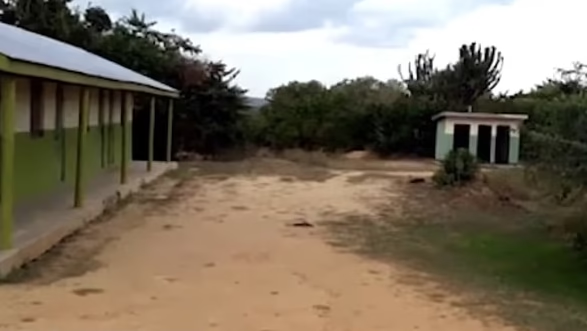
The toilet stood a short distance away, past open ground and scattered trees, with the darkness of the park just beyond the last lamps. Murchison Falls is home to lions, leopards, hyenas, hippos, crocodiles, elephants, and smaller predators that move silently after sunset. Guides inform visitors that danger is rare if they listen and refrain from walking alone. Sophia crossed that space by herself. No confirmed sighting of her exists after that.
When she did not come back, her friends went to look. They checked the toilets, walked the nearby paths, and called out into the darkness. The staff and the guide joined. Torches swept over broken earth, scrub, and shallow trenches. Someone called the Rangers. Calls rose through local chains of command with confusing fragments of information. Around nine at night, Marije’s phone rang in Kampala. On the line, someone told her that Sophia had been missing inside Murchison Falls for more than two hours.
That moment should have fixed the story. A young foreign medical student disappeared inside a national park after dark. A vulnerable guest under a guide’s care had gone missing beside a river known for crocodiles. The standard response in any serious system would be to lock down the last seen point, restrict movement, document every name on site, and treat each minute as evidence. According to Marije and later accounts, that did not happen.
Rangers walked and drove through the dark but did not immediately seal the Student Center. Soldiers and trainees came and went. Vehicles passed. There was no immediate master list of who slept there, who worked there, or who had walked those paths between dusk and the alarm. The area where Sophia had last been seen did not become protected ground. It remained a place people moved through.
At first light on October 29, the search expanded. Park staff, police, and others moved through the bush and thicket, checked game tracks, and scanned the waterlines from boats. A helicopter flew low along the river. Tracking dogs were brought in, although the family later heard that handlers used the wrong scent reference in the early stages. Sometime that day, searchers found a plastic water bottle a few meters from the Nile and recorded it as Sophia’s. It was entered as the first physical trace.
Within roughly twenty-four hours of the first call, Marije reached Murchison Falls. She expected controlled access, fixed logs, a cleared perimeter around the last seen point, and a chain of custody on whatever had been found. Instead, she saw everyday life. The Student Center functioned as usual. Trainees and staff crossed the same ground where her daughter had walked. The bottle sat near the riverbank, loosely associated, never conclusively proven.
The part of the bank where that bottle lay did not sit at the end of a clear, obvious path from the Student Center. Statements from the family, notes from Stichting Find Sophia, and fragments from officials describe scrub, branching tracks, and a slope that required either familiarity or guidance. One ranger told her that reaching that exact spot in the darkness without knowing the terrain would require uncommon coincidence.
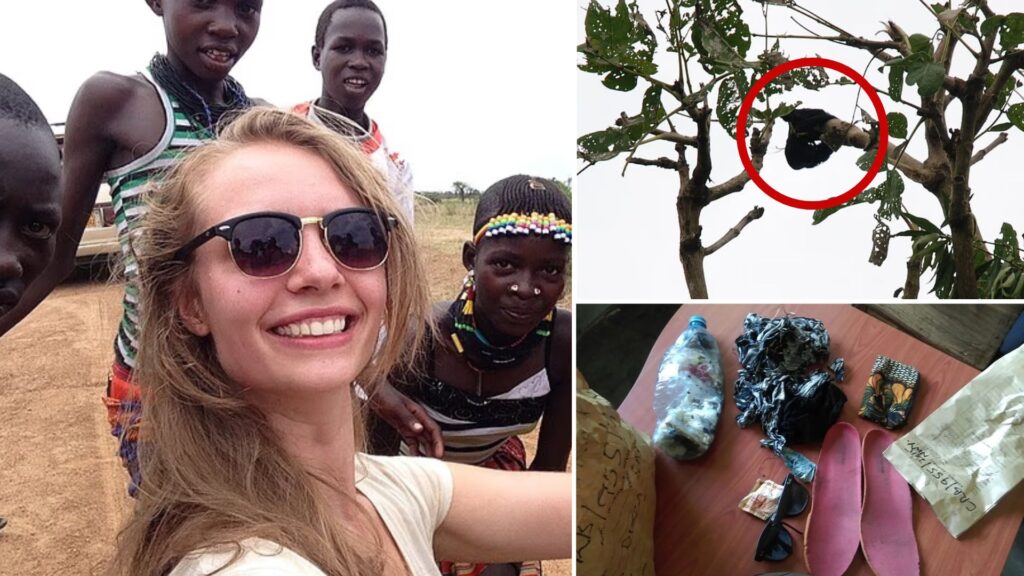
On October 30, the story took a turn. Searchers announced that they had now found more of Sophia’s belongings across a strip of about forty meters along that same bank, near the bottle. In that one stretch of land, they pointed to a boot, both insoles, a bright fabric purse, sunglasses, pieces of light trousers torn into narrow strips and draped across branches, and underwear hanging in a tree several meters above the ground.
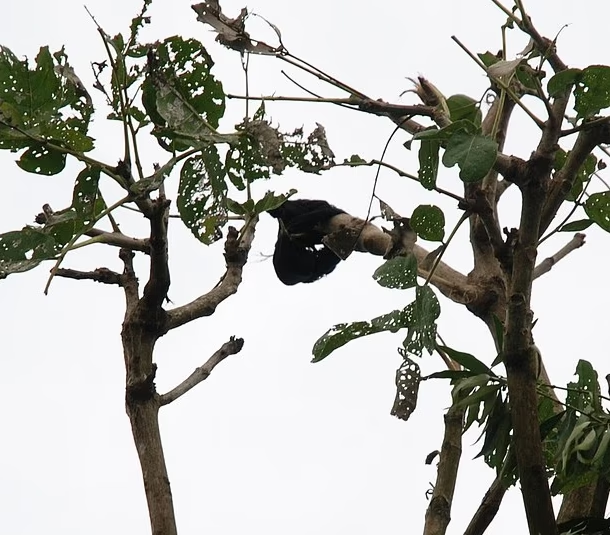
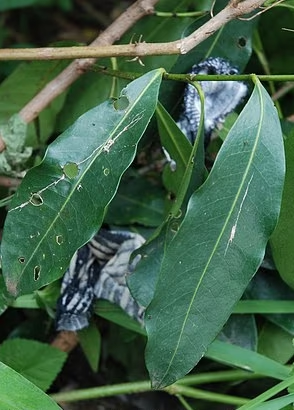
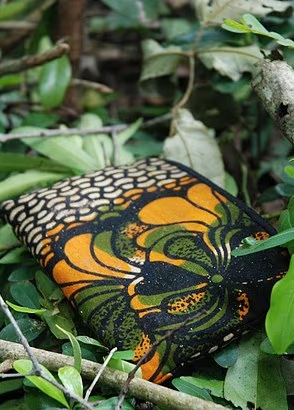
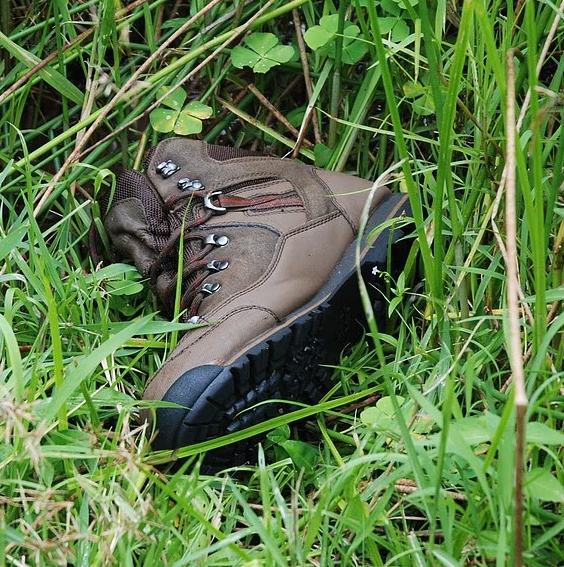
For Marije, the sight produced shock and suspicion in equal measure. Search teams had already been through that area. Helicopter crews had flown along the river. Boats had passed below. It was hard to understand how an earlier search had missed a boot, a purse, loose insoles, flapping cloth, and underwear hung at a height that caught the eye. She asked to see the place at once. Officers delayed. Only hours later did they bring her and present what they called, with rehearsed certainty, the scene of the crime.
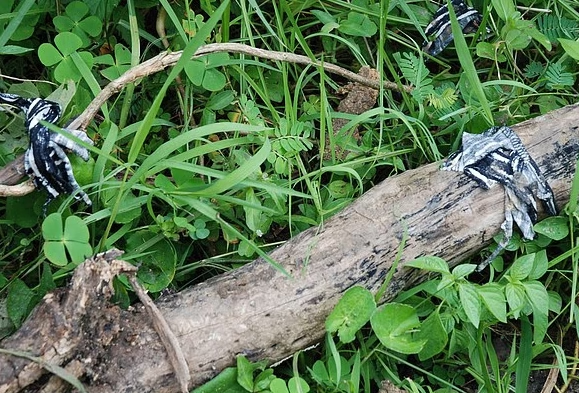
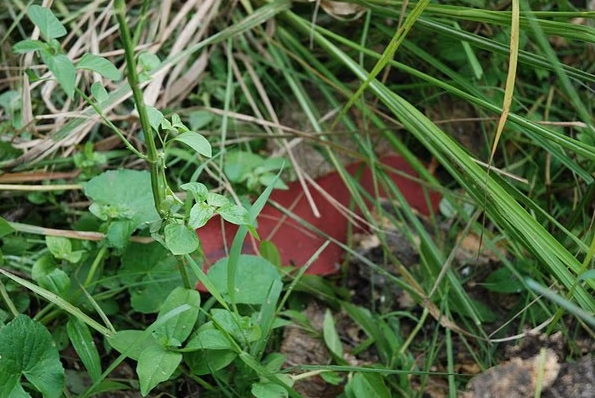
What she saw did not appear to be a struggle at the edge of a wild river. The line of objects felt deliberate. Strips of trousers looped neatly. Underwear was displayed high in the tree, as if elevated for emphasis. The bottle, the purse, the boot, the insoles, all arranged along a single visual corridor. It read to her as a message. Not an accident, not an animal, not Sophia.
She photographed the scene in detail. Later, when she shared those images with others, including people with investigative backgrounds, they repeated the same impression in plain language. It looked staged. It looked manipulated. Someone wanted searchers, journalists, and readers to draw one blunt conclusion. Experts who reviewed images of the trousers remarked that the cuts did not match typical tearing by thorns or claws. There was no visible blood. There were no human remains.
The disappearance at Murchison Falls National Park
Only after this display did forensic teams place tape and markers. The cordon went up days after Sophia left the Student Center. By then, rangers, soldiers, trainees, visitors, embassy staff, and relatives had walked through or near that ground. If there had been clear prints, drag marks, or subtle traces in the soil, most had already blurred into ordinary traffic.
Despite that damage, an official narrative settled. It suggested that Sophia, affected by a manic episode, wandered away from the Student Center in confusion, reached the river, and drowned or was attacked by an animal. That theory leaned heavily on her diagnosis and on the park’s wildlife, and lightly on the strange neatness of the scene. It allowed institutions to treat tragedy as almost automatic.
Marije’s life since that night has been spent resisting that ease. She travels between Amsterdam and Uganda, walks along the banks at Paraa, sits with rangers, questions police officers, reconstructs timetables, and refuses to let her daughter become a statistic in a report about mental illness and crocodiles. She points to what never happened in those first hours: no sealed last seen point, no verified roll call of everyone present, no immediate testing of every possible route between the toilets, the Student Center, and the river.
In 2016, the family created Stichting Find Sophia to centralise documents, interviews, and expertise. The Peter R. de Vries Foundation partnered with them and publicly treated the case as a likely crime. A reward of ten thousand euros was offered for decisive information, payable only after confirmation through DNA. Ugandan and Dutch outlets carried renewed appeals in 2025, ten years after Sophia vanished.
Independent Forensic Science Services in the United Kingdom examined items collected from the riverbank and detected the presence of male DNA. That profile has yet to be publicly and conclusively matched to the many men in uniform and staff who lived, trained, or worked near the Student Center and nearby Uganda Wildlife Authority facilities at the time.
Through her own work, Marije identified two UPDF officers who spoke about contact with Sophia on the night of her disappearance. Their accounts, when set side by side, appeared to contain contradictions about movements and timing. One surfaced not because police had mapped every person on site, but because his name appeared in another statement. She passed these findings to investigators. She saw minimal results.
In 2022, a new Ugandan task team reopened the case. Deputy investigations chief Emmanuel Womanya later acknowledged publicly that early decisions leaned too quickly toward theories of drowning and wildlife, and that delays harmed both forensics and witness memory. His comments aligned closely with what Marije had argued for years. They confirmed institutional hesitation without yet producing clarity.
The review also stripped away a layer around the guide. Authorities established that in 2015, Michael Kijjambu did not hold proper certification as a tour guide. A tourism officer told a court that he had warned Kijjambu to stop the tour, take Sophia to a hospital in Gulu, and then return her to Kampala. Kijjambu did not follow that instruction. He drove the three students further, into Murchison Falls, and lodged them in the cheapest and most exposed option.
In June 2025, proceedings at Buganda Road Chief Magistrate’s Court examined his actions, with Ugandan outlets such as the Daily Monitor detailing how warnings went unheeded. The hearings confirmed that he had continued to operate despite warnings and without full credentials. By September, the Director of Public Prosecutions ordered the withdrawal of the case. The court ended the proceedings without a decision on criminal responsibility. The record showed negligence and defiance, then stopped.
Find Sophia Foundation and the ongoing search for truth
Ten years after Sophia walked away from the Student Center, the file holds fragments that refuse to settle. The staged riverbank, the missing remains, the male DNA on her belongings, the uncertified guide who ignored warnings, the open compound shared with armed trainees, and the slow, partial response from authorities sit beside one another without a convincing, single story.
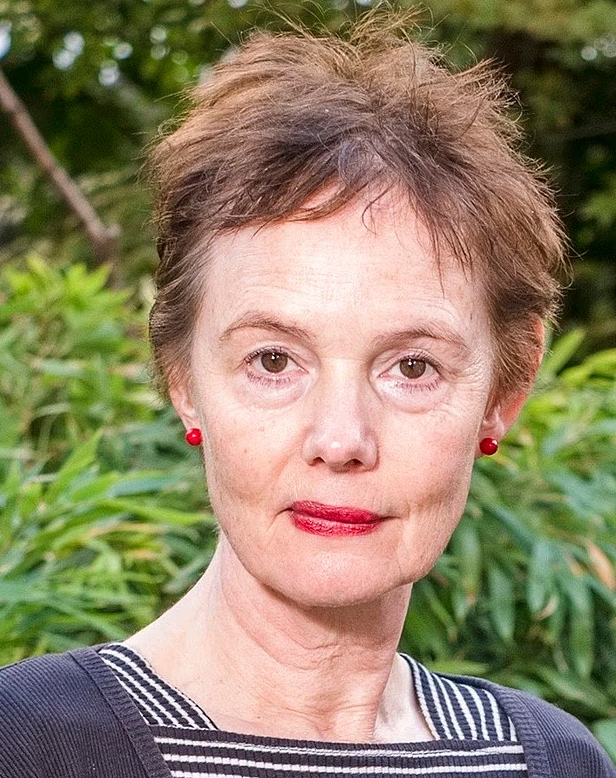
What remains constant is the work done by her family rather than the institutions that should have led. Stichting Find Sophia collects records that should have been obvious in the first week. Independent experts test items that should have been sealed at once. Journalists and advocates ask for matches that should already exist for every man who slept or worked within reach of that riverbank.
Marije does not try to turn Sophia into a symbol. She asks for something narrower and more complicated. Proper answers about a sequence of decisions that took a vulnerable young woman deeper into risk, failed to lock down the ground where she vanished, and then leaned on her diagnosis as a convenient closing line. Until those decisions are faced directly, Murchison Falls remains less a site of assumed tragedy than a place where someone arranged a story and walked away.
Other cases carry the same uneasy silence. Tionda and Diamond Bradley vanished from their Chicago apartment one morning and were never seen again. Kelly Lynn Disney left home for a short drive in Maryland and simply disappeared. Beatriz Winck set out on a trip in Brazil and was gone within hours. Each story ends the same way, with questions that never stop growing.