

Houston Heights was once a quiet neighborhood of narrow streets and old oak trees. Built in the 1890s as one of Texas’s first streetcar suburbs, it was known for modest bungalows and close-knit residents.
By the 2010s, that picture had changed. Developers replaced small houses with tall apartment blocks and modern townhomes. Construction sites filled the area, and long-time residents watched the old Heights disappear.
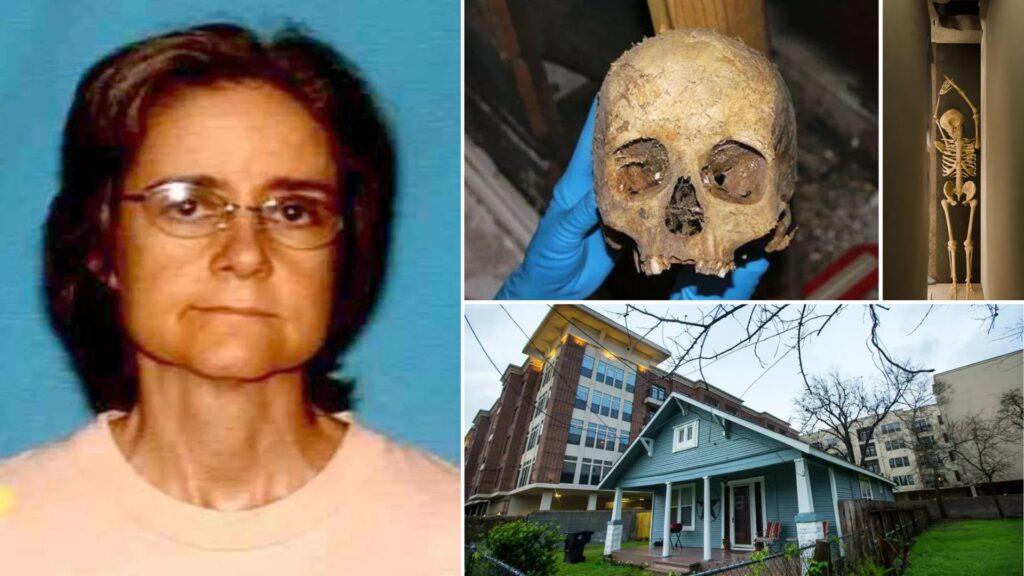
One of them was Mary Stewart Cerruti, sixty-one, who lived alone in a blue wooden house surrounded by new buildings. She cared for stray cats and spoke out against nearby development. In 2015, she disappeared without a trace.
Two years later, her remains were discovered inside the walls of her own home.
Mary Stewart Cerruti: Biography and Background
Mary Stewart was born on June 12, 1954, in Kingsville, Texas. She was the only child of Dr. S. Boyd Stewart, an English professor, and his wife Elsie, who was active in the local university community. Her mother died when Mary was thirteen, and her father passed away six years later from a heart condition while she was in college.
As reported by The Houston Chronicle, she grew up shy and bookish, cared for by distant relatives after her parents’ deaths, and carried that solitude into adulthood. She attended the University of Houston but left before finishing her degree. Friends described her as artistic and restless.
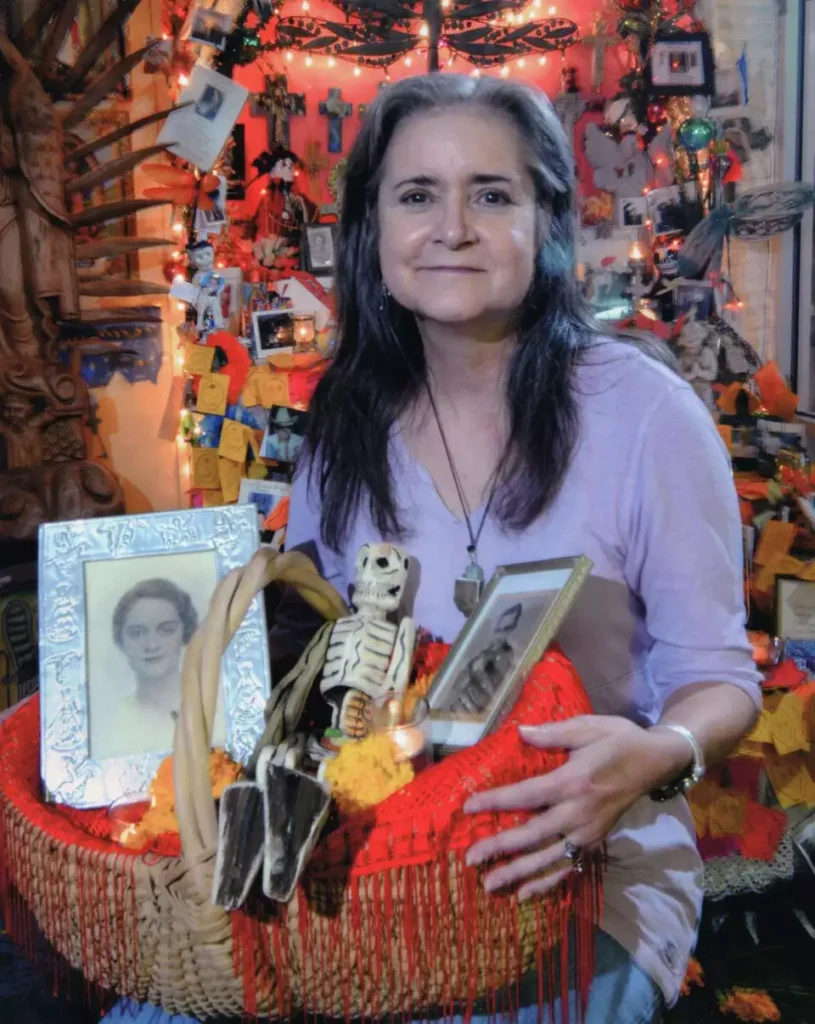
In 1979 she married David Cerruti, a man she met through friends in Houston. They lived for a time on Fargo Street in Montrose in homes Mary had inherited from her grandmother. Mike Mulloy, who ran a coffee shop nearby, remembered her as quiet but funny, with long dark hair and a good eye for photography.
The marriage to David Cerruti ended in the early 1990s. A brief second marriage to a man named Roy Elliott followed in 1991 but lasted only a few weeks. By then, Mary had gained a reputation among friends as eccentric.
She owned little, avoided large gatherings, and often retreated into periods of silence. Health problems troubled her early, including chronic migraines and what friends believed to be autoimmune symptoms. She honored her parents every November with small Day of the Dead altars and kept a growing number of cats for company.
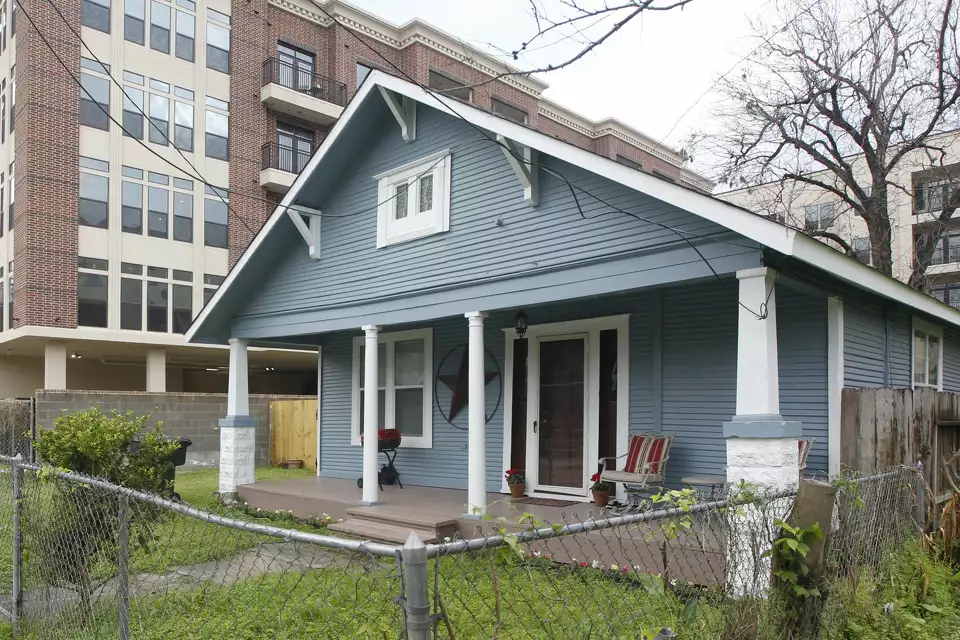
During the 1990s, Mary lived for a time with Ellsworth Milburn, a music professor, in one of her Montrose houses. That relationship ended quietly before the decade was over. By 2001, at forty-seven, she had moved into a modest two-bedroom bungalow at 610 West Allston Street in the Heights.
Built in the 1930s, the cottage became her refuge. Neighbors later described her as small, pale, and shy, always dressed in simple clothes and long sleeves. Her days revolved around her cats, her books, and her camera.
She took photographs of trees, clouds, and the houses being torn down nearby. To earn extra money, she watched pets for others or helped part-time at Casa Ramirez on 19th Street and at small coffee shops.
Those who knew her said she could be cheerful and sharp-witted one week, withdrawn the next. She covered her windows with fabric and kept her doors locked even during the day. Her home was filled with cat toys, photographs, and hand-painted decorations, but she rarely invited anyone inside.
When she struggled financially or fell ill, she turned away help, preferring to manage on her own. By the early 2010s, money had become a serious concern. Records show she had once paid off a twenty-two-thousand-dollar tax lien from the 1990s, but new debts appeared soon after.
In March 2015, Deutsche Bank filed a foreclosure petition on her Heights home. Six months later, the court approved the case. Mary did not contest it. Around that time, neighbors noticed her absence.
Mail filled the porch, weeds grew over the walkway, and one of the windows was patched with cardboard. A local yard worker, Robert Anderson, said she had stopped paying him months earlier. Spider webs spread inside the living room.
Few people saw her again as construction on nearby apartment towers rose higher each week.
Heights Activism and Opposition to Development
Mary Cerruti became known in her block as one of the last holdouts against a sweeping new development. In late 2012 and early 2013, Trammell Crow Residential announced plans to build a 350+ unit apartment complex called Alexan/Yale at 6th directly around 610 Allston Street, at Yale and West 6th.
Neighbors, including Mary, organized to oppose it, citing traffic, noise, and loss of the neighborhood’s character. Mary documented her protests through photography. In 2013 and 2014, she developed dozens of annotated pictures at Walgreens showing the construction sites and her own home.
Most of these focused on two things, her cats and the encroaching high-rises. She scrawled notes on the photos about rising rents, “bad guys,” developers, and constant noise.
According to The Houston Chronicle reporter Emily Foxhall, her annotated photographs became a haunting self-portrait of resistance. Each Walgreens print carried handwritten complaints about dust, construction, and the loss of the old Heights.
One concerned neighbor, Roxanne Davis, kept Mary’s photo collages and noted, “This is what’s left of her, how she felt about the development being built around her.”
City records and news accounts confirmed Mary’s role in these debates. The Houston Planning Commission minutes for February 14, 2013 listed her among the speakers opposing a replat for the nearby Maple Heights subdivision.
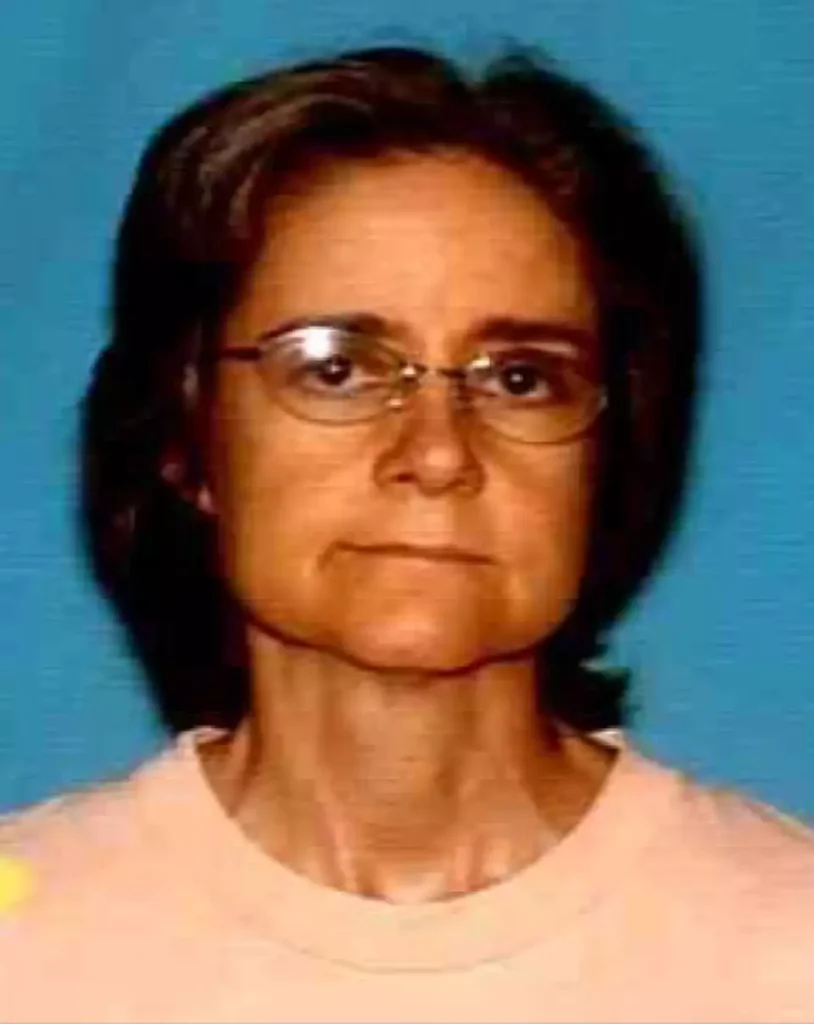
That same day, she spoke at a public hearing about the Yale Street project. Wearing pink and glasses, she told the commission, “Literally this project is going to be in my backyard. I’m surrounded. And I just don’t see the sense of this project. It seems like just too many apartments for such a small space.”
She and other residents emphasized that existing deed restrictions limited single-family homes in the area and that several owners, like Mary, had refused to sell. A local blog Off the Kuff later noted that planners approved the replat without variance, designing the complex around the holdouts who “did not want to sell.”
The project went forward as Yale at 6th, marketed as offering “casual elegance and an energetic neighborhood vibe.” Construction began by 2015, and within a few years, Mary’s block was surrounded by five-story beige and brown buildings.
During construction, neighbors recalled small incidents that made her life harder. The city cut off her water over unpaid bills. Trucks blocked her car in the driveway. Noise and dust kept people away.
Mary documented these frustrations in her photographs. Many showed piles of dirt, scaffolding, and the growing walls that hemmed her in. Despite the isolation, she kept attending city meetings and speaking out against development, even as the world around her changed.
Property and Legal Records
Public records outline the legal history behind the case. Mary’s mortgage and tax documents are preserved in county filings. At the start of 2015, she had already missed ten mortgage payments.
In March 2015, Deutsche Bank filed a foreclosure suit for 610 Allston Street, and a court judgment followed on September 25, 2015. Tax records from the Heights Tax Office show another lien on the property. By mid-2016, about twenty-five thousand dollars in unpaid tax debt had accumulated.
With Mary missing, the house was auctioned on November 3, 2015, for two hundred sixty-one thousand dollars. The new owner renovated the structure, installing a roof, new windows, and fresh interiors by early 2017. The attic, however, was never repaired, and the cat cages remained untouched.
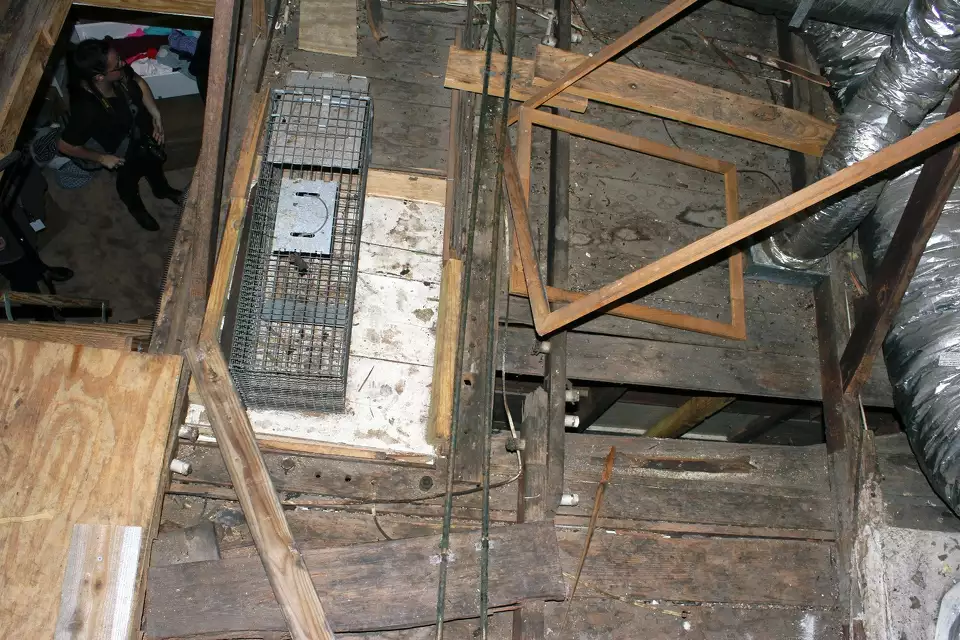
City records also preserve the hearings where Mary voiced her opposition. The February 2013 Planning Commission minutes list her among those objecting to a proposed replat. That same year, developers secured zoning approvals for the large residential project she had opposed.
A political blog reported in 2013 that Trammell Crow’s three-hundred-sixty-unit Alexan Heights project had been approved by the commission. The article noted that planners designed around several lots whose owners had refused to sell, including Mary’s.
By 2017, city appraisal data showed how quickly the neighborhood had changed. Mary’s weathered 1930 bungalow, once surrounded by empty lots, was valued at more than four hundred thousand dollars.
After her remains were found, the property sold again in 2018 for four hundred thirty thousand dollars. It was later demolished.
Forensic Findings and Medical Examiner
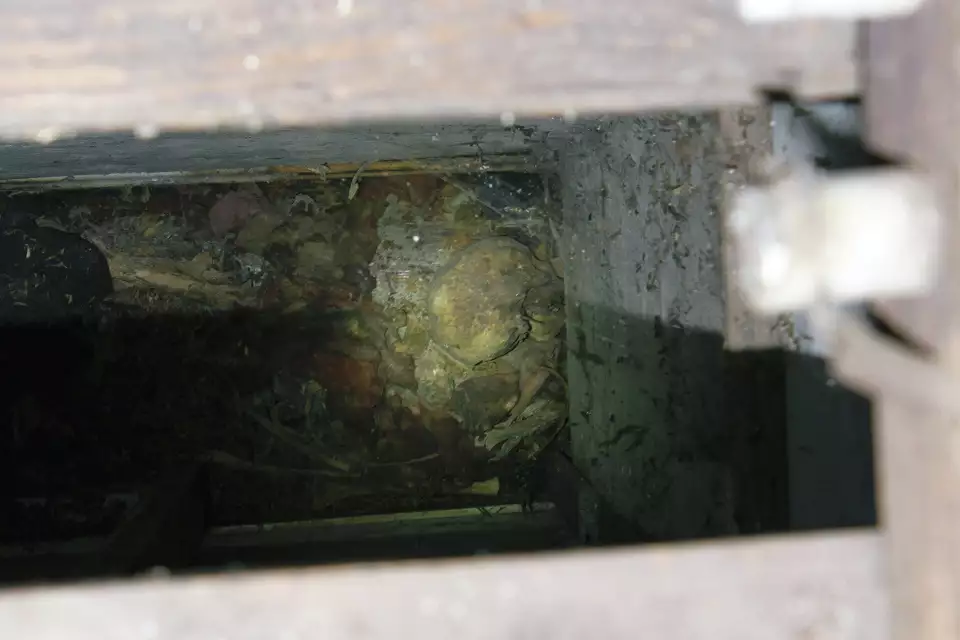
The forensic investigation focused on the bones found inside the wall. The Harris County Institute of Forensic Sciences team, led by Dr. Sharon Derrick, catalogued the remains and compared them to Mary Cerruti’s known features. They recovered nearly a full skeleton, though it was scattered and chewed by animals.
Fragments of clothing, a canvas pet carrier, and metal cat cages were mixed with the bones. The area also contained the remains of several cats, confirming that animals had disturbed the space after death. A 2017 report by ABC13 Houston described the bones as “badly damaged by extensive postmortem animal activity.”
The skeletal structure fit that of a small white woman in her sixties. Investigators noted pelvic, skull, and long bone features that aligned with Mary’s age and build. Among the most telling clues were personal items.
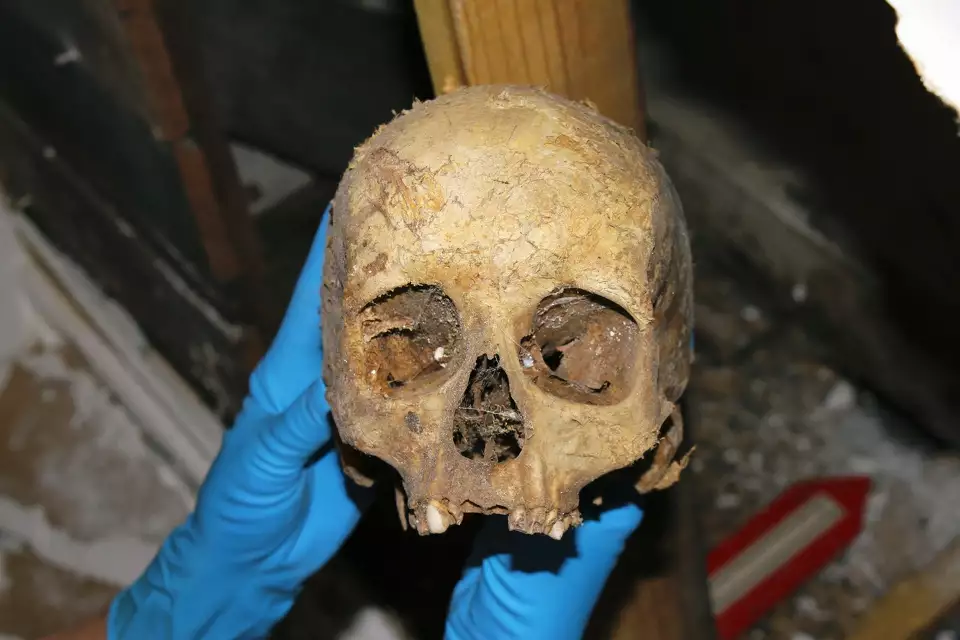
A pair of Foster Grant brown and gold reading glasses was found beside the skull. Police knew Mary wore that exact style; footage from a 2013 planning meeting showed her wearing identical glasses. A jaw fragment revealed a dental crown, matching her records that noted a missing tooth and a crown on one of her front teeth.
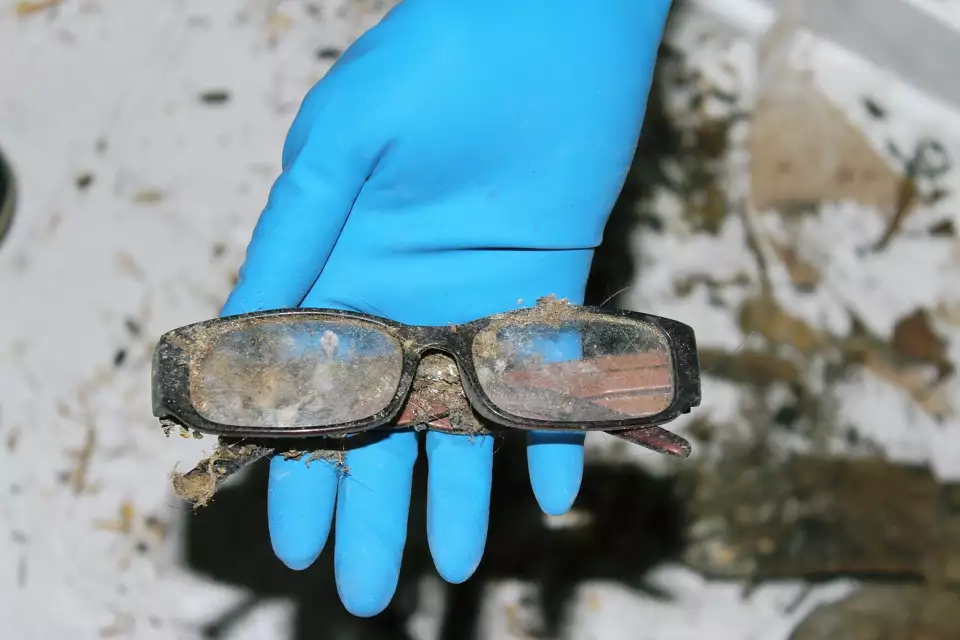
No usable fingerprints or nuclear DNA remained. The only recoverable material came from a tooth, which was badly degraded. The team had to rely on circumstantial and physical evidence rather than direct genetic proof.
Later that year, the institute sent tissue from the tooth to the University of North Texas Center for Human Identification. Mitochondrial DNA was compared to samples from two of Mary’s cousins. Because they were related through her father’s side, the test produced no match.
Dr. Derrick said the identification relied on combining every available clue, including dental records, photographs, and the glasses. She publicly asked for any medical X-rays or clear images of Mary that might help confirm the match.
In January 2018, after months of analysis, the remains were officially identified as those of Mary Stewart Cerruti. The Houston Police Department confirmed in its January 2018 press statement that “no indications of foul play” were found during the two-year investigation.
The medical examiner listed the cause of death as undetermined. By the time she was found, the body had completely skeletonized, leaving no tissue evidence to determine how she died.
Some small fractures were visible, but it was unclear if they occurred at the time of death or during the collapse of the attic and later recovery. Detective Jason Fay told reporters that police believed the scene pointed to an accident.
The bones were found directly below a hole in the attic floor. Investigators suggested Mary may have fallen through a weak board and become trapped in the narrow wall space. Dr. Bentley, the district medical examiner, said the injuries showed no sign of homicide or violence.
When police released their final report a month later, Newsweek noted that detectives had found nothing inconsistent with that conclusion.
Theories and Public Discussion
Even after the case closed, neighbors and online investigators offered their own ideas about what happened. Experts and police insisted no one placed Mary’s body inside the wall. Detective Jason Fay told reporters, “Everything we found says she is the one who ended up there,” pointing to the evidence that matched her home and belongings.
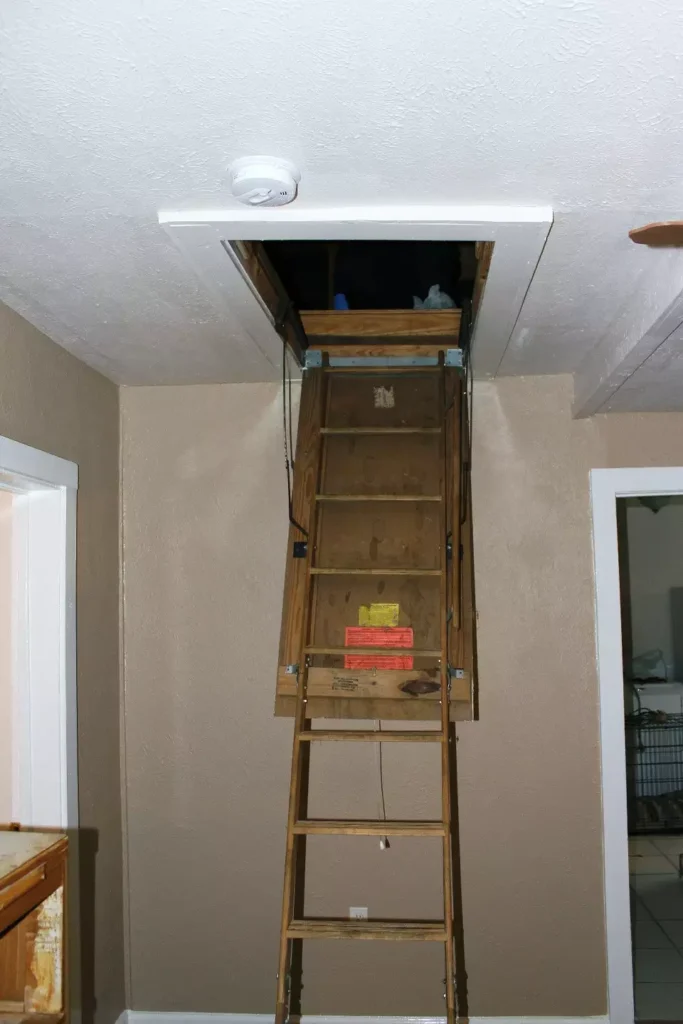
The skeleton had been discovered directly below a missing attic floorboard, not along an outer wall, which supported the idea of an accidental fall. The official explanation was that Mary may have climbed into the attic, possibly to rescue a cat or reach something, and slipped through a weak plank, becoming trapped in the narrow space.
Still, not everyone accepted that version. Some friends and neighbors doubted that a woman her age and health could have climbed into the attic alone. Roxanne Davis, who kept Mary’s photos after her death, asked, “Did somebody put the body in the wall? It just seems hard to accept she fell in there by accident.”
On Websleuths and Reddit, users debated what might have happened. One commenter wrote that it seemed strange for someone to die hidden in a crawlspace and wondered if investigators had missed something. Another suggested Mary may have been chasing one of her cats when she fell.
Others found it troubling that contractors who remodeled the house before it was rented out had left the cat cages in the attic and never repaired the missing floorboard. A few even speculated that she might have been ill and hid inside, or that someone moved her body after she died. No evidence ever supported those claims.
Authorities urged the public not to confuse speculation with fact. Houston Police pointed out that every forensic finding, including fractures consistent with a fall, no defensive wounds, no blood or poison, and clear signs of animal activity, ruled out foul play.
Dr. Sharon Derrick, who helped identify the remains, said in 2018, “We really do believe she is Mary Cerruti; we just have to scientifically prove it.” Once that was done, police officially closed the investigation as a non-suspicious death.
Detectives had interviewed neighbors, searched hospital records, and even contacted developers, but nothing new emerged. The story, however, continued to spread online.
On Reddit, a post summarizing the case drew hundreds of reactions. Many expressed sadness over how quietly Mary’s life ended. Others tried piecing together timelines from old articles and news reports. The Houston Chronicle once summed it up simply: “It’s easy to obsess over what could have happened to Mary.”
Most forum discussions, even those filled with speculation, circled back to the same conclusion. She probably died by accident, overlooked by circumstance and time. One Websleuth user wrote, “It’s hard to explain, but it fits. She didn’t seem murdered. She just slipped away.”
Houston Heights in Context
Mary Cerruti’s story played out during a period of rapid transformation in Houston Heights. By the 2010s, the quiet bungalow neighborhood had turned into one of the city’s most sought-after areas. Historic homes were being restored, while vacant lots gave way to luxury condominiums and modern townhouses.
A local blogger once wrote, “People want to live in the Heights, but the houses are scarce and ridiculously expensive. A high-end condo or apartment isn’t a bad alternative, given that reality.” Projects like Yale at 6th rose from this demand, filling every available block with multi-story buildings.
Mary’s small blue bungalow at 610 Allston became a last remnant of what the Heights once was. It sat, quite literally, in the shadow of the new complex that surrounded it.
Local historians and community groups often reference her case when talking about the changing face of the neighborhood. The Houston Heights Association and the Texas Historic Commission have both pushed to preserve the area’s original character, but gentrification continues to reshape its streets.
Within a few blocks of Mary’s home, restored Victorian houses now stand beside parking garages and upscale apartments. Property values have soared. Between 2000 and 2020, the median home price in the Heights multiplied times over.
Mary Stewart Cerruti’s remains were finally identified after years of uncertainty. Her cousins claimed them and gave her a quiet burial, bringing closure to a long search. Though her house is gone, her story lives on through the mystery she left behind.
Another case that raised similar questions about unexplained deaths was that of Joshua Maddux, a nineteen-year-old from Woodland Park, Colorado. He vanished in 2008 and was found years later lodged inside a cabin chimney